
This Maine Harbor Town Builds A Giant Christmas Tree Entirely Out Of Real Lobster Traps
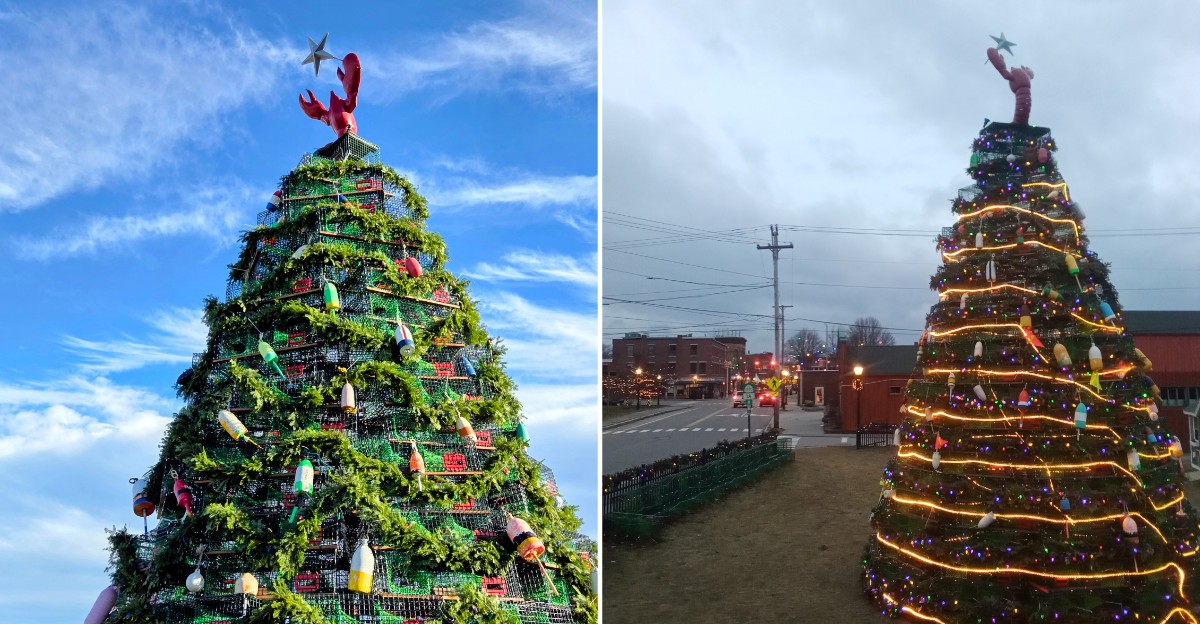
Every November, volunteers stack about 150 red and green lobster traps into a Christmas tree that rises up to 40 feet. Then they crown it with a giant fiberglass lobster. Yes, really.
The traps aren’t props pulled from a costume shop. A trap mill in a neighboring town builds them just for the occasion.
Local lobstering families donate more than 100 buoys to hang on it. I have a soft spot for traditions like this. Most towns borrow their holiday style from greeting cards. This one borrows it straight from the working docks of Maine.
Add thousands of twinkling lights and a harbor view, and the whole thing starts to make perfect sense.
The Tree Is Built From Gear Meant For The Ocean Floor
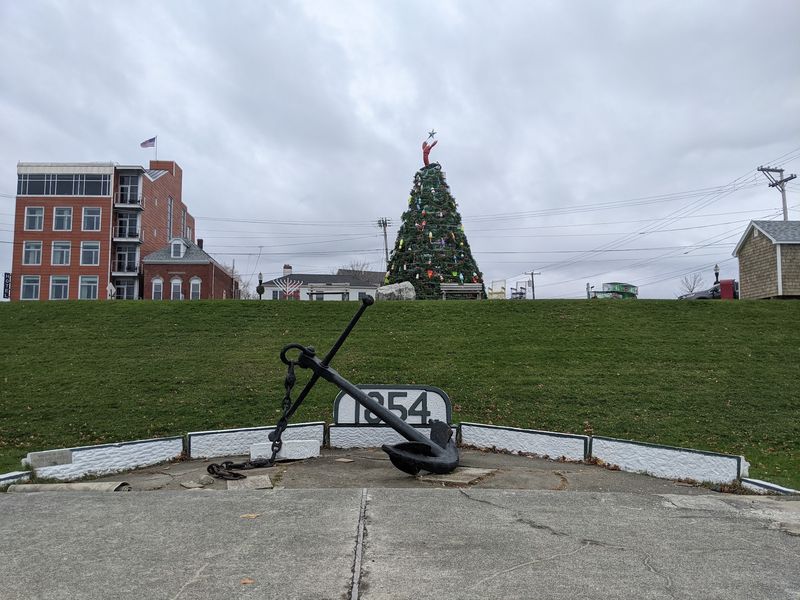
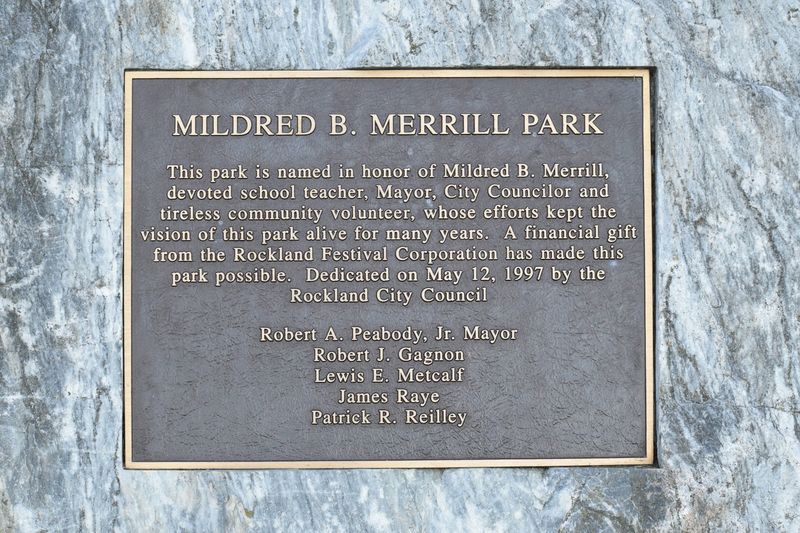
Most Christmas trees grow in forests. Rockland’s grows out of lobster traps, stacked one on top of another inside Mildred B.
Merril Park.
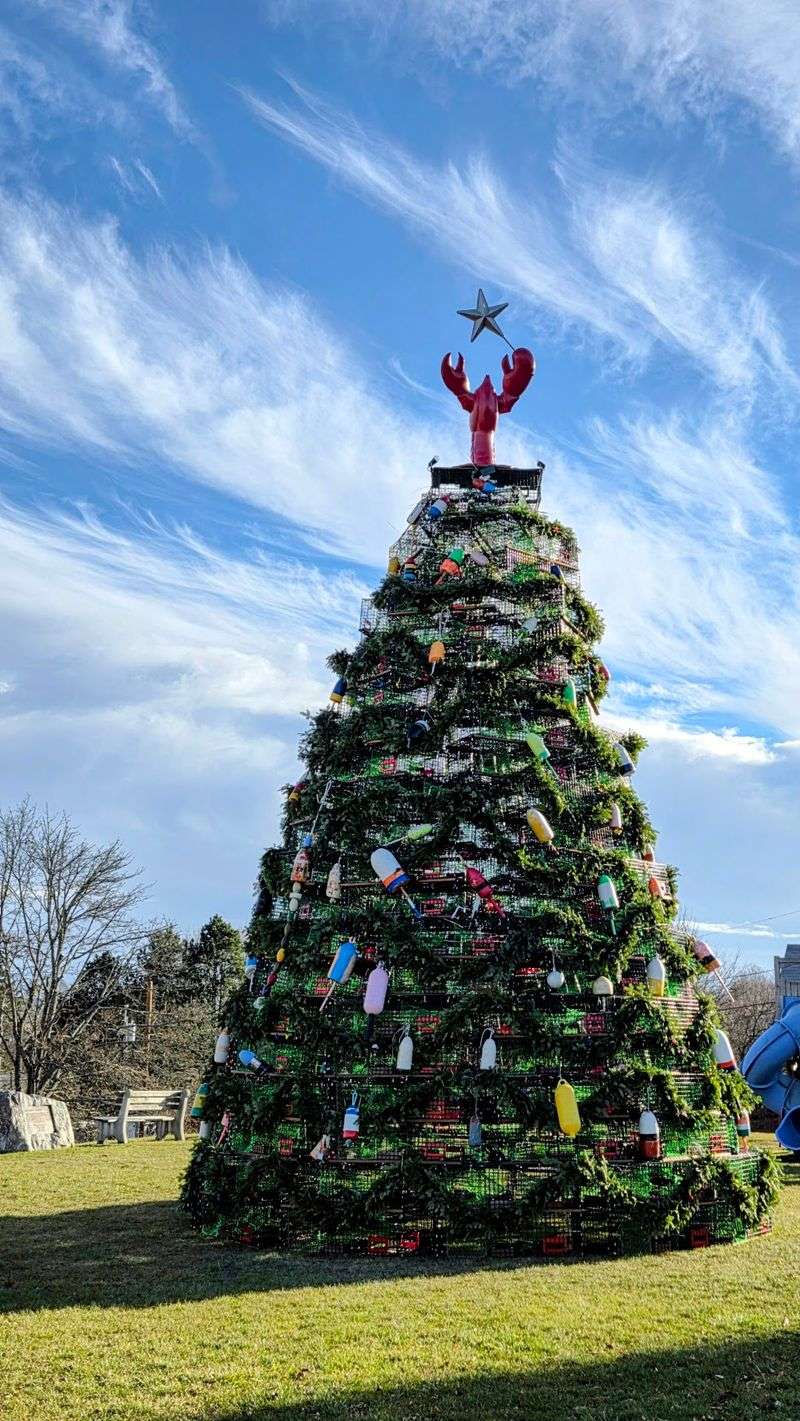
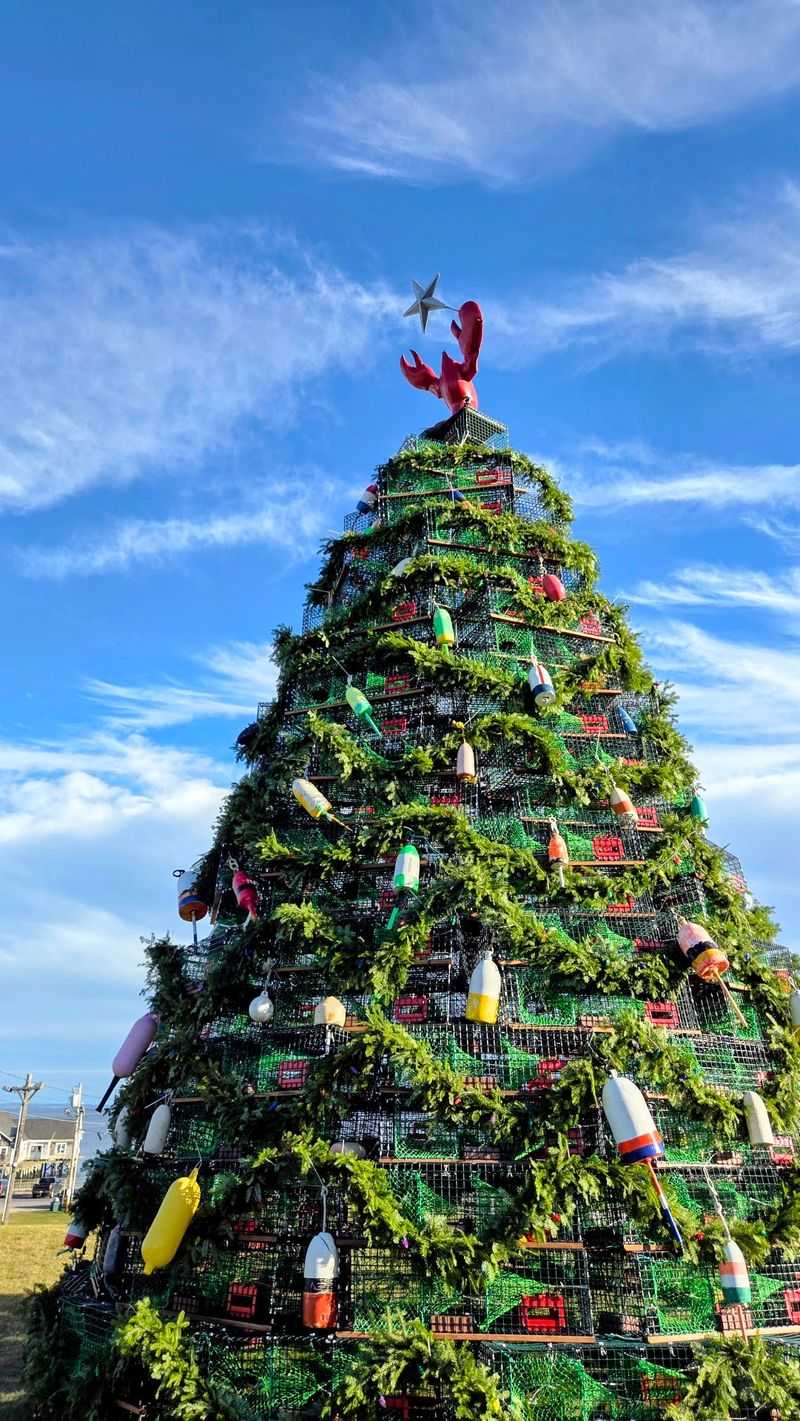
The finished tree stands roughly 35 to 40 feet tall. Its body comes from about 150 to 155 traps painted in bright holiday red and green.
Here’s the fun part. Those traps are real, working-style traps, not plastic decorations shaped to look the part.
They’re the same kind of gear that helps Maine lobstermen earn a living all year long.
Stacking them takes careful planning. Each layer has to be a little smaller than the one beneath it, so the tower narrows into that classic tree shape.
Think of it as the world’s most festive game of building blocks.
The result looks bold and blocky from a distance. Up close, you can spot the wire mesh and the frames that make each trap sturdy enough for rough ocean water.
I love how honest it feels. Nothing about it pretends to be a pine tree.
It simply celebrates the holidays with the tools of the town’s trade, and that gives it real personality.
A Five-Foot Lobster Gets The Best Seat In Town
Forget the star. Forget the angel.
The top of this tree belongs to a five-foot fiberglass lobster, and honestly, it earned the spot.
The big red crustacean comes from Trade Winds. Getting it up there is no small chore, so Journey’s End Marina helps hoist it into place.
Picture the reaction from someone driving through town for the first time. One moment it’s a tall tree of traps.
The next moment, a giant lobster is gazing out over Main Street like it owns the place.
Some older reports from 2017 describe an eight-foot lobster topper. More recent coverage mentions the five-foot version, which is still plenty big for a tree decoration.
Kids tend to point at it right away, and adults aren’t far behind. It makes a great photo target too.
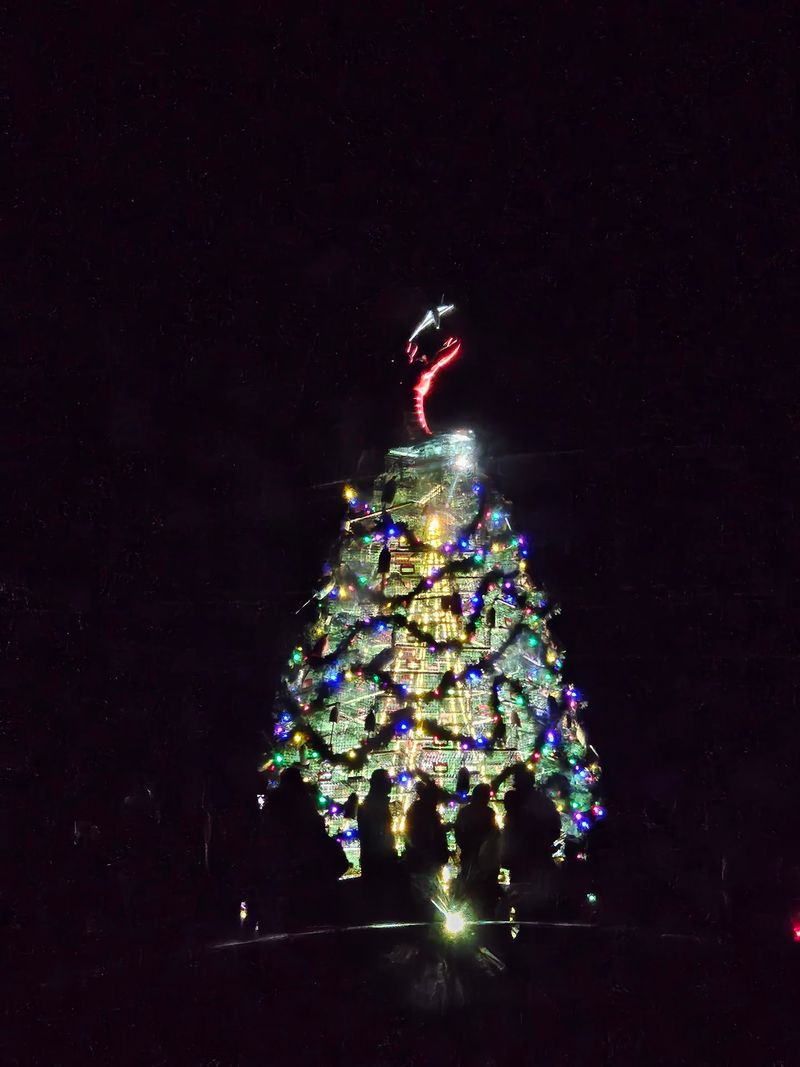
Try framing your shot from far enough back to fit the whole tree, lobster included. A low angle makes the topper look even grander against the night sky.
It’s silly in the best way. It’s also a reminder that this town knows exactly who it is and doesn’t mind having a little fun with it.
Buoys From Real Lobstering Families Make It Personal
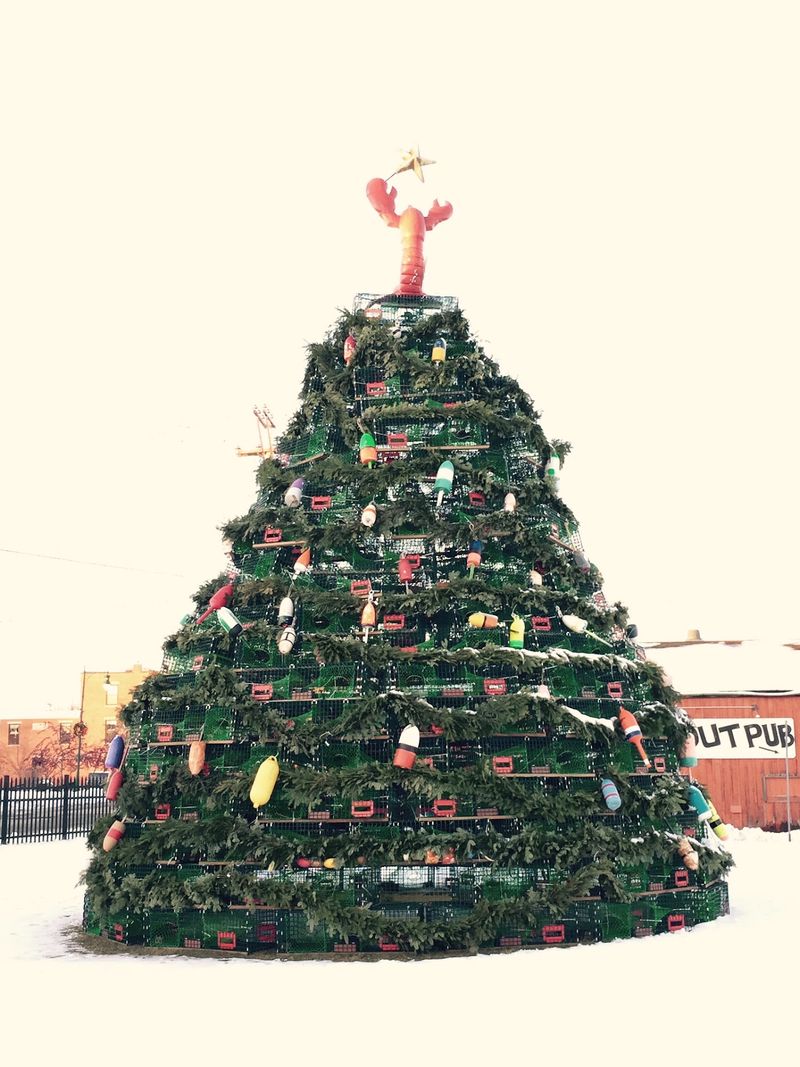
Every lobster buoy tells a story. In Maine, each lobsterman paints buoys in a unique color pattern so they can find their own traps out on the water.
Now picture more than 100 of those buoys hanging from one tree. Some reports put the number closer to 125.
Local lobstering families donate them. That turns the decorations into something far more meaningful than store-bought ornaments.
Each stripe and color combo connects back to a real family and a real boat. In a way, the tree becomes a colorful map of the people who work Rockland’s waters.
The buoys are a symbol of the city’s working waterfront heritage. That matters in a place where lobstering is part of daily life, not just a tourist theme.
When you visit, take a slow lap around the tree. Look for patterns that repeat, or ones that stand out with wild color choices.
It’s a little like reading name tags at a family reunion. You may not know the names, but you can feel the pride hanging from every branch, or rather, every trap.
Thousands Of Lights Turn Traps Into A Glowing Tower
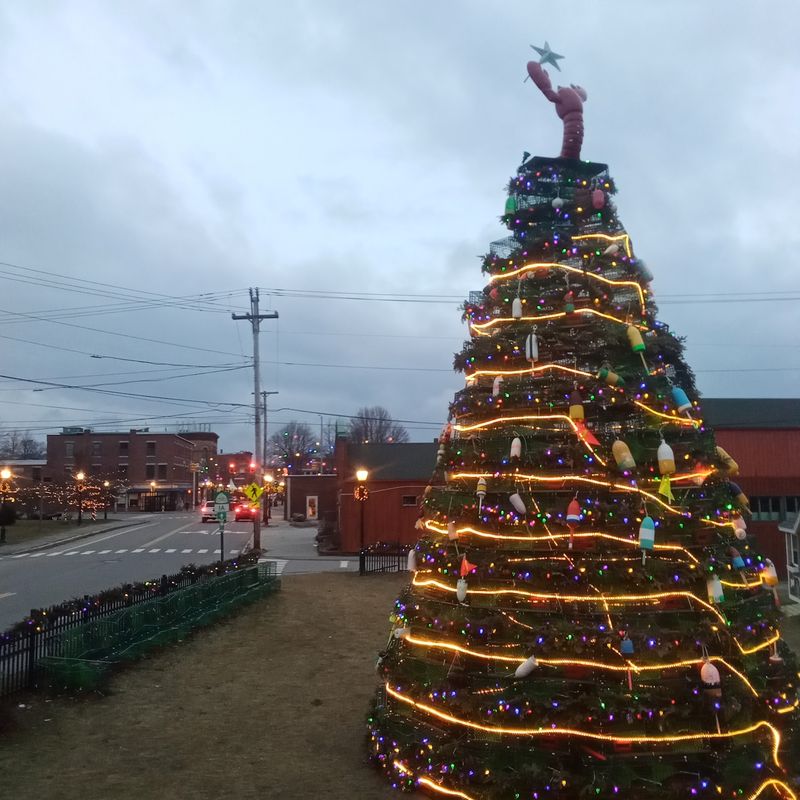
Daytime gives you the color. Nighttime gives you the magic.
Somewhere between 2,500 and 3,000 lights twinkle on this tree. Some glow from inside the traps themselves, which makes the whole structure seem lit from within.
Then there’s the garland. Volunteers wrap roughly 480 to 600 feet of lighted garland around the tree, adding sparkle to every layer.
The effect is surprisingly cozy. Those wire traps, built to survive cold Atlantic water, suddenly look soft and warm against the dark December sky.
For the best view, plan your visit just after sunset. The sky still holds a little blue, and the lights pop without the scene going completely black in photos.
Dress warmly, too. Coastal Maine evenings in winter can bite, especially with a breeze coming off the harbor.
A thermos of hot cocoa wouldn’t hurt either. Standing beneath a glowing tower of lobster traps while sipping something warm sounds like a pretty solid holiday plan to me.
Bring a friend who’s never seen it. Their first reaction might be the best part of the trip.
Volunteers From All Corners Stack It By Hand
No single crew could pull this off alone. Building the tree takes dozens of volunteers, and the mix of helpers is part of what makes it special.
Members of the United States Coast Guard pitch in. So do individuals from the Bolduc Correctional Facility, along with plenty of local residents.
That’s a pretty wonderful lineup. People from very different walks of life end up lifting, stacking, and lighting the same tree side by side.
Assembly usually happens in mid-November. That gives the team time to get every trap in place before the big lighting night.
The traps themselves come from Brooks Trap Mill in nearby Thomaston, Maine. The mill custom-builds them for the project, so the tree starts local before a single trap is stacked.
I can understand why people care so much about this tradition. When you help build something with your own hands, you feel connected to it every time you pass by.
If you visit during setup, be respectful and give the crew space. Watching the tree rise layer by layer could be a fun bonus before the official celebration.
Santa Skips The Sleigh And Arrives By Boat
Reindeer are great, but this is a harbor town. During the Festival of Lights, Santa often makes his grand arrival on a U.S.
Coast Guard boat.
The lobster trap tree serves as the centerpiece of this yearly celebration. The festival typically runs over several days right after Thanksgiving.
The tree lighting usually takes place on the Friday after Thanksgiving. In 2025, the festival ran November 28 through 30, with the lighting set for 6 p.m. on that Friday.
Beyond the tree lighting, the weekend typically includes a parade of lights and caroling. It’s a full holiday kickoff wrapped in a coastal Maine bow.
Check the schedule ahead of time, since dates shift a bit each year. Rockland Main Street Inc. organizes the event, so watch for their announcements.
Arrive early for the lighting if you want a good view. Bundle up the kids and pack mittens, since you’ll be standing outside near the water.
Honestly, watching Santa step off a Coast Guard boat might ruin regular mall Santas for your family forever. That’s a risk worth taking.
The Park Itself Comes With A View Of The Bay
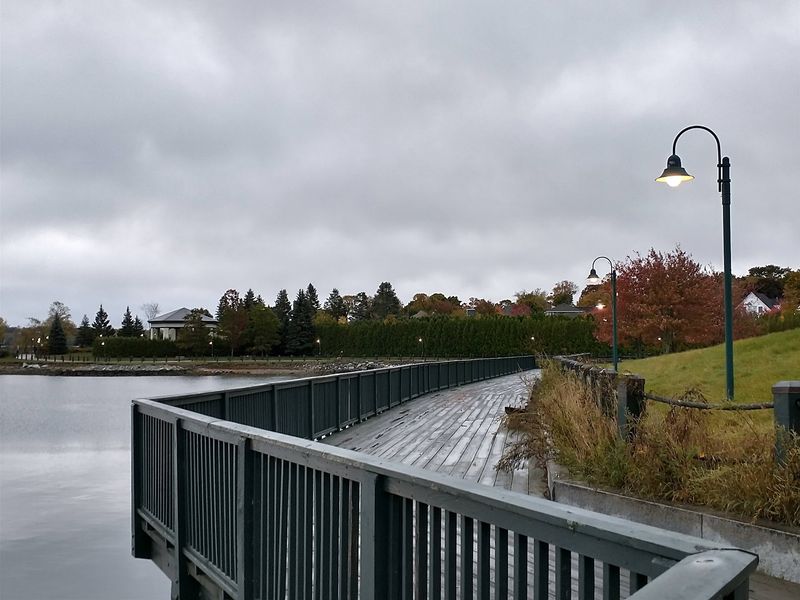
Mildred B. Merril Park isn’t a sprawling space with long trails.
It works more like a lookout point, and that’s exactly why it suits the tree so well.
You’ll find it at 256 South Main Street, Rockland, ME 04841.
The big draw, even without holiday decorations, is the view. The park looks out over the bay, giving you a front-row seat to Rockland’s working harbor.
That setting makes the tree feel at home. The traps stand within sight of the very waters where lobster gear does its real job.
Since the park is small, plan for a quick, focused visit rather than a long stroll. Snap your photos, enjoy the view, and soak in the harbor air.
Paved walking areas are limited, so wear sturdy boots in winter. Snow and ice can make footing tricky.
It’s a simple little park in Maine with a big personality each December. Sometimes the best stages are the ones that let the backdrop do most of the talking.
You Could Take Home 100 Of The Traps
Here’s a holiday prize you won’t see every day. Rockland Main Street Inc. raffles off 100 of the traps used to build the tree.
The nonprofit manages the tree, and the raffle helps make it a major fundraiser. So the tree does double duty, spreading cheer and supporting the downtown community.
Who wins 50 lobster traps? Maybe a lobsterman who could put them straight to work.
Maybe someone with a very creative backyard project in mind.
Either way, it’s a clever finish to the season. Rather than sitting unused, the traps head off to a new home once the holidays wrap up.
Buying a ticket is an easy way to support the tradition. Even if you don’t win, your money helps keep the tree going for future years.
Keep an eye out for raffle details during the Festival of Lights. Rules and timing can change, so it’s smart to check what’s offered that season.
I love the thought of that. A tree built by the community ends up giving back to the community, one trap at a time.
Rockland Was Early To This Salty Tradition
Rockland started stacking traps back in 2003. That makes it one of the earliest towns in New England to try this quirky holiday idea.
Gloucester, Massachusetts, gets credit for starting the trend. Rockland reportedly followed just a few years later and kept the tradition going ever since.
Over the years, some reports called Rockland’s tree the world’s largest of its kind. Today, that title goes to Beals and Jonesport, Maine, which built a 60-foot tree from 1,364 traps.
Losing the record doesn’t take away the charm. Rockland’s tree is still huge, still beloved, and still a must-see sight in Maine each December.
Honestly, a friendly rivalry between two Maine towns over lobster trap trees makes me smile. Few holiday debates are this delightfully specific.
The decades of history add weight to every visit. Families who saw it as kids can now bring their own children to the same spot.
So when the lights come on this year, remember what you’re looking at. It’s more than two decades of salt, teamwork, and good humor, stacked tall beside the harbor.