
This Spooky Arizona Cave Hides A Dark Past Most Visitors Never Hear About
A roadside showman once kept mountain lions in chicken-wire cages right next to a cave with one of the grimmest legends in Arizona. Yes, really.
That odd pairing is only one layer of this story.
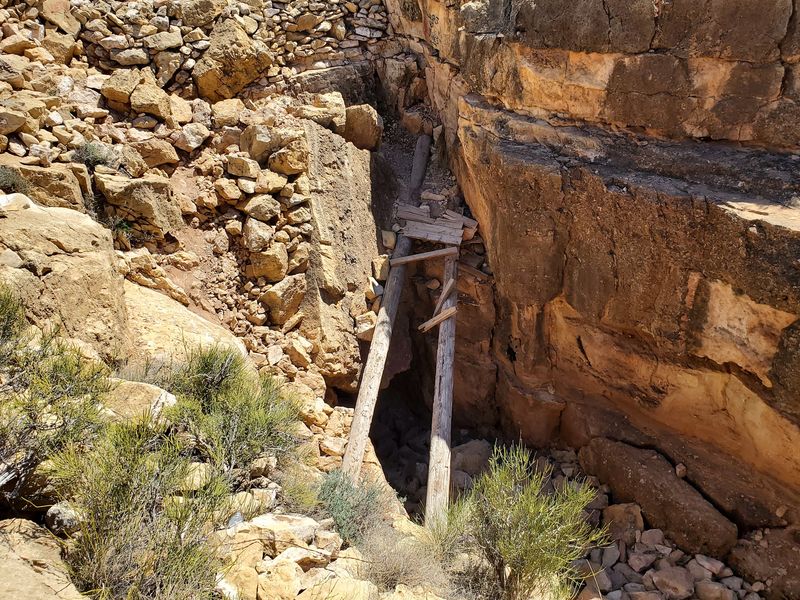
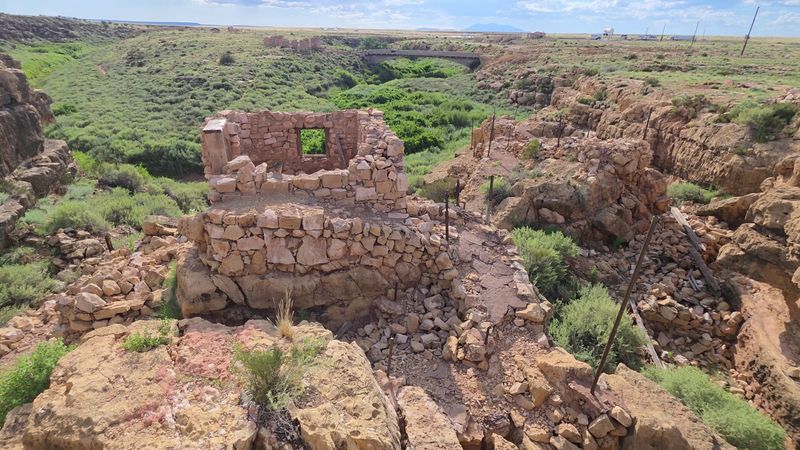
The cave sits under a ruined Route 66 stop that burned in 1971. Graffiti now covers crumbling walls, and a broken wooden ramp still hangs near the opening.
Cold air can drift up from the dark below.
I like how this place refuses to give easy answers. The famous tale behind it may be mostly invented, yet people still leave feeling uneasy.
I can’t imagine a better mix of history, myth, and pure roadside weirdness.
So who started the story, and why does it still feel so real underground? The answer involves a canyon, a showman, and a novelist with a big imagination.
A Spooky Little Opening Right Off Interstate 40
Exit 230 on Interstate 40 looks like any other quiet desert offramp. Take it, though, and you reach Apache Death Cave, one of the most talked-about oddities in northern Arizona.
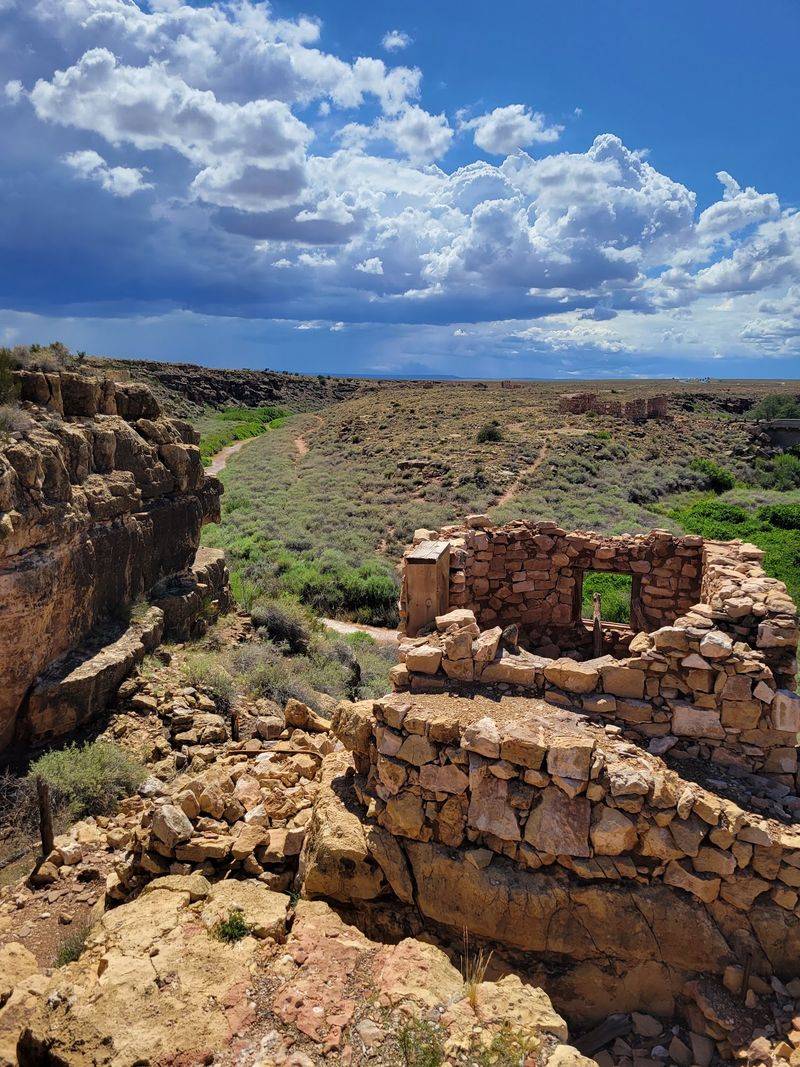
The cave sits in Canyon Diablo, a rugged ravine between Flagstaff and Winslow. Around it lie the ruins of Two Guns, a former Route 66 stop that faded long ago.
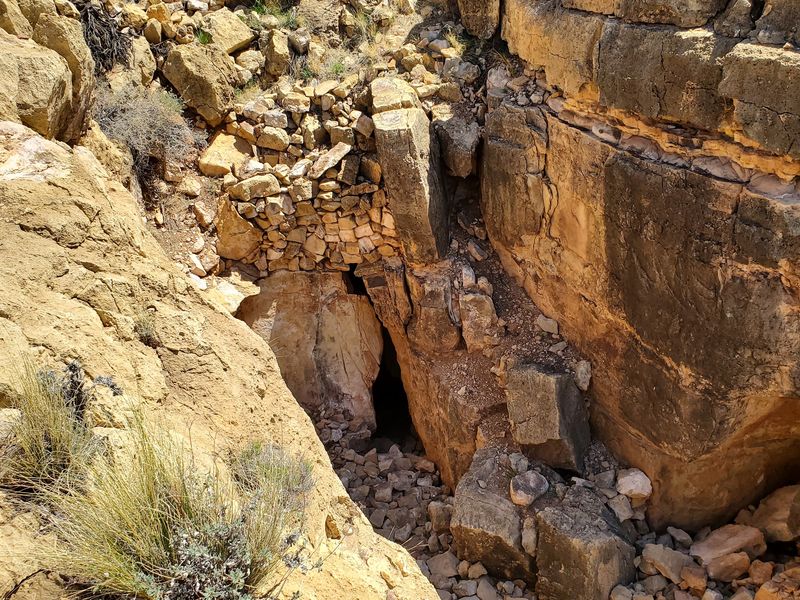
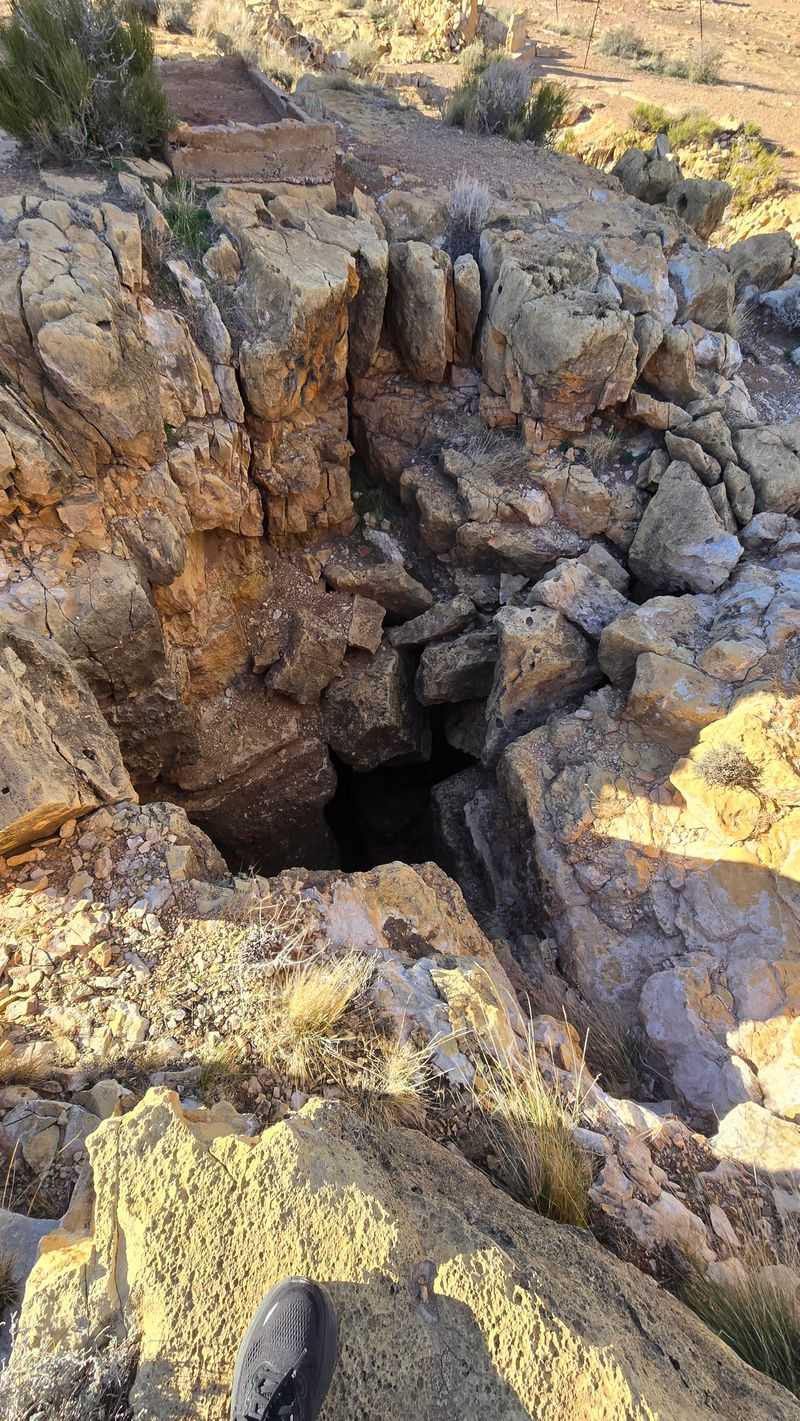
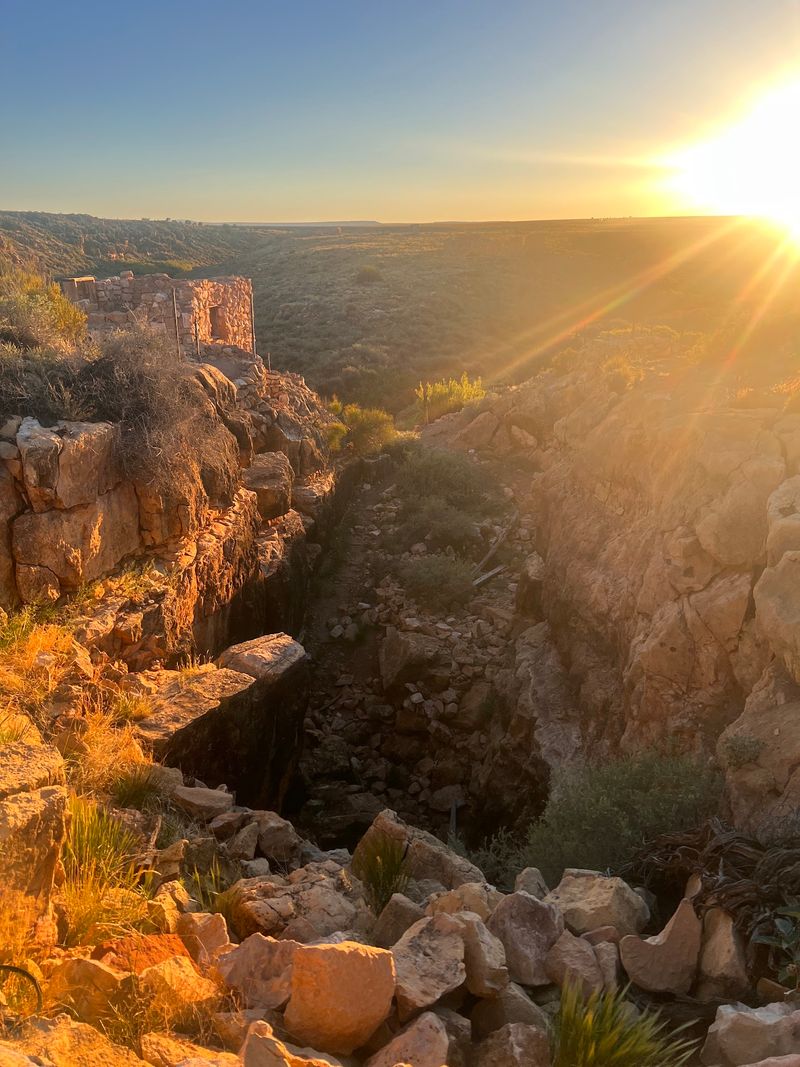
From above, the cave entrance doesn’t look like much. It’s basically a hole in the rocky ground near a stone building, easy to miss on a first pass.
There’s no visitor center here. No gift shop either, and no interpretive signs explaining what you’re looking at.
That bare-bones setup is a big part of the appeal. You get raw ruins, open sky, and a story you need to bring with you.
Do a little reading before you go. The site makes far more sense once you know the legend, the showman, and the twist that followed.
The listed hours are simple too, since the site is open 24 hours. It’s also free to explore, which makes it an easy road-trip stretch break.
Just know you’re on your own once you park. Careful footing and a curious mind matter more here than any map.
The 1878 Legend That Gave The Cave Its Chilling Name
According to the tale, the trouble began in 1878. Apache raiders supposedly struck a Navajo camp near the Little Colorado River.
Navajo men then tracked the group into Canyon Diablo. The trail seemed to vanish, until they reportedly felt warm air and heard voices rising from a crack in the ground.
That crack was said to be this very cave. The Navajo allegedly blocked the opening and lit fires, pushing smoke into the chamber below.
The legend says 42 Apache men were trapped inside and never came out. It’s a heavy story, and it gave the cave the name it still carries.
Details like the warm air give the tale its eerie punch. A cave that breathes is the kind of image that sticks with you.
Still, keep that word legend in mind. The story is dramatic, specific, and very hard to confirm, which matters more than you might expect.
Stand near the entrance and you’ll see why it caught on anyway. The ravine feels lonely, and the opening looks like it’s hiding something.
Hold onto this version for now. A later chapter in Arizona history throws a big wrench into it.
Mountain Lions, Fake Ruins, And One Bold Showman
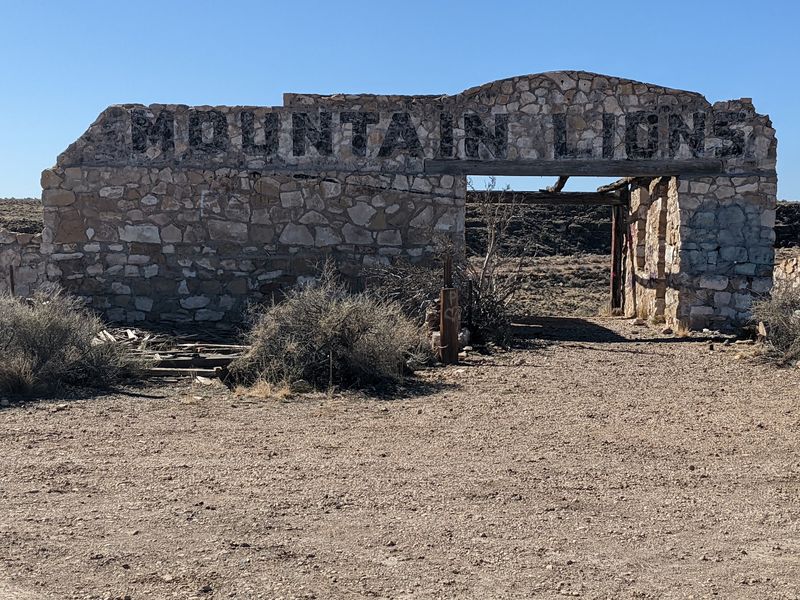
Enter Harry Miller, a man who called himself Indian Miller. He arrived in the 1920s with big plans for a dusty patch of Route 66.
Miller leased the land and named it Two Guns. Then he set out to turn it into a stop no traveler could ignore.
His roadside zoo was the headline act. It held desert animals like mountain lions and bobcats, kept in chicken-wire cages.
The cave became his other big draw. He marketed tours of the Apache Caves, also called the Mystery Cave, to curious motorists.
Some accounts claim he sold Apache bones to tourists. Others dispute that, so it lands firmly in the unproven pile.
What’s clearer is his flair for staging. Miller reportedly built fake ruins inside the cave to make tours feel more dramatic.
So the underground walls you may see today carry two kinds of history. Part of it is natural, and part is pure 1920s showmanship.
Honestly, you have to admire the hustle a little. He took a lonely canyon and sold it as the wildest stop between Flagstaff and Winslow.
Plot Twist: The Story May Have Been Mostly Made Up
Here comes the curveball. Some historians believe the 1878 tale is much younger than it sounds.
The name to know is Gladwell Richardson. He wrote Western novels and later ran the trading post at Two Guns.
Richardson had a reputation for colorful storytelling. Written records of the cave legend are hard to find before the 1960s, which raises fair questions.
One theory says he shaped or invented the tale himself. A spooky backstory could pull in tourists and sell a few more books.
That doesn’t make the canyon any less striking. It just means the cave’s most famous chapter might be fiction dressed as history.
I believe that makes the visit more interesting, not less. You’re standing inside a legend while knowing it might be a clever sales pitch.
Plenty of travelers still feel uneasy down there. Whether the story is true or not, the mood seems to hold up on its own.
So go in with an open mind and a skeptical eyebrow. Apache Death Cave rewards both, and the debate makes great conversation on the drive home.
Ghost Town Ruins Covered In Graffiti And Mystery
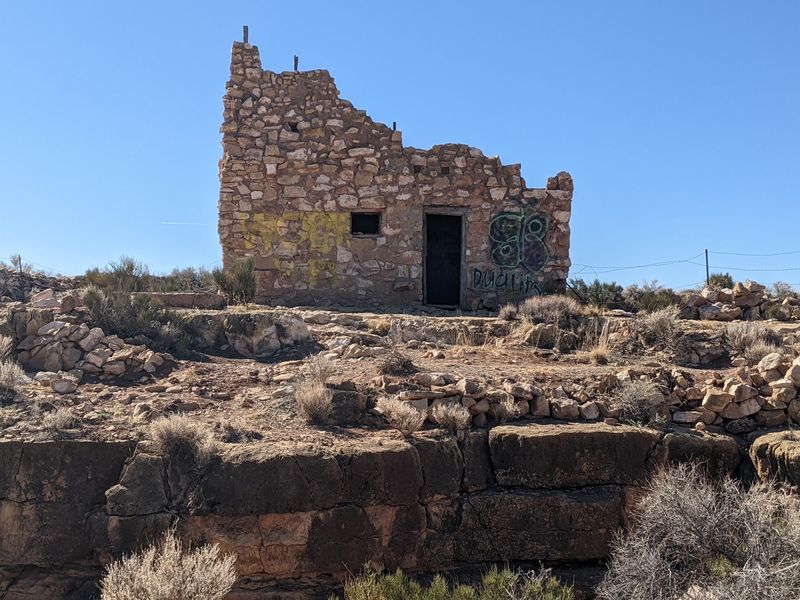
Fire changed everything here in 1971. A big blaze swept through Two Guns and left much of it as the shells you see today.
By then, the town was already struggling. Route 66 had shifted more than once, and Interstate 40 eventually bypassed the stop.
Now the ruins spread out across the rocky ground. You’ll find old stone buildings, a graffitied gas station, and the remains of Miller’s zoo enclosures.
An old bridge also crosses Canyon Diablo nearby. It’s a great reminder of how busy this crossing once was for road travelers.
Graffiti covers a lot of the walls. Some of it is colorful, and plenty of it is just scribbles, so set expectations accordingly.
Photographers tend to love the place anyway. Broken walls against wide desert sky make for moody, frame-worthy shots.
Not into caves at all? The ruins alone can easily fill a good chunk of your stop.
Look closely at what’s left, and you can trace the whole boom-and-bust cycle. Gas pumps, cages, and crumbling stone tell it better than any sign could.
Older Than The Legend, Carved By Patient Stone
Long before Route 66, people sheltered here. Archaeological evidence points to human activity in the area between roughly 1050 and 1600 AD.
That timeline puts the old legends in perspective. Centuries of quiet history came before any showman or novelist arrived.
The cave itself is a natural formation. It sits within a branch of Canyon Diablo, where limestone layers line the ravine.
Water and time slowly wore that rock away. The result was the cave system that later drew so much attention.
Some accounts say passages once stretched much farther. Rock slides and instability have closed many of them, so what’s reachable today is fairly small.
A few spots get tight as you go deeper. That’s your cue to stop, because getting stuck is a real risk.
Above ground, keep an eye on the rocks too. The canyon makes a fine spot to look around, stretch your legs, and soak in wide views.
It’s a humbling thought. The stone around you was shaping itself long before anyone in Arizona gave it a spooky name.
Bring A Flashlight And Your Bravest Shoes
Finding the entrance can take some searching. It’s near the stone building closest to the graffitied modern gas station, on the canyon side.
You may spot the remains of a wooden ramp leading down. Skip it entirely, since what’s left is weak and broken.
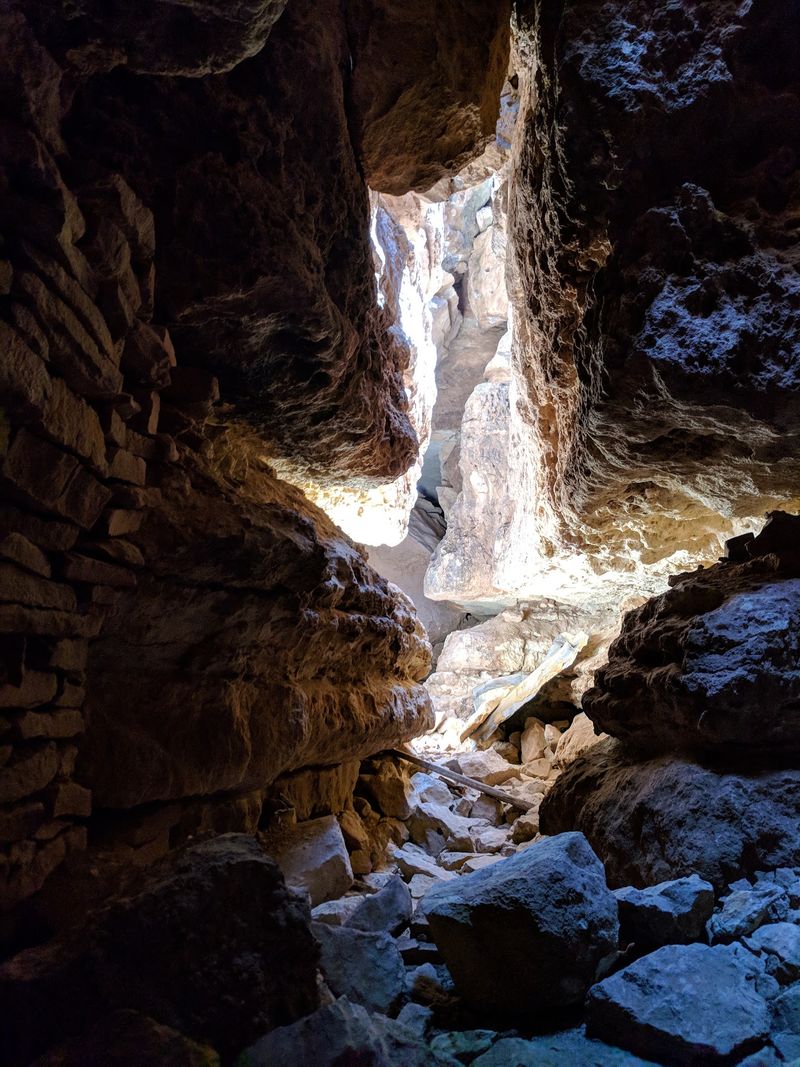
Instead, people pick their way down a rocky slide. Shoes with solid traction make a huge difference on the loose gravel.
Inside, darkness takes over fast. A good flashlight or headlamp isn’t optional here.
The floor is uneven and scattered with fallen rocks. The cave has had cave-ins, and more rock could shift at any time.
Bats also call it home. Give them space and keep your hands to yourself.
Heading out with kids? Hold small hands on the rocky ground, and skip the climb if anyone feels unsure.
Going solo deserves extra thought too. A buddy makes the scramble safer, and staying above ground is a perfectly good choice.
Those who do go in often call it creepy and memorable. Cold air drifting from the opening sets the mood before you even duck inside.
Worth The Detour For Curious Road Trippers
Free, open around the clock, and right off the interstate. That’s a pretty sweet deal for a stop this strange.
The address is listed as 2 Guns, Winslow, AZ 86047. In practice, just aim for Exit 230 on Interstate 40 between Flagstaff and Winslow.
Plan on at least 30 minutes for a quick look. Ruin explorers and cave fans can easily spend an hour or more.
Bring water, sturdy shoes, and a light. There are no services, so pack what you need before you leave town.
Late afternoon can be a lovely time to wander. The low sun warms the ruins and makes the canyon glow.
Respect the site while you’re there. Leave the walls alone, stay off weak structures, and take only photos.
So is Apache Death Cave for everyone? Not quite, but history buffs, Route 66 fans, and lovers of eerie places will find plenty here.
The legend might be fiction, and the ruins are fading. Still, few spots in Arizona pack this much weird history into one free roadside stop.