
Kids Earn A Junior Ranger Badge And Take Home A Paper Crane At This Free Washington Memorial In The Woods
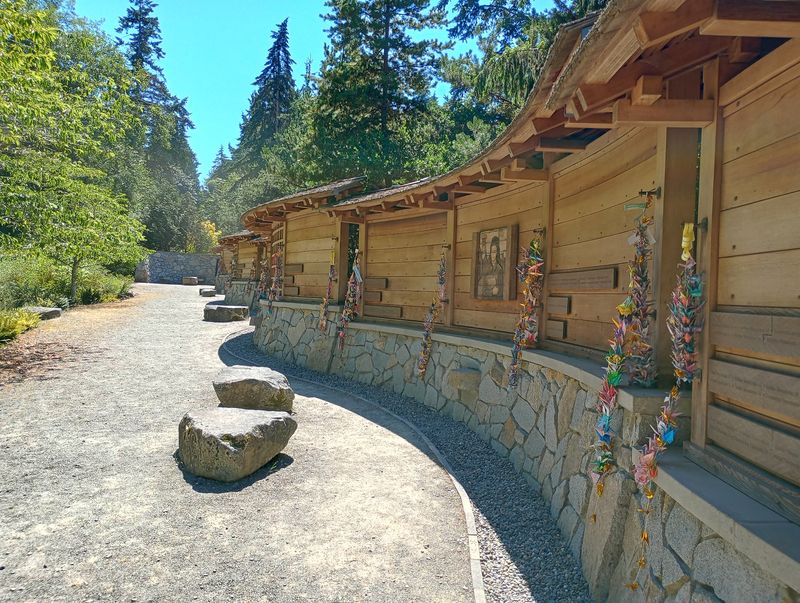
A paper crane might be waiting for you at the end of a short, shaded path near a Washington ferry route. Visitors can take one home as they leave, and that tiny folded bird says a lot about this place.
The path follows a curving wooden wall carved with scenes, quotes, and family names. Each name belongs to someone who was given only six days to pack up an entire life in 1942.
I like how the setting stays quiet and green instead of loud and heavy. Tall trees, young cherry trees, and a wide view of the bay soften a hard story without hiding any of it.
Kids can earn junior ranger badges here, and admission costs nothing at all. I can’t imagine a better free lesson for a curious young reader, so why do so few families know about it?
A Forest Path On An Island Just Across The Water From Seattle
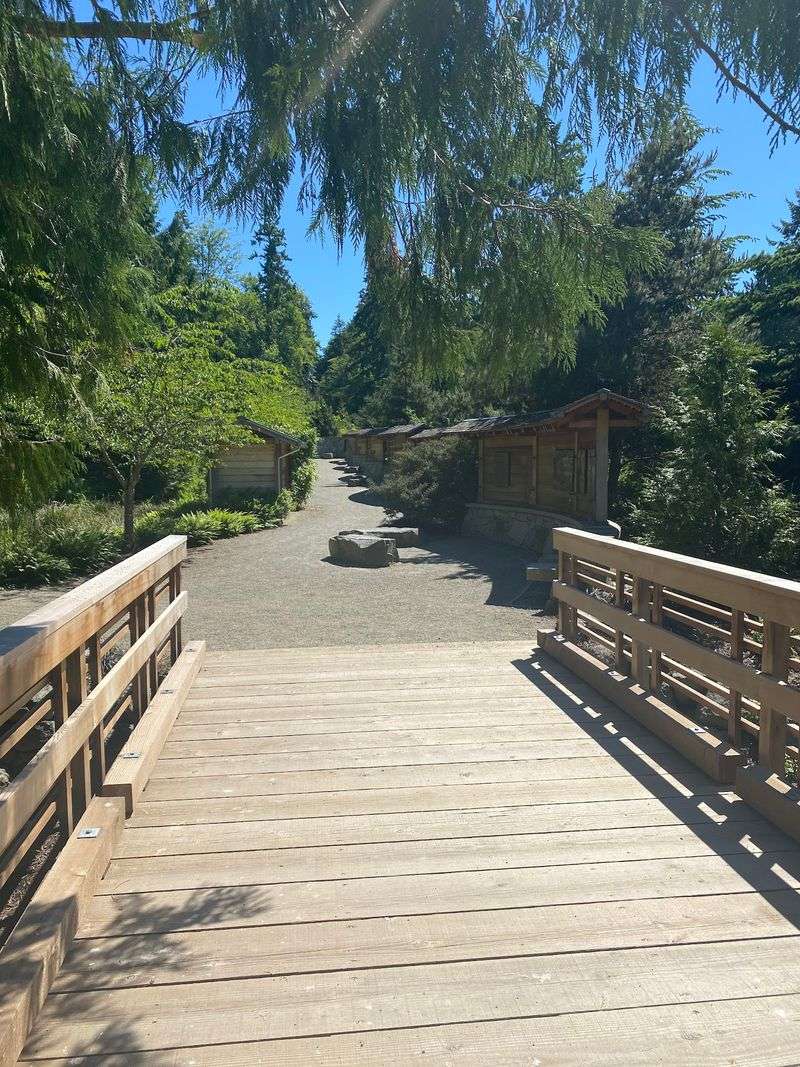
Bainbridge Island sits a ferry ride away from Seattle, and one of its most meaningful stops hides among the trees. The Bainbridge Island Japanese American Exclusion Memorial is a historical landmark and a unit of the National Park Service.
It marks the spot where Japanese Americans from the island were forced to leave their homes during WWII. They walked down to a ferry dock here in 1942, and the memorial lets you follow that same route.
The site is outdoors, wooded, and surprisingly calm for a place with such a heavy story. A gravel path, a carved wall, and a view of the water make up the heart of the visit.
Families often treat it as a quick stop on the way to or from the ferry. That works, but it also rewards anyone who slows down and reads every word.
Washington has plenty of pretty forest walks, yet few carry this much meaning per step. Here the trees frame real names, real families, and a lesson that still matters.
Think of it as a history class with birdsong. No desks required.
Six Days To Pack Up A Whole Life
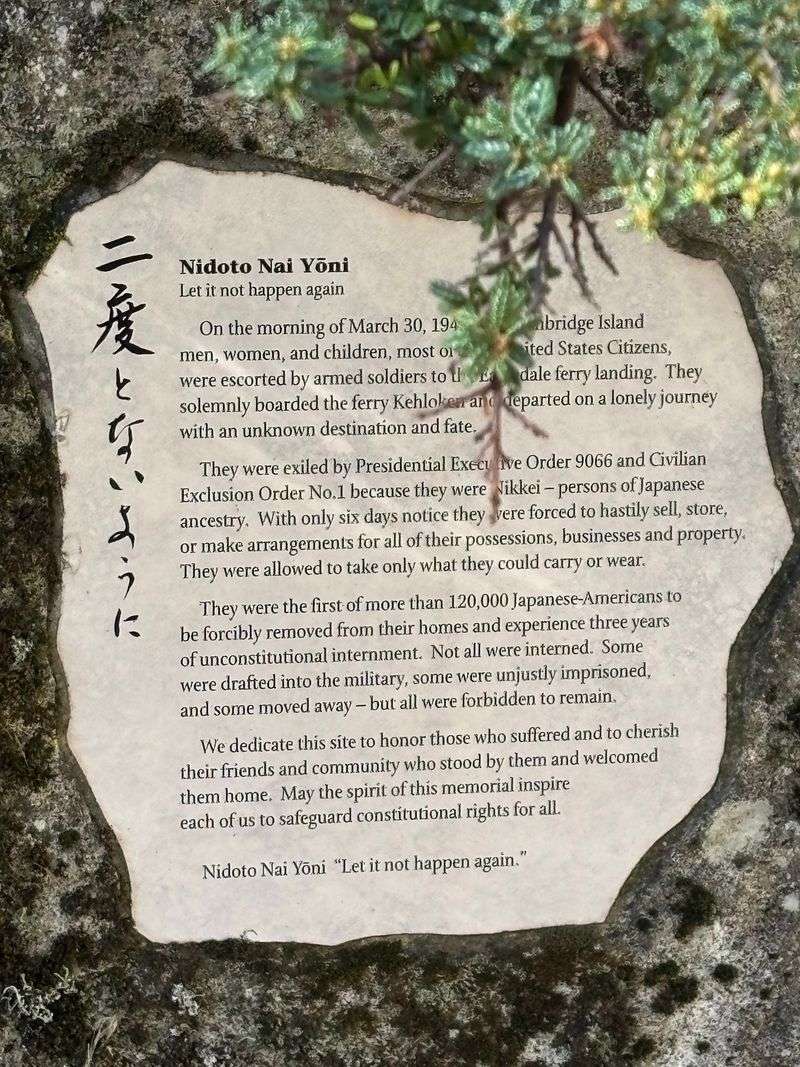
Six days. That was all the warning Japanese American families on Bainbridge Island received before they had to leave in 1942.
Many visitors learn something here they never heard in school. The families from this island were the first group of Japanese Americans removed from their homes during WWII.
They gathered and walked to a ferry landing at this exact shoreline. From there, many were sent to Manzanar, a camp far away in California.
The memorial does not stop at the leaving, though. It also tells of the neighbors who stood by these families and of the community that welcomed people home afterward.
That balance gives the story real depth for kids and grown-ups alike. Heartbreak shares the wall with courage, friendship, and the slow work of rebuilding a life.
The guiding motto is Nidoto Nai Yoni, which means Let It Not Happen Again. Those four words turn a history lesson into a promise every visitor can carry home.
Bring questions, because the story is bigger than most people expect. Rangers and volunteers are usually ready to help fill in the gaps.
The Curving Story Wall Carved In Wood
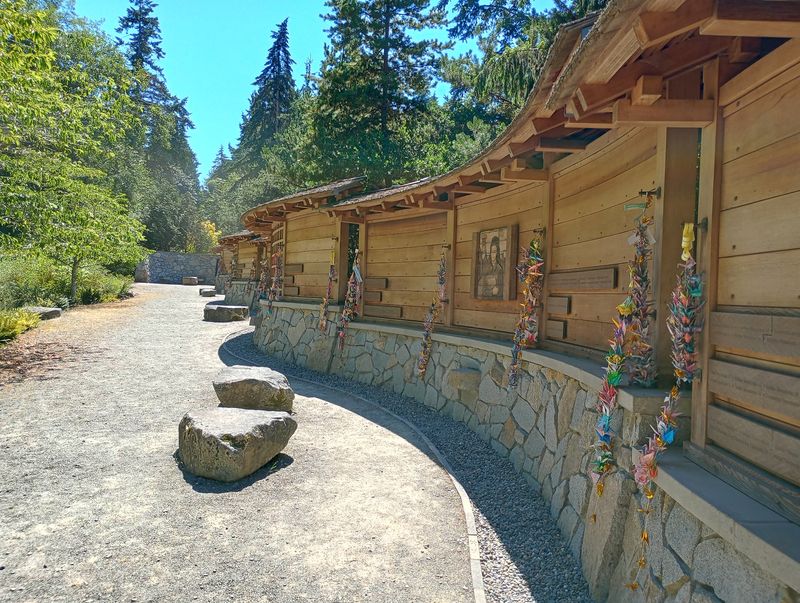
Wood carvings bring the past right up to eye level along this path. The long story wall curves gently through the trees, telling its tale panel by panel.
Carved scenes show moments from island life and from the day families left. Quotes from the people who lived it sit beside those images.
Then come the names. Families who were forced from their homes are listed along the wall, and seeing them in a row hits harder than any textbook chart.
The curve matters, too. You can’t see the whole wall at once, so each step reveals a new scene, a new quote, or another family.
For kids, that design feels a bit like turning pages in a giant outdoor book. One reader might hurry ahead while another lingers on every carving.
Give yourself time to read rather than just glance. The craftsmanship is beautiful, but the words are what stay with you on the drive home.
Bring a little patience and maybe a tissue. The wall earns both.
Where The Old Ferry Dock Meets The Bay
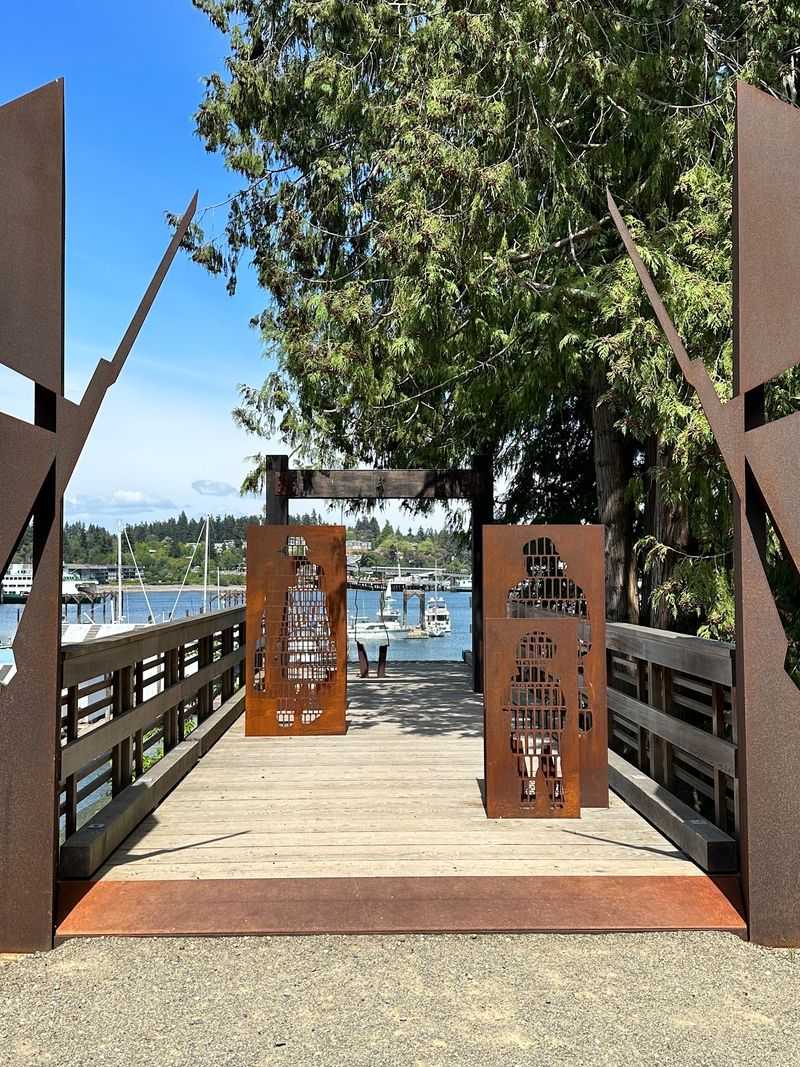
Every path needs an ending, and this one finishes at the water. The walkway leads toward the spot where the old ferry landing once stood.
Families walked this route in 1942 to board the ferry that carried them away. Following it today gives the story a physical weight you can feel in your own steps.
The view at the end is lovely, which makes it strangely bittersweet. Calm water and a wide stretch of the bay show exactly what these families had to leave behind.
The full walk is short, roughly 0.15 miles, and nearly all of it is shaded. Little legs can handle it easily, and so can grandparents.
Cherry trees are planted at intervals along and beside the gravel path. In spring, their blossoms add soft color to the walk.
Late summer visitors miss the flowers but still get the shade and the view. Rainy days work too, if you bring an umbrella and a good attitude.
Washington weather rarely cooperates on schedule. The path doesn’t seem to mind.
Junior Rangers, Passport Stamps, And A Paper Crane To Keep
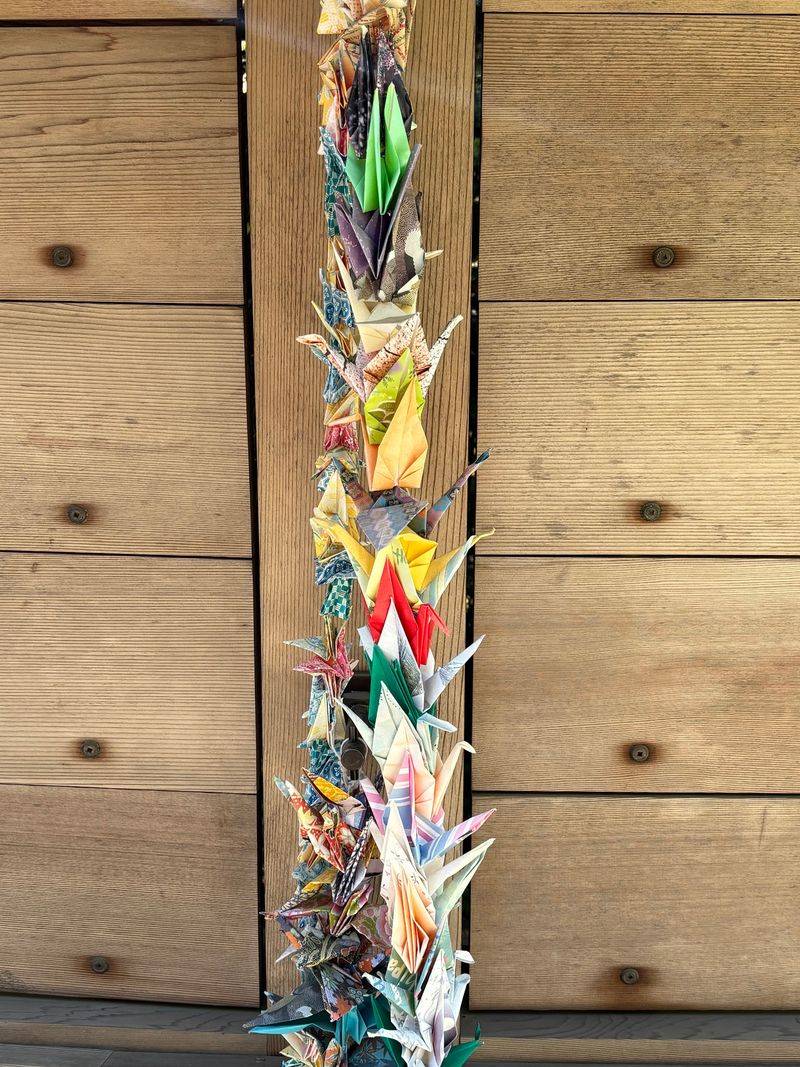
Here’s where the kid-level treasure hunt kicks in. The Bainbridge Island Japanese American Exclusion Memorial offers junior ranger badges for young visitors who want to earn one.
Families carrying National Park passport books can grab a stamp, too. Collectors know how satisfying a fresh stamp feels, especially one that comes with a story.
Plaques along the path give kids something concrete to hunt down. A determined young reader can make a game of finding and reading every single one.
And then there are the paper cranes. Visitors can take one on the way out, which turns a quiet visit into a small keepsake.
Cranes carry deep meaning in Japanese culture as symbols of hope and peace. Holding one after walking the path tends to start good conversations in the back seat.
Questions are welcome, and kids tend to have plenty. Rangers and volunteer guides can answer them in ways that make sense to young minds.
A badge, a stamp, and a crane. Not bad for an afternoon that costs nothing.
Rangers And Volunteers Who Bring The Story To Life
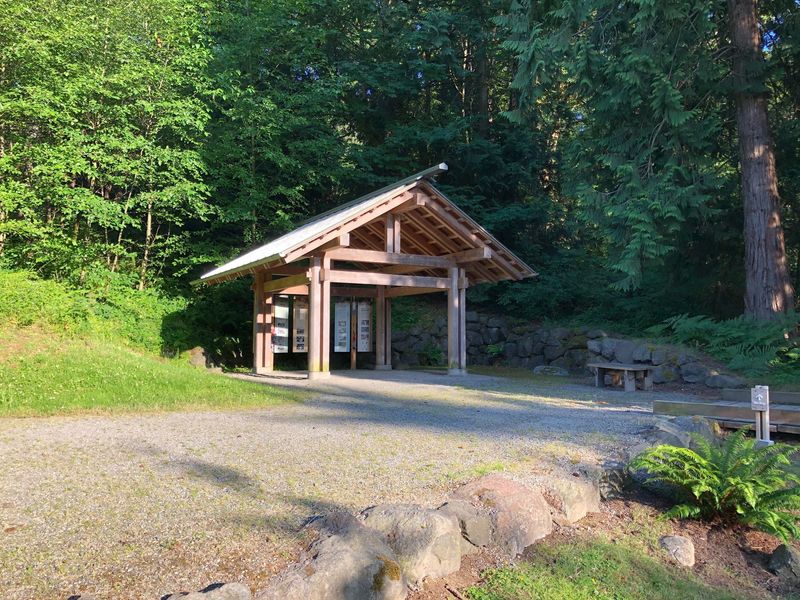
Storytelling is a big part of what makes this memorial land. Park rangers and volunteer guides often greet visitors near the entrance with a short history talk.
Those talks can include tours along the path and plenty of time for questions. Kids who might skim a plaque often perk up when a real person explains what happened.
The guides cover how Japanese immigrants built lives on the island. They also explain where families went afterward and how many eventually came home.
Having the National Park Service involved gives the site real stature. It also helps more people find and learn this piece of Washington history.
A ranger chat is optional, of course. You can always walk the path on your own and read at your own pace.
Still, I believe a few minutes with a guide makes the wall mean more. Names become neighbors when someone explains who they were.
Bring curiosity and an open ear. The people here clearly care about telling this story well.
A Shiny New Visitor Center With Displays And Videos
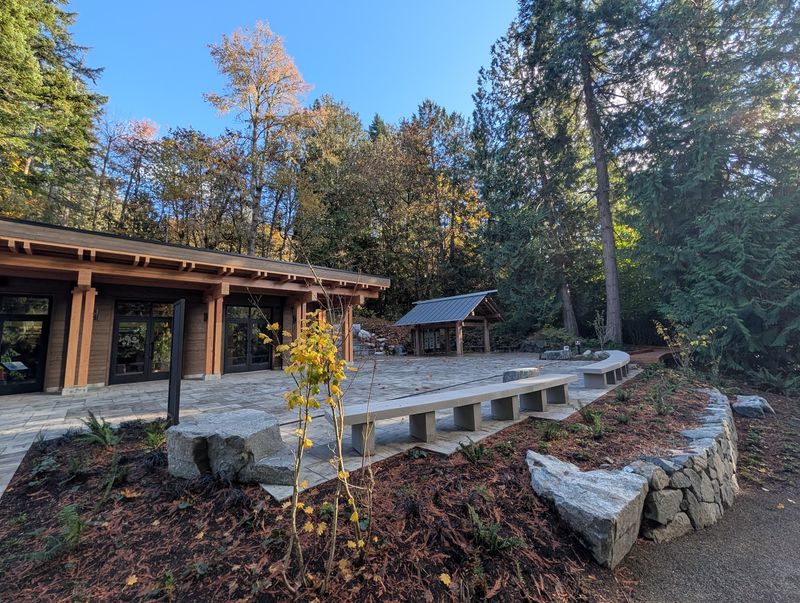
Good news for rainy-day planners: the memorial now has an indoor space. The new visitor center adds displays and videos that expand on the outdoor walk.
For a while, a temporary trailer at the entrance handled greetings and information. Construction of the bigger building took place in the upper park area.
The finished center is designed to feel connected to the outdoor experience. Inside, visitors can learn about the lived experiences of the families honored outside.
Videos can be a lifesaver for younger kids who learn better by watching. They also give older visitors a deeper look at what happened before and after 1942.
Starting indoors and then walking the path works nicely. You’ll know the story first, so the carvings and names hit with more meaning.
Of course, the reverse order works too. Some folks prefer to feel the place first and fill in the facts afterward.
Either way, the new space makes this stop more complete. It’s a fine upgrade for a site already worth the trip.
Bonus Forest Trails Down To Sandy Beaches
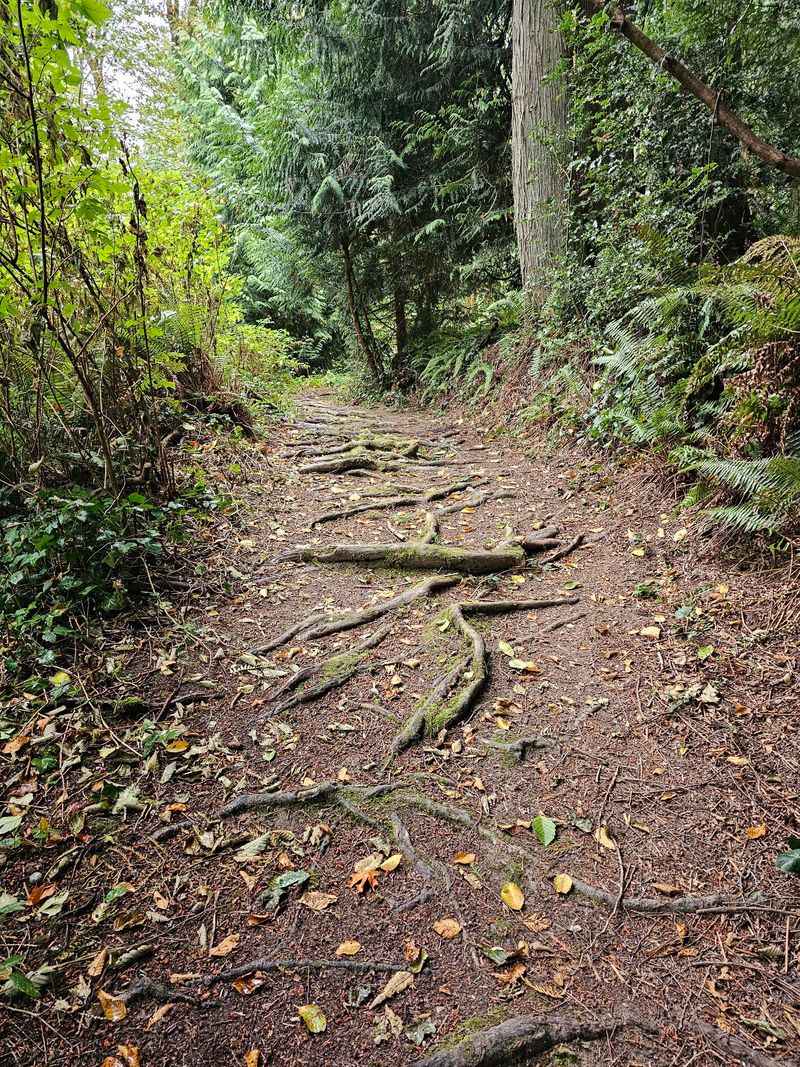
Finished at the wall but not ready to leave? The surrounding park has trails that wander through the woods nearby.
A few of those paths lead down to sandy beaches along the water. From there, you can spot ferries docked across the harbor.
Kids who need to burn off some energy after a thoughtful walk will appreciate the change of pace. Grown-ups get a quiet stroll and some salty Puget Sound air.
The parking area also offers access down to the beach. That makes it easy to split the visit between reflection and a little shoreline wandering.
Dogs are welcome here, so the family pup doesn’t have to wait in the car. The wide, open path suits leashed walkers just fine.
Washington forests and beaches rarely share a parking lot this neatly. One stop covers history, trees, and tide line in a single afternoon.
Pack sturdy shoes if the trails look muddy. Island ground can get soft after rain.
Free Admission, Easy Hours, And One Small Request
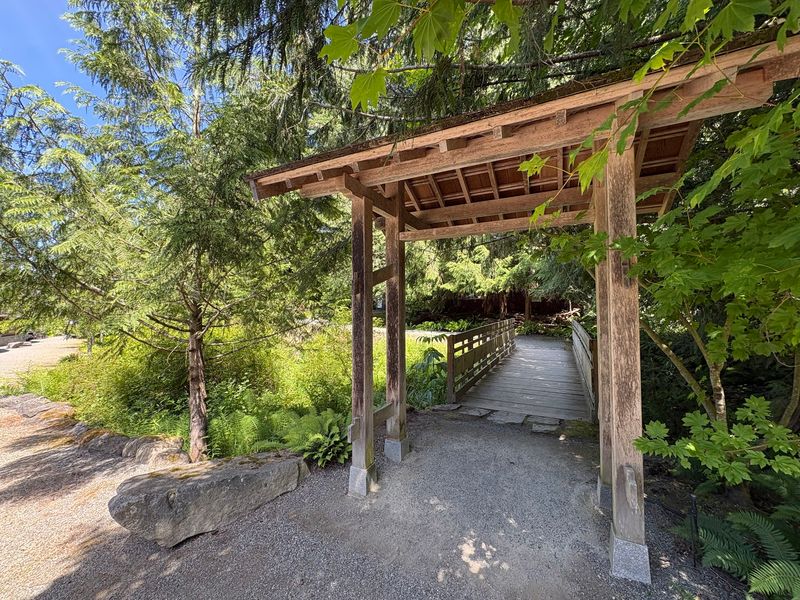
Wallet-friendly doesn’t get better than free. The Bainbridge Island Japanese American Exclusion Memorial charges no admission fee at all.
A donation box sits on site for anyone who wants to chip in. Bringing a couple of dollars is a kind way to support the work here.
You’ll find it at 4195 Eagle Harbor Dr NE, Bainbridge Island, WA 98110. A car makes the trip easiest, and there’s a parking area right at the site.
Hours run 9 AM to 6 PM Monday through Saturday. On Sundays, the site closes a little earlier, at 5 PM.
Plan for at least 30 minutes, though readers and question-askers will want more. Add time if you’re exploring the beach trails or the visitor center.
Quiet mornings and weekdays can feel especially peaceful. The setting invites calm voices and slow steps, which suits the subject well.
For families across Washington, this is an easy, meaningful weekend outing. Few free afternoons teach this much with this much grace.
Pack curiosity, leave with a crane. That’s a fair trade.