
10 Beautiful Coastal Maine Trails Where Cooler November Weather Doesn’t Always Mean Fewer Ticks
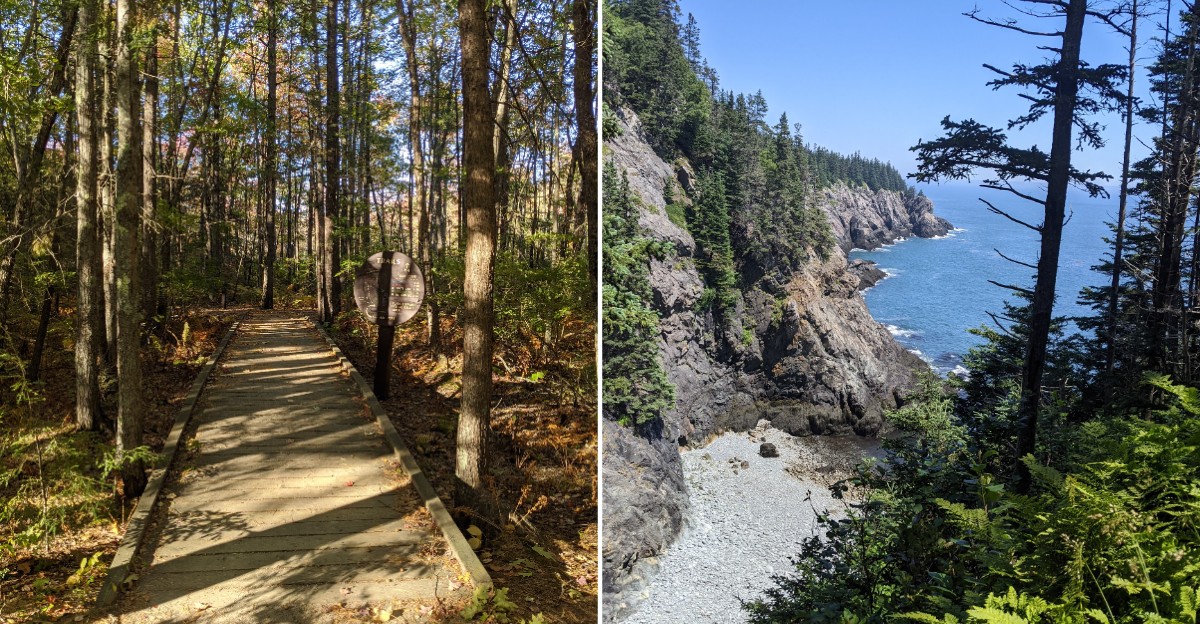
Adult deer ticks don’t pack it in when the leaves fall. In Maine, those tiny hitchhikers are often busiest in October and November, and they keep moving whenever the temperature climbs above freezing.
That surprised me more than it should have. A crisp, sunny 45-degree afternoon feels like tick-free weather, yet it’s prime time for the adults.
They wait on grass tips and low brush, legs out, hoping a hiker brushes past. I love November on the coast anyway. The crowds thin out, the light turns golden early, and the ocean looks moody in the best way.
Salt marsh, spruce woods, and cliff edges still deserve a visit. The trick is simple: go, but go smart. Long pants, light colors, repellent, and a careful check afterward.
Ready to see which shoreline paths are worth the extra tick check?
1. Cutts Island Trail
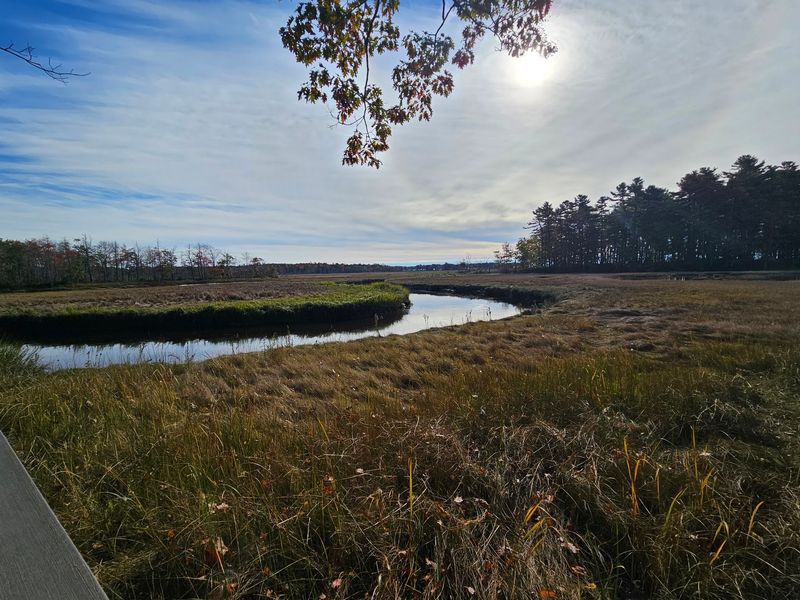
Rachel Carson spent years studying the sea, so it fits that a refuge in her name starts at the southern tip of the Maine coast. Cutts Island Trail sits in Kittery Point, close to the New Hampshire line.
The refuge itself dates to 1966. It protects salt marshes along roughly 50 miles of coastline for migrating birds.
The loop runs about 1.8 miles and stays mostly flat. Wooden footbridges carry you over the soggier stretches, so your boots stay drier than expected.
You’ll pass through salt marsh, pine forest, and tidal creekside, sometimes within a few minutes of each other. Old stone walls line parts of the route, hinting at a farming past.
Interpretive panels explain those walls and the marsh itself. Bird fans should watch for great blue herons, egrets, waterfowl, and migrating shorebirds working the creeks.
Now for the tick talk. Marsh edges and grassy borders are classic tick hangouts, and a mild November afternoon can keep adults active.
Stay in the middle of the path and skip the urge to wander into tall grass for a photo. Tucking pants into socks looks goofy, but nobody out here is judging.
Dogs aren’t allowed on this trail, and neither are bikes. That rule protects wildlife, and it also means no furry friend carrying ticks back to your car.
Parking is limited to roadside spots near the trailhead, so plan ahead. The trail is free, and an outhouse-style restroom sits at the start.
Address: 37 Seapoint Rd, Kittery Point, ME 03905
2. Carson Interpretive Trail
Back in 1988, this path became one of the first universally accessible nature trails in Maine. Wheelchairs and strollers roll along it today with no fuss.
The Carson Interpretive Trail is a one-mile loop starting at the refuge headquarters in Wells. Its surface is flat, wide, and packed, with a short boardwalk section.
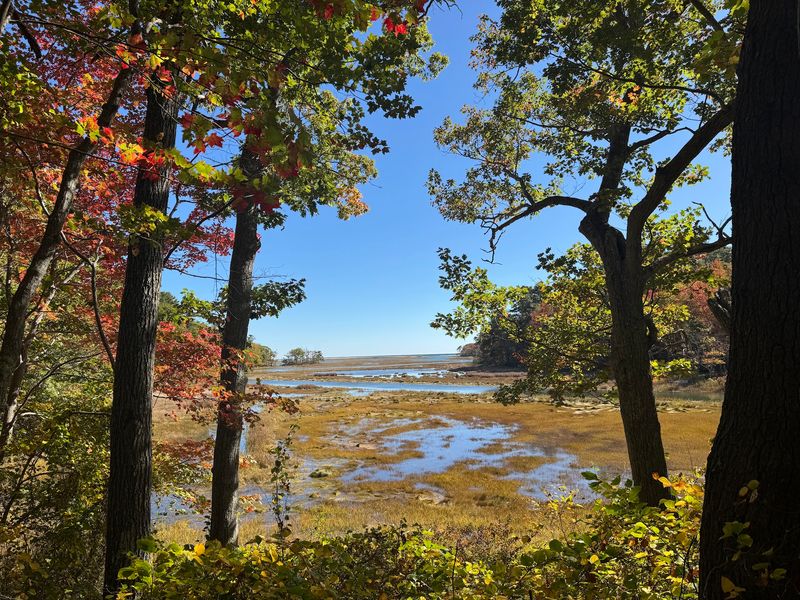
Pine woods line one side while the salt marsh opens up on the other. Look for the Merriland River and Little River winding through the grass.
Rachel Carson wrote Silent Spring in 1962, and the book helped spark the modern environmental movement. Walking her namesake trail makes a fitting tribute.
A self-guided trail guide at the kiosk matches numbered interpretive stations along the way. Benches and viewing platforms give you a reason to slow down and actually look.
Leashed dogs are welcome here, which makes this a rare refuge trail for pups. Just remember that dogs pick up ticks fast, and fur hides them well.
Run your hands over your dog’s ears, neck, and between the toes before loading up. A quick check in the parking lot beats a surprise on the couch later.
For yourself, light-colored clothes make the dark little specks easier to spot. Repellent on shoes and pant cuffs helps too.
The trail opens half an hour before sunrise and stays open until half an hour after sunset. Dawn and dusk bring the best wildlife action, and November sunsets come early.
The dirt lot can fill quickly, but parking is free. If it’s full, circle back later instead of squeezing in somewhere odd.
Address: 321 Port Road, Wells, ME 04090
3. East Point Audubon Sanctuary
More than 260 bird species have been recorded at this little point of land. That’s a big number for a sanctuary of roughly 30 acres.
East Point Audubon Sanctuary sits at the tip of Fletcher Neck in Biddeford Pool. Maine Audubon owns it, and visitors can walk in free from dawn to dusk.
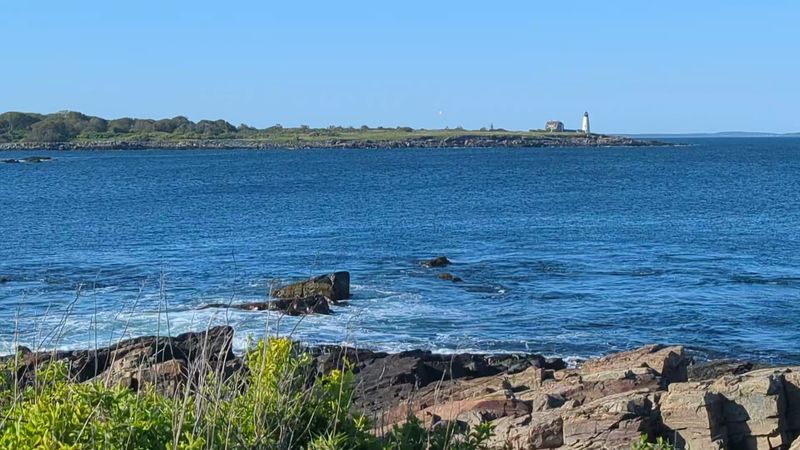
A walk out to the point and back covers about 0.8 miles. The payoff is a 270-degree view of Saco Bay and the Gulf of Maine.
Wood Island Lighthouse and Monument Island both show up on the horizon.
Cold months bring their own guest list. Common loons, black guillemots, buffleheads, long-tailed ducks, and razorbills can appear offshore, and snowy owls sometimes visit in winter.
Shrubby coastal growth hugs the path, and that’s exactly where ticks like to wait. Keep to the trail and give your sleeves a once-over after brushing past branches.
Dogs aren’t permitted, even on a leash, though registered service animals are an exception. There are no restrooms, so plan that part before you arrive.
Parking is tight, with room for about six cars along Lester B. Orcutt Boulevard.
Respect the neighbors, since the sanctuary sits among private homes and a golf course.
Trails sometimes close temporarily for invasive plant removal. Check Maine Audubon’s posts before you go so the drive isn’t wasted.
Address: Lester B. Orcutt Blvd, Biddeford, ME 04005
4. Tupelo Trail at Ferry Beach State Park
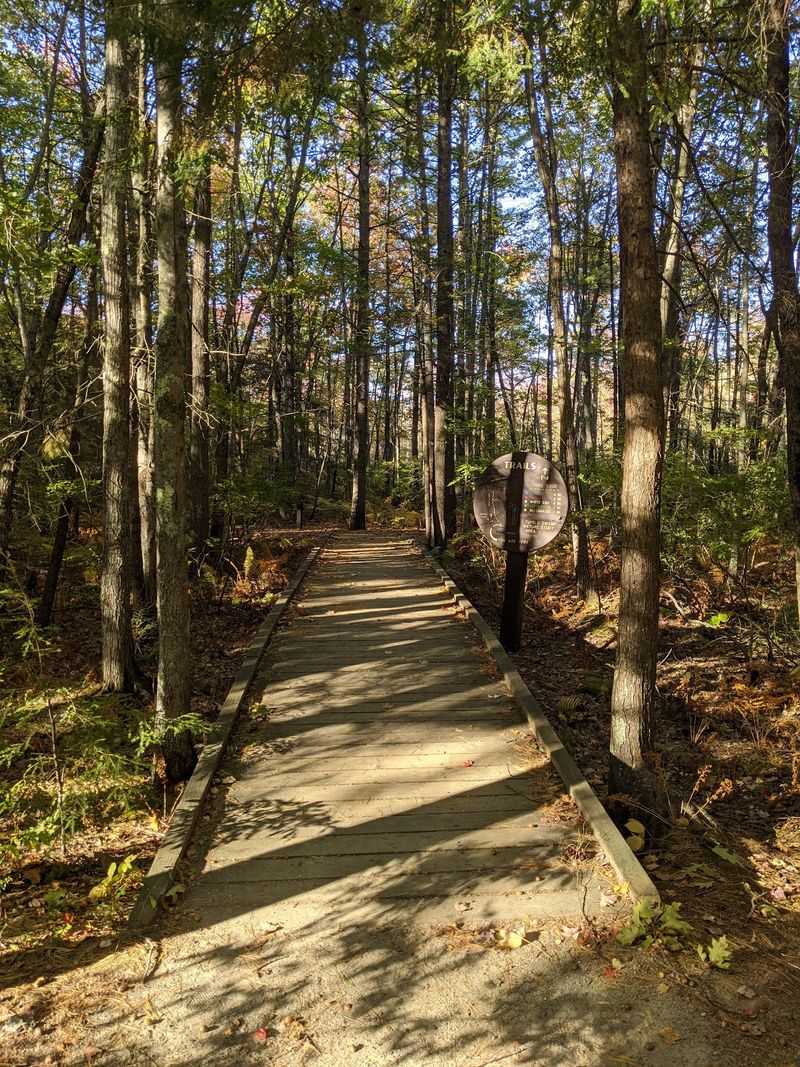
Tupelo trees aren’t supposed to be this far north, yet here they are. The stand at Ferry Beach State Park marks the northern edge of their natural range.
The Tupelo Trail is a 0.36-mile boardwalk through a freshwater swamp behind the dunes. It’s largely barrier-free, so strollers and wheelchairs can handle it.
Also called black gum, these trees turn bright crimson in fall. By November the show may be fading, but the swamp still looks wonderfully strange.
Fun history bit: from 1880 to 1923, a ‘Dummy Line’ railroad ran behind the dune. Its steam engine was disguised as a passenger car.
The park’s trails add up to about 1.7 miles, mostly flat. White Oak, Red Oak, Greenbriar, and Witchhazel trails let you stretch the walk.
Peak season ends September 30, but you can park outside the gate and walk in during daylight. Facilities close in the off-season, and fees are still collected year-round.
Leashed dogs can use the trails year-round. From October through March, they’re also allowed on the beach and boardwalk.
A boardwalk keeps you off the leaf litter, which helps with ticks. The side trails through oak forest are another story, so check your ankles after.
Wrap up with a stroll on the wide sandy beach facing Saco Bay. A quiet November beach in Maine feels like a secret you get to keep.
Address: 95 Bay View Road, Saco, ME 04072
5. Casco Bay Trail at Wolfe’s Neck Woods State Park
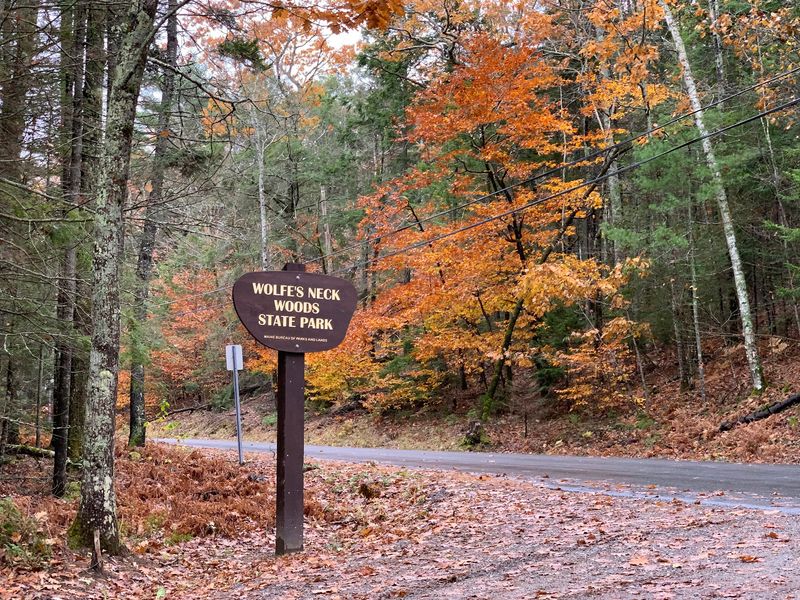
Ospreys get front-row real estate at Wolfe’s Neck Woods State Park. They nest on Googins Island, about 200 yards offshore, from April through August.
By November the birds have moved on, but the interpretive panels about their life cycle are still there. The Casco Bay Trail hugs the shoreline right past that view.
Pair it with the White Pines Trail for a circuit of about 1.25 miles. Eagle and Cousins Islands float out in the bay as you walk.
The park covers about 245 acres with around five miles of trails. White pine and hemlock forest, salt marsh, and rocky shoreline share the space.
At low tide, tide pools appear along the rocks. Kids and curious grown-ups can both lose track of time down there.
The park stays open year-round from 9 a.m. to sunset. When the gate is closed, you’re welcome to walk in during daylight hours.
Leashed dogs are allowed on the trails. Plan a tick check for them and for you, focusing on hairlines, waistbands, and behind the knees.
Off-season visitors get a bonus: free nature programs with park admission run on Sundays in winter. Weekend programs fill the spring and fall calendar.
The land was a gift from Mr. and Mrs. Lawrence M. C.
Smith in 1969. The park opened in 1972, and Freeport has been lucky ever since.
Address: 426 Wolf Neck Road, Freeport, ME 04032
6. Little River Trail at Reid State Park
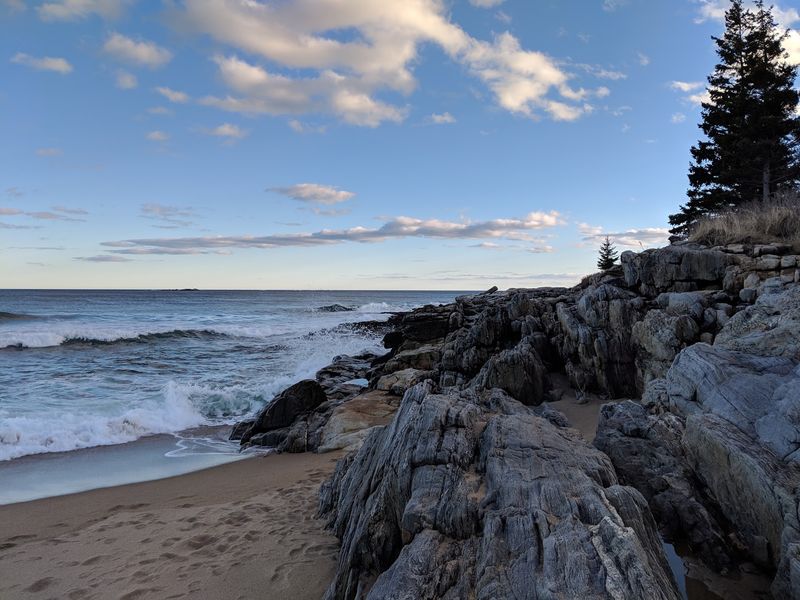
Few salt marshes in Maine have escaped ditching, but the Little River marsh is one of them.
The Little River Trail follows that winding river for about 1.4 miles at Reid State Park in Georgetown. Oak-pine woods and mixed forest frame the route.
A small boardwalk lets you look over a freshwater wetland and the salt marsh. Birds feed heavily here, so binoculars earn their spot in your pack.
Footing is mostly flat, with exposed roots, rocks, and a few small hills. Watch your step instead of your phone.
The park itself warns hikers about ticks and mosquitoes from spring through late autumn. That’s a polite way of saying November isn’t off the hook.
Spray repellent on your shoes and socks before you start. Afterward, shower soon and do a full check, since deer ticks can be as small as a poppy seed.
Reid holds a fun claim to fame as Maine’s first state-owned saltwater beach. Walter E.
Reid donated the original land in 1946.
Extend your visit to Griffith Head for views of the lighthouses on Seguin Island, The Cuckolds, and Hendricks Head. Mile Beach and Half Mile Beach stretch out nearby.
The park is open year-round from 9 a.m. to sunset, and fees are collected year-round. Early winter sunsets mean an afternoon start can get tight.
Address: 375 Seguinland Road, Georgetown, ME 04548
7. Big Spruce Trail at Moose Point State Park
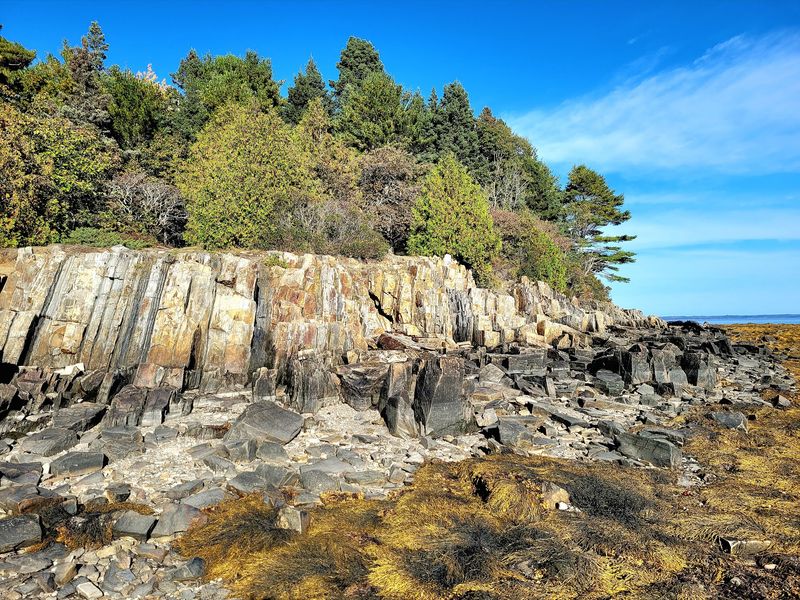
The rocks along this shoreline are more than 450 million years old. In May 2013, the park earned the title of Maine’s Geologic Site of the Month.
Big Spruce Trail at Moose Point State Park is a short one, about half a mile. It winds through tall spruce woods and along the forest edge above Penobscot Bay.
Two lookouts with benches give you views of Islesboro, Sears Island, and Northport Harbor. Grab a seat and let the bay do the talking.
Want more miles? Link up with the Moose Trail and Meadow Trail for an easy loop of roughly 1.2 to 1.5 miles.
The open field sloping toward the water is lovely, but meadow grass is tick territory. Stick to the trail and skip the shortcut through the tall stuff.
Back in 1859, the Carver family ran a dairy farm here. Their descendants gave the land to the state in 1952.
The park’s main season runs from Memorial Day through October 1. In November, park outside the gate without blocking it and walk in during daylight.
A pit toilet stays open year-round, which is a small mercy. Fees are still collected in the off-season.
Stairs lead down to the rocky shore, where tidepools show up at low tide. Watch for seals, loons, and sea ducks offshore.
Address: 310 West Main Street, Searsport, ME 04974
8. Ship Harbor Trail
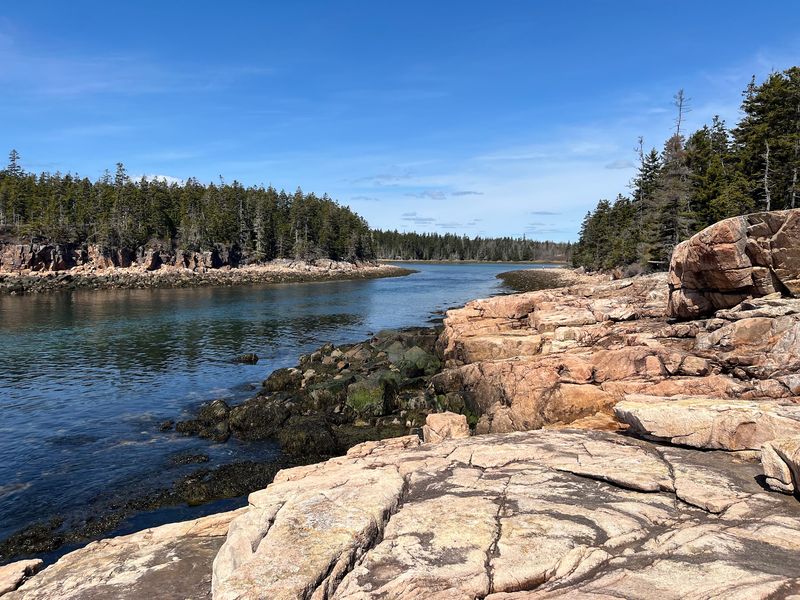
Plans for this path started with George B. Dorr in the 1930s, but the trail wasn’t built until 1957.
Good things take time, apparently.
Ship Harbor Trail is an easy figure-eight loop of about 1.3 miles on the quiet side of Mount Desert Island. One loop follows the harbor, and the other ducks into thick spruce forest.
Granite ledges, a quiet cove, and tidal mudflats make up the scenery. Arrive near low tide for the best tidepooling.
Birders can look for common eiders, black guillemots, common loons, and great blue herons. Interpretive signs along the way explain the geology and wildlife.
Acadia National Park itself recommends staying in the center of the trail to reduce tick exposure. Do a tick check when you finish, too.
The inner loop has a hard-packed gravel surface with gentle grades. Steps and bedrock show up elsewhere, so the full loop isn’t wheelchair accessible.
You’ll need an Acadia entrance pass, and the trailhead doesn’t sell them. Buy one online or at a visitor center before you go.
Route 102A can close during storms, so check park alerts in late fall. Dogs are welcome on leashes up to six feet long.
Address: Ship Harbor Trailhead, Maine Route 102A, Southwest Harbor, ME 04679
9. Coastal Trail at Cutler Coast Public Reserved Land
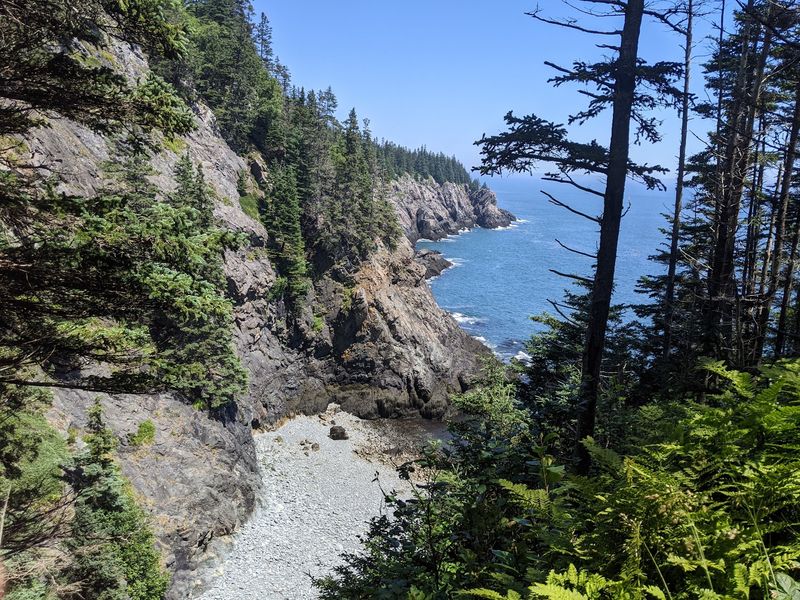
Black cliffs rise 100 feet or more above the Bay of Fundy along this stretch of Down East coast. The rock formed from volcanic eruptions around 420 million years ago.
The Coastal Trail at Cutler Coast Public Reserved Land is free to hike, park, and camp. Just sign the register at the trailhead before heading out.
For a manageable day, walk the 2.8-mile round trip to the Ocean Overlook. Plan on two to three hours, with plenty of stops for staring.
The route passes cedar swamps, spruce-fir forest, open meadows, and blueberry barrens. On a clear day, Grand Manan Island in Canada sits across the water.
Meadows and barrens look harmless, but low brush is where ticks wait. Brush off your legs after the open sections, and check again at the car.
Footing gets rugged, with roots, uneven ground, and slippery rock near the clifftops. Sturdy boots matter more than style here.
Fires in 1851 and 1854 helped create those grassy barrens. Stone walls and cellar holes from old farms still show up along the land.
Cell service is spotty, so tell someone your plan. November days are short, and the cliffs aren’t a place to hurry in the dark.
Dogs are allowed on leash, and keeping them close near the edges is smart. Pack out your trash, since there are no facilities beyond privies at the backcountry campsites.
Address: 425 ME-191, Cutler, ME 04626
10. Coastal Trail at Quoddy Head State Park
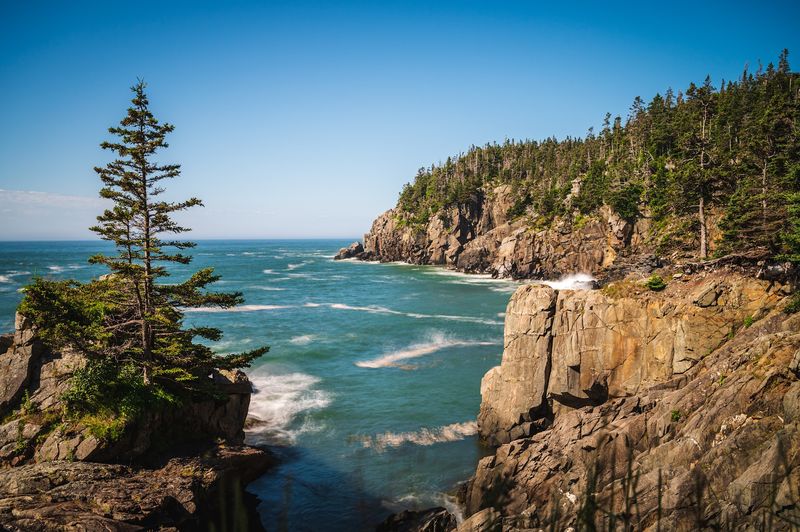
Around the equinoxes in March and September, this spot catches the first sunrise in the contiguous United States. Setting an alarm for that feels totally worth it.
Quoddy Head State Park sits on the easternmost point of land in the lower 48. Its red-and-white striped West Quoddy Head Light dates to 1858.
The Coastal Trail runs about 4 miles round trip and gets steep and rocky in spots. Many cliff sections have no guardrails, so stay alert.
Gulliver’s Hole, a narrow chasm in volcanic rock, is one highlight. High Ledge, a 150-foot bluff, offers views toward Grand Manan Island.
Whales sometimes show up offshore, mostly in late summer. In colder months, watch for sea ducks and purple sandpipers on the rocks.
Fog can roll in quickly, and the trail can stay wet. Waterproof boots will make you much happier on the way back.
The park’s main season ends October 15. After that, park outside the gate without blocking it and walk in during daylight.
No drinking water is available in the park, so bring your own. Facilities close in the off-season, too.
Ticks can ride along from the wooded stretches, even this far Down East in Maine. Tuck in your shirt, wear light colors, and check yourself before the drive home.
A short Bog Trail boardwalk nearby shows off sub-arctic plants. It makes a fun bonus loop if your legs still have energy.
The name Quoddy comes from the Passamaquoddy people and means fertile and beautiful place. After this hike, you’ll understand why.
Address: 973 South Lubec Road, Lubec, ME 04652