
Don’t Skip This Eight-Sided Arizona Trading Post Or The Navajo Breakfast Next Door
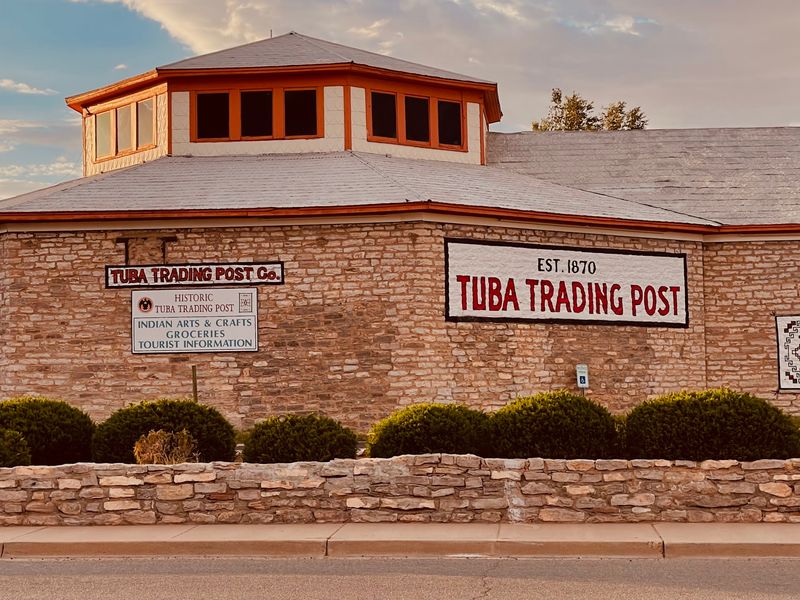
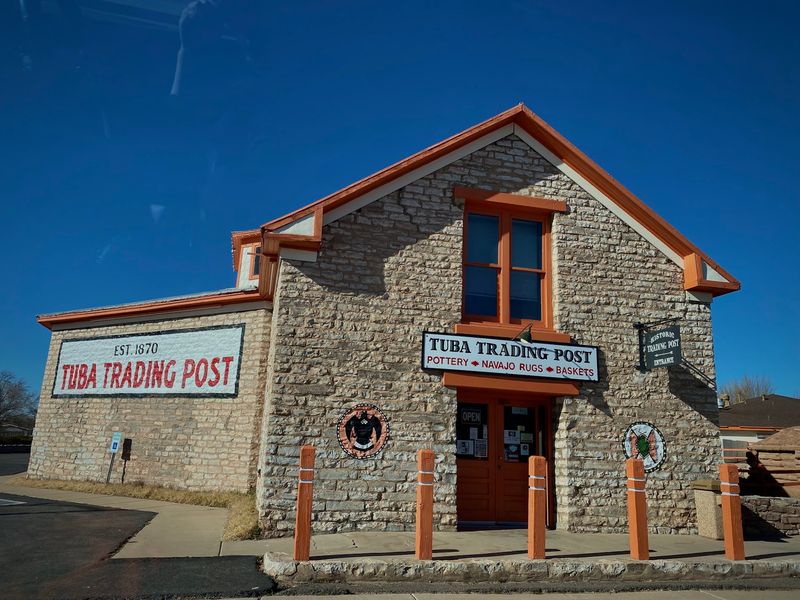
One of the oldest trading posts on the Navajo Nation started life as a two-room limestone shed. A few years later, someone gave it an eight-sided addition, and it has stood out ever since.
That octagon still holds rugs, silver jewelry, pottery, and sandpaintings. A small museum honoring the Navajo Code Talkers sits on the same grounds.
Next door, a family restaurant opens at 6:30 in the morning and serves Navajo dishes alongside its other plates.
I like how this corner of northern Arizona mixes shopping, history, and comfort food without any fuss. You can browse, learn something, and eat well in one easy stop.
It feels local because it is.
So what about that famous steam corn and the early-morning crowds? The real story is better, and a little more honest, than the rumor.
An Eight-Sided Landmark Anchors Main Street
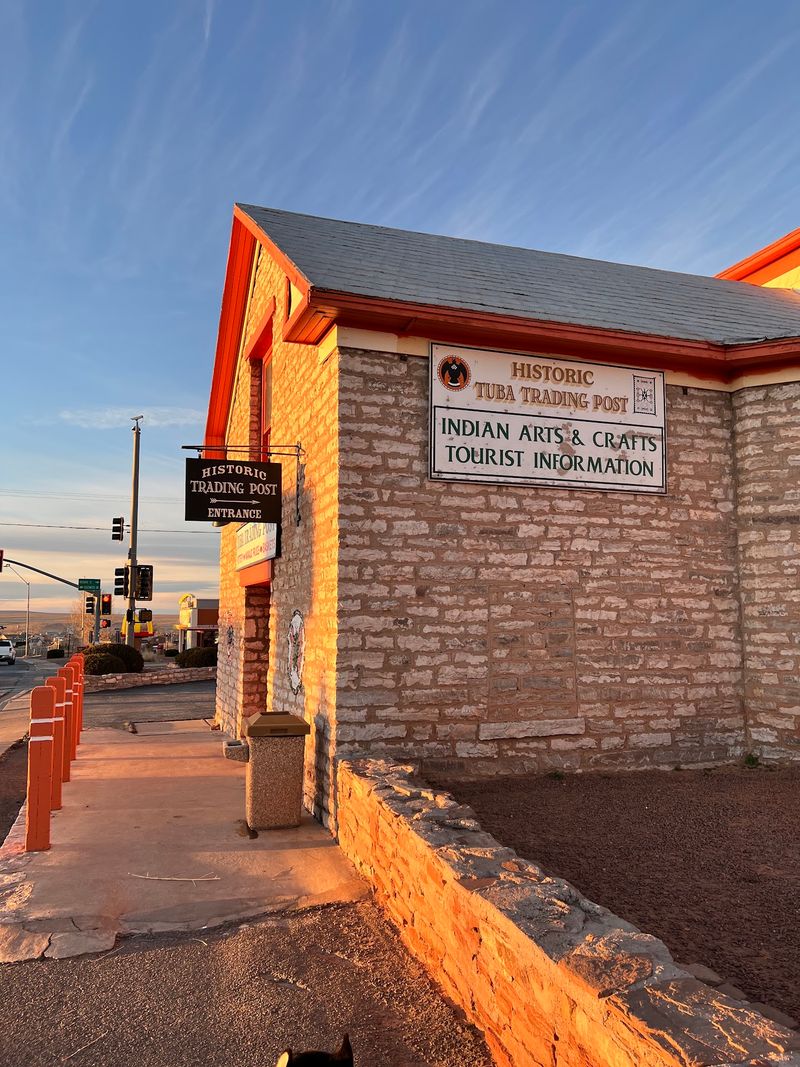
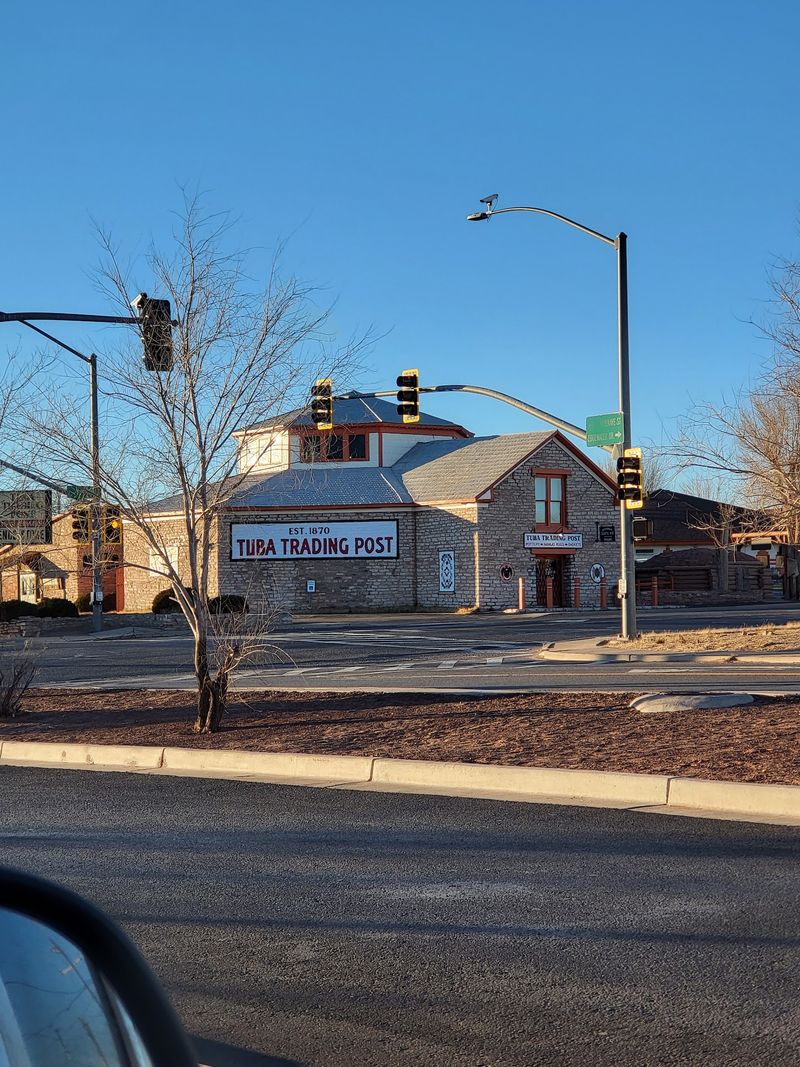
Few shops in Arizona can claim a shape this memorable. The Tuba City Trading Post sits on Main Street in Tuba City, on the western side of the Navajo Nation.
It’s a working Native American goods shop, not a roped-off exhibit. Shoppers browse rugs, jewelry, pottery, clothing, and souvenirs in a building with deep roots.
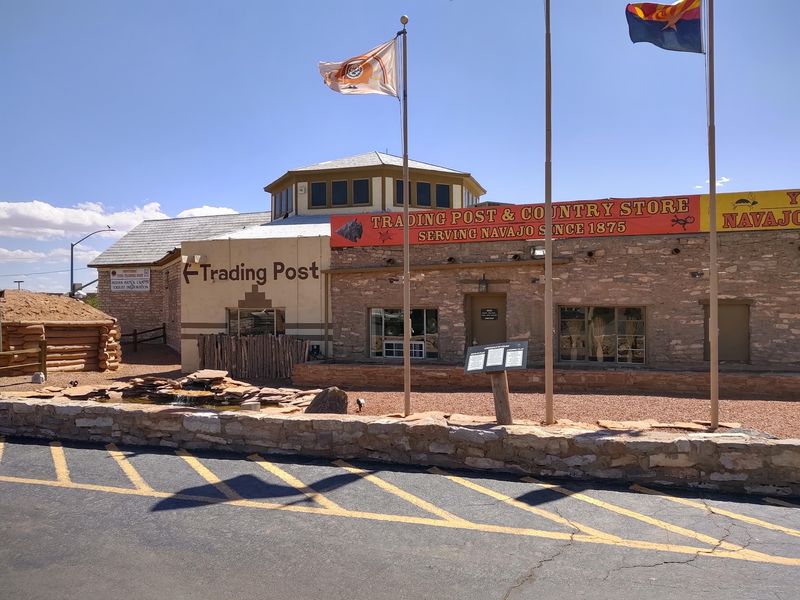
The trading post shares a complex with the NavajoLand Hotel and Hogan Family Restaurant. That neighbor matters, because it’s where the food side of this story happens.
Tuba City itself is the largest community on the Navajo Nation. Its Navajo name, To’Nanees Dizi, is often translated as tangled or braided water, a nod to local springs.
That gives the place a real sense of community. People stop here for everyday things, not just keepsakes for the drive home.
Travelers heading between Flagstaff, the Grand Canyon, and points farther north often pass close by. A short detour lands you in one of the most interesting little complexes in northern Arizona.
Think of it as three stops in one parking lot. There’s a shop, a pair of museums, and a restaurant, all within a few easy steps.
The Truth Behind That Steam Corn Stew Rumor
Let’s clear something up before anyone sets an alarm. The trading post sells goods, not stew, so you won’t find a pot simmering by the jewelry case.
The food lives next door at Hogan Family Restaurant. Its menu includes traditional Navajo dishes, with mutton stew among the best known, plus American and Mexican favorites.
Now for the corn. Steamed corn, known as neeshjizhii, is a foundational ingredient in Navajo cooking.
Traditionally, freshly harvested corn is steamed for many hours in an underground pit. Then it’s dried, which gives it an earthy flavor that pairs naturally with hearty stews.
Whether a given bowl at Hogan includes steamed corn can vary, so it’s smart to ask. I wouldn’t promise a specific recipe on any particular day.
What I can say is that the tradition behind it is real and very old. That kind of ingredient carries generations of know-how in every handful.
So the stew connection is genuine, just one door over. And honestly, a shop on one side and a stew pot on the other sounds like a pretty great arrangement.
Early Risers Get Breakfast Before The Shop Even Opens
Here’s where the early-morning part of the legend has a kernel of truth. Hogan Family Restaurant opens for breakfast at 6:30 a.m., seven days a week.
On short winter days, that can mean sitting down while the sky is still waking up. Not exactly a campout in line, but definitely an early start.
The restaurant serves breakfast, lunch, and dinner. So you’re not stuck racing the clock if you roll into town later.
Still, there’s a practical reason to go early. The trading post doesn’t open until 9 a.m., so breakfast fills that gap nicely.
Eat first, then wander next door once the doors unlock. It’s a tidy little morning plan with zero wasted time.
Road-trippers headed toward Monument Valley or Page might appreciate that rhythm. A warm meal before a long stretch of highway is never a bad call.
I can’t imagine a better way to begin a northern Arizona drive. Coffee, a plate of something hearty, and a historic shop waiting right next door.
From Limestone Shed To Octagon In Fourteen Years
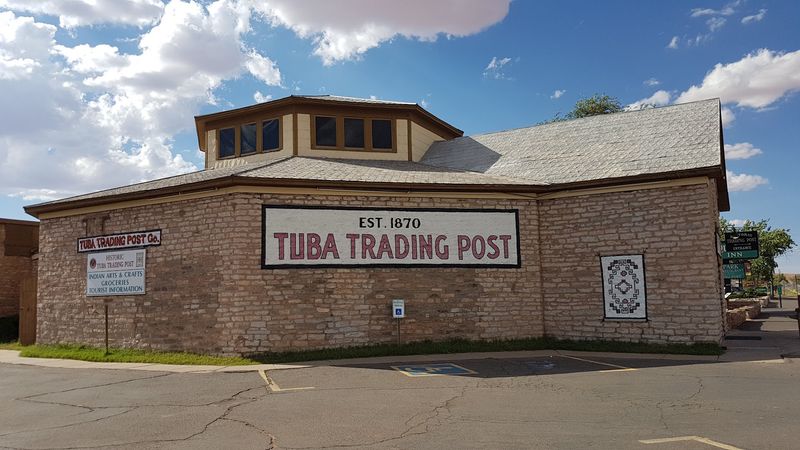
Two rooms. That’s how modestly this place began.
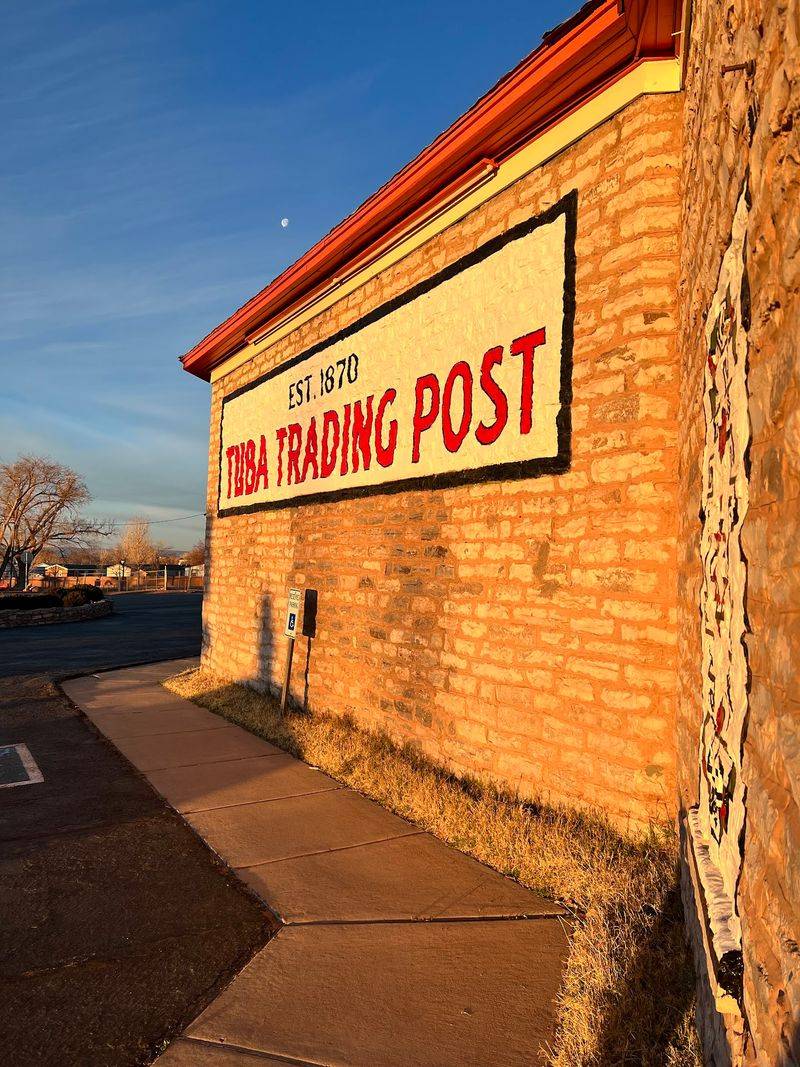
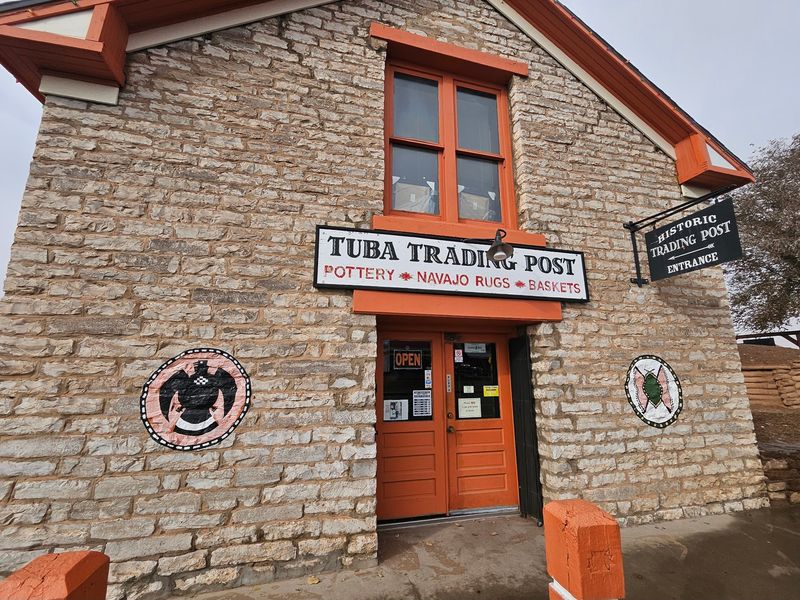
Historical accounts describe the building starting as a two-room limestone shed around 1891. Around 1905, the octagonal section was added, giving the structure its distinctive look.
Why eight sides? The shape echoes the traditional Navajo hogan, a dwelling with deep cultural meaning.
Trading on this site reaches back even earlier, with sources pointing to the 1870s. Dates vary a bit depending on who’s telling the story, which is pretty normal for frontier history.
The building has been restored while keeping its original character. That balance is tricky, and it’s nice to see it handled with care.
A self-guided Historic Tuba City Trading Post Walk lays out the story decade by decade. It traces how a simple shed grew into a real community hub.
Trading posts once connected Navajo families with goods from far away. They also became places where news traveled and neighbors crossed paths.
Standing beside those stone walls makes that history feel close. It’s a lot more satisfying than reading about it on a phone screen.
Silver, Wool, And Clay Fill The Main Room
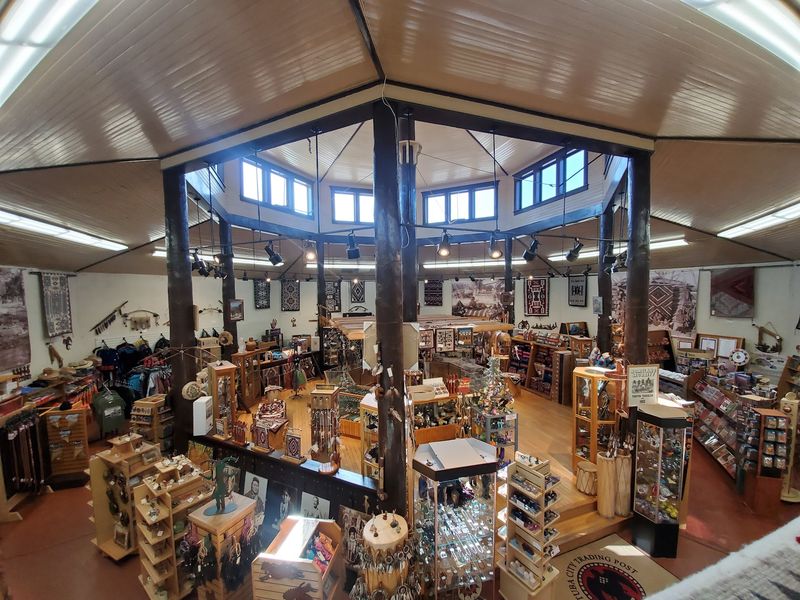
Turquoise catches the light first, then the rugs pull your eyes up the walls. The main room is where the Native American goods really shine.
Shoppers find handcrafted silver jewelry, pottery, Navajo rugs, and sandpaintings here. Kachina dolls and Hopi items also appear among the shelves.
Smaller treasures round things out nicely. Think souvenirs, gifts, and handy little items for anyone on your list.
The atmosphere tends to feel quiet and easygoing. Browsing without pressure is part of the charm, so take your time.
Soft traditional music has been known to play in the background. It adds a calm mood that suits slow wandering.
Quality and origin can vary across a shop this big, as with any trading post. If authenticity matters to you, ask staff about the maker and materials before buying.
That one question can turn a purchase into a story you’ll actually remember. Plus, it’s a great way to learn about the artists behind the work.
A Navajo rug or a piece of silver can last for generations. Choosing carefully just makes that keepsake mean even more.
Work Boots, Blankets, And A Few Surprises Upstairs
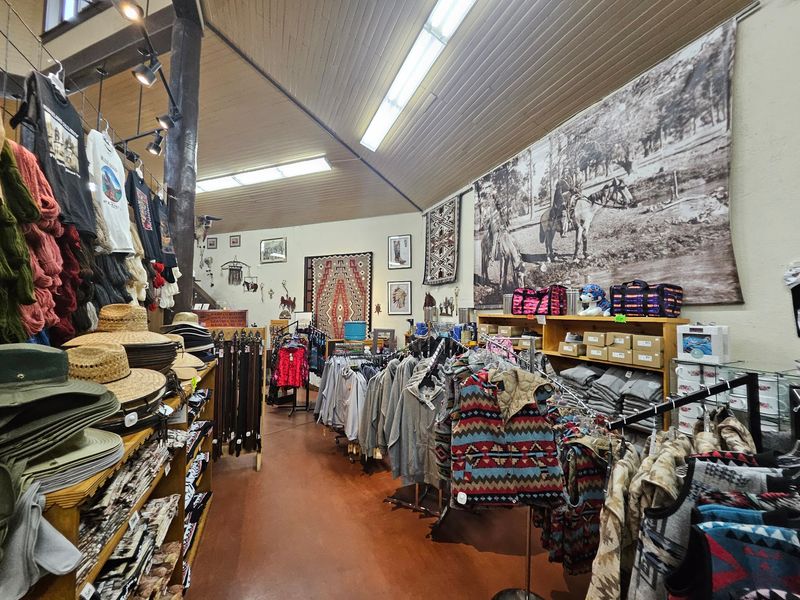
Not everything here is made for a display shelf. A separate section carries workwear and western clothing, the kind of gear people actually wear.
Hats, shirts, and clothing pieces make up a big part of the stock. Native American clothing and accessories show up too.
Look up while you’re in the main room. An upper section is set aside just for blankets, and it’s a cozy sight.
The shop also stocks snacks and some traditional cookware. Supplies for ceremonies appear as well, which speaks to its role in daily community life.
That mix is what makes a working trading post different from a gift shop. It serves neighbors and road-trippers at the same time.
Small finds can turn out to be favorites. A throw rug, a T-shirt, or a soothing salve might end up in your bag before you know it.
So budget a little extra time for wandering. The corners hold more variety than the front door suggests.
And yes, a new hat for the drive home counts as a practical purchase. Arizona sun makes a convincing argument.
A Small Museum With An Enormous Story
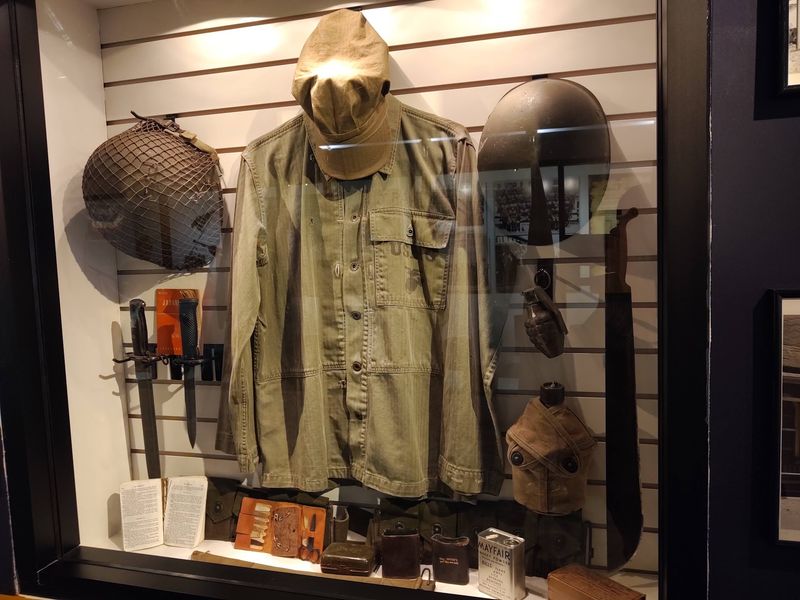
A language became an unbreakable code. That idea alone makes the Navajo Code Talkers Museum worth a stop.
During World War II, Navajo Marines used their language to send messages the other side could never crack. Their work became one of the most remarkable chapters in American military history.
The museum sits on the trading post grounds and honors these men. Detailed photos, personal stories, and real equipment help bring their achievement into focus.
Seeing the actual gear makes the history feel tangible. It’s one thing to read about radios and another to stand right beside them.
For families, this can be a meaningful lesson in courage and ingenuity. Kids often connect with the idea of a secret code, and here it’s absolutely true.
The space is compact, so it fits easily into a short visit. Even twenty minutes can leave a lasting impression.
I believe this museum gives the whole complex its heart. Shopping and stew are wonderful, but this story deserves the spotlight.
Pair it with a browse next door, and the visit gains real depth. You’ll leave knowing more than when you parked.
Bonus Culture Lessons Wait Just Steps Away
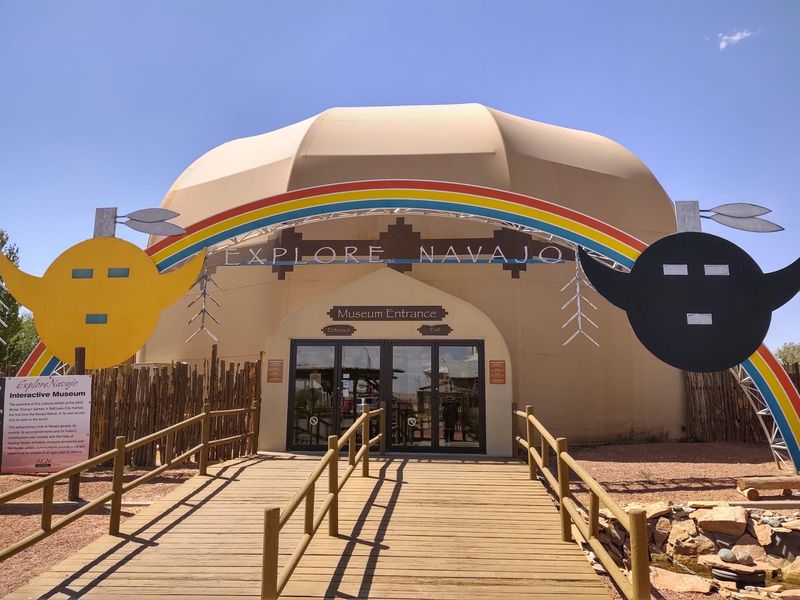
Curious minds get another treat on site. The Explore Navajo Museum offers a broad look at Navajo people, their society, and their accomplishments.
Exhibits cover history and contributions in a way that’s easy to follow. It’s a strong primer if you’re new to the Navajo Nation.
Combine it with the trading post walk for a fuller picture. One explains the people, and the other explains this building’s place among them.
That pairing works especially well before shopping. Knowing more about weaving or silverwork can change how you see a rug or a bracelet.
Suddenly the patterns and techniques aren’t just pretty. They carry meaning, and you’ll notice details you might have skipped.
Information like this has long been part of what makes the trading post special. Plenty of repeat visitors come back for the insight as much as the gifts.
Plan a relaxed pace here rather than a quick dash. The museums reward people who actually read the panels.
And if the Arizona heat is cranking outside, indoor exhibits make a welcome break. Learning in the shade is a fine deal.
Espresso, Pastries, And Wi-Fi For Road-Weary Travelers
Caffeine has a home here too. The Hogan Espresso Coffee Shop sits inside the complex and keeps things easy for travelers.
It serves Firecreek Coffee, a roaster with roots in Flagstaff. Fresh pastries make a fine sidekick to that first cup.
Hours run from 7 a.m. Monday through Saturday.
On Sundays, it opens at 9 a.m.
Complimentary Wi-Fi is available, which is handy on long desert drives. Signal can get spotty out here, so a good connection feels like a small luxury.
The shop also displays Native jewelry, rugs, pottery, and other crafts. You can sip, scroll, and browse all at once.
That makes it a smart regrouping spot between the museums and the trading post. Check your route, refill your energy, and plan the next leg.
Early travelers have a nice option here. If breakfast at Hogan feels like too much, a pastry and espresso might hit the spot.
It’s a simple setup, but it fills a real need. Good coffee in a remote corner of Arizona always feels like a win.
Set Your Clock Before You Set Out
Time zones can trip up even seasoned Arizona drivers. The Navajo Nation observes daylight saving time, while most of Arizona does not.
That means Tuba City runs an hour ahead of places like Sedona during summer. Arriving on the wrong clock could leave you staring at a locked door.
The trading post opens daily at 9 a.m. It closes at 4 p.m.
Monday through Friday and 3 p.m. on weekends.
You’ll find it at 10 Main St, Tuba City, AZ 86045. It sits right beside Hogan Family Restaurant, so parking once covers everything.
Tuba City lies in northern Arizona, roughly an hour and change north of Flagstaff. Cameron and the eastern approach to the Grand Canyon are nearby.
Prices across the shop span a wide range. Small souvenirs can fit a tight budget, while handwoven rugs and fine silver cost more.
Check hours before a long trip, since schedules can shift. A quick call or map check can save you a frustrating detour.
Morning arrivals give you the most breathing room. Breakfast, museums, then shopping makes for a smooth day.
Why This Stop Earns A Spot On Your Route
Dinosaur tracks roughly five miles away? That’s the kind of bonus northern Arizona loves to hand out.
The area around Tuba City features the Painted Desert and those famous ancient footprints. Stack them onto a trading post visit, and your afternoon fills up fast.
So, do locals really line up before dawn for steam corn stew? I can’t confirm that, and I won’t pretend otherwise.
What’s real is still pretty great. There’s a historic octagonal building, Navajo crafts, a Code Talkers museum, and a restaurant serving traditional dishes from 6:30 a.m.
The Tuba City Trading Post suits curious road-trippers, history lovers, and souvenir hunters alike. Families get an easy lesson in culture and courage without a big ticket price.
Bring patience for browsing and questions for the staff. Both tend to pay off here.
It’s not flashy, and that’s a big part of the appeal. The place feels rooted, useful, and quietly proud of its story.
Grab a bowl next door, find a rug or a hat, and read about those Code Talkers. Not a bad way to spend a morning in the high desert.