
Glass Cases Glow With Giant Crystals And Meteorites At This Washington Mineral Museum
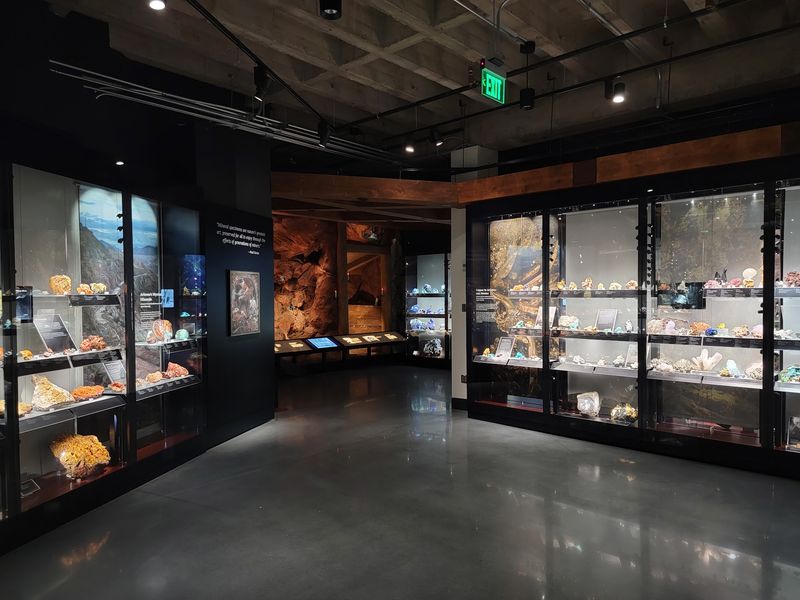
A chunk of asteroid Bennu, carried home by a NASA spacecraft, now sits on display inside a historic courthouse in Arizona. Just a few cases away, a real piece of the moon from an Apollo mission waits for its close-up.
Then come the crystals, lined up in glowing glass cases that make every specimen look ready for a magazine cover. Gold nuggets that spent decades locked in a vault now shine nearby, and they finally get the spotlight.
I like how this spot blends outer space with gritty mining history. One gallery even traces how a few dozen early minerals grew into more than 5,500 species.
I can’t imagine a cooler way to spend an afternoon, especially when summer heat starts showing off. So how did a university rock collection end up dazzling an entire downtown?
A University Rock Collection Now Glitters Inside A Grand Old Courthouse
Downtown Tucson has plenty of history, but one corner of it now sparkles. The University of Arizona Alfie Norville Gem & Mineral Museum fills a street-level wing of the Historic Pima County Courthouse.
That setting alone sets the mood before you see a single crystal. The courthouse is a beautiful landmark, and the museum feels like a treasure chest hidden inside a civic icon.
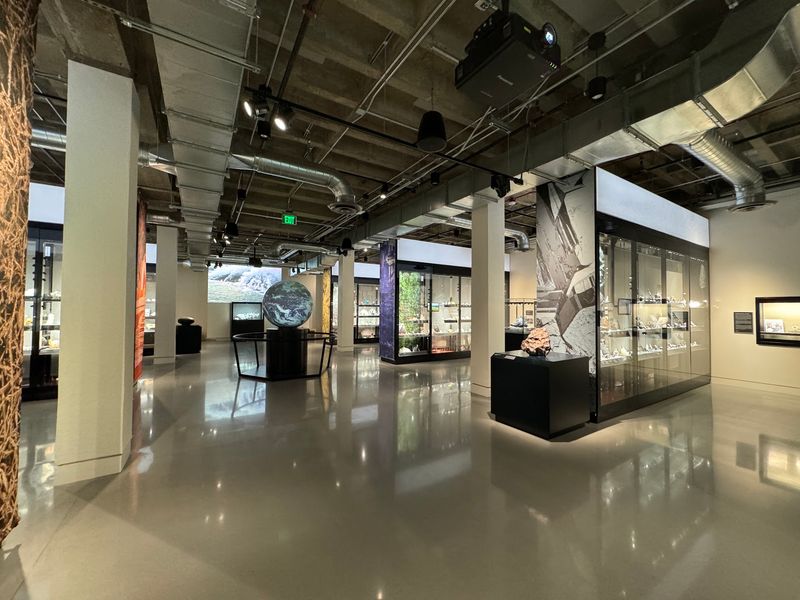
Inside, the exhibits spread across roughly 12,000 square feet. That’s a lot of room for rocks, and the museum uses every bit of it.
Expect minerals from Arizona and around the world, cut gems, jewelry, meteorites, and genuine space rocks. Mining history and science stories fill the gaps between the glittering cases.
The layout splits into distinct galleries, so the visit flows from one theme to the next. You can wander at your own pace without feeling lost in a maze of glass.
Plenty of guests expect a small university showcase and discover something much bigger. The scale catches people off guard, in the best possible way.
Even the building’s outdoor courtyard adds a calm moment before or after your visit. Reflection pools and garden space make a nice pause between all that sparkle.
A Collection That Started Before Arizona Was Even A State
Trivia lovers, take note. Part of this mineral collection dates to 1892, two decades before Arizona became a state in 1912.
Those early specimens formed the core of what was then called the Territorial Museum. Back then, the collection served students and scientists studying the rugged land around them.
By 1919, the Mineral Museum had earned official recognition from the university. That milestone cemented its role as a serious place for geological study and teaching.
For decades, the collection grew quietly alongside the campus. Specimens arrived from mines, donors, and researchers, building a library of stone that few people outside geology circles knew about.
Education has always been the heartbeat of the place. Even today, the science comes across in a clear, approachable way that doesn’t require a geology degree.
Labels explain how minerals form, where they come from, and why they matter in daily life. You might learn which mineral helps make the silicon inside computer chips.
That long history adds weight to every case. You’re looking at well over a century of careful collecting, not a pop-up rock show.
Few museums in Arizona can claim roots this deep. The age of the collection quietly backs up all that sparkle.
The Big Move Downtown And The Woman Behind The Name
For years, the collection lived at the Flandrau Science Center on the University of Arizona campus. Then came a big change of address.
The move to the Historic Pima County Courthouse wrapped up in 2020. The museum officially opened its new doors in 2021, with far more space to show off.
The new home came with a new name, too. It honors Alfena ‘Alfie’ Norville, a beloved Tucson philanthropist with deep ties to the city’s gem scene.
Norville founded the Gem & Jewelry Xchange Show, part of the huge gem gathering that draws collectors to Tucson each year. Her efforts helped strengthen the city’s passionate gem community.
Putting her name on the Alfie Norville Gem & Mineral Museum feels fitting. It links a century-old academic collection to the people who keep Tucson’s gem culture buzzing today.
The relocation also brought the museum closer to downtown visitors. Instead of a campus detour, it now sits steps from other historic buildings and city attractions.
Anyone planning a trip around the yearly gem shows has a bonus stop here. Seeing top-tier specimens first can sharpen your eye before browsing endless vendor tables.
Earth’s Mineral Family Tree Gets A Whole Gallery Of Its Own
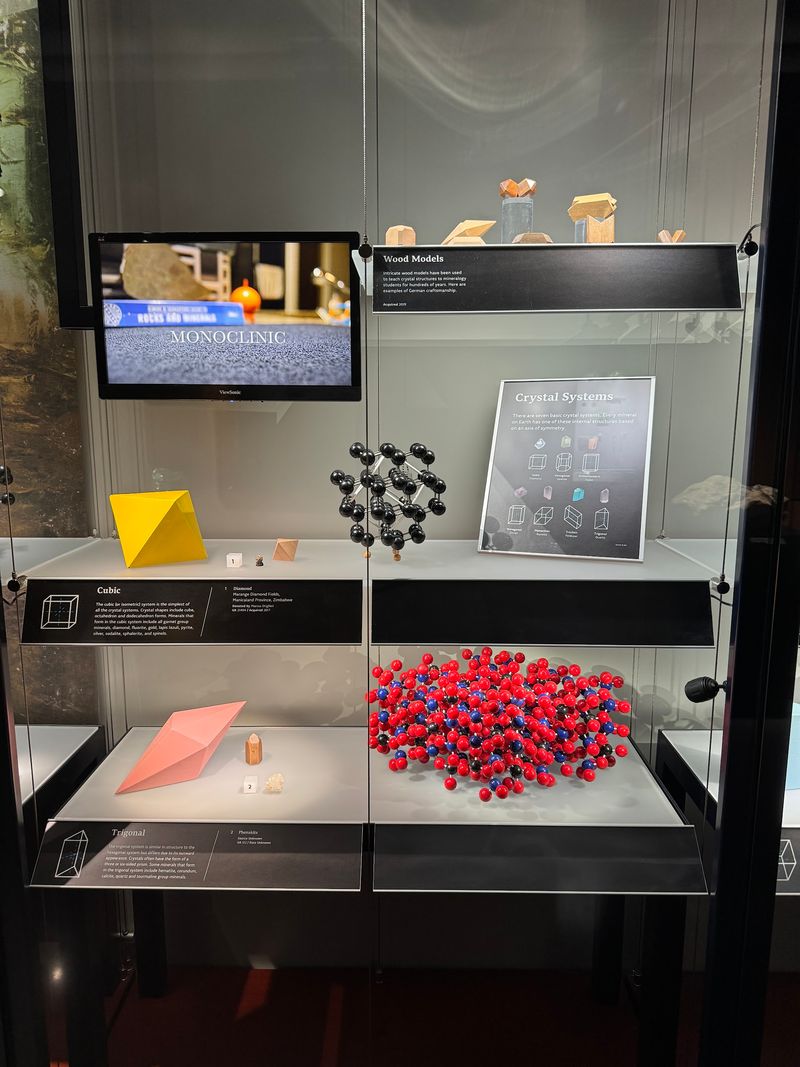
Most mineral museums show you what rocks look like. The Mineral Evolution Gallery asks a bigger question: how did all these minerals come to exist?
The answer starts before the sun fully formed. Only a few dozen minerals existed in the early solar system, and Earth now holds more than 5,500 known species.
A visual timeline walks you through that growth in half-billion-year steps. Each stretch shows how geology, and later life itself, created new mineral varieties.
The museum is the first mineral museum in the nation with a full gallery devoted to mineral evolution. That’s a pretty bold flex for a building that once handled court cases.
The science stays friendly, even when the timescales get dizzying. Molecular structure models sit beside some samples, so you can see how atoms stack into crystals.
Displays even touch on the asteroid impact linked to the end of the dinosaurs, some 65 million years ago. Space science and Earth science meet right there behind the glass.
Big ideas, small labels, and a lot of sparkle make this room a memorable starting point. You’ll walk out seeing ordinary backyard rocks a little differently.
Copper State Pride Shines Bright In Every Arizona Case
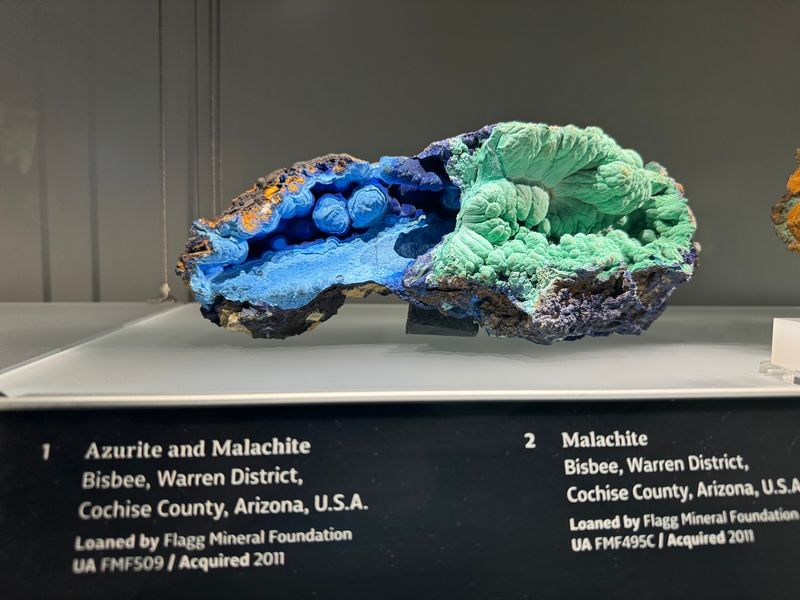
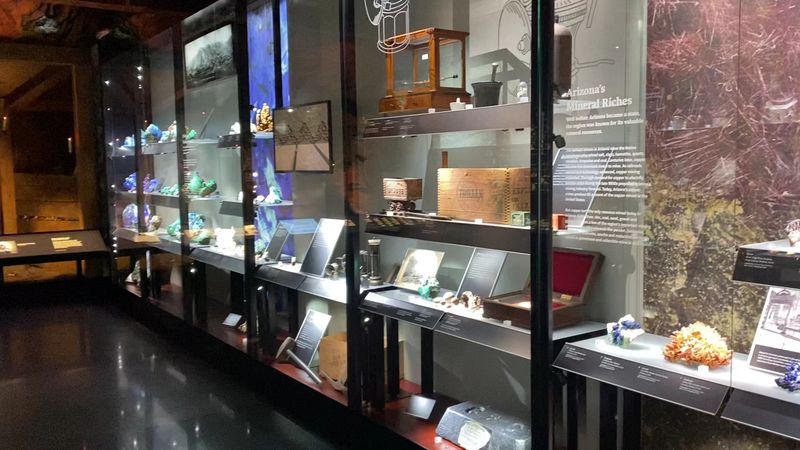
Arizona didn’t earn the nickname Copper State by accident. The Arizona Gallery celebrates that mining heritage with specimens from across the state and neighboring Mexico.
Some of the star pieces are Arizona gold nuggets. For decades they sat locked away in a vault, until a donation finally put them on public display.
Then there’s wulfenite, the official state mineral. Its bright, plate-shaped crystals look almost too vivid to be natural.
The gallery also tells the human side of mining. A set of oil paintings, commissioned more than a century ago by Phelps-Dodge, shows miners at work in early Bisbee.
Those canvases add warmth to a room full of stone. You get a sense of the grit, effort, and pride behind every shiny chunk in the cases.
Bisbee and Mexican mines are woven through the storytelling here. Anyone who knows those places will spot familiar names on the labels.
For Arizona residents, this gallery feels like a hometown reunion. It’s a reminder that remarkable minerals come from right down the highway.
Out-of-state guests get a crash course too. In one room, you’ll understand why prospectors kept chasing their luck across these deserts.
Moon Rocks And Asteroid Bits Make Space Feel Surprisingly Close
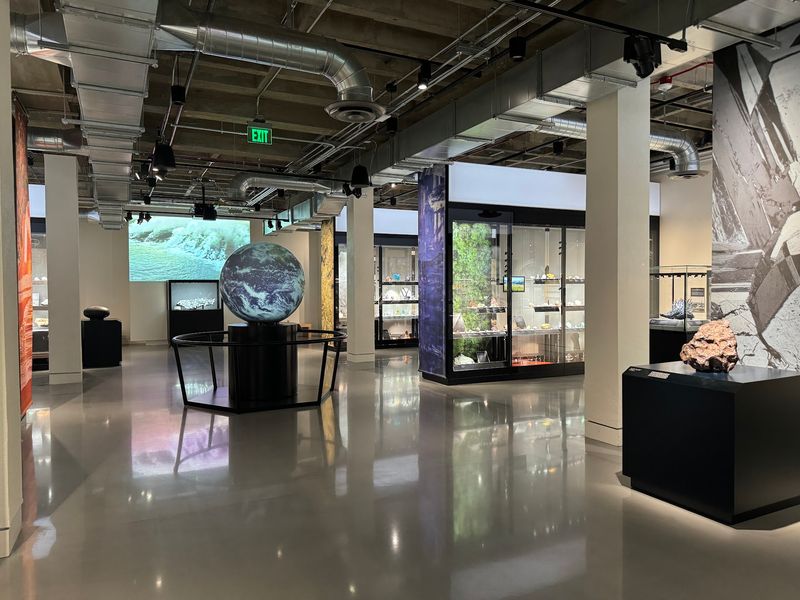
Few places let you stand inches from the moon. Here, a genuine lunar sample collected during an Apollo mission sits behind glass, close enough to study every speck.
The space collection doesn’t stop there. A fragment of asteroid Bennu, delivered to Earth by NASA’s OSIRIS-REx mission, is also on display.
That one carries serious hometown pride. The University of Arizona led the OSIRIS-REx project, so the sample tells a Tucson story as much as a cosmic one.
A spacecraft display tied to the asteroid mission adds scale and context. Seeing the hardware makes the whole adventure feel wonderfully real.
Cases of meteorites and related artifacts round out the section. These space rocks show how often our planet receives surprise deliveries from above.
Science fans of every age will find plenty to talk about in this corner. It’s tough to look at a moon rock and not feel a little starstruck.
Each piece also connects to real research. These aren’t props, and that makes the experience hit differently.
Space-loving families might pair this visit with a stargazing night later. Arizona’s dark skies make a perfect follow-up to an afternoon with meteorites.
Inside The Treasury, Raw Stone Becomes Wearable Art
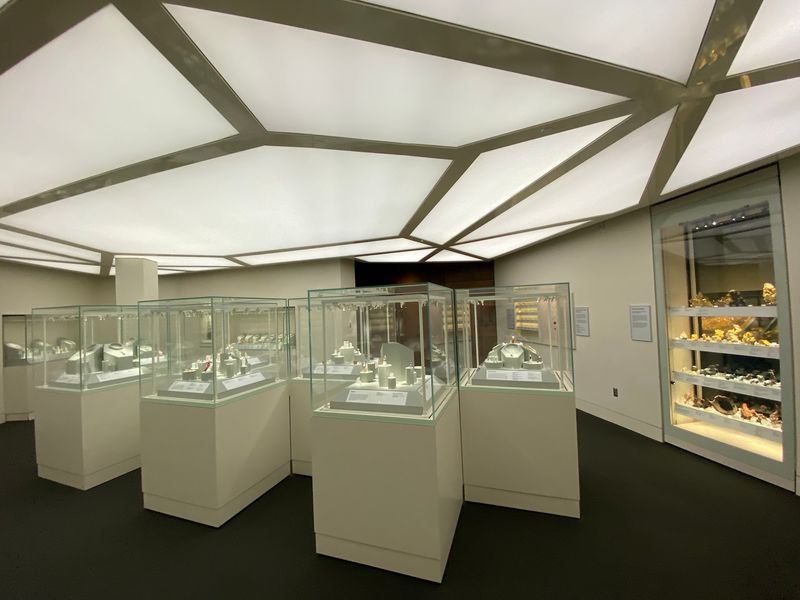
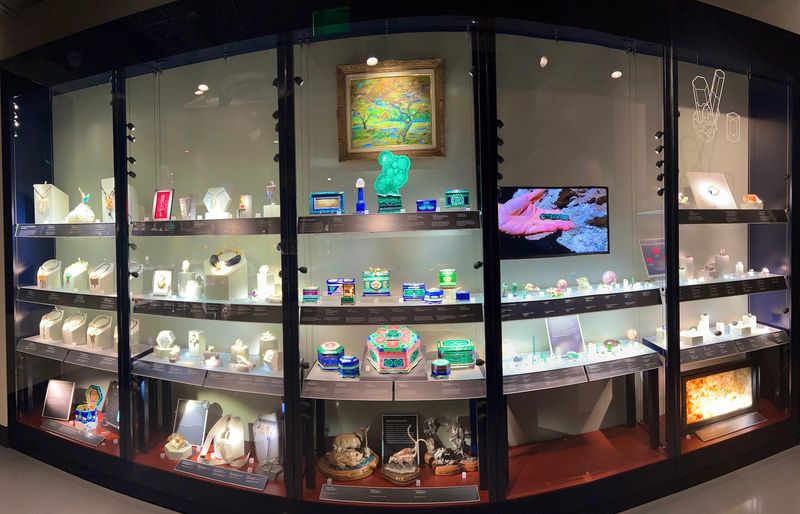
Sparkle seekers, this is your room. The Gem Gallery, nicknamed The Treasury, displays cut gems, jewelry, and decorative objects crafted from minerals.
The contrast with the rough specimens elsewhere is striking. Here you see what happens when skilled hands meet nature’s raw material.
Many pieces arrive on loan from notable private collections. One featured source is Somewhere in the Rainbow, a modern gem and jewelry collection.
Loans like that give visitors a peek at pieces rarely shown in public. Because loaned items rotate, the lineup can change from one visit to the next.
Rare and unusual gemstones appear alongside familiar favorites. Facets catch the carefully placed lighting, so the stones seem to shimmer as you move.
Jewelry lovers could easily lose track of time in here. Rock fans who usually prefer rough crystals may convert too.
It’s also a good reminder of why people have treasured stones for thousands of years. Beauty this concentrated is hard to shrug off.
Bring patience for the small details. Tiny pieces often hide the most impressive craftsmanship in the room.
Shopping for a jewelry fan later? A stroll through here makes a great source of gift ideas.
Sixty-Seven Custom Cases Built For Crystals That Keep Moving
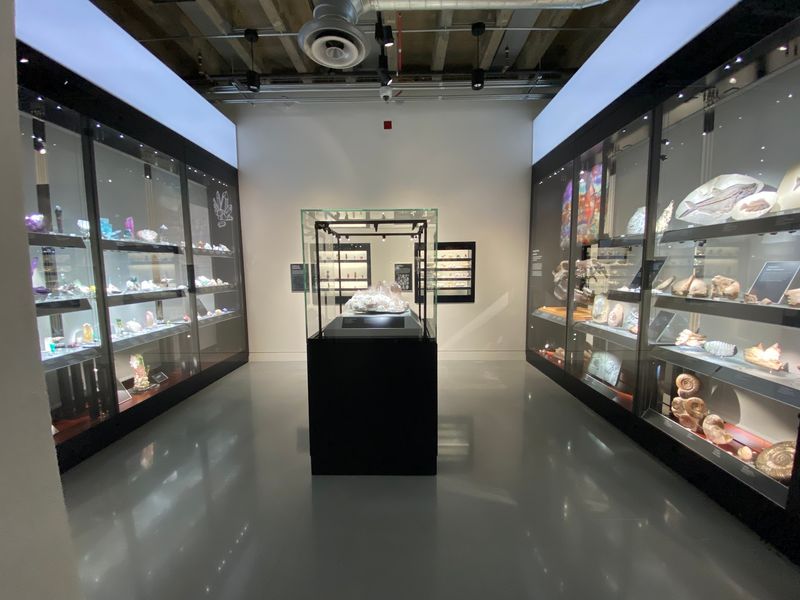
Good lighting can make or break a mineral display. The museum clearly took that seriously, and the specimens glow inside their cases.
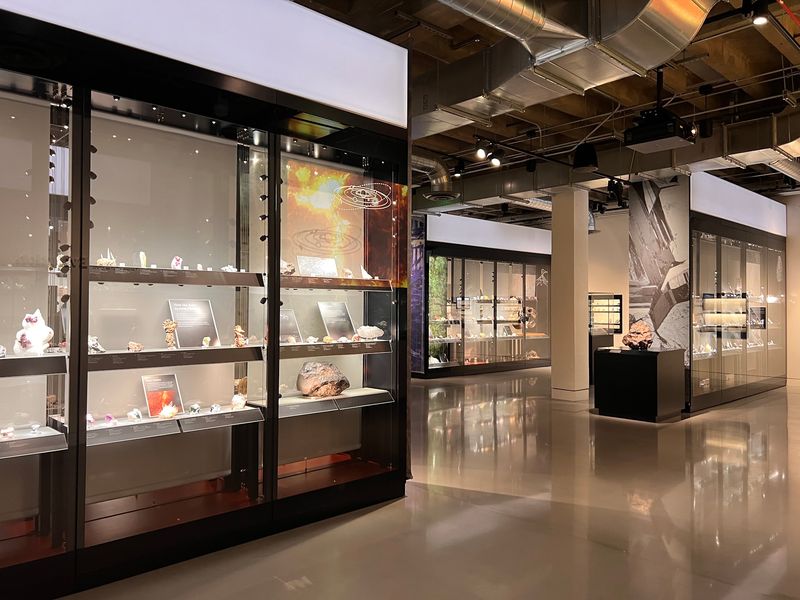
There are 67 custom-designed display cases throughout the galleries. They include recessed wall units, standing wall units, and freestanding cases on the open floor.
Those cases are built for flexibility. Their interiors can be rearranged easily, which supports one of the museum’s most exciting habits.
Roughly 20 percent of the displays rotate each year. That means a return trip next year could reveal specimens you’ve never seen before.
The design aims for the feel of a working laboratory. Clean lines and an open, modern layout keep attention on the stones rather than the furniture.
Benches appear throughout the space, which helps on a longer visit. Your feet will appreciate a pause between galleries.
Only a small slice of the full collection can be shown at any time. Rotation lets more of those stored specimens finally step into the light.
Some cases sit a bit high, so shorter visitors may need a moment to find the best angle. Little ones might want a lift for certain views.
Touchable Specimens And Docents Who Love A Good Rock Question
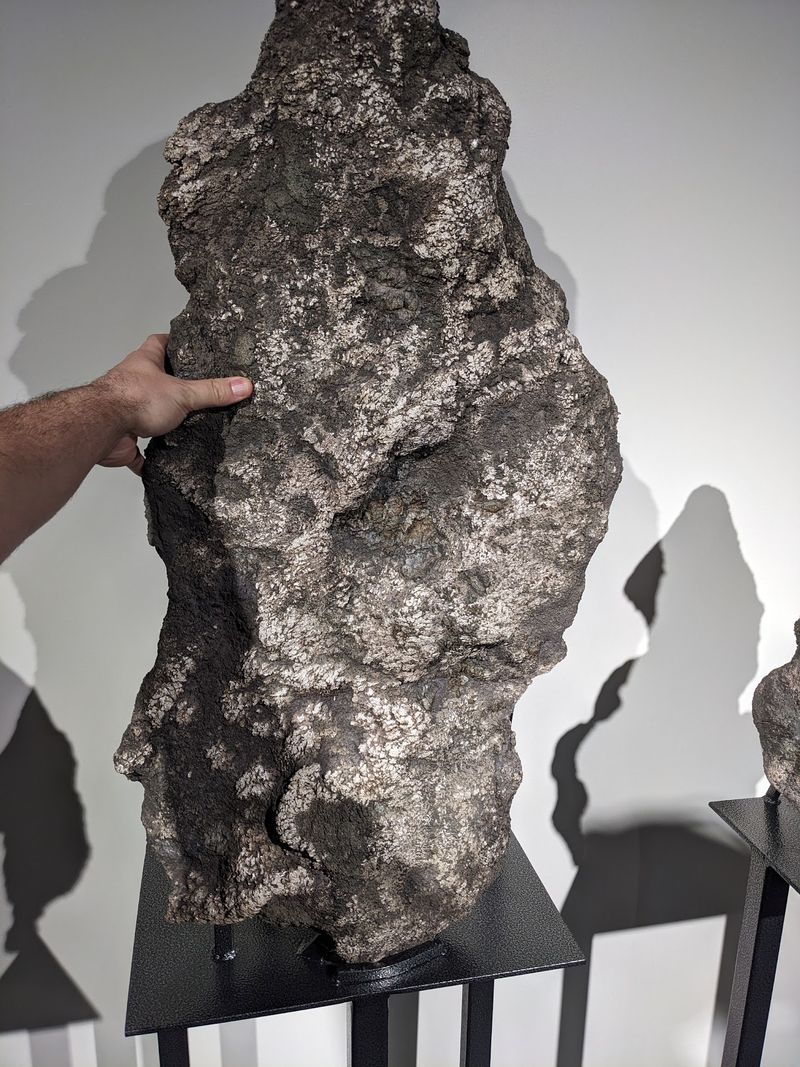
Touching the exhibits is usually off-limits at museums. Here, select specimens invite you to feel textures, weights, and surfaces for yourself.
Digital content adds another layer. Videos, photos, and audio pieces explain the science behind what you’re seeing in the cases.
The docents are a big part of the experience. They’re knowledgeable, friendly, and happy to explain the chemistry behind a crystal’s color or shape.
Guided tours can deepen a visit even more. A good docent turns a pretty rock into a story with chemistry, geography, and a bit of drama.
Prefer to explore solo? That works too, since the layout is easy to follow on your own.
The hands-on stations suit curious kids, especially those around 8 and older. Younger children may enjoy the sparkle more than the science, which is perfectly fine.
Geology lovers can easily spend three hours or more. Casual visitors often find an hour and a half feels just right.
That range makes it work for families, couples, and solo explorers alike. Everyone moves at their own speed, and nobody leaves short on wonder.
Souvenir Stones And A Visitor Center Under One Historic Roof
Leaving a gem museum without a souvenir feels almost impossible. Luckily, the gift shop offers mineral specimens, tumbled stones, and other rocky treasures.
The selection works for budding collectors and casual browsers. A small bag of tumbled stones makes an easy gift for young rockhounds.
The shop sits in another part of the courthouse. Wandering over gives you a chance to see more of the building itself.
The same building also houses a visitor center with interesting displays and friendly staff. It’s a handy spot to gather ideas for the rest of your Tucson day.
The historic courthouse deserves a slow look on its own. Architecture fans will want a few extra minutes before heading out.
For some visitors, a single tumbled stone becomes the start of a new hobby. Rock clubs, lapidary classes, and gem shows across Arizona can follow from one small purchase.
That’s the quiet magic of this place. The minerals inspire as much as they impress.
Before leaving, check the building directory. It helps you find each space without backtracking through the halls.
Plan Ahead, Then Let The Crystals Do The Talking
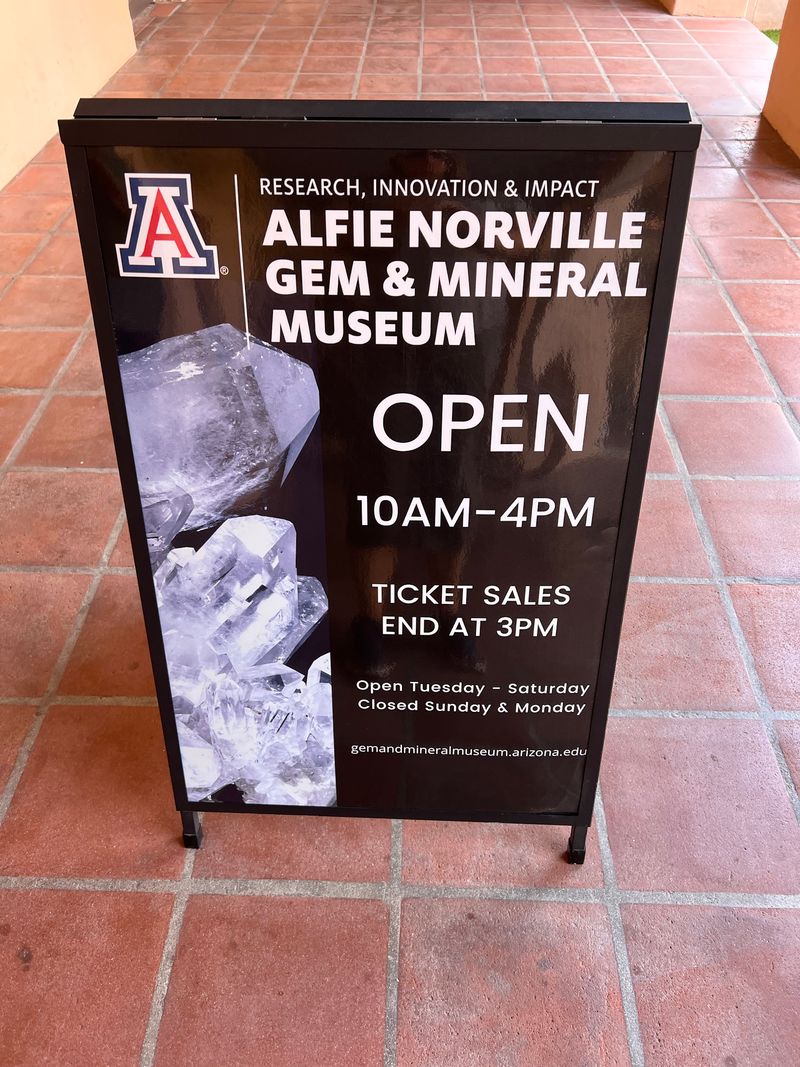
Hours have shifted over time, so a quick check before driving is smart. Right now, the museum shows Tuesday and Thursday hours, from 10 AM to 4 PM.
You’ll find it at 115 N Church Ave, Suite 121, Tucson, AZ 85701. Tickets are sold at the front desk, and summer has brought discounted admission in the past.
Drivers have options nearby. The El Presidio Parking Garage at 165 W Alameda St offers elevator access to the courthouse courtyard.
Parking validation policies have changed before, so ask at the desk. The Main Library garage and metered street spots are other handy choices.
Ask about military discounts when buying tickets. Small savings add up on a family outing.
Plan for at least a couple of hours inside. A water bottle helps for the walk, especially when Tucson heat kicks in.
As for the verdict? The Alfie Norville Gem & Mineral Museum earns a spot on any Arizona itinerary, for hardcore rockhounds and the simply crystal-curious alike.
Few places pack moon rocks, state treasures, and dazzling gems into one afternoon. Good luck leaving without a brand-new favorite mineral.