
Maine’s Biggest, Oldest, And Strangest Natural Wonders Are Almost Too Wild To Believe
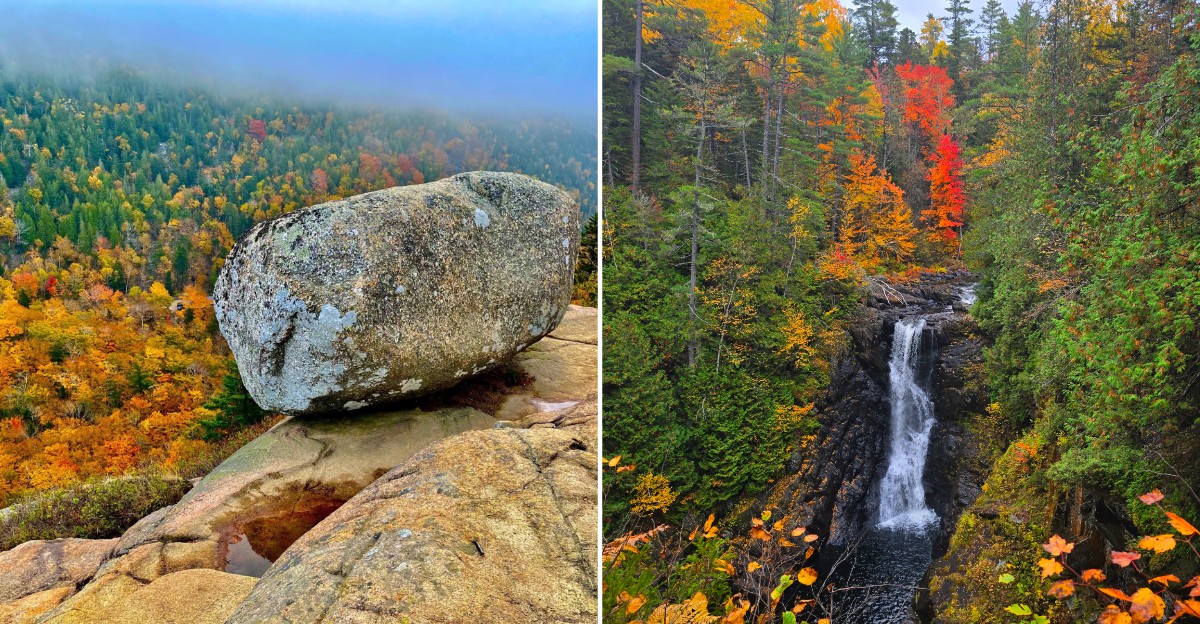
A granite boulder the size of a small car sits on the very edge of a cliff, and it has been parked there since the last Ice Age. Glaciers dropped it off and simply left. I love that nobody has managed to budge it since.
That boulder has some strange company. One spot hides ice underground that can linger deep into summer. Another booms like a cannon when the ocean gets rowdy.
Maine has a talent for this kind of thing. Its oldest rocks, tallest peaks, and deepest gorges were shaped by ice, rivers, and a whole lot of patience. Some of these places take a short stroll to reach, and others demand real grit.
I can’t decide which one sounds wildest. Is it the canyon, the roaring rock inlet, or the waterfall that drops straight down for about 90 feet?
1. Mount Katahdin
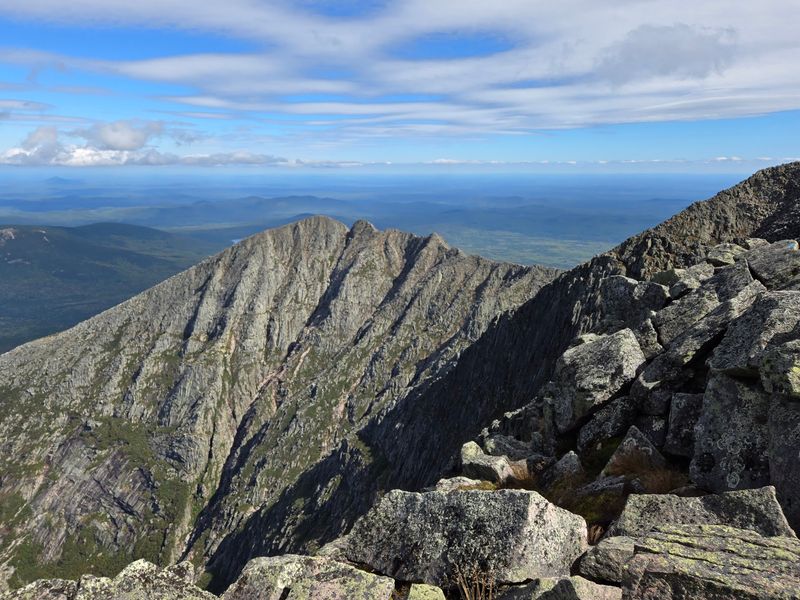
Long before anyone measured it with fancy equipment, the Penobscot people already had the perfect name for it. Katahdin means Great Mountain, and honestly, that still sums it up.
At 5,268 feet, it’s the highest peak in Maine. Recent University of Maine measurements put it a hair lower, so the summit signs may get a tiny update.
The mountain is sacred to the Penobscot. Tradition holds that Pamola, a storm spirit, lives up there, which might explain the moody weather.
You’ll also find the northern end of the Appalachian Trail on this summit. Thru-hikers who started in Georgia finish their long journey right here.
Want a challenge? The Hunt Trail runs 5.2 miles and includes about a mile of boulder scrambling above the tree line.
Then there’s the famous Knife Edge. This narrow, jagged ridge links Pamola Peak and Baxter Peak, and it’s not for anyone shaky on heights.
Glaciers carved four bowl-shaped cirques into granite that formed roughly 400 million years ago. Up top, fragile alpine tundra clings to life, so stay on the trail and watch your boots.
Plan ahead before you go. Baxter State Park limits daily visitors, charges an entrance fee, and the main climbing season runs from mid-May to mid-October.
Moose, black bears, and coyotes roam the surrounding wilderness. Bring snacks, layers, and patience, because this mountain sets the pace.
Address: Northeast Piscataquis, ME 04462
2. Thunder Hole
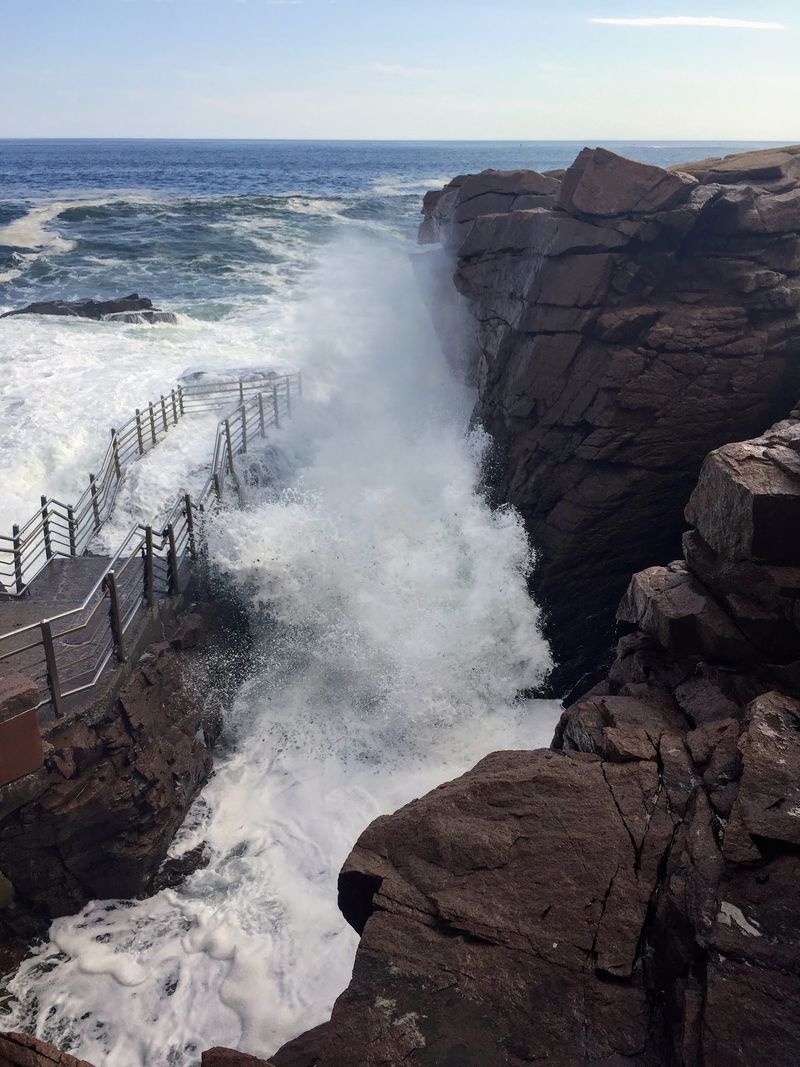
Ka-boom! The Atlantic Ocean has a drum set in Acadia National Park, and it plays loudest when the seas get rough.
Thunder Hole is a narrow rock inlet along the coast near Bar Harbor. When waves rush in, air gets trapped inside and explodes out with a deep, cannon-like roar.
Foam and spray can shoot high into the air during big surf. On a calm day, though, the show is much quieter, more of a polite gurgle than a thunderclap.
Even without the boom, the scenery holds its own. Rugged granite formations and clear water make it a great stop for photos.
Getting there is simple. A free parking lot sits nearby, and the site is open around the clock.
Afternoons tend to draw bigger crowds. Nights are the quietest, though you’ll want daylight to actually see the spray.
Respect the ocean while you’re here. Waves can surge higher than expected, so stay behind railings and keep a close eye on kids.
Think of it as nature’s surround sound system.
Address: Bar Harbor, ME 04609
3. Bubble Rock
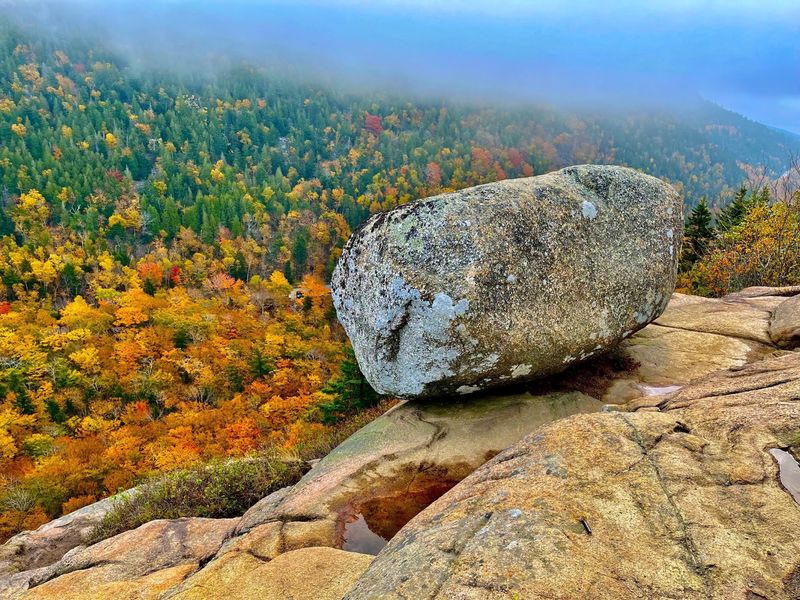
Somebody forgot to put this boulder back where it belongs. Glaciers dragged it across the land, then left it teetering on a cliff like a misplaced bowling ball.
Geologists call it a glacial erratic. That’s a fancy term for a rock moved by ice and dropped somewhere it clearly doesn’t match.
It sits on South Bubble Mountain in Acadia National Park. During the last Ice Age, massive sheets of ice scraped over the region and carried it along.
When the ice melted, the boulder simply stayed put. Tens of thousands of years later, it still looks ready to tumble, but it hasn’t.
Good news for your legs: the hike is short. It’s steep in spots, but plenty of first-time Acadia visitors make it up.
Up top, the views are a big reward. Jordan Pond stretches out below, framed by forested mountains.
You can also check out the boulder from below on some routes. Seeing it from underneath really shows off how oddly it’s balanced.
Trails here stay open around the clock, but daylight is your friend. Weekend mornings and afternoons can get busy, so an early start helps.
Bring water and shoes with solid grip. Granite can be slick, and you’ll want steady footing near that dramatic edge.
Address: Park Loop Rd, Mt Desert, ME 04660
4. Moxie Falls
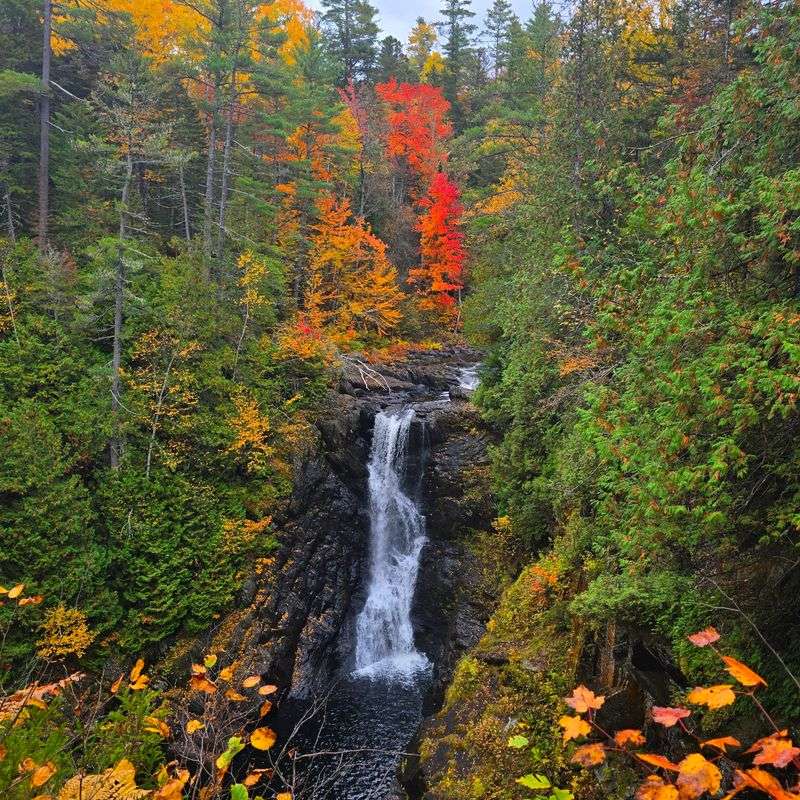
Ninety feet of water dropping in one clean plunge? That’s the kind of move that earns a waterfall some serious bragging rights.
Moxie Falls is often counted among the tallest single-drop waterfalls in New England. The water drops roughly 90 feet into a rocky gorge below.
Here’s the best part. You don’t need to be a hardcore hiker to see it.
A short walk through the woods gets you there in about 15 minutes. The path is wide and well kept, which makes it a solid pick for families with kids.
Along the way, you’ll find several spots for photos. The falls look different from each angle, so take your time.
West Forks sits in a heavily forested corner of Maine. The area is known for whitewater rafting, so rushing water is kind of the local specialty.
Plan your supplies before you arrive. There are no restrooms and no restaurants at the falls, so pack snacks and water.
Since the area is remote, fill your gas tank in advance too. Cell service in deep woods can be spotty, so download directions ahead of time.
Spring snowmelt usually brings stronger flow and louder rumbling. Whenever you visit, keep a safe distance from slippery edges near the drop.
Address: Unnamed Road, West Forks, ME 04985
5. Gulf Hagas
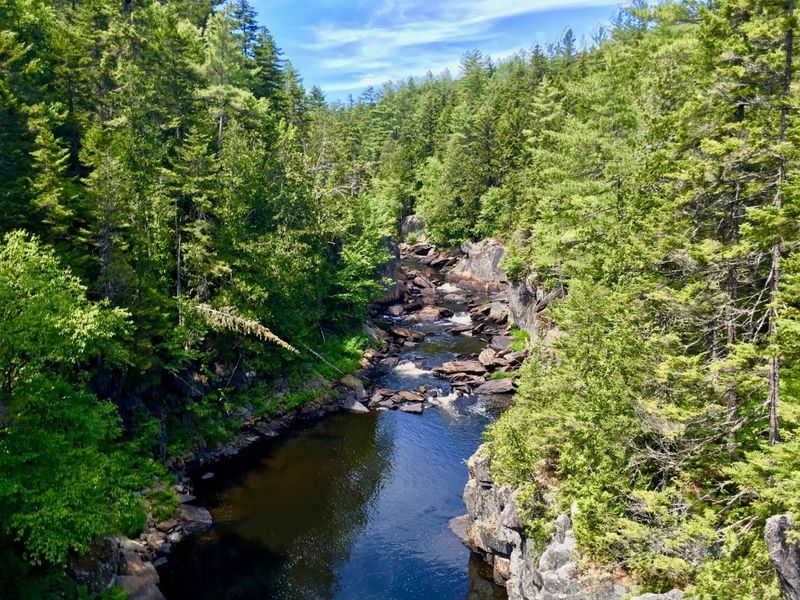
Arizona isn’t the only state with a canyon worth bragging about. People call this one the Grand Canyon of Maine, and the nickname fits better than you’d think.
The West Branch of the Pleasant River carved this gorge out of slate. It stretches roughly three miles, with sheer walls rising as high as about 130 feet.
Inside, the river drops a few hundred feet through a chain of waterfalls and deep pools. Screw Auger Falls twists through carved channels, while Buttermilk Falls churns up plenty of froth.
Gulf Hagas is a National Natural Landmark. It sits along the Appalachian Trail in the rugged Hundred-Mile Wilderness.
Don’t treat this like a casual stroll. The full loop on the Rim Trail and Pleasant River Tote Road runs eight miles or more, with rough footing.
You’ll also cross the river near the start. In high water, it can reach your knees, so check conditions and bring sturdy shoes.
Getting there involves logging roads through Katahdin Iron Works. A fee is collected at the gate, which usually opens from May through October.
The Rim Trail offers lots of lookouts. Each one gives you a new view of the slate walls and rushing water below.
Start early and pack more water than you think you need. This canyon rewards people who respect its size.
Address: Northeast Piscataquis, ME 04414
6. Debsconeag Lakes Wilderness Area
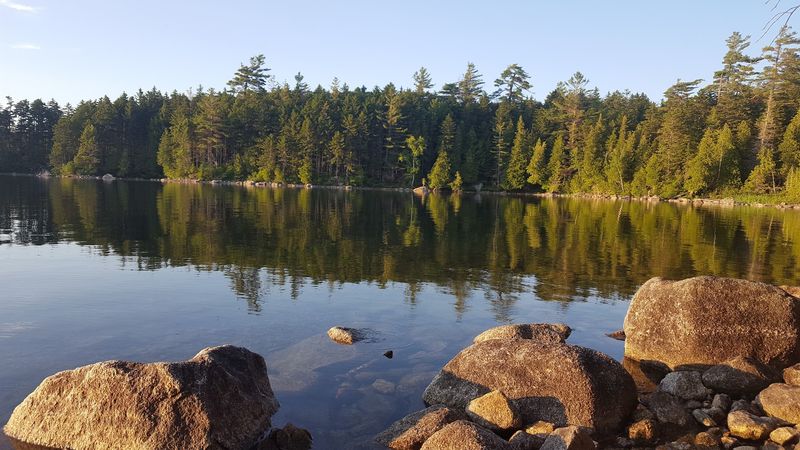
Summer ice in Maine sounds like a tall tale. In this wilderness, it’s simply part of the scenery.
The Debsconeag Ice Caves are the big draw here. These underground spaces form among jumbled boulders, and ice can linger deep inside well into the warmer months.
Bring a flashlight and a sense of adventure. The caves are cool, dark, and rocky, so watch your footing.
The whole preserve covers 46,271 acres of dense forest. It’s managed by The Nature Conservancy and sprinkled with clear, quiet lakes.
Those lakes are a big part of the fun. Fishing, paddling, and camping are popular ways to spend a day or two.
Trails come in different difficulty levels. Some hikes are kid-friendly, which makes this a nice family pick for curious young explorers.
Location adds even more appeal. The area sits outside Millinocket, practically in the shadow of Mount Katahdin.
A section of the Appalachian Trail passes through, too. You might cross paths with hikers in the final stretch of their long trek.
Remote means fewer services, so plan carefully. Carry water, a map, and bug spray, since Maine woods can get buggy.
After a visit, you’ll have a story that sounds made up. Ice in July?
Yep, and you can see it for yourself.
Address: Appalachian National Scenic Trail, Millinocket, ME 04462
7. Screw Auger Falls
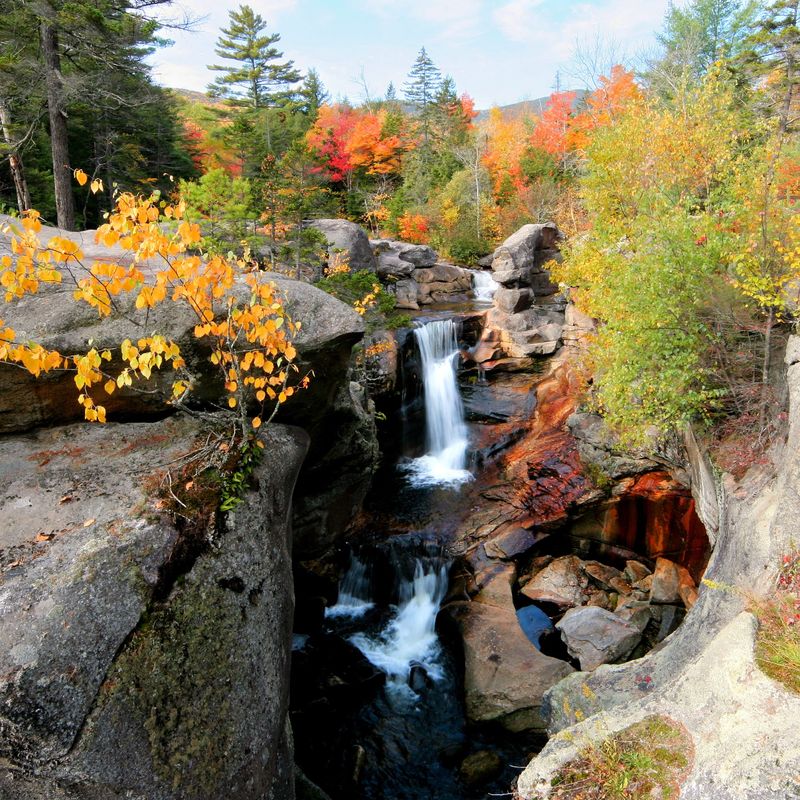
Picking a name for a waterfall is hard, so Maine used this one twice. One Screw Auger Falls sits inside Gulf Hagas, and this one lives in Grafton Notch.
The name makes sense once you see the rock. Water swirls and twists through stone, almost like a giant drill bored through it.
Long ago, glacial meltwater did the drilling. Spinning stones and rushing water carved round potholes straight into solid bedrock.
The result is a gorge about 23 feet deep. It looks a little like a water park designed by geology instead of engineers.
Getting around is easy. Multiple trails lead to different viewing spots, so you can explore from several angles.
On hot days, swimming in the pools is a favorite activity. Picnics are popular too, with flat rocks and shady spots nearby.
Grafton Notch is a mountainous valley on the Appalachian chain. The drive alone offers plenty of reasons to pull over and stare.
Use caution near the water. Rock surfaces can be slick, and currents get stronger after heavy rain or snowmelt.
Kids usually love poking around the potholes. Just remind them that these carved bowls took thousands of years to make, so no climbing on fragile edges.
Address: North Oxford, ME 04261
8. Smalls Falls
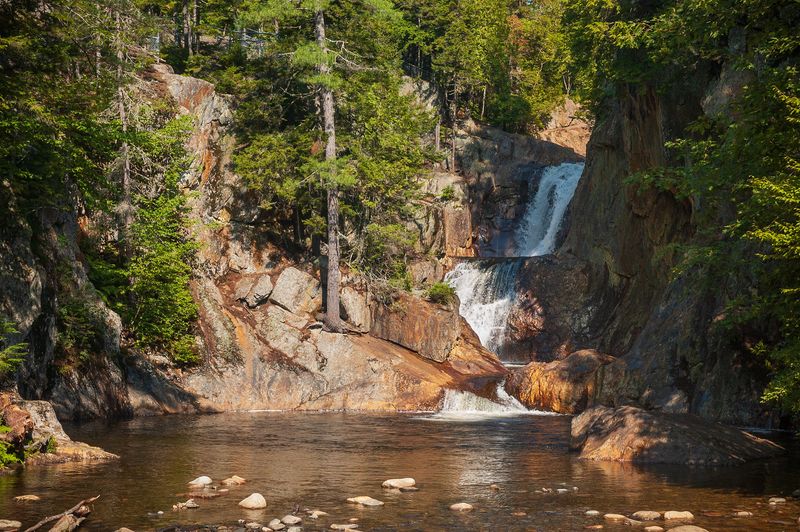
Few highway rest stops come with their own waterfalls. Along Route 4 near Rangeley, this one hands you a whole staircase of them.
The Sandy River tumbles through a series of drops here. Colorful, ancient metamorphic rock forms the tiers, creating a small canyon with pools along the way.
Those pools sit at different levels. You can wade, splash, or swim, depending on how brave you feel about cold mountain water.
Hungry travelers get a nice bonus. Grills and covered picnic tables make it easy to turn a quick stop into a lunch break.
Outhouses are available too. That’s a small detail, but on a long drive, it’s a welcome one.
Short trails let you stretch your legs. You can follow the river and see several falls without a long hike.
The setting is rural Franklin County. Mountains and forests surround the area, so the drive in is pretty scenic.
Bring a towel and water shoes. Rocks around the falls can be slippery, especially near the edges of the pools.
It’s a fitting final stop for this list. Maine somehow turned a roadside break into one of its most fun natural playgrounds.
Address: West Central Franklin, ME 04970