
Few Illinois Visitors Know This Free Chicago Building Hides A Glowing Tiffany Glass Dome
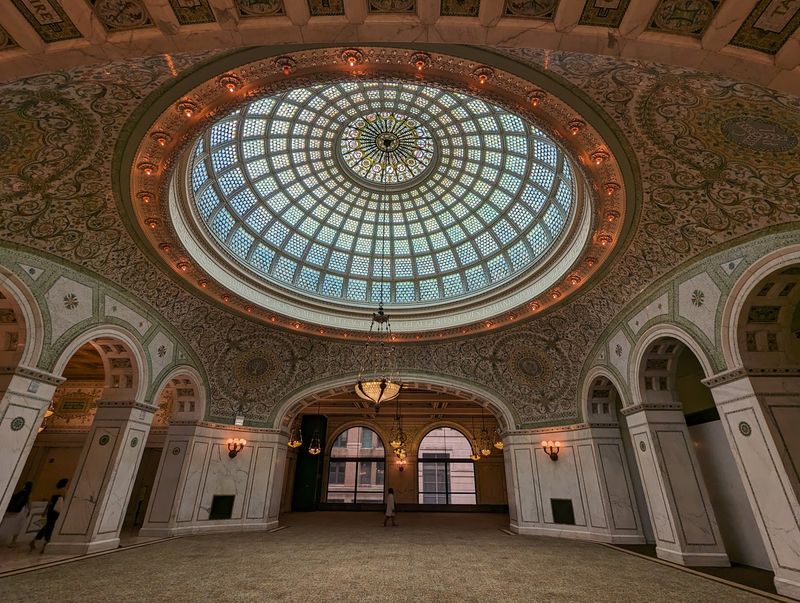
Thirty thousand pieces of glass, each one cut like a fish scale, glow above a single room in Illinois. Nobody asks you for a ticket to see them.
That glow belongs to the largest Tiffany stained-glass dome in the world. It stretches 38 feet across, with the signs of the zodiac shining near the top.
The best part is how the colors shift with the daylight. Real sunlight pours through the glass again, so the dome changes minute by minute.
I like how a treasure this fancy sits inside a public building that welcomes everyone, from toddlers to grandparents.
I can’t imagine a cheaper way to feel like royalty for an afternoon in Illinois. Plenty of people stroll right past the front doors on their way somewhere else.
So what exactly are they missing upstairs?
A Free Palace Waits Right Across From Millennium Park
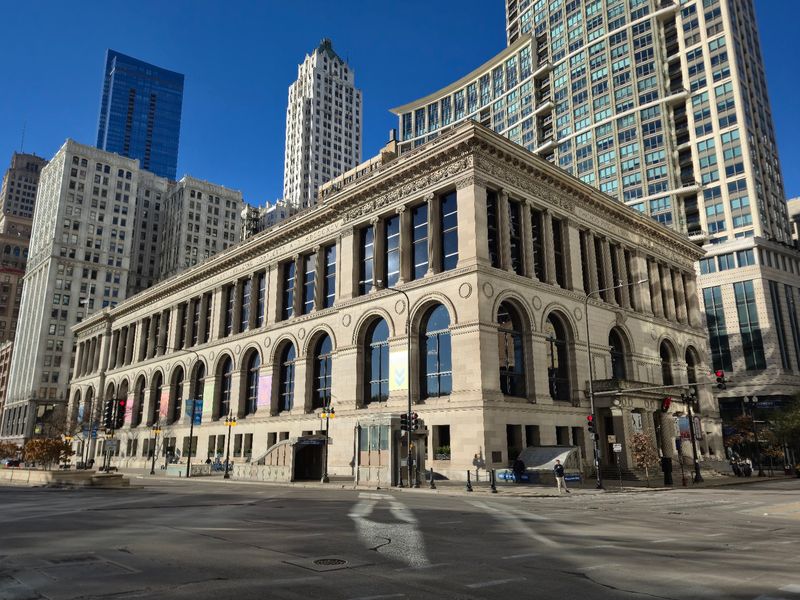
Right across the street from Millennium Park stands the Chicago Cultural Center, a grand stone building in the downtown Loop. Most folks hurry past it on their way to see the Bean.
That’s a shame, because this place costs exactly nothing to enter. No tickets are required for the building or for its exhibitions, which makes it one of the easiest family outings in Illinois.
The Chicago Cultural Center is a city-run cultural hub, and it carries a lovely nickname. Chicagoans call it The People’s Palace, and the name fits better than you’d expect.
Inside, you’ll find rotating art exhibitions, free concerts, lectures, and two dazzling stained-glass domes. The star of the show is the world’s largest Tiffany stained-glass dome, glowing above a hall on the third floor.
Outside, the building looks dignified and serious, built from Bedford limestone on a granite base. It rises 104 feet in a formal Beaux-Arts style that matches the grand old city around it.
So the building plays it cool on the street. Then you head upstairs, look up, and suddenly understand why people keep calling it a palace.
Chicago Built Its First Central Library To Show Off
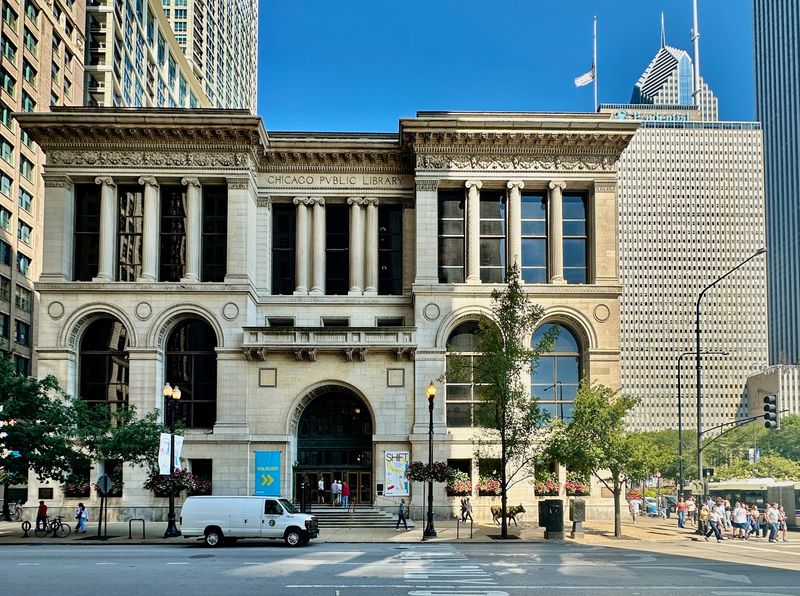
Back in 1897, this building opened as the first central public library in Chicago. It was meant to impress, and it absolutely did.
The city had rebuilt itself after the Great Chicago Fire of 1871. Leaders wanted a showpiece that proved Chicago had become a polished, sophisticated metropolis.
A library alone wasn’t the whole story, though. The building also served as headquarters for the Grand Army of the Republic, an organization for Union Army veterans.
In 1947, the Chicago Public Library took over the entire building. The library later moved to the Harold Washington Library Center in 1991.
Meanwhile, the old library found a fresh purpose. It became the Chicago Cultural Center, often described as the first free municipal cultural center in the nation, with free admission since 1978.
That library past still shows up everywhere you look. Names of great writers like Goethe, Schiller, Voltaire, and Moliere appear in the decoration, along with inscriptions about books and learning in several languages.
Today the building holds Chicago Landmark status and sits on the National Register of Historic Places. Not bad for a place that once handed out library cards.
Thirty Thousand Glass Fish Scales Light Up Preston Bradley Hall
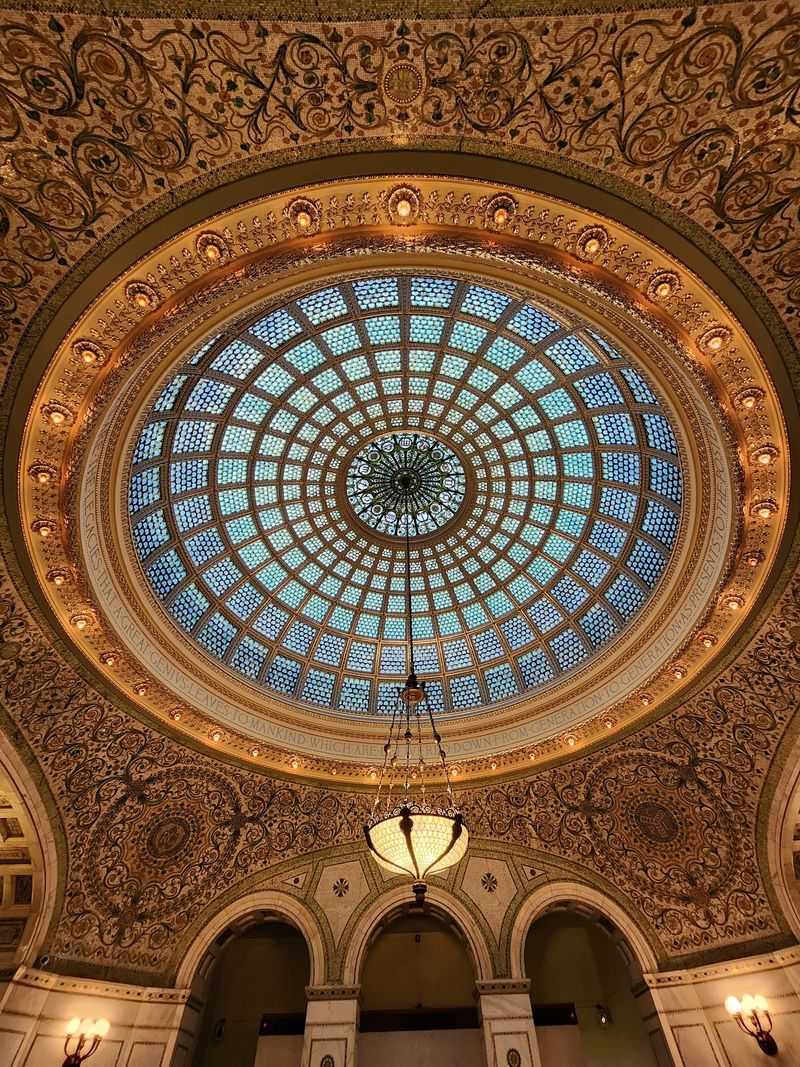
Count the pieces if you dare. The Tiffany dome in Preston Bradley Hall holds roughly 30,000 pieces of glass, each one cut in the shape of a fish scale.
It measures 38 feet across and covers more than 1,000 square feet. That makes it the largest Tiffany stained-glass dome anywhere in the world.
The glass is Tiffany Favrile glass, arranged in about 243 sections inside an ornate cast iron frame. The Tiffany Glass and Decorating Company of New York created it, along with the hall’s chandeliers, sconces, and lighting fixtures.
Watch how the colors climb. Pale yellowish-green glass sits near the bottom, then the shades grow richer and darker toward the top.
Up at the very center, the signs of the zodiac shine overhead. Nobody seems to have a definitive explanation for why they were chosen, which only adds to the mystery.
A quotation from British author Joseph Addison circles the base of the dome. Kids will probably be too busy spotting their zodiac sign to read it, and honestly, that’s a perfectly good way to enjoy it.
Sunlight Finally Got Its Job Back In 2008
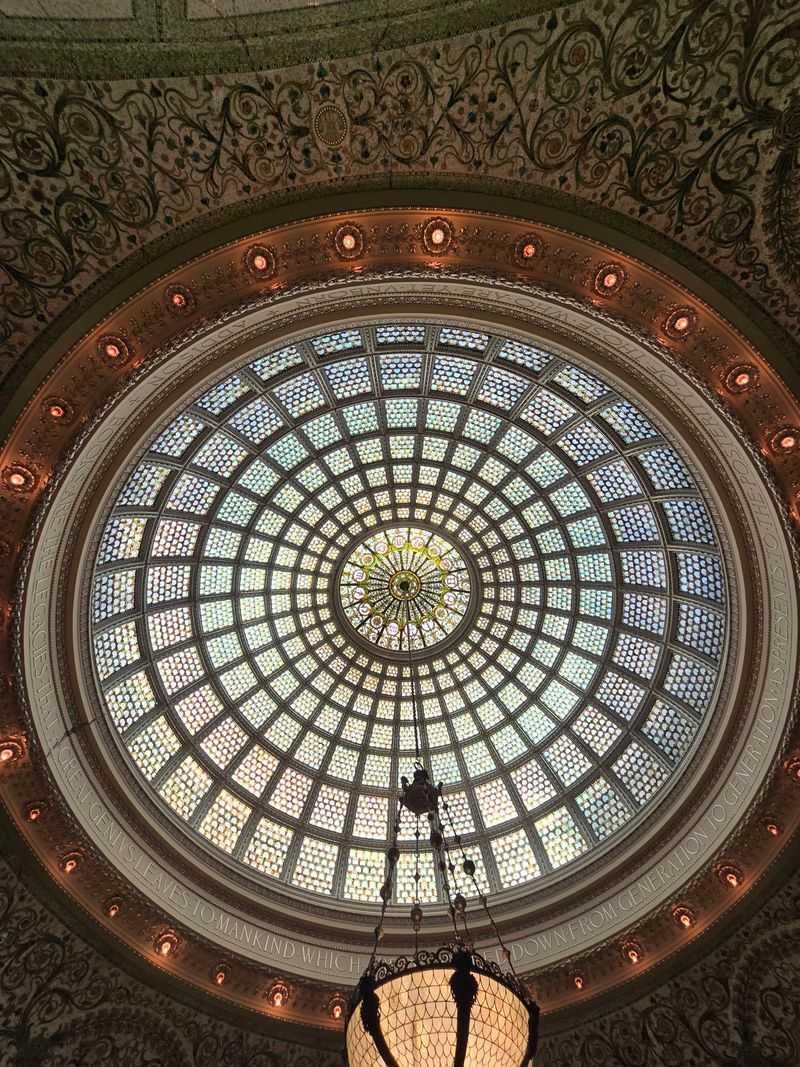
For decades, the famous dome sat in the shadows. In the 1930s, a concrete and copper outer dome was built over it, blocking the natural light.
That meant generations of visitors saw the Tiffany glass without the sun behind it. Think of a lamp with the bulb switched off, and you get the idea.
A major restoration finished in 2008 changed everything. Crews removed that outer covering, and daylight poured through the glass once again.
Now the dome behaves the way its makers intended back in 1897. The subtle colors shift minute by minute as clouds drift and the sun moves across the sky.
So timing matters a little here. A bright morning and a cloudy afternoon can make the same glass feel like two different ceilings.
I believe that’s what makes repeat visits so tempting for Illinois families. You can come back in winter, then again in summer, and the room will show you a fresh mood each time.
Bring patience along with your camera. Standing still for a few minutes lets you catch the color slowly changing above your head.
Don’t Leave Before Finding The Second Dome
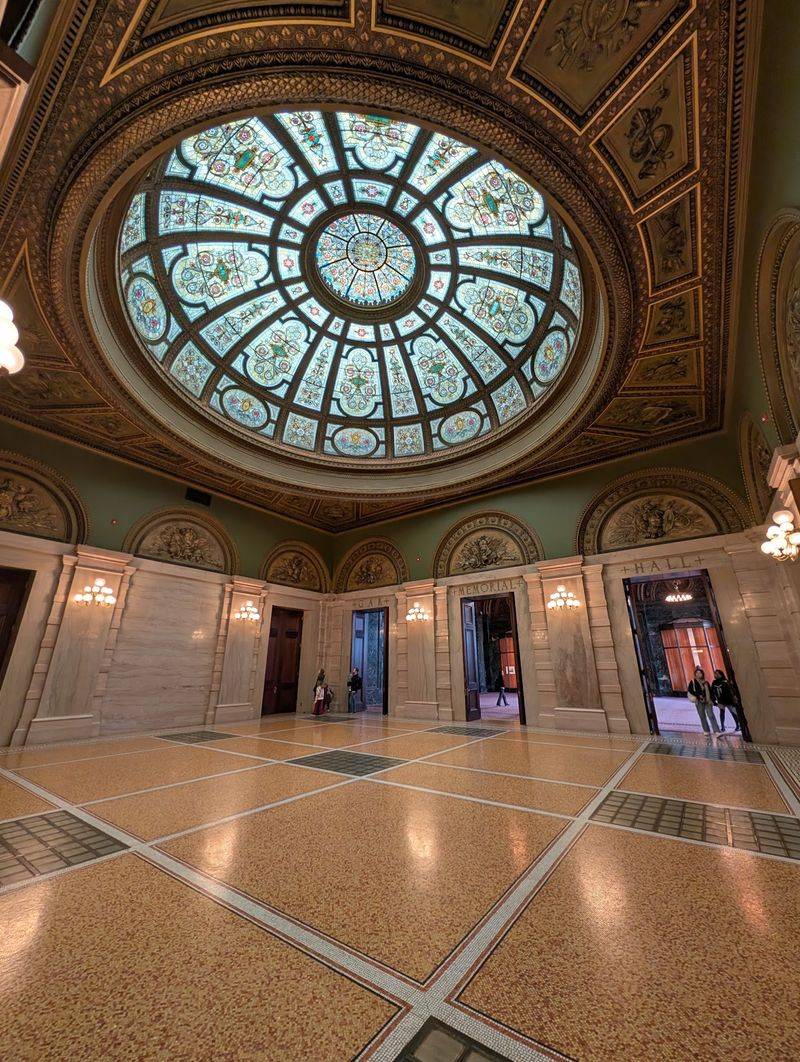
Plenty of people see one dome and head for the exit. Big mistake, because the building actually has two.
On the north side sits the G.A.R. Rotunda, named for the Grand Army of the Republic.
Its dome was designed by the Chicago firm Healy and Millet.
This one is even wider, stretching 40 feet in diameter. It holds about 50,000 pieces of glass arranged in an intricate Renaissance pattern.
The mood feels different from the Tiffany hall. Where the Tiffany dome swirls with green and gold, the rotunda dome reads more like fancy, finely stitched lace.
The surrounding Grand Army of the Republic rooms deserve a slow look too. A 2022 restoration brought back their ornate ceilings with patterned bronze panels and glowing light fixtures.
Big windows in that area frame the busy streets outside. Looking out from such old rooms feels a bit like peeking through a time machine.
Here’s a fun family challenge. Visit both domes, then let everyone vote on a favorite during the walk back to the car or train.
Marble, Mosaics, And A Staircase Fit For Royalty
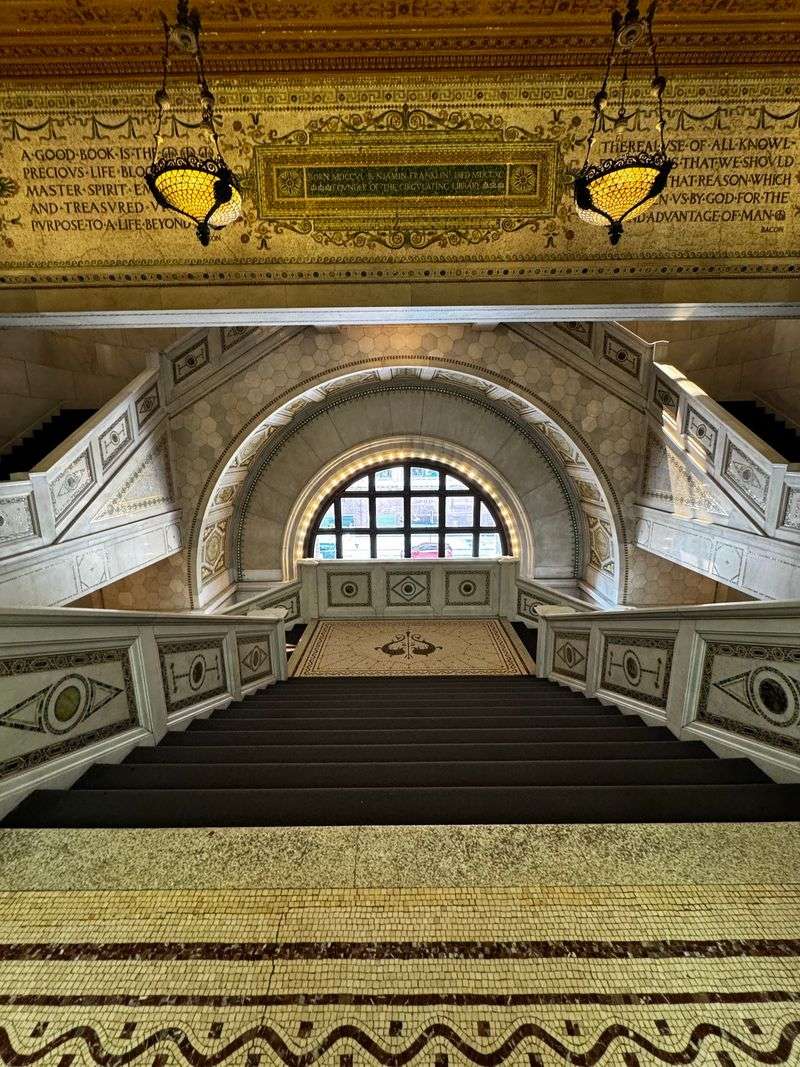
Your neck might get a workout before you even reach the domes. The interior is packed with rare imported marbles, including white Carrara and deep green Vermont marble.
Polished brass and fine hardwoods add even more warmth. Every hallway seems determined to outshine the last one.
Then come the mosaics. They mix Favrile glass, colored stone, and mother-of-pearl across the marble upper walls and arches.
The grand staircase is a showstopper of its own. It was reportedly modeled on the Bridge of Sighs in Venice and sparkles with inlaid Favrile glass and mother-of-pearl.
Look closely at the arches near Preston Bradley Hall. You’ll find heraldic and printing symbols tucked among the designs, little winks back to the building’s library days.
Even the spots under the stairs got decorated. That kind of care shows how much the builders wanted every corner to feel special.
Kids tend to love the glittering staircases most of all. Just remind them to watch their steps, since everyone ends up staring at the ceilings instead of the floor.
Free Art, Music, And Tours Keep The Calendar Busy
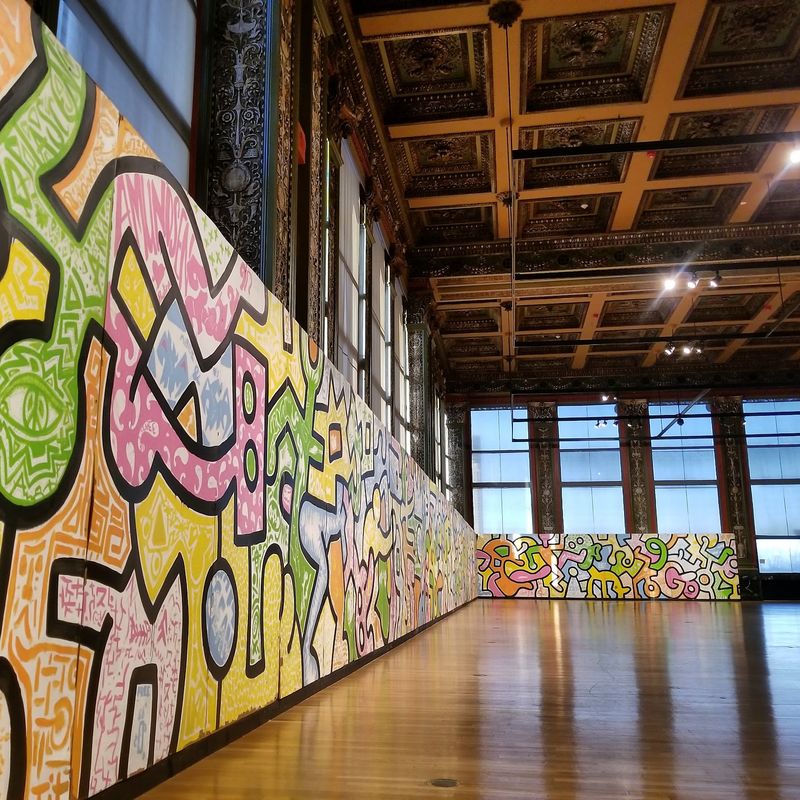
Hundreds of free public programs fill the schedule every year. Art exhibitions, concerts, dance, theater, films, and lectures all share these historic rooms.
The exhibitions rotate, so there’s often something new to see. Some installations are immersive and invite you to sit, touch, and explore rather than just stand back.
That hands-on style works wonders for kids. Art feels a lot less stuffy when you’re allowed to become part of it.
Music lovers get treats too, including concerts and jazz performances throughout the year. Checking the event calendar before your trip can turn a quick visit into a full afternoon.
Free guided architecture tours run at 1:15 p.m. on set weekdays year-round. Self-guided tours are also available if your crew prefers wandering at its own pace.
The tours can fill up, so arriving early is smart. The guides bring the building’s stories to life in a way plaques simply can’t.
Before leaving, peek into Buddy on the first floor. The shop sells goods made by Chicago artists and makers, a far better souvenir than another keychain.
What To Know Before You Head Downtown
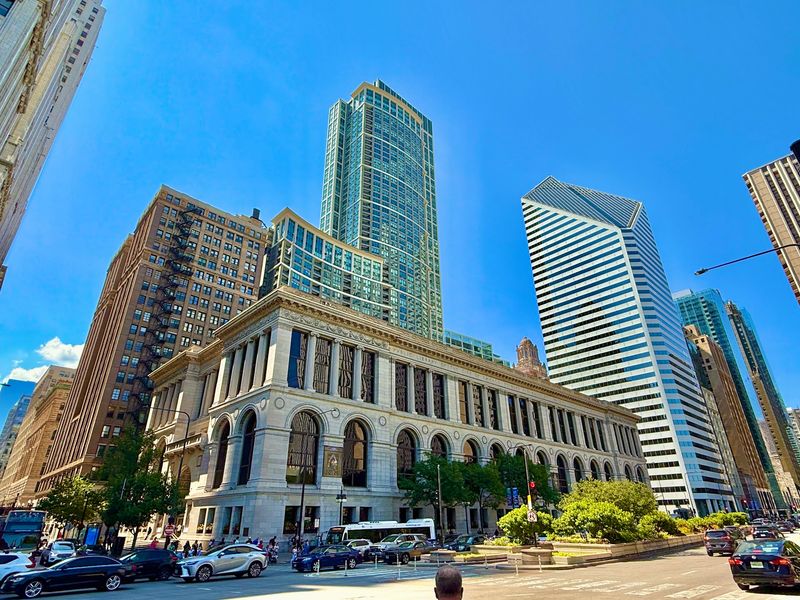
Point your GPS to 78 East Washington Street, Chicago, Illinois 60602. You’ll land in the Loop, right across from Millennium Park.
The Chicago Cultural Center is generally open from 10 a.m. to 5 p.m. Schedules can change, so a quick check of the city’s listing before you go is a smart move.
Exhibition galleries begin closing 15 minutes before the building does. The center also closes on city holidays, including New Year’s Day, Thanksgiving, and Christmas Day.
Plan on at least 45 to 90 minutes inside. Most people end up lingering longer once the ceilings start pulling their attention upward.
Liquids aren’t allowed inside the exhibition galleries. Finish that water bottle or coffee before you head into the art spaces.
Clean public restrooms and plenty of seating make this an easy pit stop for families. You can even rest and recharge a phone between downtown adventures.
Rough weather? The building connects to the Pedway, the downtown walkway system.
That’s handy during a classic Illinois winter when the wind off the lake has strong opinions.
The Best Free Afternoon Your Family Might Be Skipping
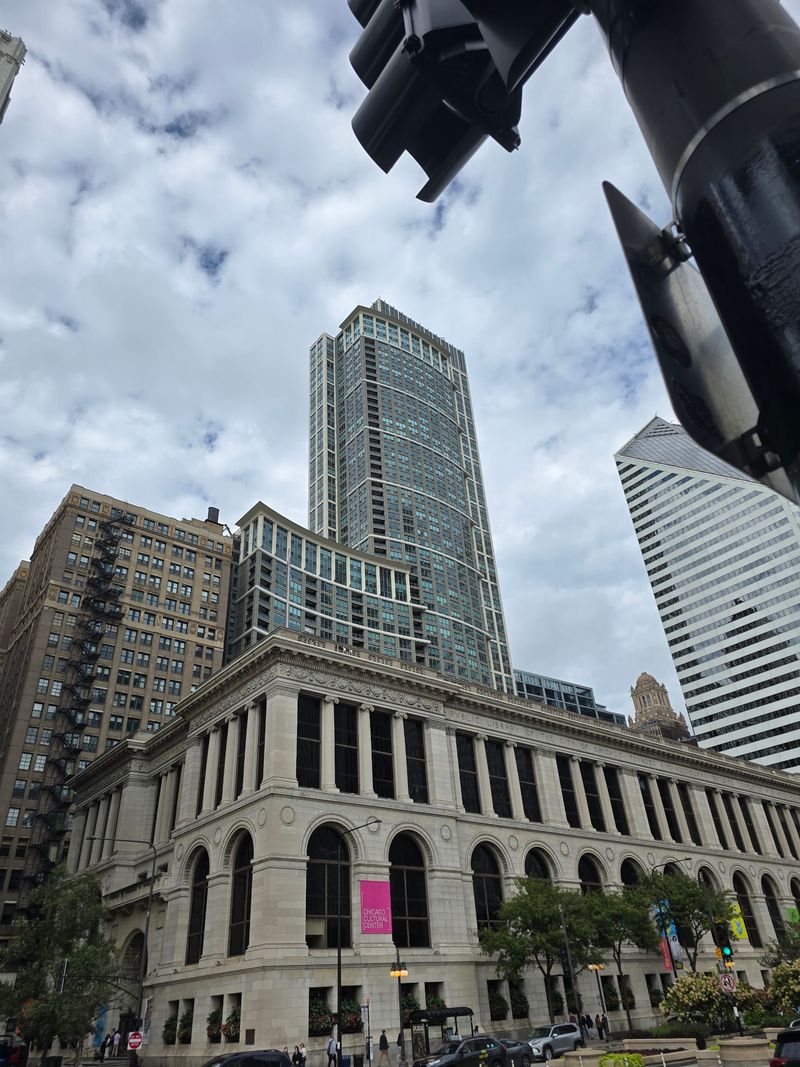
Few places in Illinois let three generations share the same wow moment for zero dollars. The Chicago Cultural Center pulls it off with ease.
Grandparents get the history and the craftsmanship of a bygone era. Parents get a calm break from busy downtown streets, and kids get glittering glass overhead.
The building can feel surprisingly quiet compared with other Loop attractions. That calm makes it easier to slow down and actually notice the details.
It also works for nearly any schedule. Fifteen minutes under the Tiffany dome is worth it, though a couple of hours rarely feels too long.
Pair it with a stroll through Millennium Park across the street. Then you’ve built a full day of memories without spending a cent on admission.
Photographers, architecture fans, and art lovers will all find plenty to love. Even folks who simply need a warm, beautiful place to sit will feel welcome here.
So next time you’re downtown, skip the rush past those limestone walls. Head upstairs, tilt your head back, and let 30,000 glowing fish scales say hello.