
Pioneers Built This Little Log Church In Washington Over A Century Ago, And It Still Stands Today
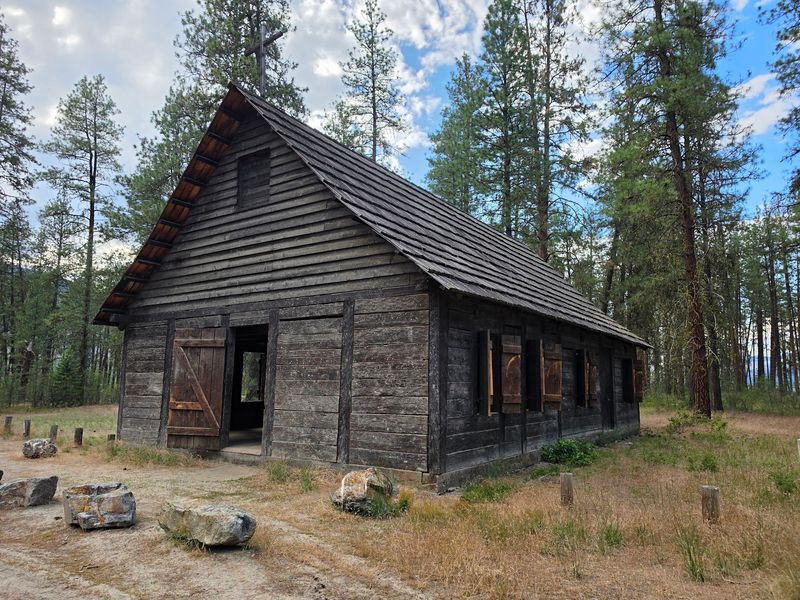
The builders of this little church skipped nails entirely. They held hand-hewn cedar beams together with wooden pegs back in 1847, and the building still stands today.
The church sits on a quiet bluff in northeast Washington, surrounded by pine and fir. Below it, a famous salmon fishing spot now rests under deep water.
A short trail nearby leads to an old rock that people once used to sharpen their tools.
I like how small this place feels. It isn’t a grand cathedral or a busy museum.
It’s a modest log building with a big story packed into its walls, and you can sometimes walk right inside.
I can’t imagine a better spot for a slow, quiet afternoon with a little history mixed in. So how did a pegged log church outlast fire, floods, and more than 175 years?
A Pegged Log Church Perched Above The Columbia
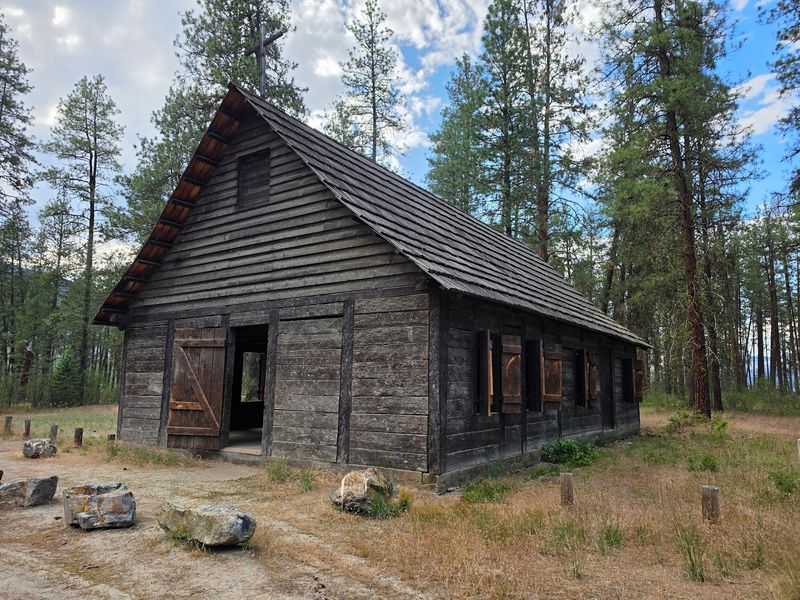
Some buildings shout for attention, but St. Paul’s Mission barely clears its throat. The small log church rests on a bluff near Kettle Falls, in the pine-covered corner of northeast Washington.
It was built in 1847, which makes it one of the oldest buildings you can still visit in the state. That’s older than Washington’s statehood by more than four decades, which is a fun fact to drop at dinner.
Today, the site is managed by the National Park Service as part of the Lake Roosevelt area. That means signs, a tidy trail, and a well-kept setting rather than a crumbling ruin in the weeds.
The mission once looked out over Kettle Falls on the Columbia River, a gathering place for tribes for thousands of years. The falls are gone now, covered by the waters of Lake Roosevelt, but the bluff and the church remain.
So what exactly are you visiting? A historic church, a short loop trail with interpretive stops, an old cemetery, a remarkable sharpening rock, and a sweeping view of the water.
Not bad for one quiet stop off the highway.
Two Priests, Three Days, And A Promise Made In 1838
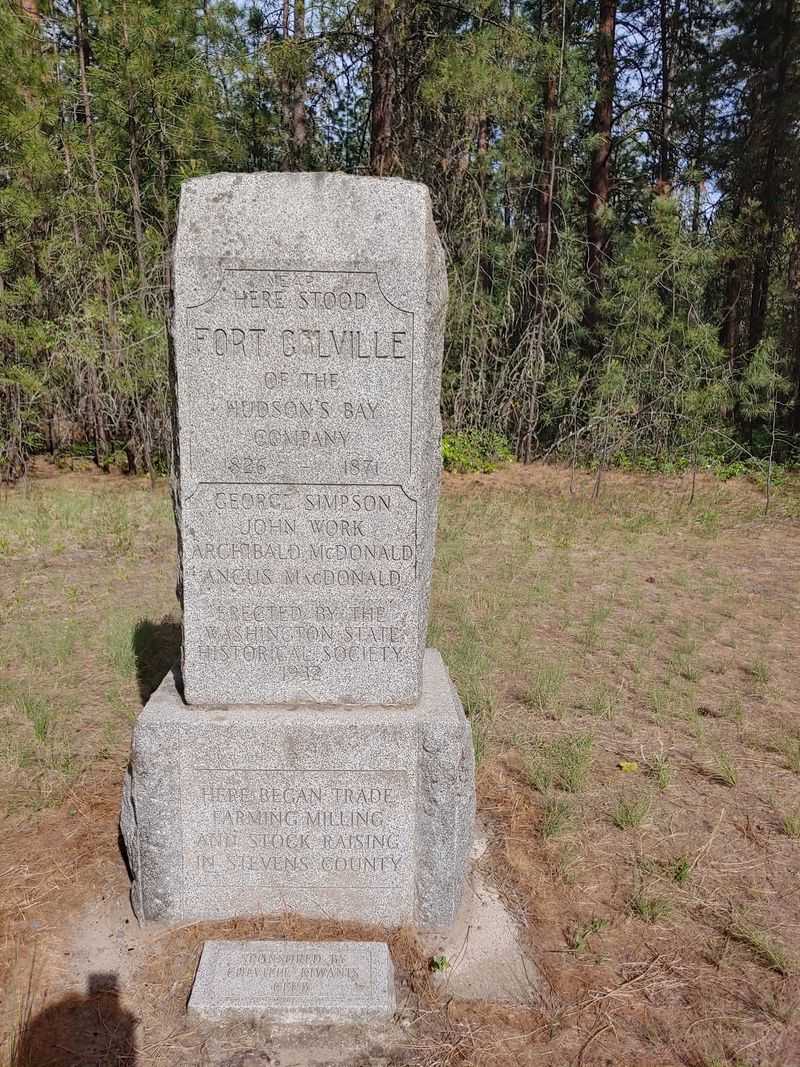
November 1838 brought two travelers who would set this whole story in motion. Fathers François Norbert Blanchet and Modeste Demers were heading from Montreal to Fort Vancouver when they stopped at Fort Colvile.
Fort Colvile was a Hudson’s Bay Company fur trading post near Kettle Falls. Fur traders spread word of the priests’ arrival, and representatives from five tribes came to meet them.
For three days, the priests worked with translators to hold services, including daily mass. They performed 19 baptisms, marking the first Catholic presence between the Cascades and the Rocky Mountains.
Here’s the part that matters for the little log church. As they left, the priests promised that someone would return to start a permanent mission on the Upper Columbia River.
Promises like that often fade, especially across a region with no roads and endless miles of wilderness. This one took nearly seven years to keep, but somebody did show up.
Earlier, in 1836, Protestant missionaries had also visited Kettle Falls, so the area was already drawing travelers with big goals. Few of them left anything as lasting as what came next.
Eight Days Of Fishing Season And A Name That Stuck
Enter Pierre Jean de Smet, a Belgian Jesuit who kept that old promise in 1845. He’d spent years traveling between St. Louis and Europe, recruiting priests and raising funds for missions across the Pacific Northwest.
He arrived at Kettle Falls during the annual fishing season. By his own count, around eight to nine hundred people had gathered there for the salmon runs.
De Smet stayed for eight days and built a simple shelter of logs, brush, and boughs. It stood right in the middle of a village on the bluff overlooking the falls.
His visit included over 100 baptisms and a solemn mass with chanted hymns. He also gave the name St. Paul to the Colville people he met, which is where the mission’s name comes from.
Before leaving, he told the gathered tribes that one of his priests would come to stay permanently. A month later, Father Antonio Ravalli arrived and began building a small chapel.
Ravalli had trained in drawing, architecture, medicine, and theology, which sounds like an excellent résumé for frontier life. He was soon called away, though, and others carried the work forward.
Cedar Beams, Wooden Pegs, And Zero Nails
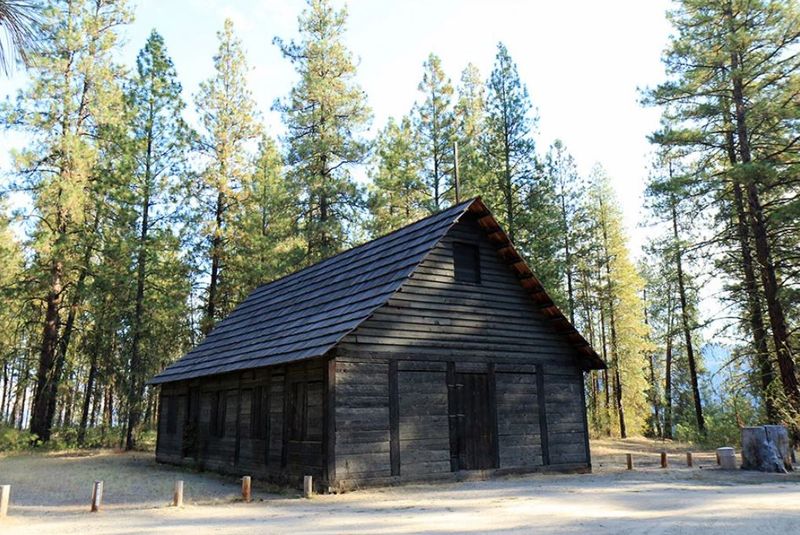
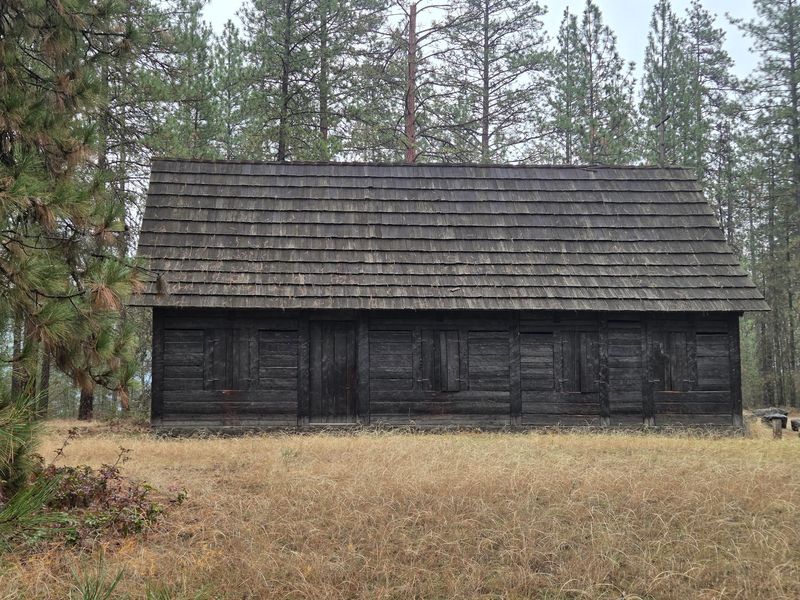
Nails were hard to come by on the 1840s frontier, so the builders got creative. In 1847, Father Peter de Vos began a larger chapel that would serve as both a residence and a mission.
Fur traders from Fort Colvile pitched in to help. Several cedar logs were chiseled and hand-hewn into beams for the frame.
Instead of nails, the crew used wooden pegs to keep those beams in place. That’s old-school carpentry at its finest, and it’s a big reason the walls feel so solid and handmade today.
White mud was packed into the gaps to block drafts, a practice called chinking. The building also had glass windows, which was quite a luxury in such a remote spot.
Two wood-burning stoves kept the place warm through cold northeast Washington winters. By the end of 1847, construction was complete, and the log church you see now took shape.
Take a close look at those hand-hewn logs when you visit. Every flat face and edge was shaped by hand tools, not a sawmill.
It’s craftsmanship you can almost feel just by standing beside it.
A Busy Hub On The Upper Columbia
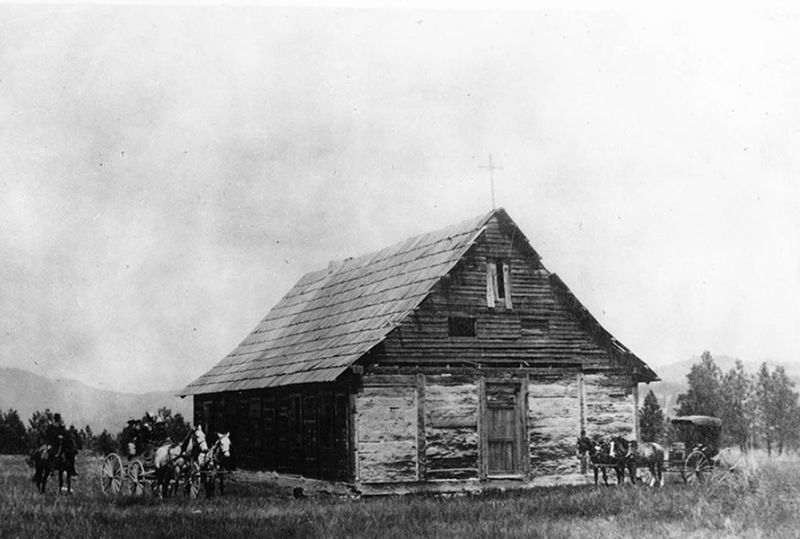
Under Father de Vos, the little mission grew surprisingly busy. He stayed for four years before poor health ended his time there in 1851.
During those years, he performed 491 baptisms and 123 marriages. Numbers like that turned St. Paul’s into the center of Jesuit activity on the Upper Columbia River.
The mission’s main goal was to serve the Colville and nearby tribes. These communities had called the Upper Columbia home for thousands of years.
Many of them were semi-nomadic, arriving at Kettle Falls each summer to fish for salmon. They would then return to their winter grounds when the season ended.
The priests encouraged farming as a more settled way of life. They worked with Fort Colvile, which was also an agricultural hub for the Hudson’s Bay Company, to teach those skills.
Fathers Joseph Joset and Louis Vercruysse served through much of the 1850s. Around 1869, the mission moved to a new location about seven miles north of present-day Colville.
The log church was left behind, but it clearly wasn’t finished making history. Its next chapters would test those pegged beams in a whole new way.
Fire In 1910, Then A Second Chance
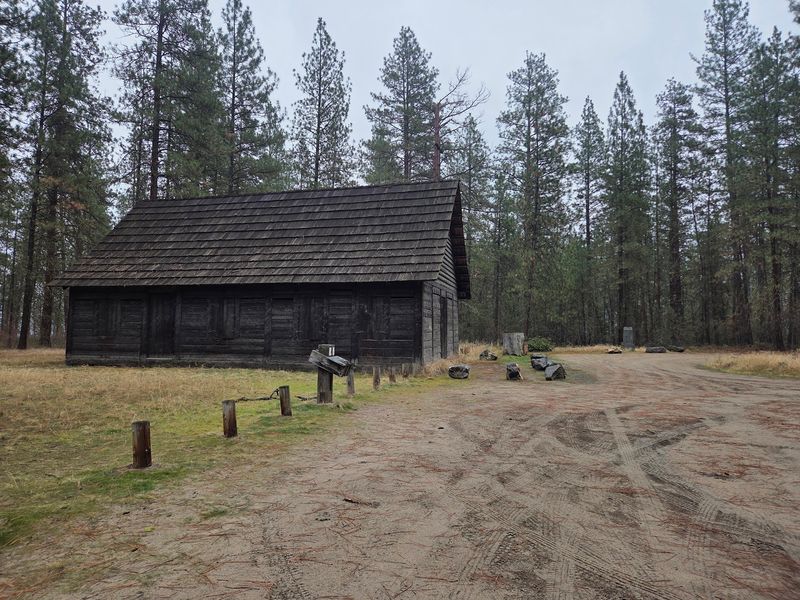
Plenty of frontier buildings simply vanished, but this one refused to go quietly. In 1910, a fire damaged the old log church that had stood since 1847.
For many structures, that would have been the end of the line. Instead, the building got a full restoration between 1939 and 1940.
That effort is why you can still stand beside it today. The restored church keeps its humble, hand-built look, so it still reads like a pioneer structure rather than a modern copy.
I believe that’s what makes it so moving. It survived the move of the mission, a fire, and the flooding of the valley below, yet it still sits right where its builders placed it.
Think about the timeline for a second. The logs were hewn before Washington was even a territory, and they’ve outlasted generations of travelers who passed through Kettle Falls.
When you reach the clearing, give yourself a minute before rushing toward the door. The simple shape of the building tells its own story of grit and patience.
Few places in Washington let you stand this close to something so old and still so sturdy.
Step Through The Door When The Season Allows
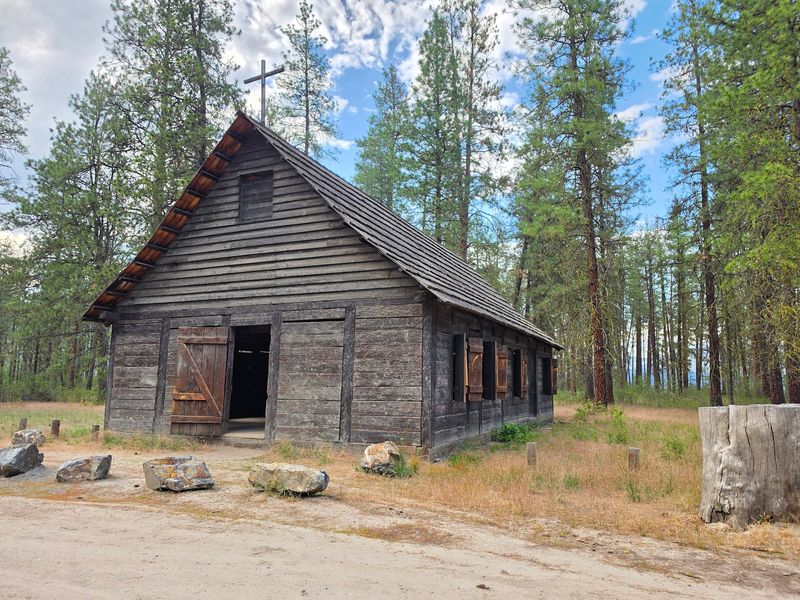
Getting to peek inside a building this old feels like a small privilege. At St. Paul’s Mission, the church is open to visitors during its open season.
That season matters, so plan around it. The building has been closed over the winter in the past and reopened around May, so spring through summer is your best bet.
Once inside, the space has a cool, old-world feel. The hand-hewn log walls are the star, and seeing them up close gives you a real sense of the work that went into them.
Don’t expect velvet ropes, gift shops, or flashy exhibits. The charm here comes from the simple structure itself and the quiet that fills it.
If you arrive when the door is closed, don’t worry too much. The grounds, the trail, the signs, and the views are still free to enjoy, so the trip won’t feel wasted.
Families with curious kids may find this the highlight of the visit. It’s one thing to read about pegged beams and chinked walls.
It’s another thing entirely to stand inside them and look up at a ceiling built in 1847.
Your Phone Becomes The Tour Guide
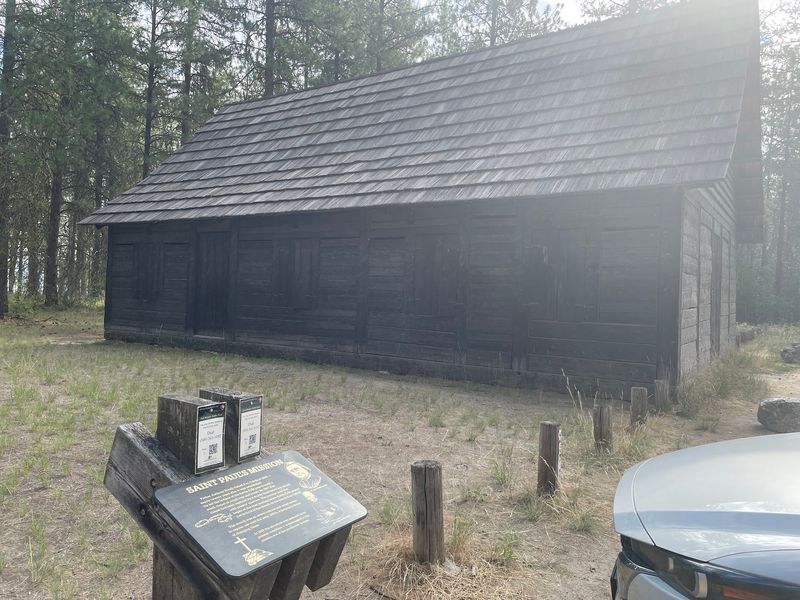
No ticket booth, no tour schedule, no problem. The National Park Service offers a self-guided tour you can access on your phone, and it’s available any time of day.
The tour covers six stops along a short trail. Each stop helps you connect the dots between the church, the people who gathered here, and the landscape around you.
Along the way, interpretive signs and informational plaques fill in the details. They point out landmarks and share bits of history from before the river was flooded.
The loop is short and easy, so it works well for most ages and energy levels. Kids can handle it, and grandparents won’t need to plan a recovery nap afterward.
I like how this setup lets you move at your own pace. You can linger at one sign for ten minutes or breeze along to the next stop without anyone hurrying you.
A quick tip: check your phone’s battery before you go. The tour is the best way to understand what you’re seeing, and you’ll want it working for all six stops.
Headphones can help if you’d like a little extra quiet while you listen.
An Ancient Sharpening Rock That Steals The Show
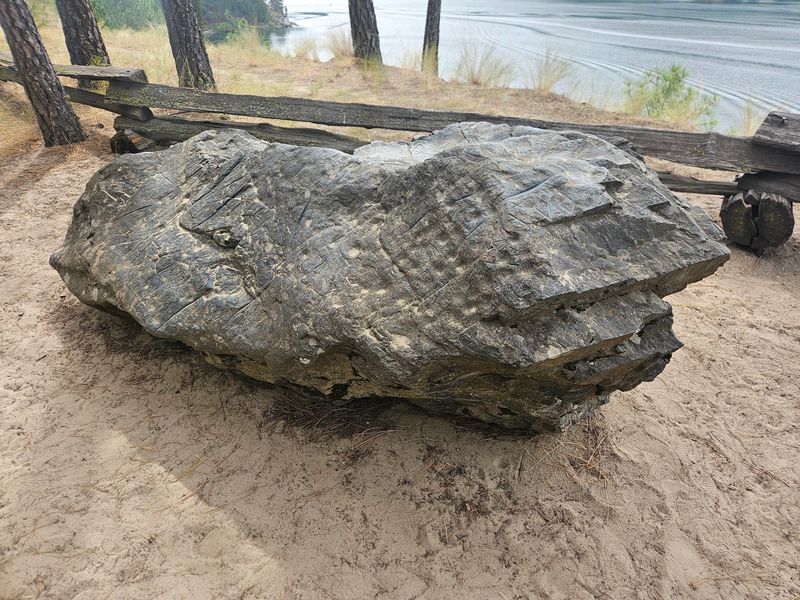
Plenty of visitors come for the church and leave talking about a rock. Along the trail sits a large whetstone, a big stone that Native people used to sharpen knives and spears.
It’s one of those details that makes history feel touchable. Long before the mission existed, people gathered at Kettle Falls for salmon season, and tools needed a keen edge.
Standing beside that rock connects you to a much older story than the 1847 church. The mission is only a recent chapter compared with the thousands of years tribes used this place.
Kids especially tend to perk up at this stop. A rock used for sharpening spears is a lot easier to picture than dates on a plaque.
The sharpening rock is free to visit and reachable even when the church building is closed. That makes it a great reason to swing by in the off-season.
Take a moment to look at the stone’s surface and think about how many hands worked there. It’s a quiet reminder that this bluff was a busy, important gathering place long before any log was hewn.
Where The Falls Once Roared Beneath Lake Roosevelt
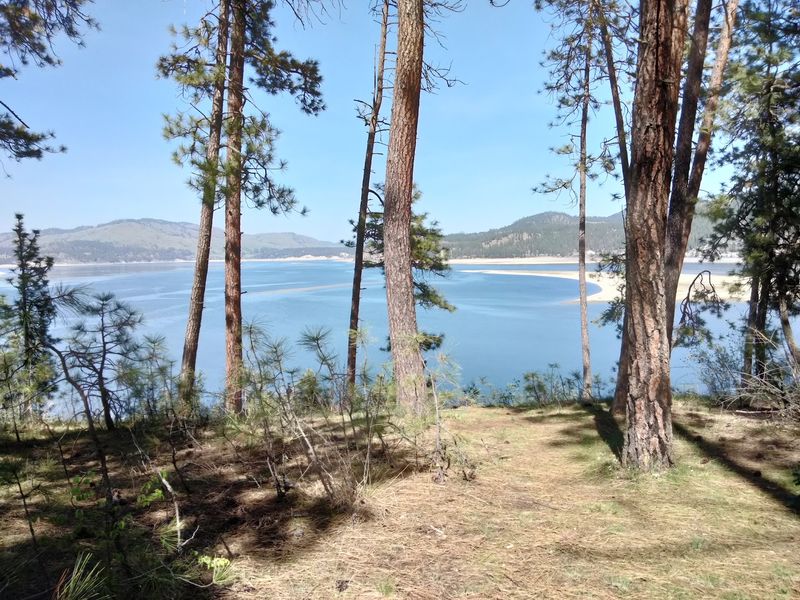
Here’s a twist that surprises a lot of first-time visitors. The famous falls that gave Kettle Falls its name are no longer visible from the bluff.
When Grand Coulee Dam created Lake Roosevelt, the water rose and covered the falls. Fort Colvile, the old fur trading post, also now sits beneath the lake.
For thousands of years, this stretch of the Columbia was a major salmon fishing site. Tribes gathered here each summer, making it one of the region’s key trading hubs.
The signs along the trail help you picture what used to be below. You’ll learn about landmarks, churches, and other features from before the flooding changed the valley.
Knowing this changes how you see the view. That calm, wide water is beautiful, but it also hides a whole lost landscape of rushing falls and busy fishing camps.
I can’t imagine standing there without wondering what it sounded like back then. The roar of the falls and the bustle of hundreds of people must have filled the air.
Today, the quiet is part of the experience, and it gives the history room to breathe.
Pines, Wildflowers, And A View Worth The Short Walk
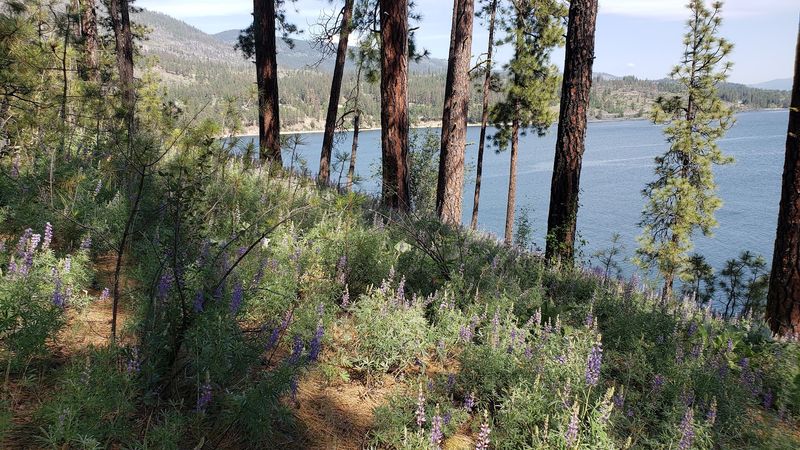
Nature does a lot of the heavy lifting here. The mission grounds sit within a forest of pine and fir, with plenty of open room to wander.
A short trail leads down to a viewpoint over the water. It’s an easy walk, and the reward is a sweeping look at the Columbia River and Lake Roosevelt.
In spring, wildflowers can line the path. Keep your eyes on the sky, too, because eagles have been spotted soaring over the area.
The whole place feels calm and peaceful. It’s just far enough from the highway to feel like you’ve slipped into the woods.
So who will love this stop? History fans, families with kids who need to stretch their legs, and retirees looking for a low-key outing will all find something to enjoy.
Dog owners may appreciate the space as well, though keeping pups leashed is the courteous move on a historic site. Photographers will want extra time at the viewpoint.
If your idea of a perfect afternoon is fresh air, a little learning, and almost no crowds, this corner of northeast Washington checks every box without asking much of your wallet.
Plan A Free, Easy Afternoon In Kettle Falls
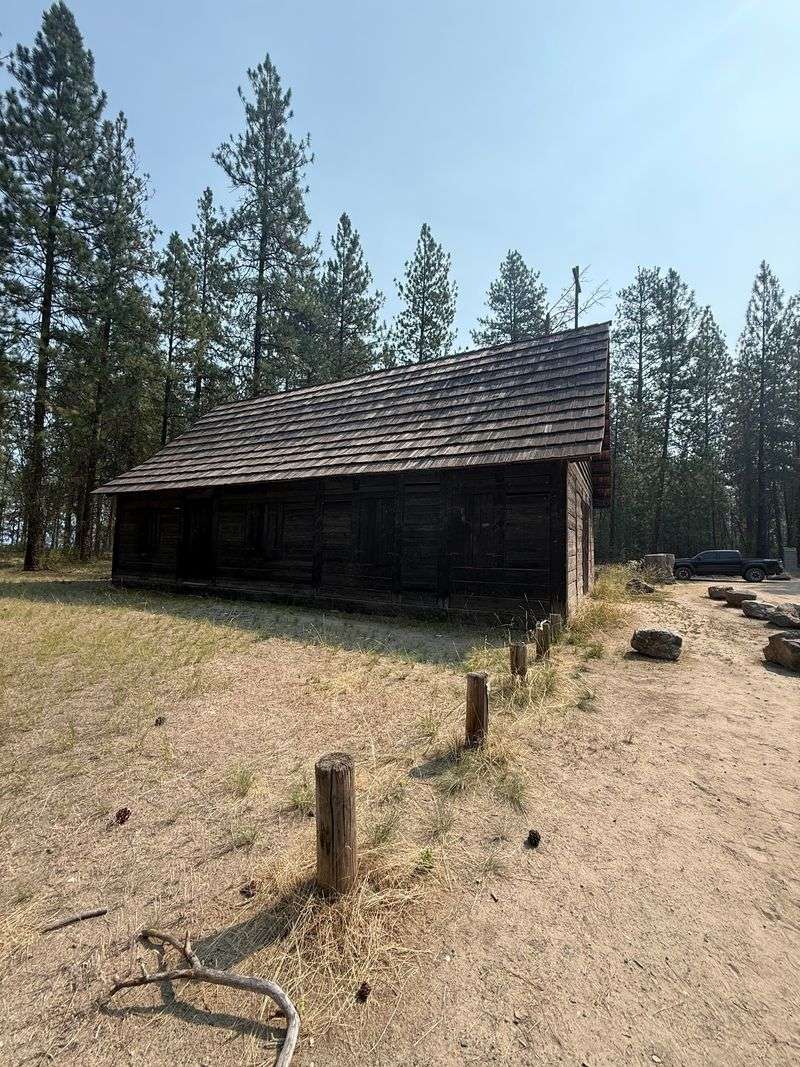
Good news for anyone watching their budget. Walking the grounds, the trail, and the sharpening rock is free, which makes this an easy yes for a weekend outing.
St. Paul’s Mission sits in Kettle Falls, WA 99141, in Washington’s northeast corner near Lake Roosevelt. Parking has been easy to find, so you won’t spend half your visit circling a lot.
Aim for late spring through summer if you’d like to step inside the church. The building has closed over winter before, while the outdoor areas stay open for wandering.
Plan on an hour or so for the full loop, the church, and the viewpoint. History lovers may stretch that longer, especially with the phone tour playing at each stop.
Bring water, comfortable shoes, and a charged phone. A light jacket is smart, too, since the bluff can feel breezy.
So is it worth the drive? For a pegged log church from 1847, an ancient whetstone, and a view over a vanished waterfall, I’d say absolutely.
St. Paul’s Mission proves that small places can hold enormous stories, and this one is waiting quietly for your visit.