
13 Regional Foods So Good, You’ll Never Nail Them At Home
Every corner of America hides culinary treasures that locals swear by and visitors travel miles to taste. These regional specialties carry the essence of their birthplaces – shaped by history, culture, and techniques perfected over generations.
While you might attempt to recreate these iconic dishes in your kitchen, something magical happens when they’re made in their hometown that’s nearly impossible to duplicate elsewhere.
1. New Orleans Beignets
Square pillows of fried dough buried under mountains of powdered sugar, New Orleans beignets are deceptively simple yet maddeningly difficult to replicate at home.
The perfect beignet requires precise oil temperature control and timing. Café du Monde has been serving these heavenly puffs since 1862, creating a ritual as sacred to New Orleans as jazz.
I once attempted making these at home and ended up with dense, chewy dough bombs that triggered my smoke alarm and coated my kitchen in a sugar blizzard.
2. Philadelphia Cheesesteak
Thinly sliced ribeye sizzling on a flat-top grill, melty cheese (Whiz, American, or provolone), all stuffed into an Amoroso roll – the Philly cheesesteak seems straightforward but remains elusive to home cooks.
The magic happens on well-seasoned grills that have cooked thousands of sandwiches. Pat’s and Geno’s might battle for supremacy, but both understand the precise balance of meat-to-cheese ratio and the importance of that locally-baked bread.
The chopping technique alone takes years to master!
3. Chicago Deep Dish Pizza
More casserole than pizza, Chicago’s deep dish is an engineering marvel of flaky, buttery crust supporting layers of cheese, toppings, and chunky tomato sauce. The inch-thick masterpiece requires specialized deep pans and ovens that maintain consistent heat for the 45-minute bake time.
Lou Malnati’s and Giordano’s have perfected their recipes over decades, creating that distinctive buttery crust that home ovens simply can’t replicate.
My aunt from Chicago laughed when I showed her my homemade attempt – “That’s a nice lasagna, honey.”
4. Maine Lobster Roll
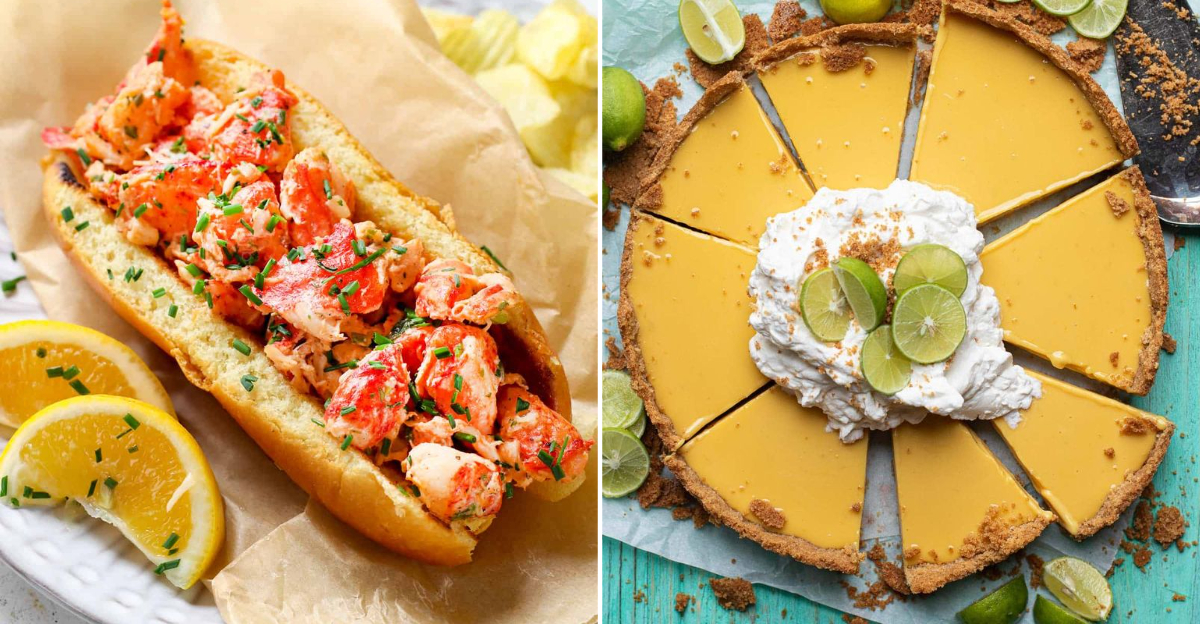
The perfect Maine lobster roll is summer sunshine in sandwich form. Fresh-caught lobster meat, barely dressed with mayonnaise, lemon juice, and maybe a whisper of celery, all nestled in a top-split, butter-toasted hot dog bun.
What makes these impossible to recreate elsewhere? The lobster itself. Maine’s cold waters produce sweeter, more tender lobster meat that loses its magic when shipped inland.
Plus, those authentic New England-style split-top buns are traditional, though now widely available outside the region.
5. Texas Brisket
Legendary Texas brisket transcends mere barbecue – it’s a near-religious experience of smoke, time, and patience. The alchemy happens in massive offset smokers where pitmasters maintain the perfect low temperature for 12+ hours, creating that signature pink smoke ring and pepper-crusted bark.
Franklin Barbecue in Austin has people lining up at dawn for a reason. Home smokers simply can’t match the heat control, wood quality, and airflow of commercial pits.
I’ve watched grown men weep at first bite of properly smoked brisket. It’s that good.
6. Cincinnati Chili
Cincinnati chili defies categorization. This Mediterranean-spiced meat sauce served over spaghetti and topped with mountains of finely shredded cheddar is neither traditional chili nor pasta sauce – it’s something uniquely Ohio.
Skyline and Gold Star restaurants guard their spice blends like Fort Knox. The secret mix might include cinnamon, chocolate, allspice, and dozens more ingredients simmered for hours.
My college roommate from Cincinnati brought his mom’s recipe to our apartment. Despite following it exactly, something was missing – that distinctive Ohio magic remained elusive.
7. New York Bagels
The perfect New York bagel has a glossy, crackly exterior giving way to a chewy, dense interior – achieved through boiling before baking and careful fermentation rather than relying solely on New York’s municipal water supply.
The minerals in NYC water may play a role, but technique matters most. Traditional bagel shops boil their dough rings before baking, creating that distinctive crust. Ess-a-Bagel and Russ & Daughters have perfected techniques passed down through generations.
Even professional bakers outside the five boroughs admit defeat when attempting authentic replicas.
8. Key Lime Pie from the Florida Keys
True Key lime pie from the Florida Keys has a sunny yellow filling – never green – made from tiny local Key limes that pack more aromatic punch than their Persian cousins. The authentic version features a graham cracker crust and often sports a topping of lightly browned meringue.
The pie’s simplicity (just lime juice, sweetened condensed milk, and egg yolks) makes it deceptively difficult to master. The filling sets because the lime juice’s acidity reacts with the sweetened condensed milk and yolks (often with a brief bake).
When I visited Key West, a pie shop owner told me, “If it’s green, just leave.”
9. San Francisco Sourdough
San Francisco sourdough bread owes its distinctive tangy flavor to a symbiotic culture of wild yeasts and lactic acid bacteria (including Lactobacillus sanfranciscensis) that bakers have cultivated locally for generations. Bakeries like Boudin have maintained their starter cultures for over 150 years!
The bread’s perfect contrast between crackling crust and chewy, hole-filled interior comes from specialized steam-injected ovens and the region’s unique air quality.
Home bakers might produce good sourdough elsewhere, but it will never have that specific San Francisco character.
10. Detroit-Style Pizza
Detroit-style pizza’s signature feature is its rectangular shape and caramelized cheese edge – created in blue steel pans originally used to hold auto parts in Motor City factories.
The cheese (traditionally Wisconsin brick cheese) extends all the way to the edges, creating a lacy, crispy perimeter that’s absolutely addictive. Buddy’s Pizza pioneered this style in 1946.
The industrial pans, seasoned over decades, create heat transfer that home cookware can’t match. The sauce goes on top of the cheese, not under it – a small but crucial detail.
11. New Mexico Green Chile Stew
New Mexico’s green chile stew showcases the state’s famous Hatch chiles – grown in mineral-rich volcanic soil under intense desert sun. These conditions create peppers with a complex flavor profile that ranges from grassy and bright to smoky and earthy.
During harvest season, the intoxicating aroma of roasting chiles fills the air at roadside stands throughout the state. The stew combines these roasted peppers with pork, potatoes, and local spices.
My brother moved to Santa Fe and swears nothing tastes the same elsewhere.
12. Maryland Crab Cakes
Maryland crab cakes celebrate Chesapeake Bay blue crabs with a simple preparation that lets the sweet meat shine. Barely bound with crackers or bread crumbs and minimal filler, authentic versions emphasize mostly lump crab meat.
Old Bay seasoning provides the distinctive flavor, but it’s the freshness of just-caught blue crabs that makes Maryland versions impossible to duplicate inland.
Faidley’s Seafood in Baltimore’s Lexington Market has perfected the delicate balance between binding and showcasing the crab. They’re typically broiled or fried (some bake them, too).
13. St. Louis Gooey Butter Cake
St. Louis gooey butter cake began as a happy accident in the 1930s when a local baker mixed up the proportions in his coffee cake recipe.
The mistake created a dessert with a cake-like bottom and a gooey, buttery custard top that’s now beloved throughout Missouri. Park Avenue Coffee makes over 70 varieties, but the traditional version remains unbeatable.
The secret lies in the precise balance between the yeast-raised base and the sweet, gooey top layer. Home versions often use cake mix shortcuts that miss the authentic texture.