
7 Oatmeals You Should Never Eat
I’ve always considered oatmeal a breakfast superhero – until I discovered not all oatmeals wear capes.
Some actually sabotage your health goals with sneaky sugars, artificial ingredients, and nutritional emptiness.
After investigating ingredient lists and nutrition facts, I’ve identified seven oatmeal villains masquerading as healthy choices on grocery shelves.
These morning meal imposters might be convenient, but they’re doing your body no favors.
1. Calorie-Conscious Catastrophe: Better Oats 100-Calorie Cinnamon Roll
Marketing genius meets nutritional disaster in this deceptive package. Sure, it’s only 100 calories, but those calories come loaded with artificial sweeteners, flavor enhancers, and a chemical cocktail trying desperately to mimic cinnamon roll flavor. I fell for the low-calorie promise once, only to discover I was hungrier an hour later than if I’d eaten nothing at all.
The maltodextrin (a processed food additive) in this product actually has a higher glycemic index than table sugar! This means despite the lower calorie count, your blood sugar still takes a roller coaster ride. The manufacturers have essentially replaced sugar calories with artificial ingredients that may trigger cravings later.
Counting calories without considering nutritional quality is like counting the deck chairs on the Titanic – you’re still headed for disaster. These packets contain barely any actual oats compared to their additive content.
2. Variety Pack Trap: Market Pantry Instant Oatmeal Variety Pack
Variety is supposedly the spice of life, but not when every option is equally problematic! Last month, I grabbed this multi-flavor pack thinking I was being smart about breakfast planning. Each flavor in this assortment contains between 9-13 grams of sugar, with the strawberries and cream variety being particularly offensive.
The peaches and cream flavor contains exactly zero real peaches. Instead, you’ll find “peach flavored pieces” made primarily of sugar, artificial flavors, and food coloring. Even the plain packets aren’t truly plain – they contain added salt and preservatives unnecessary in actual oatmeal.
These variety packs prey on our desire for convenience and choice while delivering uniformly poor nutrition. The colorful packaging and flavor assortment distract from what you’re really getting: multiple versions of sugar-laden, artificially flavored breakfast disappointment.
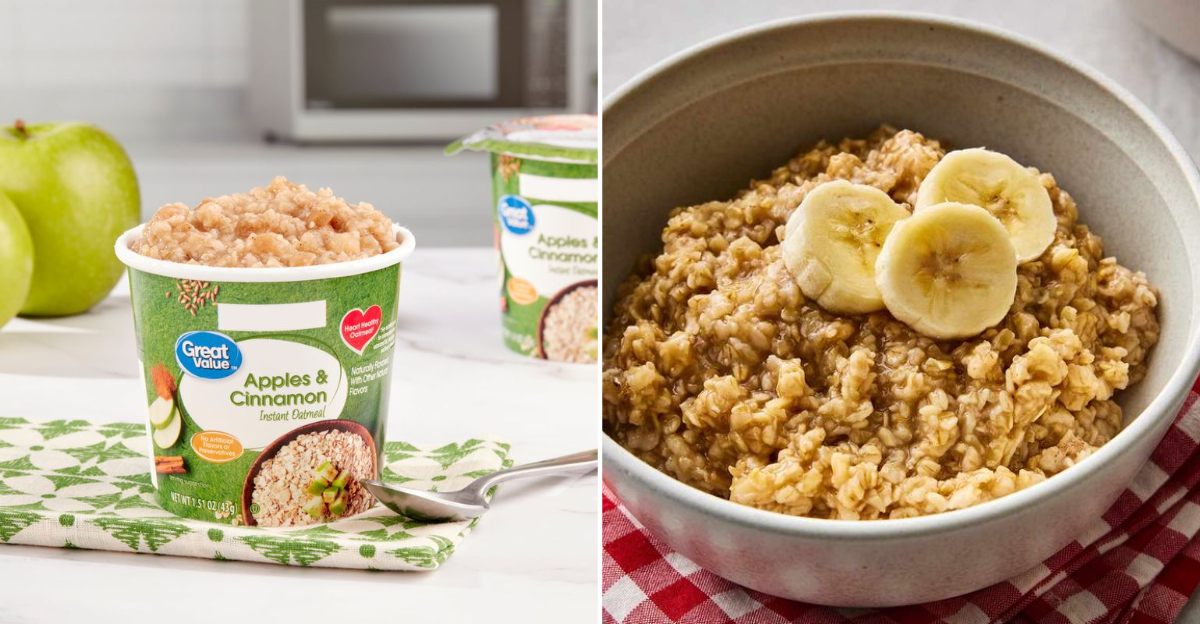
3. Artificial Nightmare: Great Value Instant Oatmeal Apples & Cinnamon
Scanning the ingredient list of this budget option nearly made me drop my shopping basket. Behind that innocent “apple” label lurks artificial flavors, preservatives, and something called “apple pieces” that contain more sugar than actual fruit. The cinnamon isn’t just cinnamon either – it’s mixed with various gums and stabilizers.
Remember when food ingredients were recognizable? This oatmeal contains components I’d need a chemistry degree to understand. The worst part? The misleading packaging suggests you’re getting something wholesome with those pictures of fresh apples and cinnamon sticks.
Budget-friendly shouldn’t mean health-compromising. At 11 grams of sugar per serving plus those mysterious ingredients, this oatmeal exemplifies how processed foods can stray so far from their natural origins.
4. Sugar Bomb: Quaker Instant Oatmeal Maple & Brown Sugar
My nephew calls this his “dessert breakfast,” which accidentally reveals the uncomfortable truth. A single packet contains a whopping 12 grams of sugar that’s three teaspoons worth! The artificial maple flavoring bears little resemblance to the real stuff from trees.
I once relied on these packets during busy mornings, believing I was making a healthy choice. The reality? You’re essentially starting your day with a sugar rush followed by an inevitable crash. The processing strips away much of the fiber that makes oatmeal beneficial in the first place.
The convenience factor simply doesn’t justify the nutritional downgrade. Your body deserves better than processed oats swimming in sugar crystals that’ll spike your blood glucose and leave you hungry again before lunch even rolls around.
5. Kid-Targeted Trickery: Quaker Dinosaur Eggs Oatmeal
Dinosaur eggs in oatmeal? My sister’s kids went wild for these until I showed her the nutrition label. These “magical” dinosaur eggs are actually candy pieces coated in food dye that “hatch” when hot water hits them. Pure marketing wizardry targeting children with 14 grams of sugar per tiny serving!
The bright blue and green dinosaurs contain artificial colors linked to hyperactivity in some children. The irony is painful – parents serve this thinking they’re giving kids a wholesome breakfast, when they might actually be setting them up for a mid-morning attention crash in school.
Children deserve better than to have their natural enthusiasm for dinosaurs exploited to sell them sugar-laden breakfast food. The concerning part? This creates early associations between fun characters and unhealthy food choices that can last a lifetime.
6. Premium Pretender: McCann’s Instant Oatmeal With Maple & Brown Sugar
The fancy packaging and premium price point fooled me completely. McCann’s trades on its reputation for traditional Irish oatmeal, but their instant version with maple and brown sugar bears little resemblance to their steel-cut classic. Behind that sophisticated label hides 13 grams of sugar per serving – more than some cookies!
The ingredient list reveals the “maple” comes from artificial flavoring, not real maple syrup. What’s truly disappointing is how a brand known for quality traditional oats has surrendered to the same sugar-laden formula as cheaper competitors, while charging more for essentially the same product.
The texture suffers too becoming a gummy, overly sweet mush rather than hearty oatmeal. Save your money and your health. This premium-priced option delivers budget-quality nutrition wrapped in sophisticated packaging, proving that marketing often trumps substance in the breakfast aisle.
7. Organic Imposter: Nature’s Path Organic Instant Oatmeal Spiced Apple
“Organic” doesn’t automatically mean healthy a lesson I learned the expensive way. Nature’s Path Organic oatmeal proudly displays its organic certification while quietly packing 11 grams of sugar into each small serving. The organic sugar might be less processed, but your body processes it exactly the same way.
Last year, I stocked up during a sale, believing I was making a superior choice. The dried apple pieces are indeed organic, but they’re infused with organic apple juice concentrate – essentially a fancy name for sugar. The “spiced” component comes from a minimal dusting of spices far outweighed by the sweeteners.
The organic label creates a health halo that distracts from the fundamental nutrition facts. While free from synthetic pesticides (a plus), this oatmeal remains a sugar delivery system that happens to contain some organic oats and apple pieces as carriers.