
13 Beloved Food Brands That Weren’t The Same After A Corporate Takeover
Big corporations love acquiring smaller, beloved food brands to add to their portfolios. Unfortunately, these takeovers often lead to recipe changes, quality compromises, or shifts in brand values that leave loyal customers disappointed.
From childhood favorites to artisanal delights, here are 13 food brands that lost their magic touch after being swallowed by corporate giants.
1. Butterfinger’s Crunch Controversy
Candy lovers nearly staged a revolt when Ferrero acquired Butterfinger in 2018 and promptly changed the iconic recipe.
The company claimed they improved the quality by removing artificial preservatives and hydrogenated oils. However, fans disagreed vehemently, lamenting the altered texture and flavor profile that had defined their favorite candy bar for generations.
Social media campaigns begged for the original formula’s return, proving that not all changes are sweet.
2. Breyers’ Frozen Dairy Deception
Remember when Breyers was synonymous with premium ice cream? That changed after Unilever’s 1993 acquisition.
Gradually, many beloved flavors were reformulated with cheaper ingredients and air-pumping techniques that legally couldn’t be called ice cream anymore.
The rebranding to “frozen dairy dessert” wasn’t just a name change. It represented a fundamental shift away from the quality that built Breyers’ reputation.
Customers noticed the melting differences immediately.
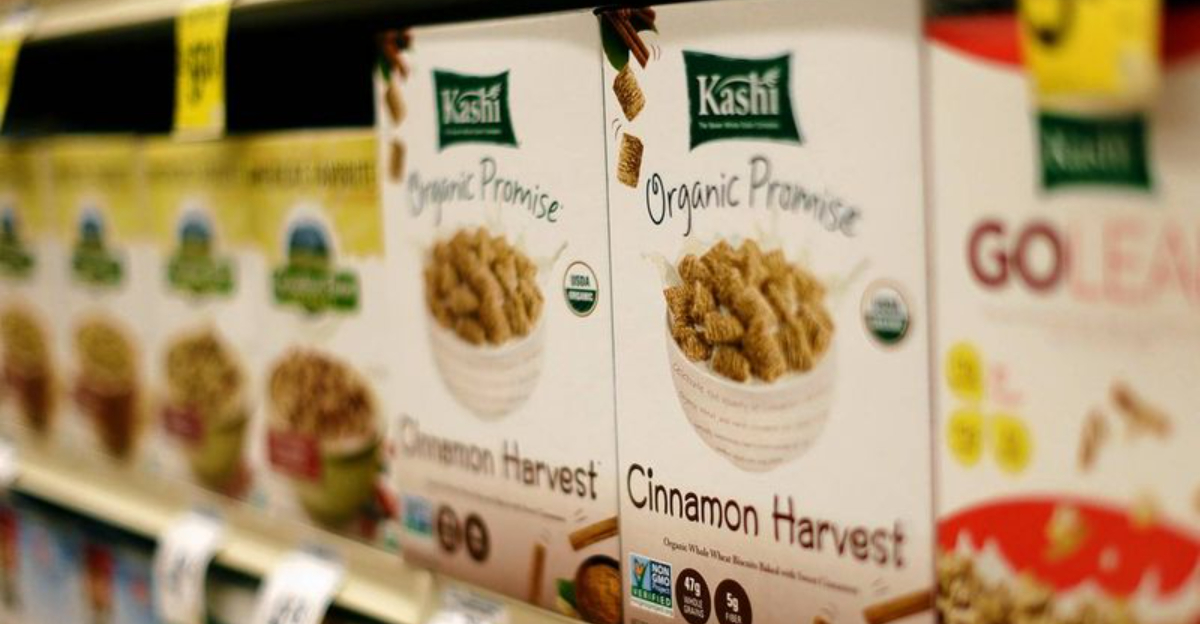
3. Kashi’s Natural Reputation Crumbles
Kashi built its following on wholesome, natural ingredients before Kellogg’s gobbled it up in 2000.
The health-focused brand soon faced lawsuits over misleading “all-natural” claims when products contained genetically modified ingredients, something early fans found unthinkable from their trusted granola maker.
Forced to drop certain claims and reformulate products, Kashi paid millions in settlements while watching its authentic health halo dim considerably.
4. Green & Black’s Organic Compromise
Founded on principles of organic chocolate and fair trade practices, Green & Black’s enjoyed cult status among ethical consumers.
After Cadbury (later Mondelez) took over in 2005, the brand maintained its standards until 2017. The introduction of Velvet Edition bars that were neither organic nor Fairtrade certified marked a stark departure from the company’s founding values.
Longtime supporters felt betrayed by what they saw as corporate profit trumping principles.
5. Scharffen Berger’s Artisanal Downfall
Craft chocolate pioneers Robert Steinberg and John Scharffenberger created America’s first bean-to-bar chocolate company in 1997.
Hershey’s 2005 acquisition initially seemed promising for expansion. Just four years later, however, they shuttered the beloved Berkeley factory, moving production away from its artisanal roots.
The relocated chocolate lost its distinctive terroir and handcrafted quality, with connoisseurs noting immediate differences in flavor complexity and mouthfeel.
6. Odwalla’s Juicy Demise
Odwalla built a loyal following with fresh, minimally processed juices and smoothies that felt genuinely healthy.
Coca-Cola’s 2001 acquisition initially expanded distribution while maintaining product integrity. But in July 2020, amid pandemic portfolio “streamlining,” Coke completely discontinued the brand after nearly two decades of ownership.
Longtime customers mourned the loss of their favorite refrigerated beverages, finding mass-produced alternatives lacking Odwalla’s distinctive fresh-pressed quality.
In 2025, the brand returned under new ownership, though the abrupt 2020 shutdown still left a lasting impression.
7. ZICO’s Coconut Water Rollercoaster
ZICO pioneered the American coconut water craze before Coca-Cola acquired majority ownership in 2013.
Initially, the partnership boosted ZICO’s market presence. But in 2020, Coke axed the brand during pandemic-related cuts, only to sell it back to founder Mark Rampolla in 2021.
This corporate whiplash left consumers confused about product availability and quality consistency, damaging the brand’s market position despite its eventual return to independent ownership.
8. KeVita’s Probiotic Problems
Health enthusiasts celebrated KeVita’s raw, probiotic-rich kombucha drinks before PepsiCo snatched up the brand in 2016.
After the acquisition, controversy bubbled up through class-action lawsuits alleging that PepsiCo was pasteurizing the beverages, destroying the very living probiotics that were the product’s main selling point.
This fundamentally altered what made KeVita special, as wellness-focused customers questioned whether they were still getting the gut-health benefits they were paying premium prices for.
9. Topo Chico’s Contamination Crisis
Mexican mineral water Topo Chico developed a cult following for its exceptional carbonation and clean taste over 125 years.
Shortly after Coca-Cola’s 2017 acquisition, Consumer Reports revealed the brand had some of the highest PFAS levels (“forever chemicals”) among tested waters. Coke subsequently reduced these levels, but the damage was done.
The timing of the controversy immediately following the takeover left many loyalists wondering if corporate ownership had compromised their favorite sparkling water’s purity.
10. Keebler’s Cookie Recipe Revision
The Keebler elves’ tree-baked cookies were pantry staples before Ferrero acquired the brand in 2019.
The new Italian owners quickly implemented sweeping recipe changes, removing high-fructose corn syrup and artificial flavors in favor of “premium” ingredients like natural vanilla.
While healthier on paper, longtime fans complained that Chips Deluxe and Fudge Stripes just didn’t taste the same.
The texture and flavor profiles that defined childhood memories had noticeably shifted.
11. Famous Amos Cookie Confusion
Wally Amos created his premium cookie brand with high-quality ingredients and his grandmother’s recipe in 1975.
After multiple ownership changes, Ferrero acquired Famous Amos in 2019. The new recipe changes proved so unpopular that by 2024, the company was forced to reverse course, announcing a return to “original” formulations.
This corporate flip-flop demonstrated how even big companies sometimes must admit that tampering with beloved recipes can backfire dramatically.
12. Snapple’s Sugar Substitution
Snapple’s quirky brand personality and “made from the best stuff on Earth” slogan made it a 90s beverage icon.
After changing hands multiple times (Quaker Oats, then Cadbury Schweppes/Dr Pepper), the brand underwent significant transformations.
In 2009, Snapple reformulated, including replacing high-fructose corn syrup with sugar, while its broader switch from glass to plastic bottles occurred years later.
Despite marketing this as an improvement, devoted fans insisted the drink’s distinctive flavor profile had fundamentally changed.
13. Annie’s Homegrown’s Corporate Sellout
Annie’s Homegrown built its reputation on wholesome, natural mac and cheese and other family favorites that parents trusted.
When General Mills acquired the brand in 2014 for $820 million, loyal customers feared the worst. Their concerns materialized when Annie’s faced backlash and scrutiny over GMO-related issues under its new corporate parent, a stark contrast to its former positioning.
The company scrambled to make public assurances about ingredient standards, but the trust damage was already done.