
11 Regional Foods That Vanished When Chain Restaurants Took Over
Remember those special dishes that made road trips through different states so memorable?
Before the golden arches and drive-thru lanes dominated America’s roadsides, each region boasted unique culinary treasures you couldn’t find anywhere else.
I still recall my grandmother’s stories about local diners serving specialties that defined their communities.
Sadly, as chain restaurants expanded across the country with their standardized menus, many of these regional delicacies faded into obscurity.
1. Lefse: The Norwegian Flatbread That Lost Its Foothold
Growing up in Minnesota, Grandma’s paper-thin potato lefse was our Christmas morning tradition. Warm, buttery, and sprinkled with cinnamon sugar, this Norwegian flatbread was once a staple across the Upper Midwest where Scandinavian immigrants settled.
Fast food pancake houses gradually replaced the small-town bakeries that kept lefse-making traditions alive. The delicate art of rolling the dough tissue-thin required specialized tools and patience – qualities that didn’t translate to commercial kitchens focused on speed and consistency.
Now lefse exists primarily at holiday gatherings and specialty Scandinavian shops. The younger generation rarely encounters this delicious heritage food unless they have a determined grandmother willing to spend hours at the lefse griddle.
2. Scrapple: Pennsylvania’s Breakfast Secret That Disappeared
Hoo boy, the first time I encountered scrapple at my uncle’s Pennsylvania farm, I nearly turned tail and ran! This mid-Atlantic breakfast meat – a savory loaf made from pork scraps, cornmeal, and spices – looked strange but tasted divine when pan-fried to crispy perfection.
Local diners throughout Pennsylvania, Delaware, and Maryland once proudly served thick slices alongside eggs and toast. The thrifty dish emerged from Pennsylvania Dutch farming communities where nothing went to waste.
Chain breakfast spots with their uniform bacon and sausage offerings gradually pushed scrapple off menus. The rustic appearance and “mystery meat” reputation didn’t help its survival in an era of increasing food prettification. Now you’ll rarely spot it outside Amish country markets and a handful of traditional diners.
3. Goetta: Cincinnati’s Forgotten Breakfast Meat
My first Cincinnati business trip introduced me to goetta – a glorious mixture of ground meat, steel-cut oats, and spices formed into sliceable loaves. This German-inspired creation was the working-class hero of breakfast foods throughout the Ohio River Valley, stretching every bit of precious meat with hearty grains.
Family-owned German restaurants once featured goetta prominently, but standardized breakfast chains had no room for regional oddities. The time-intensive preparation (simmering for hours!) made it impractical for fast-paced commercial kitchens.
While a few Cincinnati establishments still serve this specialty, it’s virtually unknown outside its homeland. Most travelers passing through the area never discover this unique breakfast treat that sustained generations of German-American factory workers with its stick-to-your-ribs goodness.
4. Chislic: South Dakota’s Vanishing Meat Cubes
During a motorcycle trip through South Dakota, I stumbled upon chislic in a tiny roadside tavern – perfectly seasoned cubes of lamb or beef, deep-fried and served with toothpicks. My taste buds threw a party! This simple yet addictive dish was brought by Russian-German immigrants who settled the Dakota Territory.
Local bars throughout southeastern South Dakota once served these meat morsels as their signature appetizer. The preparation couldn’t be simpler, but the flavor was unforgettable.
As sports bar chains expanded with their standardized mozzarella sticks and buffalo wings, chislic retreated to increasingly remote locations. Today, unless you’re exploring the backroads around Freeman or Sioux Falls, you might never encounter this regional treasure that locals guarded with fierce pride. The distinctive name alone – derived from the Russian word “shashlik” – deserves preservation!
5. Cheese Frenchee: The Midwest’s Crispy Sandwich Sensation
My first Cheese Frenchee experience came from my Nebraska-born college roommate who recreated this midwestern marvel in our dorm kitchen. Imagine a grilled cheese sandwich dipped in egg batter, rolled in crushed cornflakes, and deep-fried to crunchy perfection – pure comfort food genius!
The King’s Food Host restaurant chain popularized this creation throughout Nebraska, Iowa, and Kansas in the 1960s. Local diners proudly served their versions, each claiming slight variations that made theirs superior.
When national fast-food chains steamrolled across the heartland with their predictable menus, the labor-intensive Frenchee couldn’t compete. Now this magnificent sandwich has virtually disappeared from public consciousness. Only a handful of Nebraska restaurants still honor this regional specialty that combines the best elements of French toast and grilled cheese in one indulgent package.
6. Fried Brain Sandwich: The Controversial River Town Delicacy
I’ll never forget my grandfather’s face lighting up when he spotted a fried brain sandwich on a menu during our Mississippi River road trip. This infamous specialty – thinly sliced beef or pork brain battered and fried until crispy – was once common in river towns from Missouri to Indiana.
Slaughterhouse workers popularized this protein-rich meal in communities where meatpacking was the economic backbone. Served on a bun with mustard and pickles, it had a dedicated following despite (or because of) its shock value.
Health concerns and changing tastes gradually pushed brain sandwiches off menus, while chain restaurants with standardized offerings accelerated their decline. Today, you might find them in just a handful of old-school taverns in places like St. Louis and Evansville. Most have switched to pork brains after beef brains were restricted during the mad cow disease scare.
7. Hot Dish: Minnesota’s Casserole Tradition That Chain Restaurants Ignored
The church basement potlucks of my Minnesota childhood always featured at least five varieties of hot dish – that magical combination of protein, starch, and canned soup baked into casserole perfection. Tater tot hot dish was the crown jewel, with its golden potato crown atop seasoned ground beef and creamy vegetable filling.
Family restaurants throughout the Upper Midwest once proudly served their signature hot dishes as daily specials. These hearty, affordable meals reflected the practical sensibilities of Scandinavian and German settlers who needed to feed hungry families through harsh winters.
National restaurant chains had no interest in these homestyle creations that varied from town to town. Their standardized menus favored recognizable dishes with broad appeal. Now hot dish survives primarily in home kitchens and church cookbooks, a culinary tradition passed down through generations but rarely found in commercial establishments.
8. Loose Meat Sandwich: Iowa’s Answer to the Hamburger
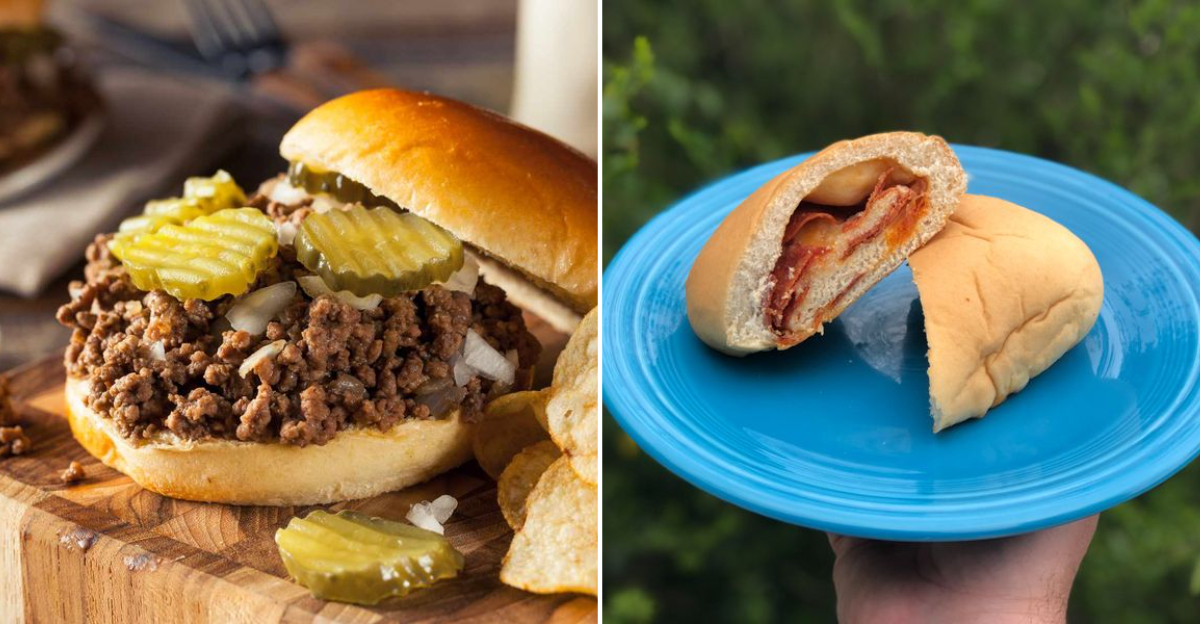
My road trip through Iowa led to a life-changing discovery at a small-town diner – the loose meat sandwich. Unlike a hamburger, this magical creation features seasoned ground beef that’s steamed rather than formed into a patty, served on a bun with pickles and mustard. The meat’s perfectly seasoned crumbles create a delightful texture experience!
Local restaurants like Maid-Rite popularized these sandwiches throughout Iowa and neighboring states. Each town seemed to have its own variation, with heated debates about proper seasoning and whether ketchup was an acceptable topping.
As burger chains consolidated their hold on American fast food with their uniform patties, the loose meat sandwich retreated to its heartland strongholds. The messy, utensil-requiring nature of this regional specialty made it impractical for eat-while-driving modern consumers. Now you’ll rarely encounter this delicious Iowa tradition unless you deliberately seek it out.
9. Pepperoni Rolls: West Virginia’s Mining Lunch That Faded Away
During a backcountry hiking trip through West Virginia, I discovered pepperoni rolls at a small country store – soft bread rolls with spicy pepperoni baked inside, creating pockets of delicious orange-tinted oil. The storekeeper explained they were invented for coal miners who needed portable, no-refrigeration lunches for long shifts underground.
Local bakeries throughout the Mountain State once produced these hearty rolls by the thousands. Italian immigrants who came to work the mines developed this ingenious solution to workplace hunger that became part of West Virginia’s cultural identity.
National chain convenience stores and fast food outlets gradually replaced the family bakeries where pepperoni rolls were a specialty. While still available in parts of West Virginia and western Pennsylvania, this regional treasure remains largely unknown to outsiders. The simple combination of bread and cured meat created a portable meal perfectly suited to its time and place.
10. Butter Burgers: Wisconsin’s Dairy-Enhanced Beef Patties
My first Wisconsin butter burger experience left me speechless – a juicy beef patty with a generous pat of cold butter melting into the hot meat and bun. Sinful? Absolutely. Delicious? Beyond words! This dairy state specialty once graced menus at local diners across Wisconsin, celebrating the state’s butter abundance.
Family-owned restaurants took pride in their butter burger variations, some mixing butter into the ground beef, others adding it after cooking. The rich, melty goodness created a flavor profile that chain restaurants couldn’t replicate.
As national burger franchises expanded with their standardized recipes, these buttery creations retreated to a handful of Wisconsin establishments. Health concerns about saturated fat didn’t help their survival. While Culver’s chain has preserved a version of the butter burger, the original local interpretations – often featuring thick slabs of local butter – have largely disappeared from roadside stops where travelers once discovered this regional indulgence.
11. Chicken Spiedies: Binghamton’s Marinated Meat Skewers
My cousin’s wedding in upstate New York introduced me to chicken spiedies – cubes of marinated chicken grilled on skewers and served on soft Italian bread. The tangy, herbaceous marinade (a closely guarded family secret in many cases) transformed ordinary chicken into something extraordinary!
Local taverns throughout New York’s Southern Tier region once featured these Mediterranean-inspired skewers. Italian immigrants who settled around Binghamton adapted their traditional cooking methods to create this distinctive local specialty that became a source of fierce regional pride.
As national chicken franchises multiplied with their buffalo wings and predictable grilled options, spiedies remained stubbornly local. Annual spiedie festivals still celebrate this regional treasure, but outside the Binghamton area, you’d be hard-pressed to find them on restaurant menus. The unique name alone – derived from the Italian “spiedo” meaning spit or skewer – deserves wider recognition in America’s culinary landscape.