
8 Reasons Locals Love This California Town Where Time Stands Still
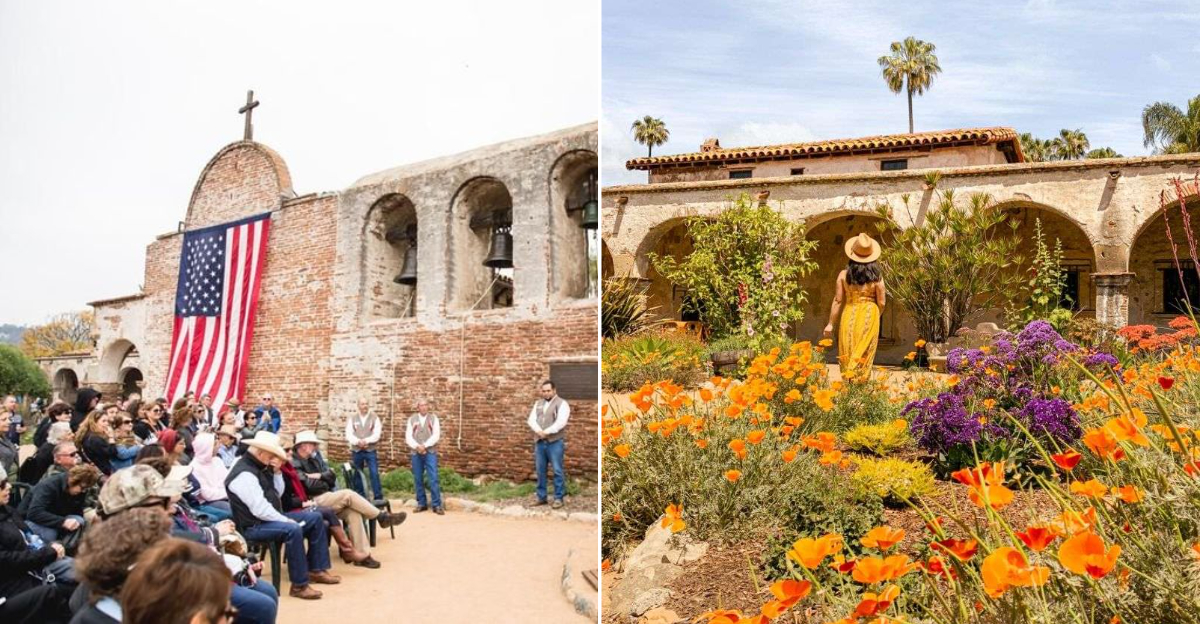
Nestled in the heart of Orange County lies a charming slice of California history that locals cherish and visitors often overlook.
San Juan Capistrano, with its cobblestone streets and adobe buildings, feels like stepping into a time capsule where modern life slows to match the rhythms of centuries past.
Walking through this town, I’m always struck by how it preserves its rich heritage while still feeling vibrantly alive—a rare quality that keeps both multi-generation residents and newcomers falling in love with it year after year.
1. Mission Magic Captivates Every Visitor
The first time I wandered through Mission San Juan Capistrano’s gardens, I lost track of time completely. That’s the magic of this place—the crumbling Great Stone Church ruins tell stories without saying a word. Founded in 1776, this “Jewel of the Missions” stands as the town’s beating heart and spiritual anchor.
Serra Chapel, the only surviving church where Father Junípero Serra himself celebrated Mass, gives me goosebumps every visit. The worn wooden pews have supported worshippers for over two centuries, and somehow you can feel that history in the air. The mission’s seasonal gardens transform with each passing month—vibrant poppies in spring, roses in summer, and rustic charm year-round.
Local families don’t just visit once and check it off their list. They return regularly, bringing out-of-town guests, attending concerts in the central courtyard, or simply seeking a peaceful moment among the fountains and bell wall. Children chase each other through the open spaces while parents point out the architectural details they themselves discovered as kids. The mission serves as both museum and living heritage site, hosting everything from candlelit Christmas celebrations to educational programs that keep local history vibrant.
What makes it truly special is how it remains the genuine article—not a recreation or tourist trap, but the authentic center of a community that grew around it. When the afternoon light filters through the old windows and casts long shadows across the grounds, even lifelong residents pause to appreciate the timeless beauty they’re lucky enough to call home.
2. Swallows’ Faithful Return Creates Annual Celebration
My grandmother first told me about the swallows when I was seven. “They fly all the way from Argentina,” she explained as we stood watching the tiny birds swoop around the mission, “and they always know exactly when to come home.” Every March 19th, like clockwork, the cliff swallows return to San Juan Capistrano after their 6,000-mile journey from South America.
This natural phenomenon has become woven into the town’s identity. I’ve watched wide-eyed children point skyward as the first scouts appear, heralding spring’s arrival more reliably than any calendar. The town celebrates with the famous Swallows Day Parade, California’s largest non-motorized parade, filling streets with mariachi bands, equestrian units, and colorful folk dancers.
Though environmental changes have affected migration patterns in recent years, the town has rallied to welcome back their feathered friends. Special nesting structures have been installed, and habitat restoration efforts show promising results. Scientists study the birds’ habits while locals keep watchful eyes on favorite nesting spots.
The swallows represent more than just a tourist attraction—they symbolize continuity and renewal in a fast-changing world. Families mark their children’s growth by annual photos beneath the mission bells during the celebration. Local businesses name menu items after them, and school children create swallow-themed art projects each spring.
I still remember my grandfather pointing out mud nests tucked under eaves throughout town, explaining how these tiny travelers connect us to something larger than ourselves. “They’ve been doing this since before any of us were here,” he’d say, “and they’ll keep coming long after we’re gone.” In a world of constant change, there’s profound comfort in such reliability.
3. Los Rios Historic District Preserves California’s Oldest Neighborhood
Stepping onto Los Rios Street feels like walking through a portal to early California. Last summer, I spent an entire afternoon just sitting on a bench under a 200-year-old pepper tree, watching the world go by at a pace that hasn’t changed much since 1794. This three-block stretch constitutes the oldest continuously inhabited residential neighborhood in California, with adobe homes that have sheltered the same families for generations.
The Montanez Adobe, built in 1794, now serves as a small museum where I’ve traced my fingers over the thick walls that have witnessed nearly every chapter of California history. Nearby, the Rios Adobe remains occupied by descendants of the original family—a living connection to the past that few American communities can claim. Gardens overflow with native plants, citrus trees, and roses that have adapted to the coastal climate over centuries.
What strikes me most is how this neighborhood balances preservation with everyday life. Children still play in the same yards where their great-great-grandparents once did. Residents chat across picket fences that have stood for decades. The train rumbles past regularly, a modern intrusion that somehow feels right at home against the historic backdrop.
Los Rios doesn’t feel like a museum piece frozen in time—it breathes and evolves while honoring its roots. Small businesses occupy historic structures, serving lavender lemonade in gardens or displaying local artwork in converted barns. Cats doze on sun-warmed adobe walls while hummingbirds hover around flowering vines that have climbed the same trellises for generations.
Walking here reminds me that history isn’t just something in textbooks—it’s a living, continuing story we all participate in. The neighborhood stands as proof that progress doesn’t have to erase the past.
4. Historic Buildings House Modern Delights
Yesterday, I sipped a perfectly crafted latte inside what was once a blacksmith’s workshop from 1883. The exposed beam ceiling still showed hammer marks from the original craftsman! This seamless blend of past and present represents what makes San Juan Capistrano truly special—history doesn’t just sit behind glass cases here; it gets repurposed, lived in, and loved.
Throughout downtown, historic adobes and Victorian-era buildings have found new life as boutiques, wine bars, and restaurants. The old Union Hotel now houses an artisanal olive oil shop where I’ve spent hours sampling flavors while the shopkeeper shared stories of the building’s colorful past. Around the corner, a former stagecoach stop serves farm-to-table cuisine with ingredients grown just miles away.
What makes these establishments unique is how they honor their historic homes. Original hardwood floors show a century of wear. Vintage photographs hang beside modern art. Menus feature dishes inspired by early California cuisine alongside contemporary favorites. Even newer buildings follow strict architectural guidelines that maintain the town’s historic character.
The Swallow’s Inn—a legendary watering hole housed in an 1870s structure—exemplifies this blend. Cowboys still tie their horses outside while inside, live music plays beneath dollar bills stapled to the ceiling by generations of patrons. I’ve watched tourists and locals share tables, swapping stories as if the age difference between the building and its cocktail menu didn’t span 150 years.
Unlike manufactured “historic districts” in other towns, San Juan Capistrano’s charm comes from authentic evolution rather than reconstruction. Each building tells multiple stories—the original purpose, the families who owned it, and its current incarnation. This layered history creates an atmosphere that feels both grounded in the past and vibrantly present.
5. Year-Round Celebrations Connect Community Through Traditions
“You haven’t seen the real San Juan until you’ve experienced the Swallows Day Parade,” my neighbor told me when I first moved here. He wasn’t exaggerating! Every March, I join thousands lining the streets as horseback riders, Mexican folk dancers, and marching bands pass by in a celebration that’s continued since 1958. The genuine joy on everyone’s faces reminds me why I chose this town.
San Juan Capistrano’s calendar pulses with events that mark the seasons and strengthen community bonds. Summer brings the Concert on the Green series where families spread blankets on the mission lawn, sharing picnics while musicians perform against the backdrop of historic ruins. Fall ushers in the Greek Festival at San Juan’s Byzantine church, filling the air with the scent of honey-soaked baklava and the sound of bouzouki music.
December transforms the town into a holiday wonderland during Christmas at the Mission, when thousands of luminarias light pathways and choir voices echo through the ancient stone church. Local children perform Las Posadas, reenacting Mary and Joseph’s search for shelter—a tradition that’s continued for generations. February’s Battle of the Mariachis showcases regional talent while celebrating the area’s Mexican heritage.
What makes these celebrations special isn’t elaborate production values but authentic community participation. The same families have often contributed to these events for generations. My friend’s grandmother danced in the first Swallows Day Parade, her mother followed suit, and now her daughter performs the same traditional steps.
Unlike tourist-focused events in nearby cities, San Juan’s celebrations maintain their authentic character. They weren’t created for visitors but evolved organically from the community’s diverse heritage. Attending feels less like watching a performance and more like being welcomed into a family gathering—one that happens to span centuries of California history.
6. Natural Beauty Flourishes Along Hidden Pathways
Last April, I discovered a secret that locals have treasured for generations. Following San Juan Creek Trail after a spring rain, I rounded a bend to find a hillside carpeted in wildflowers—California poppies, lupines, and blue-eyed grass creating a patchwork of color that took my breath away. A retired teacher walking her dog smiled at my amazement and whispered, “We try not to tell too many people about this spot.”
Despite being just minutes from bustling Orange County cities, San Juan Capistrano maintains pockets of natural beauty that have remained largely unchanged for centuries. The six-mile San Juan Creek Trail follows the gentle waterway that first sustained the Acjachemen Native Americans and later attracted Spanish settlers. Today, it offers a peaceful escape where I regularly spot herons fishing in the shallows and red-tailed hawks circling overhead.
Seasonal transformations create ever-changing landscapes throughout the year. Winter rains bring verdant hillsides and flowing creeks. Spring erupts in wildflower displays worthy of any painting. Summer’s golden hills contrast with the deep green of ancient oak groves that provide cool shade for afternoon walks. Fall brings migrating butterflies and birds passing through on ancient flight paths.
What makes these natural spaces special is their accessibility. Unlike wilderness areas requiring serious hiking gear, San Juan’s natural beauty integrates seamlessly with daily life. Children wade in safe sections of the creek after school. Elderly residents enjoy gentle morning walks along well-maintained paths. Families gather for picnics beneath trees that have witnessed centuries of similar gatherings.
The town’s commitment to preserving these spaces shows in the careful balance between development and conservation. Native plant restoration projects, bird counts, and community clean-up days ensure that future generations will enjoy the same natural beauty that has defined San Juan Capistrano since long before it had a name.
7. Ghost Stories And Legends Add Mysterious Dimension
“Did you see her?” a wide-eyed local teen asked me during my first late-night walk past the Los Rios district. I had no idea what she meant until she explained about the White Lady—the ghostly figure said to wander near the train tracks in a flowing Victorian dress. Ghost stories might seem out of place in sun-drenched Southern California, but San Juan Capistrano embraces its supernatural reputation with a wink and a shiver.
The mission itself serves as ground zero for spectral tales. Nighttime security guards report hearing children’s laughter echoing through empty courtyards. Visitors have captured unexplained orbs of light in photographs taken near the Great Stone Church ruins, which collapsed during an 1812 earthquake. My skeptical uncle swears he once heard Spanish chanting coming from the empty Serra Chapel during an evening tour.
These stories connect modern residents to the town’s layered past. The legendary weeping woman—La Llorona—is said to search for her lost children along San Juan Creek, a tale blending Spanish colonial and indigenous folklore. The Acjachemen Native American tribe, who inhabited this land for thousands of years before European arrival, passed down their own spiritual stories about the area that some locals still honor.
What fascinates me is how these supernatural tales cross cultural boundaries. Mexican, Spanish, and American traditions have all contributed to the town’s ghostly lore. During October’s candlelight tours, storytellers share these legends, keeping oral traditions alive while raising funds for historic preservation.
Rather than dismissing these stories as superstition, many residents embrace them as another layer of local identity. Whether you believe in ghosts or not, these tales preserve aspects of history that might otherwise be forgotten—the everyday lives, mysterious events, and cultural beliefs that official records often overlook. They remind us that history isn’t just about buildings and dates, but about human experiences that continue to resonate across time.
8. Slower Pace Cultivates Genuine Human Connections
My favorite morning ritual involves grabbing coffee at the corner café where Rosa, the owner, starts preparing my usual order the moment I walk through the door. “How’s that garden coming along?” she’ll ask, remembering a casual conversation from weeks earlier. This isn’t customer service training—it’s the genuine human connection that flourishes in a place where rushing simply isn’t part of the culture.
San Juan Capistrano operates at a pace that feels almost rebellious in fast-paced Southern California. Restaurants don’t rush diners through meals to flip tables. Shop owners chat with customers about family news before discussing purchases. Even the Amtrak coastal trains seem to slow down as they pass through town, passengers pressing against windows to glimpse the historic district.
This unhurried atmosphere creates space for meaningful interactions that have become increasingly rare in modern life. The postal clerk knows which packages belong to which families without checking IDs. The hardware store owner remembers what project you were working on last month and asks for updates. Children still play unsupervised in front yards where neighbors keep watchful eyes.
The town’s layout encourages this connectedness. Narrow streets and centralized businesses mean people naturally encounter each other throughout their day. The absence of big box stores and national chains means shopping locally isn’t just a slogan but a way of life that builds relationships. Many businesses remain family-owned across generations, with children working alongside parents and grandparents.
This slower rhythm isn’t accidental but intentionally preserved through community choices. Residents have repeatedly voted against developments that might increase traffic or alter the town’s character. When new businesses open, they quickly learn that embracing the local pace isn’t optional—it’s essential to survival. The result is a rare place where people don’t just live alongside each other but truly know one another, creating a sense of belonging that keeps families here for generations.