
6 Texas BBQ Traditions That Still Haven’t Changed In 100 Years
The smoky scent of Texas BBQ has been wafting through the Lone Star State since long before anyone alive today can remember.
When I first moved to Texas fifteen years ago, I was amazed to discover BBQ joints operating exactly as they had for generations.
These time-honored traditions aren’t just cooking methods – they’re cultural touchstones that connect modern Texans to their ancestors through the universal language of incredible smoked meat.
1. The Sacred Dry-Rub Brisket Ritual
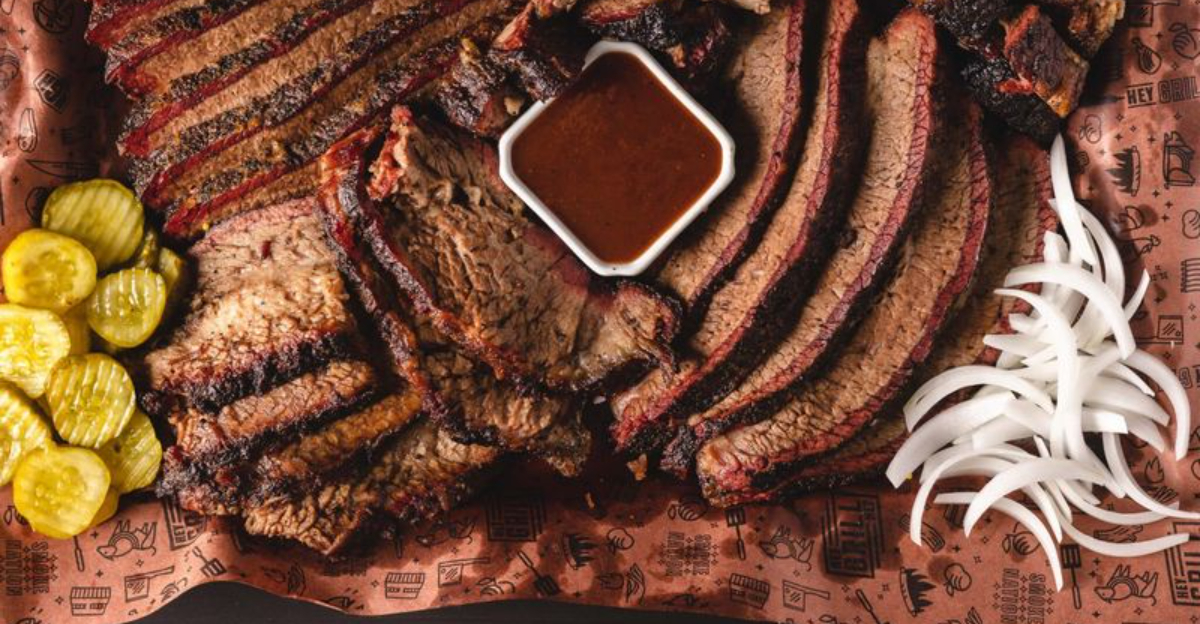
Y’all wouldn’t believe the religious experience I had the first time I watched a pitmaster unwrap a Central Texas brisket from its butcher paper cocoon. The simplicity floored me – just salt, pepper, and maybe a touch of garlic, rubbed lovingly onto that magnificent beef before a 12-hour smoke session over post oak.
What makes this tradition so special is what’s not there. No fancy injections. No complicated marinades. Just meat, fire, smoke, and time – the same four ingredients pitmasters have been using since German and Czech settlers brought their meat-smoking techniques to Texas in the 1800s.
The butcher paper serving tradition isn’t just practical (though it does make cleanup a breeze) – it’s a direct connection to the meat market origins of Texas BBQ, when smoked meats were wrapped and sold by weight.
2. Family BBQ Dynasties Keep Traditions Alive
My BBQ pilgrimage through Texas introduced me to the Muellers, Schmidts, and Blacks – BBQ royalty whose smoky empires span generations. At Black’s Barbecue (running since 1932!), I chatted with a pitmaster whose great-grandfather taught his grandfather who taught his father who taught him.
These family-run institutions aren’t just restaurants; they’re living museums where recipes and techniques get passed down like precious heirlooms. The wood pile arrangements, the pit cleaning rituals, even the way the meat gets sliced – it’s all preserved with remarkable fidelity.
Most fascinating to me was discovering how these families have resisted modernization that would compromise quality. When I asked one third-generation pitmaster why he didn’t upgrade to automated smokers, he just laughed and said, “You can’t automate soul, son.”
3. Sausage Links To The Old Country
Holy smokes! The first time I bit into a traditional Czech-style sausage in a tiny Lockhart meat market, I swear I time-traveled. That distinctive snap of the casing, the coarse-ground meat mixture, and the post oak smoke flavor haven’t changed a lick in over a century.
German and Czech immigrants brought these sausage-making techniques to Central Texas in the 1800s. The recipes – often jealously guarded family secrets – feature the same simple ingredients: beef, pork, salt, black pepper, maybe some garlic, and occasionally a touch of cayenne for kick.
What tickles me most is how these sausages still get made by hand in many places. I once watched an 80-year-old sausage maker stuff casings using equipment that looked older than he was! He told me, “My granddaddy would recognize everything I’m doing here today.”
4. The Simple Salt And Pepper Gospel
“What’s in your rub?” I innocently asked a weathered pitmaster my first week in Texas. The look he gave me! Like I’d suggested putting ketchup on filet mignon. “Salt. Pepper. Meat. Fire. That’s BBQ,” he growled, turning back to his pit.
This minimalist approach isn’t laziness – it’s deliberate preservation of the purest form of Texas BBQ. Dating back to the 19th century, when cowboys and ranch hands had limited supplies, this simple seasoning lets the meat and smoke remain the stars of the show.
The magic happens in the patience and technique. Standing beside a 100-year-old pit watching a pitmaster apply nothing but kosher salt and coarsely ground black pepper to a magnificent brisket taught me more about respecting ingredients than any fancy cooking class ever could.
5. No Sauce Necessary, Thank You Very Much
I committed the cardinal sin during my first Texas BBQ experience – I asked for sauce before tasting the meat. The pitmaster’s eye-roll spoke volumes! True Texas BBQ has always been about the meat, not what you pour on it.
This beef-first philosophy runs deep in Texas BBQ culture. If sauce appears at all, it’s served on the side in a little cup, almost as an afterthought. Many historic joints still use the same thin, slightly spicy sauce recipes they developed decades ago – not to mask the meat’s flavor but to complement it if desired.
My favorite explanation came from an 85-year-old BBQ legend in Luling: “Son, we smoke this brisket for 14 hours. If you need sauce, we didn’t do our job right.” That meat-forward approach hasn’t budged an inch in over a century, even as sauce-heavy styles gained popularity elsewhere.
6. West Texas Cowboy-Style Open Pit Smoking
I’ll never forget stumbling upon a West Texas BBQ gathering where they were cooking the old cowboy way – directly over mesquite coals in an open pit dug right into the ground! The pitmaster winked at me and said, “Welcome to BBQ like the cowboys made it.”
This direct-heat method predates fancy smokers and commercial pits. Dating back to cattle drives and ranch cookouts of the 1800s, it’s BBQ in its most primal form. The meat cooks faster than with indirect smoking, developing a distinctive crust while mesquite imparts its characteristic bold flavor.
What struck me most was the communal aspect that’s remained unchanged – men and women gathered around the pit, sharing stories while tending the fire, just as their great-grandparents did. In these remote West Texas towns, BBQ isn’t just food – it’s a social institution preserved through generations by folks who see no reason to change what works perfectly.