
8 Texas BBQ Traditions That Outsiders Always Get Wrong
I’ve lost count of how many times I’ve seen out-of-towners fumble Texas BBQ etiquette, often with the best intentions but little understanding of the culture behind it.
Growing up in the very heart of BBQ country, I didn’t just eat the food—I absorbed the traditions standing beside my granddaddy’s smoker before I was even old enough to tie my shoes.
Around here, barbecue isn’t just a meal; it’s a way of life, filled with rituals, unspoken rules, and fierce pride. Visitors often bring misconceptions that make locals smile, shake their heads, or even cringe. These eight traditions are the most misunderstood.
1. Brisket Reigns Supreme
Nothing makes me smile wider than watching a first-timer’s eyes light up at their inaugural Texas brisket experience. Unlike other regions where pork shoulders or ribs take center stage, our smoky beef brisket wears the crown here.
My uncle Roy spent 40 years perfecting his brisket technique, teaching me that patience isn’t just a virtue—it’s a requirement. A proper brisket needs 12-16 hours of low-and-slow cooking to transform that tough cut into butter-soft meat with that signature pink smoke ring.
Outsiders often rush the process or choose leaner cuts, missing the magic that happens when fat renders through the meat, creating that melt-in-your-mouth texture that’s become the measuring stick for Texas BBQ greatness.
2. Sauce Is Optional (And Often Frowned Upon)
The first time my cousin from Chicago drowned his brisket in sauce, you could hear a pin drop at our family cookout. True Texas BBQ stands on its own merits—no sauce required.
We craft our meats to shine through smoke, salt, and time. While some joints offer house-made sauces on the side, slathering it on automatically is practically sacrilege. The pitmaster’s skill should speak through perfectly rendered fat and complex smoke flavors, not be masked under a sugary blanket.
I’ll never forget when a renowned pitmaster quietly removed the sauce bottles from his tables, saying “If you need sauce, I haven’t done my job right.” That philosophy captures the essence of our approach to BBQ purity.
3. Post Oak Is The Only Acceptable Wood
My grandfather would sooner hang up his tongs than smoke with anything but post oak. This distinctly Texan hardwood creates the perfect heat curve and imparts a subtle flavor that doesn’t overpower the meat.
Visitors often assume any wood will do, bringing their hickory or mesquite preferences along. While those woods work fine elsewhere, they burn too hot and strong for our low-and-slow methodology. Post oak’s mild smoke profile enhances rather than competes with beef’s natural flavors.
I remember helping my dad harvest post oak from our property, learning to identify the right age and dryness. He’d say, “The wood is half the flavor, son—choose poorly and you might as well be cooking indoors.” That wisdom holds true in every authentic Texas smokehouse.
4. The Simplicity Of Central Texas Dry Rubs
The magic formula that visitors often overthink? Salt and black pepper. That’s it. My grandmother nearly fainted when she saw a cooking show host apply 15 different spices to a brisket.
Central Texas BBQ tradition calls for a minimalist approach—coarse black pepper and kosher salt in roughly equal parts, sometimes with a touch of garlic powder if you’re feeling fancy. This simple combination forms the perfect crust (we call it “bark”) while letting the beef and smoke remain the stars.
Fancy rubs with brown sugar, paprika, and exotic spices might work elsewhere, but they’ll earn you suspicious glances in Texas. As my mentor at the local smoke shack told me, “If you need more than two ingredients to make your meat taste good, you’ve already lost the battle.”
5. Sausage Links Are Non-Negotiable
The snap of a perfectly smoked sausage link brings me right back to childhood BBQ joints where they hung like meaty treasures behind glass counters. Outsiders focus so much on brisket they often overlook our sausage tradition—a critical mistake!
Texas BBQ sausages (we call them “hot guts” or “links”) reflect our German and Czech immigrant influences. Made with coarsely ground beef—not pork—mixed with brisket trimmings and bold spices, then stuffed into natural casings. The perfect link delivers a satisfying snap followed by juicy, smoky goodness.
My favorite pitmaster creates sausages using his great-grandfather’s recipe from the 1890s. “Some things don’t need improving,” he says with a wink, sliding a fresh link onto my butcher paper. He’s absolutely right.
6. Beef Ribs Outrank Pork Every Time
“Those aren’t dinosaur bones—they’re beef ribs!” I joked to some wide-eyed tourists at my favorite Austin BBQ spot. While other regions worship at the altar of pork ribs, Texas pledges allegiance to massive beef ribs.
These impressive cuts come from the cow’s plate section, featuring a single bone that can span 12 inches with pounds of meat attached. Outsiders expecting tiny pork ribs are stunned by these meat lollipops that dominate the plate and Instagram feeds alike.
Last summer, I watched my uncle transform these formidable cuts into tender masterpieces. “Pork ribs are fine for beginners,” he chuckled, “but beef ribs separate the tourists from the locals.” With their rich marbling and robust flavor, these showstoppers remain Texas BBQ royalty for good reason.
7. Meat Is Ordered By The Pound
The first time I took my California friend to a real Texas BBQ joint, she kept looking for the combo plates. Her confusion turned to shock when I stepped up and confidently ordered “pound of brisket, half-pound of ribs, quarter-pound of sausage.”
True Texas BBQ isn’t served on plates with predetermined sides. We order meat by weight, typically starting at quarter-pound increments. The pitmaster slices it fresh, weighs it on butcher scales, and wraps it in pink butcher paper—not styrofoam containers.
This tradition dates back to meat markets that started smoking their unsold cuts. They already sold meat by weight, so why change? I love watching newcomers adapt to this system, especially when they realize they can sample small amounts of everything rather than committing to one massive plate.
8. The Holy Trinity Of Sides: White Bread, Pickles, And Onions
Fancy cornbread and artisanal mac and cheese? Not in authentic Texas BBQ joints! I nearly spilled my sweet tea laughing when a visitor asked for a fork and knife at my hometown BBQ spot.
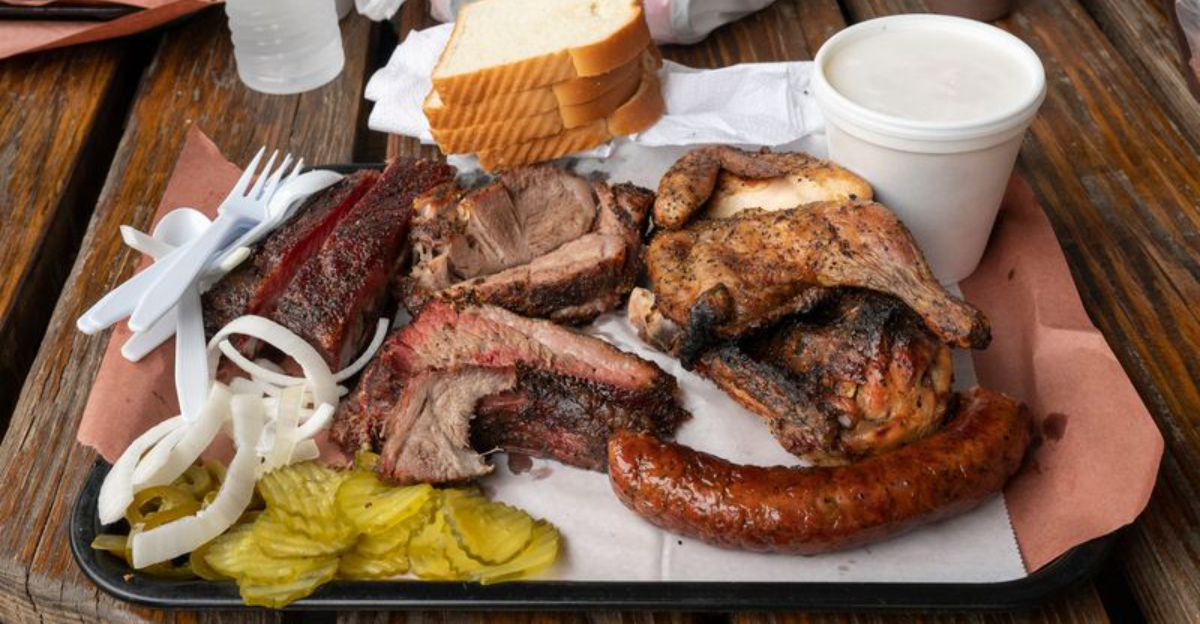
Our traditional sides couldn’t be simpler: plain white bread (think Wonder Bread, not artisan sourdough), dill pickle chips, and raw white onion slices. These aren’t afterthoughts—they’re essential palate cleansers and tools. The bread soaks up meat juices and makes impromptu sandwiches, pickles cut through fattiness, and onions add sharp contrast.
My grandfather taught me to make a proper “Texas taco” by folding white bread around brisket with pickles and onions. “Fancy sides just distract from what matters,” he’d say, wiping sauce from his mustache. “The meat is the star—everything else is just supporting cast.”