
7 Florida Small Towns With Main Streets Straight Out Of The 1950s
Florida isn’t just about bustling beaches and theme parks.
Hidden throughout the Sunshine State are charming small towns where time seems to have stood still.
I discovered these gems during a road trip last summer, when I was looking to escape the tourist crowds.
These seven towns boast historic main streets that transport visitors back to the 1950s, complete with vintage storefronts, old-fashioned diners, and the kind of community spirit that’s becoming increasingly rare in our fast-paced world.
1. Micanopy: The Town That Time Forgot
Stumbling upon Micanopy was like finding a portal to another era! This tiny town, pronounced “mick-ah-NO-pee,” sits beneath a canopy of ancient oak trees draped with Spanish moss, creating a movie-set atmosphere that’s captured my heart instantly.
The main drag, Cholokka Boulevard, features antique shops housed in buildings dating back to the 1800s. I spent hours chatting with shop owners who shared fascinating tales of the town’s founding in 1821, making it one of Florida’s oldest inland settlements.
Don’t miss the Micanopy Historical Society Museum, where local artifacts tell stories of bygone days. When hunger strikes, grab a homemade pie at the Old Florida Café – their key lime slice transported me straight to dessert heaven!
2. Mount Dora: A Lakeside Slice Of Americana
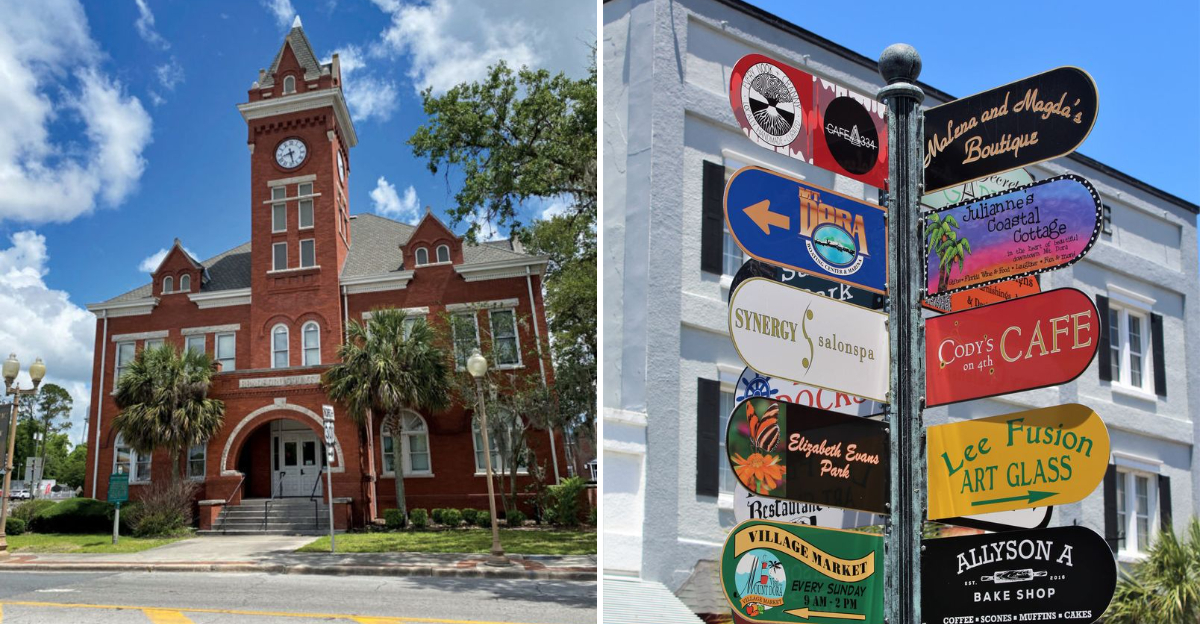
“You’ll never want to leave,” whispered a friendly shopkeeper as I wandered Mount Dora’s picturesque downtown. She wasn’t wrong! Perched on the shores of Lake Dora, this little haven combines old-school charm with breathtaking waterfront views.
Donnelly Street forms the backbone of the historic district, lined with brick-paved sidewalks and colorful buildings housing everything from old-fashioned candy stores to quirky bookshops. The town’s iconic 1883 lighthouse stands as a proud reminder of simpler times.
Every February, the Mount Dora Arts Festival transforms the streets into Florida’s most delightful outdoor gallery. After browsing antiques, I cooled off with a hand-spun milkshake at the Palm Tree Grille – thick enough to make any 1950s soda jerk proud!
3. Cedar Key: Fishing Village Frozen In Time
The moment my tires hit Cedar Key’s main drag, I knew I’d found Florida’s best-kept secret! This tiny fishing village, accessible only by a long causeway stretching across the Gulf of Mexico, feels worlds away from modern Florida’s tourist traps.
Second Street serves as the town’s beating heart, where weathered clapboard buildings house seafood joints that haven’t changed their recipes in generations. Fishermen still unload their daily catch at docks visible from sidewalk cafés, where I savored the freshest clam chowder of my life.
The Island Hotel, built in 1859, stands as the town’s grande dame with its wrap-around porches and ghost stories. Cedar Key’s population barely tops 700 residents, creating a place where everybody knows your name by your second visit!
4. Alachua: Main Street’s Small-Town Magic
“Y’all picked a good day to visit!” greeted a shopkeeper as I wandered into Alachua’s Main Street, where American flags fluttered from every lamppost. This wasn’t just southern hospitality – I’d accidentally timed my visit with their annual harvest festival!
Main Street stretches for several charming blocks, showcasing perfectly preserved architecture that would make any 1950s resident feel right at home. The old Alachua Hardware store still operates with wooden floors that creak delightfully underfoot, while Good Times Diner serves milkshakes in frosty metal cups.
The town’s crown jewel is the restored 1905 Skirvin Opera House, which now hosts monthly bluegrass jams. I joined locals for their Friday night ice cream social – a tradition they’ve maintained since 1956, complete with hand-cranked freezers!
5. DeFuniak Springs: Victorian Elegance Meets Southern Charm
Circle Drive knocked my socks off! This perfect ring road surrounds the almost perfectly circular Lake DeFuniak, creating what might be Florida’s most distinctive downtown layout. Victorian mansions line the outer edge, their gingerbread trim and wraparound porches transporting visitors straight to the 1890s.
The town’s historic district radiates from this circle, with Baldwin Avenue serving as the main commercial corridor. Here, the red-brick L&N Railroad station (now a museum) anchors a street where barbershops still have spinning poles and the hardware store displays goods on wooden sidewalk tables.
Fun fact: DeFuniak Springs once hosted the Florida Chautauqua, a major cultural gathering that brought luminaries like William Jennings Bryan to town! Don’t miss Mamie’s Thriftway Café, where I devoured the best fried green tomatoes in three states.
6. Eau Gallie: Melbourne’s Historic Art District
Who knew Melbourne harbored such a delightful secret? The Eau Gallie Arts District (locals call it “EGAD”) surprised me with its blend of mid-century architecture and contemporary artistic flair. Highland Avenue forms the district’s spine, where 1950s commercial buildings have been lovingly preserved while embracing their new identities as galleries and studios.
The 1924 Rossetter House Museum anchors the neighborhood with its period furnishings and gardens. I spent a wonderful afternoon watching artisans blow glass at the district’s hot shop before cooling off with a phosphate soda at the restored Eau Gallie Pharmacy counter.
The district’s crowning glory is the massive outdoor murals decorating buildings throughout the area. These weren’t part of the original 1950s landscape but somehow enhance rather than detract from the vintage vibe, creating a uniquely vibrant take on mid-century charm.
7. Starke: Call Street’s Timeless Treasures
The train whistle echoing through downtown Starke provided the perfect soundtrack to my stroll down Call Street! This historic district captures small-town Americana so perfectly that I half-expected to see teenagers in saddle shoes heading to a sock hop.
The Bradford County Courthouse stands sentinel at one end of the district, its clock tower chiming hourly since 1902. Brick-fronted shops along Call Street maintain their original facades, housing everything from a record store with actual vinyl to Morgan’s Drugstore, where the soda fountain still serves cherry Cokes in paper-wrapped straws.
Starke celebrates its railroad heritage with the annual Strawberry Festival, but I was lucky enough to catch their classic car show. Vintage Chevys and Fords lined up along Call Street created a living museum of mid-century motordom that perfectly complemented the unchanged storefronts behind them!