
10 North Carolina Barbecue Rivalries That Locals Can’t Stop Arguing About
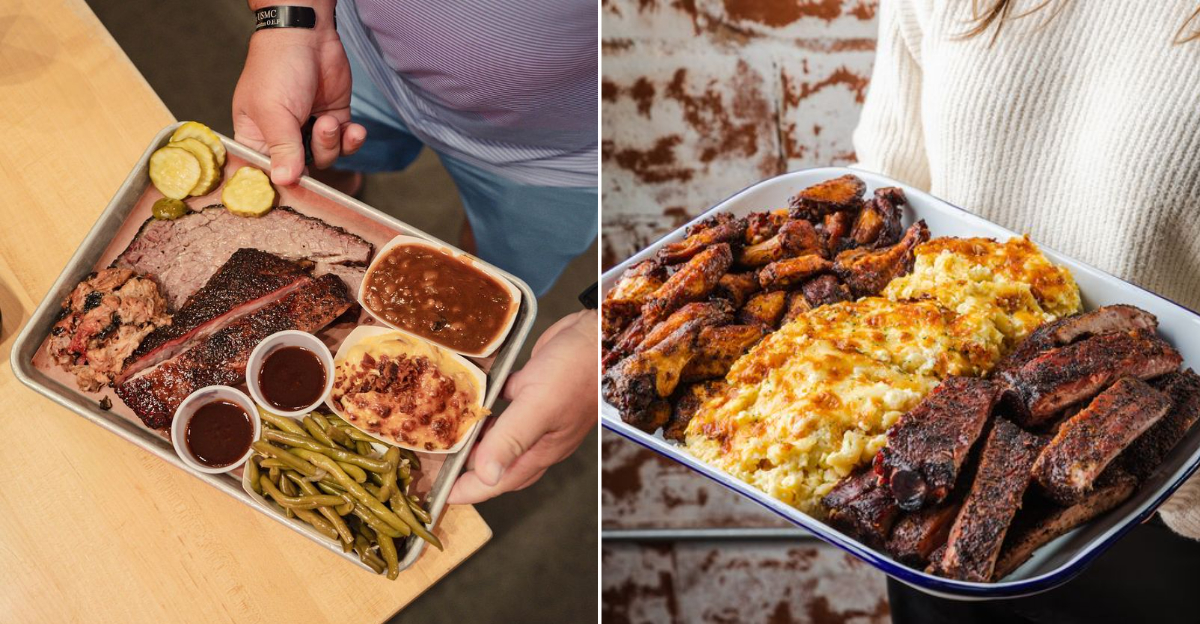
North Carolina barbecue isn’t just food. It’s a full-blown passion, and opinions run deep.
From smoky pits to tangy sauces, locals can debate for hours about which town, style, or pitmaster reigns supreme.
Every plate sparks conversation, laughter, and the occasional heated disagreement.
Exploring these rivalries reveals the flavors, traditions, and history that make North Carolina barbecue so beloved, proving that in this state, barbecue is more than a meal. It’s a way of life.
1. Lexington Barbecue vs. Bar-B-Q Center
These Lexington heavyweights sit just a mile apart but worlds divide their loyal fans.
Founded by former colleagues, both joints smoke pork shoulders over hickory coals, but subtle differences in their dips keep the debate sizzling.
Locals call Lexington Barbecue “The Monk” after founder Wayne Monk, while Bar-B-Q Center boasts a legendary banana split dessert that’s nearly as famous as their pork.
The ultimate Lexington showdown continues after 60+ years with no clear winner in sight.
2. Red Bridges Barbecue Lodge vs. Alston Bridges Barbecue
Family feuds taste delicious in Shelby where these namesake restaurants confuse tourists and divide locals.
Despite sharing a surname, the owners aren’t directly related – just barbecue competitors who’ve perfected slow-cooking techniques across generations.
Red Bridges boasts a distinctive red sauce with a spicy kick, while Alston’s offers a milder, tangier alternative.
Both serve their chopped pork with red slaw (mayo-free and tinged with barbecue sauce), creating a Cleveland County tradition that keeps customers choosing sides year after year.
3. Stamey’s Barbecue vs. Little Richard’s Bar-N-Que
Greensboro’s barbecue battle pits Warner Stamey’s legacy against Little Richard’s upstart excellence.
Stamey’s claims barbecue royalty status as Warner trained many legendary pitmasters across the Piedmont region.
Little Richard’s counters with perfectly smoked pork and ribs that have earned fierce loyalty since opening in 1991.
The rivalry highlights Lexington-style’s dominance in the Triad region, with both spots featuring that signature reddish-brown dip and minced pork shoulder.
Locals alternate between the two depending on which relative they’re dining with!
4. The Pit vs. Prime Barbecue
Old school meets new school in this Raleigh-area showdown. The Pit brings downtown sophistication to traditional whole-hog cooking, serving eastern-style barbecue with upscale sides and craft cocktails since 2007.
Prime Barbecue, led by competition champion Christopher Prieto, represents barbecue’s new generation in Knightdale.
Prime blends Texas, Kansas City, and Carolina techniques into something uniquely modern. Barbecue purists square off against innovation-seekers in this clash between tradition and contemporary approaches.
5. 12 Bones Smokehouse vs. Luella’s Bar-B-Que
Asheville’s barbecue scene splits between 12 Bones’ new-school approach and Luella’s more traditional offerings.
12 Bones rocketed to fame after President Obama’s repeated visits, showcasing their blueberry-chipotle ribs and punky industrial vibe.
Luella’s counters with a more comprehensive menu featuring both eastern and western Carolina styles plus creative sides.
Mountain folk argue whether barbecue should stick to tradition or embrace Asheville’s creative food culture.
The rivalry perfectly captures the city’s tension between honoring Appalachian heritage and embracing culinary innovation.
6. Skylight Inn BBQ vs. Parker’s Barbecue
Eastern Carolina’s whole-hog titans have battled for supremacy since the 1940s.
Skylight Inn in Ayden, crowned “The Capital of Barbecue” with an actual capitol dome on its roof, chops whole hogs with crispy skin mixed in, creating a distinctive texture.
Parker’s in Wilson counters with family-style service and legendary speed – servers literally run plates to hungry customers. Both champions of vinegar-pepper sauce represent eastern-style barbecue in its purest form.
The rivalry intensified when Skylight won a James Beard award, while Parker’s maintains its reputation for consistent quality and tradition.
7. Grady’s BBQ vs. Wilber’s Barbecue
Rural barbecue mastery defines this eastern Carolina matchup between two legendary pitmasters.
Gerri Grady still works the pits at Grady’s in Dudley at 84 years old, maintaining wood-fired traditions with her husband’s recipes since 1986.
Wilber’s in Goldsboro recently reopened after bankruptcy, saved by loyal customers who couldn’t bear losing Willis Underwood’s legendary whole-hog tradition.
Both joints represent disappearing rural barbecue culture where pigs cook slowly over oak and hickory coals. The debate centers on which place better preserves authentic techniques that predated electricity.
8. B’s Barbecue vs. Bum’s Restaurant
Greenville’s barbecue battle features two no-frills joints that close when the meat runs out.
B’s operates from a tiny red building with no phone and no website, selling legendary oak-smoked whole hog until they’re empty – often by early afternoon.
Bum’s counters with three generations of Dennis family expertise and adds distinctive eastern North Carolina sides like rutabagas and collards.
Students from nearby East Carolina University pledge allegiance to one or the other, creating barbecue identities that last long after graduation.
The rivalry showcases how barbecue joints become personality-defining institutions in small-town Carolina.
9. Sweet Lew’s BBQ vs. Noble Smoke
Charlotte’s newcomer rivalry represents barbecue’s urban renaissance. Sweet Lew’s brought authentic hickory-smoked barbecue to the Belmont neighborhood in 2018, cooking in a cinder block smokehouse behind a converted service station.
Noble Smoke counters with pitmaster Jim Noble’s massive shrine to Carolina traditions featuring both eastern and Lexington styles alongside Texas-inspired brisket.
The clash embodies Charlotte’s barbecue coming-of-age, with purists backing Sweet Lew’s back-to-basics approach while others appreciate Noble’s comprehensive barbecue education and craft beer selection.
10. Clyde Cooper’s Barbecue vs. Ole Time Barbecue
Raleigh’s old-versus-older debate pits downtown institution against roadside classic.
Clyde Cooper’s has served eastern-style barbecue since 1938, making it one of the state’s oldest continuously operating restaurants despite relocating in 2014.
Ole Time Barbecue provides the western-style counterpoint from its modest cinder block building on Hillsborough Street since 1993.
Locals choose sides based on sauce preference and whether they want city center convenience or highway authenticity.
The rivalry perfectly captures Raleigh’s dual barbecue citizenship between eastern and Lexington traditions.