
7 Forgotten Michigan Amusement Parks Locals Still Talk About
Growing up in Michigan, summer weekends meant one thing to me – amusement park adventures!
While Cedar Point still draws crowds across the Ohio border, many beloved Michigan parks have disappeared into history.
These vanished wonderlands once defined summer for generations of Michiganders, leaving behind only fading photographs and colorful stories.
From island escapes to prehistoric adventures, here’s my nostalgic journey through seven Michigan amusement parks that live on only in local memories.
1. Boblo Island Amusement Park: Detroit’s Floating Paradise
My grandpa still gets misty-eyed describing the steamboat journey to Boblo Island. Located on Canada’s Bois Blanc Island in the Detroit River, this magical destination wasn’t just about rides—it was about the entire experience beginning with that unforgettable boat ride.
The park operated from 1898 until 1993, featuring classic wooden coasters, a ferris wheel, and a magnificent dance hall where my grandparents first met in 1952. The iconic white steamers, Columbia and Ste. Claire, transported generations of excited visitors across the water.
Today, the abandoned park stands eerily quiet, but Detroiters still swap stories about summer days spent riding the Sky Tower and eating cotton candy on the return trip home. The island itself has transformed into a residential community, but those Boblo memories remain Detroit’s shared summer soundtrack.
2. Silver Beach Amusement Park: St. Joseph’s Lakeside Gem
“Meet me by the carousel!” That phrase echoed throughout Silver Beach Amusement Park for nearly a century. Nestled along Lake Michigan in St. Joseph, this beachfront wonderland captured my imagination during childhood visits to my aunt’s nearby cottage.
From 1891 until its 1971 closure, Silver Beach offered affordable family fun with its wooden roller coaster, fun house, and magnificent carousel. The Shadowland Ballroom hosted big bands while teenagers danced under twinkling lights. What made this park special wasn’t just the attractions but its perfect lakeside setting.
While the original park vanished decades ago, its spirit lives on through the Silver Beach Carousel Society, which operates a restored merry-go-round near the original site. When I visit with my own kids now, I swear I can still hear echoes of the old park’s calliope music mixing with Lake Michigan’s waves.
3. Prehistoric Forest Amusement Park: Irish Hills’ Dinosaur Adventure
Nothing prepared first-time visitors for the sight of life-sized dinosaurs lurking among Michigan pines! As a dinosaur-obsessed kid in the 80s, Prehistoric Forest in Irish Hills was my absolute favorite weekend destination.
This quirky roadside attraction operated from 1963 until 2012, featuring over 30 concrete dinosaurs along a winding forest path. The park expanded beyond prehistoric creatures to include a water slide, safari train, and mini-golf course. Owner Leroy Lewis continuously added new attractions, including my personal favorite—the volcano slide that rumbled and smoked!
Though closed for years, urban explorers occasionally share photos of the decaying dinosaurs slowly returning to the earth. These weathered behemoths, now covered in graffiti and moss, seem oddly fitting—prehistoric creatures once again becoming fossils. Whenever I drive through Irish Hills, I still crane my neck hoping for a glimpse of a concrete brontosaurus through the trees.
4. Six Flags AutoWorld: Flint’s Short-Lived Indoor Theme Park
Whoever thought an automotive-themed indoor amusement park in struggling 1980s Flint was a good idea clearly hadn’t run the numbers! Six Flags AutoWorld stands as perhaps Michigan’s most spectacular theme park failure, and I was there for its brief, bizarre existence.
Opening with massive fanfare in 1984, this $80 million indoor complex was supposed to revitalize downtown Flint with automotive history exhibits, rides, and shops. The facility featured a massive geodesic dome, a ferris wheel, and animatronic shows celebrating car culture. Despite government funding and Six Flags’ expertise, it closed after just six months.
My family visited during its opening weekend, and I remember mostly empty walkways and confused employees. The park briefly reopened, then closed permanently by 1986. The building was eventually demolished in 1997, becoming a cautionary tale in Michigan’s theme park history and urban redevelopment efforts. Sometimes I wonder if my ticket stub might be worth something as a collector’s item!
5. Electric Park: Detroit’s Illuminated Wonderland
Before Las Vegas discovered neon, Detroit’s Electric Park was already lighting up the night sky! My great-grandmother kept a faded postcard showing the park’s spectacular illumination, which seemed like something from a fairytale.
Operating from 1906 to 1928 on Detroit’s east side, Electric Park earned its name from the thousands of incandescent bulbs outlining every building and attraction. The park featured a massive roller coaster, a fun house, and a beautiful pavilion where orchestras played nightly. Created by the Detroit United Railway to boost streetcar ridership, it represented cutting-edge entertainment in the early electrical age.
The park’s centerpiece was its tower, visible for miles when lit at night. Though it fell victim to changing entertainment tastes and the Great Depression, Electric Park’s influence extended far—Walt Disney reportedly used it as partial inspiration for his theme parks decades later. Now only photographs remain of this glittering playground that once represented Detroit’s bright future.
6. Wenona Beach Amusement Park: Bay City’s Forgotten Playground
Last summer, I stumbled across my grandmother’s photo album filled with snapshots from Wenona Beach, and the stories came pouring out! For nearly 75 years, this Saginaw Bay destination drew crowds seeking relief from Michigan’s humid summers.
Operating from 1887 to 1964, Wenona Beach Amusement Park combined natural beauty with thrilling attractions. The park boasted a wooden roller coaster, dance pavilion, and bathing beach that made it the jewel of Bay City’s entertainment scene. During prohibition, its location near the Canadian border made it particularly popular for those seeking more than just family entertainment.
The park’s demise came gradually—declining attendance, water pollution concerns, and changing vacation habits all contributed. Today, the site exists as a residential area with barely a trace of its carnival past. Only longtime residents remember the sounds of the carousel and the smell of caramel corn that once defined Wenona Beach, though occasional remnants—a random piece of track or foundation—still surface after heavy storms.
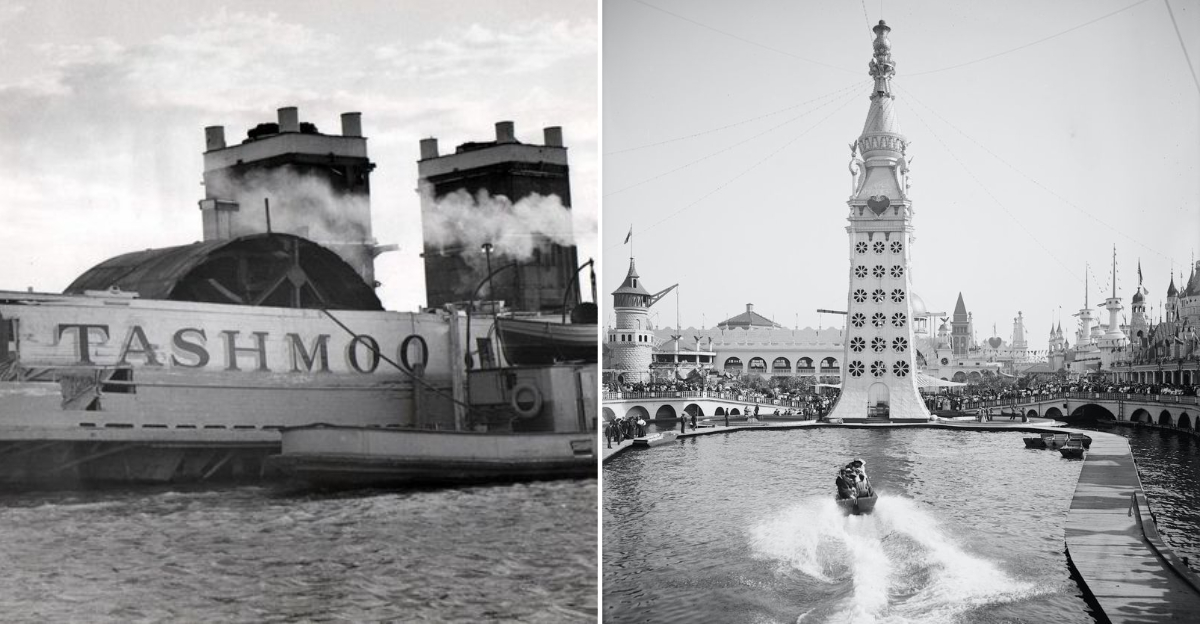
7. Tashmoo Park: Harsens Island’s Steamboat Destination
“The day I met your grandfather, we were dancing at Tashmoo Park.” My grandmother’s favorite story always started this way, transporting me to a magical island accessible only by steamship.
From 1897 until 1951, Tashmoo Park on Harsens Island served as a premier Detroit-area resort destination. Located in the St. Clair Flats, visitors arrived aboard the legendary Tashmoo steamer for day trips featuring dancing, baseball fields, and amusement rides. The park’s massive dance pavilion and picnic grounds made it perfect for company outings and family gatherings.
The park’s popularity began declining after the steamer Tashmoo sank in 1936 (though no lives were lost). After closing, the land returned to natural wetlands, leaving few physical reminders. Today, only a small historical marker acknowledges where thousands once danced, laughed, and courted. Whenever I visit Harsens Island, I bring my grandmother’s faded photos, trying to match the landscape to her youthful memories of this vanished Michigan playground.