
8 Abandoned Virginia Buildings Locals Still Tell Stories About
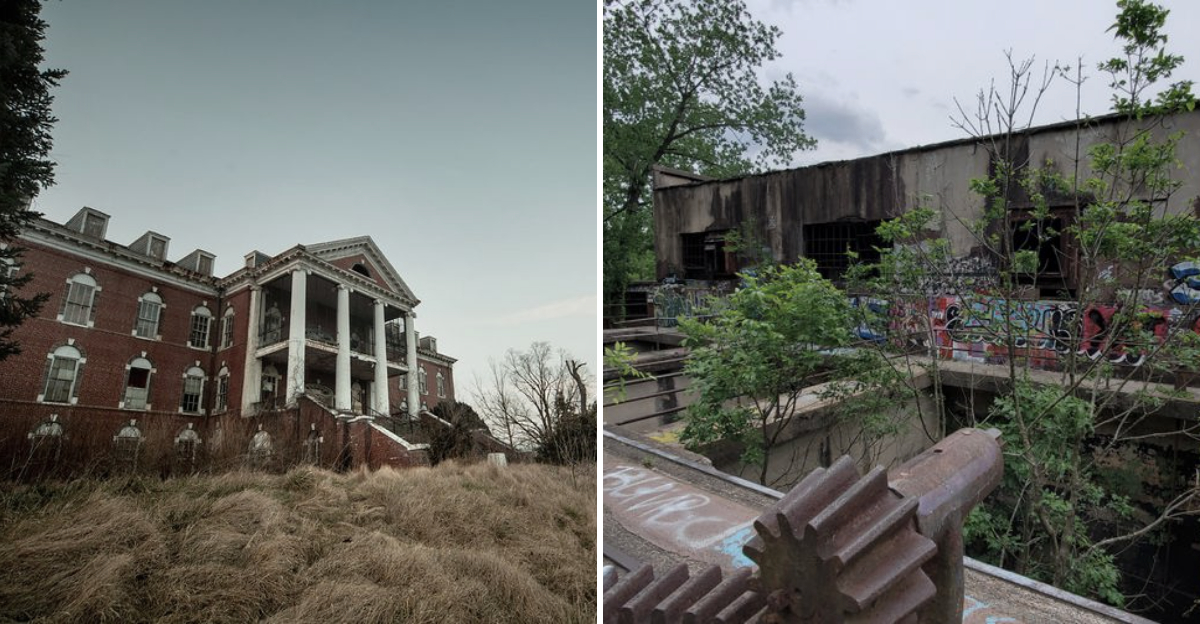
Scattered across Virginia are eerie relics of the past – abandoned mansions, empty hospitals, and crumbling landmarks that time has left behind. Each one carries echoes of history, sparking curiosity and fueling ghost stories that refuse to fade.
Some serve as stark reminders of the state’s tangled past, while others have slipped fully into the realm of legend, captivating both locals and adventurous visitors.
1. Swannanoa’s Marble Palace
Perched atop Afton Mountain, this 1912 Italian Renaissance mansion stands frozen in time. The grand estate was built by Richmond millionaire James Dooley as a summer retreat and love letter to his wife.
Today, its ornate Tiffany stained glass window still catches sunlight, casting colorful shadows across deteriorating marble floors.
Locals whisper about Mrs. Dooley’s spirit wandering the halls, searching for her beloved husband.
2. St. Albans Sanatorium’s Haunted Halls
Originally a boys’ school with brutal competitive traditions, St. Albans transformed into a psychiatric hospital in 1916. The facility’s experimental treatments included ice baths and electroshock therapy, leaving invisible scars on its walls.
My uncle worked security there in the 1980s and refused to patrol certain hallways alone. Now a paranormal hotspot, visitors report cold spots, disembodied voices, and shadowy figures in the abandoned patient rooms.
3. DeJarnette Sanitarium’s Dark Legacy
Hidden behind overgrown trees in Staunton sits a decaying reminder of Virginia’s troubled psychiatric history. The sanitarium’s founder, Dr. Joseph DeJarnette, was a vocal advocate for eugenics, supporting forced sterilization of patients deemed “unfit.”
Urban explorers occasionally brave trespassing charges to photograph its crumbling corridors and graffiti-covered walls. The building stands as a somber monument to medical ethics gone wrong.
4. Rosewell’s Majestic Ruins
Once rivaling Williamsburg’s Governor’s Palace in grandeur, Rosewell Plantation now exists only as towering brick walls reaching skyward like skeletal fingers. Built in the 1720s by the Page family, the mansion featured intricate woodwork and 12-foot ceilings.
Growing up nearby, I heard countless ghost stories about the ruins. The most popular tells of a young woman in white appearing in the empty window frames on foggy nights, supposedly searching for a lost love.
5. Belle Isle’s Industrial Ghosts
Concrete shells stand silent on this James River island, remnants of Richmond’s industrial past. The hydroelectric plant once powered the city’s trolley system, its massive turbines humming day and night.
I spent countless teenage afternoons exploring these ruins with friends, imagining the workers who once tended the machines.
The graffiti-covered walls now serve as an open-air gallery amid the rushing river, attracting photographers, urban explorers, and history buffs.
6. Lorton Reformatory’s Cell Blocks
Brick buildings crafted by prisoner hands stand as monuments to Progressive Era prison reform gone stale. The 1910 complex once housed suffragists who endured the infamous “Night of Terror” for demanding voting rights.
Walking through the grounds during a guided tour last summer, I felt the weight of history in the thick walls.
While parts have transformed into an arts center, other sections remain hauntingly empty, their peeling paint and rusted cell doors telling stories of confinement.
7. Clifton Furnace’s Forest Sentinel
Rising from the forest floor like a primitive lighthouse, this stone stack once belched smoke and fire. The 1846 charcoal iron furnace represents Virginia’s industrial revolution, when iron production transformed sleepy communities into boomtowns.
I stumbled upon this hidden gem while hiking last autumn. The massive structure seemed almost mythical among the colorful fall foliage.
Though it went out of blast in 1854, was revamped in 1874, and was abandoned in 1877, the furnace stands defiant against time, a testament to the region’s industrial heritage.
8. Virginia Renaissance Faire’s Forgotten Kingdom
Mother Nature reclaims wooden castles and timbered shopfronts near Lake Anna. This short-lived 1990s attraction now resembles a fairy tale being erased – medieval-inspired structures slowly dissolving back into the forest.
Weathered signs for the jousting field and ye olde marketplace peek through vines and saplings.
Photographers risk trespassing charges to capture this surreal sight of a manufactured medieval village being consumed by the Virginia wilderness, creating images that blur the line between fantasy and decay.