
11 Pennsylvania Shopping Malls That Defined The ’90s
Remember when hanging out at the mall was the highlight of your weekend?
In the 1990s, Pennsylvania’s shopping centers weren’t just places to buy stuff – they were social hubs where teens roamed free, food courts buzzed with energy, and department stores played musical chairs with their names.
These 11 malls captured the essence of ’90s retail culture in the Keystone State, from Philadelphia’s suburbs to Pittsburgh’s outskirts.
1. King of Prussia Mall: The Crown Jewel
A massive mid-decade transformation turned this Montgomery County complex into Pennsylvania’s retail paradise. The Plaza and The Court joined forces, creating a shopping metropolis that drew visitors from across the Mid-Atlantic.
Luxury arrived in style when Nordstrom, Neiman Marcus, and Lord & Taylor all opened their doors between 1995-1996.
The constant department store rebrandings (Wanamaker’s to Hecht’s to Strawbridge’s) perfectly captured the corporate retail shuffle of the decade.
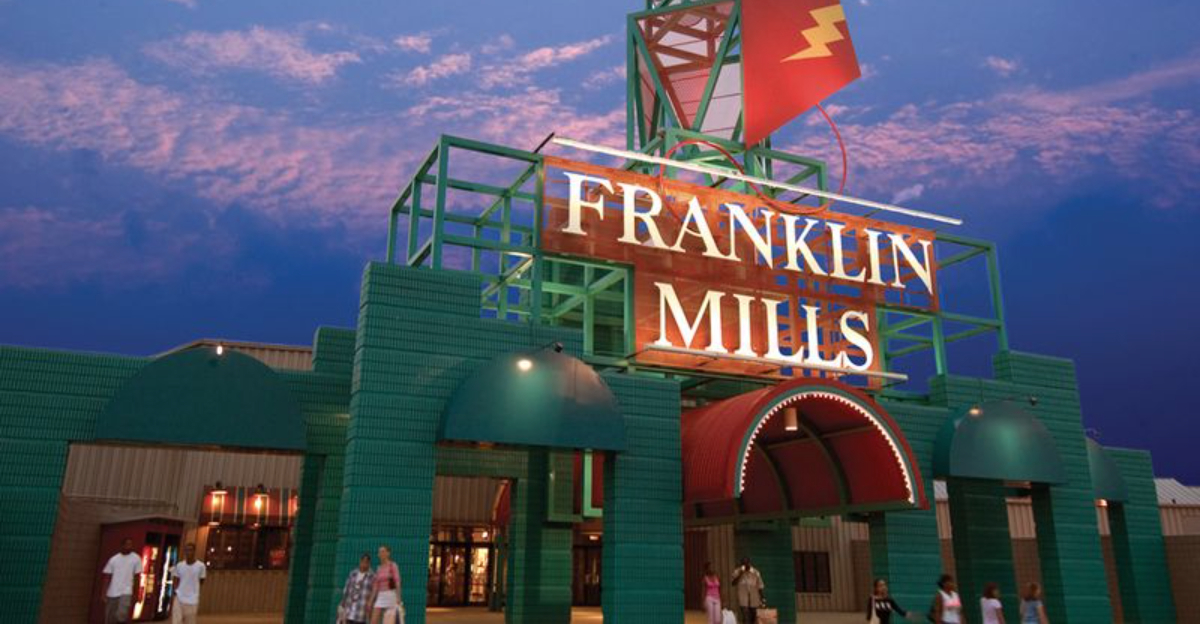
2. Franklin Mills: Bargain Hunter’s Paradise
This Northeast Philadelphia behemoth wasn’t your average mall – it was a mile-long bargain wonderland. Opening just before the ’90s began, it perfected the outlet concept with JCPenney and Sears outlets anchoring a seemingly endless shopping corridor.
Teens flocked to Jillian’s arcade and the massive multiplex that arrived mid-decade. The themed shopping districts gave the place a uniqueness that standard malls couldn’t match.
3. Willow Grove Park Mall: Carousel Central
Built on the grounds of a historic amusement park, this three-level shopping center kept the fun alive with its 2001 carousel installation. The gleaming centerpiece became the perfect meeting spot for mall-goers of all ages.
I still remember the thrill of racing up to the third-floor entrance where the spectacular food court awaited.
The combination of Bloomingdale’s prestige and the mall’s family-friendly amenities made it the perfect suburban retail escape.
4. Oxford Valley Mall: Anchor Shuffle Champion
No mall captured the ’90s department store identity crisis quite like Oxford Valley. Shoppers needed a scorecard to keep track of the constant rebranding – Gimbels became Stern’s, then Wanamaker’s transformed into Hecht’s before morphing into Strawbridge’s.
The 1995 food court opening turned this Bucks County staple into a teenage hangout destination. With the multiplex theater conveniently located behind Sears, you could easily spend an entire Saturday here without noticing the hours slip by.
5. Neshaminy Mall: Teen Scene Headquarters
Before smartphones and social media, Neshaminy Mall was where Bucks County teenagers crafted their weekend memories. The sprawling food court served as both a dining destination and social hub for countless first dates and friend gatherings.
My first job interview happened at the Sam Goody here. I was so nervous I forgot my own phone number!
Between the bustling multiplex cinema and the perfect mix of teen-focused retailers, Neshaminy perfected the formula for capturing adolescent dollars and attention.
6. Park City Center: Central PA’s Retail Royalty
Lancaster’s shopping landmark ruled Central Pennsylvania’s retail scene throughout the ’90s. The octagonal center court design made it architecturally distinctive among the state’s shopping destinations.
The local-to-national transition played out when hometown favorite Watt & Shand became The Bon-Ton in 1992.
Park City’s super-regional draw meant shoppers drove from Harrisburg, York, and beyond, cementing its status as the dominant enclosed mall for miles around.
7. Lehigh Valley Mall: Glass Elevator Glamour
The 1995 renovation that replaced the spiral ramp with a gleaming glass elevator symbolized this mall’s ’90s transformation. Shoppers gasped at the modern touch that suddenly made the place feel cutting-edge and sophisticated.
I remember my grandmother lamenting the loss of Wanamaker’s while I was more focused on scoring the latest Starter jacket from the sports shop.
The constant anchor rebranding (Wanamaker’s to Hecht’s to Strawbridge’s) created a retail identity crisis that defined the era.
8. Monroeville Mall: Zombie Fame With Real-Life Appeal
Famous for its starring role in the classic horror film, Monroeville Mall continued its reign as Pittsburgh’s eastern retail hub throughout the ’90s. Kaufmann’s, JCPenney, and Sears provided the retail backbone while the expanding food court kept shoppers fueled.
Pittsburgh teens weren’t thinking about zombies – they were focused on finding the perfect outfit at The Gap or catching the latest blockbuster at the cinema. The mall’s cultural cachet only grew stronger as the decade progressed.
9. Ross Park Mall: North Hills Fashion Destination
North Pittsburgh’s premier shopping destination cultivated an upscale image that separated it from competitors. While other malls chased entertainment additions, Ross Park doubled down on fashion-forward retailers that appealed to brand-conscious shoppers.
The polished terrazzo floors and abundant natural light created an atmosphere that felt a cut above. Parents with bigger budgets gravitated here, making it the go-to for back-to-school shopping and holiday gift hunting throughout the decade.
10. Century III Mall: Rise and Fall of a Giant
Once among America’s largest malls, Century III dominated South Pittsburgh’s retail landscape into the ’90s. The late-decade skylights addition attempted to modernize the space as competition intensified.
The department store musical chairs here was dizzying – Gimbels, Horne’s, and Lazarus all played parts in the retail drama.
Standing on the distinctive split-level design, watching shoppers below felt like surveying a retail kingdom that seemed permanent but was already beginning its long, slow decline.
11. Millcreek Mall: Tri-State Shopping Magnet
Erie’s retail powerhouse pulled shoppers from Pennsylvania, Ohio, and New York with its massive single-level layout. The sprawling parking lot filled with out-of-state license plates every weekend as shoppers made their pilgrimages.
The ’90s brought the standard department store shuffling – Horne’s became Lazarus while Kaufmann’s and JCPenney provided stability.
The 2008 food court addition transformed the social dynamics, creating a gathering space that kept shoppers lingering longer in this border-town retail oasis.