
15 Defunct Pennsylvania Restaurants Locals Still Talk About
Pennsylvania has seen countless beloved restaurants come and go over the decades, leaving behind cherished memories and legendary stories.
From fancy French cuisine in Philadelphia to iconic diners in Pittsburgh, these establishments weren’t just places to eat – they were community landmarks.
Here’s a nostalgic journey through 15 defunct Pennsylvania eateries that continue to spark conversation among locals who remember their glory days.
1. Le Bec-Fin: Philadelphia’s French Crown Jewel
Georges Perrier’s legendary restaurant defined fine dining in Philadelphia for over four decades. The Center City establishment served impeccable French cuisine that earned national acclaim and multiple five-star ratings.
The elegant dining room, with its crystal chandeliers and attentive service, transported guests to Paris. Locals still reminisce about the signature galette de crabe and the dessert cart that made even the most disciplined diners weak at the knees.
2. Melrose Diner: South Philly’s Neon-Lit Legend
The jingle “Everybody who knows goes to Melrose” wasn’t just advertising – it was Philly gospel. Before a devastating 2022 fire, this South Philadelphia institution served classic diner fare 24/7 since the 1950s.
I’ll never forget my grandfather taking me there for buttermilk pancakes after Eagles games, insisting we sit in the same booth every time.
The waitresses knew most customers by name and often started pouring their coffee before they even sat down.
3. City Tavern: Colonial Dining Experience in Old City
This reconstructed 18th-century tavern offered a taste of Revolutionary-era dining under Chef Walter Staib’s direction. Servers in period costumes presented historically accurate dishes like pepper pot soup and West Indies pepperpot stew.
The building itself, though a 1970s recreation, stood on the site where the founding fathers once dined. The pandemic claimed this historical gem in 2020, ending its run as a living museum of American culinary heritage.
4. Palumbo’s: The Italian Market’s Entertainment Palace
More than just a restaurant, Palumbo’s was the heart of South Philly’s entertainment scene for generations.
The sprawling venue hosted weddings, political rallies, and performances by legends like Frank Sinatra and Dean Martin.
The dance floor witnessed countless first dances and family celebrations until a devastating 1994 fire reduced it to ashes.
Older Philadelphians recall how the smell of Italian gravy would waft onto Ninth Street, drawing in hungry patrons from blocks away.
5. Snockey’s Oyster & Crab House: Queen Village’s Seafood Sanctuary
For 103 years, Philadelphians slurped fresh oysters and cracked crab legs at this no-frills seafood house. The maritime decor and wooden booths transported diners to a simpler time when seafood restaurants focused on freshness rather than flash.
I spent every birthday at Snockey’s until its 2015 closure, ordering the same thing: a dozen oysters followed by their famous crab cakes.
The third-generation family owners knew their regulars by their shellfish preferences rather than their names.
6. Frog & The Commissary: Pioneering Philadelphia Dining
Steve Poses revolutionized Philly’s dining scene with these sister restaurants in the 1970s. The Commissary’s cafeteria-style service introduced sophisticated food in a casual setting, while Frog offered more formal dining.
Their carrot cake became so legendary that locals still search for recipes claiming to duplicate it. The restaurants pioneered farm-to-table practices decades before they became trendy, establishing Philadelphia as a serious food city worthy of national attention.
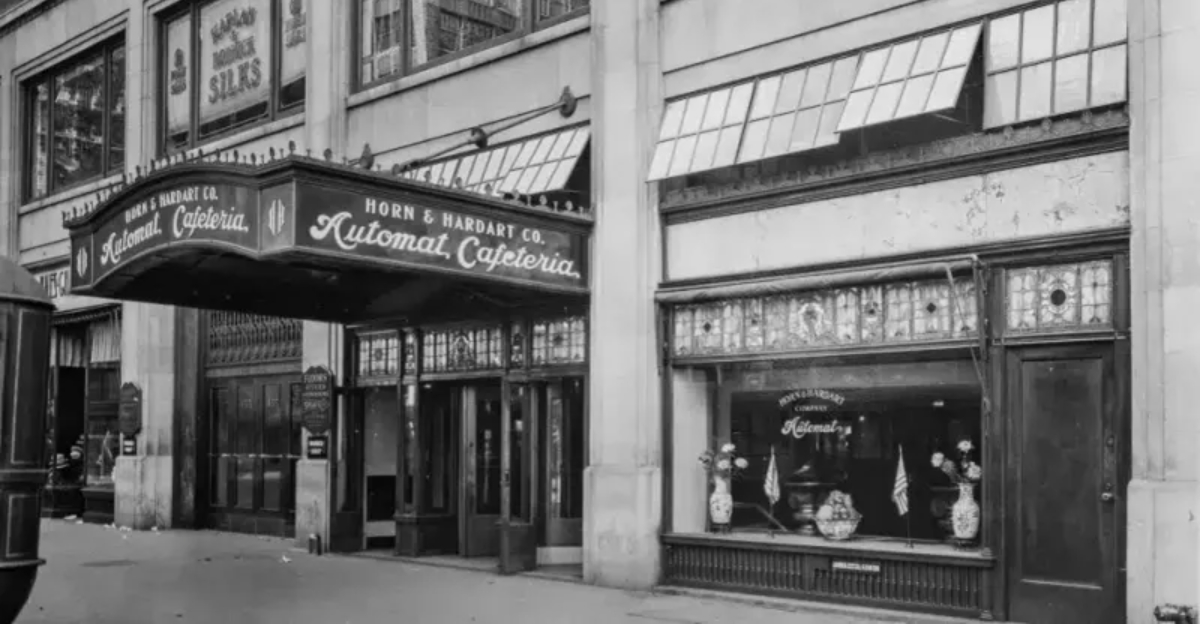
7. Horn & Hardart Automat: America’s First Fast Food Revolution
Before McDonald’s, Philadelphians experienced the future of dining at Horn & Hardart’s Automats. Customers inserted nickels into glass-fronted compartments to retrieve freshly made dishes, a revolutionary concept when it debuted in 1902.
The mac and cheese, baked beans, and fresh-baked pies became comfort food staples for generations. During the Depression, the company had a policy of allowing people to stay as long as they wanted after purchasing a cup of coffee, providing dignity along with nourishment.
8. Essie’s Original Hot Dog Shop: Pittsburgh’s Late-Night Institution
Affectionately known as “The O,” this Oakland fixture fueled University of Pittsburgh students with mountains of hand-cut fries and perfect hot dogs for nearly 60 years. The portions were legendary – a small order of fries could feed a study group.
The fluorescent lighting and no-nonsense counter service became part of its charm. My college roommate and I once witnessed a customer attempt to finish the jumbo fry order solo, a feat so rare that other patrons stopped eating to watch the valiant effort.
9. Poli’s: Squirrel Hill’s Family-Run Italian Treasure
For generations, Pittsburgh families celebrated special occasions at this Squirrel Hill institution. The red sauce recipes remained unchanged for decades, creating a taste memory that former patrons still chase at other Italian restaurants.
The intimate dining rooms felt like eating in someone’s home rather than a restaurant. Children would receive small cups of wedding soup while waiting for their meals, a tradition that introduced countless Pittsburgh kids to the pleasure of a well-made broth.
10. Chiodo’s Tavern: Home of the Mysterious Homestead Sandwich
Steelworkers flocked to this Homestead bar for the legendary “Mystery Sandwich” – a secret recipe that customers weren’t allowed to watch being prepared. The walls displayed an incredible collection of sports memorabilia until its 2005 closure.
After finishing shifts at the nearby mills, workers would crowd the bar, creating a living museum of Pittsburgh’s industrial heritage.
The tavern’s owner refused countless offers to sell the secret sandwich recipe, taking it to his grave when the establishment closed.
11. The Carlton: Downtown Pittsburgh’s White-Tablecloth Destination
Business deals and marriage proposals unfolded at this BNY Mellon Center restaurant for 37 years. The impressive wine cellar and tableside preparations made dining here feel like a special occasion, even on an ordinary Tuesday.
I remember my father saving for months to take my mother there for their 25th anniversary. The Carlton’s signature veal chop and dover sole deboned tableside represented fine dining in Pittsburgh before the city’s culinary renaissance brought new competition.
12. Spaghetti Warehouse: The Strip District’s Quirky Family Favorite
Dining inside an actual trolley car made this restaurant a magical experience for Pittsburgh kids. The cavernous converted warehouse featured antiques and artifacts suspended from the ceiling and adorning every wall during its 28-year run.
The all-you-can-eat garlic bread kept servers constantly moving through the dining room with fresh baskets.
While the pasta wasn’t the most authentic Italian in the city, the festive atmosphere and reasonable prices made it a popular choice for large family gatherings.
13. Gullifty’s: Squirrel Hill’s Dessert Paradise and Jazz Haven
Before closing in 2013, Gullifty’s served as both a neighborhood restaurant and cultural institution. The dessert case displayed towering cakes and pies that patrons would eye throughout their meals, strategically saving room.
Weekend evenings transformed the space into an intimate jazz club where local musicians and occasional national acts performed.
College students from nearby universities would nurse coffee for hours while studying during the day, then return at night for the renowned Chocolate Blackout Cake.
14. Tic Toc Restaurant: Kaufmann’s Department Store Dining Tradition
Shopping at downtown Pittsburgh’s Kaufmann’s wasn’t complete without lunch under the famous clock.
Generations of Pittsburghers met “under the clock” before enjoying chicken salad sandwiches and ice cream sundaes at this department store institution.
Grandmothers treated granddaughters to lunch here after picking out Easter dresses, creating traditions that spanned decades.
When Kaufmann’s became Macy’s and eventually closed in 2015, Pittsburgh lost more than a restaurant – it lost a cherished meeting place.
15. Park Schenley: Oakland’s Special Occasion Destination
Near the entrance to Schenley Park, this mid-century restaurant served as Pittsburgh’s celebration headquarters until the 1980s.
The continental cuisine and formal service made it the go-to spot for anniversaries, graduations, and milestone birthdays.
My parents got engaged here in 1975 over Chateaubriand for two. The tableside preparations – from Caesar salads to Bananas Foster – created memorable dining theater.
Oakland residents still point out the building to newcomers, explaining its significance in Pittsburgh’s dining history.