
A 75-Foot Cross That Towers Above An Arizona Shrine And Draws Pilgrims Year-Round
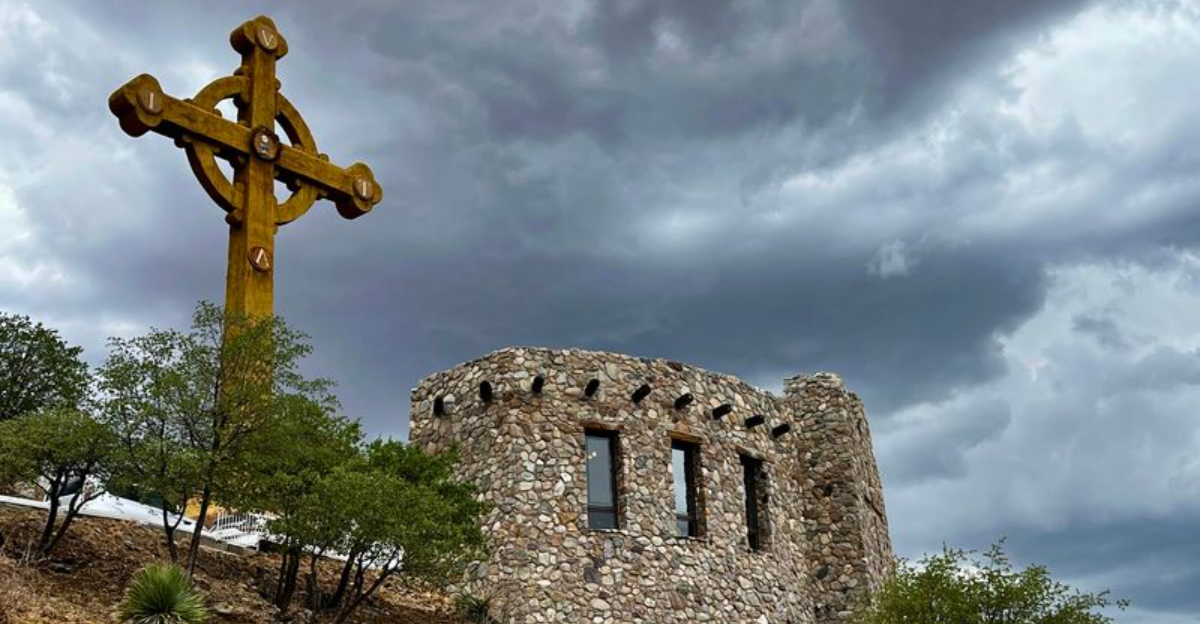
High on a rugged mountainside, a 75-foot Celtic cross rises above the landscape and commands attention from miles away. Beside it, a 31-foot statue of the Blessed Virgin Mary stands against sweeping valley views, open sky, and quiet mountain terrain.
I arrived on a crisp autumn morning, when the cool air and stillness made every detail seem sharper.
The climb, the silence, and the scale of the monuments created a sense of calm that was difficult to shake. You do not need to arrive with a particular faith to appreciate what stands here. The craftsmanship, setting, and history give the grounds a presence that reaches beyond religion alone.
Some places impress you for a moment and fade once the road carries you away. This one stays in your thoughts, long after the mountains disappear in the rearview mirror.
A Retired Couple’s Grand Vision
Few pilgrimage sites in America were born from a single moment of inspiration, but the Our Lady Of The Sierras Shrine at 10310 S Twin Oaks Rd, Hereford, traces its roots to one powerful afternoon in 1990.
Gerald and Patricia Chouinard, a couple from Illinois, had purchased eight acres of land in Ash Canyon, Arizona, with plans to build a quiet retirement home on the hillside they adored.
Everything changed when the Chouinards traveled to Medjugorje, Yugoslavia, on a religious pilgrimage. Standing beside a large stone cross on Mount Krizevac, they looked out over the valley below and were immediately struck by how closely it resembled their own Arizona property.
That moment planted a seed that would grow into something far bigger than a retirement home.
They returned to Arizona with a clear and ambitious mission: to build a towering cross and a statue of the Virgin Mary on their land. That vision, born from a hillside moment halfway around the world, eventually became a beloved landmark that draws thousands of visitors every single year.
Legal Battles And The Clever Chapel Loophole
Building a 75-foot cross on a private Arizona hillside sounds straightforward enough, but the Chouinards quickly discovered that ambition and local zoning regulations do not always get along.
Cochise County had a height restriction in place that generally prohibited structures taller than 30 feet unless the structure was classified as a monument.
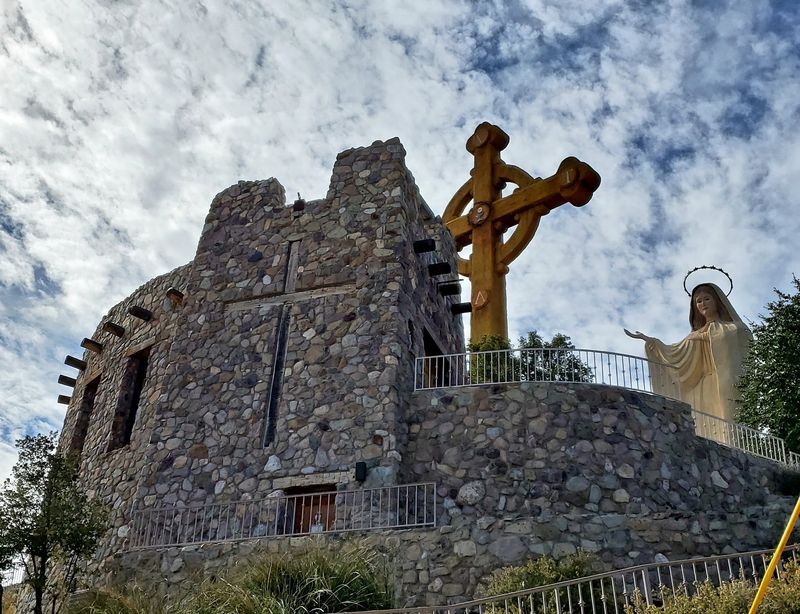
Rather than abandoning their dream, the Chouinards found a creative path forward. By incorporating a small chapel into their design plans, the towering cross could legally be classified as a monument, which allowed it to exceed the standard height limits.
It was a simple but inspired solution that kept the project alive.
Years of legal challenges followed before construction was finally permitted to begin. The persistence the Chouinards showed through that process is part of what makes visiting the shrine feel so meaningful today.
When you stand beneath that cross and understand what it took to build it, the structure feels less like a landmark and more like a testament to determination itself.
The Iconic 75-Foot Celtic Cross Up Close
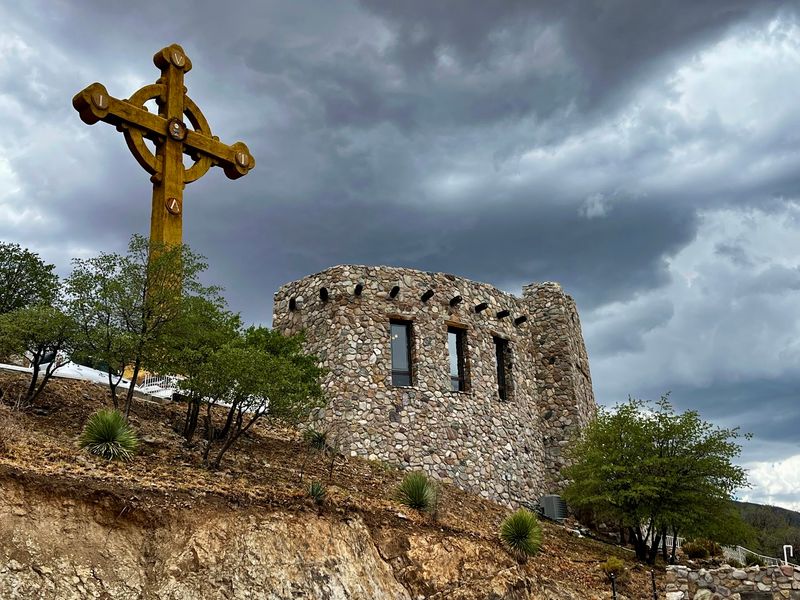
Standing beneath the 75-foot Celtic cross at Our Lady Of The Sierras is one of those travel moments that makes you tilt your head back and just stare. The sheer scale of the structure is genuinely surprising, even when you think you are prepared for it after seeing it from a distance on the drive in.
The cross weighs approximately 30 tons and features a structural steel frame covered with a concrete and fiberglass exterior that was hand-sculpted to give it the appearance of carved wood.
The craftsmanship involved in creating that textured surface is remarkable, and running your eyes along it reveals all kinds of subtle detail work. The word “VITA,” meaning life in Latin, is inscribed on the cross, adding a layer of meaning to its visual impact.
Completed in March 1998, the cross was built to be visible from the San Pedro Valley far below, and on a clear day it absolutely delivers on that promise. It has become the defining image of the Hereford area and a recognizable landmark across southeastern Arizona.
The 31-Foot Statue
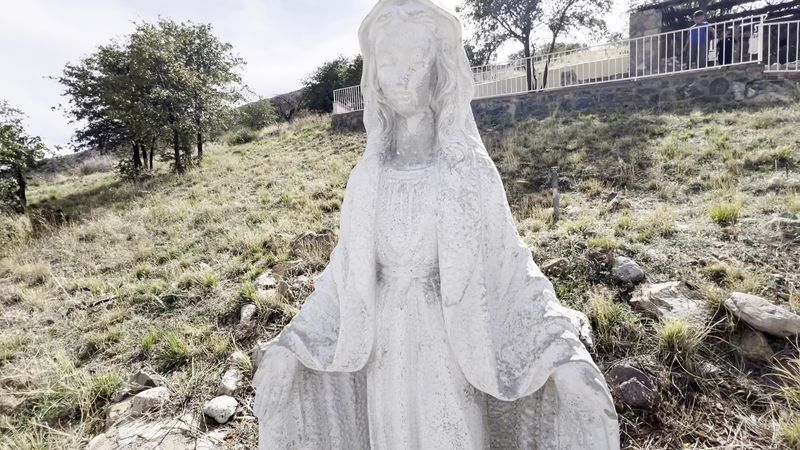
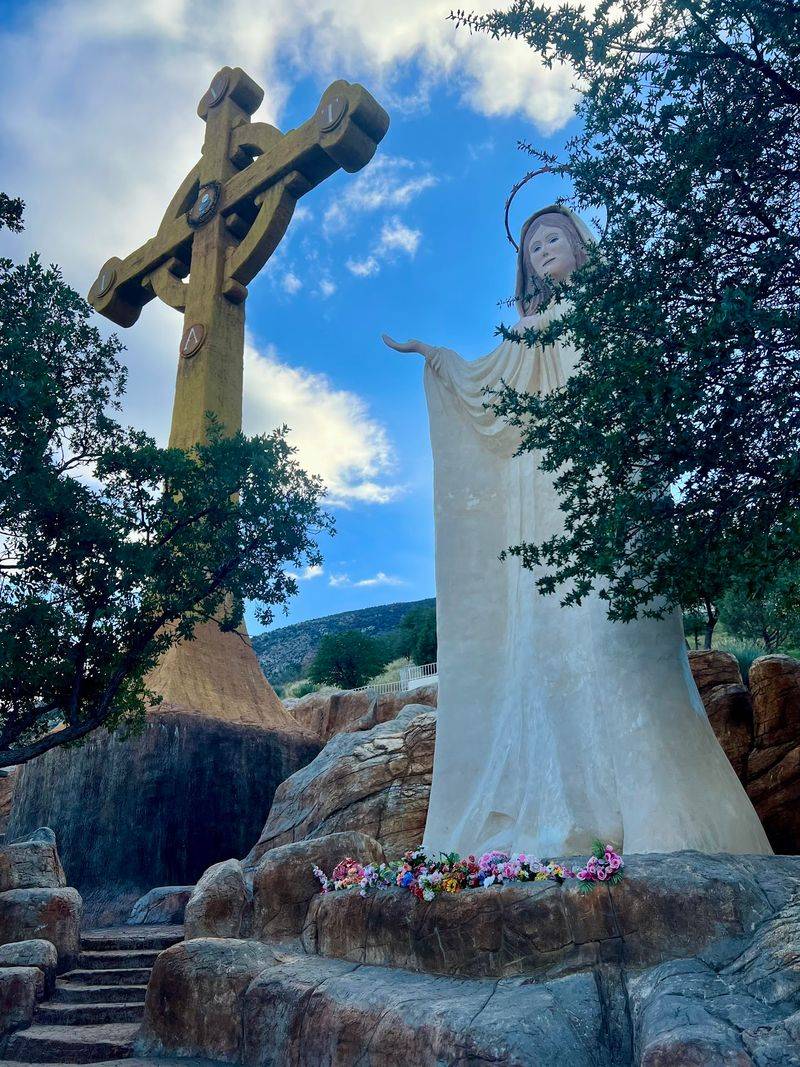
Right beside the cross stands a figure that commands her own kind of attention. The 31-foot statue of the Blessed Virgin Mary, often called the Madonna, weighs 25 tons and was built using a welded steel frame covered with a hand-sculpted concrete finish, matching the craftsmanship of the cross beside her.
She wears a crown of stars around her head, and her right hand is raised slightly in a gesture that visitors consistently describe as welcoming and hopeful.
Up close, the sculptural detail in her face, robes, and hands is impressive, especially considering the scale at which the artists were working. The statue has a quiet presence that many people find deeply moving, regardless of their religious background.
One of the most remarkable facts about both the statue and the cross is that they survived the 2011 Monument Fire completely unharmed, even as the fire swept through the surrounding area.
Many visitors see that fact as deeply significant, and it has added another layer of meaning to these already powerful structures for the pilgrims who come here.
Inside The Hand-Crafted Stone Chapel
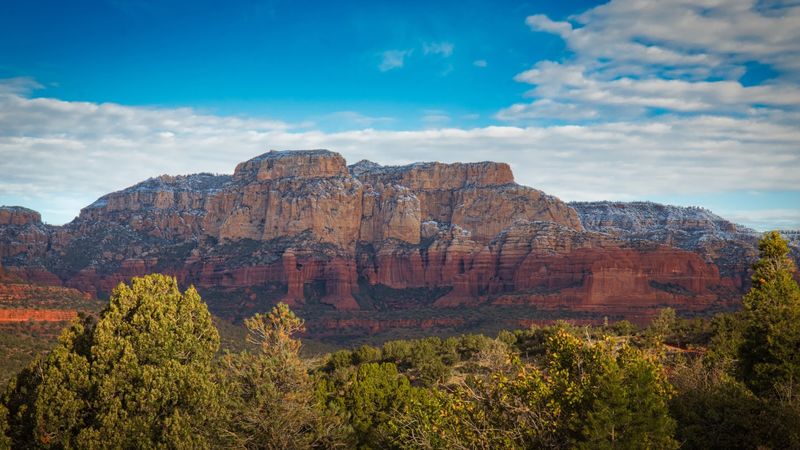
The 680-square-foot stone chapel tucked into the hillside below the cross might be small, but it carries more character per square foot than most grand cathedrals.
Built with local river rock, the chapel fits naturally into the mountain landscape, looking as though it grew out of the hillside rather than being placed upon it.
The interior was completely destroyed during the 2011 Monument Fire, which swept through the Huachuca Mountains with devastating speed.
The community rallied after the fire, and the chapel was lovingly restored and reopened in 2012 with a renewed interior that honors both its heritage and the people who worked to bring it back.
Today the chapel features hand-hewn Douglas Fir beams, a ceiling made from Northern Arizona Aspen wood, and a striking mural of Jesus painted by local artist Donna Ramaeker.
An antique Spanish wooden crucifix adds a sense of historical depth to the space. Sitting quietly inside for even a few minutes offers a kind of stillness that is genuinely hard to find anywhere else in the region.
Walking The 14 Outdoor Stations Of The Cross
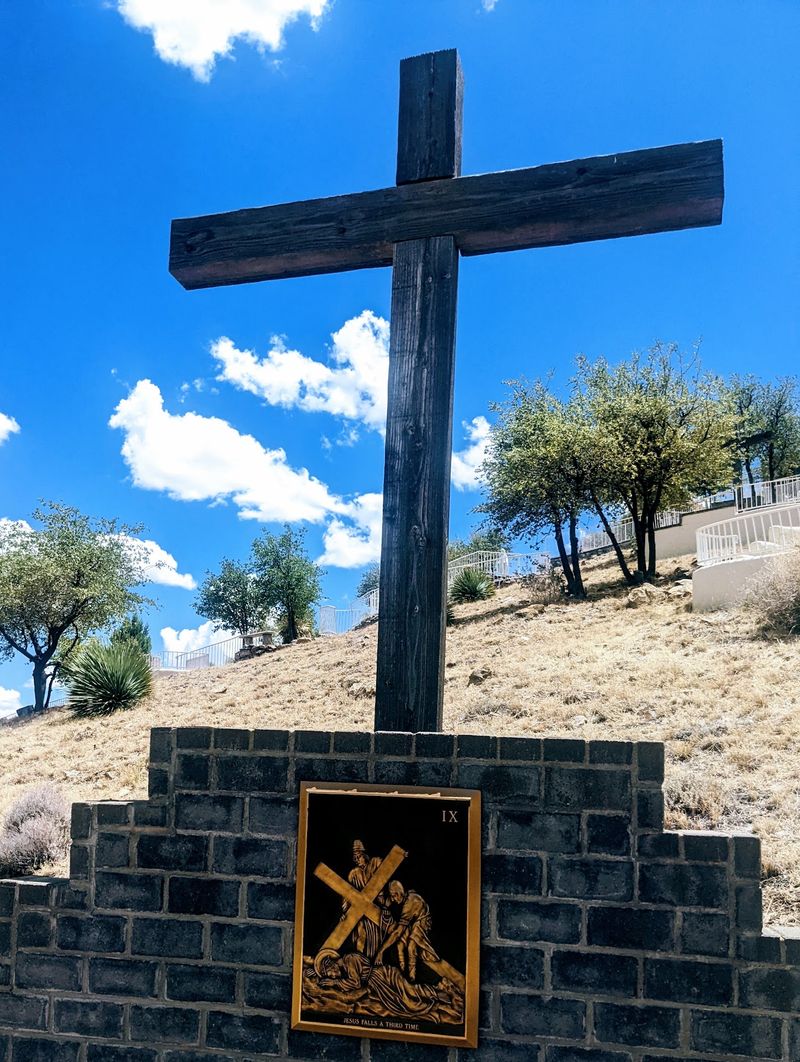
For visitors who want to engage more deeply with the shrine’s spiritual landscape, the 14 Outdoor Stations of the Cross offer one of the most rewarding walks on the property.
Completed in 2002, the trail climbs 600 feet up the mountainside from the lower parking lot, leading pilgrims through a series of carved stone stations that mark the journey of Jesus toward the cross.
The trail itself is a workout, winding through native Arizona vegetation with live oak trees providing patches of shade along the way. Each station is thoughtfully placed so that the surrounding mountain scenery becomes part of the meditation, with views opening up across the valley as you climb higher.
I found myself stopping at each station not only for reflection but also just to catch my breath and take in the landscape.
In 2004, a 10-foot-high Angel of Revelation was installed along the trail, adding a striking visual element to the journey. The combination of physical effort, spiritual focus, and natural beauty makes this trail one of the most memorable parts of any visit to the shrine.
The Our Lady Of Guadalupe Grotto
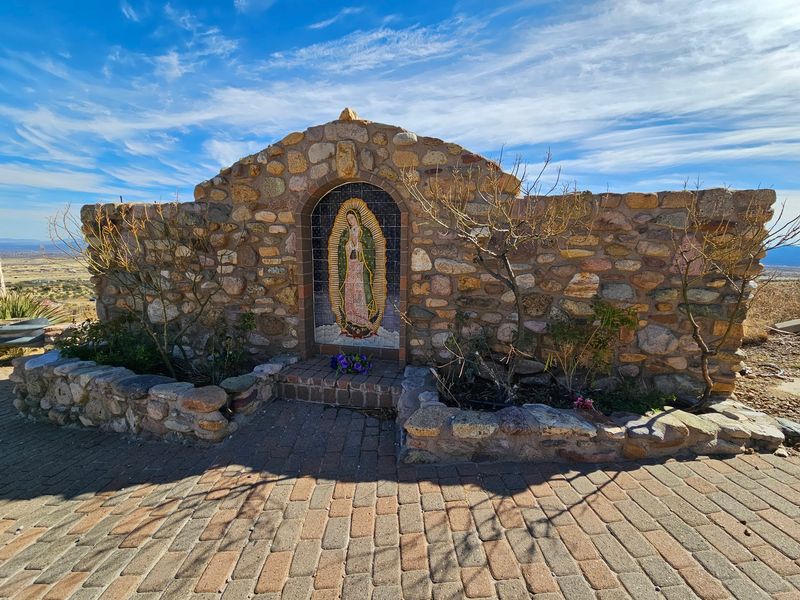
Scattered across the shrine grounds are several smaller devotional spaces, and the Our Lady of Guadalupe Grotto is one of the most visually striking.
Completed in 2004, the grotto was constructed using local river rock combined with vibrant Mexican tile art, creating a colorful and textured shrine that feels rooted in both the land and the cultural traditions of the borderlands region.
There are actually two Guadalupe grottos on the property, one located in the lower parking lot area and another positioned higher on the hillside. Each one offers a slightly different setting and perspective, and many visitors choose to spend a few quiet minutes at both during their time at the shrine.
The combination of the handcrafted stonework and the bright tile details gives the grotto a warmth that stands apart from the more monumental scale of the cross and the Madonna statue.
It feels personal and intimate, which is part of what makes it such a popular spot for visitors who want a quieter moment of connection during their visit to the grounds.
How The 2011 Monument Fire Tested The Shrine
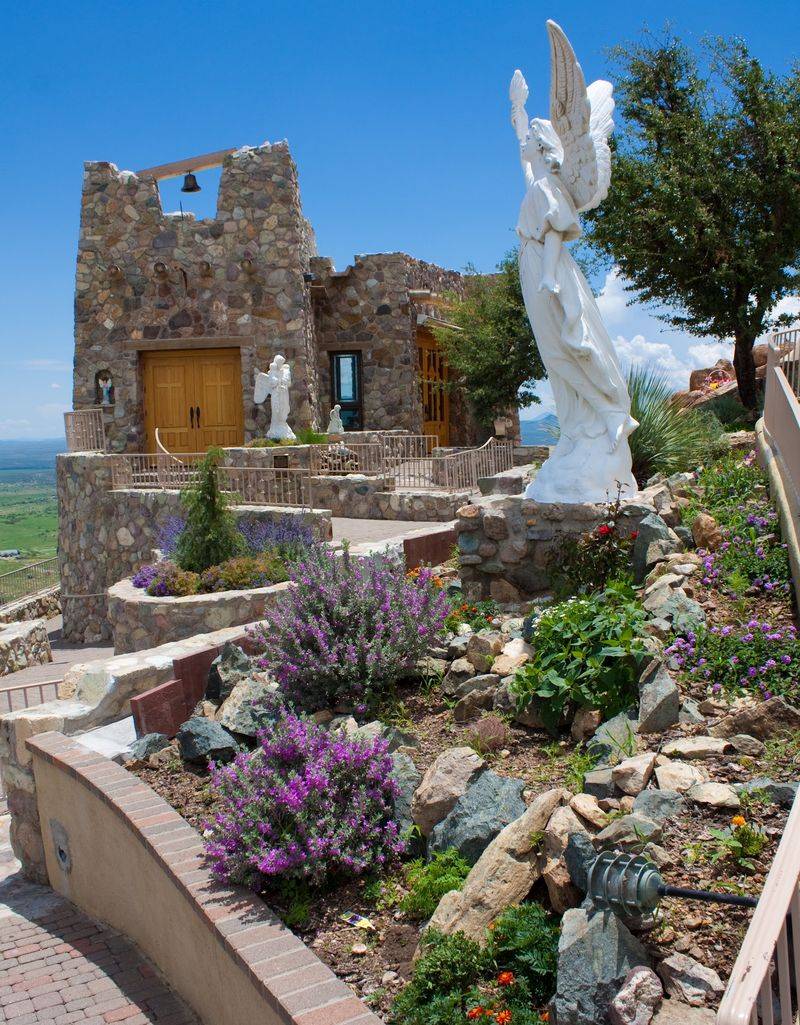
The summer of 2011 brought one of the most destructive wildfires in Cochise County history. The Monument Fire swept through the Huachuca Mountains with intense speed, burning through thousands of acres of vegetation and destroying structures in its path.
The Our Lady Of The Sierras Shrine sat directly in the fire’s path, and the damage to the chapel interior was severe. What made the story remarkable was what the fire did not destroy.
Both the 75-foot cross and the 31-foot statue of Mary came through the blaze completely unharmed, standing on the scorched hillside without a mark on them.
For the many pilgrims and community members who had invested years of faith and effort into building the shrine, the survival of those two structures felt profoundly significant.
The restoration of the chapel interior was completed in 2012, bringing back the space with even finer materials than before, including the hand-hewn Douglas Fir beams and Aspen ceiling.
The fire and the rebuilding that followed became part of the shrine’s story, adding a layer of resilience to a place that was already defined by perseverance.
A Community Hub For Celebrations
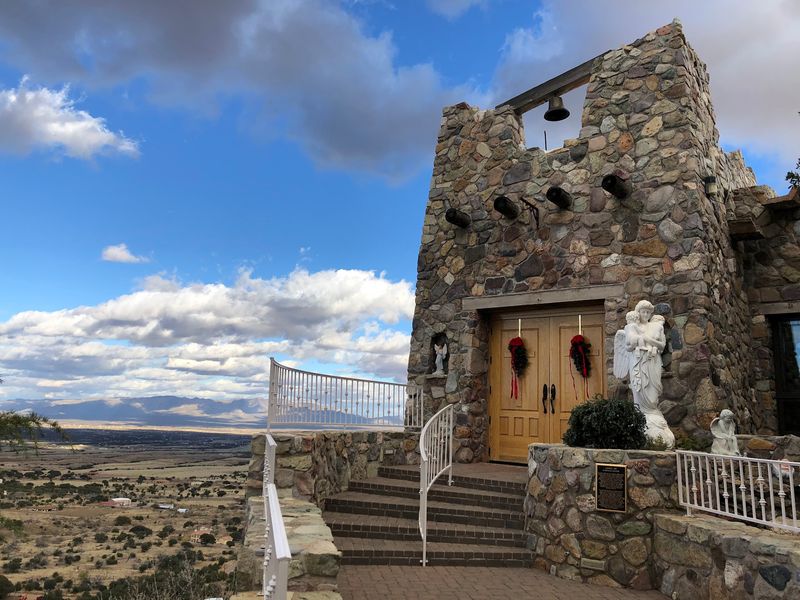
Beyond its role as a pilgrimage destination, the shrine functions as a meaningful gathering place for the surrounding community.
Baptisms, weddings, and funerals are all held on the grounds, which speaks to how deeply the site has woven itself into the lives of people throughout southeastern Arizona and beyond.
Hosting a wedding with a 75-foot cross and sweeping mountain views as your backdrop is a setting that most venues simply cannot compete with.
Couples who have chosen the shrine for their ceremonies often describe it as the most meaningful location they could have imagined for marking such an important moment. The natural beauty of the Huachuca Mountains adds something that no indoor venue can replicate.
The shrine also welcomes visitors of all faiths, not just Catholics, which contributes to its reputation as a place of broad spiritual welcome.
Group pilgrimages arrive regularly throughout the year, and the combination of the outdoor trail, the grottos, the chapel, and the retreat center means there is always something meaningful for a group of any size to experience together during a visit.