
A Historic Pennsylvania Village Built By A German Religious Community In The 18th Century You Can Still Explore
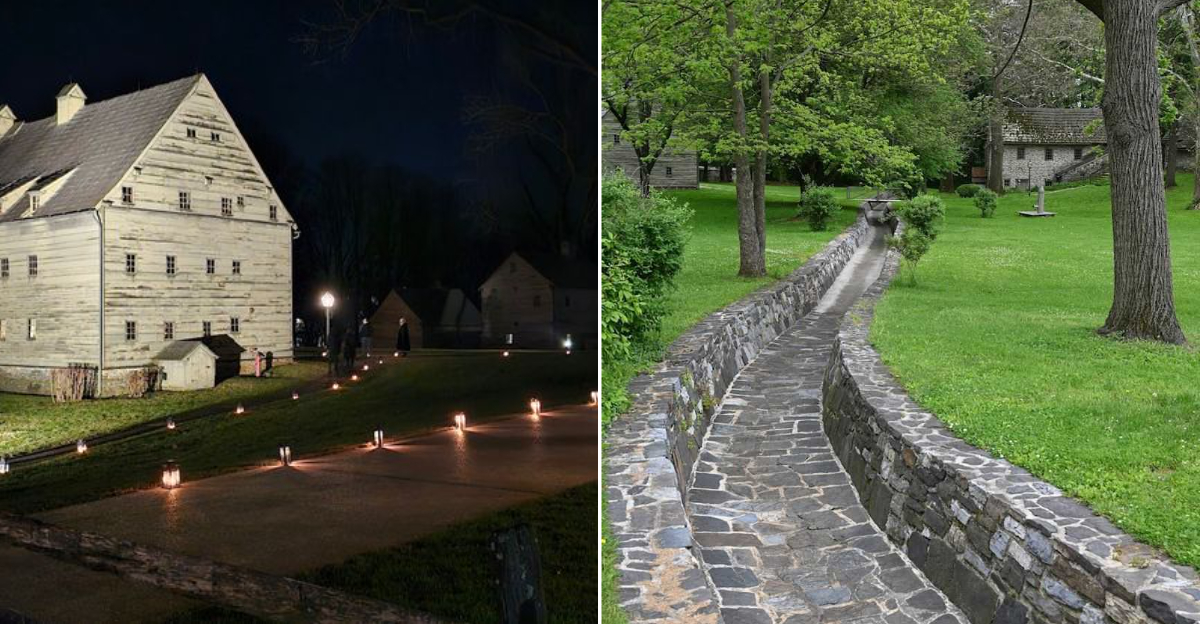
There is something especially fascinating about a place where history still feels close enough to walk through.
Not the polished, behind-glass kind, but the kind that lingers in old buildings, quiet pathways, and the feeling that another way of life once unfolded exactly where you are standing.
That kind of experience can feel both peaceful and deeply intriguing, especially when the story behind it is rooted in faith, community, and a way of living that still sparks curiosity centuries later in Pennsylvania. A historic village like this offers more than a quick look at the past.
It brings stone walls, old-world atmosphere, and the sort of thoughtful stillness that makes you slow down without even realizing it.
Part time capsule, part cultural treasure, and part beautifully preserved escape, it has the kind of character that stays with you long after the visit ends. Some places impress with noise. Others leave a mark with quiet wonder.
I always end up drawn to places like this because the moment I step into a setting where history feels that real, I start imagining the daily lives, the routines, and the stories that once filled every corner.
Johann Conrad Beissel: The Visionary Who Started It All
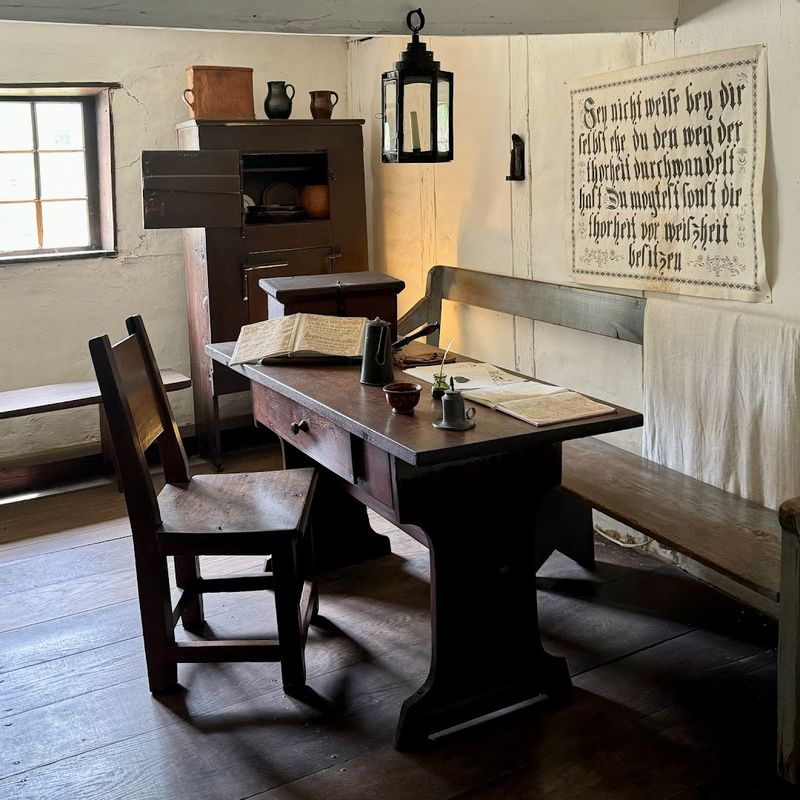
Not every religious movement begins with a single charismatic personality, but Ephrata Cloister certainly did.
Johann Conrad Beissel arrived in Pennsylvania from Germany in the early 1700s, carrying deep spiritual convictions and a magnetic personality that drew followers wherever he went.
Born in Eberbach, Germany, around 1691, Beissel was a baker by trade who became increasingly devoted to pietist religious ideas.
He eventually broke away from established church structures and developed his own theology, blending elements of German pietism with Saturday Sabbatarianism.
By 1732, he had gathered enough devoted followers to formally establish the community at Ephrata.
His influence was so strong that people relocated from across Pennsylvania and even sailed from Germany just to join him.
Beissel led the community until his passing in 1768, leaving behind a legacy that still draws curious visitors to Lancaster County today.
The Saturday Sabbath: A Belief That Set Them Apart
One of the most distinctive beliefs held by the Ephrata community was their observance of Saturday as the Sabbath, rather than Sunday.
This practice set them apart from virtually every other Christian group in colonial Pennsylvania and caused considerable friction with their neighbors.
Beissel drew this belief from his study of scripture and German pietist traditions, concluding that the original seventh-day Sabbath had never been legitimately changed.
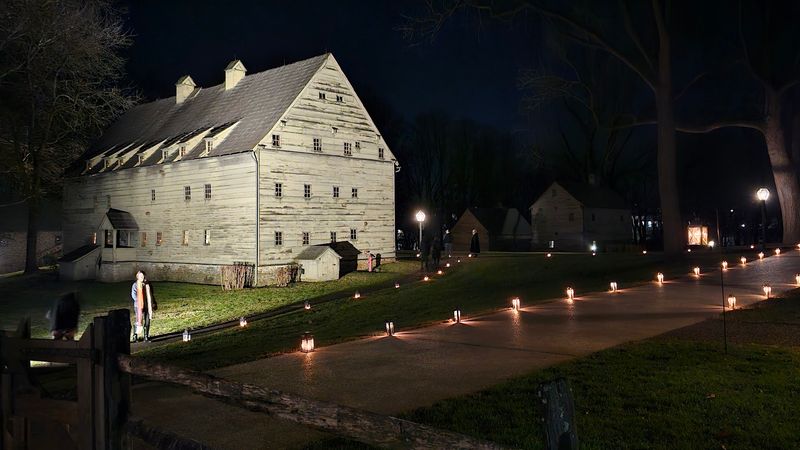
Members structured their entire week around this conviction, resting on Saturday and holding worship services that could stretch deep into the night.
The midnight prayer service was a particularly striking tradition. Members were expected to rise in the middle of the night to sing, pray, and meditate, even during the coldest Pennsylvania winters.
This demanding schedule, combined with strict dietary rules and limited sleep, reflected just how seriously the Ephrata community took their spiritual commitments.
Medieval Architecture In The Pennsylvania Countryside
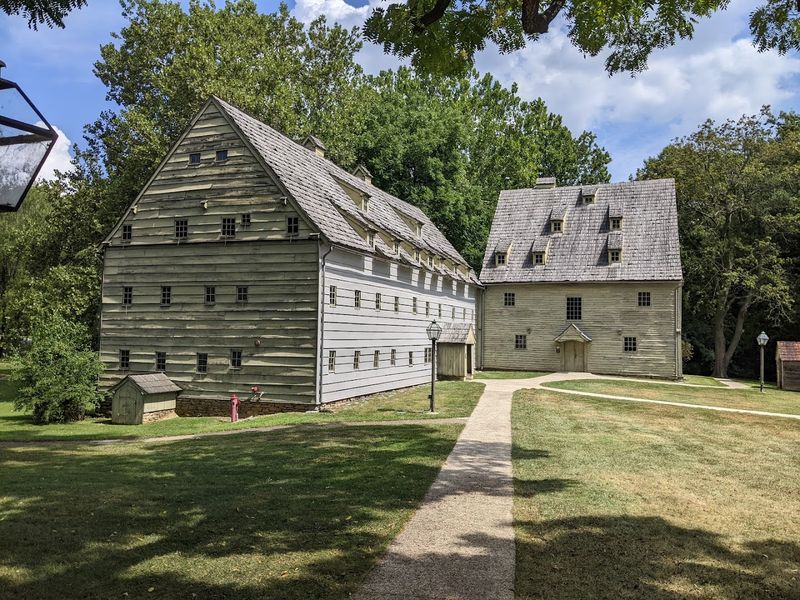
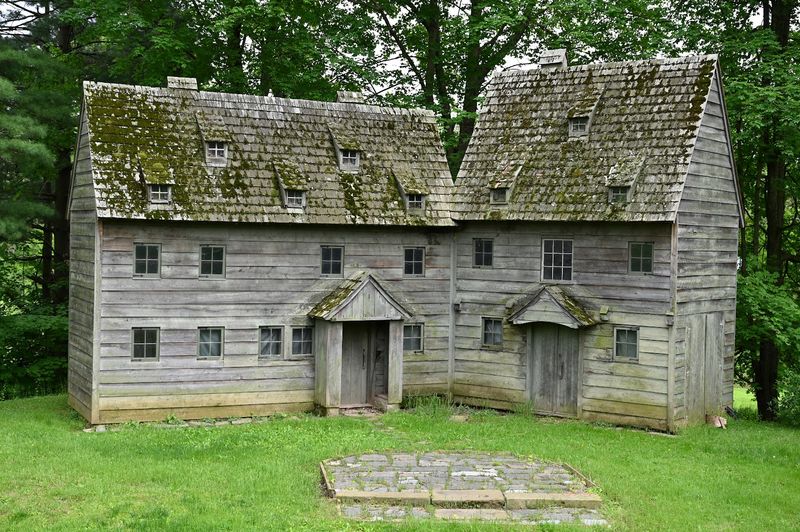
Standing in front of the main buildings at Ephrata Cloister, it is hard to believe you are in Pennsylvania and not somewhere in 15th-century central Europe.
The architectural style of the surviving structures draws heavily from German medieval traditions, featuring steep roofs, narrow doorways, and thick timber-frame construction.
The low doorways were not an accident. They were deliberately designed to encourage humility, forcing anyone who entered to bow their head.
This kind of intentional symbolism was woven into nearly every physical detail of the community’s design.
Three major structures still stand on the grounds today: the Saal, which served as the meeting house; the Saron, or Sisters House; and the Almonry.
Each building has been carefully preserved and tells a different chapter of daily life at Ephrata Cloister.
Visitors who appreciate architecture will find themselves stopping repeatedly just to study the craftsmanship up close.
Separate Living: The Brotherhood and Sisterhood Orders
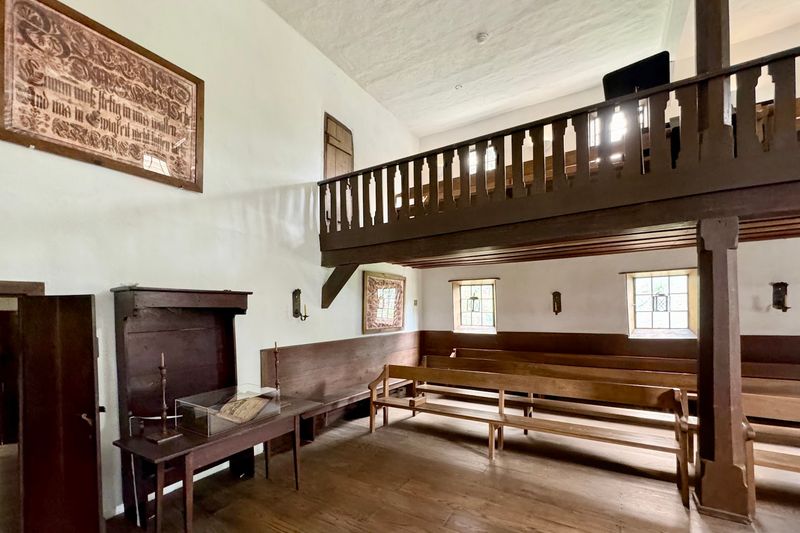
Life at Ephrata Cloister was organized around a fascinating social structure that divided members into three distinct groups.
Single men formed the Brotherhood, single women formed the Sisterhood, and married couples lived as householders on the outer edges of the community’s property.
The celibate orders were considered spiritually superior within the community’s belief system, and members of both the Brotherhood and Sisterhood committed to strict routines of prayer, labor, and study.
They wore distinctive white robes as a symbol of their dedication and spiritual purity.
The Sisters’ Dormitory, known as the Saron, is one of the buildings that can only be accessed through a guided tour at Ephrata Cloister.
Walking through its narrow corridors and seeing the small, plainly furnished sleeping quarters gives a vivid sense of just how disciplined and intentional everyday life was for these remarkable 18th-century residents.
Frakturschriften: The Art Of Sacred Calligraphy
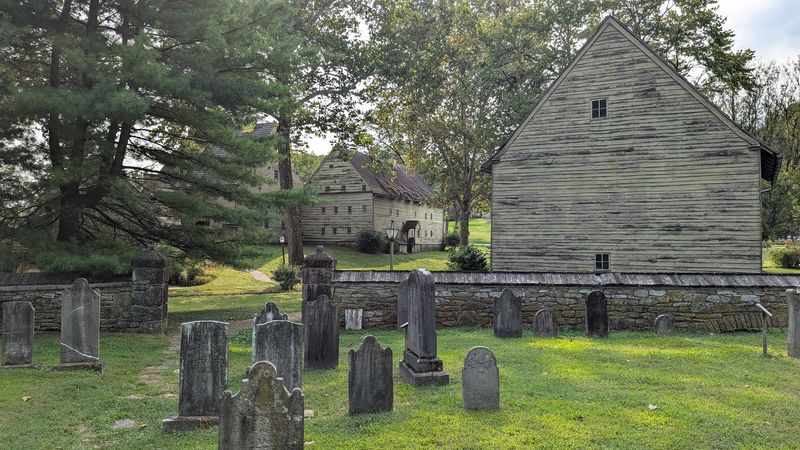
Among the most breathtaking contributions of the Ephrata community is their tradition of Frakturschriften, an ornate style of German calligraphy that combined elaborate lettering with decorative imagery.
Birds, flowers, and geometric patterns surrounded sacred texts in a way that turned scripture into visual art.
The community at Ephrata Cloister produced some of the finest examples of this art form in colonial America.
Their manuscripts were not just devotional objects but also extraordinary demonstrations of patience, skill, and creativity. Members spent countless hours perfecting each stroke.
Today, original examples of Fraktur work from Ephrata are preserved in museum collections across the country, and the visitor center at the site displays reproductions that help tell this artistic story.
For anyone who appreciates handmade art and the dedication it requires, seeing these intricate pieces in context adds a deeply human dimension to an already remarkable historical site.
One of Colonial America’s Earliest Printing Presses
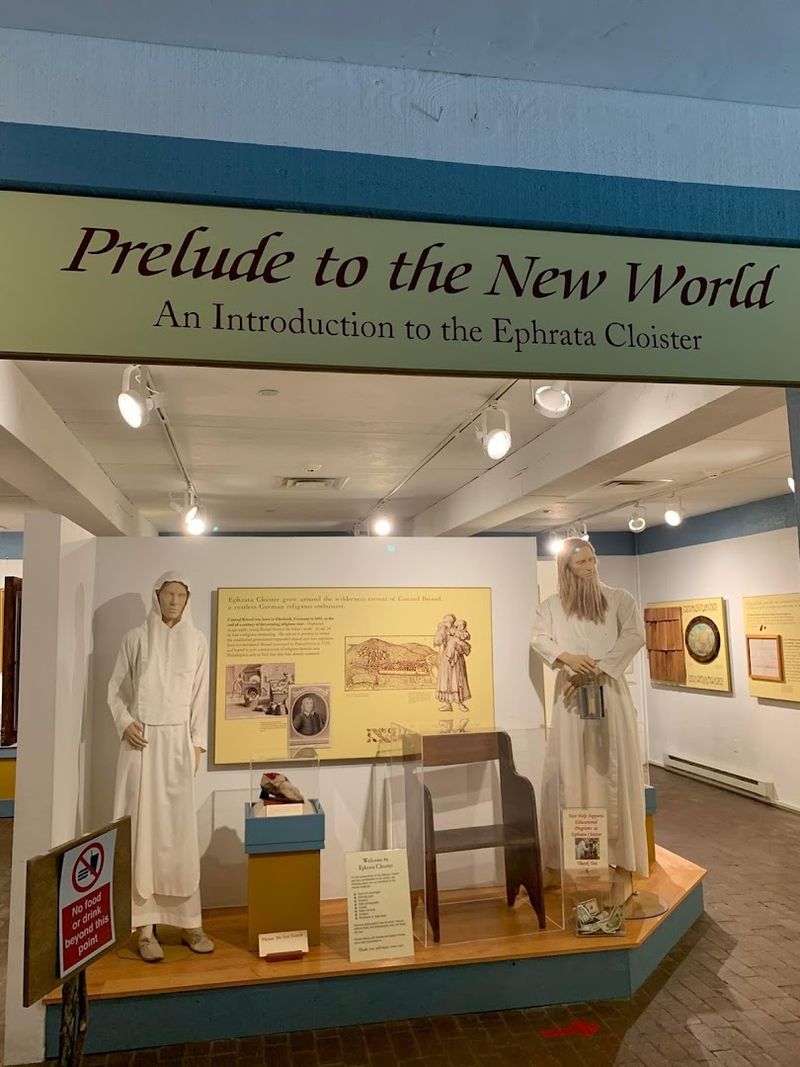
Long before newspapers dominated the American landscape, the community at Ephrata Cloister was already running one of the most productive printing operations in colonial Pennsylvania. Their press, established in the 1740s, produced hymnals, religious texts, and community documents that circulated well beyond their own membership.
The Ephrata press was significant enough that it was called upon during the Revolutionary War period to print documents of broader public importance. This connection to early American civic life shows that the community, despite its withdrawn lifestyle, was not entirely isolated from the world around it.
The printing tradition at Ephrata also supported their music program and their theological writings, helping to spread Beissel’s ideas to a wider audience.
Visitors to the site today can learn about this press and its output through exhibits in the visitor center, which does an excellent job of placing the community’s intellectual contributions in their proper historical context.
Sacred Music And Original Hymn Compositions
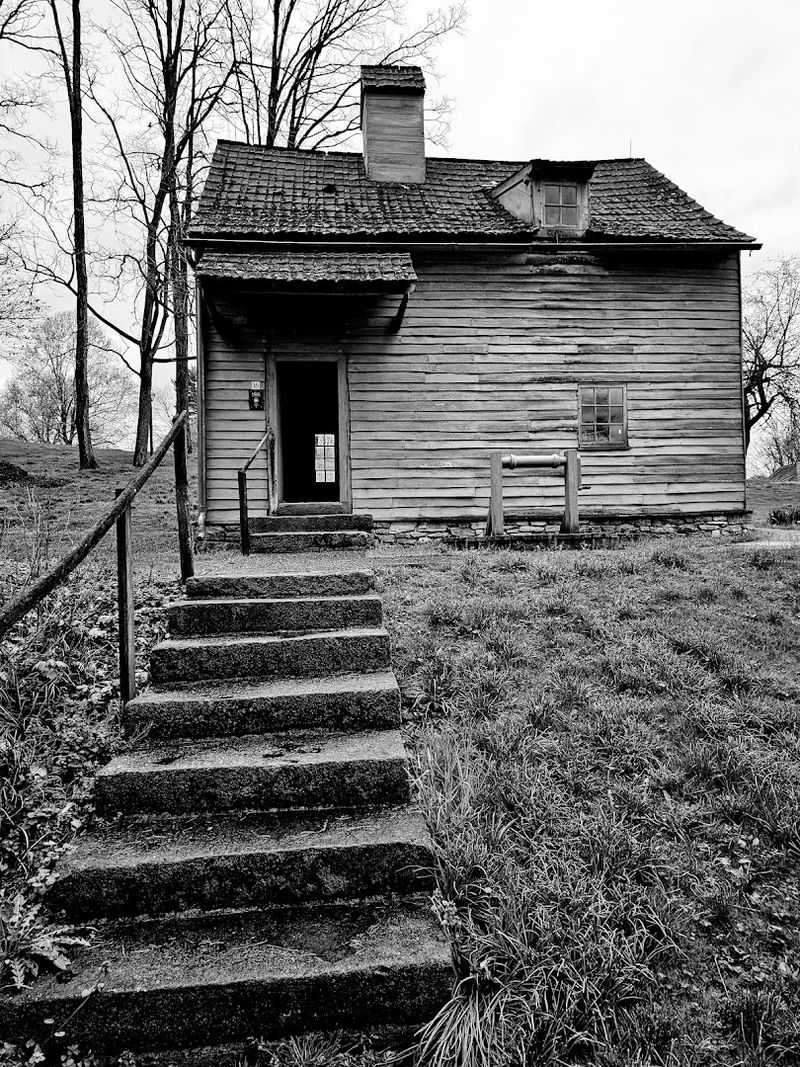
Music was central to spiritual life at Ephrata Cloister, and the community developed a choral tradition that was genuinely unlike anything else in colonial America.
Johann Conrad Beissel composed hundreds of original hymns and also developed his own unique system of music theory to guide how they were performed.
The choir at Ephrata became well known throughout the region for its unusual sound, which featured high falsetto singing in multiple parts. Beissel believed that specific musical intervals carried spiritual energy, and he organized his compositions around these ideas in a highly structured way.
Recordings and demonstrations of this music are sometimes featured at special events held at the Ephrata Cloister site, and hearing even a brief sample makes it immediately clear how otherworldly the community’s worship must have sounded echoing through those medieval-style wooden halls on a quiet Pennsylvania evening. It is genuinely unlike anything you would expect from colonial America.
The Revolutionary War Connection: A Hospital On Holy Ground
The American Revolutionary War left its mark on Ephrata Cloister in a way that the community never fully anticipated.
After the Battle of Brandywine in September 1777, General George Washington’s wounded soldiers were brought to Ephrata, and the community’s large buildings were converted into a military hospital.
The members of Ephrata Cloister responded with compassion, caring for hundreds of soldiers despite the enormous strain it placed on their small community.
Typhus spread through the makeshift hospital, and many community members who provided care became seriously ill themselves as a result of their selfless service.
This chapter of the site’s history adds a layer of significance that extends well beyond religious curiosity.
The community’s willingness to open their doors during one of America’s most critical moments speaks to a spirit of humanitarian service that visitors find deeply moving.
It is a story that most people do not expect to encounter when they first arrive at this Pennsylvania landmark.
200 Acres Of Grounds To Explore At Your Own Pace
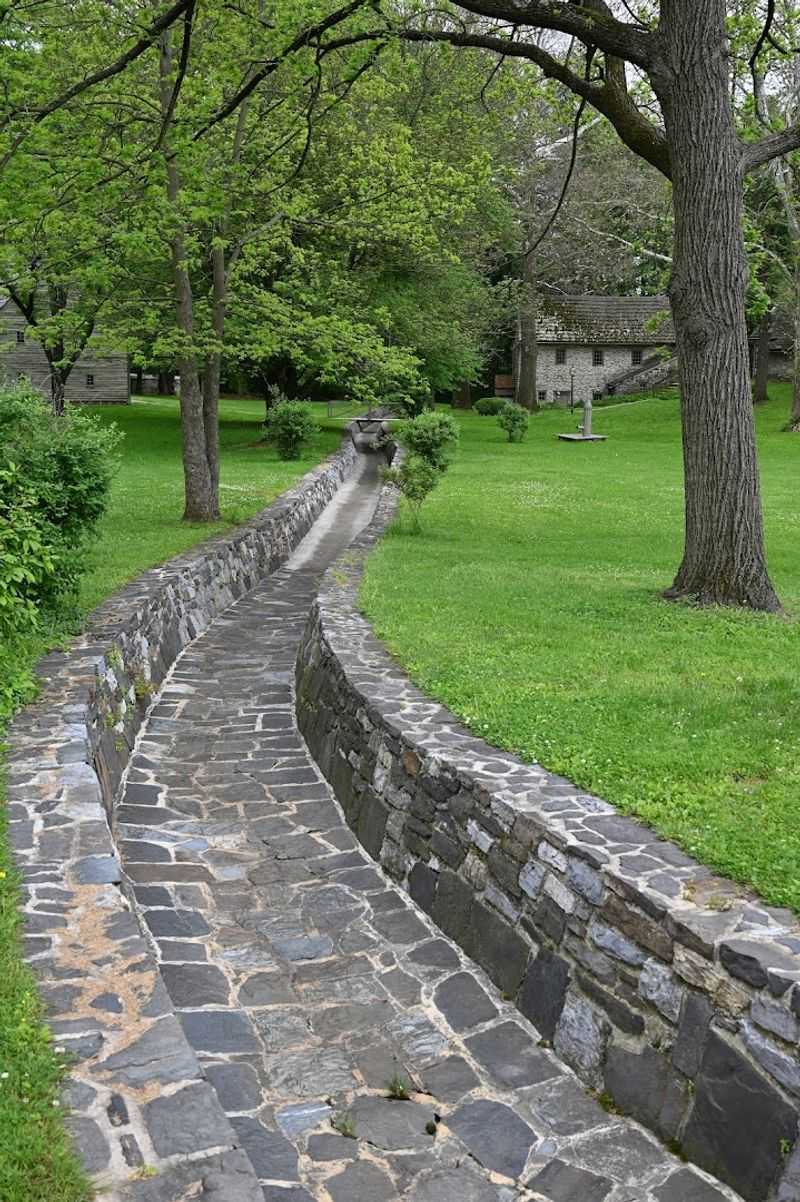
One of the most refreshing aspects of visiting Ephrata Cloister is the sense of space available to explore.
The site offers a peaceful setting that feels genuinely removed from the rhythm of modern life in Lancaster County.
After completing a guided tour of the main buildings, visitors are free to wander the grounds at their own pace.
The landscape is well maintained, with clear pathways and informative signage that helps connect the physical spaces to the community’s daily routines and spiritual practices.
A self-guided tour option is also available, and the site has embraced technology by providing QR codes that link to audio and visual content about each building.
This makes it easy to go at whatever speed suits you best.
Comfortable walking shoes are genuinely recommended here, because once you start exploring the grounds of Ephrata Cloister, it is surprisingly easy to lose track of time.
Visiting Today: Hours, Tours, And What To Expect
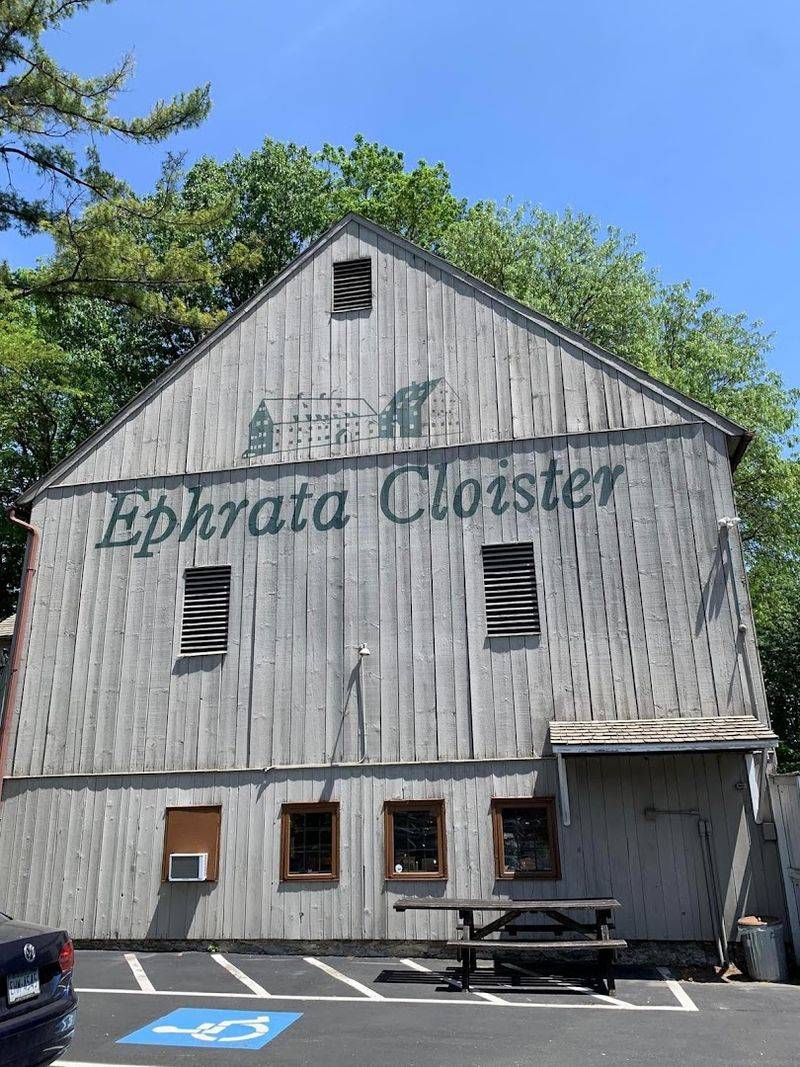
Planning a trip to Ephrata Cloister is straightforward, and the site is well set up to welcome visitors of all backgrounds.
The museum is open Wednesday through Saturday from 9 AM to 4 PM, and on Sundays from noon to 4 PM. It is closed on Mondays and Tuesdays, so it is worth checking before you go.
Guided tours are the most popular way to experience the site, and they are strongly recommended by nearly everyone who has visited.
The tour takes about an hour and gives access to buildings that are not open during the self-guided experience, including the Sisters House.
The visitor center also shows an introductory film that provides helpful context before you step outside.
The gift shop carries locally made crafts and books about the community’s history, making it a fine place to pick up a meaningful souvenir. Ephrata Cloister can be reached at 632 W Main St, Ephrata, PA 17522.