
A New York Underground Discovery Revealed A Forgotten Piece Of The City’s Past
For decades, New Yorkers walked these streets without knowing what lay beneath them. Then, during construction, the ground gave up a secret the city had buried and seemingly forgotten.
It’s unsettling to think how much history can sit just out of sight, hidden beneath the rhythm of everyday life.
What gets me is how easily a place can disappear from public memory while the people buried there remain part of the city’s story. Manhattan has layers upon layers, but not all of them are made of concrete and subway tunnels.
Today, a memorial and museum give this forgotten chapter the recognition it deserves. And once you know what’s beneath these streets, it’s hard to look at the city quite the same way again.
The Dig That Stopped A Skyscraper Project In Its Tracks
Construction crews in 1991 were preparing the ground for a new federal office building at 290 Broadway. Instead of plain dirt, they uncovered human remains buried deep beneath Lower Manhattan.
That find became the heart of the African Burial Ground National Monument. Archaeologists soon realized they had reached part of a cemetery used in the 17th and 18th centuries.
The burial ground served people of African descent in colonial New York. Back then, it carried the name the Negroes Burying Ground on old maps and records.
Why was it placed there? Enslaved and free Africans were often barred from burial in church grounds, so they used land outside the city limits.
Records suggest the ground stayed in use until about 1794 or 1795. After that, the growing city swallowed the land, and buildings rose right on top of it.
The 1991 discovery forced a big rethink about who built early New York. It showed that enslaved Africans played a central role in shaping the city.
Today, the site ranks among the most important archaeological discoveries of the 20th century in America.
Ordinary New Yorkers Refused To Let This Story Get Buried Twice
Discoveries don’t protect themselves. After the remains surfaced, community members, activists, and leaders pushed hard to make sure the site received proper respect.
Their voices mattered. The site earned National Historic Landmark status in 1993, just two years after the first remains appeared.
Researchers studied the remains of 419 Africans who were carefully exhumed. That work helped reveal details about their lives, labor, and roots in Africa.
Then came a deeply meaningful moment in 2003. A traditional African reburial ceremony returned those 419 individuals to the ground at the site.
Three years later, in 2006, President George W. Bush established the African Burial Ground National Monument.
The National Park Service now cares for it.
I like how this chapter proves regular people can change history’s direction. Without their persistence, the story might have vanished under concrete a second time.
When you visit, keep that activism in mind. The museum and memorial exist partly because folks spoke up at public meetings and kept the pressure on.
It’s a solid reminder that preservation is often a team sport. And this team played to win.
Your Visit Should Start Inside, Even If The Memorial Is Calling
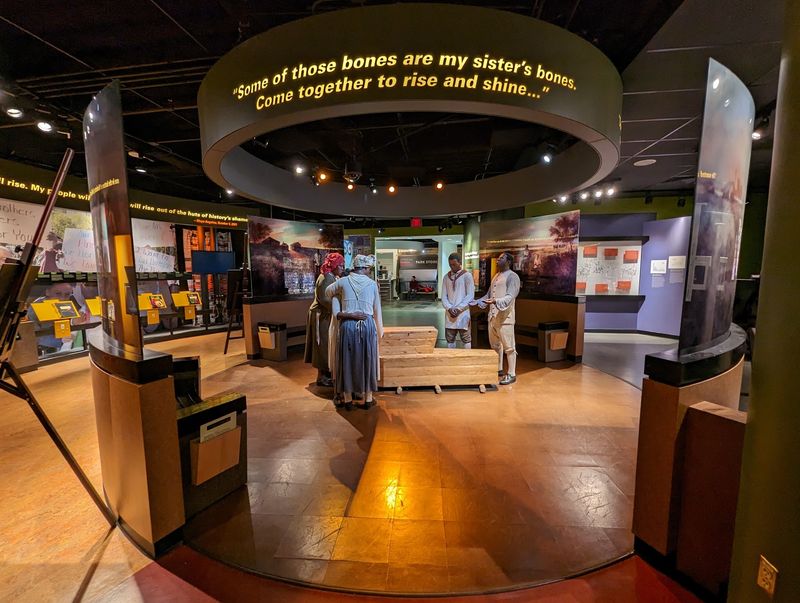
Head indoors first. The visitor center and museum give you the background that makes the outdoor memorial hit much harder.
You’ll find everything on the first floor of the Ted Weiss Federal Building. The address is 290 Broadway, New York, NY 10007, between Duane Street and Reade Street.
The museum is free and self-guided. Four exhibit areas explore the lives of free and enslaved Africans in colonial New York.
A 40-seat theater shows a 20-minute film about the site’s history and meaning. It’s a smart way to get your bearings before wandering the exhibits.
There’s also a bookstore if you want to keep learning after you leave. Accessibility gets attention too, since the center is ADA compliant.
An audio component helps visitors with sight or hearing impairments. That thoughtful touch means more people can connect with the story.
One practical tip matters here. The museum has its own dedicated entrance at 290 Broadway, so look for it rather than guessing.
Give yourself time to read slowly. The details stick better when you aren’t rushing toward the next stop on your New York list.
Pack Your Photo ID Or Prepare For A Detour
Airport-style security inside a museum? Yep, that’s part of the deal here, since the visitor center sits inside a working federal building.
Everyone entering 290 Broadway must pass through screening. You may also be asked to show photo identification, so bringing it is a good idea.
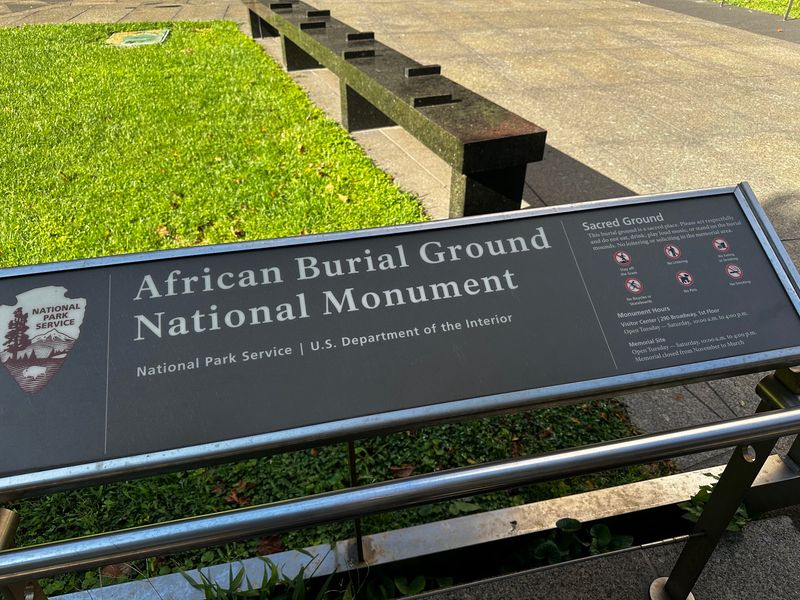
Plan your timing with the hours in mind. The indoor visitor center and the outdoor memorial both open Wednesday through Sunday, from 10 a.m. to 4 p.m.
Monday and Tuesday are closed days. Showing up then would mean staring at locked doors, which is nobody’s idea of fun.
Both the indoor museum and outdoor memorial close on Thanksgiving Day, Christmas Day, and New Year’s Day.
Winter can also shake things up outside. The memorial’s winter opening depends on the weather, so check conditions before heading over.
Here’s a useful heads-up for comfort. There are no public restrooms at the outdoor memorial, so plan ahead while you’re inside the building.
Admission costs nothing at all. That leaves more room in your budget for a nearby snack after your visit.
Seven Design Elements Turn A Small Corner Into Something Huge
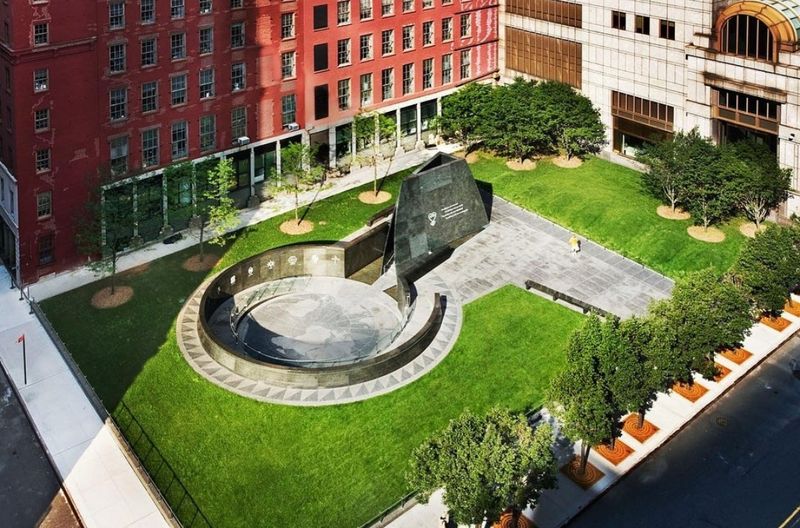
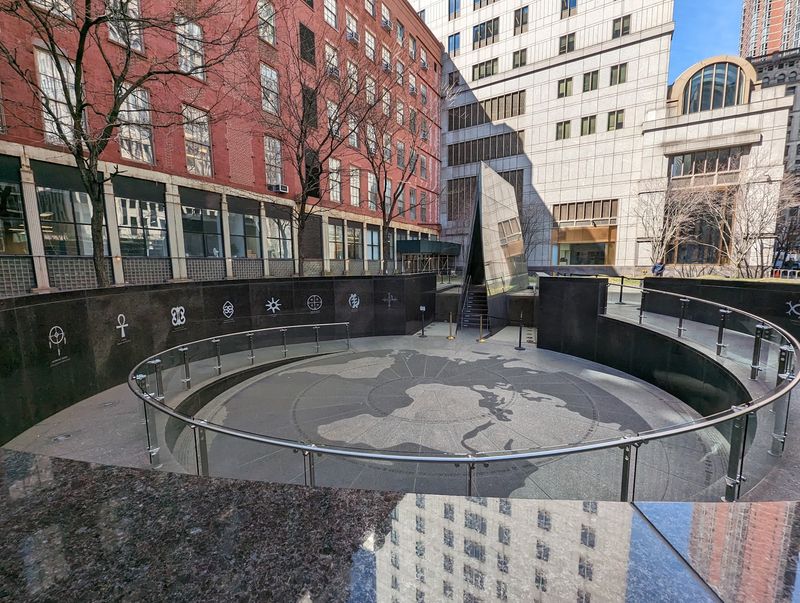
Only 0.35 acres. That’s the size of the outdoor memorial at the corner of Duane Street and African Burial Ground Way, also called Elk Street.
Architects Rodney Leon and Nicole Hollant Denis designed it. The memorial was dedicated in 2007 and packs serious meaning into a compact footprint.
It includes seven distinct design elements. You’ll see the Wall of Remembrance, the Ancestral Re-Internment Grove, and the Memorial Wall.
The list continues with the Ancestral Chamber and the Circle of the Diaspora. There’s also a Spiral Processional Ramp and the Ancestral Libation Court.
Each piece invites you to slow down. Moving through them feels like following a path instead of just looking at a statue.
The memorial stands at the African Burial Ground National Monument as a sacred space. Treat it with the quiet respect you’d give any cemetery.
I believe the smart design works because it asks something of you. You walk, descend, and circle, and the story sinks in with every step.
Small space, big feelings. Manhattan rarely does modest, but here it nails it.
A Triangle-Shaped Chamber Carries The Weight Of An Ocean Crossing
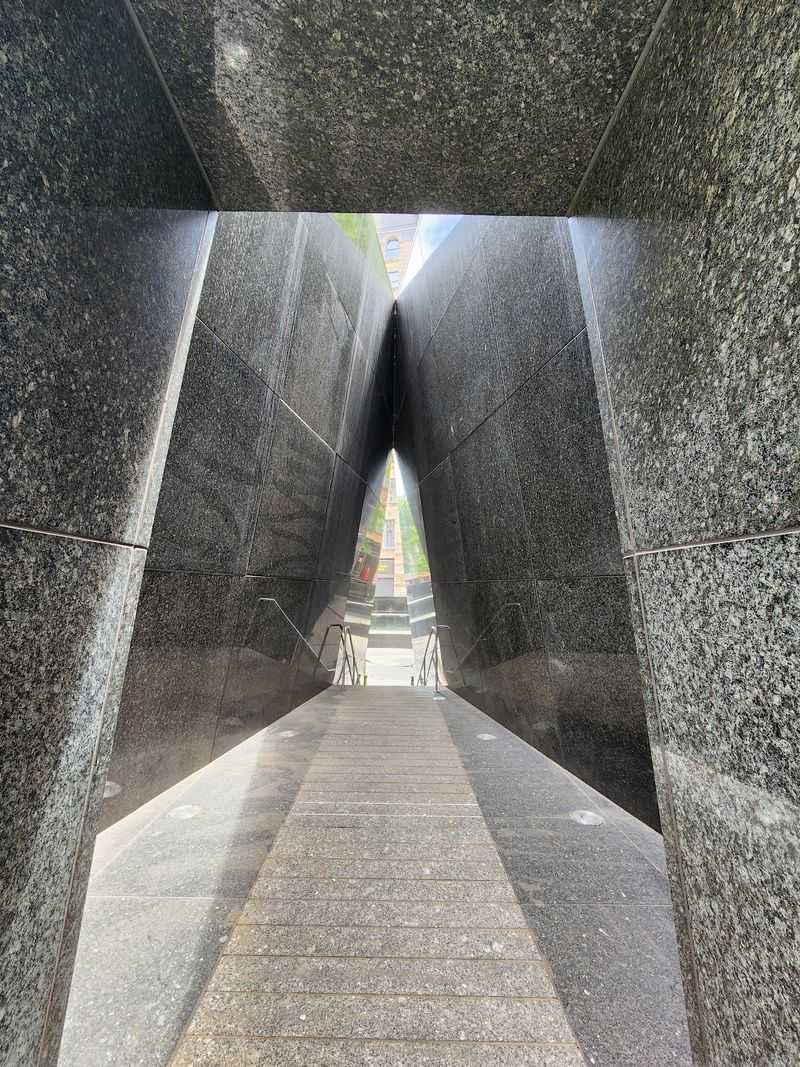
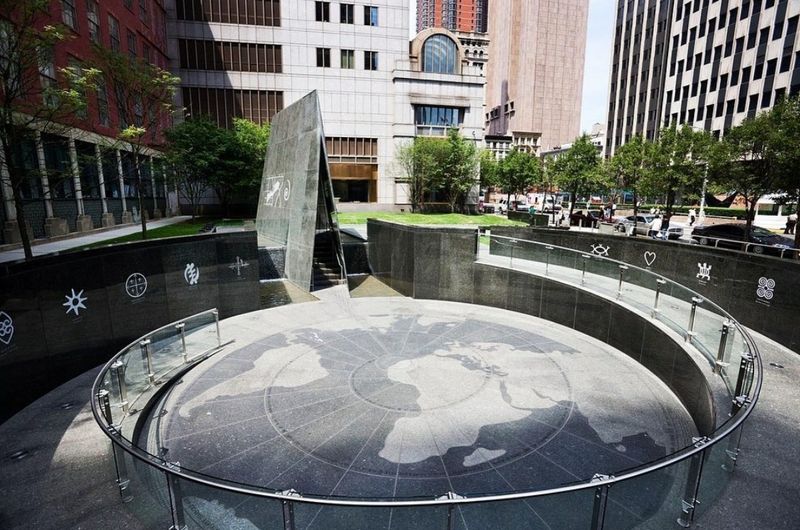
Shapes can tell stories. At the outdoor memorial, the Ancestral Chamber rises as a triangular structure with a powerful purpose.
It represents the Middle Passage. That was the brutal ocean journey that carried enslaved Africans across the Atlantic to the Americas.
Standing near it, you get a sense of how the designers used form to share history. No long plaque is needed for the message to land.
The chamber connects naturally with the rest of the space. It links the stories of the people buried here to the much larger journey behind them.
Many of those buried in this New York cemetery had roots in Africa. Others were born in the colonies, but the crossing shaped all their lives.
That’s why this element deserves a few quiet minutes. Read any nearby information and let the design do its job.
For families, it’s a good spot to talk with kids about history. A simple question like what this shape might mean can open a meaningful conversation.
Honestly, it’s hard to look at it the same way twice. Once you know the story, the angles feel heavier.
Look Down, Because The Floor Holds A Map Of The World
Most people look up in Manhattan. At this memorial, an important part of the story is represented in the design beneath your feet.
A world map sits embedded in the monument’s floor. It centers on the West African coast, with sun rays stretching toward other parts of the world.
Those rays point to North America, Brazil, Europe, and the Caribbean Islands. The design shows how the African diaspora spread across oceans and continents.
It’s a clever visual lesson. One glance helps you understand how connected these places became through history.
The map works especially well with the Circle of the Diaspora. Together they remind visitors that the people buried here belonged to a much larger story.
Bring curious kids here and let them trace the lines. Ask which places they recognize, then explain how those spots link back to Africa.
Photographers will appreciate it too. Just remember this is a burial site, so keep the mood respectful while you snap.
Fun fact: you can learn a whole chapter of world history in about one square of stone. That’s efficient storytelling.
Twenty Symbols On One Wall Speak A Language Worth Learning
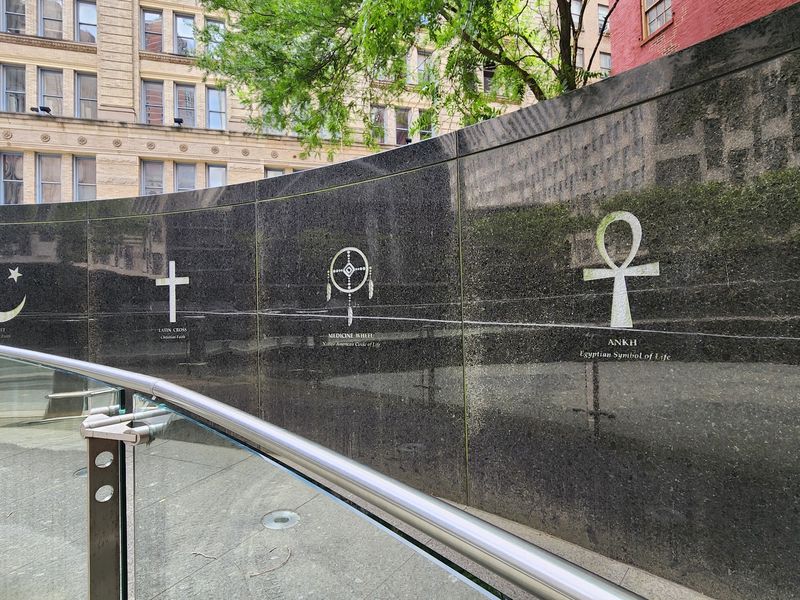
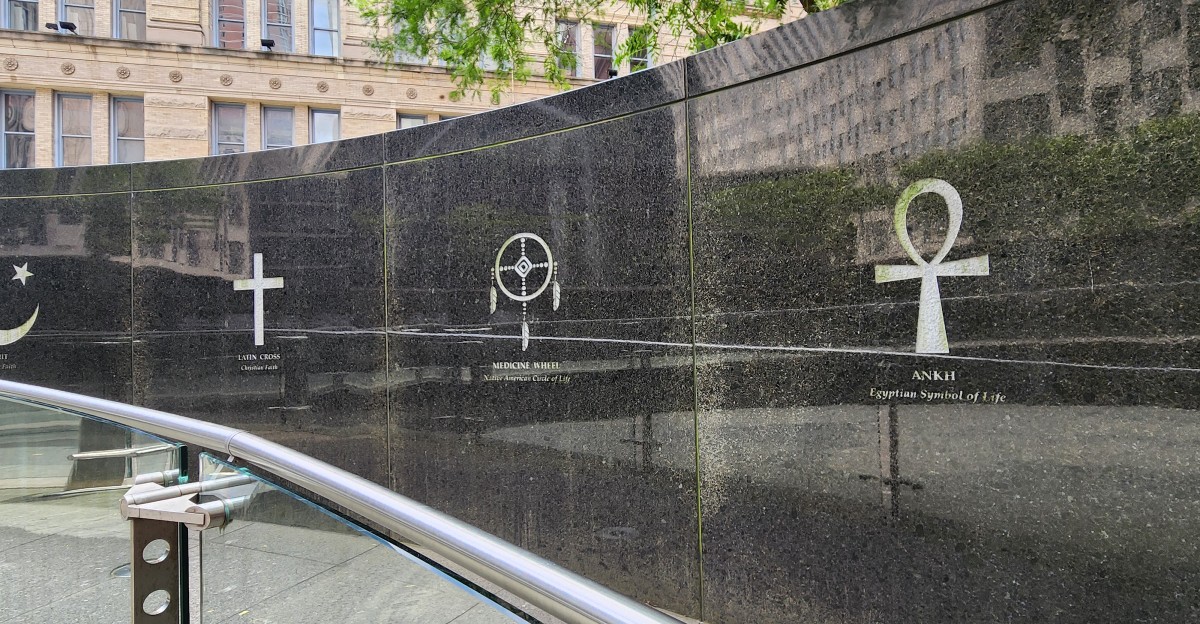
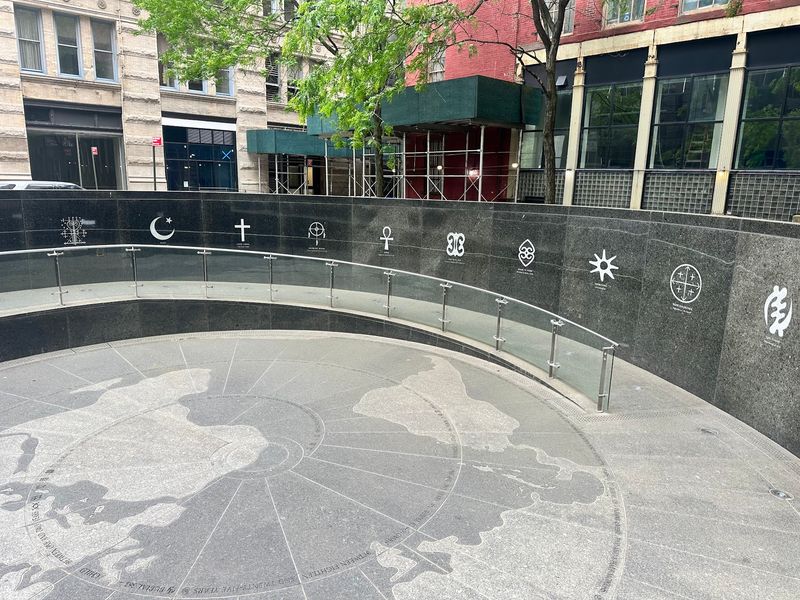
Ever heard of Adinkra symbols? They come from the Akan people of Ghana, and several appear on the memorial’s walls.
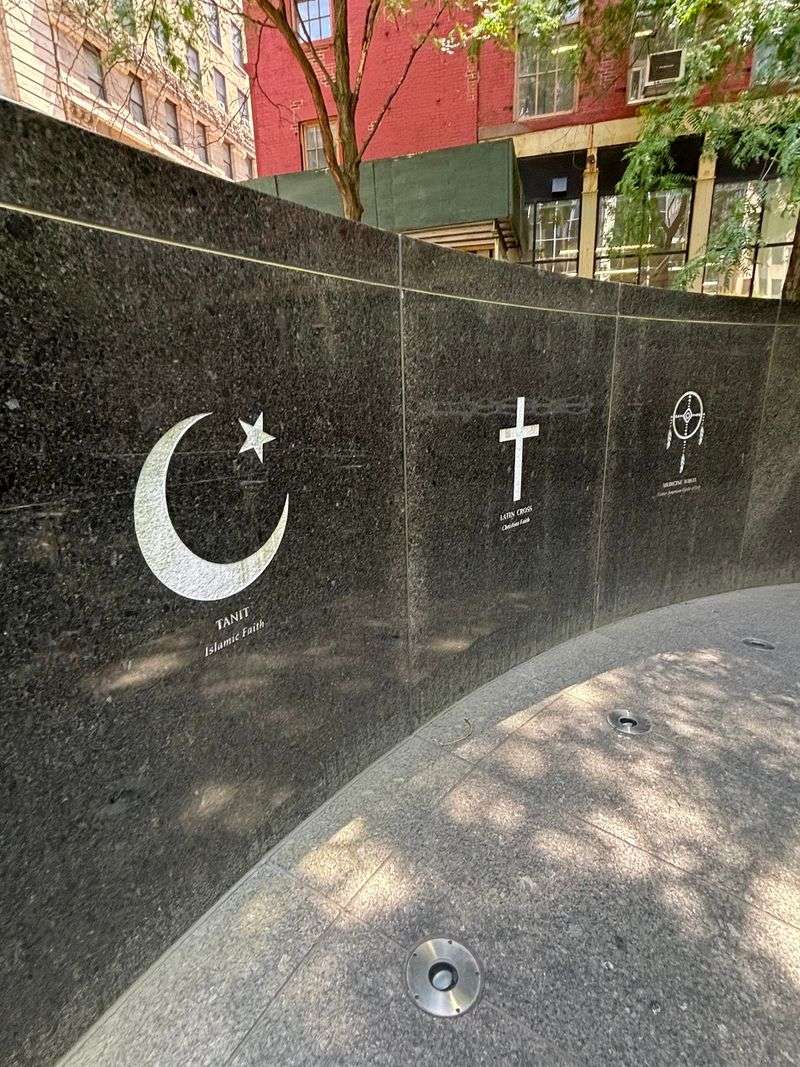
The Memorial Wall features twenty religious symbols in total. Each one represents ideas and beliefs connected to the people honored at the site.
Spotting them becomes a little like a treasure hunt. You start noticing shapes, then wondering what each one means.
That curiosity is the whole point. The symbols link the cemetery to African traditions that traveled with people across the ocean.
I like how this detail adds culture instead of just facts. It reminds you that the people buried here had faith, values, and identities of their own.
Before visiting, consider looking up a few Adinkra symbols online. Recognizing one or two on the wall feels surprisingly rewarding.
Rangers at the African Burial Ground National Monument can also help explain them. They know this site inside and out.
Teachers and students might love this part most. Few walls in New York double as a lesson in art, belief, and heritage all at once.
Book A Ranger And Let The Experts Do The Storytelling
Self-guided visits are great. Ranger-led tours, though, add a layer of insight you just can’t get from reading signs.
Tours are available by reservation through Recreation.gov. On-site presentations usually last about 60 minutes and cover a lot of ground.
Each one includes the film and an orientation to the exhibits. Then comes a guided tour that changes with the seasons.
In spring and summer, rangers lead groups through the Outdoor Memorial. In fall and winter, the focus shifts to artwork in the Ted Weiss Federal Building lobby.
That seasonal switch gives repeat visitors a reason to return. You could come twice and hear different stories each time.
Can’t make it to New York? Off-site and virtual ranger-led presentations can also be arranged, which is great news for classrooms.
The monument hosts special events throughout the year as well. Checking the schedule before your trip might line you up with something memorable.
A visit here fits easily into a Lower Manhattan day. Just leave room afterward to think, because this place stays with you long after you leave.