
A Restored Jail Cellblock Is Hiding On The Sixth Floor Of This Arizona Courthouse
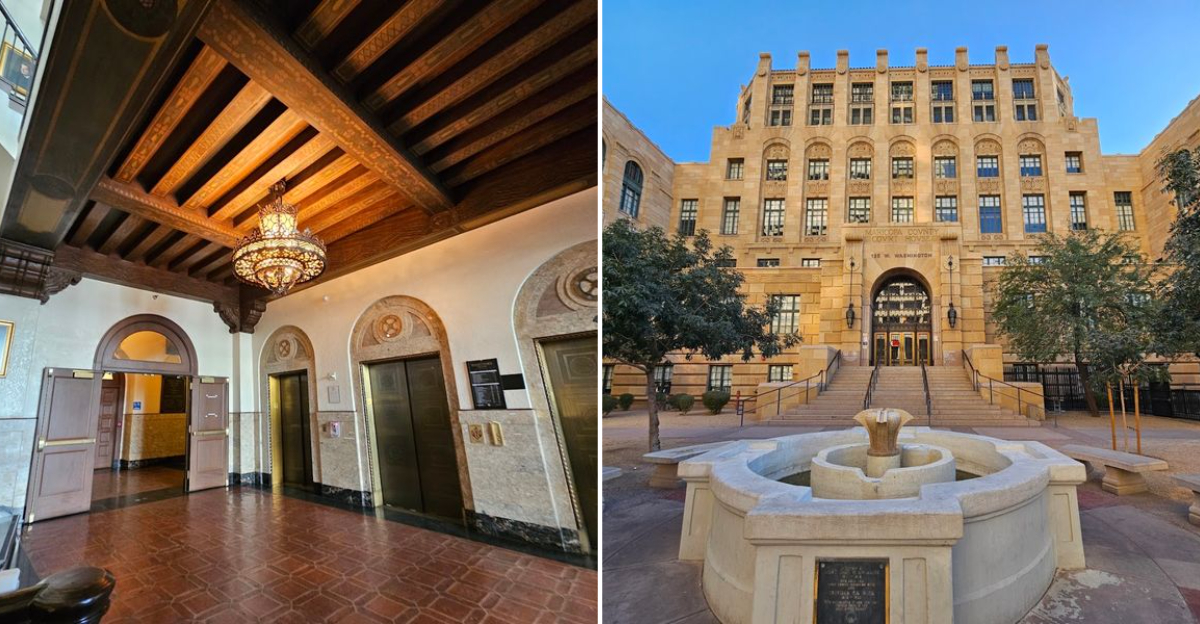
Courthouses usually make me think of paperwork, security lines, and rooms where everyone speaks a little more quietly.
This Arizona courthouse, however, keeps one remarkable piece of history several floors above the busy streets below. A restored jail cellblock survives on the sixth floor, complete with heavy doors, narrow corridors, and spaces that once held real prisoners.
I find places like this fascinating because the past is not displayed behind a single glass case. You can stand inside the same rooms and imagine the daily routines, tension, and uncertainty that once filled them.
Photographs, artifacts, and exhibits explain how justice and law enforcement developed across Maricopa County. The experience offers a surprising contrast between modern Phoenix and an older Arizona that operated by very different rules.
This is not a stuffy museum with roped-off displays and dusty plaques. It is a fully immersive walk through Arizona’s legal history, complete with preserved prisoner artwork etched into the walls, landmark case exhibits, and stories of trailblazing legal figures.
Best of all, admission is completely free, so there is no reason to skip it on your next trip to downtown Phoenix.
The Restored 1929 Jail Cellblock
Walking into this space feels like the building itself is whispering stories from nearly a century ago. The restored cellblock on the sixth floor of the Historic Old Courthouse operated as a working jail from 1929 until the 1960s, and the museum has preserved it with remarkable care and attention to detail.
Narrow corridors lined with iron bars, original bunk beds, and folded jail uniforms give visitors a vivid picture of what daily life looked like for inmates during that era. The tight quarters make it easy to understand just how confined and monotonous that existence must have been.
What truly sets this space apart are the original markings and artwork left behind by former prisoners directly on the walls. These unscripted human expressions are raw, personal, and completely unrepeatable in any other museum setting.
The cellblock is the beating heart of the entire museum, and no visit is complete without spending real time absorbing every corner of it.
The Historic Old Courthouse Building Itself
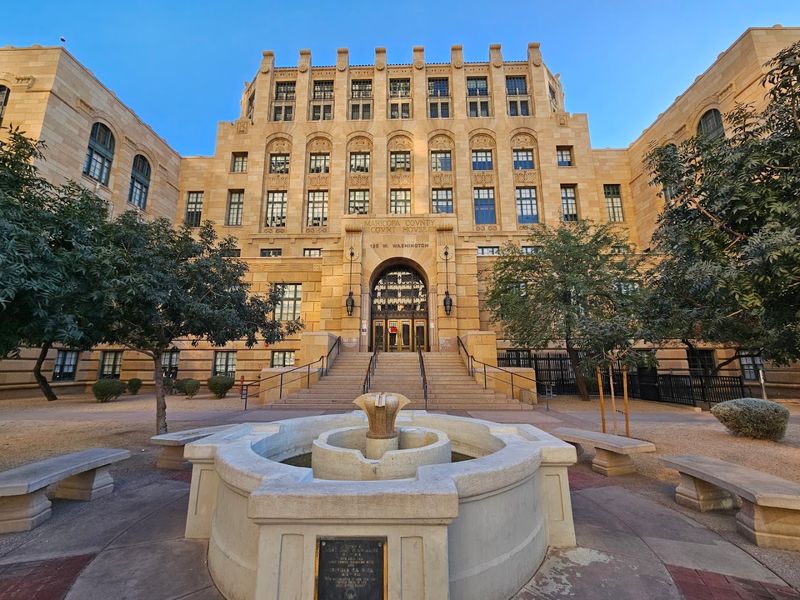
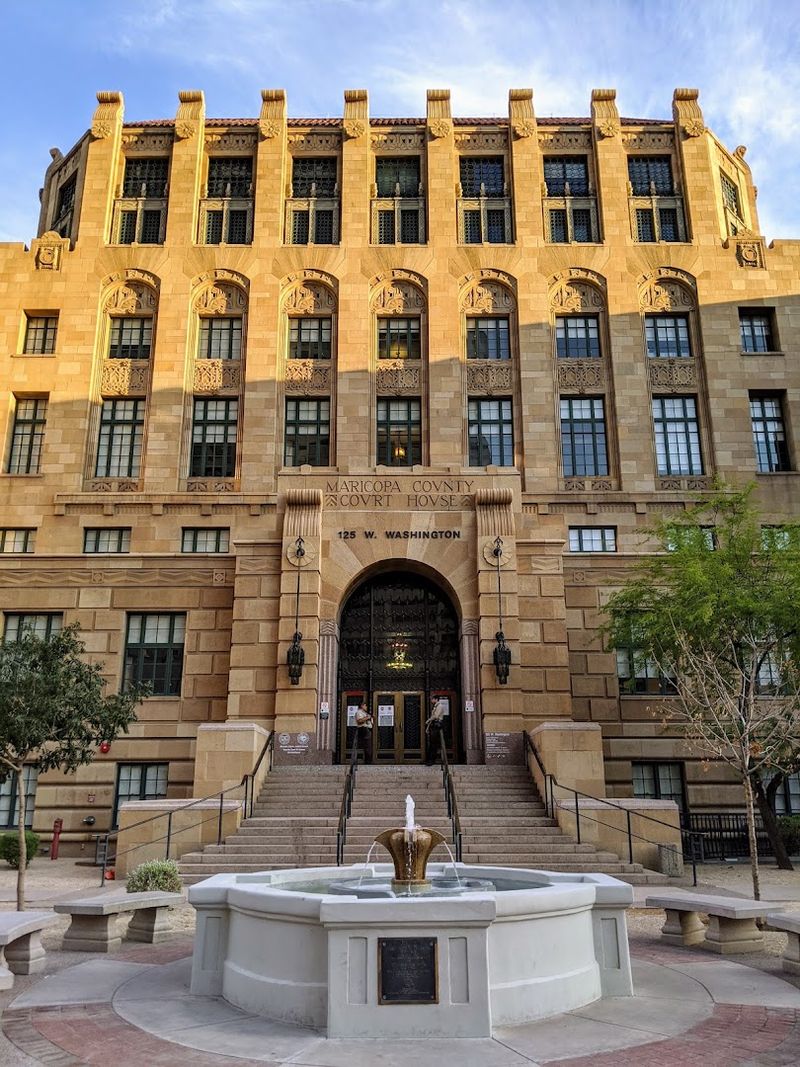
Before you even reach the museum on the sixth floor, the building you are entering deserves a slow, appreciative look.
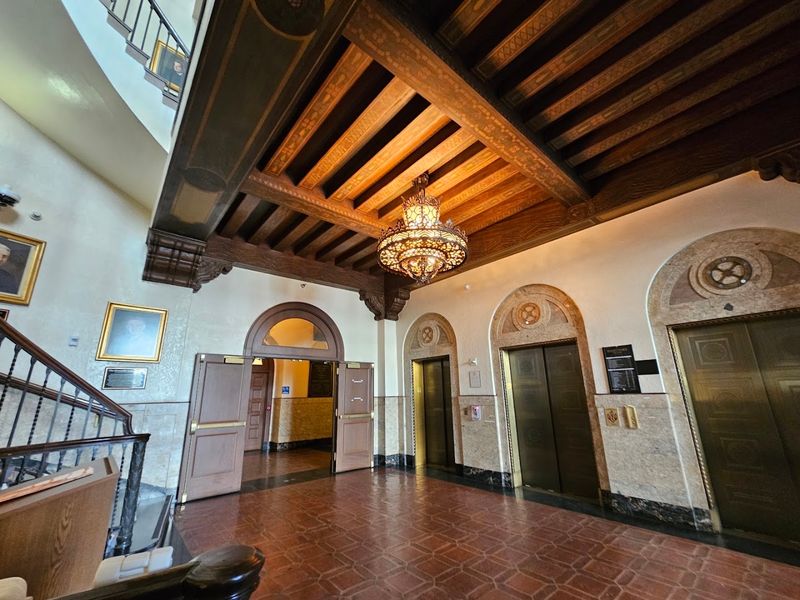
The Historic Old Courthouse is an architectural showstopper that was meticulously renovated back to its original 1929 grandeur, and it holds a genuinely unusual distinction in American architecture.
Designed by two separate architects, one hired by the county and one by the city, the structure actually contains two independent buildings inside a single unified exterior shell.
Each side features its own take on Neo-Classical and Spanish Colonial Revival styling, which explains the subtle but interesting differences you notice as you move through the halls.
The building is still an active courthouse today, meaning you might share the corridor with a suited attorney rushing to a hearing while you are leisurely admiring the ornate ceiling details.
That collision of past and present is part of what makes this address at 125 W Washington St so memorable and worth exploring at a relaxed pace.
The Miranda V. Arizona Exhibit
Few legal cases have shaped everyday American life quite like Miranda v. Arizona, and the museum brings this watershed moment to life in a way that textbooks simply cannot match.
Most people recognize the phrase “You have the right to remain silent” without knowing it traces back to a case decided right here in Arizona.
The exhibit walks visitors through the full arc of the case, from Ernesto Miranda’s 1963 arrest in Phoenix to the 1966 Supreme Court ruling that permanently changed how law enforcement must treat individuals in custody.
The displays are clear, engaging, and written in a way that makes the legal stakes feel genuinely personal rather than abstract. Understanding this case through its Arizona roots adds a layer of context that national history classes often skip entirely.
Seeing the local geography and community tied to such a monumental ruling makes the museum feel less like a side attraction and more like an essential stop for anyone curious about how American rights actually developed over time.
The In Re Gault Case Display
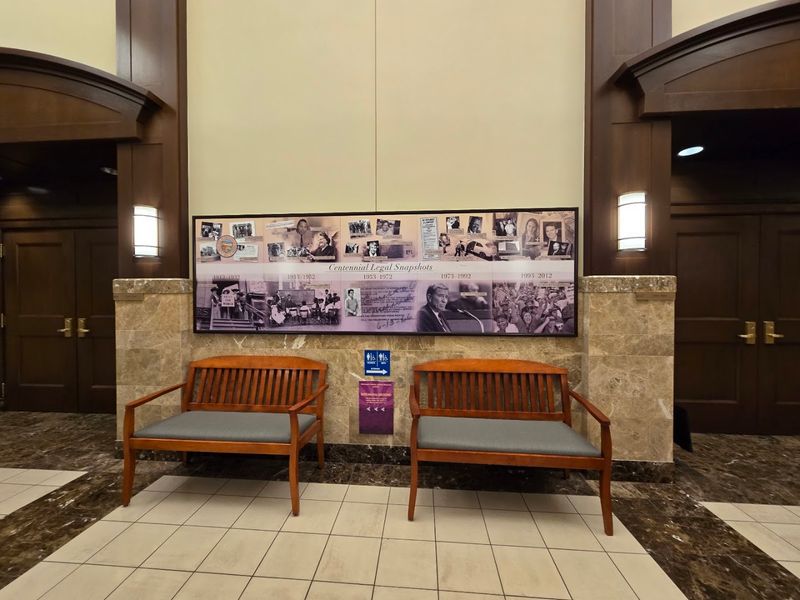
Not every landmark legal case involves adults, and the In re Gault exhibit is a powerful reminder of that fact.
Gerald Gault was a fifteen-year-old Arizona boy whose 1967 Supreme Court case fundamentally transformed the rights of juveniles within the American legal system, and the museum tells his story with clarity and respect.
Before this ruling, young people had almost no formal legal protections during court proceedings. The decision established that minors are entitled to many of the same constitutional safeguards as adults, including the right to an attorney and the right to be notified of charges against them.
The exhibit presents this information through engaging visual displays that make the legal concepts approachable for visitors of all ages, including actual young people visiting with school groups.
There is something quietly powerful about learning the story of a teenager whose case changed history inside a building that still actively administers justice today. It connects the past to the present in a way that genuinely resonates.
The Sandra Day O’Connor Exhibit
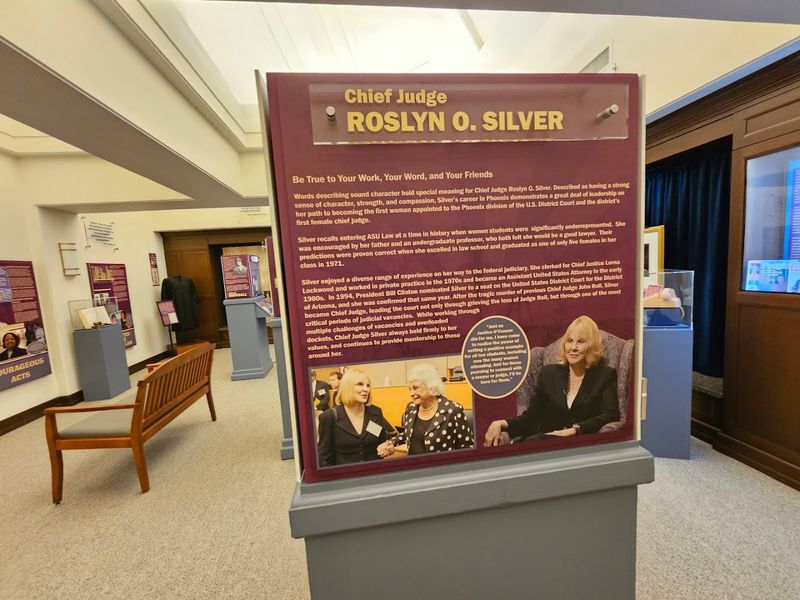
One of the most talked-about exhibits in the entire museum is dedicated to Justice Sandra Day O’Connor, and it earns every bit of that attention.
O’Connor was an Arizona native who made history in 1981 when President Ronald Reagan appointed her as the first woman to serve on the United States Supreme Court, a moment that changed the face of American law forever.
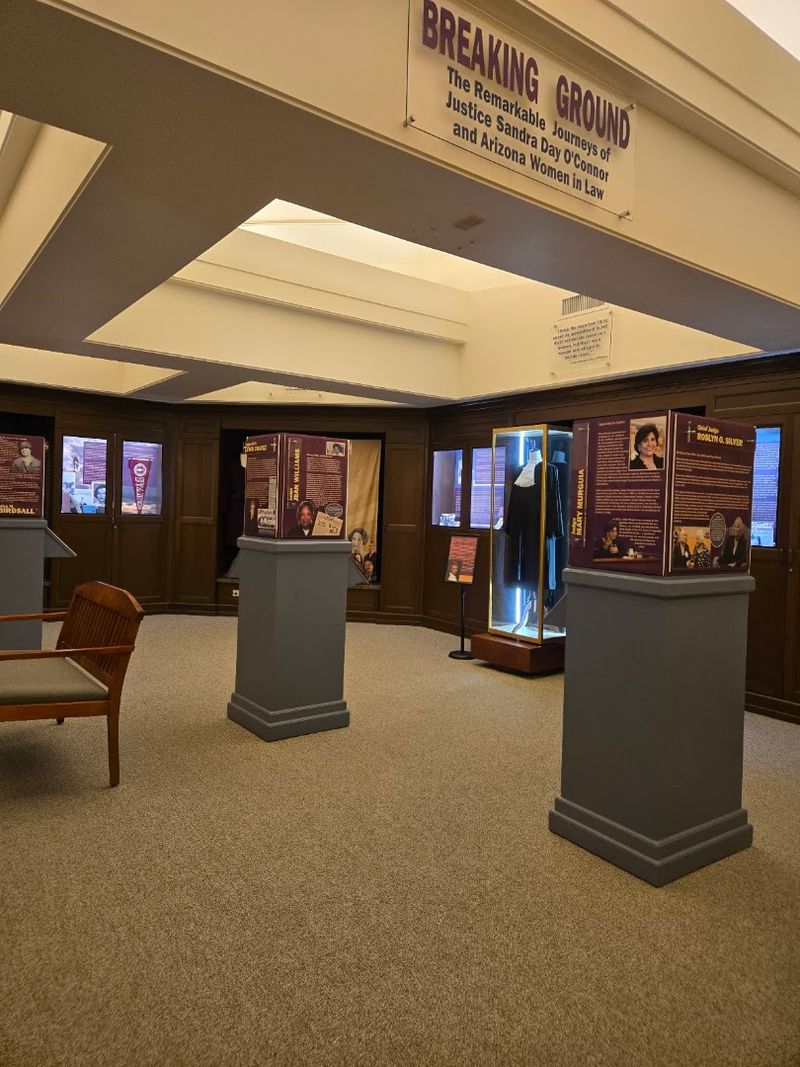
The exhibit, titled “Breaking Ground: The Remarkable Journeys of Justice Sandra Day O’Connor and Arizona Women in Law,” includes one of her actual Supreme Court robes on display.
Visitors can also see a replica of the telephone she used when she received that historic call from President Reagan, which adds a surprisingly intimate and tangible quality to the storytelling.
Beyond O’Connor herself, the exhibit honors more than thirty other pioneering women lawyers and judges who achieved remarkable firsts across Arizona’s legal community.
Seeing their photographs, biographies, and accomplishments displayed together creates a genuine sense of momentum, proof that persistent, talented individuals really do reshape institutions over time.
The Governor Evan Mecham Impeachment Display

Arizona’s political history has its share of dramatic chapters, and the exhibit covering the impeachment of Governor Evan Mecham is one of the most riveting stops in the museum.
Mecham was removed from office in 1988 after the Arizona Senate convicted him of obstruction of justice, making him one of only a small number of U.S. governors ever to be impeached and removed.
The display lays out the timeline of events in a straightforward, balanced way that helps visitors understand both the legal process and the broader political climate of the era.
Newspaper clippings, photographs, and official documents work together to build a picture of a moment when Arizona’s legal and political systems were under intense national scrutiny.
What makes this exhibit particularly valuable is that it shows how the mechanisms of justice operate even at the highest levels of state government, and that no position places anyone entirely above accountability.
For visitors who enjoy political history, this section of the museum offers plenty of material to think about long after you have left the building.
The Free Admission Policy And Visitor Access
One of the most refreshing things about this museum is that it costs absolutely nothing to walk through the door. Free admission makes the Justice Museum accessible to students, families, curious tourists, and locals who want to spend a meaningful hour or two without worrying about the price of a ticket.
The museum is open Monday through Friday from 8 a.m. to 5 p.m., which aligns well with a downtown Phoenix weekday itinerary.
Since it sits inside an active courthouse, you will need to pass through security screening upon entry, so leave extra time and avoid bringing items that might slow down that process.
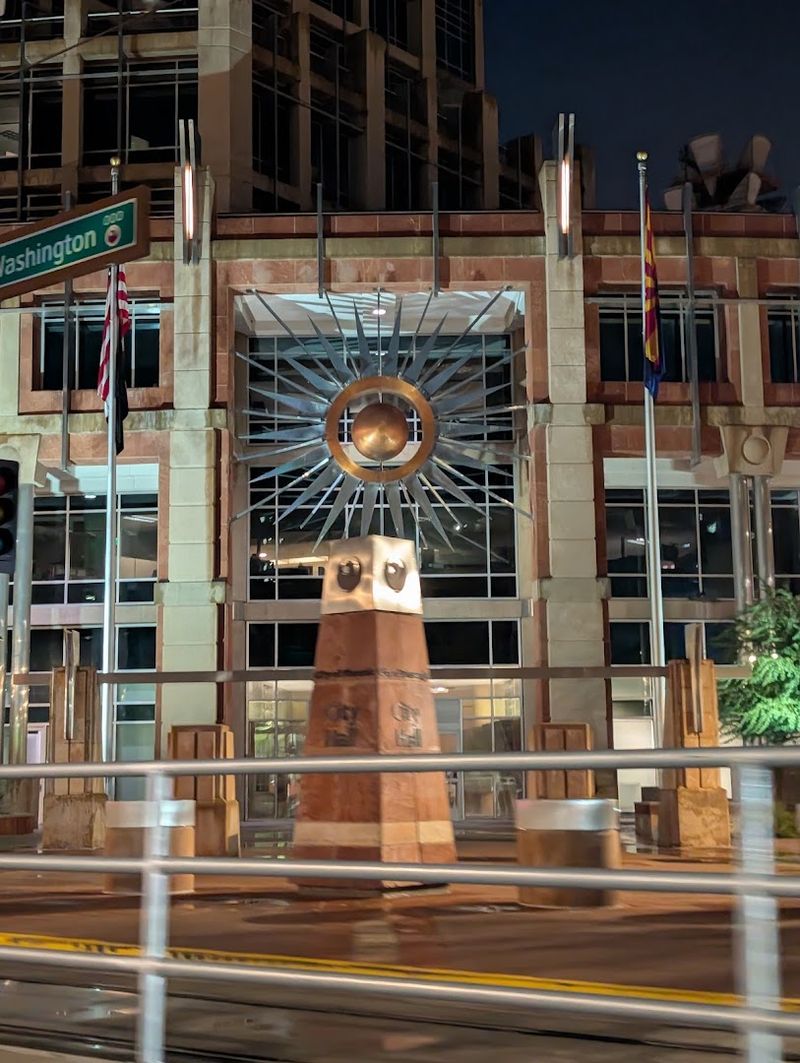
Parking options exist nearby throughout downtown Phoenix, and the location is also accessible via the Valley Metro light rail system, making it convenient whether you are driving or using public transit.
The combination of no admission cost, a central location, and weekday hours makes this one of the easiest cultural stops to fit into a Phoenix visit without any complicated planning required.
The Unique Setting Inside An Active Courthouse
There is something genuinely one-of-a-kind about experiencing a history museum while real legal proceedings are happening just a few floors away.
The Maricopa County Justice Museum is widely believed to be the only museum of its kind housed inside an active courthouse in the entire United States, and that distinction creates an atmosphere you simply cannot manufacture artificially.
As you move through exhibits about Arizona’s legal past, you might pass a public defender reviewing case notes in the hallway or see a judge’s nameplate beside a courtroom door.
The building hums with actual judicial activity, and that energy sharpens the relevance of everything you see inside the museum displays. That juxtaposition transforms a visit here into something more than sightseeing.
You are standing at the intersection of living history and present-day justice, watching the same systems that produced the Miranda ruling and the O’Connor appointment continue to operate in real time.
Few museums anywhere in the country can offer that kind of immediate, living context for what they are trying to teach.