
A Tropical Rainforest With 40,000 Plants Is Hidden Inside A Washington Office Campus
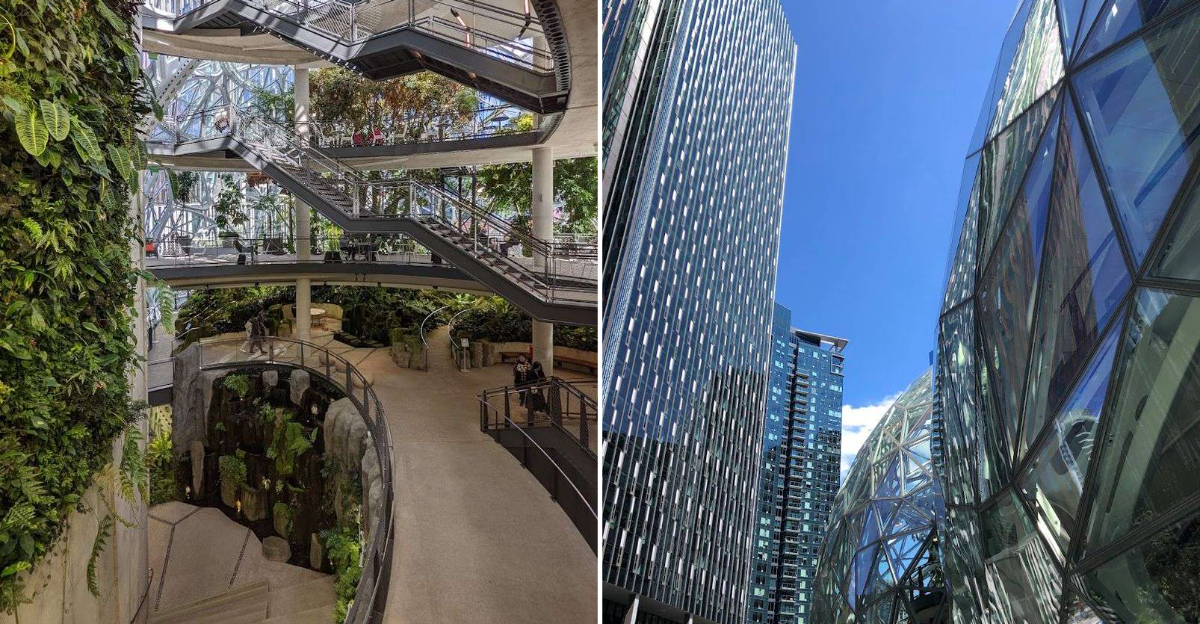
Ever tried sneaking forty thousand houseplants into your workplace just to avoid doing actual spreadsheets? Trust me, my boss was totally unimpressed with my three sad ferns.
But somewhere out there in Washington, somebody actually pulled it off on a massive corporate campus, building an entire tropical rainforest right next to the water coolers.
We are talking about a jaw-dropping glass jungle where you can practically get lost hunting for rare orchids between morning meetings. Forget corner offices with a view; these lucky workers get to file TPS reports under a twenty-foot fern tree while dodging rogue mist.
It is basically what happens when a botanist accidentally takes over architectural planning, and honestly, it makes every normal cubicle look like a tragic little sadness box.
Built as a workspace and sanctuary for Amazon employees, these spheres now open their doors to the public on select Saturdays, giving everyday visitors a rare chance to explore a full-blown rainforest in the middle of a major American city.
The Origin Story Behind The Spheres
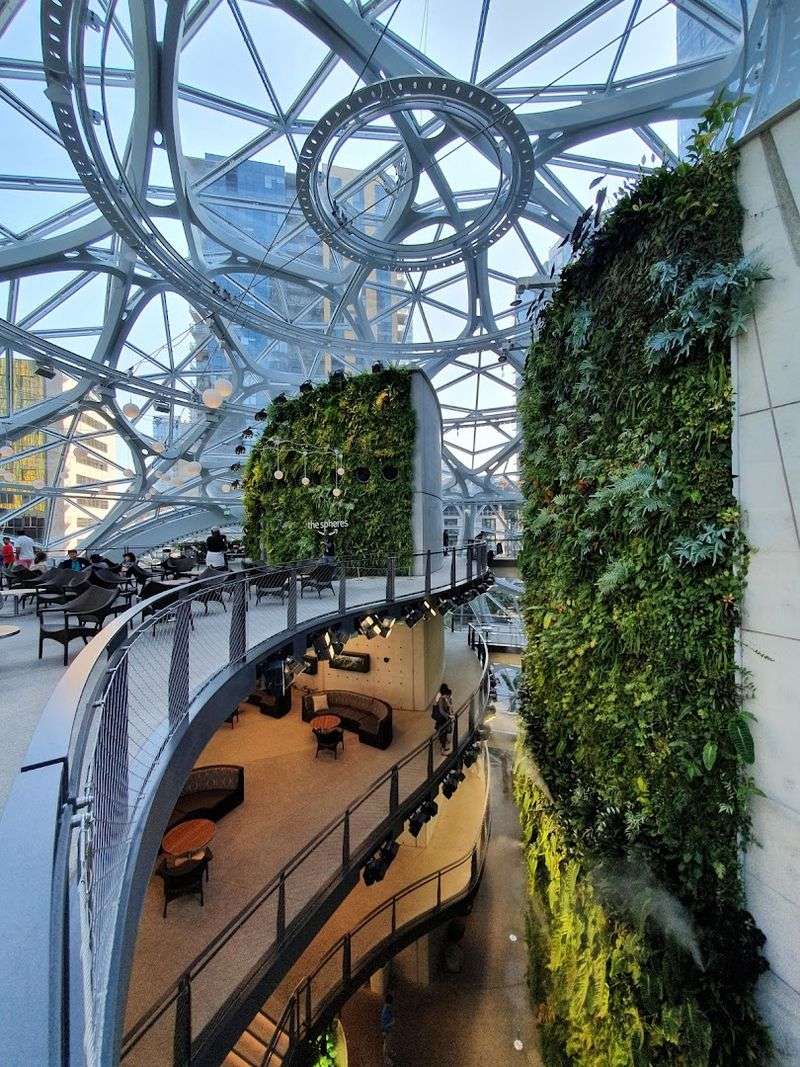
Back in 2012, Amazon leaders and their design partners at architecture firm NBBJ sat down with a bold question: what if an office could feel like a living forest? That question sparked years of planning, sketching, and engineering problem-solving that would eventually reshape a full city block in downtown Seattle.
The early concepts ranged from rooftop gardens to elaborate indoor conservatories, but the team kept pushing until they landed on something truly original.
The iconic spherical shape was chosen not just for its visual drama but for its structural efficiency, allowing maximum interior volume with minimal material.
Construction officially broke ground in June 2015, and the structural engineering firm Magnusson Klemencic Associates helped turn that bold vision into steel and glass reality.
When the grand opening arrived on January 30, 2018, Seattle had a brand-new landmark unlike anything else in the country. The journey from a whiteboard idea to a 95-foot-tall tropical sanctuary took six years, and every single one of them was worth it.
The Address And Location That Surprises Every Visitor
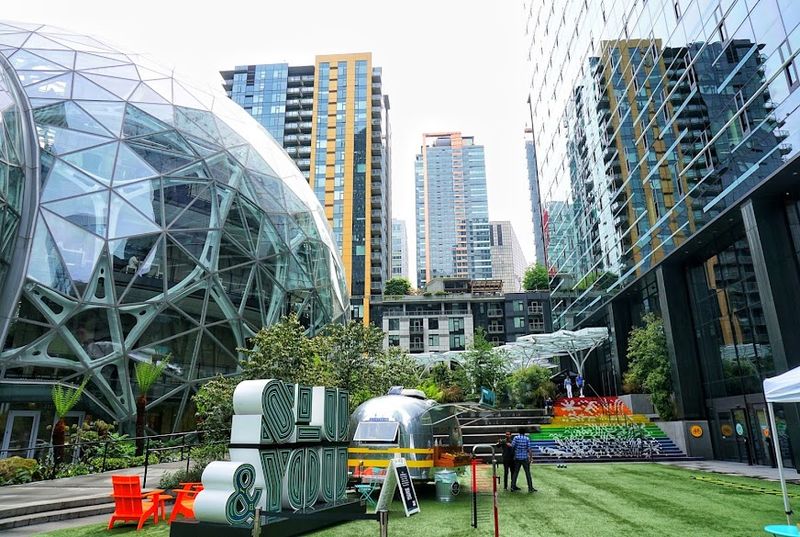
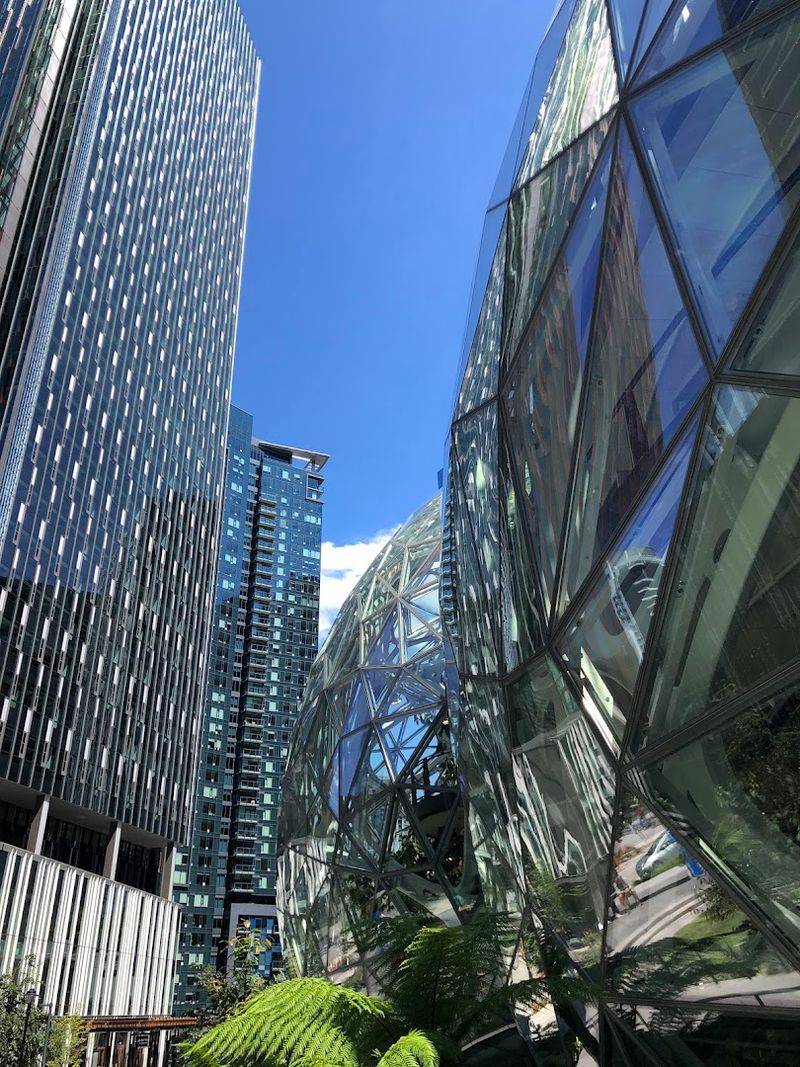
Standing at 2111 7th Avenue, Seattle, Washington, the Spheres sit right in the middle of one of the most active urban corridors in the Pacific Northwest. You step off a city sidewalk, look up, and suddenly three enormous glass orbs are staring back at you from behind steel frames.
It genuinely stops people mid-stride. The location is part of Amazon’s sprawling headquarters campus, which means the Spheres are flanked by modern office towers, coffee shops, and the constant hum of a tech-driven neighborhood.
Getting there is straightforward since the campus is well-served by public transit, and the Westlake and South Lake Union streetcar stops are both within easy walking distance.
What makes the location so memorable is the contrast. One moment you are navigating city traffic and crowded crosswalks, and the next you are pressing your nose against warm glass and watching tropical leaves sway gently on the other side.
Seattle has always had a flair for surprises, and this one ranks near the top.
The Stunning Glass and Steel Architecture
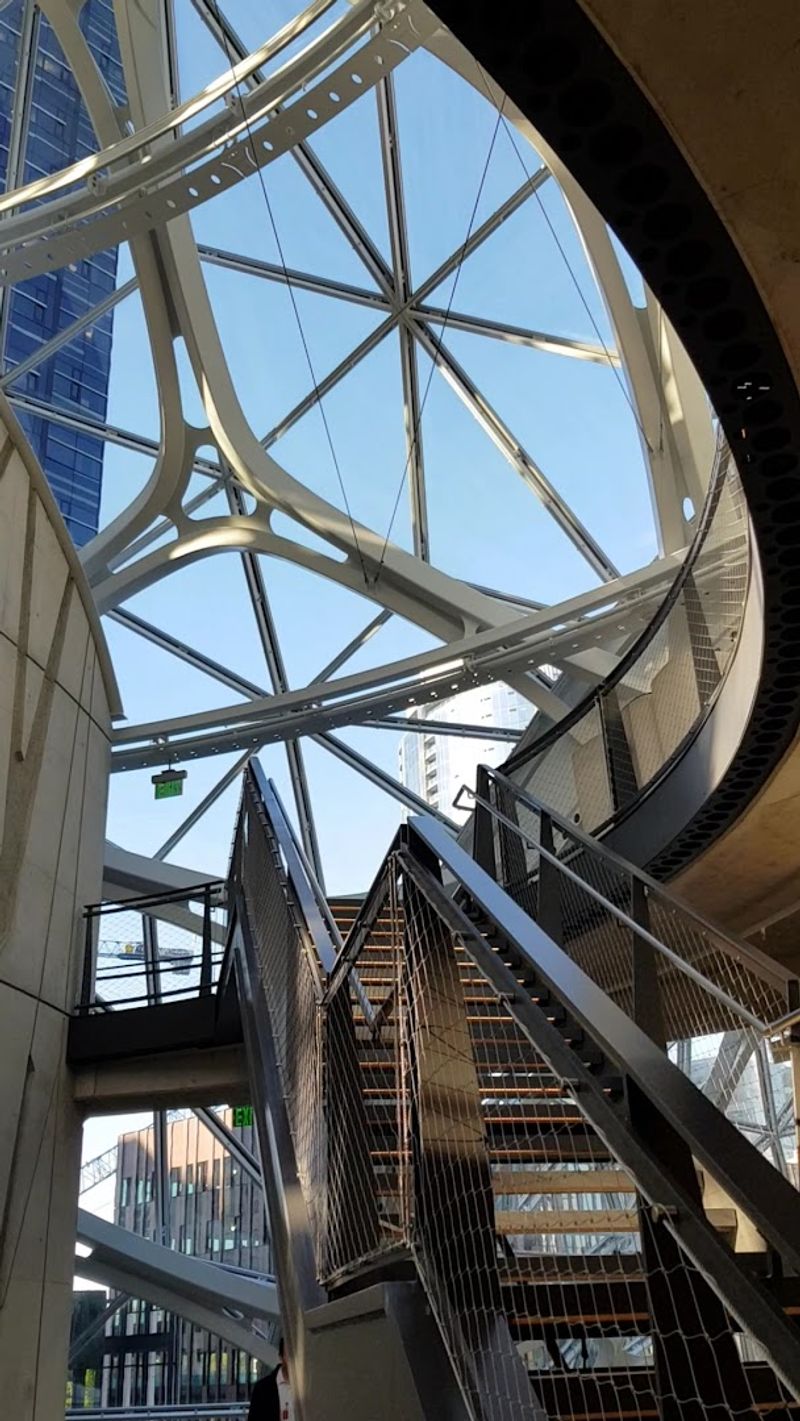
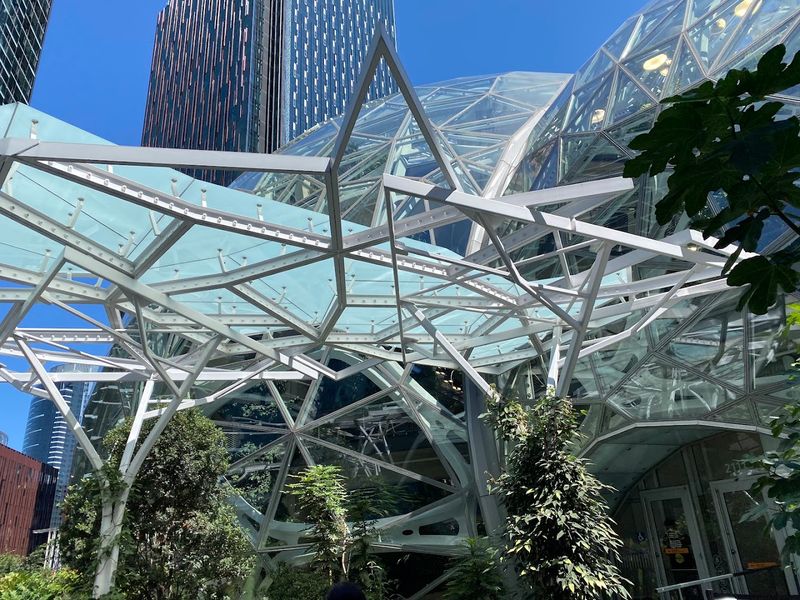
The geometry of the Spheres is something that architects and curious tourists alike tend to obsess over. Each dome is built around a shape called the pentagonal hexecontahedron, which sounds like a math exam answer but is actually a beautifully organic form that echoes patterns found in nature.
The exterior is made up of 180 elongated pentagonal modules, each one fitted with ultra-clear, energy-efficient glass panes.
Those glass panes were specifically selected to allow the right amount of light to reach the thousands of plants inside while filtering out excess heat that could stress the ecosystem.
The steel framework, nicknamed “Catalans” by the engineering team, creates an interlocking lattice that gives the Spheres their signature look from every angle. At their tallest, the domes reach between 80 and 95 feet, making them visible from several blocks away.
Walking around the exterior before entering is its own little architectural tour, and the way the glass catches Seattle’s moody light at different times of day makes every visit feel visually fresh and worth photographing.
The Climate Inside
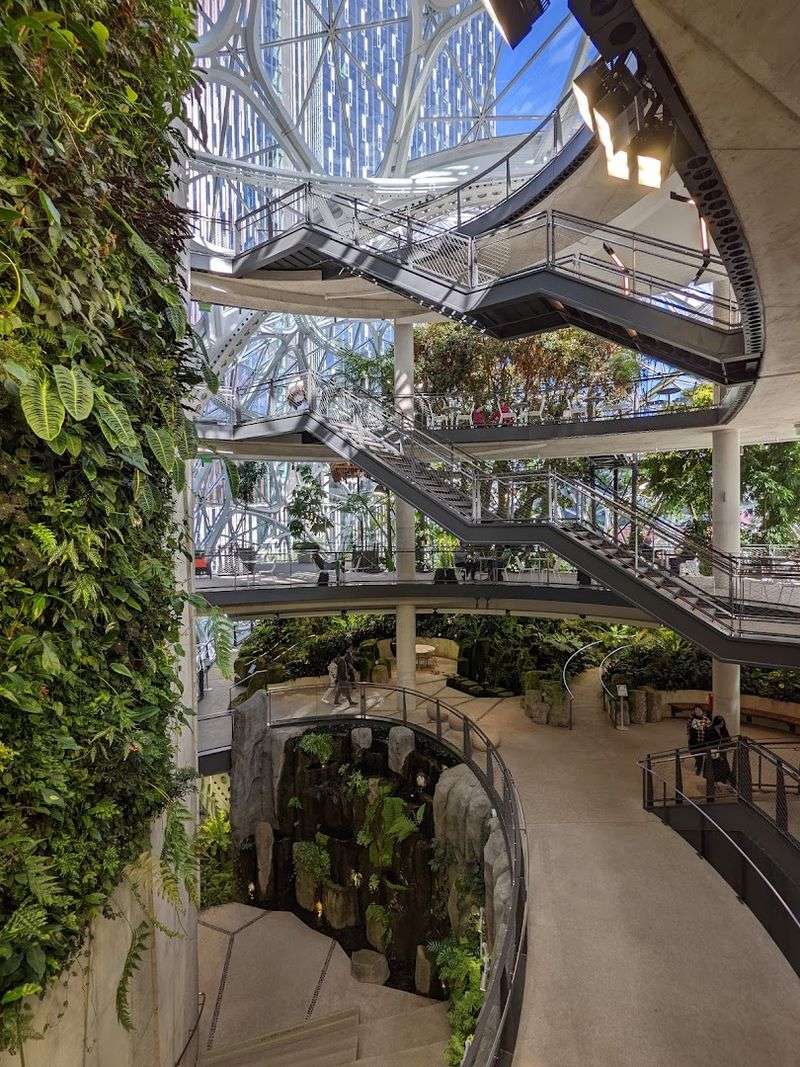
Forget packing a raincoat for this part of the trip. The moment you walk through the entrance doors, the temperature settles at a steady 72 degrees Fahrenheit and the humidity hovers around 60 percent, creating a climate that feels like a permanent, comfortable summer afternoon in a tropical highland.
It is a deliberate and carefully managed environment designed to keep thousands of cloud forest plants thriving year-round.
The climate control system works around the clock, adjusting ventilation, moisture levels, and temperature to match the needs of the collection.
On particularly cold Seattle days, the contrast between the chilly streets outside and the warm, green interior feels almost theatrical, like the building is putting on a show just for you.
Visitors who tend to run cold will appreciate every minute spent inside, while those who prefer a breeze might want to dress in light layers.
The humidity is noticeable but never overwhelming, and most people find it refreshing rather than stifling. It genuinely feels like the plants are breathing alongside you.
Meet Rubi
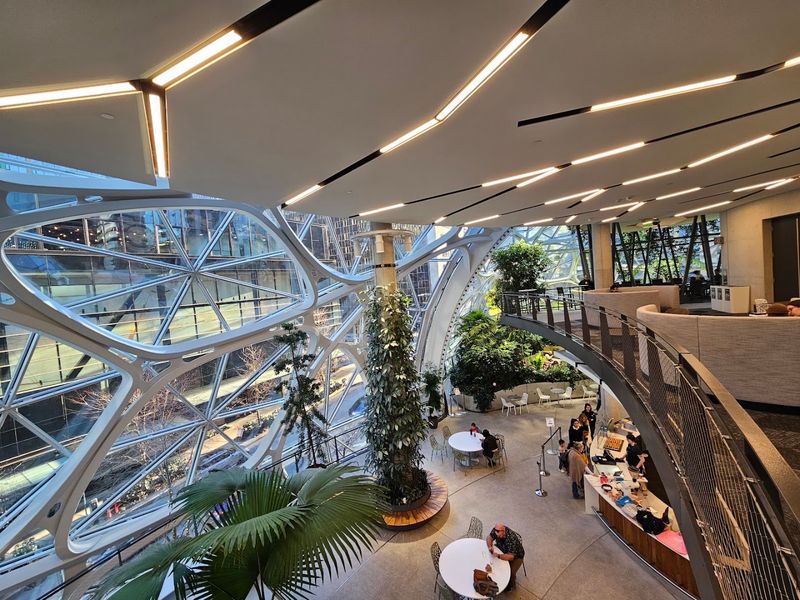
Every great forest has a champion tree, and inside the Seattle Spheres, that title belongs to Rubi, a magnificent Ficus rubiginosa that stretches an impressive 49 feet toward the glass canopy above.
Rubi is not just the tallest plant in the collection; she is the centerpiece around which the entire interior atmosphere is built. Looking up at her canopy from the ground level genuinely makes you feel small in the best possible way.
The tree was carefully transported and installed during construction, which required some serious logistical creativity given her size. Today she anchors the main atrium and serves as a natural meeting point for visitors wandering through the space.
Ambassadors on site love talking about her, and it is easy to see why since Rubi has a quiet, commanding presence that photographs can barely capture.
Standing near the base of her trunk and looking upward through layers of broad, glossy leaves toward the filtered light above is one of those travel moments that sticks with you long after you leave Seattle. She earns every bit of her star status.
Over 40,000 Plants From More Than 30 Countries
The sheer variety of plant life inside the Spheres is staggering. More than 40,000 individual plants representing over 1,000 different species have been sourced from cloud forest regions across more than 30 countries, creating a living library of global biodiversity under one glass roof.
The collection reads like a passport stamped with stops in South America, Southeast Asia, Africa, and beyond.
Some of the standout specimens include the quirky “Potato Chip” Palm, named for its distinctively crinkled leaves, and the Begonia sizemoreae, which has foliage so unusual it looks like it was designed by a fantasy novelist.
The Platycerium ridleyi, a staghorn fern with antler-like fronds, is another crowd favorite that tends to make people stop and stare.
Curators and horticulturalists work year-round to maintain the health and diversity of the collection, rotating specimens and introducing new species as the ecosystem evolves.
Visiting once is a treat, but returning a year later often means encountering entirely new plants that were not there before, which keeps the experience feeling perpetually fresh and rewarding.
The Vivarium: Where Plants and Water Meet Wildlife
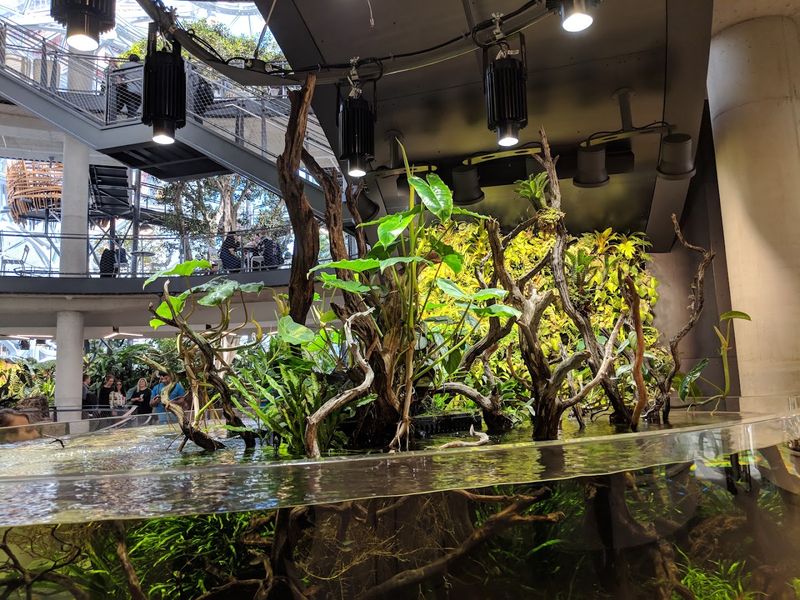
Tucked among the plant collections is one of the Spheres’ most conversation-starting features: a vivarium that blends a living plant wall with a freshwater aquarium.
This hybrid display houses small aquatic creatures in semi-natural conditions, creating a tiny ecosystem where terrestrial and aquatic life share the same carefully engineered space.
It is the kind of exhibit that makes children press their faces against the glass and adults forget they are technically inside an office building.
The vivarium reflects the Spheres’ broader philosophy of creating environments that feel as authentic and interconnected as real ecosystems. Rather than displaying plants in isolation, the design team looked for ways to show how different forms of life support and depend on each other.
The result is educational without feeling like a classroom, and fascinating without being overwhelming.
Friendly ambassadors stationed nearby are always happy to explain what you are looking at and share details about the species inside. It is a small corner of the Spheres, but it consistently earns some of the longest visit times from guests who simply cannot bring themselves to walk away from it.
How To Get A Reservation
Securing a spot inside the Spheres takes a little advance planning, but the process is straightforward once you know the rules. Public visits are free of charge and open on the first and third Saturday of each month, running from 10 a.m. to 6 p.m. PST.
Reservations open 15 days before the desired visit date and are released in real-time every 15 minutes, so setting a reminder on your phone is genuinely useful advice.
Spots fill up fast, often within hours of going live, so flexibility with your schedule helps. Each visit is limited to one hour to keep the experience comfortable for everyone inside.
When you arrive, every adult in your group who is 18 or older will need a valid government-issued ID for check-in, and any minors must be accompanied by a responsible adult throughout the visit.
Large bags, outside food, and pets are not permitted inside, with the exception of service animals. Keeping personal belongings streamlined not only speeds up your entry but also helps protect the delicate plant ecosystem you are about to enjoy.
Arrive a few minutes early and the check-in process moves quickly.
The General Porpoise Cafe
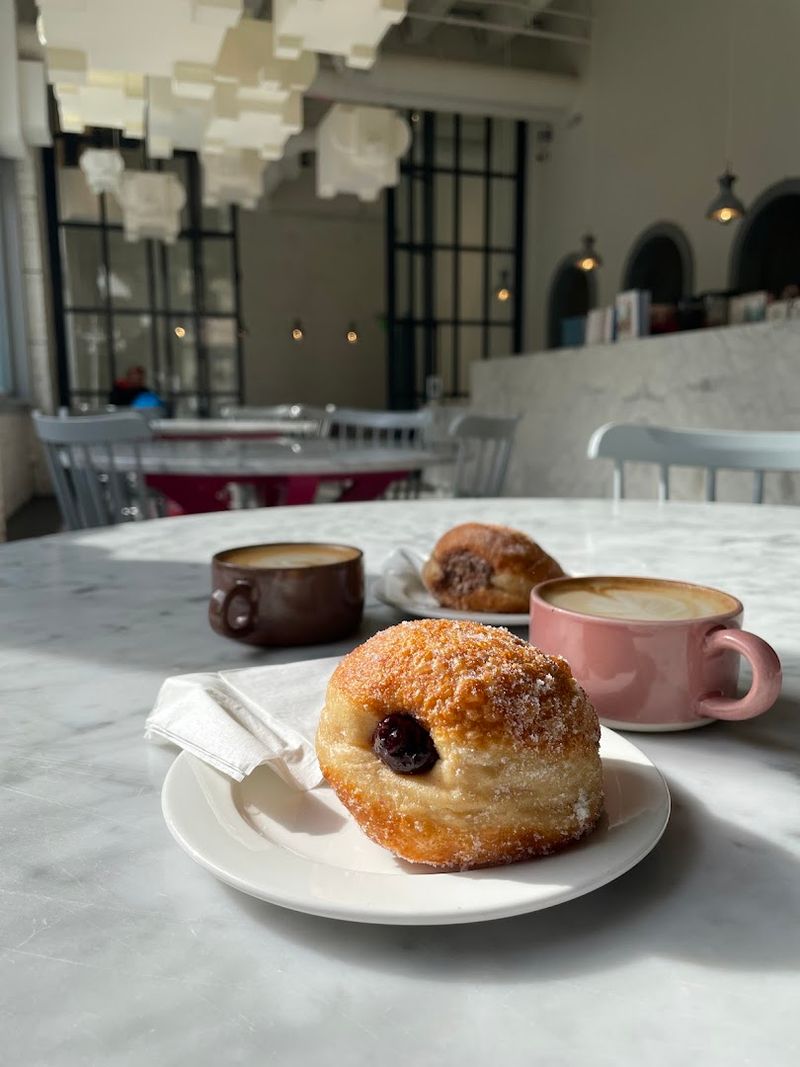
Wandering through a rainforest works up an appetite, and the Spheres have a delightful answer to that problem. On the second floor, General Porpoise cafe serves coffee and light refreshments in what has to be one of the most unusual and photogenic cafe settings in all of Seattle.
Sipping a latte while surrounded by tropical foliage and filtered glass light is an experience that feels slightly unreal in the best way.
General Porpoise is a well-loved local brand known for quality coffee and freshly made doughnuts, so the food and drinks genuinely hold their own regardless of the spectacular setting.
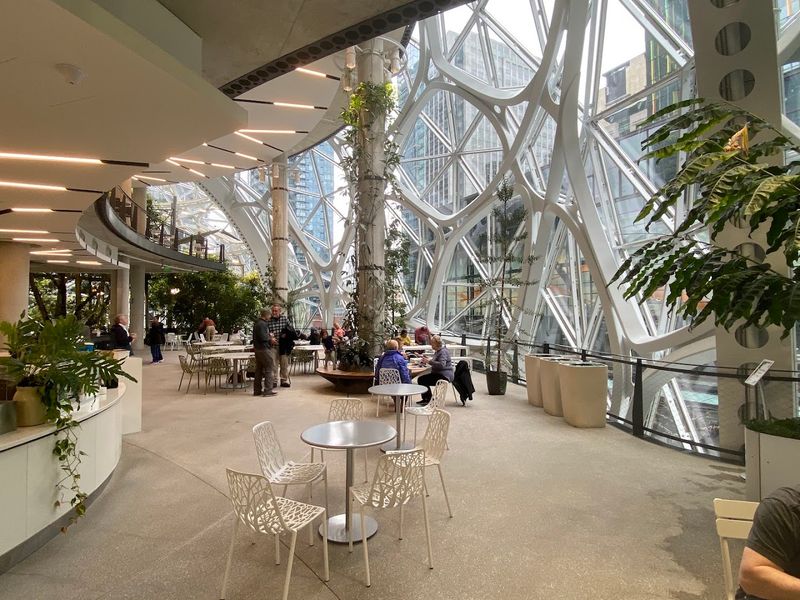
The second-floor position gives visitors an elevated perspective on the plant collections below, making it a great spot to pause, reflect, and take in the full scale of the interior before continuing your walk.
It is worth noting that the cafe is a popular stop, so a short wait during peak Saturday hours is possible. Building in a few extra minutes for a coffee break turns an already enjoyable visit into something that feels properly leisurely and complete, like a mini-vacation packed into a single morning.
The Understory Visitor Center
Not everyone manages to snag a reservation for the main Spheres on their first attempt, and that is where the Understory visitor center becomes a genuinely valuable alternative.
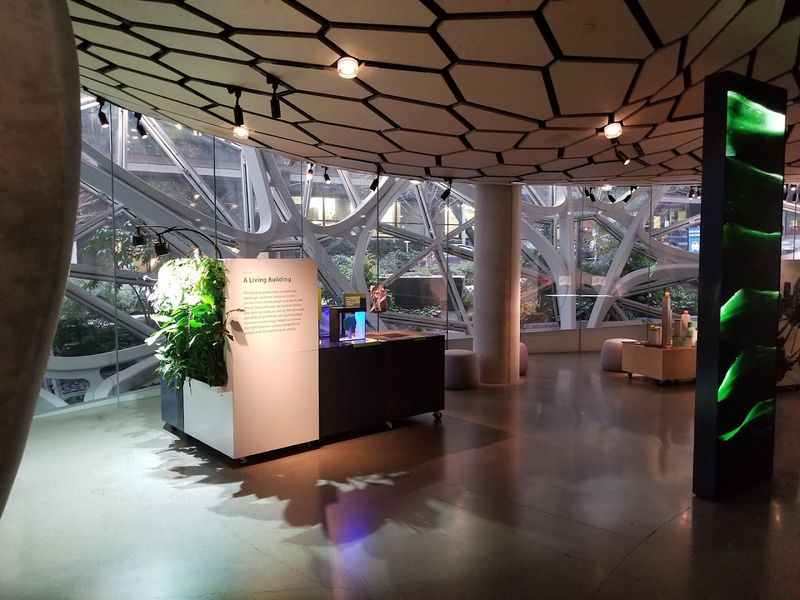
Located at 2101 7th Avenue, just steps from the Spheres themselves, the Understory is open to the public without a reservation Tuesday through Saturday and offers fascinating exhibits about the design, technology, and science behind the project.
Interactive displays walk visitors through the engineering challenges of building a climate-controlled tropical ecosystem inside a glass dome in a Pacific Northwest city.
There are also exhibits on the plant science and horticultural practices that keep 40,000 specimens healthy in a manufactured environment, which turns out to be a surprisingly gripping story once you start learning the details.
Even for visitors who do secure a Spheres reservation, stopping at the Understory beforehand adds a layer of context that makes the main experience richer and more meaningful. Think of it as the backstage tour before the main show.
The staff there are knowledgeable and enthusiastic, and the space itself is well-designed and easy to navigate in about 30 to 45 minutes.
Worth Every Bit Of The Effort
Some travel experiences live up to their hype, and the Seattle Spheres are among the rare ones that actually exceed it.
The combination of extraordinary architecture, a thriving tropical ecosystem, thoughtful curation, and a genuinely welcoming visitor experience makes this one of the most memorable urban attractions in the United States.
It feels like a gift tucked inside a city that already has plenty going for it.
For plant lovers, the collection alone is worth the trip. For architecture fans, the building itself is a masterclass in form meeting function.
For anyone who simply wants a moment of calm and natural beauty in the middle of a busy city day, the Spheres deliver that in abundance. Personal photography is fully welcomed, so you will leave with a camera roll full of images that make friends and family ask where on earth you went.
The Seattle Spheres stand as a reminder that workplaces, cities, and nature do not have to exist in competition with each other.
Sometimes the most inspiring spaces are the ones that bring all three together, and this particular corner of Seattle does exactly that with remarkable grace and ambition.