
10 Abandoned 19th-Century Towns In Michigan Still Marked By Ruins And Memory
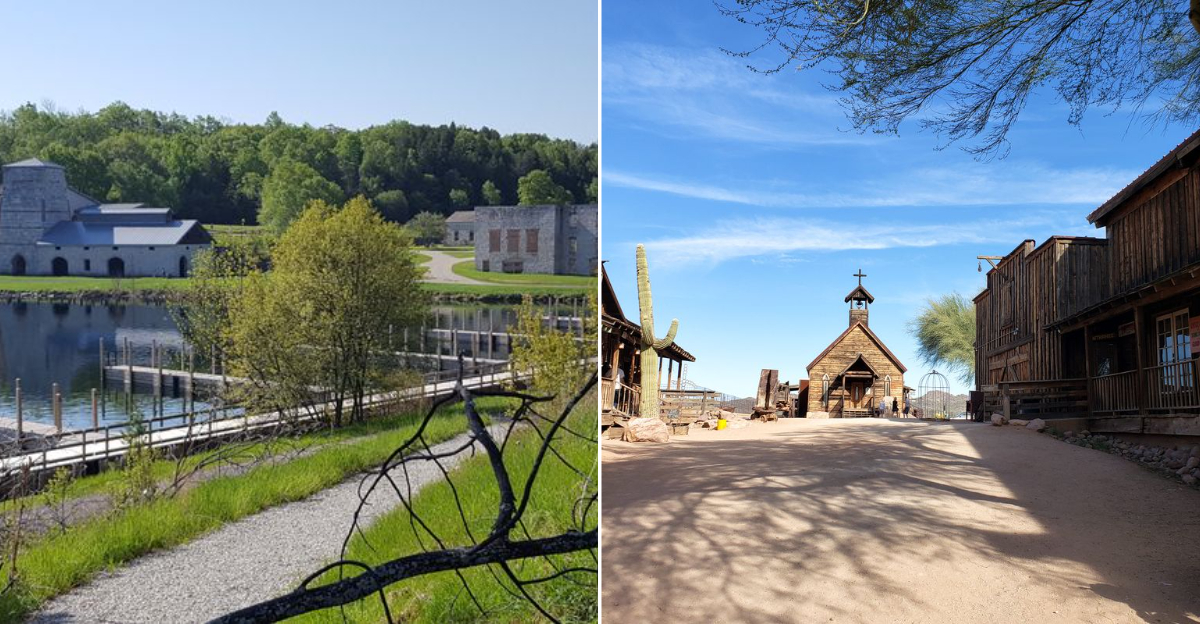
Michigan hides its old townsites with a kind of quiet persistence, tucking them into dunes along the Great Lakes, deep hardwood forests, and rocky points where the land itself seems to have decided to keep the record after people moved on.
What stays with me about these places is how close they often are to the present, sometimes just a few minutes off the highway, where modern traffic hums along unaware that kiln stones, collapsed foundations, or a single schoolhouse step are still holding their ground nearby.
You don’t arrive with fanfare or signage, you drift in slowly, noticing iron flecks in the soil, rows where houses once stood in careful order, and paths worn smooth by repetition rather than intention.
These sites never feel staged, because they aren’t trying to be anything now, they’re simply what remains, functioning more like open-air archives than attractions.
Labor, ambition, boom years, and quiet departures all sit side by side, readable if you’re willing to slow down and look at the ground as much as the horizon.
Walking through them asks for a certain care, a respect for the fact that these were once ordinary places full of routine and expectation.
Come curious, move gently, and let the ruins answer in their own language, through wind, texture, and the subtle stories you can still trace with your shoes.
1. Fayette, Garden
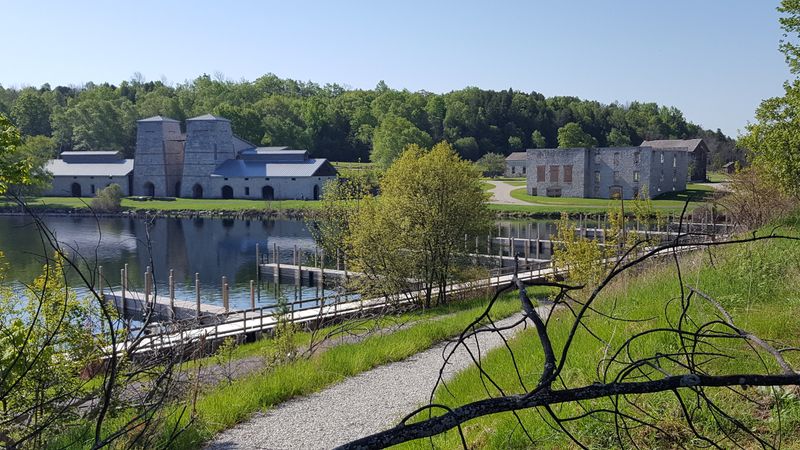
Limestone kilns rise in pale, geometric repetition along Snail Shell Harbor, their arches catching light off Lake Michigan while gulls circle overhead and stitch the air with looping cries that feel both present and archival at once.
Boardwalks guide you past rows of charcoal-gray company houses, each nearly identical in proportion and spacing, creating a visual rhythm that emphasizes how carefully ordered daily life once was at what is now preserved as Fayette Historic State Park at Garden Peninsula.
Between 1867 and 1891, the Jackson Iron Company smelted pig iron here using hardwood charcoal and lake shipping routes, tying the town’s survival directly to forests, furnaces, and freight schedules rather than permanence.
When charcoal resources dwindled and industrial processes modernized elsewhere, the population emptied quickly, leaving behind an intact industrial shell rather than a slow decay.
The preserved site avoids theatrical restoration, instead maintaining structures with a restraint that allows weather, silence, and scale to do most of the storytelling.
Late afternoon light sharpens kiln edges and deepens shadows, turning the complex into something quietly monumental without spectacle.
Standing on the dock long enough, you hear water, wind, and distance repeating the same measured account Fayette has offered for more than a century.
2. Central Mine, Phoenix
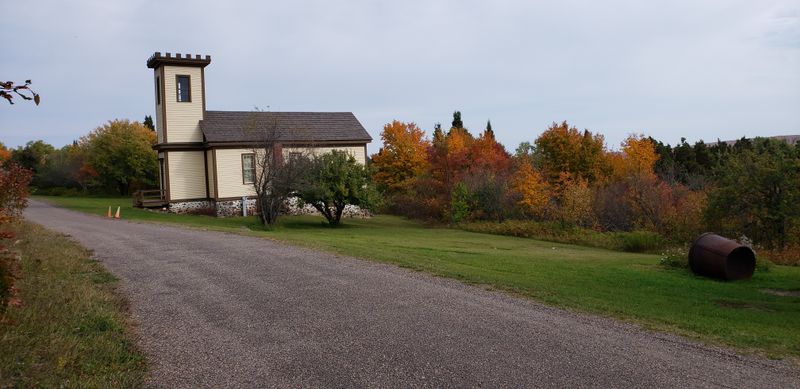
A small church still anchors the clearing, hosting an annual reunion where hymns carry through surrounding hemlocks and confirm that this former mining town continues to function as a gathering place rather than a forgotten one.
Narrow lanes thread between rock foundations and restored houses, some carefully maintained by descendants, others softened by wild raspberries and grass that blur the line between residence and ruin near Phoenix in Michigan’s Keweenaw Peninsula.
Central Mine operated from the 1850s into the 1890s, producing native copper at impressive levels and supporting a tight-knit community of Cornish miners whose cultural imprint remains unusually legible.
Company-built houses were later saved through volunteer labor and private stewardship, allowing the townsite to survive as a hybrid of preservation and lived memory.
An interpretive museum documents mining life through tools, photographs, and domestic details, grounding the romantic landscape in labor and routine.
Visiting during the July reunion transforms the site from quiet to communal, as bells ring and voices fill spaces otherwise defined by absence.
At other times, walking slowly and respectfully allows the buildings to speak through proportion, placement, and the restraint of what has been left untouched.
3. Delaware, Mohawk
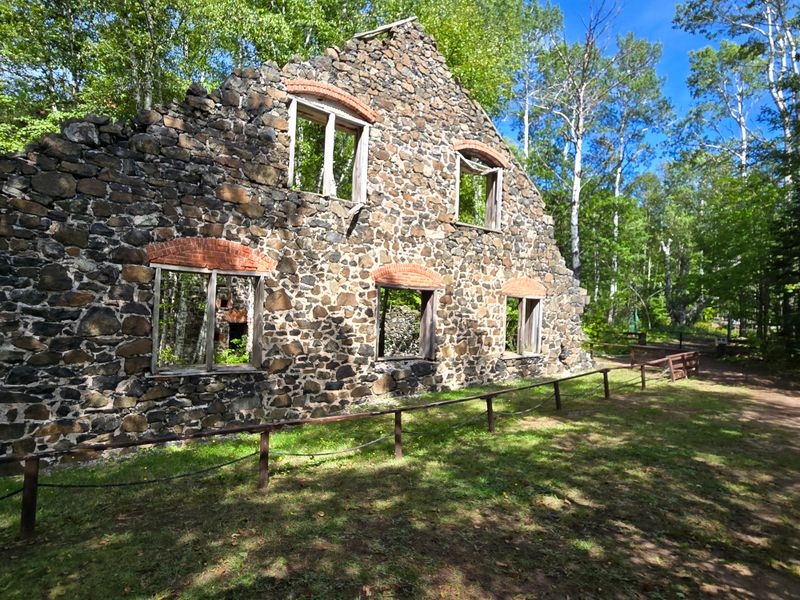
A faint metallic scent lingers near the shaft house ruins, carried by wind that moves cables and grasses with a low, resonant hum that feels less eerie than mechanical.
In winter, heavy snow buries the site almost completely, turning trestle lines and foundations into pale ribs, while summer reveals thimbleberries and rust-stained stone near Mohawk in the Keweenaw region.
The Delaware Mine dates back to the 1840s and operated intermittently through the 1880s, marking it as one of the earliest copper ventures in Michigan’s mining history.
Descending into the mine on a guided tour exposes drill marks frozen mid-action, cooling air, and rock textures that make industrial ambition feel suddenly physical.
Surface structures reflect layers of abandonment and reuse, with repairs and collapses overlapping rather than resolving into a single era.
Even with guides present, the space remains demanding of attention, especially where wet stone and low ceilings require deliberate movement.
Emerging back into daylight, the nearby stretch of US-41 offers expansive lake views that recalibrate scale, reminding you how small and temporary these operations ultimately were.
4. Clifton, Phoenix
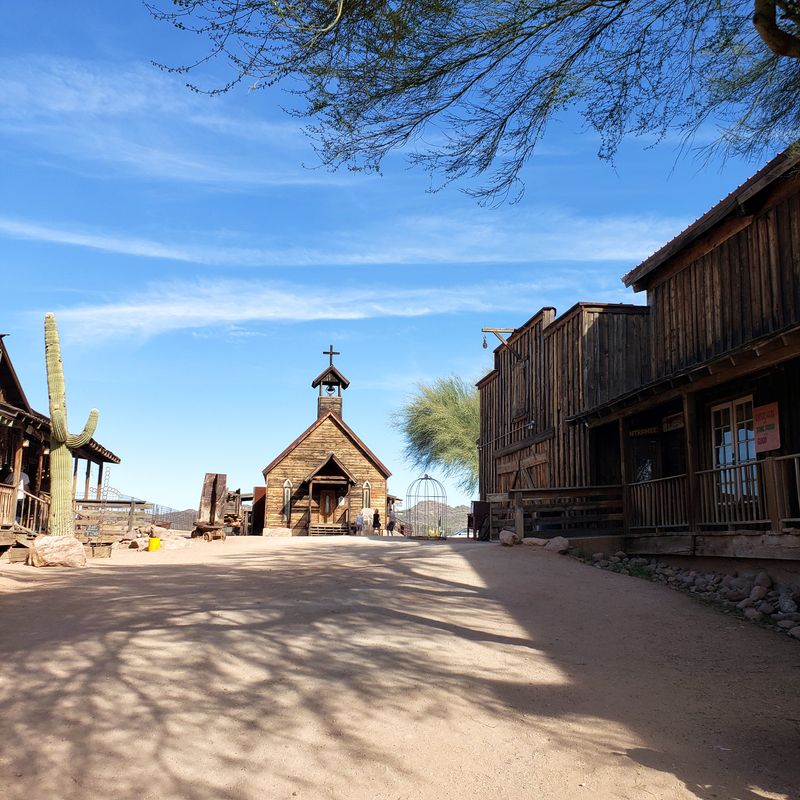
A quiet turn off US-41 leads into a clearing where moss grips low stone foundations, birch saplings lean into former doorways, and the absence of sound feels shaped by terrain rather than silence itself, as if the land still remembers the weight of machinery that once pressed into it.
Stone footings scatter across the slope in deliberate alignments that read like an unfinished blueprint, revealing where homes, offices, and industrial structures once stood in relation to the Cliff Mine that powered this short-lived settlement.
Clifton emerged in the 1840s to support one of the earliest successful native copper operations in the region, rising quickly with optimism and fading just as decisively by the 1870s when productivity slowed and investment shifted elsewhere.
Unlike preserved sites, Clifton remains largely unmarked, leaving interpretation to the visitor’s patience and willingness to match topography with historical records rather than signage.
Birdsong dominates the space now, yet the contours of the land still suggest rails, haulage paths, and work rhythms embedded into the slope.
Volunteer cleanups and limited archaeological attention have clarified some building outlines without polishing the site into a display.
Long pants, careful footing, and a map overlay on your phone help translate scattered stone into a readable, if fragmentary, townscape.
5. Mandan, Copper Harbor
Mandan sits just off the scenic drive where the Keweenaw Peninsula narrows, exposed to wind and weather in a way that makes its remaining foundations feel both vulnerable and stubbornly anchored to the bedrock beneath them.
In winter, snowmobile tracks briefly impose order on the site before ferns and grasses reclaim it by early summer, erasing seasonal paths and returning the town to partial concealment.
The Mandan Mine opened in the 1860s and passed through cycles of promise, closure, and revival before abandonment finally settled in as the only constant.
Residential remnants outline a small company town whose scale reflects cautious ambition rather than grand speculation, serving nearby operations rather than commanding them.
Modern traffic passes within minutes, yet the site itself feels insulated from time, reading more like an early industrial experiment paused mid-sentence.
Low hills cup the remains, softening wind and shaping acoustics so that gusts arrive in waves rather than blasts.
Visiting early in the morning reveals slag flecks embedded in the soil that catch light unexpectedly, glittering like industrial residue refusing to disappear entirely.
6. Old Victoria, Rockland

Log cabins at Old Victoria retain the scent of cedar and linseed oil thanks to decades of patient volunteer care, creating an atmosphere that feels maintained rather than restored, as though daily life simply paused and might resume at any moment.
Shingles sit evenly, sills hold firm, and interiors remain furnished with tools and domestic objects that quietly explain how miners’ families shaped routines around shift schedules and harsh seasons.
Built in the 1890s to house workers connected to nearby copper operations, the settlement later declined as industry moved on, leaving the cabins vulnerable to decay before restoration efforts began in the mid-20th century.
Unlike many abandoned towns, Old Victoria carries warmth, occasionally marked by the smell of smoke from demonstration stoves or the appearance of buttered pasties during special events.
The balance between preservation and use allows visitors to experience scale, texture, and domestic intimacy without turning the site into a static exhibit.
Guided tours contextualize labor and family life while acknowledging gaps and uncertainties rather than smoothing them away.
Lingering afterward, especially if coffee is offered, reinforces the sense that memory here survives not through ruins alone but through continued, respectful presence.
7. Onota, Christmas
Waves slap softly against the sandstone edge of Munising Bay while wind carries the mixed scents of wet iron, pine needles, and cold water, creating an atmosphere that feels more elemental than historical at first glance.
Onota once functioned as a short-lived harbor and furnace town east of present-day Christmas, its location chosen for access to shipping lanes that now appear calm and indifferent at the shoreline.
In the 19th century, pig iron and lumber moved through this site until repeated fires, shifting markets, and logistical disadvantages unraveled the town’s economic purpose almost as quickly as it formed.
Today, only faint foundations and disturbed ground lines remain, partially hidden by woods and shoreline growth that require attention rather than signage to notice.
Rail realignments diverted movement away from the harbor, turning a once-connected industrial node into a quiet geographic afterthought.
Archival photographs reveal docks, furnaces, and clustered buildings where loons now drift and water laps without interruption.
Reaching the site demands maps, patience, and respect for mixed land ownership, but the reward is a silence that feels earned rather than empty.
8. Dollarville, Newberry

A lingering whistle-stop quality hangs around the rail corridor west of Newberry, where open ground and subtle elevation changes hint at a town that once moved according to mill schedules and freight timetables.
Dollarville was founded in the 1880s by the American Lumber Company under R. G. Dollar, its very name reflecting the ledger-driven logic that governed life in timber towns.
Sawmills powered the settlement’s growth, filling the air with smoke and fresh-cut cedar until forests thinned and profitability declined beyond recovery.
As timber waned, residents dispersed, the post office closed, and the town receded into records rather than ruins.
What remains today is largely invisible without historical context, embedded in soil, rail alignments, and scattered infrastructure fragments.
Local archives and the Tahquamenon Logging Museum provide crucial interpretive grounding that the landscape itself no longer offers plainly.
Visiting in autumn enriches the experience, when low sun and color shifts lend depth to otherwise modest terrain.
9. Pere Cheney, Grayling

Sandy roads loop through jack pine stands where wind murmurs constantly, creating a subdued, unsettled soundscape that frames the clearing where Pere Cheney once stood.
The cemetery anchors the site, its lichen-flecked stones arranged with a solemnity that invites care rather than curiosity, despite persistent folklore that often misrepresents the place.
Pere Cheney rose in the 1870s alongside lumber operations, then suffered depopulation through fire, disease, and economic exhaustion before fading by the early 20th century.
What remains is not a town in any conventional sense but a spatial memory, marked by grave rows and faint grid patterns in the surrounding forest.
Folklore clings stubbornly, yet verified records tell a familiar frontier story of boom, strain, and abandonment rather than mystery.
Evidence of repeat visitation appears in carefully placed offerings and vehicle tracks, signaling ongoing human connection rather than neglect.
Daylight visits, respectful behavior, and careful navigation are essential here, as the landscape offers little guidance and demands deliberate attention.
10. Singapore, Saugatuck
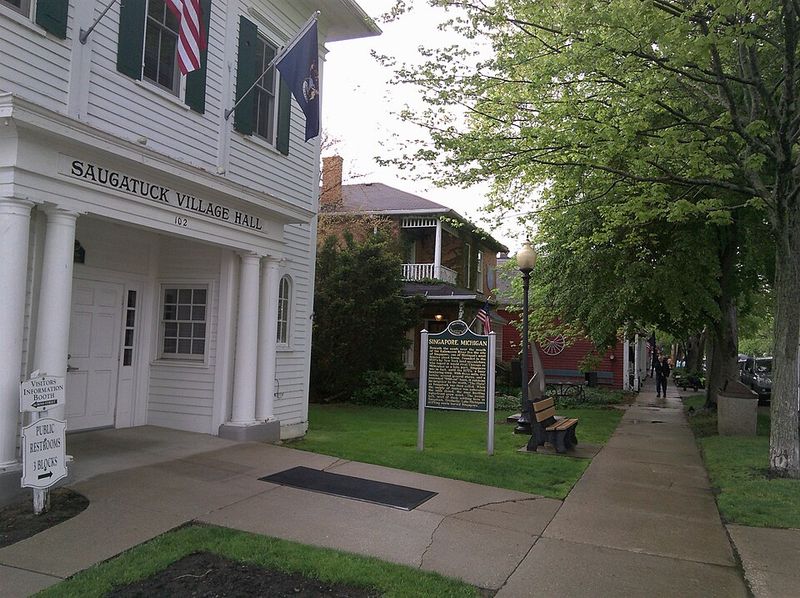
Dunes rise and shift with slow authority along the Kalamazoo River mouth, and beneath their moving contours lies the buried footprint of Singapore, a former lumber port whose physical absence is made more striking by the lively presence of modern Saugatuck just beyond the sand.
Founded in the 1830s, Singapore prospered by feeding lumber to Chicago, especially during the rebuilding surge after the Great Fire of 1871, its docks, mills, and warehouses operating at a scale that now feels improbable given the fragility of the surrounding landscape.
Overcut forests stripped the town of its economic base, while drifting dunes advanced steadily, swallowing streets, foundations, and entire structures until abandonment became less a decision than an inevitability.
What remains today is largely subterranean, preserved through bank records, newspaper accounts, and historical markers rather than visible architecture.
Wind moves sand across boardwalks in dry, whispering sheets, reenacting the same forces that erased the town while visitors walk above its buried grid.
Understanding Singapore requires accepting geology as an active historical agent, not a backdrop, reshaping commerce and settlement with indifferent persistence.
Hiking the nearby dunes or riding through the state park clarifies how industry, disaster, and landscape converged here, turning a once-busy port into a lesson written almost entirely below the surface.