
8 Abandoned Amusement Parks In Ohio That You Won’t Believe Are Still Standing
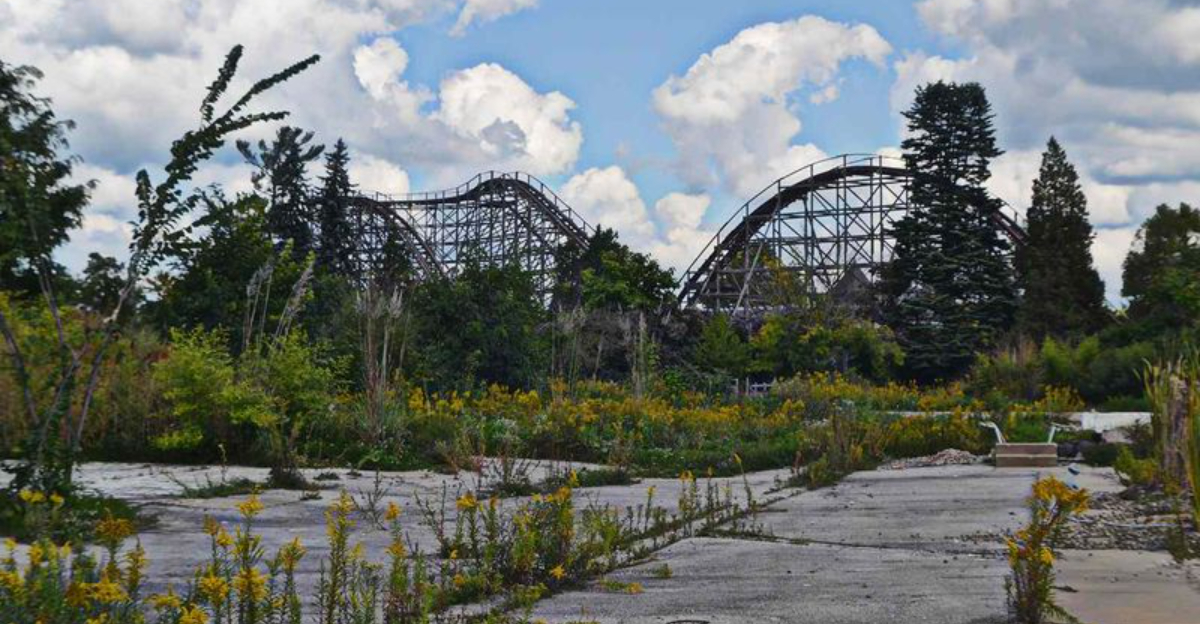
Ohio is filled with places that feel like time pressed pause. Some of the state’s old amusement parks may no longer be buzzing with crowds, yet many of their structures still stand—quiet, untouched, and surprisingly photogenic.
Walking through them feels like opening a time capsule, where summer nights, laughter, and bright lights still live in the air.
Here are eight unbelievable Ohio amusement parks that remain standing long after the rides stopped spinning.
1. Chippewa Lake Park
Chippewa Lake Park first opened its gates in 1878, making it one of the oldest amusement parks in the entire country. When I visited the area as a teenager, locals told me ghost stories about the old ballroom that once hosted big band concerts. The park officially closed in 1978, exactly a century after it began welcoming guests.
Wooden roller coaster remnants still poke through the trees like skeletal fingers reaching for the sky. Nature has reclaimed most of the midway, turning ticket booths into homes for raccoons and birds. You can still spot the old dance hall foundation if you know where to look.
Walking through what remains feels like stepping into a sepia-toned photograph where laughter echoes faintly in the wind.
2. Geauga Lake
Once a thriving destination that competed with Cedar Point, Geauga Lake closed permanently in 2007 after years of ownership changes. My family visited in the late nineties, and I remember the massive wave pool that seemed endless to my young eyes. Corporate decisions and declining attendance eventually sealed its fate, leaving behind acres of concrete and memories.
Today, the property sits eerily quiet, with faded paint marking where coasters once thrilled thousands daily. Some sections were demolished, but portions of the park infrastructure remain visible, including old pathways and ride foundations. Local explorers often share photos of the site online, capturing its ghostly beauty.
It serves as a reminder that even giants can fall silent.
3. Idora Park
Fire claimed much of Idora Park in 1984, but long before that, the place was a Youngstown treasure dating back to 1899. My grandfather once told me about riding the famous Wildcat roller coaster as a young man, describing the wooden structure as both terrifying and exhilarating. The park never recovered after the fire, eventually closing its doors for good.
The charred remains of the Wildcat still stand in certain areas, though nature has worked hard to cover what’s left. Some original carousel pieces were saved and now appear in museums around the state. The ballroom foundation remains partially intact, a quiet reminder of the grand entertainment venue it once was.
Visiting the site feels like remembering something beautiful that disappeared sooner than anyone expected.
4. Euclid Beach Park
Euclid Beach Park operated from 1894 to 1969, offering Clevelanders a lakeside escape filled with thrills and treats. I once met an elderly woman who described the park as her summer sanctuary, where she met her husband by the popcorn stand. Economic pressures and competition from newer parks eventually forced it to close, ending an era of affordable family fun.
Though most structures were demolished, the archway entrance was preserved and relocated to a local park as a historical monument. Some original rides found new homes in other amusement parks across the country. The beach itself remains accessible, but the laughter and carousel music have long since faded.
Sometimes progress means saying goodbye to the places that shaped entire generations.
5. LeSourdsville Lake Amusement Park
Known by many as Americana, LeSourdsville Lake Amusement Park opened in 1922 and experienced multiple closures and reopenings over the decades. My cousin worked there one summer in the nineties, operating the bumper cars and coming home smelling like funnel cakes. Financial troubles finally shuttered the park for good in 2002, leaving behind a maze of silent rides and empty concession stands.
The Screechin Eagle wooden coaster still towers over the property, its tracks weathered but recognizable. Several attempts to revive the park have failed, leaving it in limbo between demolition and preservation. Local historians fight to save pieces of its history, hoping future generations will remember its glory days.
Hope springs eternal, even in places where the music stopped playing.
6. Shady Lake Park
Smaller than its famous counterparts, Shady Lake Park operated from the early 1900s until the 1970s as a local swimming and picnic destination. My research turned up old newspaper ads promising cool lake breezes and affordable family entertainment during sweltering Ohio summers. When nearby larger parks expanded, Shady Lake struggled to compete, eventually closing quietly without fanfare.
The lake itself remains, though the swimming area is no longer maintained or accessible to the public. Concrete foundations from bathhouses and concession stands peek through the underbrush along the shoreline. Few people remember the park existed, making it one of Ohio’s most forgotten recreational spots.
Some stories fade so completely that only the land remembers what once was.
7. Long Island Beach Amusement Park
Long Island Beach Amusement Park thrived near Sandusky Bay during the early twentieth century before closing in the 1930s. I stumbled upon old postcards showing families in vintage swimwear enjoying the beach and small rides along the shore. Economic hardship during the Great Depression made leisure activities unaffordable for many, sealing the park’s fate before it could reach middle age.
Very little remains visible today, as erosion and development have claimed most of the original structures. Local historical societies preserve photographs and artifacts, keeping the memory alive for curious researchers. The beach area is now largely private property, making access difficult for those seeking glimpses of the past.
Sometimes history gets swallowed by waves, leaving only stories to prove it existed at all.
8. Coney Island Cincinnati
While Coney Island Cincinnati still operates today, portions of the original park that opened in 1886 now sit abandoned and forgotten. My dad remembers when the entire complex bustled with activity before Kings Island opened nearby in 1972, drawing crowds away. Certain sections closed permanently as the park downsized, leaving behind ghostly remnants of its former glory tucked between active areas.
Old ride foundations and shuttered buildings hide behind fences, visible to observant visitors willing to explore the property’s edges. The park’s famous Sunlite Pool remains operational, but surrounding attractions have vanished or fallen into disrepair. Historical photos show just how massive the original complex was compared to today’s scaled-down version.
Even places that survive sometimes carry the weight of their own abandoned past.