
10 Abandoned Ghost Towns In Colorado That History Lovers Still Explore
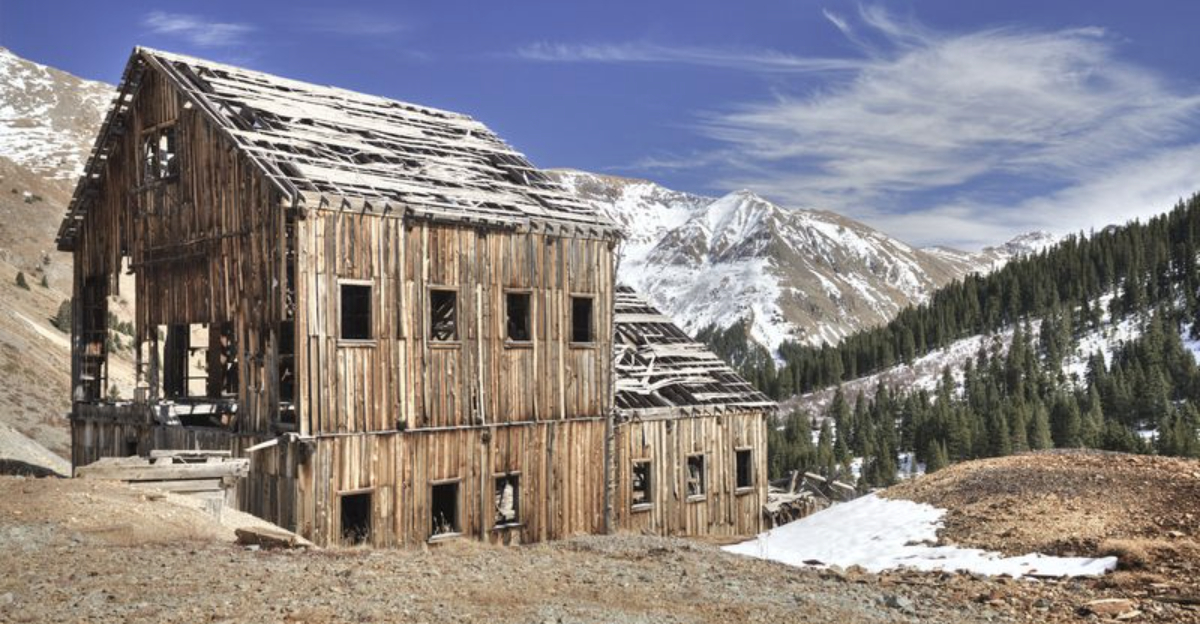
Colorado’s rugged mountains hide dozens of forgotten settlements where miners once struck it rich and families built entire communities.
These ghost towns tell fascinating stories of boom and bust, dreams fulfilled and shattered, all frozen in time among weathered wooden buildings and crumbling foundations.
History buffs can still walk these dusty streets today, exploring authentic remnants of the Wild West that Hollywood could never replicate.
1. St. Elmo – The Crown Jewel of Preservation
Picture stepping into a Western movie set, except everything around you is completely authentic. St. Elmo stands as Colorado’s best-preserved ghost town, where dozens of original buildings line a classic dirt Main Street in Chalk Creek Canyon near Buena Vista.
Families love this destination because passenger cars can reach it year-round, making it incredibly accessible. Summer visitors enjoy browsing the restored St. Elmo General Store for souvenirs and snacks.
Remember to respect the remaining structures and private cabins since this area holds official historic district status.
2. Ashcroft – Where Meadows Meet History
Eleven miles up Castle Creek Road from Aspen, Ashcroft combines stunning photogenic meadows with beautifully restored cabins. During summer months, knowledgeable docents provide fascinating interpretive tours that bring the town’s mining heritage to life.
The site operates on an honor system outside regular hours, welcoming self-guided exploration from June through September. Visitors should note that dogs aren’t permitted within the townsite boundaries.
My family discovered this gem during a wildflower hike, and the contrast between colorful blooms and weathered wood created absolutely breathtaking photography opportunities.
3. Animas Forks – Sky-High Mining Camp
At 11,200 feet elevation, Animas Forks claims bragging rights as one of Colorado’s highest ghost towns. This high-alpine mining camp offers multiple standing buildings and absolutely sweeping views of the San Juan Mountains that will leave you breathless.
Reaching this remote location requires navigating the unpaved Alpine Loop backcountry byway, where high-clearance or four-wheel-drive vehicles are strongly recommended. Summer brings the most favorable conditions for exploration.
The thin mountain air and stunning vistas create an almost otherworldly experience among these historic structures.
4. Independence – Golden Dreams at 10,900 Feet
Independence holds special significance as the site of the Roaring Fork Valley’s first major gold strike. Interpretive signs and well-maintained trails guide visitors through fascinating ruins scattered across this ~10,900-foot elevation townsite east of Aspen.
Self-guided exploration operates on a suggested donation basis, making it budget-friendly for families. However, Independence Pass closes for winter from roughly late October through late May, so plan summer or fall visits.
The combination of authentic mining artifacts and educational signage creates an excellent learning experience for curious minds of all ages.
5. Tomboy – Dramatic Ruins Above the Clouds
Perched at nearly 12,000 feet above Telluride on Imogene Pass, Tomboy showcases dramatic mill ruins and massive tailings piles that demonstrate the scale of historical mining operations. This location ranks among Colorado’s most spectacular ghost town settings.
Adventure seekers need high-clearance four-wheel-drive vehicles to reach these lofty ruins via one of the state’s classic old mining roads. County regulations restrict unlicensed off-highway vehicles on the Telluride approach.
During my last visit, clouds literally drifted through the ruins, creating an almost mystical atmosphere that perfectly captured the town’s remote, abandoned character.
6. Alta – Weathered Beauty Near Scenic Lakes
Rows of weathered buildings from Alta’s former mill town days create compelling photographic subjects in this scenic location south of Telluride. The townsite pairs perfectly with nearby Alta Lakes, offering visitors double the natural and historical attractions.
A graded dirt road provides reasonable access to the ghost town itself, though continuing to Alta Lakes requires four-wheel-drive capability. Summer and fall seasons offer the most reliable road conditions.
Photographers particularly appreciate how the weathered wood structures contrast beautifully against the surrounding alpine landscape and distant peaks.
7. Dearfield – Pioneering African American Heritage
Dearfield represents Colorado’s largest historic Black homesteading settlement, earning recognition as an official National Historic District. This unique site along US-34 east of Greeley tells important stories often overlooked in Western history narratives.
Roadside access makes visiting convenient, with standing structures still visible from the highway. The Black American West Museum occasionally offers guided tours that provide deeper historical context and preservation updates.
Ongoing preservation efforts ensure future generations can learn about these pioneering families who built thriving communities against tremendous odds in early Colorado.
8. Crystal City – Living Ghost Town Experience
Crystal operates as a fascinating “living” summer ghost town above Marble in Gunnison County, where seasonal residents maintain some structures while others remain authentically abandoned. The iconic Crystal Mill from 1892 sits just downstream, creating a photographer’s paradise.
Rough four-wheel-drive roads provide the only vehicle access during summer and fall months, though guided jeep tours, hiking, and biking offer alternative approaches. Check current conditions through Marble tourism resources before attempting the journey.
The combination of maintained and abandoned buildings creates a unique glimpse into how some ghost towns transition between past and present.
9. Ironton – Aspen Grove Preservation Success
Nestled among golden aspen trees in the Red Mountain Mining District between Ouray and Silverton, Ironton showcases successful historic preservation efforts. This cluster of beautifully maintained houses demonstrates what dedicated conservation can accomplish.
A short walking path from US-550 makes Ironton an easy addition to any San Juan Skyway road trip. The convenient highway access contrasts sharply with many remote ghost town locations.
Fall visitors experience pure magic when the surrounding aspens turn brilliant gold, framing the historic structures in nature’s most spectacular display of seasonal color.
10. Capitol City – Remote Alpine Loop Adventure
Capitol City rewards adventurous explorers with an evocative smelter stack, former post office building, and scattered foundations in a truly remote Alpine Loop setting near Lake City. This location epitomizes the isolation that defined many mining communities.
Engineer Pass Road provides late spring through fall access as part of the challenging Alpine Loop backcountry byway system. The journey itself becomes part of the historical experience.
Standing beside that lonely smelter stack, surrounded by vast mountain wilderness, visitors gain profound appreciation for the determination required to establish communities in such remote locations.