
9 Abandoned Ghost Towns In Wyoming That Still Hold Echoes Of The Old West
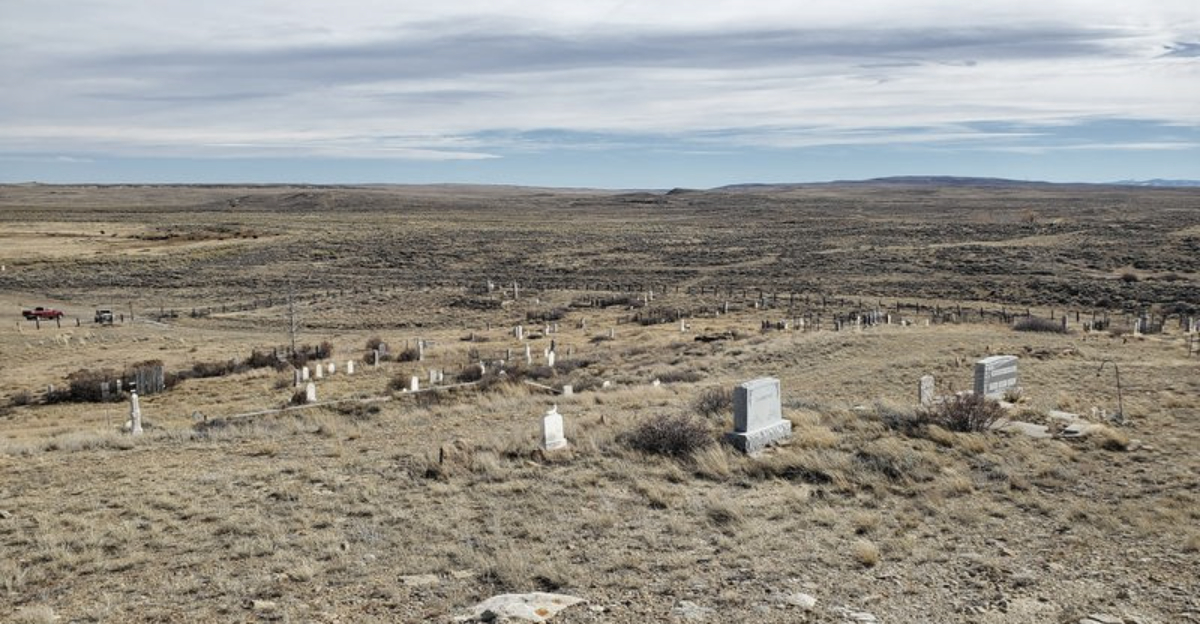
Wyoming holds secrets tucked into valleys and high country, places where wooden buildings lean against the wind and empty streets still seem to whisper old stories.
These ghost towns once buzzed with miners, ranchers, and railroad crews chasing dreams across the frontier. When the gold ran out or the coal stopped flowing, people packed up and left behind entire communities.
Now you can walk through these abandoned sites and feel what life was like more than a century ago, touching the same doorframes and peering into the same windows that frontier families once called home.
1. Kirwin
Gold and silver drew hopeful prospectors high into the Absaroka Range, where Kirwin sprang up with cabins, assay offices, and mine tunnels carved into rock.
Everything changed on February 5, 1907, when an avalanche roared down the mountain and buried dreams along with buildings.
Survivors packed what they could carry and never looked back. The site sits near Meeteetse within Shoshone National Forest, and you can still spot weathered cabins and rusted mining equipment clinging to the slopes.
Stabilization work has kept some structures standing so visitors can imagine the rush and panic of that winter morning.
2. Gebo
Coal turned Gebo into the biggest town in Hot Springs County, with thousands of miners living in neat rows of company houses and shopping at busy storefronts.
The seams ran deep, and the paychecks flowed until 1938, when the mines sputtered out and families had no reason to stay.
Bulldozers arrived in 1971 and scraped away most of what remained, but foundations still mark where kitchens and bedrooms once stood. A quiet cemetery keeps watch over the prairie, headstones leaning like old friends swapping tales.
You can reach the site from roads north of Thermopolis and walk among the ghosts of Wyoming’s coal era.
3. Piedmont & the Charcoal Kilns
Smelters in nearby Utah needed fuel, so Piedmont grew around charcoal production, with workers tending massive beehive kilns that glowed orange through the night.
Three of those kilns still stand in Uinta County, their stone walls warm to the touch and faintly scented with old soot if you step inside.
Hotels, saloons, and shops once lined the streets, but now only scattered relics remain along a dirt road off Interstate 80. The kilns are the real stars, round and sturdy enough to outlast everything else.
Visiting feels like stepping onto a movie set where the cameras stopped rolling more than a century ago.
4. Miner’s Delight / Hamilton City
Gold winked in the streambeds near Atlantic City in 1868, and prospectors rushed in to build a tight little camp they called Miner’s Delight.
Saloons and cabins sprouted under the shadow of the Wind River Range, and boom-bust cycles kept the camp alive well into the 1900s.
Bureau of Land Management trails now wind past log walls that still stand, a shaft house with empty windows, and corrals where horses once stamped and snorted.
The place feels frozen, as if miners might return any moment with pickaxes slung over their shoulders.
Hiking here offers a quiet chance to touch the rough-hewn logs and imagine the clang of gold pans in cold water.
5. South Pass City
The Sweetwater gold rush swelled South Pass City to roughly a thousand residents and hundreds of buildings by 1869, making it one of the liveliest spots in the territory.
When the Carissa Mine flagged, the crowds drifted away, leaving behind an entire town that time forgot.
Today, it ranks among the best-preserved historic sites in the West, with dozens of original structures you can walk through and mine tours that bring machinery clanging back to life.
Wyoming State Parks manages South Pass City as a State Historic Site, so you get guided stories instead of just silent ruins.
It feels less like a ghost town and more like a time machine, complete with creaky floorboards and dusty shelves still holding old goods.
6. Winton
Coal companies built Winton, also called Megeath, to house miners and their families in tidy company-owned cottages with shared water pumps and coal stoves.
The camp thrived for decades, then faded fast after mid-century closures left the mines silent and the paychecks gone.
Now you find rubble piles, a few standing walls, and wind cutting through what used to be kitchens and union halls where workers argued wages. Sweetwater County holds onto the memory, but nature is slowly reclaiming the site.
Visiting requires a sense of adventure and a good map, since roads can be rough and landmarks scarce in this corner of Wyoming.
7. Carbon
Carbon holds the title of Wyoming’s first major coal town, built to feed the hungry boilers of the newborn Union Pacific Railroad. Fires, mine troubles, and shifting rail routes doomed the settlement, and families scattered to find work elsewhere.
The ruins and cemetery sit on seasonal roads west of Medicine Bow, and you can visit by arrangement with the local museum, which keeps keys and stories safe.
Headstones lean at odd angles, and foundation stones mark where homes and shops once stood.
Walking among the remains feels like reading a history book written in stone and silence, each crumbled wall a chapter in Wyoming’s railroad era.
8. Jay Em Historic District
Homesteaders following the old Texas Trail needed supplies, so Jay Em grew into a bustling stop with a bank, gas station, stone works, and a mercantile that sold everything from nails to candy.
When trade routes shifted, the town froze in time, buildings locked but standing.
The abandoned core still waits in Goshen County, and tours happen by appointment for those curious enough to call ahead. Peering through dusty windows, you can spot old cash registers and shelves still lined with goods.
It feels like everyone stepped out for lunch and never came back, leaving behind a perfectly preserved snapshot of small-town Wyoming life.
9. Benton
Benton burned bright for three rowdy months in 1868 as a classic Hell on Wheels end-of-track town, packed with tents, gamblers, and construction crews pushing the Union Pacific westward.
When the rails moved on, so did everyone else, leaving behind Wyoming’s first true ghost town.
Little remains at the site east of Rawlins, but the story still rattles like cards in a saloon, full of brawls, quick fortunes, and even quicker departures.
The Carbon County Museum keeps artifacts and tales alive for visitors who want to imagine the chaos.
Standing on the empty prairie, you can almost hear the hammering of railroad spikes and the shouts of workers racing against time.