
10 Abandoned Michigan Villages You Can Visit Without A Guide
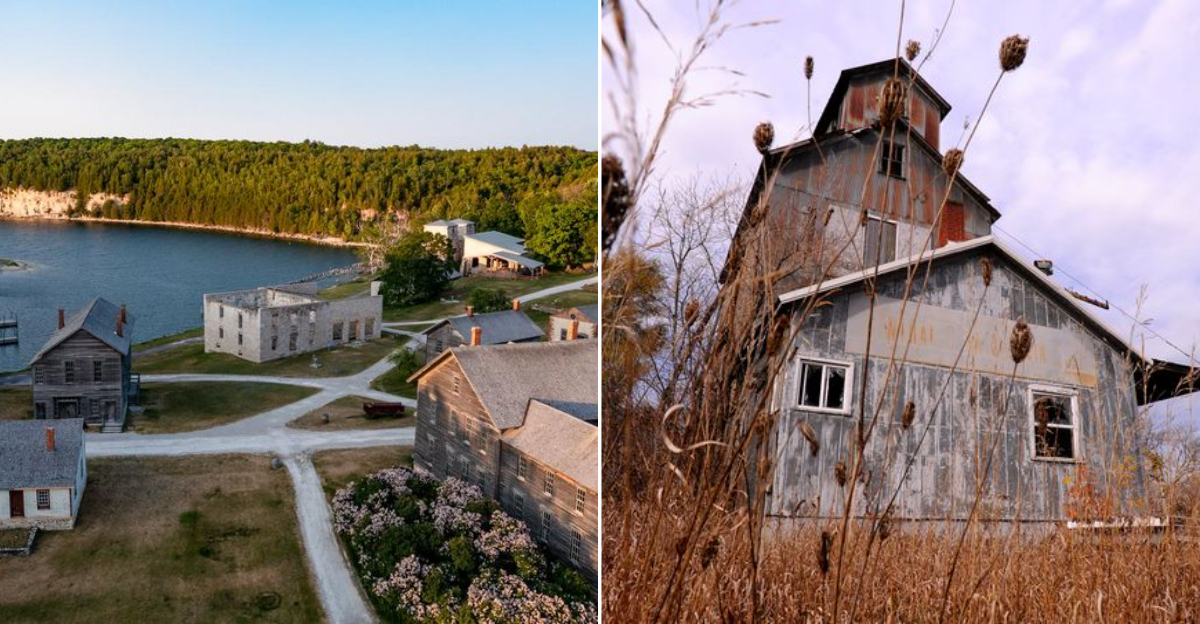
If you’ve ever felt drawn to places where time seems to pause, Michigan’s forgotten towns will speak to you. Along the Garden Peninsula, crumbling foundations peek through tall grass where miners once built their lives.
Farther north, in the Keweenaw, moss now carpets what used to be streets, and wind moves through empty doorframes like a voice that never left. These are landscapes shaped by work and weather, logging camps, fishing villages, smelters, now surrendered to silence.
Walking through them feels both eerie and intimate, like reading a story written in rust and stone. Bring sturdy shoes, an open mind, and patience.
1. Fayette Historic Townsite, Garden Peninsula
The limestone cliffs here feel cinematic, rising above Lake Michigan like the backdrop of an old adventure film. Wind brushes across iron furnaces and brick walls that once roared with 19th-century industry. You can almost hear it, metal, steam, ambition.
Fayette began in 1867 as a smelting town and shut down in 1891, now preserved as a state park. Trails loop through homes, furnaces, and lake overlooks.
Reaction: walking its gravel streets feels both eerie and gentle, like paging through a storybook left outdoors.
2. Central Mine, Keweenaw County
The first thing you notice is how green everything is. The forest has swallowed most of the mining town, leaving chimneys poking through ferns like reminders that people once dug deep here.
A small white church stands quiet, still hosting reunions every summer. Central Mine ran from 1854 to 1898, producing over fifty million pounds of copper before shutting down. The terrain’s rough, and roots curl through every ruin.
Tip: stop by the heritage society nearby, they hand out walking maps and ghost-town gossip with equal enthusiasm.
3. Delaware, Keweenaw County
The air up here feels thinner, almost metallic, and the old mine shafts seem to exhale cold air from the past. Wooden beams lean, moss grows where miners once stood, and the forest hums with the sound of wind instead of machinery.
This site dates to the 1840s and once had its own school, store, and dance hall. Now, nature writes its own architecture.
I came in early fall, mist lifting from the trees, and it felt like the world had quietly pressed pause.
4. Phoenix, Keweenaw County
Sunlight catches the copper-stained soil along US-41, and you suddenly realize how small Phoenix is—just a few foundations and the restored Phoenix Church. The air smells faintly of pine and iron.
There’s a sense that this place is still listening. Founded in the 1840s, Phoenix once held hundreds of miners and their families, most working for the Phoenix Copper Company. All that bustle has settled into quiet.
Tip: pull off near M-26, walk the short path, and let the wind narrate what’s left.
5. Cliff Mine And Clifton, Keweenaw County
Down a gravel turnoff near the ghostly Cliff Drive, the forest splits to reveal ruins that look sculpted more than decayed. Moss clings to stone walls, and birch roots twist through the old mine shafts.
The mood is both wild and peaceful. This was Michigan’s first profitable copper mine, opened in 1845 and abandoned half a century later. Artifacts still surface after heavy rain.
Bring boots and curiosity, the ground’s uneven, and there’s no cell service, which somehow makes it even better.
6. Old Victoria, Rockland
The cabins smell of pine and wood smoke, though no fires burn inside. Their log walls glow gold in late afternoon light, and the silence feels kind, not eerie.
Each cabin has hand-hewn furniture and iron cookware left from the mining families who lived here in 1899. Preservationists rebuilt the site on its original foundations, creating a small open-air museum near Rockland.
Volunteers share stories in period dress I loved how the past felt touchable here; quiet, sturdy, and very much alive in its own way.
7. Mandan, Keweenaw County
At first glance, Mandan looks like the woods swallowed it whole. You spot foundations half-buried in moss, the faint trace of a dirt road, and the breeze moving softly through young birch.
It feels untouched, which is part of the thrill. This late-1800s mining settlement once had saloons, a depot, and small homes along a single dusty street. All of it now belongs to the forest.
If you ask me, you should bring a friend or a map. GPS fades out here, and it’s easy to wander deeper than planned.
8. Port Crescent Townsite, Port Austin
The Thumb region hides this gem inside Port Crescent State Park, where dune grass whispers over the ghost of a lumber town.
The lake wind rushes across what used to be sawmills and saloons, scattering grains of sand over the last foundations. Founded in the 1860s, Port Crescent burned twice before finally disappearing.
Its ruins are gentle now, folded into nature. Come in late summer when the sun sets over Lake Huron, its golden reflection makes the empty town glow like it remembers being alive.
9. Freda, Houghton County
Rusted steel towers rise over Lake Superior, their edges softened by years of wind and spray. The air smells faintly metallic, and gulls circle lazily above the skeletal remains of the Champion Mill.
The silence feels deliberate. Freda thrived on copper refining until 1967, when the mill closed and workers moved on. Today, the ruins mark the cliffside like modern ruins from a forgotten empire.
Standing there, I couldn’t help thinking how beautiful abandonment can be, the lake polishing memory one wave at a time.
10. Pere Cheney, Crawford County
Pere Cheney, a ghostly village in Crawford County, is steeped in haunting tales and mystery. Known for its old cemetery, the site is often enveloped in eerie silence.
Walk among the grassy fields where nature has reclaimed much of the land, lending an otherworldly feel.
The cemetery stones stand as somber reminders of the lives once lived here. Pere Cheney’s enigmatic history continues to captivate the imagination.