
10 Abandoned Pennsylvania Places To Add To Your Next Road Trip
There is something strangely irresistible about abandoned places. Maybe it is the silence, maybe it is the mystery, or maybe it is that thrilling feeling of standing near something that time clearly forgot.
Road trips get a lot more interesting when they come with ghost-town energy, crumbling beauty, and the kind of eerie charm that makes you slow down and stare a little longer than you meant to.
Pennsylvania is full of history, but some of its most fascinating stories are hiding in empty buildings, overgrown corners, and long-forgotten sites that still know how to spark curiosity.
These are the kinds of stops that make a drive feel like an adventure instead of just a change of scenery. One abandoned place can feel haunting, cinematic, puzzling, and oddly beautiful all at once.
It is part roadside wonder, part history hunt, and part spooky detour for anyone who loves places with a past. Some destinations are polished and predictable.
These are the ones with texture, questions, and unforgettable atmosphere.
I always get pulled in by places like this because once I spot something weathered, quiet, and a little haunting, I immediately want to know the story behind it.
1. Eastern State Penitentiary, Philadelphia
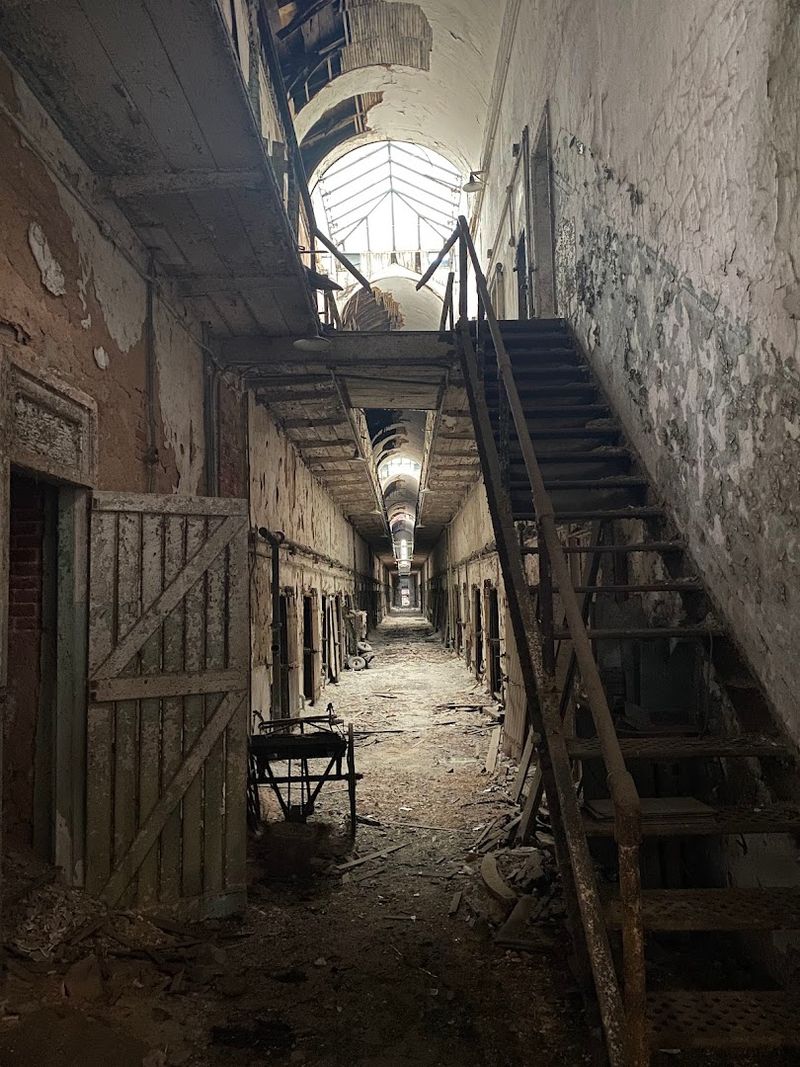
Few places in the United States carry the kind of layered, haunting history that Eastern State Penitentiary does right in the heart of Philadelphia, Pennsylvania.
Built in 1829, this massive fortress-style prison was once considered the most expensive building in the country and housed some of America’s most notorious criminals, including Al Capone himself.
Today, Eastern State Penitentiary stands as one of the most visited historic sites in the state, offering self-guided audio tours through its crumbling cellblocks and vaulted corridors.
The peeling paint, rusted cell doors, and collapsed ceilings create a visual experience that no photograph can fully capture.
Photographers absolutely love this place, and for good reason: the play of light through broken skylights onto decayed floors is genuinely stunning.
Eastern State Penitentiary also runs a wildly popular Halloween event each fall that draws crowds from across the region.
Visiting during the quieter spring months gives you more space to soak in the atmosphere at your own pace.
2. Abandoned Pennsylvania Turnpike, Near Breezewood And Waterfall
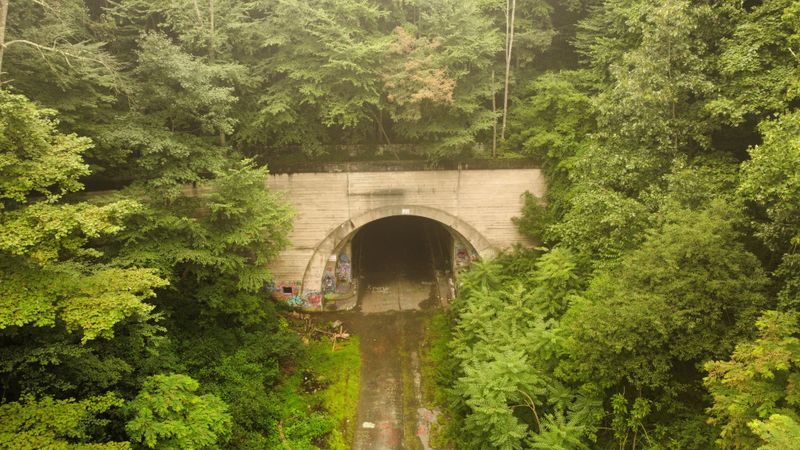
Stretching 13 miles through the mountains of central Pennsylvania, the abandoned Pennsylvania Turnpike is one of the most surreal road trip detours you will ever take.
This section of highway near Breezewood and Waterfall was bypassed in 1968 and left almost entirely intact, complete with two long tunnels that burrow straight through the Allegheny ridges.
Walking or cycling through the Old PA Pike Trail along this route feels like stepping into a post-apocalyptic set where the trees have slowly started reclaiming the pavement.
The Rays Hill and Sideling Hill tunnels are the real stars here, stretching about two-thirds of a mile and over a mile, and plunging visitors into complete darkness if you come unprepared.
Bring a flashlight or a headlamp, because the tunnels have no lighting whatsoever. The abandoned Pennsylvania Turnpike draws cyclists, hikers, and urban explorers alike, and the trail is open year-round.
Fall foliage transforms the surrounding ridges into a spectacular backdrop that makes the whole experience feel even more otherworldly.
3. Kinzua Bridge State Park, Mount Jewett
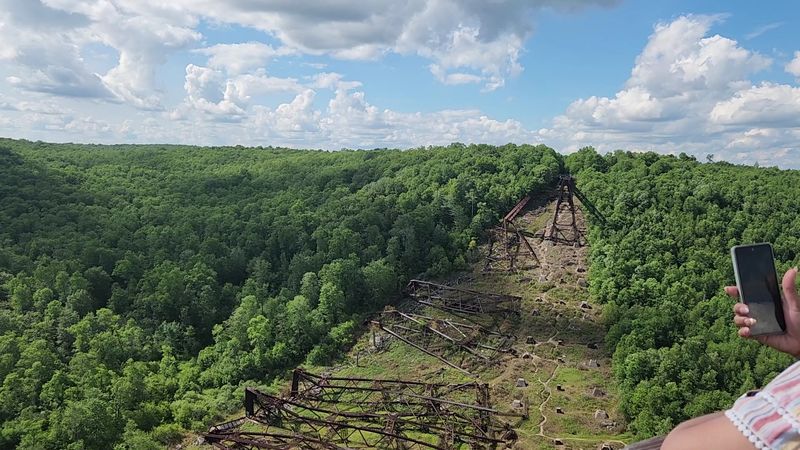
A tornado tore through Kinzua Bridge State Park in 2003 and brought down most of this once-magnificent iron viaduct, but what remained behind is somehow even more impressive than the original structure.
Located near Mount Jewett in McKean County, Pennsylvania, the park preserves the fallen towers exactly where they landed in the gorge below, creating an open-air monument to both engineering and the raw power of nature.
A glass-floored observation area extends out over the edge of the original bridge, though the skywalk itself is under a rehabilitation project and only reopens during limited fall periods.
Kinzua Bridge State Park is surrounded by the Allegheny National Forest, so the scenery on the drive in is already worth the trip on its own.
The park also offers hiking trails, picnic areas, and a small museum that tells the full story of the bridge’s construction and eventual collapse.
Kinzua Bridge State Park is genuinely one of the most unexpected and moving spots in the entire state. Plan to spend at least a few hours here.
4. Carrie Blast Furnaces, Pittsburgh Area
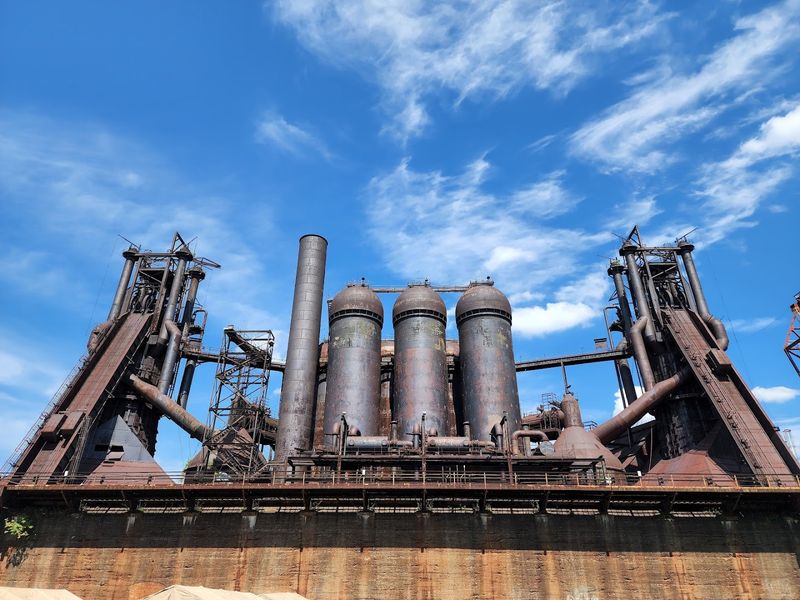
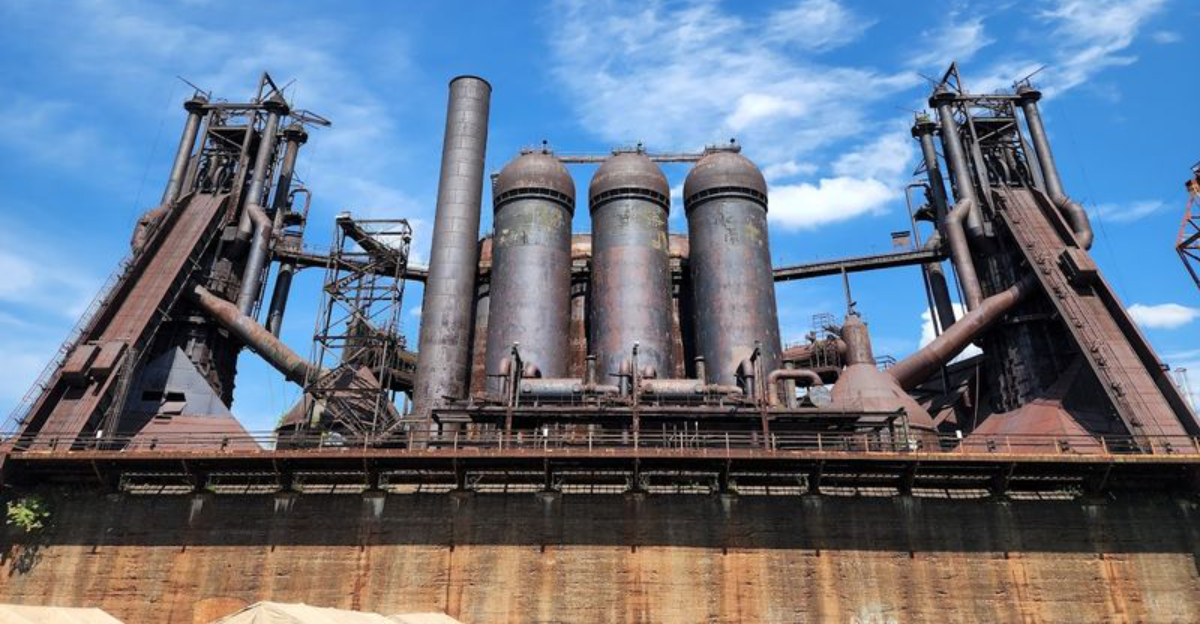
Standing along the Monongahela River just outside Pittsburgh, the Carrie Blast Furnaces are a towering reminder of the industrial muscle that once defined western Pennsylvania.
These furnaces operated from 1884 all the way through 1978, producing iron for the legendary Homestead Steel Works across the river.
Today, the site is managed by Rivers of Steel, which offers guided tours that take visitors deep into the skeletal infrastructure of the complex for visitors today still.
Carrie Blast Furnaces is not a place you simply wander through on your own; the tours are led by knowledgeable guides who bring the history of Pittsburgh steel to life in a way that is genuinely gripping.
The scale of the furnaces is almost impossible to process until you are standing right next to them, looking up at structures that rise several stories into the air.
Street artists have also left their mark throughout the complex, adding vivid murals that contrast beautifully with the rust and decay.
Carrie Blast Furnaces earns its reputation as one of the finest industrial heritage sites in the country.
5. Austin Dam Memorial Site, Austin
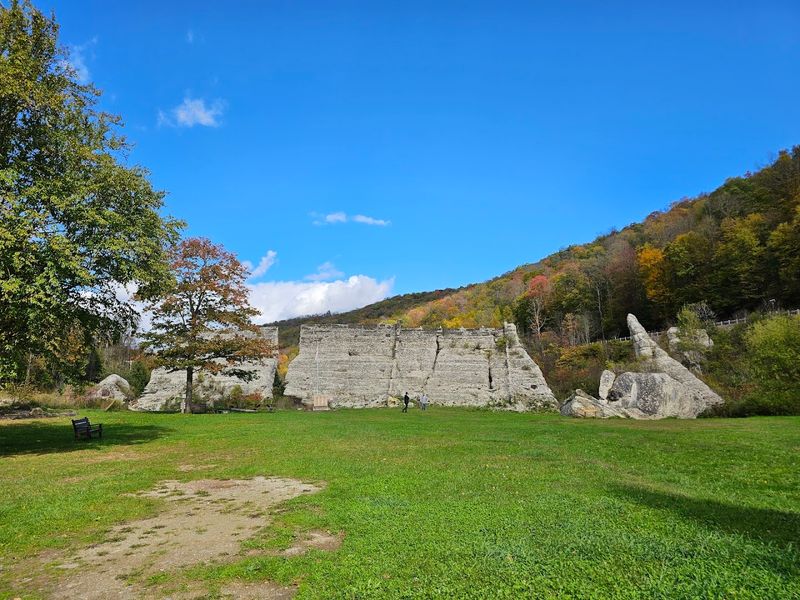
On September 30, 1911, a poorly constructed concrete dam gave way above the small town of Austin in Potter County, Pennsylvania, sending a wall of water crashing through the community below.
The Austin Dam disaster claimed dozens of lives and left the town forever changed, and the massive concrete ruins of the dam still sit in the valley today as a sobering memorial.
Visiting the Austin Dam Memorial Site means standing in front of a crumbling wall of concrete that has been split and toppled by one of Pennsylvania’s most tragic engineering failures.
The site is free to visit and includes interpretive signage that walks you through the timeline of events with striking clarity.
A short trail leads down to the base of the ruins, where you can see just how thick and heavy the original structure was before it failed.
The Austin Dam Memorial Site sits in a quiet, forested valley that feels almost too peaceful given the history it holds.
It is a sobering and deeply human place that stays with you long after you leave.
6. Ghost Town Trail, Cambria And Indiana Counties
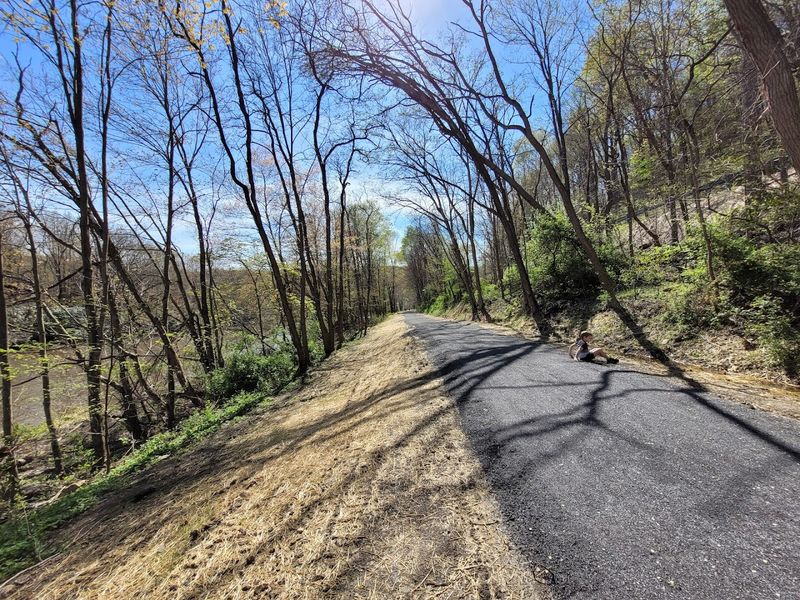
Rail trails are everywhere in Pennsylvania, but the Ghost Town Trail in Cambria and Indiana counties has a backstory that sets it apart from every other paved path in the state.
Running through the heart of the old bituminous coal region, this trail now stretches beyond 36 miles and passes through the sites of several communities that once thrived during the coal boom and were completely abandoned when the industry collapsed.
Ghost Town Trail gets its name from those vanished settlements, and sharp-eyed hikers can still spot old foundations, mine portals, and crumbling stone walls hidden just off the path.
The trail is well-maintained and suitable for cyclists, hikers, and even horseback riders on certain sections, making it one of the more versatile outdoor destinations in western Pennsylvania.
Wehrum is one of the most notable ghost town sites along the route, and several sections include interpretive signs explaining what life once looked like there.
Ghost Town Trail is especially atmospheric in early spring, when the fog sits low in the hollows and the bare trees reveal old structures that summer leaves would otherwise hide.
7. Pithole City, Pleasantville Area
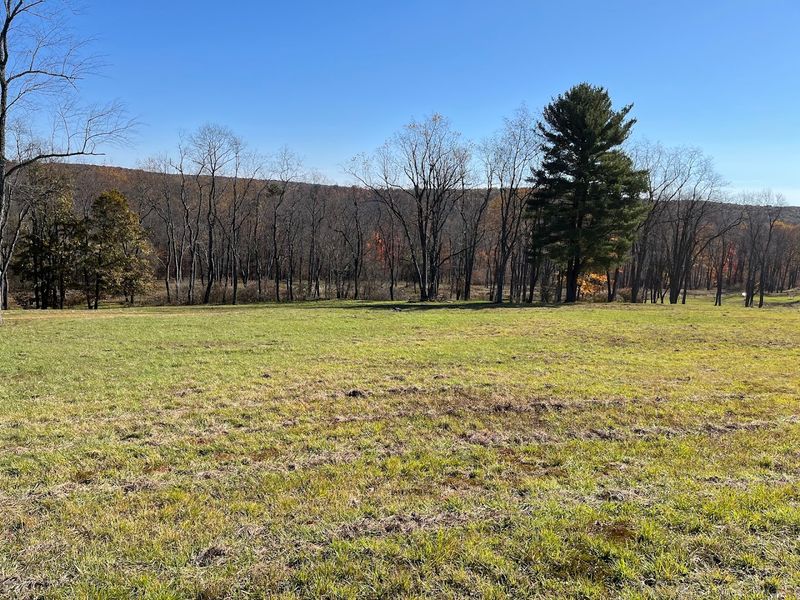
In 1865, Pithole was one of the fastest-growing cities in the United States, a booming oil boomtown that sprang up almost overnight in Venango County, Pennsylvania. By 1870, it was gone.
The oil dried up, the investors fled, and the entire city of nearly 15,000 people simply dissolved back into the landscape.
Today, the site near Pleasantville is a flat, grassy field with numbered markers showing visitors exactly where the hotels, newspapers, churches, and saloons once stood.
Pithole City is managed by the Pennsylvania Historical and Museum Commission, and the visitor center at the site tells the full story of this rise and fall with photographs, artifacts, and maps during seasonal hours.
Standing in that quiet field and trying to picture a bustling city street where cows now graze is a genuinely mind-bending experience.
Pithole City is best visited in combination with the nearby Drake Well Museum, which covers the broader story of Pennsylvania’s oil industry and gives the Pithole story even more context. Few places in the state make history feel quite this immediate.
8. Staple Bend Tunnel, Near Mineral Point And Johnstown
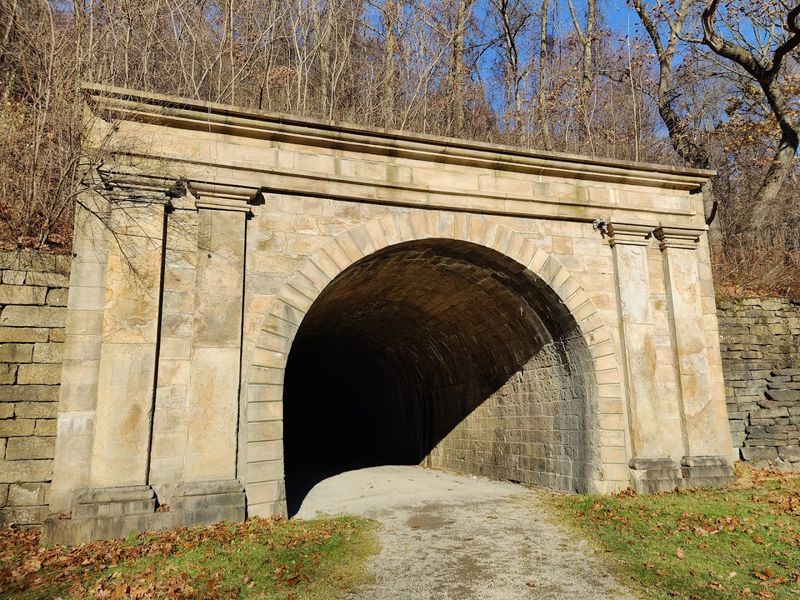
Completed in 1833, the Staple Bend Tunnel near Mineral Point and Johnstown holds a remarkable distinction: it is the oldest railroad tunnel in the United States.
Carved through the Allegheny ridgeline as part of the Allegheny Portage Railroad system, the tunnel stretches about 900 feet and was originally used to haul canal boats over the mountains on a series of inclined planes.
Reaching the tunnel requires a round-trip hike of about four miles through a forested gorge along Conemaugh Creek, which keeps the crowds thin and the atmosphere wonderfully remote.
The stone portal at each end of Staple Bend Tunnel is beautifully preserved, and stepping inside reveals a cool, dripping passage that has barely changed since the 1800s.
The hike itself is a highlight, following a former railroad grade through thick forest with the creek rushing alongside for most of the route.
Staple Bend Tunnel is managed by the National Park Service as part of the Allegheny Portage Railroad National Historic Site. History lovers and hikers will both find something to celebrate here.
9. Alvira Bunkers, Allenwood Area / State Game Lands 252
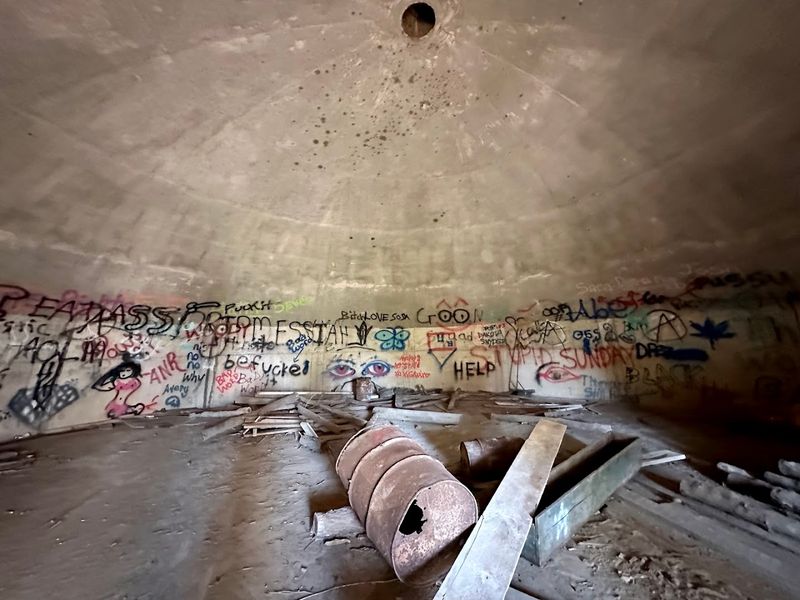
Hidden inside State Game Lands 252 near Allenwood in central Pennsylvania, the Alvira Bunkers are one of the state’s best-kept secrets and one of its most fascinating World War II relics today.
During the early 1940s, the federal government seized the land and relocated the entire community of Alvira to build an ordnance depot and a network of concrete ammunition storage bunkers there.
After the war ended, the plant was dismantled but the bunkers were left behind, and the forest slowly grew up around them.
Today, dozens of these moss-covered concrete domes are scattered across the game lands, half-buried in the earth and surrounded by deer trails and wildflowers.
The Alvira Bunkers are completely free to explore on foot, and the game lands surrounding them offer excellent hunting and wildlife watching as a bonus.
Finding the bunkers requires a bit of navigation since there are no official signs leading directly to them, which only adds to the sense of discovery. Alvira Bunkers reward the curious traveler who does not mind a little off-the-beaten-path adventure.
10. D*ad Man’s Hollow, Near McKeesport
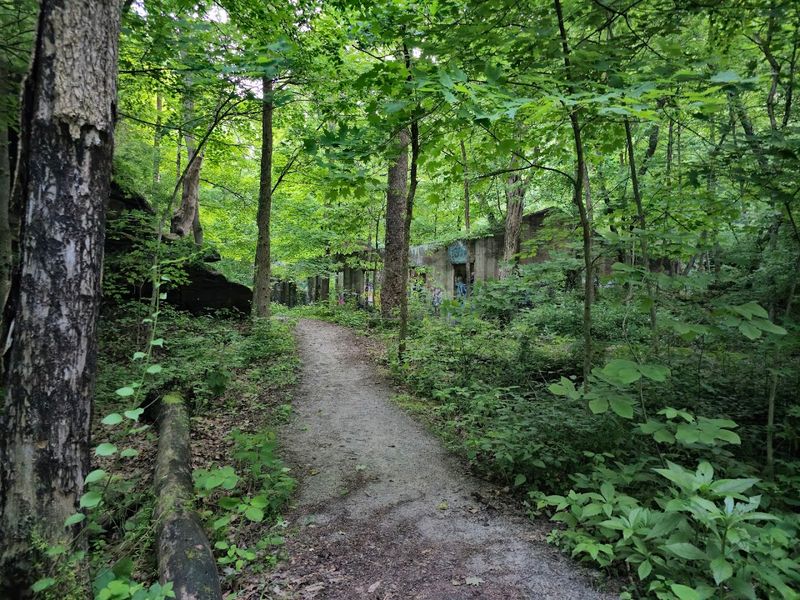
Just a short drive from McKeesport in Allegheny County, Pennsylvania, D*ad Man’s Hollow is a nature preserve that doubles as an open-air industrial archaeology site.
The hollow gets its dramatic name from the area’s rough-and-tumble past, when coal mining operations and coke works dominated the landscape and the work was genuinely dangerous.
Today, D*ad Man’s Hollow is managed by the Allegheny Land Trust and contains over 400 acres of recovering forest, steep ravines, and creek corridors that are slowly reclaiming what industry left behind.
Hikers who explore the trail network will come across old mine openings, stone foundations, and rusted equipment that peek out from the undergrowth at unexpected moments.
The creek at the base of the hollow runs clear and cold, and the forest canopy in summer makes the whole place feel worlds away from the suburban sprawl just beyond the tree line.
D*ad Man’s Hollow hosts occasional guided hikes led by naturalists and historians who bring both the ecology and the industrial history to life with impressive depth.
It is the kind of place that rewards a slow, curious pace above all else.