
10 Abandoned Places In Illinois With Fascinating Stories
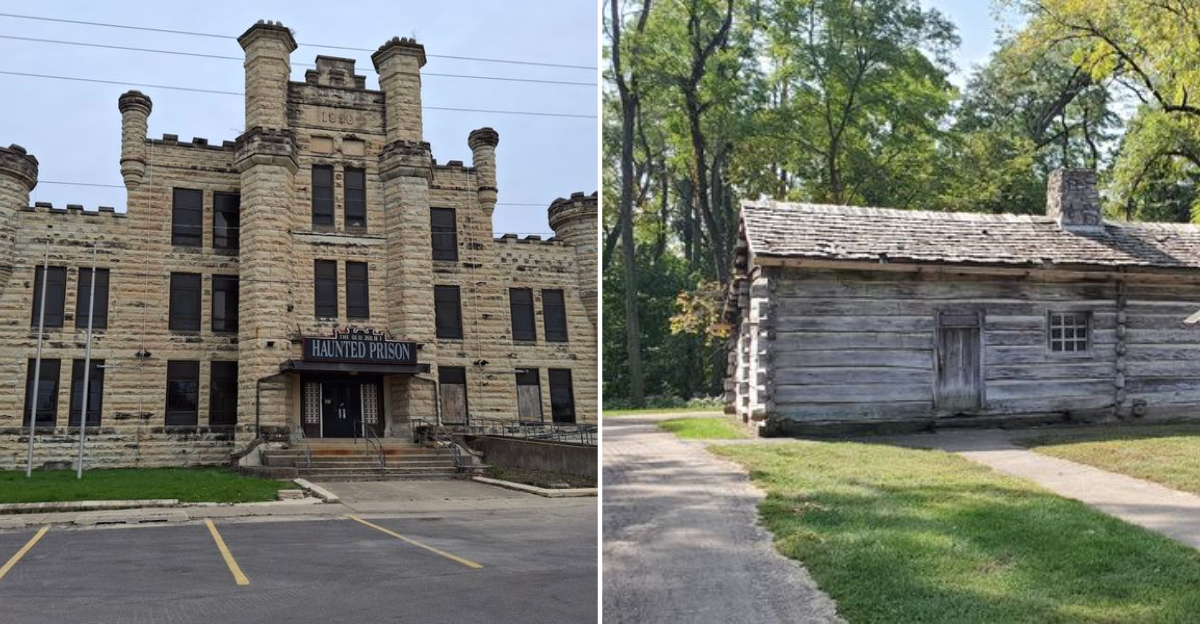
A rusted gate, a silent village street, a towering prison wall… Illinois holds places where history never quite faded away.
Across the state, forgotten institutions, vanished towns, and ancient earthworks continue to stand as quiet witnesses to the people who built them and the events that unfolded around them. Some locations once shaped national headlines.
Others preserve stories that nearly slipped out of the historical record entirely. What remains today is a collection of remarkable sites where the past still leaves a strong impression on anyone who walks the grounds.
Illinois offers an unusual mix of abandoned landmarks and carefully preserved historic places, each carrying its own dramatic backstory.
1. Old Joliet Prison, Joliet
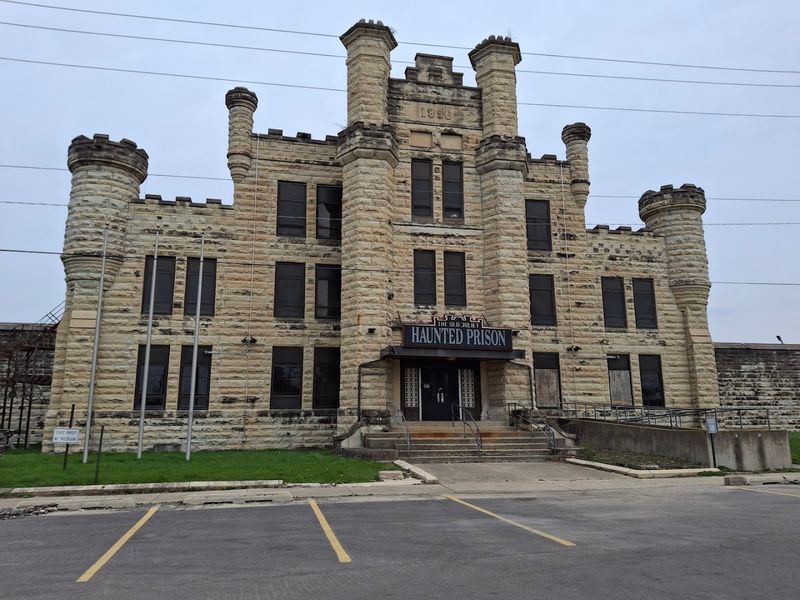
Few places in Illinois carry as much gritty history as the Old Joliet Prison at 1125 Collins St, Joliet, IL 60432. Opened in 1858, this massive limestone fortress operated for nearly 150 years before closing its doors in 2002.
Its towering Gothic walls and iron gates give it an unmistakable presence that still commands attention from the street.
Movie fans might recognize it immediately. The prison served as a filming location for the iconic Blues Brothers movie, and it has appeared in several other productions over the years.
Walking its grounds today, you can almost hear echoes from that colorful cinematic past bouncing off the stone walls.
The City of Joliet has invested significantly in preserving and developing the site into a heritage tourism destination. Seasonal tours and self-guided experiences are offered throughout much of the year, allowing visitors to explore the cellblocks, the warden’s house, and the administration building.
The stories told by knowledgeable guides bring the history of Illinois corrections vividly to life. Whether you are a history enthusiast or a curious traveler, a visit here rewards you with something genuinely unforgettable.
2. Ashmore Estates, Ashmore
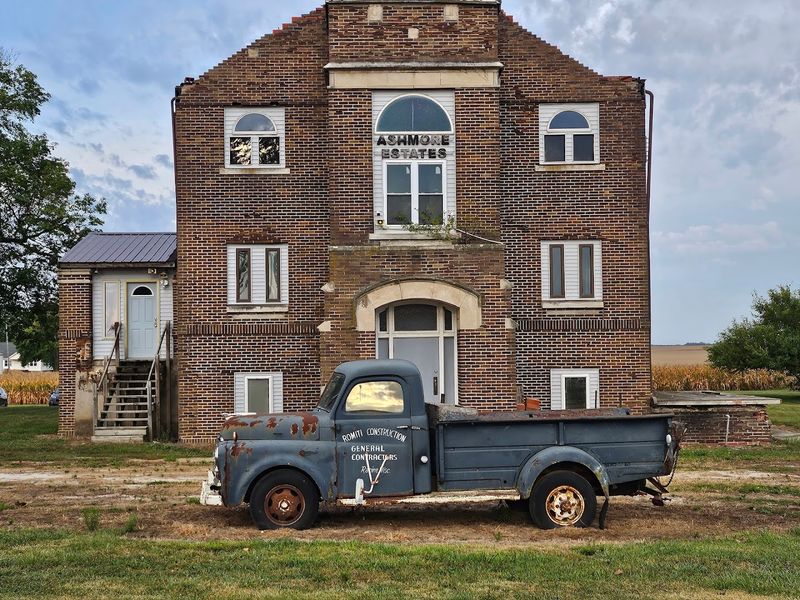
Out in the quiet countryside of Ashmore, Illinois, at 22645 E County Rd 1050 N, sits a building with one of the most talked-about histories in the state.
Ashmore Estates began its life in 1916 as the Coles County Poor Farm, a facility designed to house residents who had nowhere else to turn. Decades later, it was converted into a private care facility before ultimately closing in 1986.
The building’s long history of housing vulnerable populations has given it a reputation that draws paranormal investigators from across the country.
Television crews have filmed here, and countless ghost hunting groups have spent nights inside its walls. Whether or not you believe in the supernatural, the atmosphere inside is genuinely striking.
The current owners offer public tours, overnight investigations, and special events throughout the year, making it one of the more accessible historic sites on this list. The brick exterior, broken windows, and long corridors create a setting that feels completely removed from everyday life.
If you enjoy exploring places where history and mystery overlap, Ashmore Estates delivers an experience that is hard to match anywhere else in central Illinois.
3. Pullman National Historical Park, Chicago
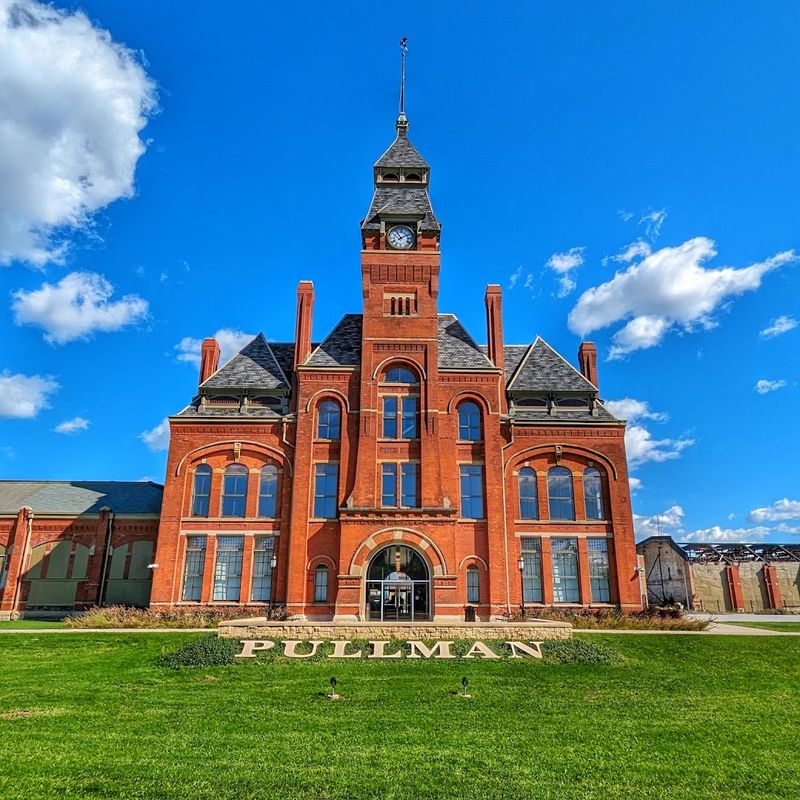
George Pullman had a vision. In 1880, the railroad car manufacturer built an entire town from scratch on the south side of Chicago, creating what he believed would be the ideal community for his workers.
Today, Pullman National Historical Park at 11141 S Cottage Grove Ave, Chicago, IL 60628 preserves what remains of that ambitious social experiment.
The neighborhood includes rows of Victorian-era brick homes, a market hall, a hotel, and the remains of the factory complex where luxury sleeper cars were manufactured.
Pullman’s paternalistic approach to managing his workers eventually led to one of the most significant labor strikes in American history in 1894, a turning point that changed labor laws across the country.
Designated as a national monument in 2015 and redesignated as Pullman National Historical Park in 2022, the site is actively being restored and interpreted by the National Park Service. Free ranger-led tours are offered on weekends, and the visitor center provides excellent context for understanding the neighborhood’s complicated legacy.
The architecture alone is worth the trip, but the labor history woven into every building makes this one of Chicago’s most genuinely important historic destinations.
4. Cahokia Mounds State Historic Site, Collinsville
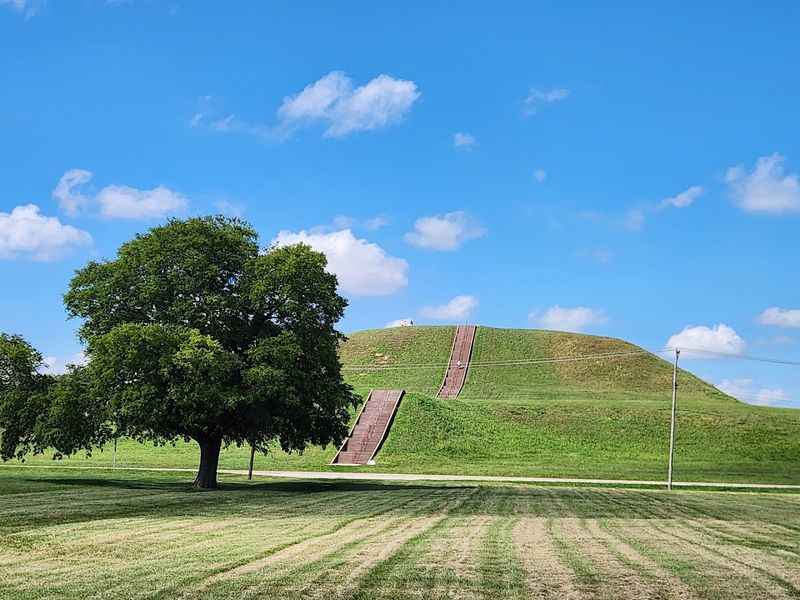
Long before European explorers set foot in North America, a sophisticated city thrived near what is now Collinsville, Illinois.
Cahokia Mounds State Historic Site at 30 Ramey St, Collinsville, IL 62234 preserves the remnants of a pre-Columbian settlement that at its peak around 1100 AD may have housed as many as 20,000 people, making it one of the largest pre-Columbian cities in North America.
The site preserves roughly 70 earthen mounds within the protected area, including Monks Mound, the largest prehistoric earthen structure in the Americas. Climbing to the top of Monks Mound gives you a sweeping view of the surrounding landscape that feels genuinely awe-inspiring.
The sheer scale of what these ancient builders accomplished using only human labor is difficult to fully comprehend until you are standing right in front of it.
Designated a UNESCO World Heritage Site in 1982, Cahokia Mounds is both a state historic site and a world-class archaeological treasure.
The on-site interpretive center is well-designed and filled with artifacts, models, and exhibits that help visitors understand the culture and daily life of the Mississippian people. Plan for at least two to three hours to do the site proper justice.
5. Lincoln’s New Salem State Historic Site, Petersburg
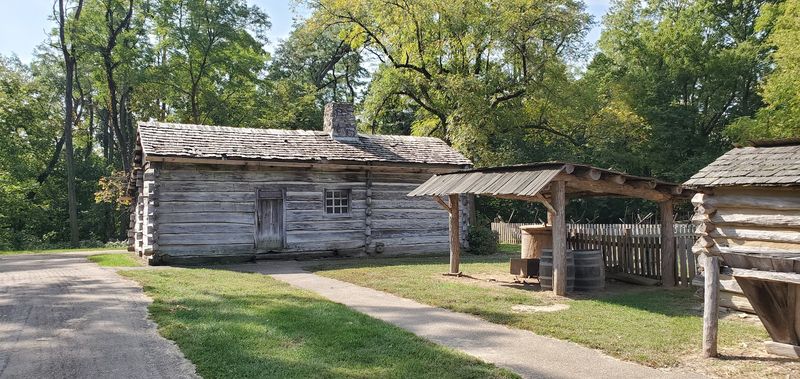
Before Abraham Lincoln became president, he was a young man trying to figure out his place in the world. New Salem, Illinois was where that figuring out happened.
Lincoln’s New Salem State Historic Site at 15588 History Ln, Petersburg, IL 62675 is a fully reconstructed version of the frontier village where Lincoln lived from 1831 to 1837, working as a store clerk, postmaster, and self-taught lawyer.
The village was almost entirely gone by the time restoration efforts began in the 1930s, but researchers used historical records and archaeology to rebuild it faithfully.
Today, more than 20 log structures stand on the original site, including homes, shops, a tavern, and a mill. Costumed interpreters bring the 1830s frontier atmosphere to life in a way that feels remarkably immersive.
What makes this place genuinely special is the human scale of it all. You can walk the same ground where a future president chopped wood, read law books by firelight, and formed the friendships that shaped his character.
The site is open most of the year, admission is free, and the surrounding Sangamon River scenery adds a quiet natural beauty that completes the experience beautifully.
6. Fort de Chartres State Historic Site, Prairie du Rocher

There is something quietly powerful about standing inside walls that have witnessed centuries of history, and Fort de Chartres delivers that feeling in full.
This French colonial fort along the Mississippi River was once the most powerful stronghold in the middle of North America. Originally built in wood in 1720, it was later reconstructed in stone and served as the seat of French colonial power in the Illinois Country.
France ceded the fort to Britain in 1765, and the British abandoned it just a few years later after the Mississippi River began eroding the surrounding land. The walls that once housed soldiers, priests, and colonial officials slowly crumbled into the earth.
Restoration efforts in the 20th century brought significant portions of the fort back to their former presence, including the impressive stone gatehouse.
The site hosts one of Illinois’ most beloved annual events, the Fort de Chartres Rendezvous held every June, where hundreds of re-enactors in period costume recreate 18th-century French colonial life.
The combination of genuine history, scenic riverside location, and living history programming makes this one of southern Illinois’ most rewarding day trips.
7. New Philadelphia National Historic Site, Barry
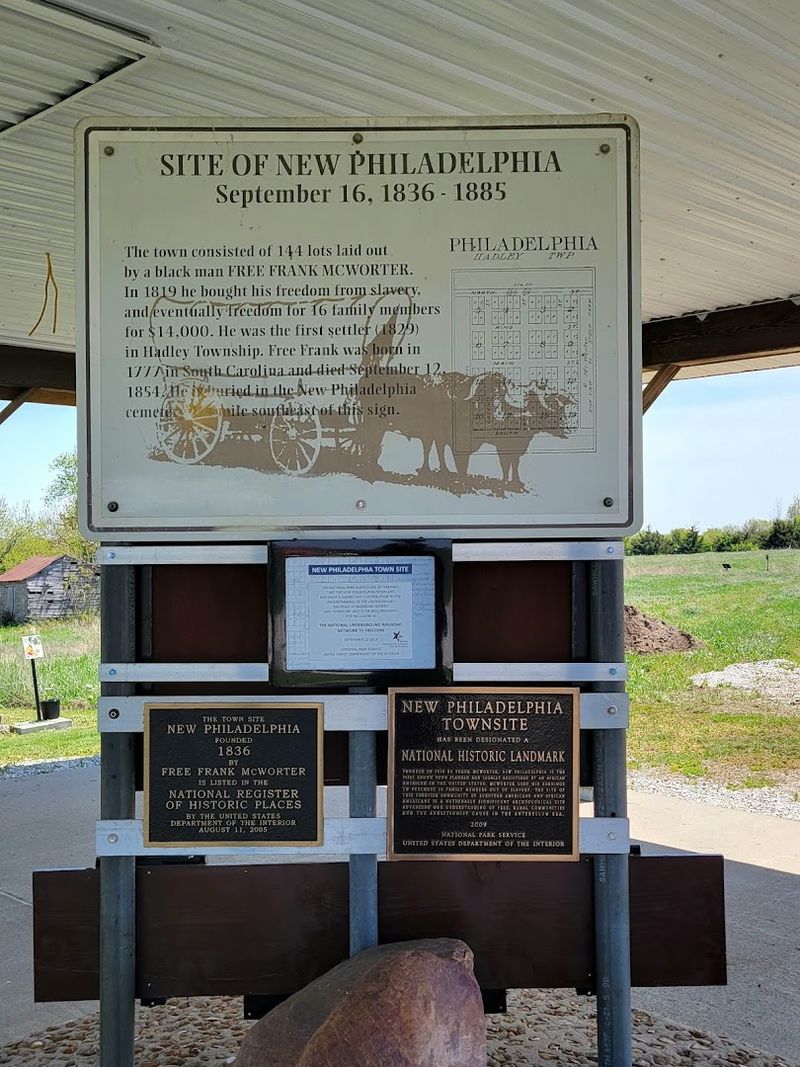
New Philadelphia holds a distinction unlike any other town in American history. Founded in 1836 by Frank McWorter, a formerly enslaved man who purchased his own freedom and later bought the freedom of several family members while building a successful business and selling town lots.
New Philadelphia at 29766 306th Ln, Barry, IL 62312 became the first town in the United States platted and registered by a Black man.
The town thrived for several decades, attracting both Black and white residents in an era when such integration was extraordinarily rare.
Its decline began when the railroad bypassed it in the 1870s, and by the early 20th century the town had completely disappeared beneath farmland. Today, only open fields mark the spot where this remarkable community once stood.
Designated as a National Historic Site in 2022, New Philadelphia is now being interpreted for the public through archaeological research, signage, and ranger programs. The story it tells about freedom, entrepreneurship, and community is one of the most inspiring in Illinois history.
Visiting requires some imagination since there are no standing structures, but the historical weight of the ground beneath your feet is something you will carry with you long after leaving.
8. Millstone Bluff Archaeological Area, Simpson
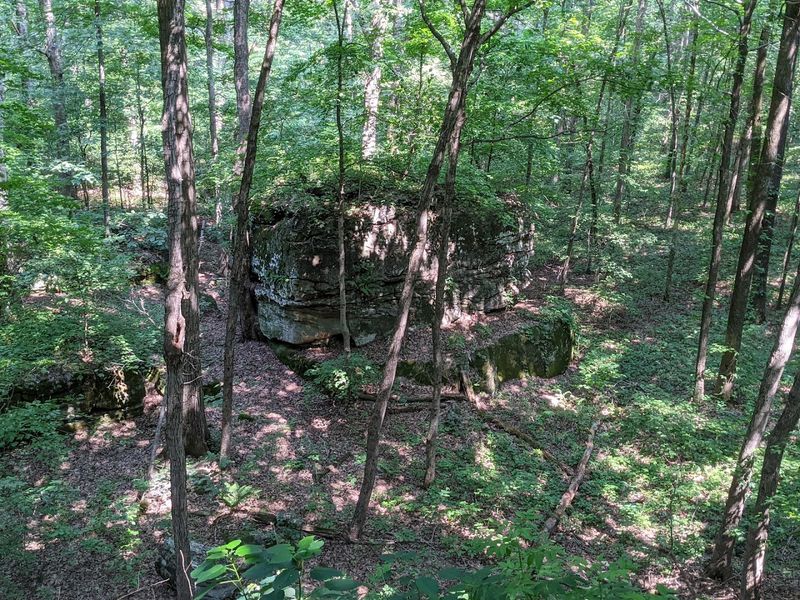
Perched atop a sandstone bluff deep in the Shawnee National Forest near Simpson, Illinois, Millstone Bluff is one of the most remarkable and least-visited archaeological sites in the entire Midwest.
Found along Forest Rd 13, Simpson, IL 62985, this elevated plateau contains the remains of a Native American village used during multiple periods, including Woodland and Mississippian cultures.
The site includes a stone wall that once enclosed the village, a prehistoric stone box cemetery, and a collection of petroglyphs carved directly into the sandstone surface. The carvings depict symbols, human figures, and geometric shapes that archaeologists are still working to fully interpret.
Seeing them in person, knowing they were created by hands that worked this stone hundreds of years ago, creates a genuinely moving experience.
A short interpretive trail loops around the bluff and includes informational signs that explain the history and significance of each feature. The surrounding forest scenery is stunning in every season, and the bluff itself offers sweeping views of the Shawnee Hills.
This is an ideal destination for hikers, history fans, and anyone curious about the deep human past of southern Illinois. Arrive early and bring good walking shoes.
9. Bachelor’s Grove Cemetery, Midlothian
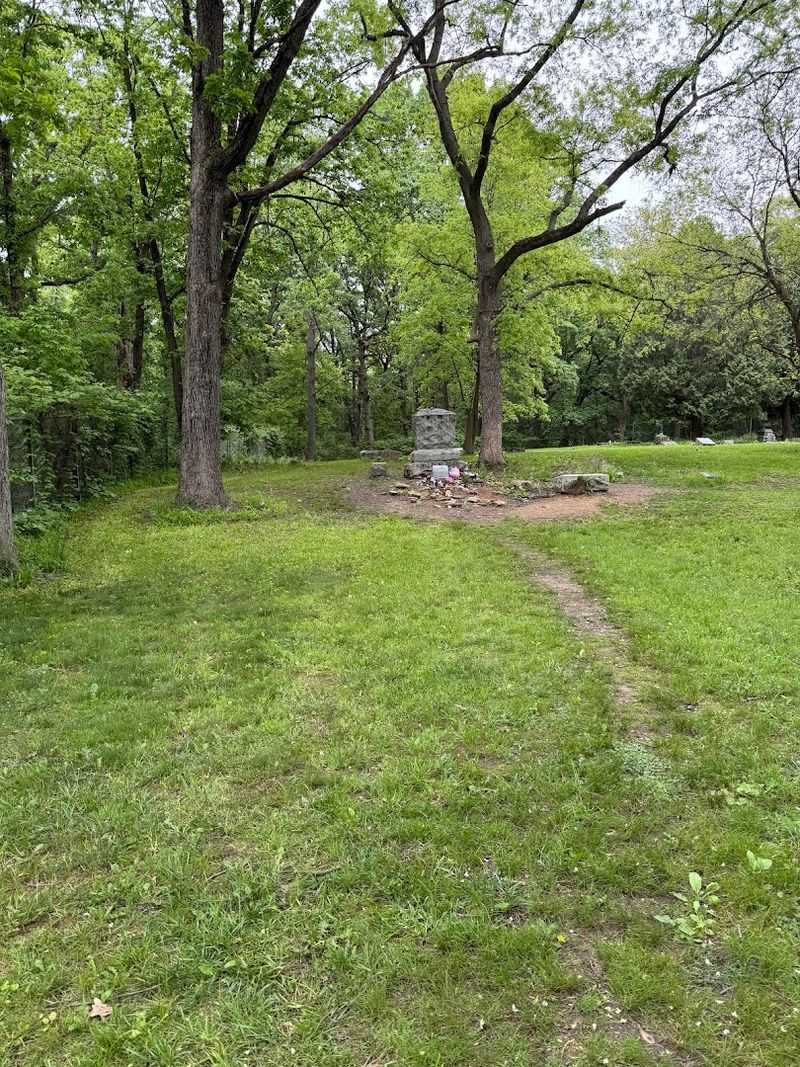
Reputedly one of the most haunted spots in the entire United States, Bachelor’s Grove Cemetery at 5900 W Midlothian Turnpike, Midlothian, IL 60445 is a tiny, forgotten burial ground tucked inside the Rubio Woods Forest Preserve on the south side of the Chicago suburbs.
The cemetery dates back to the 1830s and historically contained more than 200 burials, though only a small number of markers remain visible today, but its history is far more layered than its small size suggests.
For much of the 20th century, the isolated location made the cemetery a target for vandalism, and many headstones were moved or damaged over the decades.
Researchers have documented dozens of paranormal claims here, and a famous photograph taken in 1991 purportedly shows a translucent figure seated on a tombstone. Scientists and skeptics have debated the image ever since.
Getting to the cemetery requires a short walk along a wooded trail, which adds to the overall atmosphere of the visit. The grave markers that remain are genuinely old and historically interesting, and the surrounding forest creates a sense of complete isolation even though you are close to suburban Chicago.
Visiting during daylight hours gives you the best chance to read the inscriptions and appreciate the genuine historical character of this peculiar and compelling place.
10. Kaskaskia Bell State Memorial, Prairie du Rocher
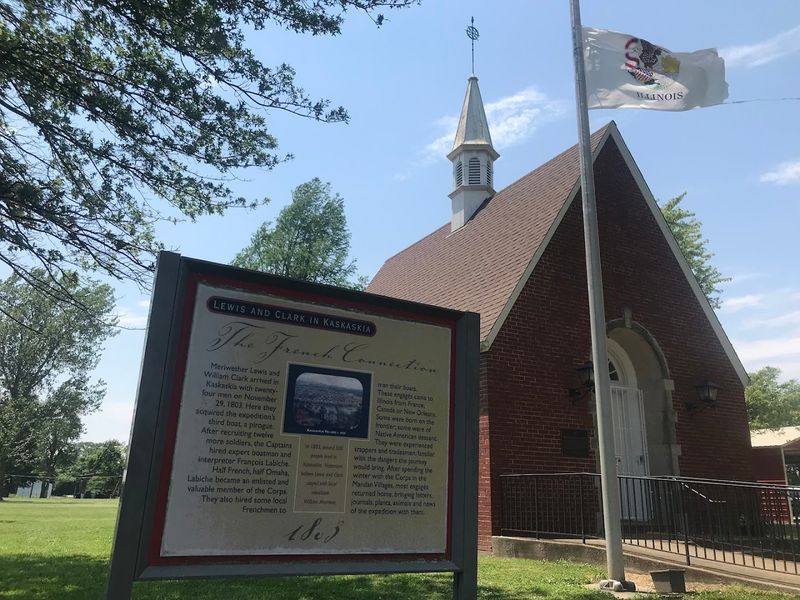
Hidden away in the historic village of Kaskaskia on Kaskaskia Island, the Kaskaskia Bell State Memorial on First Street protects one of the most symbolically significant objects in American history.
The bell, cast in France in 1741 and given to the Illinois missions by King Louis XV, is known as the Liberty Bell of the West, a title earned through its role in the American Revolution.
When American forces under George Rogers Clark captured the British-held town of Kaskaskia in 1778 without firing a single shot, the bell rang out to celebrate the victory. That moment helped secure the Northwest Territory for the newly forming United States.
The bell has survived floods, wars, and the complete disappearance of the original town of Kaskaskia, which was eventually swallowed by the Mississippi River.
The memorial building is small and easy to overlook, but the experience of seeing this historic bronze bell up close is genuinely moving for anyone who appreciates early American history.
Prairie du Rocher itself is a beautifully preserved French colonial village, and pairing this stop with a visit to nearby Fort de Chartres makes for an exceptionally rich historical day trip through southern Illinois.