
8 Abandoned Places In Maine Worth Exploring For A Thrilling Adventure
Maine has a talent for hiding the kind of history that makes me reach for a flashlight and immediately question every scary movie I have ever watched. The first time I walked into an old concrete passageway, I told myself I was being adventurous.
Five minutes later, every dripping sound had me looking over my shoulder like the walls were planning something. That little jolt of mystery is exactly what makes these places so much fun to explore.
Rusting locomotives still rest deep in the woods, while traces of vanished communities linger beneath quiet water. I love trips that leave me curious long after I get home, especially when the scenery is just as memorable as the story.
These eight adventures reveal a stranger, moodier side of Maine that deserves a closer look.
1. Battery Steele, Peaks Island
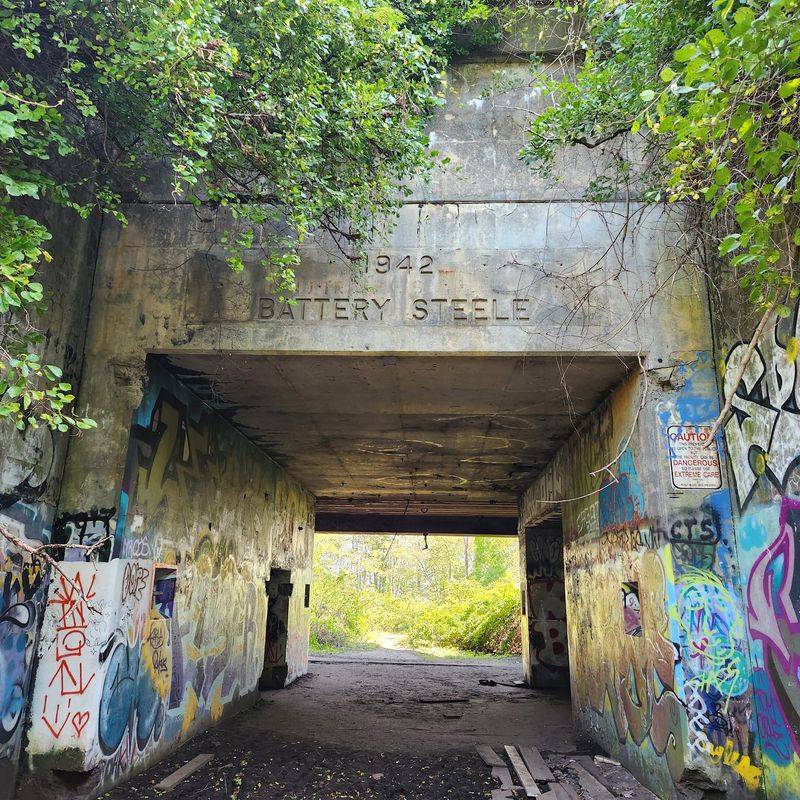
Hop on a ferry from Portland, cruise three miles across Casco Bay, and you land on Peaks Island where Battery Steele waits like a quiet giant. This concrete fortress went up in 1942 to guard against a possible German attack during World War II.
During World War II, more than 800 soldiers served on the wider Peaks Island military reservation, with Battery Steele forming one of its key defenses. Today it sits inside a 14-acre preserve, and it even made the National Register of Historic Places in 2005.
Walking through its tunnels feels like stepping into another world. The walls are eighteen inches thick, and a 300-foot corridor links the old gun spots together.
Some rooms hold several feet of water, so watch your step and definitely pack a flashlight for the shadowy insides.
Climb on top of the structure and you get sweeping ocean views, with three lighthouses often visible in the distance. You can reach the site on foot or by bike, and the half-mile loop trail sometimes gets muddy, though wooden planks help you cross the sloppy parts.
The surrounding preserve is more than just the battery. A red maple swamp, cattail marsh, and thick woods make it a favorite for spotting birds, wood frog tadpoles, and gray tree frogs.
Between the history, the eerie tunnels, and the wildlife, this stop mixes chills and beauty in one easy trip. Battery Steele proves that some of Maine’s best adventures hide just a short boat ride away.
2. Flagstaff Lake, Dead River Township
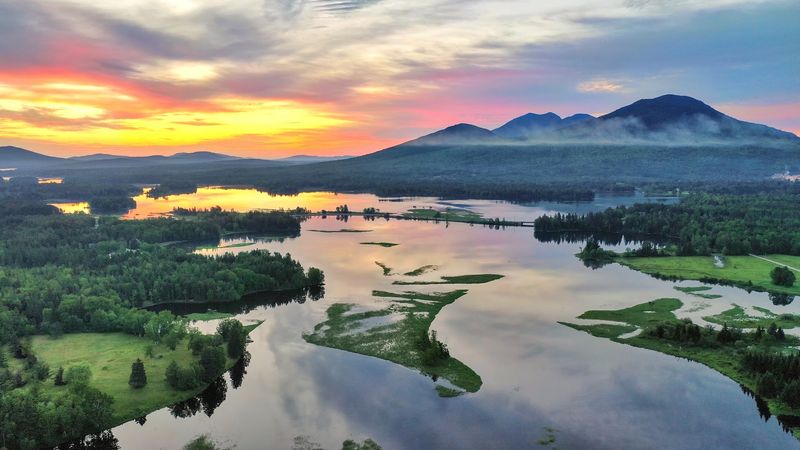
Beneath the shimmering waters of Flagstaff Lake in Dead River Township lies a story that few lakes can match. This huge man-made lake was created around 1950 when Long Falls Dam impounded the Dead River, storing water for hydroelectric facilities farther downstream.
What makes it so haunting is what the water covers. The former villages of Flagstaff, Dead River, and Bigelow sit submerged below the surface.
The name Flagstaff traces back to a flagpole raised by Benedict Arnold’s troops during their march to Quebec in 1775.
Before the water rose, families had to pack up and move. Homes and businesses were taken apart, relocated, or simply abandoned, and many folks started fresh in nearby towns like Eustis and Stratton.
Even the cemeteries were carefully moved.
When water levels drop, sharp-eyed explorers can spot old foundations, roads, and rusting farm equipment peeking through the shallows. Pontoon boat tours point out these underwater landmarks, giving you a window into a town that vanished.
There is plenty to do above the surface too. Boating, swimming, fishing, kayaking, and canoeing are all popular here, and the lake is part of the Northern Forest Canoe Trail.
Free primitive campsites are available around parts of Flagstaff Lake, with some offering fire rings and pit toilets. Flagstaff Lake blends outdoor fun with a mystery hiding just beneath your paddle.
3. Fort Popham State Historic Site, Phippsburg
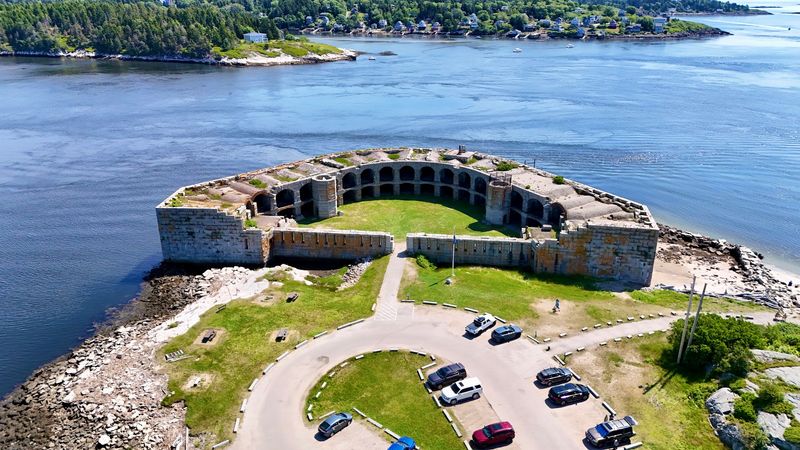
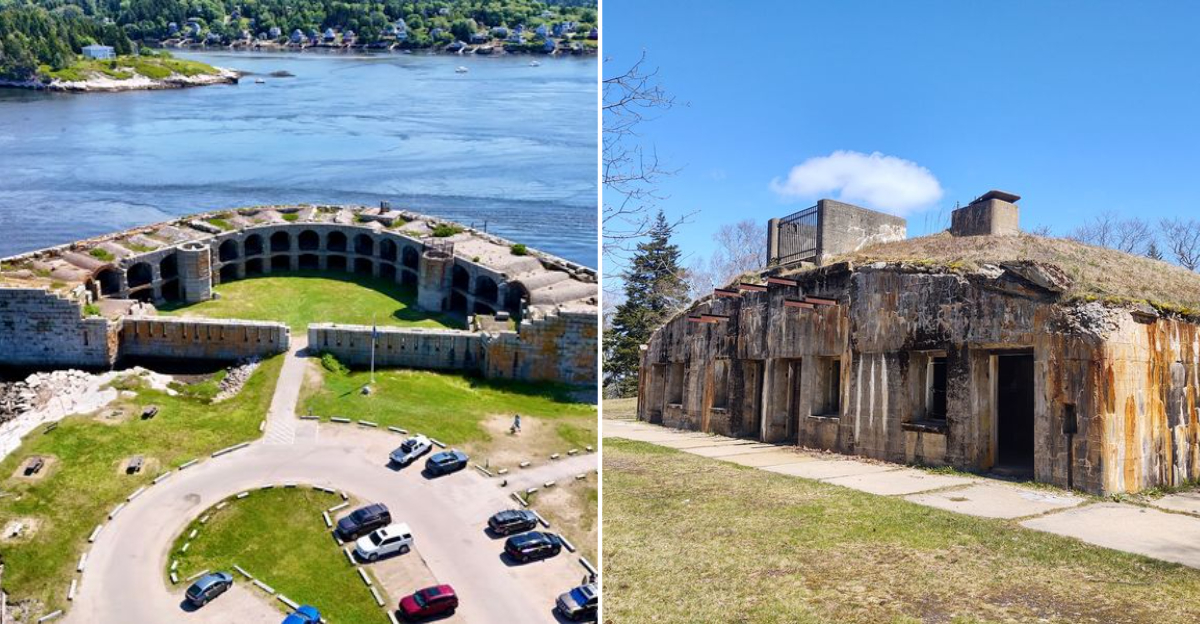
Standing guard at the mouth of the Kennebec River, Fort Popham is a huge granite fort that was never quite finished. Builders started work in 1861 to protect the shipbuilding town of Bath and the state capital in Augusta during the Civil War era.
Made from massive granite blocks quarried on nearby Fox and Dix Islands, the fort was meant to hold three tiers of guns, though only two were ever completed. Construction stopped suddenly in 1869 because new rifled cannons could punch right through its walls.
The fort takes its name from George Popham, who led the short-lived Popham Colony nearby in 1607. Over the years it saw light use during the Spanish-American War and World War I, and it joined the National Register of Historic Places in 1969.
This crescent-shaped fortress stretches nearly 500 feet around, with walls towering 30 feet high. You can explore the vaulted granite rooms that once held cannons and climb the winding spiral staircases inside the towers.
Bring a flashlight, because the dark inner passages are wonderfully spooky, and water seepage has even started forming tiny stalagmites like a cave. Signs around the fort explain its history as you wander.
Outside, you might spot otters, seals, and seabirds, and the shoreline is a well-known striper fishing spot. Pack a picnic and pair your visit with nearby Popham Beach or Fort Baldwin for a full day.
4. Eagle Lake And West Branch Railroad
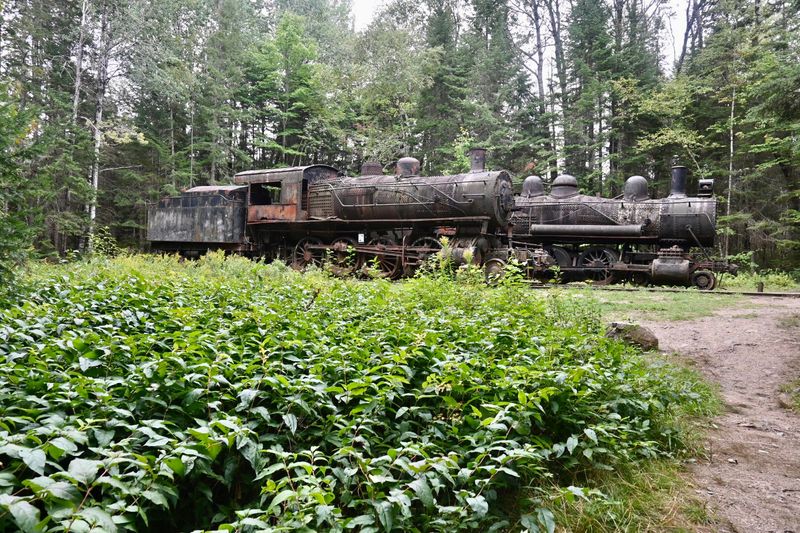
Way out in the untamed North Maine Woods, on the shores of Eagle Lake in Northwest Piscataquis County, two rusting steam locomotives sit quietly in the forest. Locals call them the ghost trains, and reaching them is half the adventure.
This forest railway ran from 1927 to 1933, hauling huge loads of pulpwood from the Allagash River drainage to the Penobscot River system. It replaced an older steam-powered tramway that had moved logs between Eagle and Chamberlain Lakes since 1902.
Building the railroad was an incredible feat. Two 100-ton steam locomotives, miles of steel rails, and sixty train cars were dragged overland by Lombard tractors in the dead of winter.
By 1933, changing economic conditions had made the remote railroad operation no longer worthwhile, and it was abandoned. The two locomotives were too costly to haul out of such a remote place, so they were simply left behind.
A shed once sheltered them, but it burned down in 1969. Since then, conservation crews have painted the engines and removed asbestos to help them survive the weather.
Getting here still takes planning, with most road visitors traveling remote logging roads before hiking the final stretch, while paddlers can approach through Eagle Lake. Once there, you might also find bits of the old tramway, including track pieces, clamps, and giant boilers.
Please leave every artifact right where it rests. That way this rusty slice of Maine’s logging past stays waiting for the next explorer.
5. Fort Baldwin, Phippsburg
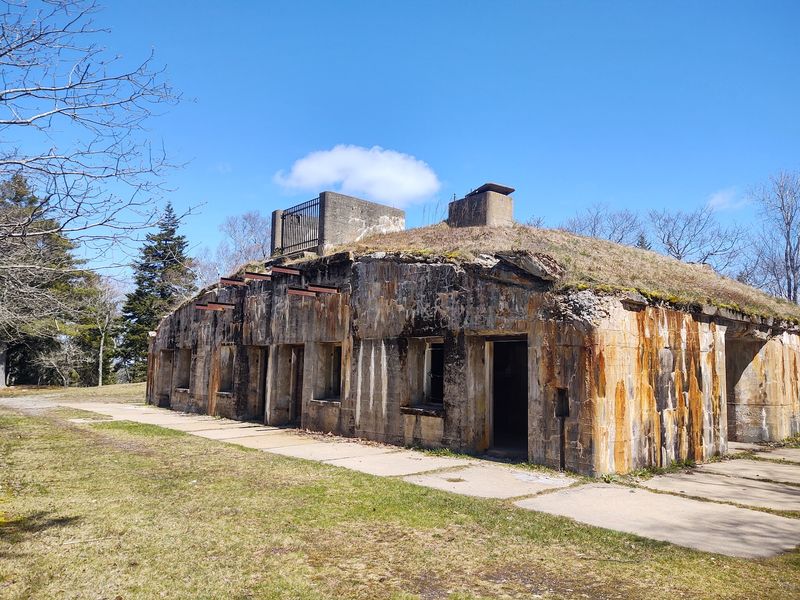
Perched atop Sabino Hill in Phippsburg, Fort Baldwin is a moody concrete relic from the early 1900s. Built between 1905 and 1912, it was named for Revolutionary War engineer Jeduthan Baldwin and placed to protect the Kennebec River and the busy Bath Iron Works.
Unlike its granite neighbor Fort Popham, this fort was made of reinforced concrete and earth. Designers built the batteries partly below grade and covered them with earth, making much of the installation harder for approaching ships to spot.
Three gun batteries called Cogan, Hardman, and Hawley held 3-inch and 6-inch guns. The fort never fired in battle, but soldiers manned it during both World Wars, and its five-story fire control tower watched for German U-boats.
Maine acquired the former military property in the 1920s, and Fort Baldwin was added to the National Register of Historic Places in 1979. Today the concrete batteries are slowly decaying, with water dripping into forgotten rooms as nature creeps back in.
The tall fire control tower is gated off for safety, but it still dominates the hilltop even as trees grow up around it. You can wander the empty concrete structures and picture the soldiers who once stood watch here.
Several trails wind through the six-acre site, including the Perkins Farm Trail that climbs gently to the top. For the clearest views of the crumbling architecture, visit in late fall once the leaves have dropped.
Combine this stop with nearby Fort Popham and Popham Beach, and you have got yourself one memorable day of history hunting.
6. Perkins Township, Swan’s Island
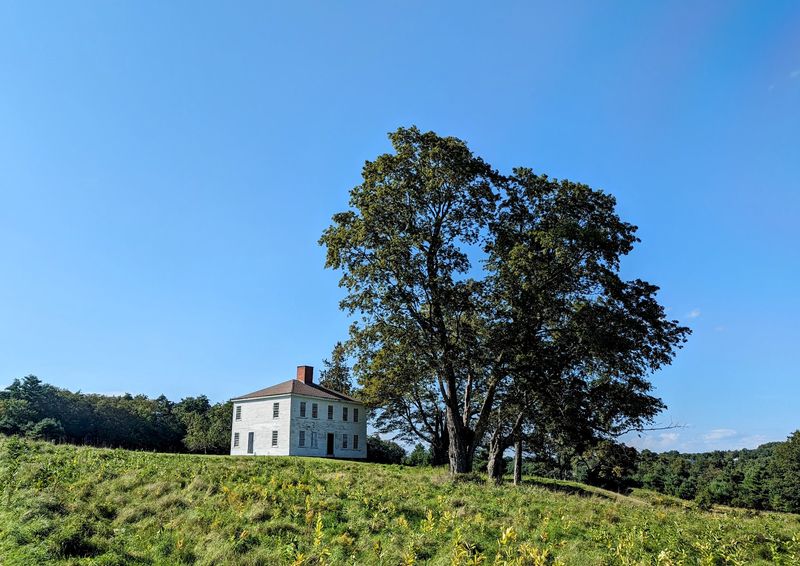
Perkins Township, better known as Swan Island, is a strange and wonderful mix of ghost town and nature preserve. It sits in the Kennebec River between the towns of Richmond and Dresden in Sagadahoc County.
Once nearly 100 people lived here. Incorporated in 1847, the community thrived on shipbuilding, farming, and ice harvesting, and it even had its own government, schoolhouse, and cemeteries.
By 1918 there were not enough men to fill town offices, so the town was disincorporated. The Great Depression and river pollution sped up its decline, and by the mid-1940s the last residents had left.
Today the island is the Steve Powell Wildlife Management Area, looked after by the Maine Department of Inland Fisheries and Wildlife. You can explore five well-preserved historic houses from the 1700s and 1800s, along with old cellar holes and roads.
One highlight is the Gardiner-Dumaresq House from around 1763, a peek at true Colonial architecture. History and wildlife share the island in a way you rarely see anywhere else.
Outdoor lovers get seven miles of hiking trails and a 4.5-mile dirt road perfect for mountain biking. Keep your eyes open for bald eagles, wild turkeys, and white-tailed deer, while visitors under 16 can fish the island’s designated children’s fishing pond.
Ten free Adirondack shelters welcome campers from May to October, complete with fire pits and drinking water. You reach the island by private boat or paddlecraft from Richmond, making the trip feel like a true escape.
7. Goddard Mansion Ruins, Cape Elizabeth
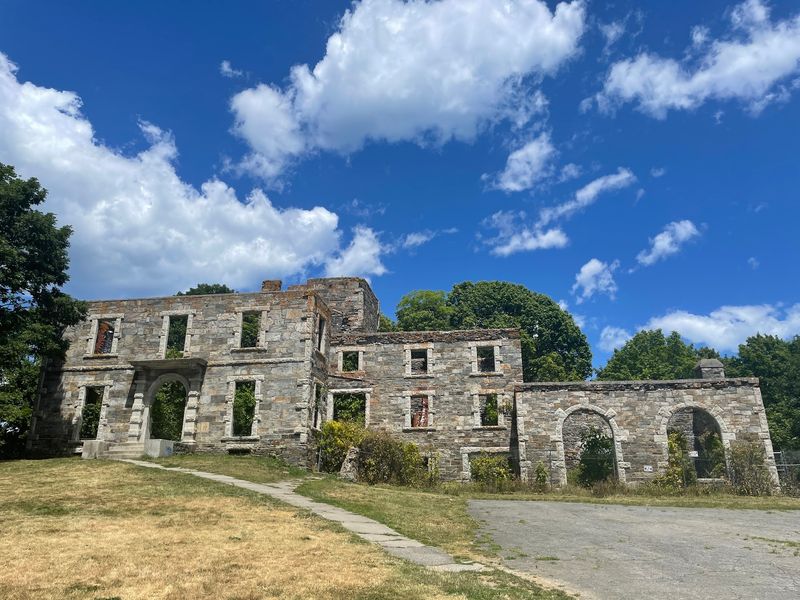
Few ruins look as dramatic as the roofless stone shell of Goddard Mansion at Fort Williams Park in Cape Elizabeth. Set overlooking Casco Bay and the famous Portland Head Light, this old villa still turns heads.
The Italianate mansion was finished between 1853 and 1859 for John Goddard, a wealthy lumber baron and Civil War Colonel. Its native stone walls and white granite trim made it a grand private home.
Things changed in 1900 when the U.S. Army bought it while expanding Fort Williams.
Soldiers used it as quarters for married officers and even ran an officers’ club in the basement.
After Fort Williams closed in the early 1960s, the town of Cape Elizabeth took over the property. Years of neglect, vandalism, and small fires left the mansion in rough shape.
Instead of paying for a costly restoration, the town made an unusual choice in 1981. They did controlled burns of the interior to remove unstable wooden parts, leaving behind the majestic stone skeleton you see today.
The ruins are now fenced off for safety, but public trails wind close enough for you to admire this picturesque wonder. Photographers adore it, and couples even choose it as a backdrop for weddings.
A visit here feels both beautiful and a little wistful as you imagine the grand rooms that once filled the space. Pair it with the park’s military batteries or the nearby Portland Head Light for a perfect afternoon.
8. Kennebec Arsenal, Augusta
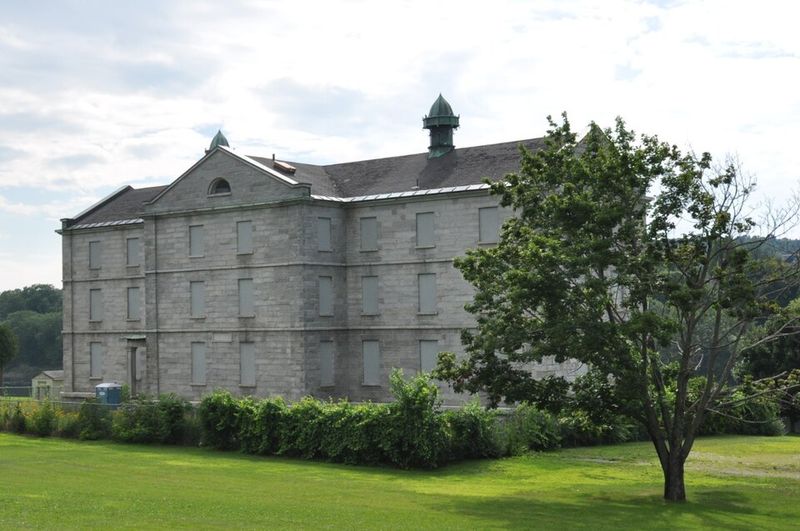
On the east bank of the Kennebec River in Augusta stands the Kennebec Arsenal, a sprawling 41-acre complex of granite buildings full of stories. Built between 1828 and 1838, this federal arsenal answered fears left over from the War of 1812 and border disputes with British North America.
Its riverside spot made supply by boat easy. The complex stored munitions and housed troops, showing off Greek Revival officer quarters, barracks, and magazines.
The arsenal helped supply weapons for the Mexican-American and Civil Wars. Its importance faded after the border with New Brunswick was settled in 1842.
The Army formally left the arsenal by 1901, and in 1905 the property became part of the Maine State Hospital, later called the Augusta Mental Health Institute. During this time the wooden structures were removed and the granite buildings were reused for patients.
The hospital closed in 2004, and the whole property sold to a private developer in 2007. Named a National Historic Landmark District in 2000, it is celebrated as the most intact early 1800s munitions depot in the country.
Some buildings sit empty and worn today, though efforts to preserve them continue. You can wander the grounds to admire the sturdy granite architecture and enjoy scenic river views.
Photographers especially love the soft light of early morning or late afternoon here. Nearby public areas and the Kennebec River trail corridor offer legal exterior views of the historic complex.