
12 Abandoned Railroads In Pennsylvania That Tell Stories From A Forgotten Era
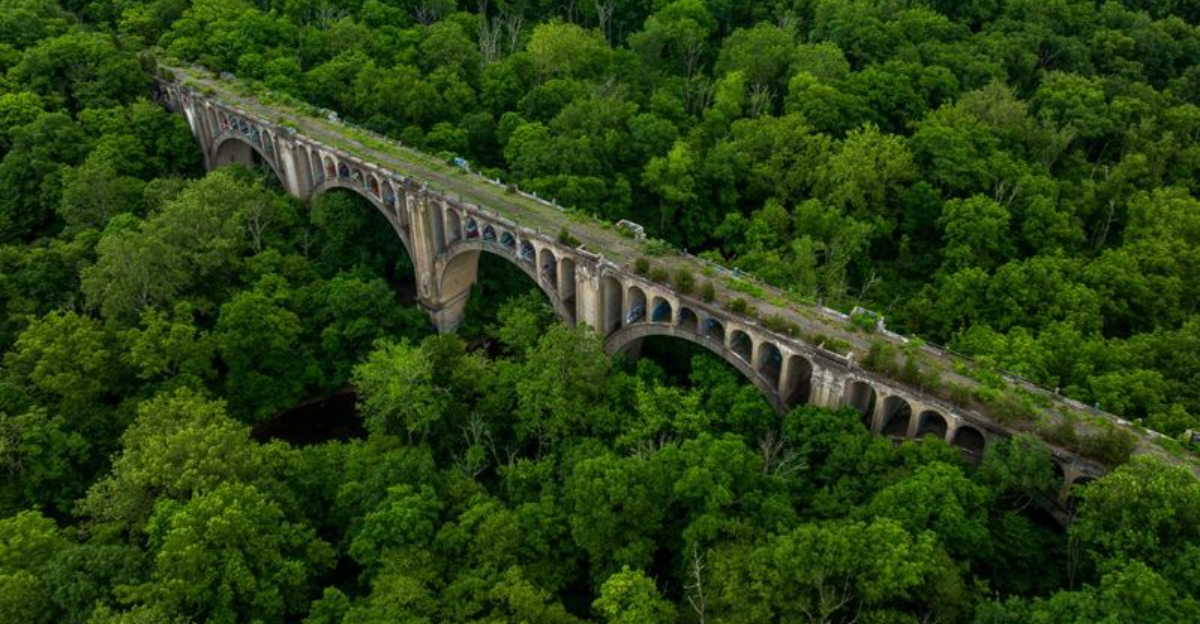
Pennsylvania’s railroads once thundered through valleys and over mountains, carrying coal, lumber, and dreams of prosperity.
Today, many of these iron giants sit silent, their tracks reclaimed by nature and time.
I’ll never forget the first time I stumbled upon rusted rails disappearing into a forest—it felt like discovering a secret passage to the past.
These abandoned railroads aren’t just forgotten infrastructure, they’re storytellers whispering tales of boom towns, industrial might, and the communities that thrived alongside them.
1. The Ghost Town Trail – Former Cambria & Indiana Railroad
Walking this trail feels like stepping into a time machine where coal mining towns once buzzed with life. The Ghost Town Trail stretches 46 miles through the heart of Indiana and Cambria Counties, connecting communities that literally vanished when the coal ran out. I remember biking past old foundations and wondering about the families who called these places home.
Nature has reclaimed most of the original railroad infrastructure, but you can still spot remnants if you look carefully. Old telegraph poles stand like sentinels, and occasional rail spikes peek through the gravel path. The trail passes through nine ghost towns, each with its own story of rise and fall tied to the coal industry.
Today, it’s a peaceful recreation path perfect for hiking and cycling adventures.
2. Pine Creek Rail Trail – Former Jersey Shore, Pine Creek & Buffalo Railway
Carved through what locals call the Grand Canyon of Pennsylvania, this trail delivers jaw-dropping scenery at every turn. The original railroad hauled lumber and coal starting in the 1880s, but Mother Nature has taken over with spectacular results. Pine Creek babbles alongside much of the route, creating a soundtrack that beats any playlist.
I once spent an entire afternoon just watching hawks circle above the gorge walls, which tower hundreds of feet overhead. The trail runs for 62 miles, making it one of the longest rail trails in the state. Spring wildflowers blanket the corridor, while autumn transforms it into a painter’s palette of reds and golds.
Wildlife sightings are common, so keep your eyes peeled for deer and even black bears.
3. Allegheny Portage Railroad – Historic, Now Abandoned Route
Before tunnels and modern engineering, getting trains over mountains required serious creativity and muscle power. This engineering marvel opened in 1834 as part of a canal system, using inclined planes and stationary steam engines to haul canal boats over the Allegheny Mountains. Seriously, they pulled entire boats up mountainsides!
The National Park Service now preserves this site, and visiting feels like attending an outdoor museum of transportation history. Original stone culverts and the Lemon House tavern still stand as monuments to ambitious infrastructure dreams. I love imagining the passengers’ faces as they were winched up steep slopes in what must have felt like a carnival ride.
Educational exhibits help visitors understand this groundbreaking transportation system that connected Philadelphia to Pittsburgh.
4. Lehigh Gorge Scenic Corridor – Former Central Railroad Of New Jersey Line
Whitewater rafters and trail users now share space where coal trains once rumbled through one of Pennsylvania’s most dramatic landscapes. The Central Railroad of New Jersey carved this route through solid rock, creating a path that hugs the Lehigh River for 26 thrilling miles. Every visit reminds me why this corridor earned its scenic designation.
Sheer cliffs rise on one side while the river churns on the other, especially dramatic during spring runoff. The abandoned railroad grade provides front-row seats to nature’s power show without requiring technical climbing skills. Old tunnels and cuts through rock face showcase the determination of railroad builders who refused to let geology stop progress.
Mountain bikers particularly love the challenging terrain and constantly changing views.
5. Enola Low Grade Trail – Former Atglen & Susquehanna Branch
Built to avoid steep grades, this railroad earned its name by taking the long, flat route through Lancaster County’s beautiful farm country. The Pennsylvania Railroad constructed this branch to move freight efficiently, and the gentle terrain now makes it perfect for families with young children. My nephew learned to ride his bike here without worrying about steep hills.
Stone arch bridges span small creeks, their craftsmanship still impressive more than a century later. The trail passes through Amish farmland where you might see horse-drawn buggies and farmers working fields the traditional way. It creates an interesting contrast between old railroad technology and even older agricultural traditions.
Wildflowers bloom along the corridor in summer, attracting butterflies and providing natural beauty.
6. Butler-Freeport Community Trail – Former Butler Branch Of The PRR
Connecting communities that grew up around the railroad, this trail preserves the social fabric that trains once stitched together. The Pennsylvania Railroad’s Butler Branch served this region for decades, and locals still remember the whistle echoing through valleys. I met an elderly gentleman who recalled his father working as a conductor on this very line.
The 21-mile trail winds through forests and past old industrial sites that hint at the area’s manufacturing heritage. Several restored railroad stations along the route now serve as trailheads and community gathering spots. Spring brings chorus frogs singing from wetlands that have reclaimed former rail yards.
Local volunteers maintain the trail beautifully, adding benches and interpretive signs that share railroad history with new generations of visitors.
7. Oil Creek State Park Railway Remnants – Former Oil Creek Railroad
Where America’s oil industry was born, this railroad hauled liquid gold that changed the world forever. The Oil Creek Railroad served the nation’s first oil boom in the 1860s, when fortunes were made and lost faster than you could drill a well. Walking through the park, you can almost hear the chaos of boomtown life.
Old railroad grades wind through the state park, passing sites where derricks once covered hillsides like mechanical forests. The park preserves this incredible industrial heritage while allowing nature to heal the scars of extraction. I always stop at the overlooks to imagine the valley filled with wooden oil tanks and bustling workers.
A tourist railroad now operates seasonally, offering rides through this historically rich landscape on restored vintage equipment.
8. Switchback Railroad (Jim Thorpe) – One Of The First Railroads In The U.S., Now Abandoned
Originally built in 1827 to haul coal down Mauch Chunk Mountain, this railroad later became a tourist attraction that rivaled Niagara Falls in popularity. Gravity powered the descent while mules pulled empty cars back up—until someone realized tourists would pay for the thrill ride! My grandfather rode it as a kid and called it better than any modern rollercoaster.
Portions of the original grade still snake up the mountainside, visible from overlooks around Jim Thorpe. The engineering was revolutionary for its time, using a series of inclined planes and level sections. Hikers can follow parts of the route, discovering stone foundations and remnants of the infrastructure that made this engineering wonder possible.
The town celebrates this heritage with museums and historical markers.
9. Abandoned Tunnels Of The South Penn Railroad – The Railroad That Never Was
Imagine spending millions to build a railroad and then just walking away before completion. The South Penn Railroad, backed by railroad tycoon William Vanderbilt, was supposed to compete with the Pennsylvania Railroad. Construction started in the 1880s with tunnels blasted through mountains, but financial troubles and competing interests ultimately brought the project to a halt.
Nine tunnels were completed but never saw a single train, earning this the nickname “Vanderbilt’s Folly.” I’ve explored several of these atmospheric passages where you can still see drill marks on the walls and walk through complete darkness. The Pennsylvania Turnpike eventually used some tunnels, but others remain hidden in the woods.
Urban explorers and history buffs search for these forgotten passages, though caution is essential around old structures.
10. Kinzua Bridge – Spectacular Ruins Of A Railroad Marvel
Once the highest railroad bridge in the world, this engineering masterpiece now stands as a monument to both human achievement and nature’s power. Built in 1882 and rebuilt in 1900, the Kinzua Viaduct soared 301 feet above the valley floor, carrying trains across what seemed like thin air. A tornado destroyed most of it in 2003, creating an unintentionally dramatic landscape.
The state park preserved the ruins and built a glass-floored skywalk on the remaining towers that’ll test your fear of heights. I’ll admit my knees got wobbly looking down through that glass! Twisted steel towers lie in the valley like fallen giants, creating a surreal scene.
Interpretive exhibits tell the bridge’s story, and the views from the observation deck are absolutely breathtaking.
11. Lackawanna Cut-Off – Engineered Perfection Left To Decay
Built to eliminate curves and grades, this railroad represented engineering at its finest when completed in 1911. The Delaware, Lackawanna and Western Railroad spared no expense, constructing massive concrete viaducts and perfectly graded track that allowed trains to fly between New York and Buffalo. Then highways stole the traffic and this masterpiece was abandoned.
Exploring the concrete structures feels like discovering ancient ruins, except these are barely a century old. The Paulinskill Viaduct and other massive bridges still stand as testaments to an era when railroads built infrastructure to last forever. Restoration efforts are underway to potentially bring trains back to portions of this route.
Photography enthusiasts love capturing the geometric beauty of the Art Deco-influenced concrete work against natural settings.
12. Reading Railroad Abandoned Lines – Industrial Heritage Frozen In Time
Scattered across eastern Pennsylvania, abandoned Reading Railroad branches tell stories of the coal and iron industries that built America. The Reading Company operated hundreds of miles of track, and many spurs to mines and factories now sit silent and rusting. I stumbled across one such line behind a shopping center, rails still in place but surrounded by trees.
Some sections have been converted to trails while others remain industrial archaeological sites waiting to be discovered. Old signals, crossing gates, and even locomotives sit abandoned in various locations, slowly being consumed by vegetation. The Reading Railroad’s famous monopoly on anthracite coal transportation made it powerful, but changing energy sources sealed its fate.
Urban explorers and railroad historians document these remnants before they disappear completely from the landscape.