
21 Alabama Dinner Table Traditions From The 1960s That Would Confuse Today’s Kids
Growing up in Alabama during the 1960s meant sitting down to meals that looked and felt completely different than what you see today.
Sunday dinners came with rules nobody questioned, and the table itself was a stage for rituals that made perfect sense back then but would leave modern kids scratching their heads.
I remember visiting my grandmother’s house and watching her pull out dishes and foods that seemed almost magical in their strangeness.
Let me walk you through the quirks, customs, and curious eats that defined Alabama dinner tables six decades ago.
1. Sunday dinner at noon
Right after church let out, families rushed home to the biggest meal of the week, served around noon and called dinner. The evening meal was lighter and went by the name supper, a distinction that has mostly disappeared today.
Fried chicken, heaps of fresh vegetables, and homemade pie crowned the table every single Sunday. This midday feast was non-negotiable, a weekly anchor that brought everyone together before the afternoon stretched out long and lazy.
2. Covered-dish spreads at church
Church homecomings and Decoration Days turned into epic potlucks, with tables practically groaning under the weight of casseroles, vegetables, and desserts.
Families spread blankets under the trees or packed into fellowship halls, sharing food and stories until the sun dipped low.
I still remember the thrill of peeking under foil-covered dishes, trying to guess which neighbor brought the best banana pudding. It was community dining at its finest, and nobody left hungry.
3. The meat-and-three plate
One protein, three sides: that was the grammar of supper, whether you sat at home or slid into a café booth. Pot roast or a pork chop anchored the plate, flanked by macaroni and cheese, greens, and a wedge of cornbread.
Sweet tea washed it all down, and the formula never got old. This straightforward approach to mealtime made ordering easy and ensured every plate was balanced, filling, and deeply satisfying.
4. Pitchers of sweet tea that never ran dry
Iced, pre-sweetened, and poured from a sweating pitcher, sweet tea was the unofficial house beverage of the South. It sat on the table all meal long, refilled again and again until everyone had their fill.
Its place in Southern identity is actually newer and more layered than most folks realize, but by the 1960s, it was already a staple.
Kids and adults alike reached for it first, making it as essential as salt or pepper.
5. Skillet cornbread with no sugar
Cast-iron cornbread came to the table straight from the skillet, its edges crackly and golden, its crumb tender and ready to soak up juices. Sugar had no place in the batter, a point of pride that separated serious cooks from amateurs.
Every bite was savory, slightly grainy, and perfect for mopping up potlikker or gravy. The skillet itself was often older than the cook, seasoned by decades of use and handed down through generations.
6. Potlikker debates: dunk or crumble
When greens hit the table, so did the rich, flavorful cooking liquid called potlikker. The question was never if you would eat it, but how: some folks dunked hunks of cornbread straight into the bowl, while others crumbled theirs and let it soak.
Arguments over which method was correct could stretch through the entire meal. I watched my grandfather dunk and my grandmother crumble, and neither one ever budged an inch.
7. Pepper-vinegar on the table
A slender bottle of hot pepper vinegar sat beside the salt shaker, its contents sharp, tangy, and ready to wake up any dish. Peppers steeped in vinegar gave greens and black-eyed peas a bright, spicy kick that folks craved with every bite.
Passing the pepper-vinegar was as common as passing the bread, and every family had their own bottle, often homemade. It was a condiment that spoke to resourcefulness and a love of bold flavor.
8. New Year’s luck on a plate
January first meant black-eyed peas, collards, cornbread, and potlikker, a combination believed to bring prosperity and good fortune for the year ahead.
Every ingredient carried its own symbolism: peas for coins, greens for paper money, cornbread for gold.
Leftovers stretched into the next day, a bonus that felt like the luck was already working. Missing this meal was unthinkable, a superstition taken seriously by even the most skeptical eaters.
9. Congealed Jell-O salads in gleaming molds
Shimmering rings and domes of gelatin, sweet or savory, were the pride of mid-century hostesses. These congealed salads emerged from molds gleaming and cold, a fridge-chilled counterpoint to hot meats and vegetables.
Lime, cherry, and lemon flavors mingled with fruit cocktail, shredded carrots, or even cottage cheese. They looked impressive and tasted like a science experiment, but nobody dared skip them at a proper dinner party.
10. Canned-pear salad crowned with cheddar
A lettuce leaf cradled a pear half from a can, topped with a spoonful of mayo and a shred of sharp cheddar. Simple, sweet-savory, and oddly satisfying, this combination appeared on countless Southern tables as a salad course.
I thought it was strange the first time I saw it, but one bite changed my mind. The contrast of creamy, tangy, and sweet made it weirdly addictive, even if it looked like something a kid dreamed up.
11. Tomato aspic: a savory gelatin
Tart, tomato-bright, and set firm, tomato aspic was a savory gelatin that puzzled picky eaters then and now. It signaled a company meal, something fancier than everyday supper, and hostesses served it with pride.
The texture was slippery, the flavor tangy, and the appearance bold red and jiggly. Kids often eyed it with suspicion, but adults appreciated its refreshing acidity alongside rich, heavy dishes.
12. Ambrosia for the holidays
Fresh citrus layered with sugar and coconut created ambrosia, a Christmastime tradition served from Grandma’s cut-glass bowl.
Sometimes dressed up with mini marshmallows or maraschino cherries, it was sweet, creamy, and festive.
The name means food of the gods, and during the holidays it felt like just that. Every spoonful tasted like celebration, a bright spot on the dessert table that disappeared fast.
13. Deviled eggs at every gathering
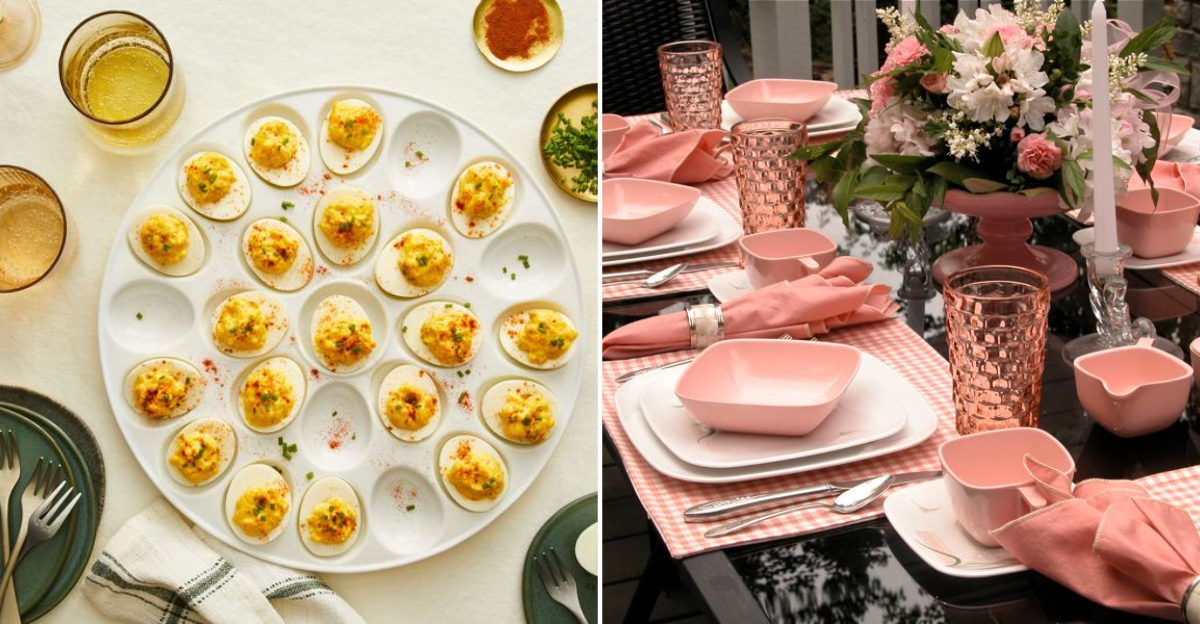
A dozen halved eggs, creamy and peppered, vanished before the platters made a full lap around the table. Deviled eggs were mandatory at every gathering, their filling whipped smooth with mayo, mustard, and a dusting of paprika.
I watched my mom pipe the yolk mixture back into the whites with a steady hand, making each one look perfect. They were the first thing to disappear and the last thing anyone forgot to bring.
14. Banana pudding under a meringue cloud
Layers of custard, bananas, and vanilla wafers came together in a dish that closed out countless suppers and potlucks.
Sometimes topped with a browned meringue, sometimes just chilled and simple, banana pudding was a non-negotiable dessert.
The wafers softened into the custard, creating a texture that was part cake, part pudding, all comfort. It was the dessert everyone hoped to see, and the one that always got scraped clean.
15. Saying the blessing before anyone lifted a fork
Hands clasped, heads bowed: grace set the tone before anyone lifted a fork. Whether whispered in the kitchen or spoken over a crowded table, the blessing was a ritual that marked the start of the meal.
Skipping it was unthinkable, even if you were starving and the food was getting cold. It was a moment of gratitude and unity, a pause that reminded everyone what mattered most.
16. Tupperware on the sideboard and at the table
From church suppers to weeknights, molded plastics and burping lids were modern marvels. Tupperware was everywhere, a status symbol born of the party boom that swept through living rooms across the South.
I remember my mom hosting Tupperware parties, and the excitement when a new set arrived. The containers kept food fresh, stacked neatly, and made packing leftovers feel almost glamorous.
17. Colored aluminum tumblers that turned drinks arctic-cold
Light as a feather and icy to the touch, those shimmering cups made sweet tea taste extra crisp. Aluminum tumblers came in every color, their metallic finish gleaming on the table and their chill lasting through the longest meals.
Kids loved them because they felt special, almost futuristic. Adults loved them because they were unbreakable and kept drinks cold without sweating all over the tablecloth.
18. Camp stew in big pots for a crowd
Also called Brunswick stew, Alabama’s camp stew was thick, smoky, and perfect for feeding a tableful. Pork, chicken, tomatoes, and corn simmered together in big pots, filling the air with a scent that drew everyone closer.
It was the kind of dish made for outdoor gatherings, ladled into bowls and eaten with cornbread. Every family had their own recipe, and every cook swore theirs was the best.
19. Duke’s mayo in everything
The tangy, sugar-free Southern icon sat ready for deviled eggs, pimiento cheese, and potato salad. Duke’s Mayo, with its legend beginning in 1917 thanks to Eugenia Duke, became the only mayo serious cooks would use.
Tomato sandwiches slathered with Duke’s were a summer staple, simple and perfect. Its creamy texture and sharp tang elevated everything it touched, making it a pantry essential in every Alabama kitchen.
20. Cream-of-something casseroles
Condensed-soup casseroles were reliable, affordable centerpieces that shone at potlucks and weeknight suppers. Think green bean casserole crowned with fried onions, or chicken and rice baked in cream of mushroom.
I watched my grandmother open can after can, mixing them with whatever she had on hand to create something warm and filling. These casseroles were comfort food at its most practical, and they never failed to satisfy.
21. Melmac and other unbreakable dishes
Bright, durable melamine dinnerware set many a casual table, standing up to everyday knocks and the chaos of family meals.
Melmac was practically indestructible, a blessing for households with kids who dropped plates and cups constantly.
The good china stayed tucked away for Sundays, but Melmac handled the rest of the week with cheerful resilience. Its bold colors and modern feel made it a symbol of mid-century practicality and style.