
Almost No One Outside Arkansas Realizes This Enormous Lake Exists
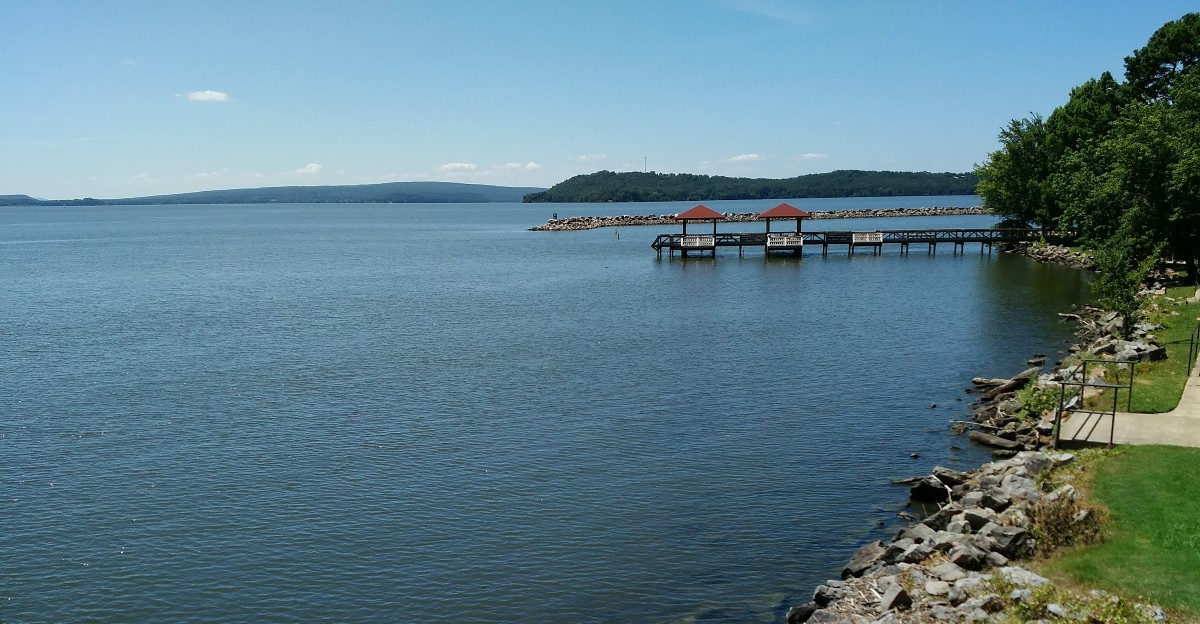
It is easy to assume a lake this large would announce itself long before you reach the shoreline. Instead, the road can keep its biggest view out of sight until the water suddenly opens beside you.
That reveal is part of the fun. The lake stretches toward distant ridges while barges move along a navigation channel that still plays an active role in the region.
Around the edges, anglers find quieter water and visitors can stop for broad views that feel surprisingly expansive. This Arkansas destination has more going on than its size suggests.
Rocky shoreline sections break up the scenery, and protected coves show a calmer side of the water when the main channel gets breezy. Stay late enough and sunset can completely change the mood.
The lake also has an interesting story, shaped by a navigation project that transformed this stretch of river into the vast body of water visitors see today.
Where The River Turns Into A Giant Lake
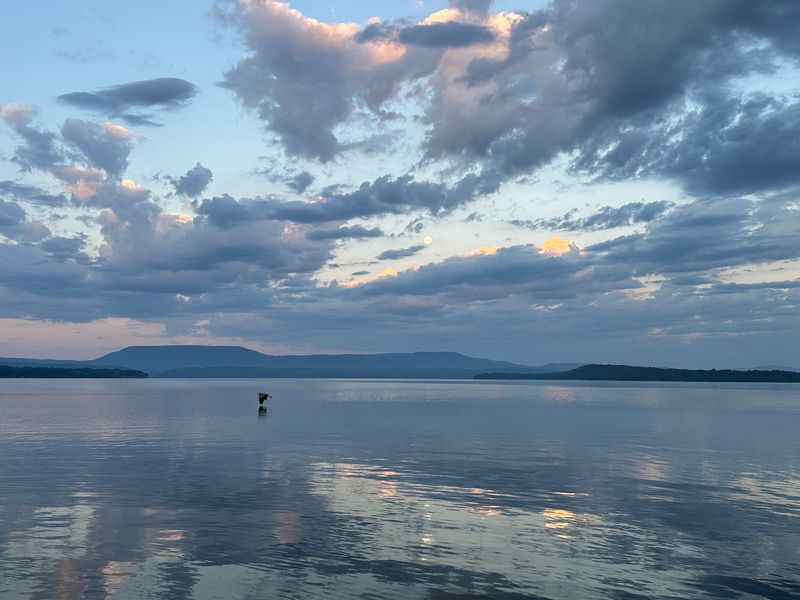
Long before anyone thought of it as a vacation spot, this stretch of water was simply the Arkansas River doing what rivers do, running shallow and unpredictable. Engineering changed that story completely, turning a working waterway into something far broader and calmer.
The transformation came with the navigation system built along the river, which raised water levels and spread them out across low ground. What used to be sandbars and channels became a reservoir measured in tens of thousands of acres, deep enough for commercial barges to pass through.
That dual purpose still shapes daily life here, since the lake is both a recreation area and a shipping route. Watching a loaded barge slide by while someone fishes from a nearby bank is one of the odder sights in the region, and I find that contrast genuinely charming.
Towboat traffic keeps the main channel busy, while side arms stay quiet enough for paddling. Because the water is river-fed, levels can shift with rainfall upstream, which regular visitors learn to check before launching.
Understanding that river origin explains almost everything about the shape of the shoreline, all those fingers and bays reaching inland. The lake in question is Lake Dardanelle, spread across Arkansas, USA, near Russellville.
Big Water With Mountain Views
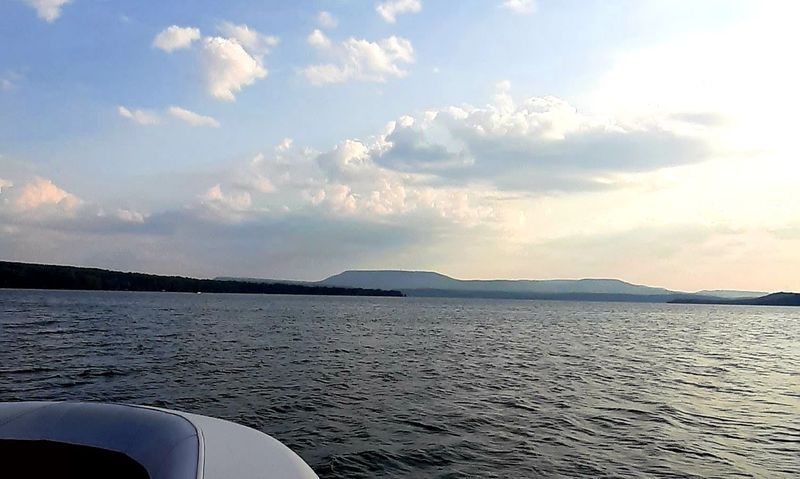
Mountains are not what most people expect when they picture a reservoir in the middle of the state. Yet the Arkansas River Valley delivers exactly that, with flat-topped peaks standing guard beyond the far shore.
Nebo rises to the south with its distinctive shape, and on clear days the higher ridges of the Ouachita region stack up behind it. The result is a horizon with actual layers, which gives photographs a depth that flat lakes simply cannot match.
Morning light tends to be softer and hazier, while late afternoon sharpens the ridgelines into crisp silhouettes. Boaters often notice the mountains more than the water itself, especially when crossing the widest open stretches near the main channel.
Nearby overlooks in the surrounding state parks give an entirely different perspective, letting visitors look down on the lake from above. Seeing the whole system spread out like a map helps explain just how enormous it really is.
Seasonal color adds another layer in late October, when hardwood slopes turn copper and gold above the waterline. The combination of scale and scenery keeps drawing people back long after the fishing gear gets packed away.
Quiet Coves Along The Shore
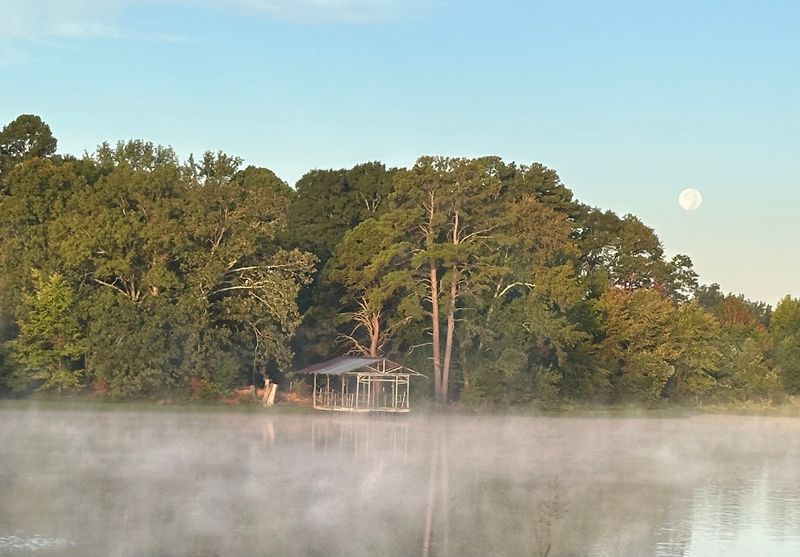
Tucked behind every wooded point sits a pocket of still water where the wind barely reaches. These sheltered arms are where the lake shows its gentler personality, far from the wake of passing barges.
Shoal Bay, Delaware, Piney Bay and other named inlets branch off the main body like side rooms in a very large house. Each one has its own character, some lined with standing timber, others opening into shallow flats thick with grass.
Anglers prize these spots because bass, crappie and catfish use the cover year round. Local tournaments have made the lake well known in fishing circles, and the quiet backwaters are usually where the winning fish come from.
Kayakers and canoe paddlers benefit even more, since the protected water stays calm when the open lake gets choppy. I always appreciate a lake that offers a plan B when the wind picks up.
Wildlife concentrates here too, with herons stalking the shallows and turtles lined up on half sunken logs. Early morning is when the coves feel most private, mist sitting low over water that barely moves at all.
Sunsets That Fill The Horizon
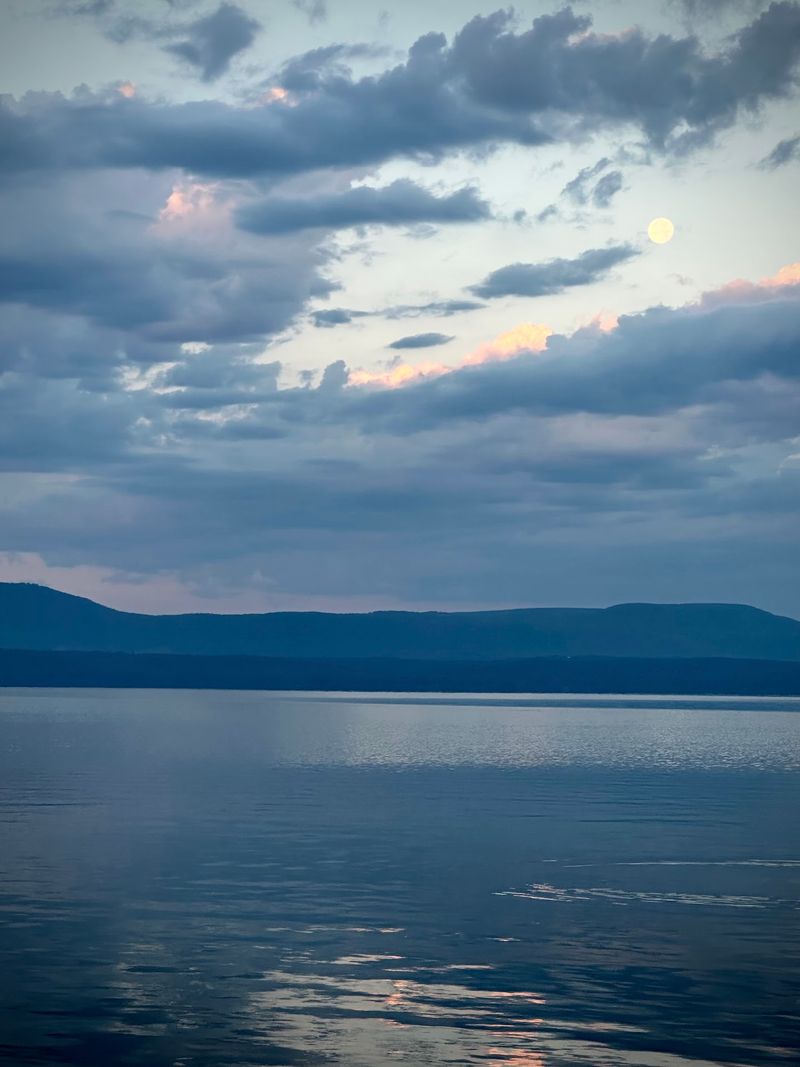
Evening is when the lake stops being a place to do things and becomes a place to simply sit. Wide open water gives the sky an enormous canvas, and the color spreads across it without anything getting in the way.
Because the lake stretches for miles east to west, the setting sun lines up beautifully with the main channel. Reflections run in a long unbroken streak toward whoever happens to be standing on the bank.
Summer sunsets tend toward hot oranges and deep pinks, while winter evenings lean into cooler purples and steel blue. Cloud cover after a storm often produces the most dramatic results of all.
Shoreline picnic areas and pavilions near Russellville give easy access without any hiking required. Several visitors describe pulling in for a short break and staying far longer than planned, which honestly sounds about right.
Photographers set up along the causeways and boat ramps where sightlines are clearest. Once the light fades, the water goes glassy and the whole valley settles into a hush that lingers well past dark.
Docks Stretching Into Open Water
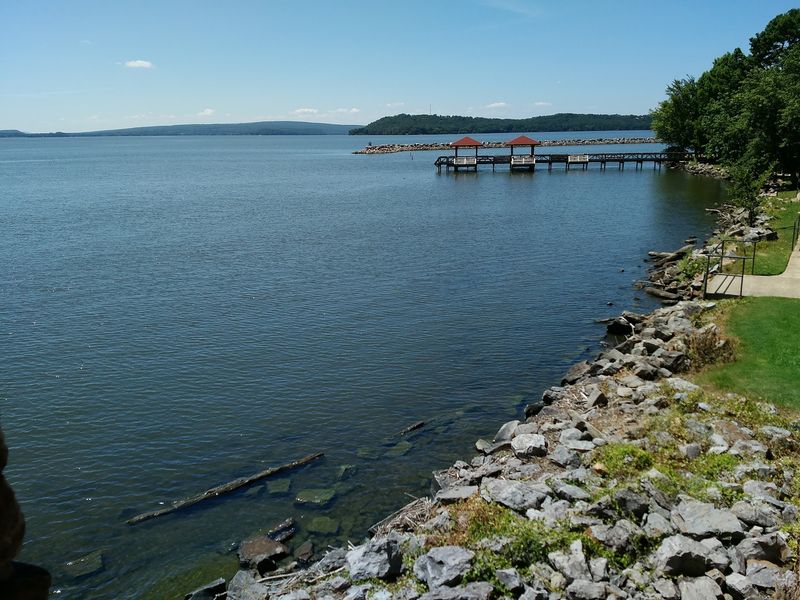
Wooden walkways reaching out over the shallows are part of the everyday furniture here. They let visitors get past the weeds and mud and stand directly above deeper, cooler water.
Boat ramps are scattered generously around the shoreline, which is one of the first things people notice about the lake. With that much surface area, launching close to your chosen fishing spot saves a surprising amount of time.
Fishing piers near the state park area give bank anglers a fair shot without needing a boat at all. Kids, folding chairs and tackle boxes tend to appear in equal numbers on warm weekends.
Some docks connect to short walkways over the water, useful for anyone who just wants a stroll and a view. A few spots are close enough to the navigation channel that passing towboats become the main entertainment.
Courtesy docks beside the ramps make loading easier when the wind is up. Watching someone back a trailer down a steep ramp remains a reliable source of free comedy at any busy launch.
Rocky Shores With A Wild Feel
Not every bank here is soft sand or grassy slope. Long sections are built from stacked gray stone, placed to hold the shoreline steady against wind and current.
Those rocky edges attract a different crowd entirely, including anglers who know that baitfish gather around submerged stone. Crappie and bass patrol these drop-offs, especially when water temperatures shift in spring and autumn.
Driftwood collects between boulders after high water, creating a slightly untamed look that feels older than the lake actually is. Sturdy shoes matter more than flip flops on this kind of ground.
Levee sections along the river side have been repaired and reinforced over the years, a reminder that this is managed water with real engineering behind it. Flooding has tested those defenses more than once.
Sandbars can build up near certain bay entrances, and boaters pay close attention to changing depths in those areas. Local knowledge tends to travel fast among people who launch here regularly.
Sunlight hitting wet stone late in the day turns the whole bank a warm silver-gray, which never fails to look good on camera.
Views That Seem To Go On Forever
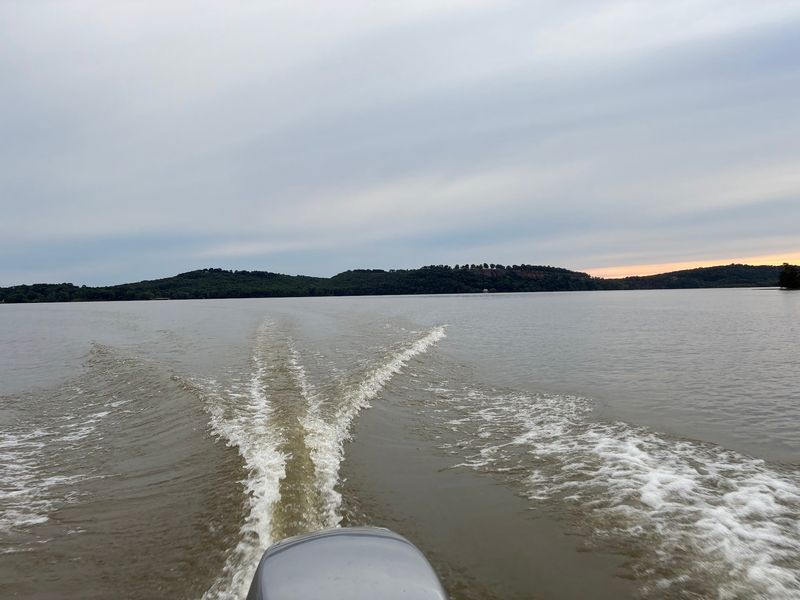
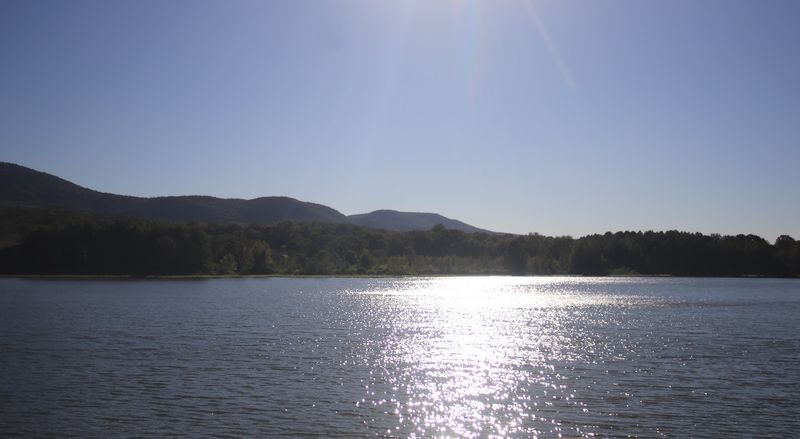
Scale is the first thing that surprises newcomers, and the second, and probably the third. Covering roughly thirty four thousand acres, the lake stretches for around fifty miles along the river corridor.
Standing at certain crossings, the far bank shrinks into a thin green line that blurs into haze. Boats out in the middle look like specks, which gives an immediate sense of how much room there is.
Wind has space to build across those open stretches, so afternoon chop can surprise anyone expecting pond-like conditions. Small craft operators usually plan crossings for calmer morning hours.
Bridges and highway causeways provide the easiest big-picture views for people who never leave dry land. Passing drivers on the nearby interstate corridor often have no idea what they are skimming past.
Multiple counties touch the water, and towns including Russellville, Dardanelle and Clarksville sit within its reach. I still find it remarkable that something this large stays off most travel radars.
Elevated overlooks nearby turn the whole thing into a living map, silver water threading between ridges. On calm days that view barely seems to move at all.
Wildlife Along The Water’s Edge
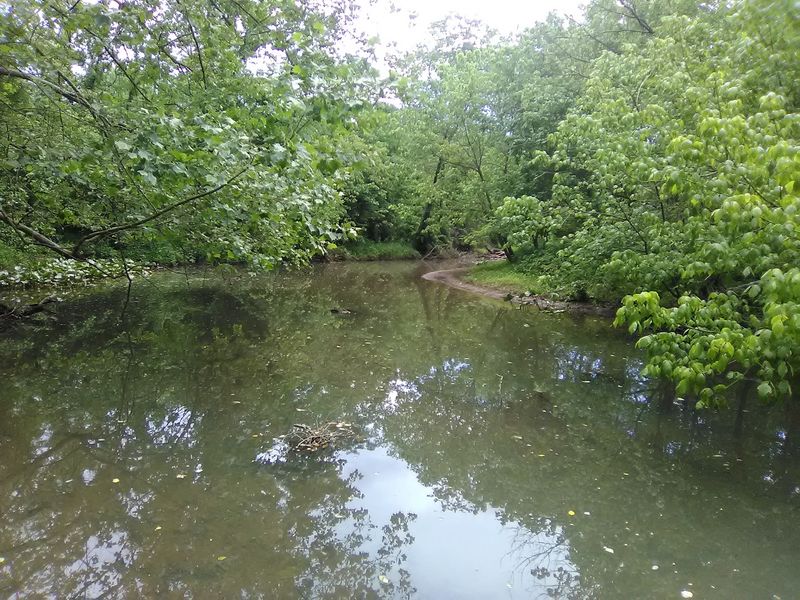
Herons get most of the attention, standing motionless in the shallows until something edible swims too close. Great blue and green herons both work these banks, along with egrets that glow white against dark water.
Bald eagles appear regularly in colder months, perching in bare trees near open water where fish are easiest to spot. Winter is prime time for anyone hoping to see one without much effort.
Waterfowl arrive in numbers as temperatures drop, filling backwater flats with ducks and geese. Ospreys take over in warmer seasons, hunting with a splash that carries across quiet coves.
Turtles line up on logs, deer slip down to drink at dawn, and beavers leave chewed stumps as calling cards. A visitor center in the area houses very large freshwater aquariums showing the fish that live below the surface.
Those tanks give kids a chance to see catfish and bass up close, which usually beats staring at a bobber for an hour. Binoculars earn their keep here more than almost any other piece of gear.
Mornings belong to the birds, and the soundtrack alone is worth an early alarm.