
An 1800s Cedar Log Fort Still Guards Maine’s Northern Border
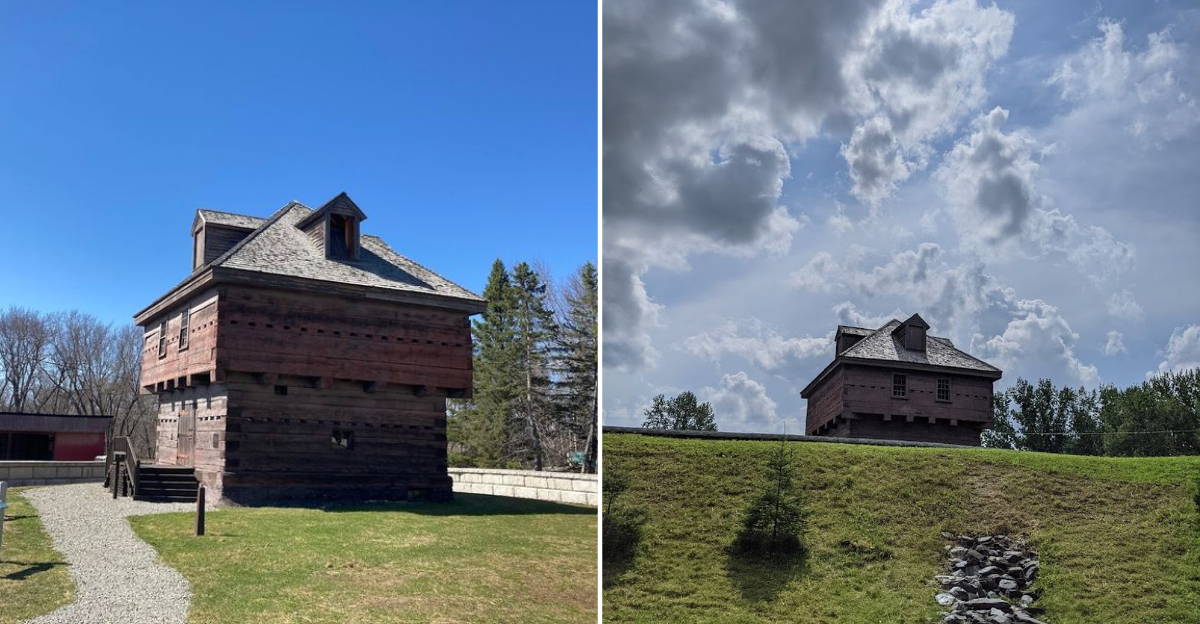
A nearly 200-year-old cedar blockhouse still stands in northern Maine, guarding a story most travelers never hear. Near the St. John River, this small wooden fort recalls a strange border crisis that nearly pushed the United States and Britain into war over timber, territory, and pride.
Built in 1839, its rough-hewn walls survived brutal winters, political tension, and generations of curious visitors. The site feels quiet now, but its past is anything but sleepy.
This was once a nervous edge of the nation, a place of militia movements, disputed maps, and watchful eyes turned toward New Brunswick.
If you’re drawn to forgotten history, rugged scenery, and places that feel almost hidden in plain sight, this corner of Maine delivers a surprisingly powerful story in one compact landmark.
The Aroostook War
Most people have never heard of the Aroostook War, and honestly, that makes it one of the most underrated stories in American history.
It was not a war with bullets flying, but it was absolutely a showdown. In the late 1830s, both the United States and Britain claimed ownership of the rich timberlands along the Aroostook River valley in northern Maine.
Tensions rose fast as American and British/New Brunswick lumbermen clashed over who had the right to cut timber in the region. Maine called up its militia, Congress authorized troops, and suddenly a remote corner of New England became the center of an international standoff.
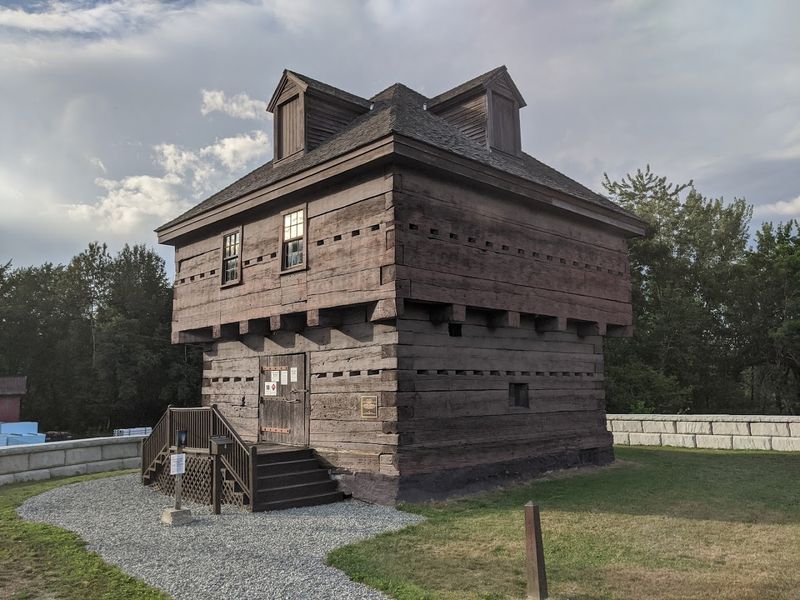
Fort Kent was built in 1839 directly because of this conflict, intended to serve as a military outpost protecting American interests on the border.
The dispute was eventually resolved through the Webster-Ashburton Treaty of 1842, which settled the boundary line peacefully. The fort never saw actual combat, but its very existence changed the map of the northeastern United States.
Cedar That Refused To Rot
Cedar is not just a pretty wood. It is one of the most rot-resistant, insect-repelling building materials that early 19th-century craftsmen could get their hands on in northern Maine.
The soldiers and laborers who built the Fort Kent blockhouse in 1839 chose their material wisely, and the results speak for themselves nearly 187 years later.
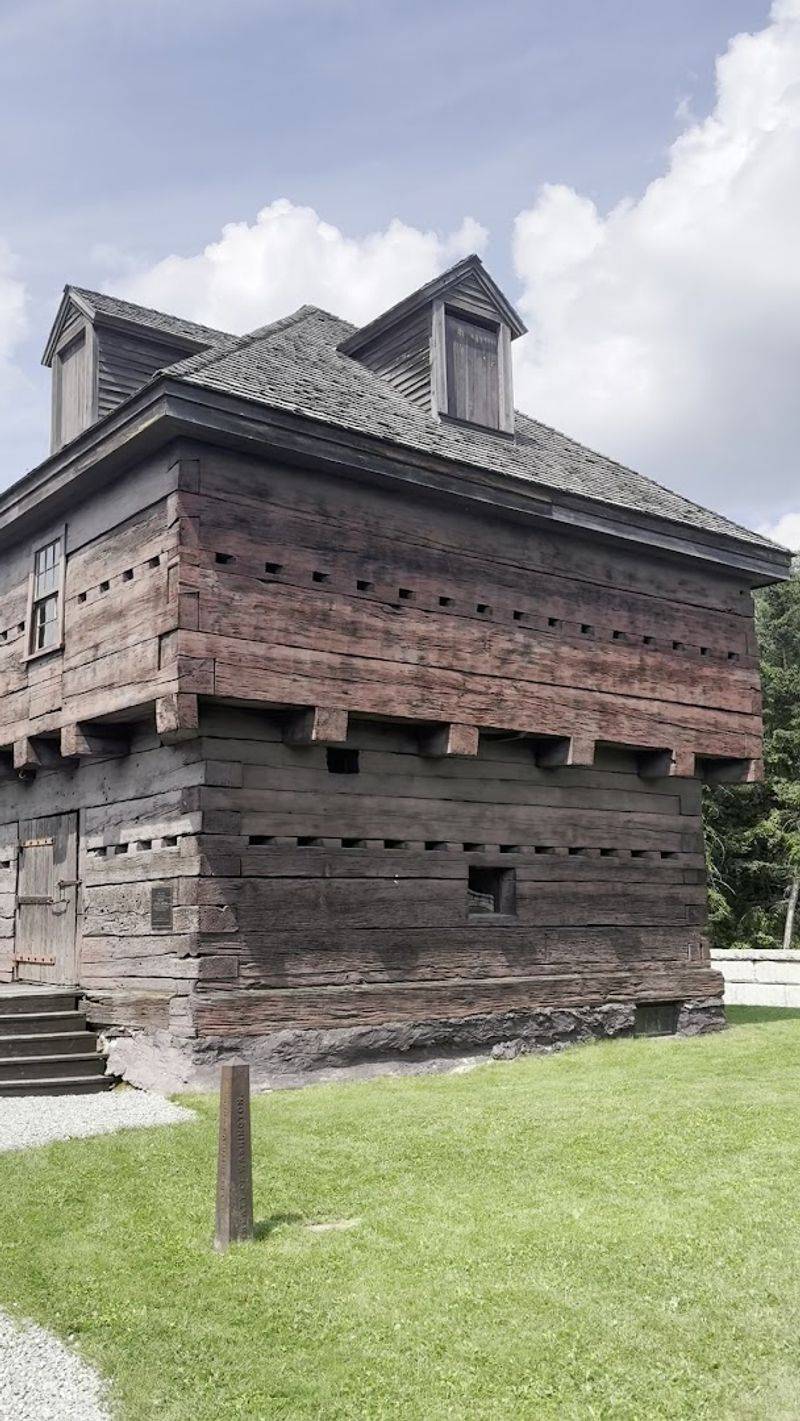
The hand-hewn cedar logs that form the walls of the blockhouse have survived brutal Aroostook County winters, spring floods, and more than a century of exposure to the elements.
You can still see the original notched corners where each log was fitted into place without modern hardware, relying purely on craftsmanship and weight to hold the structure together.
Running your hand along those weathered logs feels like touching something that has quietly watched history unfold around it.
The texture is rough, the wood is darkened with age, and every groove tells a story that no museum exhibit could fully replicate. This is living architecture at its most honest.
A Rare Borderland Survivor
There is something quietly remarkable about standing in front of a structure and realizing it is one of the oldest of its kind still standing anywhere in the country.
Fort Kent’s blockhouse holds the distinction of being the only surviving fortification associated with the Aroostook War, and it has remained largely intact since its construction in 1839.
Most military structures from that era are long gone, lost to fire, decay, or demolition. The Fort Kent blockhouse beat those odds through a combination of durable materials, community care, and eventually formal historic preservation efforts by the state of Maine.
Today it is listed on the National Register of Historic Places and recognized as a National Historic Landmark.
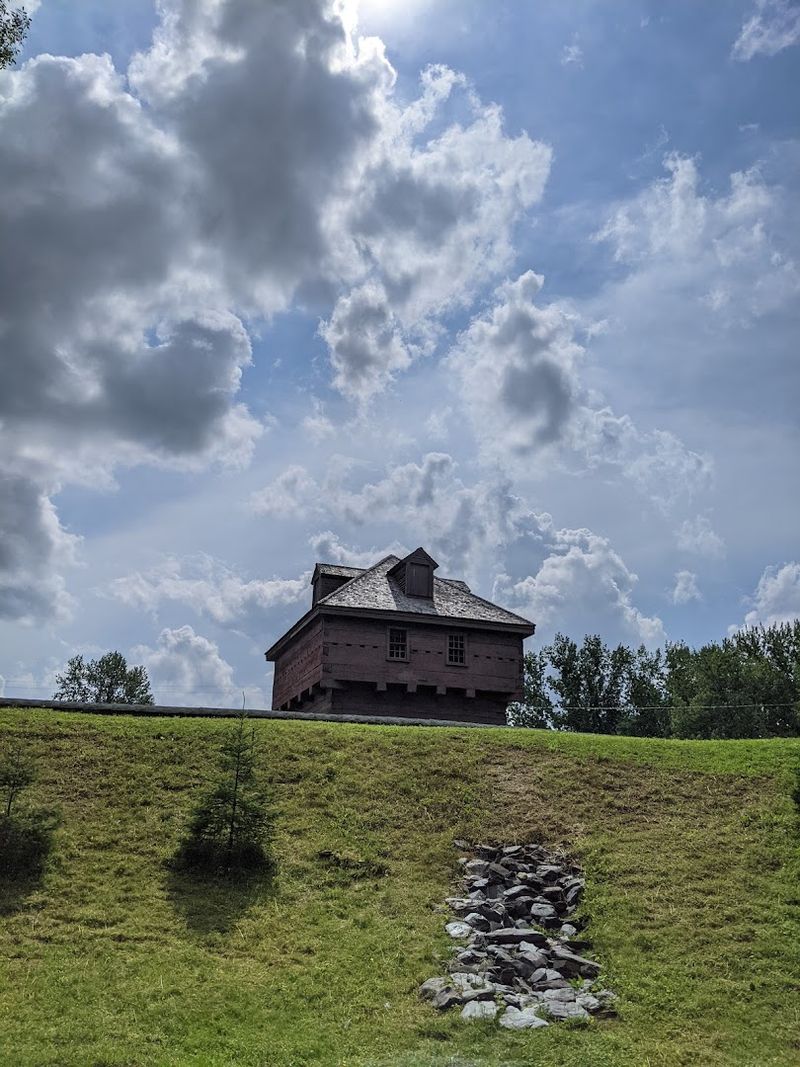
The two-story square structure features an overhanging upper floor, a design element that was intentional. That overhang allowed defenders to fire downward at anyone approaching the base of the walls.
It is a small architectural detail that reminds you this building was designed with real defensive purpose in mind, not just as a storage shed.
The Webster-Ashburton Treaty
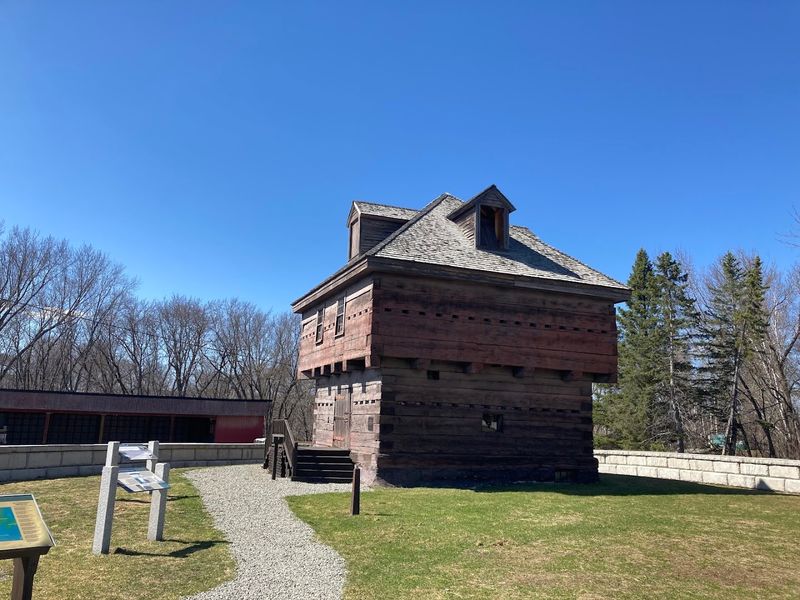
By 1842, both the United States and Britain were tired of arguing over timberland in the middle of nowhere.
American Secretary of State Daniel Webster and British diplomat Lord Ashburton sat down in Washington and hammered out what became the Webster-Ashburton Treaty, one of the most important boundary agreements in North American history.
The treaty settled not just the Maine boundary but also resolved several other disputed sections of the US-Canada border stretching all the way to the Great Lakes.
For Fort Kent, the agreement meant that the military outpost was no longer needed as an active garrison. The border was drawn, the tension cooled, and the soldiers eventually moved on.
What the treaty left behind, though, was a defined international boundary that still exists today, running right along the St. John River just steps from the old blockhouse.
Standing at the fort and looking north across that river into New Brunswick, Canada, you are looking at a line that Webster and Ashburton drew more than 180 years ago.
Clever Two-Story Design
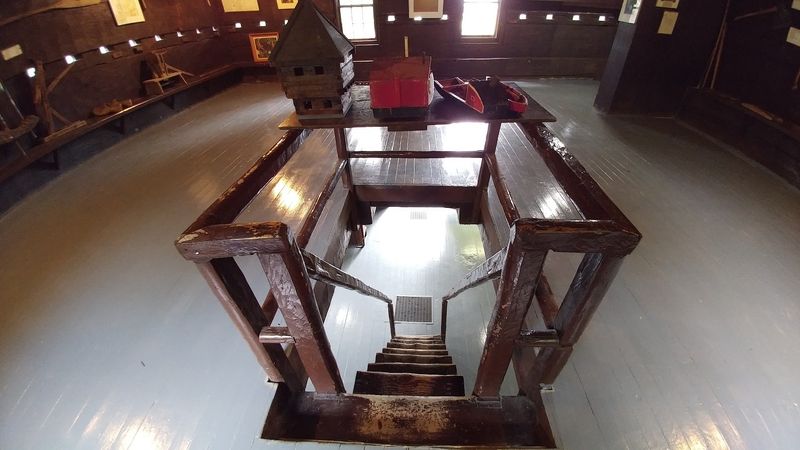
Military architecture in the early 1800s was all about making the most of limited resources, and the Fort Kent blockhouse is a textbook example of smart frontier design.
The two-story layout was not just about having more floor space. Each level served a specific strategic purpose that made the structure surprisingly effective as a defensive post.
The ground floor was used for storage and provided a solid, low-profile base. The upper floor, which juts out slightly beyond the lower walls, gave soldiers a commanding view of the surrounding area and the ability to defend all four sides of the structure from above.
Small rifle slits cut into the upper walls allowed defenders to fire outward while remaining protected inside.
Visitors who step inside today can see how compact and functional the space really is. There is no wasted room, no decorative flourish, just practical construction built for a specific job.
The wooden beams overhead, the rough plank floors, and the narrow windows all combine to give you an immediate sense of what it felt like to be stationed there in the 1840s.
Historic Graffiti Carved Into The Walls
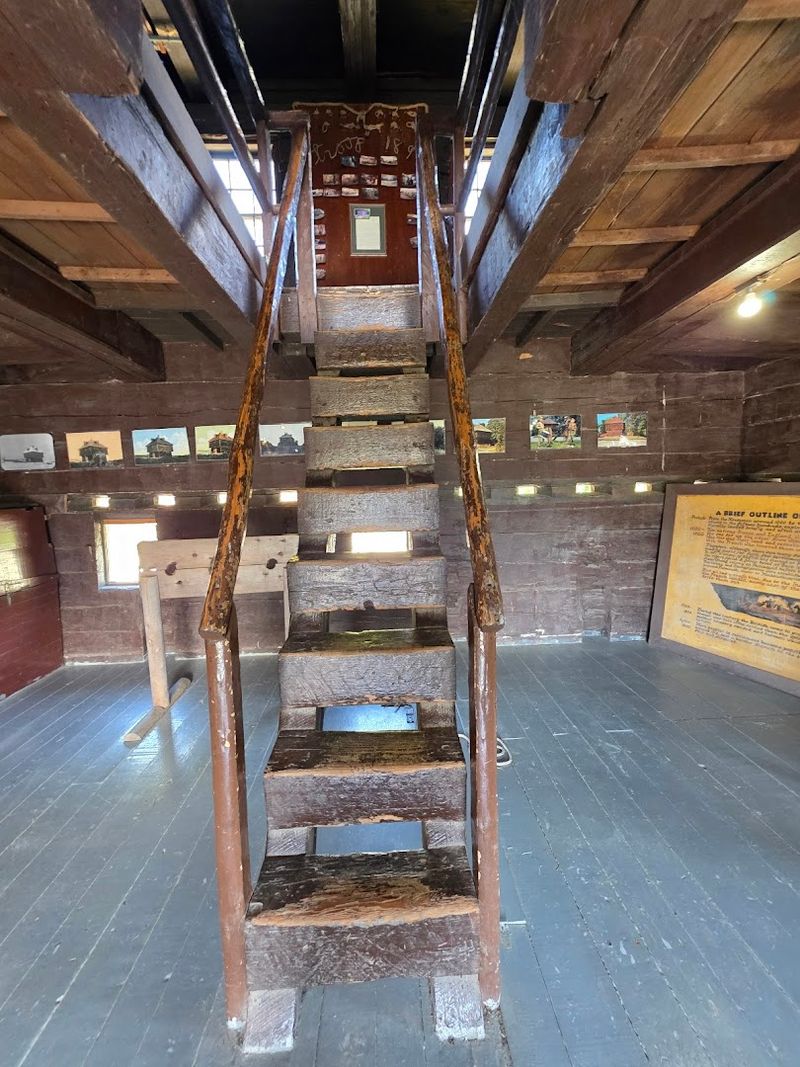
Not all graffiti is an eyesore. Some of it is history.
Inside the Fort Kent blockhouse, you can find names and dates carved directly into the cedar log walls by visitors going back well over a hundred years. Some of the oldest carvings date to the late 1800s, making them antique graffiti in the most literal sense.
It is oddly moving to trace a name with your finger and realize that the person who carved it was standing in that exact same spot, in that exact same room, more than a century before you arrived.
They wanted to leave a mark, to say they were there, which is a completely human impulse that crosses every generation.
The site does not encourage new carvings, of course, but the historic ones are preserved as part of the authentic character of the building.
They add a layer of personal, unscripted history that no official exhibit could manufacture. In a way, those anonymous names are just as much a part of the fort’s story as the military officers who commanded it.
The Boy Scouts’ Role
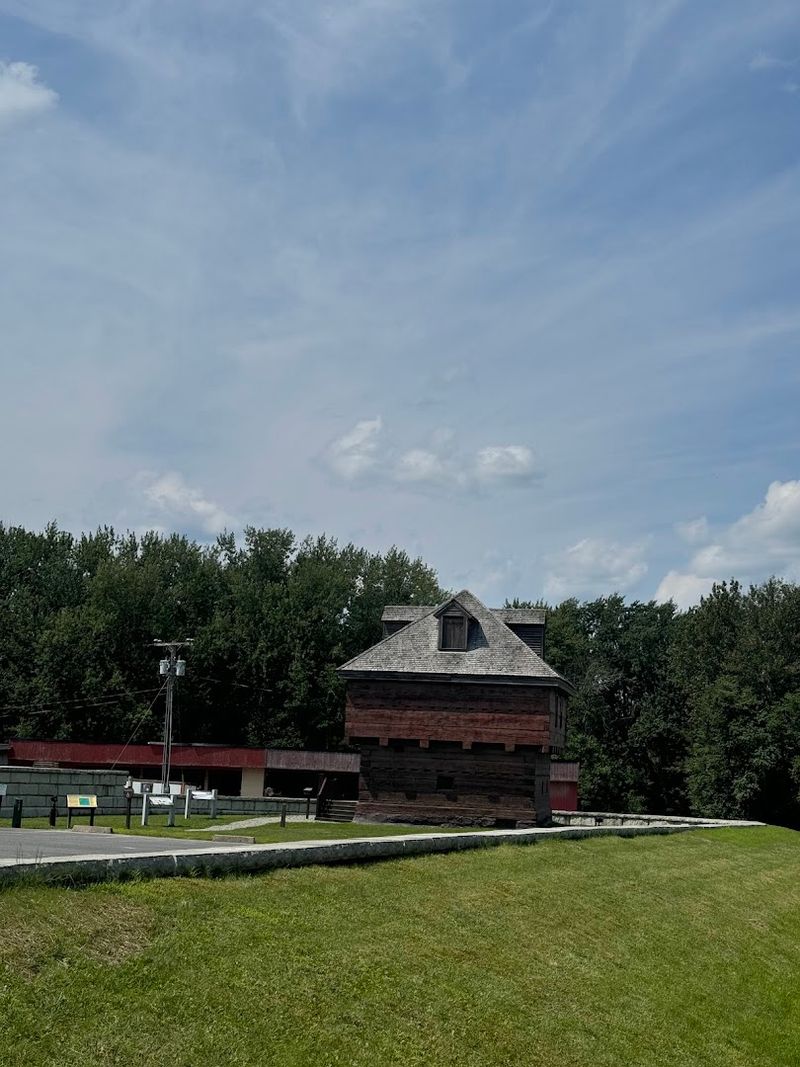
Preservation of a nearly 200-year-old wooden structure does not happen by accident. At Fort Kent State Historic Site, the local Boy Scouts have played a meaningful role in maintaining and operating the site over the years.
Their involvement adds a community-driven layer to the story of how this fort has survived into the modern era.
On the property, you will find a small trading post staffed during open season that offers information, souvenirs, and a warm welcome to visitors who make the journey up to Aroostook County.
The trading post is a low-key but genuinely helpful stop, especially for first-time visitors who want context before stepping inside the blockhouse.
It is refreshing to see a historic site where community organizations have a real stake in keeping history alive rather than leaving it entirely to government agencies.
The Scout presence gives the place a personal, neighborhood feel that larger, more commercialized historic sites often lack. Fort Kent is proof that a small community can take great pride in something extraordinary sitting right in its backyard.
Where Two Rivers Meet
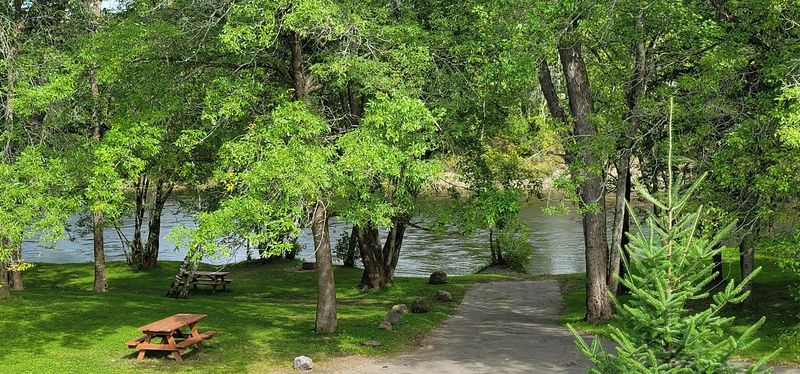
History does not have to mean standing in a stuffy room reading wall plaques. At Fort Kent State Historic Site, the outdoor experience is just as rewarding as the blockhouse itself.
Adjacent to the fort, along the banks of the Fish River, there is a quiet picnic area with tables and grills that invites you to slow down and take in the surroundings.
The Fish River meets the St. John River very close to this spot, and the combined scenery of moving water, tall trees, and open sky makes for a genuinely peaceful afternoon. Families traveling through northern Maine often stop here to eat lunch, let kids run around, and decompress from the long drive up Route 1.
The setting also gives you a real sense of why this location mattered strategically in the 1800s. Rivers were highways back then, and controlling the junction of two waterways meant controlling movement through the entire region.
Sitting at a picnic table by the water, it is easy to imagine canoes and log drives passing by in an era before paved roads connected this corner of Maine to the rest of the world.
Why This Little Fort Matters
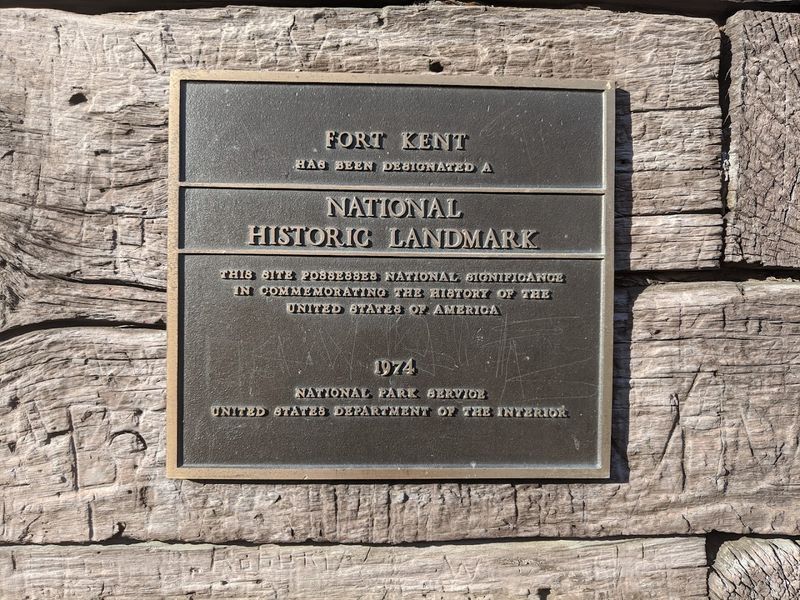
Getting onto the National Register of Historic Places is not a rubber-stamp process. A property has to demonstrate genuine historical significance, architectural integrity, and a story worth preserving for future generations.
Fort Kent State Historic Site earned that designation, and it is easy to understand why once you know the full context of the Aroostook boundary dispute.
The designation means the site receives certain protections and is recognized at the federal level as an irreplaceable piece of American heritage. It also helps the site attract attention from history enthusiasts, roadtrippers, and researchers who specifically seek out National Register properties on their travels.
For a site as remote as Fort Kent, that recognition matters enormously. Aroostook County is not exactly on the main tourist trail, and the National Register listing helps put this corner of Maine on the radar of travelers who might otherwise drive right past without knowing what they were missing.
The blockhouse earned its spot on that list, and the designation is a quiet but powerful endorsement of its lasting importance to American history.
Before You Head North
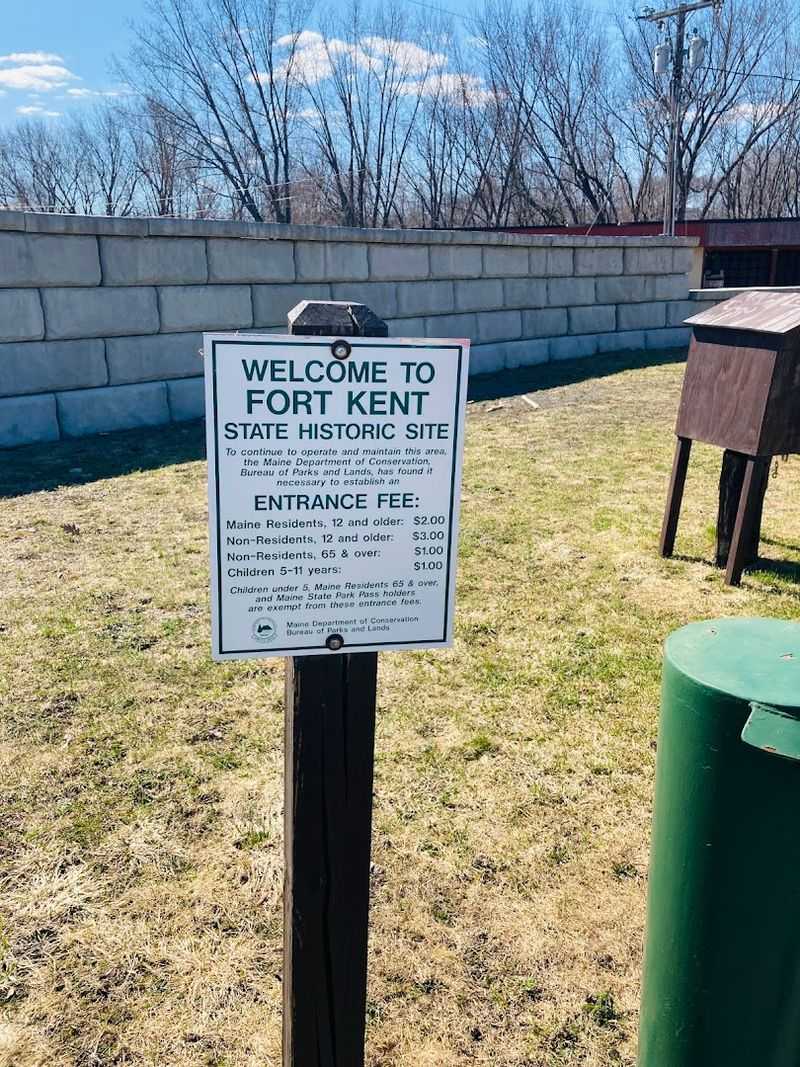
Fort Kent State Historic Site operates on a seasonal schedule, so timing your visit matters. The blockhouse is typically open during summer months and into early fall, but hours are limited to specific days of the week.
Checking ahead before you make the drive up to Fort Kent, Maine 04743 is genuinely worth a few minutes of planning. For current hours, fees, and conditions, check with Maine Bureau of Parks and Lands or contact the Fort Kent State Historic Site through Aroostook State Park at 207-768-8341.
There is a small admission fee to enter the blockhouse, which is reasonable given what you get access to inside. If the building happens to be closed when you arrive, the grounds are still accessible for walking, photography, and enjoying the riverside picnic area.
Parking near the picnic area is limited, so arriving early on busy summer days is a smart move. Bring cash for the entrance donation, wear comfortable shoes for the short trail around the property, and do not rush.
This is a place that rewards slow, curious visitors who read every sign and look closely at every corner of that remarkable old cedar building.