
An Abandoned Florida Village Is Filled With Tiny “Elf Houses,” And Nobody Really Knows Why
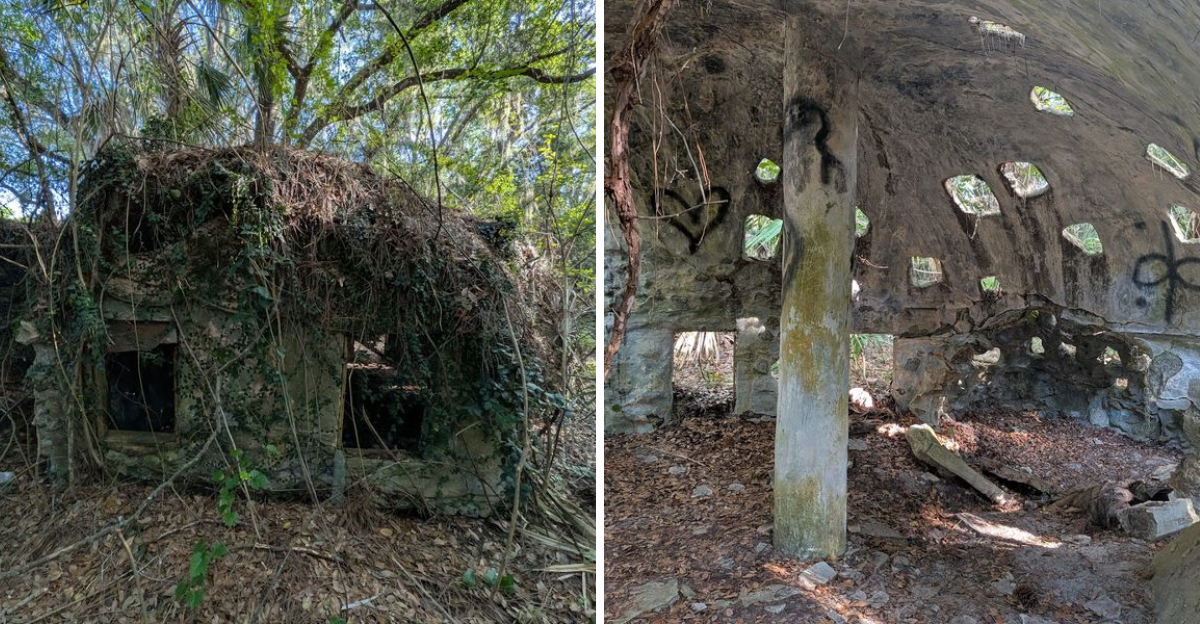
Florida is filled with places that seem too strange to be real.
This is one of them.
Hidden beneath towering trees and slowly reclaimed by nature sits a collection of mysterious little structures that look as though they belong in a fairy tale rather than the Sunshine State. There are no flashing signs pointing the way, no crowds lining up for photos, and no obvious explanation waiting at the entrance.
That mystery is exactly the attraction.
For decades, curious visitors have wondered who built these unusual domes, what purpose they once served, and why they continue to capture the imagination of everyone lucky enough to stumble across them.
Some say they look like tiny homes for mythical creatures.
Others see forgotten relics from another era.
Whatever the truth may be, one thing is certain.
Florida has no shortage of hidden gems, but few are as mysterious, whimsical, and conversation-worthy as this one.
The Mysterious Origins Nobody Can Fully Explain
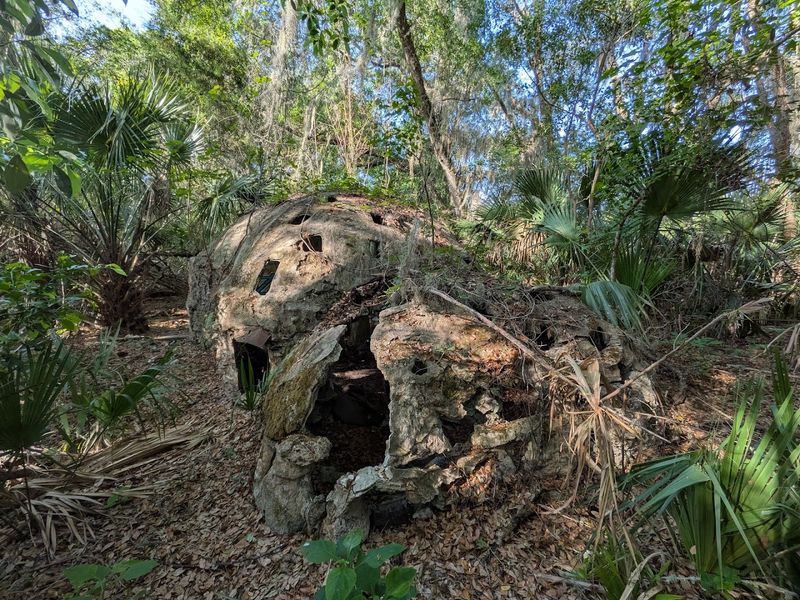
Nobody handed down a clear blueprint or a signed confession explaining exactly why these tiny concrete domes were built in Oak Hill, Florida.
What we do know is that they were constructed decades ago, likely as part of some kind of roadside attraction meant to catch the eyes of curious travelers passing through Volusia County.
Florida had a long tradition of wild, eccentric roadside stops in the mid-twentieth century, and the Elf Houses fit right into that quirky culture.
Some locals believe a single creative builder erected them on a whim, while others suggest a small community effort was involved.
No official records have surfaced to settle the debate once and for all, which is part of what keeps people coming back to look.
The lack of a clear answer is honestly part of the charm, turning every visit into a little personal investigation.
Standing among them, you get the feeling the forest itself is keeping the secret on purpose.
What the Structures Actually Look Like Up Close
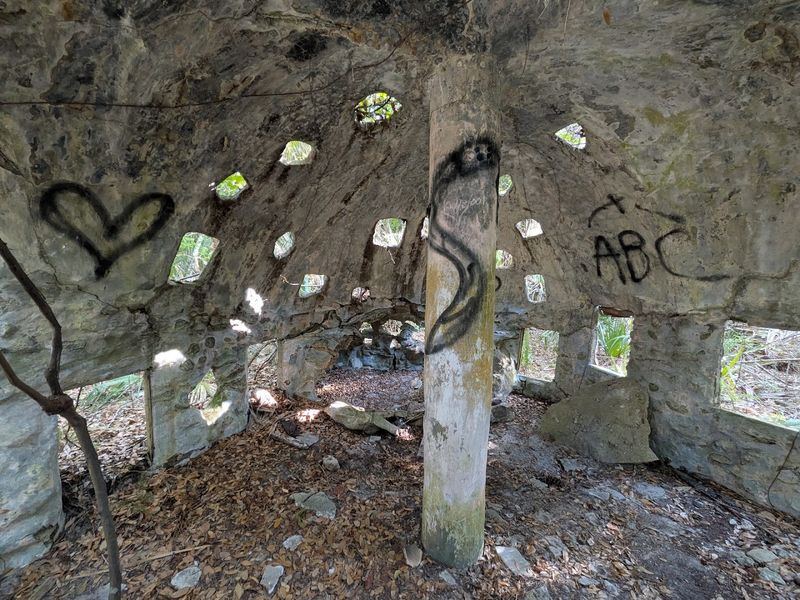
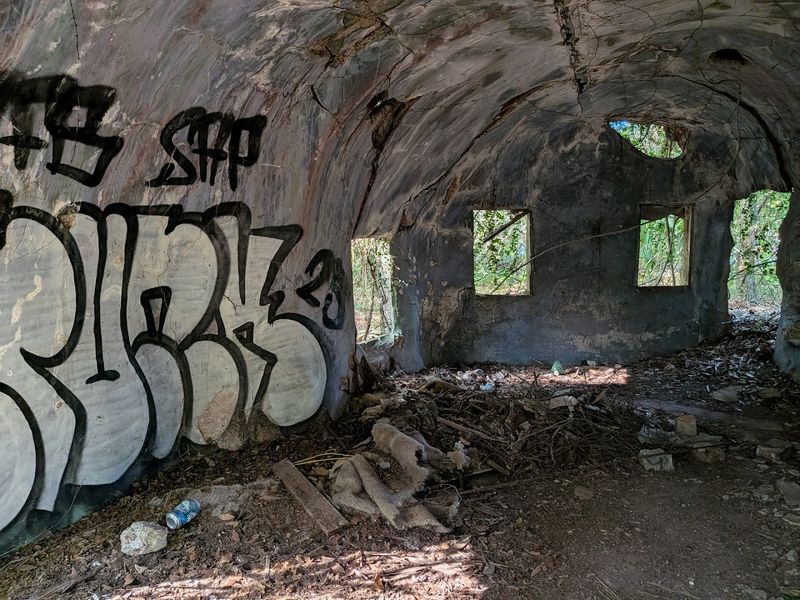
Picture a series of low, rounded concrete domes, each one barely tall enough for an adult to crouch inside, scattered across a wooded lot like oversized mushrooms frozen in time.
The walls are thick and rough, built from poured concrete that has aged into a patchwork of gray tones, green moss, and creeping lichen.
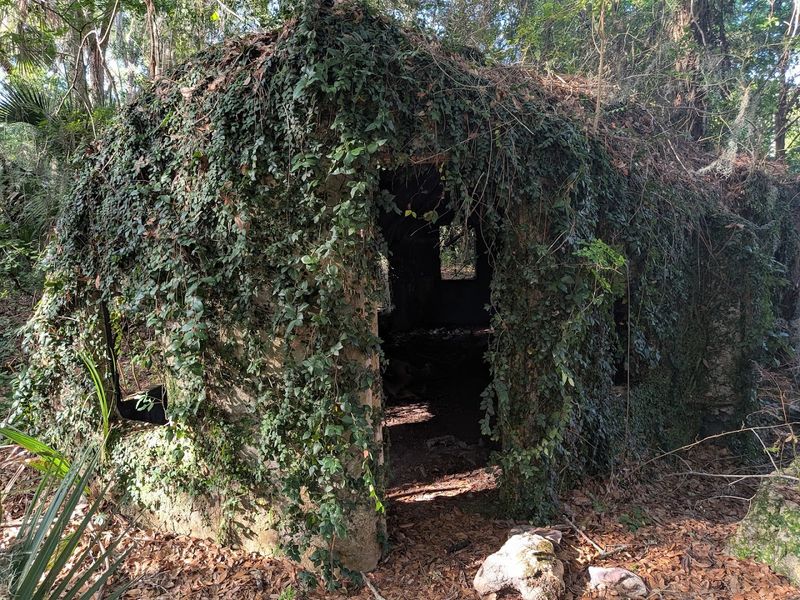
Some of the structures have small doorway openings just wide enough to peek through, giving them an unmistakably fairy-tale silhouette against the surrounding trees.
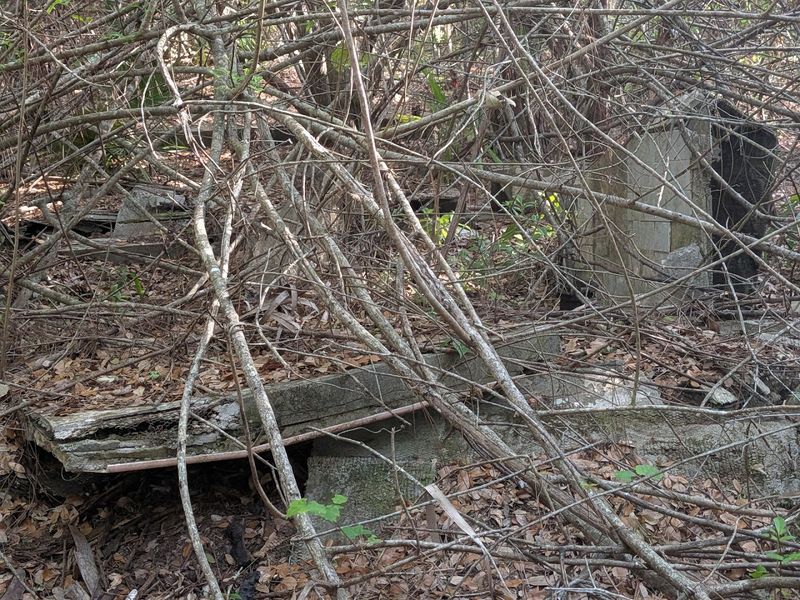
Up close, you can see that nature has been slowly reclaiming every surface, with roots pushing up around the bases and vines curling over the tops.
There is no glass, no plumbing, and no interior detail left to speak of, just raw concrete shells standing quietly in the undergrowth.
The scale of these buildings is what really gets you, because they genuinely look sized for someone much smaller than the average person.
That detail alone is enough to make your imagination start running in very entertaining directions.
The Location That Makes Them Even Stranger
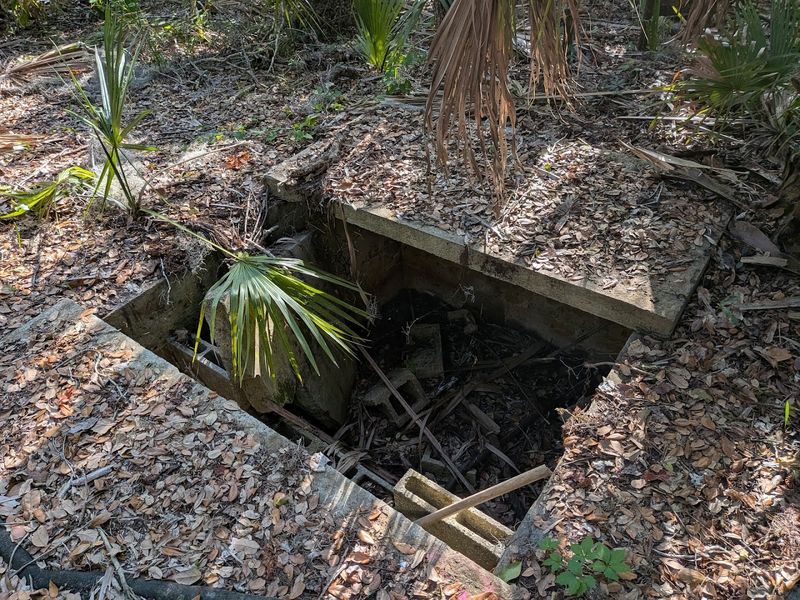
Oak Hill, Florida sits in Volusia County along the Indian River Lagoon, a small and relatively quiet town that most people drive through without a second glance.
The Elf Houses are tucked into a wooded area near this town, positioned in a way that feels deliberately hidden, as if whoever built them wanted just enough visibility to tease passing drivers without giving everything away.
The surrounding landscape is classic central Florida, flat and lush, full of palmettos, oaks draped in Spanish moss, and the kind of dense undergrowth that swallows things whole over time.
That setting amplifies the strangeness of the structures considerably, because stumbling on concrete domes in that kind of wilderness feels genuinely surreal.
The nearest major road puts you close enough to civilization that the isolation feels theatrical rather than truly remote.
Coordinates for the site place it at approximately 28.8339 degrees north latitude and 80.8420 degrees west longitude, just outside the small Oak Hill community.
The geography alone makes the whole scene feel like a deliberate riddle.
The Roadside Attraction Theory Explained
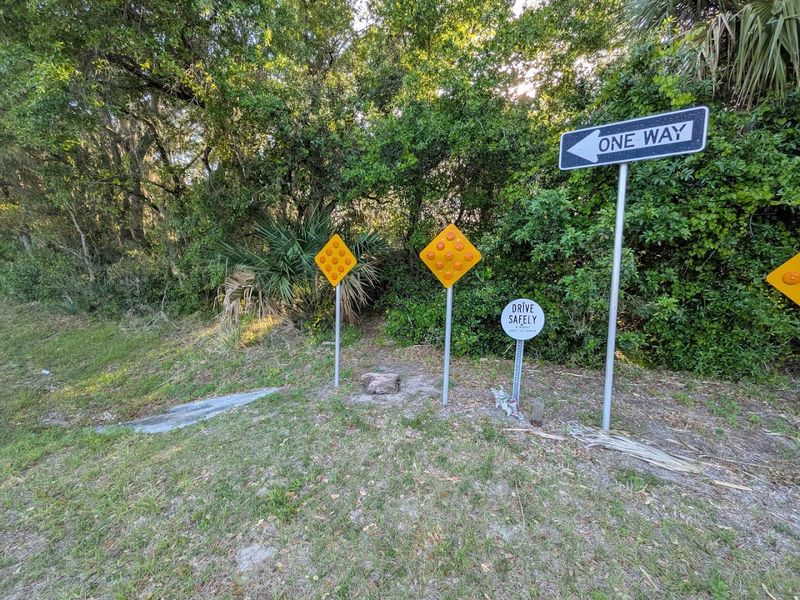
Florida in the mid-twentieth century was absolutely packed with homemade roadside attractions, and the Elf Houses appear to be one of the more unusual survivors of that era.
Before interstate highways redirected traffic away from small towns, entrepreneurs and dreamers along old U.S. routes built all kinds of eye-catching novelties to lure in travelers and collect a few coins.
Miniature villages, giant concrete animals, and themed gardens were all common enough that the Elf Houses would have fit right into that landscape without raising too many eyebrows at the time.
The dome shape and small scale suggest someone was going for a fantasy or fairy-tale theme, possibly imagining a tiny village that visitors could walk through and photograph.
Whether admission was ever charged or the attraction ever fully opened to the public remains unclear, adding another layer to the puzzle.
What seems certain is that the project was eventually abandoned before it reached whatever its creator originally imagined.
That unfinished quality gives the site a haunting, suspended-in-time feeling that no completed attraction could ever replicate.
How Nature Has Taken Over The Site
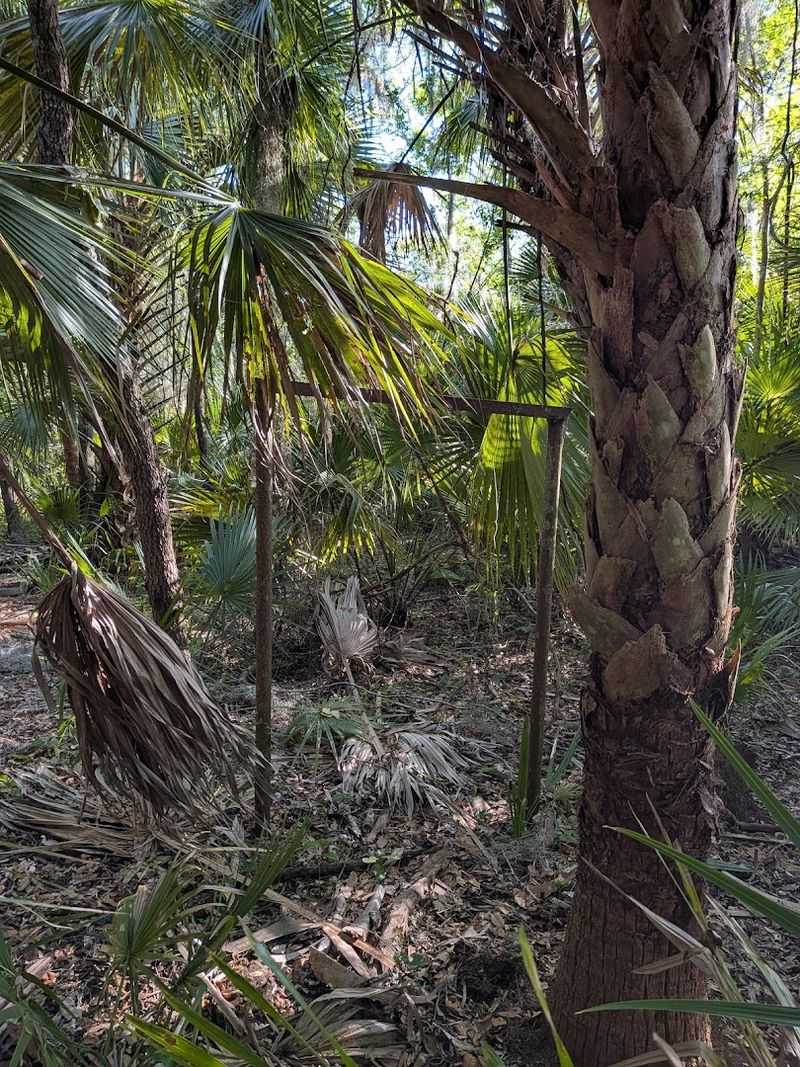
One of the most visually striking things about the Elf Houses today is how completely the surrounding forest has wrapped itself around them over the decades.
Thick roots from nearby oaks and palms have pushed up through the soil around the bases of the domes, cracking and lifting the ground in slow, patient ways that concrete cannot resist forever.
Moss and lichen coat nearly every exposed surface, turning what was once smooth gray concrete into something that looks genuinely ancient and organic.
Vines have climbed the rounded walls and draped across the tops, so that from certain angles the structures almost disappear into the tree canopy entirely.
This reclamation by nature is actually part of what makes the site so visually compelling and photographically rich for anyone who visits.
The contrast between the hard, man-made geometry of the domes and the soft, chaotic growth surrounding them creates a tension that feels almost cinematic.
Florida is very good at reminding you that it will outlast anything humans leave behind.
The Fairy Tale And Science Fiction Vibe
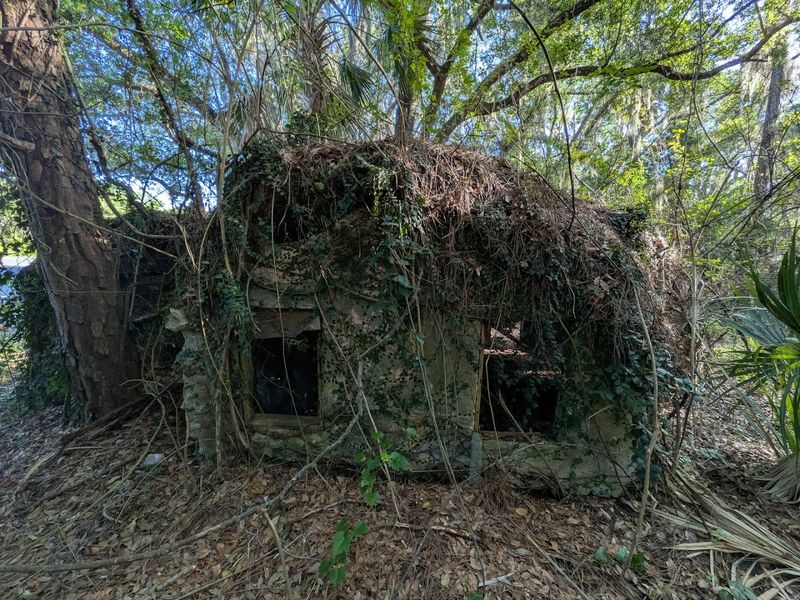
People who visit the Elf Houses for the first time almost universally describe the same initial reaction, which is a feeling of having stepped sideways into a story rather than a real place.
The dome shapes have a quality that sits right between fairy-tale cottage and retro science-fiction movie set, which is an unusual combination that is hard to shake once you notice it.
You can easily picture them as hobbit homes, alien pods, or the backdrop of a 1950s low-budget film about miniature beings living in the Florida wilderness.
That dual identity, both whimsical and slightly eerie, is what keeps the Elf Houses interesting to such a wide range of visitors, from fantasy fans to history buffs to people who simply love the weird.
The filtered light coming through the tree canopy above adds to the atmosphere considerably, giving the whole scene a soft, dreamlike quality at certain times of day.
Morning visits, when mist still hangs low among the palmettos, push the storybook feeling about as far as it can go.
You half expect a tiny door to creak open at any moment.
What Local Residents And Historians Have Said
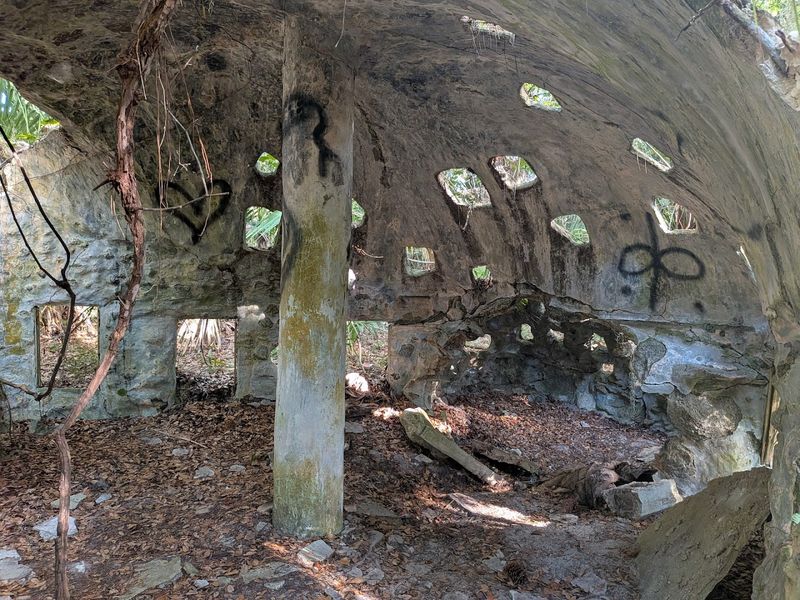
Ask longtime Oak Hill residents about the Elf Houses and you will get a fascinating range of responses, from knowing nods to genuine puzzlement to elaborate personal theories passed down through families.
Some older locals recall the structures being a minor curiosity even when they were children, suggesting the site has been abandoned for at least several decades.
Regional historians have noted that no official records in Volusia County clearly document who built the structures, when construction began, or what the intended purpose was.
That absence of paperwork is itself a clue, since legitimate businesses and permitted construction projects from that era would typically leave some kind of paper trail.
The informal, self-built nature of the domes suggests an individual passion project rather than a commercial development backed by investors or permits.
Some researchers who study Florida roadside history have flagged the Elf Houses as a significant example of vernacular architecture, meaning structures built outside formal architectural traditions by everyday people with personal visions.
That framing gives the site a cultural weight that goes beyond simple curiosity.
Why The Site Has Attracted Explorers And Photographers
There is a whole community of people who seek out exactly this kind of place, and the Elf Houses have become a quiet favorite among urban explorers, photographers, and fans of forgotten Florida.
The combination of unusual architecture, natural overgrowth, and genuine historical mystery checks every box that makes an abandoned site worth the effort of finding.
Photographers in particular are drawn to the way the light behaves around the domes, especially in the early morning or late afternoon when golden hour turns the moss-covered surfaces into something almost glowing.
The small scale of the structures creates interesting compositional challenges and opportunities, since you can frame them against the canopy, the roots, or the surrounding undergrowth in very different ways depending on your angle.
Social media has played a role in spreading awareness of the site, with posts and short videos gradually building a small but dedicated following among people who love obscure Florida landmarks.
Visiting with a camera gives you a reason to slow down and really look at the details, which is the best way to appreciate a place like this.
Every angle reveals something new that a quick glance would miss entirely.
How To Find And Visit The Elf Houses
Getting to the Elf Houses requires a little research and a spirit of adventure, since there are no official signs guiding you there and the site does not appear on most standard tourist maps.
The location is in Oak Hill, FL 32759, and the GPS coordinates of approximately 28.8339 latitude and 80.8420 longitude will get you close enough to orient yourself on arrival.
A short walk through the surrounding vegetation is typically required to reach the structures, so wearing closed-toe shoes and long pants is a genuinely good idea given Florida’s enthusiasm for thorny plants and insects.
The best times to visit are cooler months, roughly October through March, when the heat and humidity are manageable and the bug population is considerably less aggressive.
Going in the morning gives you the best light for photography and the most pleasant walking conditions before the Florida sun climbs high.
Always be respectful of the site and the surrounding private or public land, and take nothing with you except photographs and the memory of a very strange afternoon.
Bringing a friend makes the whole experience more fun and slightly less eerie.
Why The Elf Houses Matter As A Piece of Florida History
Places like the Elf Houses matter far more than their modest size might suggest, because they represent a specific and rapidly disappearing chapter of American roadside culture.
The mid-twentieth century was full of individual builders and dreamers who created strange, personal, and utterly original things along the highways of the United States, and most of those creations are now gone.
The ones that survive, even in a ruined state, serve as physical evidence that creativity and eccentricity have always been part of the American character, especially in a state like Florida that has always attracted unconventional thinkers.
Preserving awareness of sites like this, even informally through word of mouth and social media, helps keep that history alive for future generations who might otherwise never know it existed.
The Elf Houses have a rating of five stars from visitors who have taken the time to seek them out and share their experiences, which speaks to the genuine impact a small and mysterious place can have.
History does not always arrive in grand buildings or famous names.
Sometimes it shows up as a handful of tiny concrete domes hiding quietly in the Florida woods, waiting for someone curious enough to go looking.