
An Easy Forest Walk Leads Straight To Ancient Petroglyphs At Columbia Hills State Park In Washington
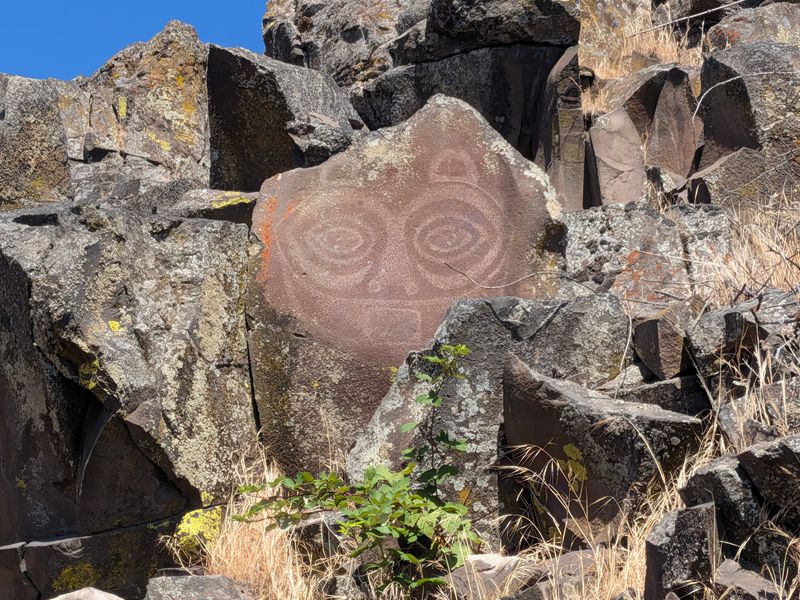
A carved face called She Who Watches has gazed over the Columbia River for centuries. You can only see her up close on a guided tour, and those tours need a reservation.
That alone makes this Washington park feel like a secret with a waiting list. Ancient petroglyphs line the rocks near a calm lake.
Bald eagles nest inside the park boundaries.
I like how history and everyday fun share the same ground here. Kids can splash in the lake in the morning.
Then the whole family can stroll over to carvings older than any map of the state.
Spring adds fields of wildflowers and views of Oregon’s snowy peaks. Summer brings starry skies and steady breezes off the gorge.
So how did a place this storied stay so quiet?
A River Park Where The Rocks Still Talk
Few state parks can claim ancient art, a fishing lake, and eagle nests in one stop. Columbia Hills Historical State Park in Washington pulls off all three without breaking a sweat.
The park sits along the Columbia River inside the Columbia River Gorge National Scenic Area. Rocky hills wrap around a valley, and Horsethief Lake rests right in the middle of it all.
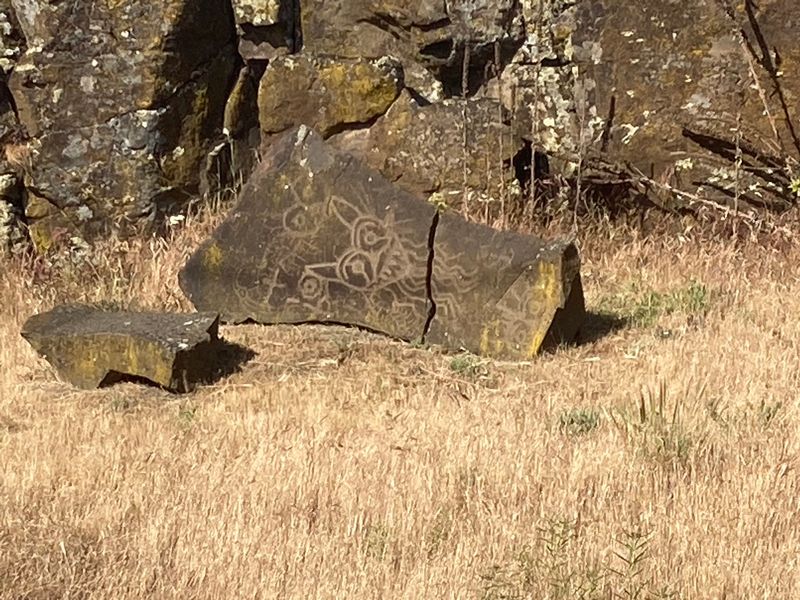
Native American petroglyphs decorate the rocks near the water. That’s the headline, and it’s a big one.
These carvings connect today’s visitors to people who lived along this river long before highways arrived.
The park also spreads farther than most travelers realize. Separate areas include the lake and campground, Horsethief Butte, the Crawford Oaks trailhead, and the Stacker Butte hiking area.
Each one has its own parking, so you can choose your adventure.
Short on time? A quick stop works fine for stretching your legs and seeing the carvings.
Got a whole weekend? Fishing, hiking, picnicking, and camping can easily fill it.
I love that one park can be both a ten-minute detour and a full family getaway. That kind of flexibility is rare, and it makes Columbia Hills Historical State Park an easy yes.
She Who Watches Has Been Keeping An Eye Out For Centuries
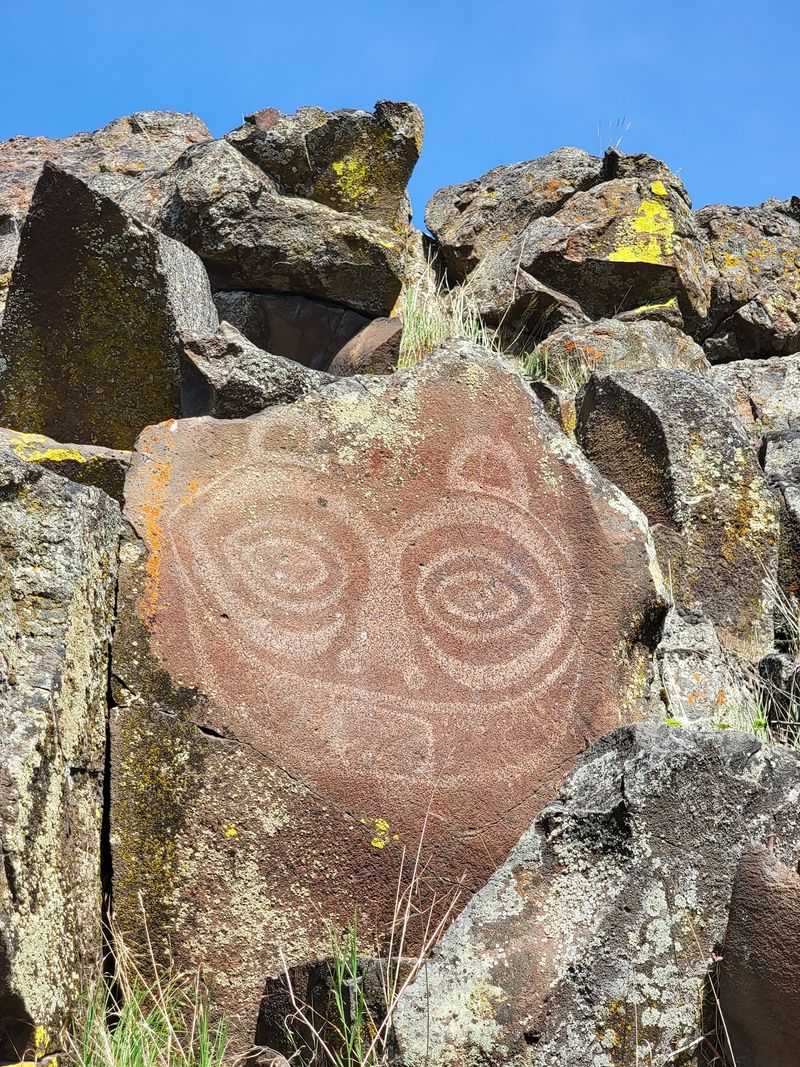
Her round eyes stare out from the basalt, calm and steady. She’s known as Tsagaglalal, or She Who Watches, and she’s the park’s most famous resident.
Getting close to her takes a little planning. Access to this area is limited to guided tours, and you’ll need a reservation before you arrive.
Tours have typically run on weekend mornings, so check the schedule well ahead.
Why the extra steps? Some pictographs here were damaged by vandals over the years.
Protecting what remains became a priority, and tribal partners worked with the park to allow these guided visits.
The tour reveals both petroglyphs, which are carved, and pictographs, which are painted. Seeing both side by side helps you understand how artists worked with this stone.
Guides share stories and context that you’d never get from a sign. Visitors have come from as far as Georgia just for this experience.
That tells you plenty about its pull.
Show up with patience and respect. You’re a guest in a very old gallery, and the art can never be replaced.
A little care keeps She Who Watches watching for generations to come.
The Short Stroll From Campsite To Carvings
Good news for anyone who isn’t a marathon hiker. You can walk from the campground to the petroglyphs, no rugged climbing required.
A small trail also loops around the lake, offering pleasant views along the way. It’s not designated as accessible, so plan accordingly.
Still, the pace stays relaxed and friendly for most families.
Shade trees around the lake help on hot days, which matters here. Summer temperatures in this corner of Washington can soar well into the triple digits.
Morning walks make a lot of sense.
Parking also sits closer to the carvings, right near a small boat ramp. That makes it handy if you’re just passing through or traveling with little ones.
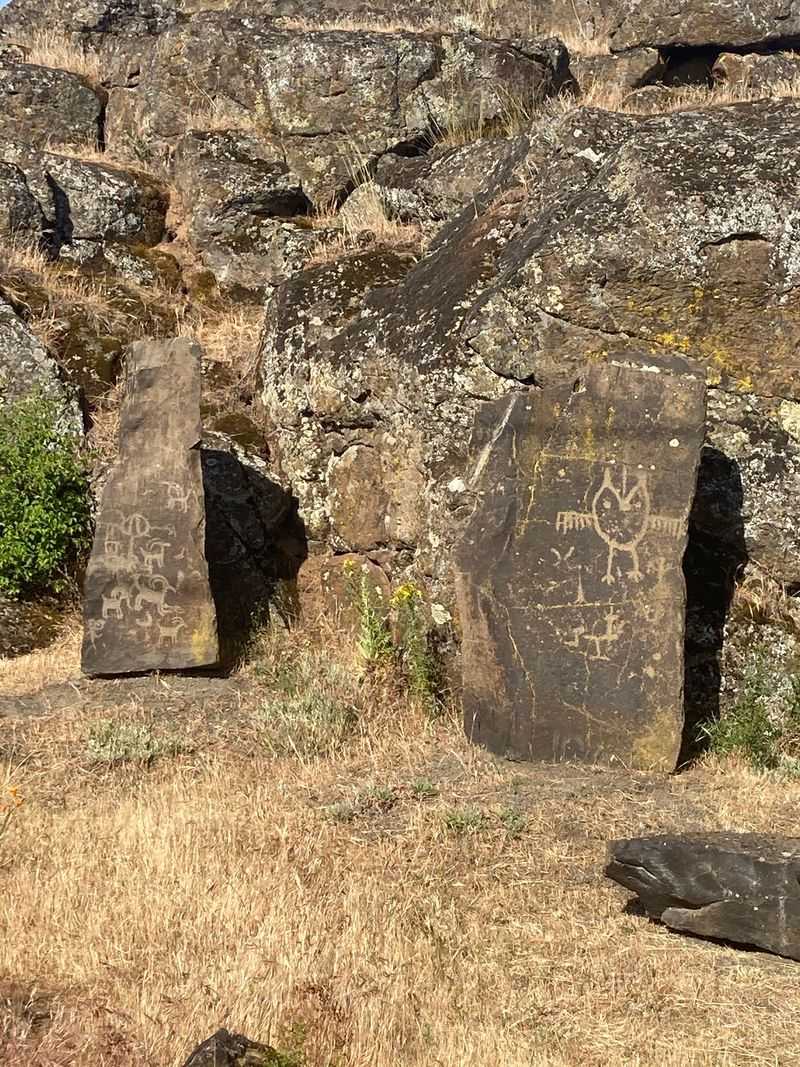
Once you reach the rock panels, slow down and really look. Shapes and figures appear in the stone, some easy to spot and others subtle.
Kids tend to treat it like a scavenger hunt.
Please admire with your eyes only. Oils from fingers can harm the surfaces over time.
Honestly, it’s hard to beat a walk where the reward is thousands of years of storytelling. Your sneakers will barely notice the effort.
Horsethief Lake Brings The Splash Factor
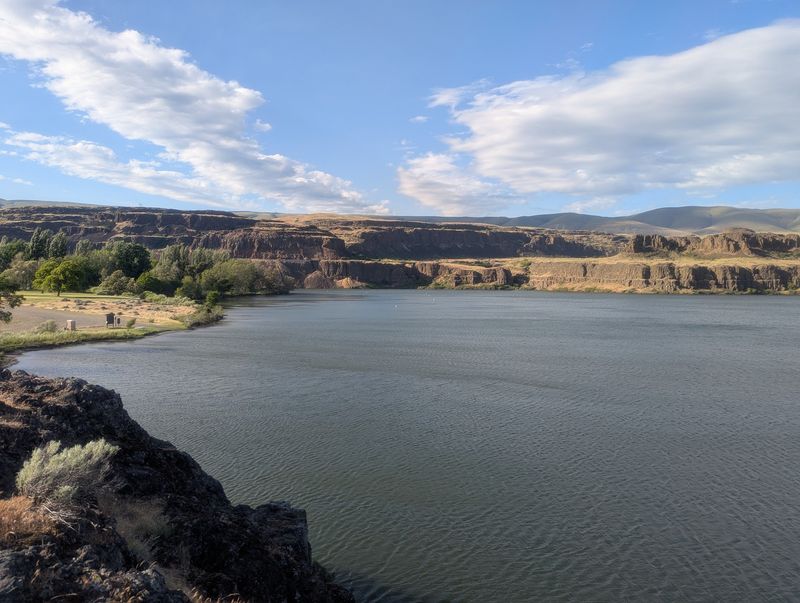
Paddleboards, kayaks, fishing poles, and swimsuits all feel at home on Horsethief Lake. It’s the park’s playful side, and it balances the history beautifully.
The water is generally calm, which makes it inviting for beginners. Families have enjoyed swimming here with young kids.
Anglers cast from the shore hoping for a bite.
Wind is the wild card. Breezes in the gorge can be steady, so keep an eye on your distance from shore while paddling.
A sudden gust can turn a lazy float into a workout.
Kayak rentals have been offered in small numbers. Ask the camp host about availability, since supply is limited.
Algae can appear in the water at times. If that’s not your thing, the green, well-kept lawns make a great spot for a picnic instead.
Fun fact: the lake shares its name with the campground, so signs may say Horsethief Lake rather than the park name. Don’t worry, you’re in the right place.
A morning paddle followed by an afternoon with the petroglyphs? That’s a pretty perfect Washington day.
Spring Wildflowers That Turn The Hills Gold And Purple
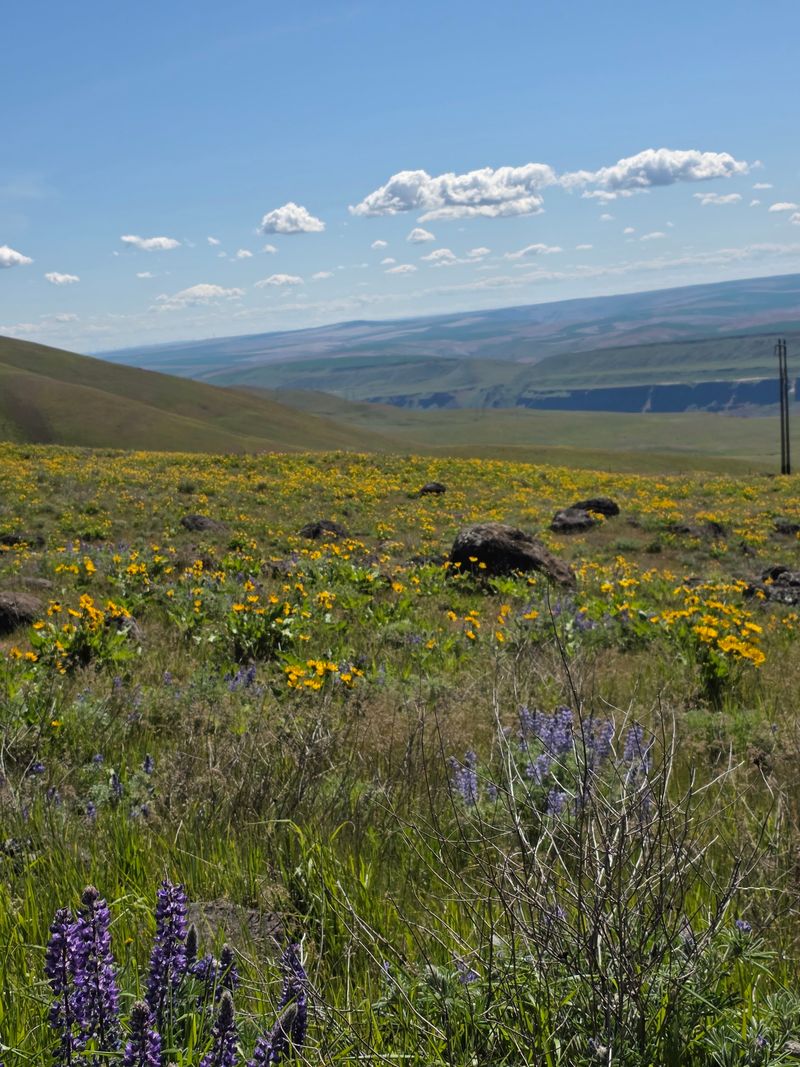
Lupine, bright yellow blooms, and endless rolling hills. Spring at Columbia Hills feels like someone flipped the color settings to maximum.
Timing matters a lot. Bloom season usually peaks in spring, and showing up in mid-June may mean missing the show.
Wet springs tend to produce the biggest displays, while drier years stay quieter.
The Crawford Oaks trailhead is a favorite starting point. It offers a vault toilet, picnic tables, and wide-open land to roam.
The area can feel wonderfully empty, even on pretty days.
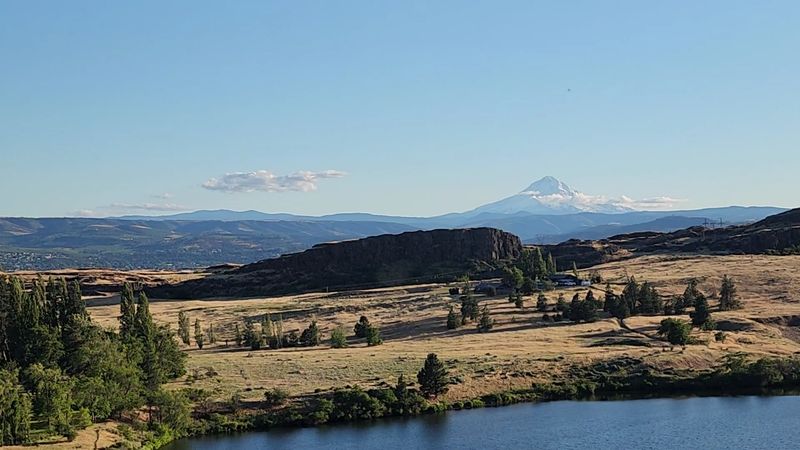
The Vista Loop runs a little over six miles with expansive views in every direction. Mount Hood and Mount Jefferson rise across the river in Oregon.
Geology fans get a bonus too. The landscape shows the marks of the ancient Missoula Floods, which carved much of this gorge.
For a higher view, Stacker Butte sits up a gravel road. Its trailhead parking is limited, so arrive early.
Bring a jacket even if the forecast looks warm. Winds up top can be strong enough to nearly knock you sideways.
The flowers, thankfully, seem to love it.
Eagles Overhead And Rock Climbers Next Door
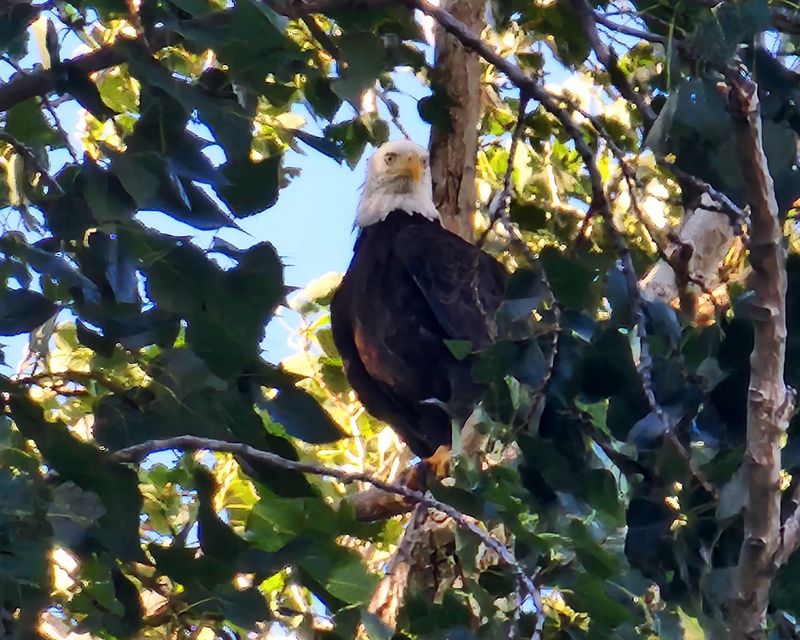
Look up. Bald eagles nest inside the park, and watching them circle overhead is a real treat.
Bring binoculars if you have them. Eagles cruising above the lake and hills make even a lunch break feel special.
Kids usually spot them first, of course.
Nearby, Horsethief Butte offers a different kind of fun. It’s not the biggest rock formation around, but the views from the top are lovely.
Rock climbers often use its walls for practice.
Wear sturdy shoes and watch your step in the rocky areas. Rattlesnakes live in this dry landscape, especially on warm, sunny days.
Staying on trails keeps encounters unlikely.
Cooler, cloudy days can actually be ideal for exploring the butte. You’ll avoid the intense summer heat and enjoy the scenery in comfort.
Night brings yet another show. Stargazing here can be outstanding, with dark skies far from big-city lights.
Bring a telescope if you own one.
Between eagles by day and stars by night, this corner of Washington never really stops performing. You just have to remember to look up.
Camping With Clean Showers And Choo-Choo Soundtracks
Train fans, rejoice. A rail line runs regularly across the lake, and the sound carries right into camp.
Light sleepers may want earplugs. Others find the rumble oddly charming, almost like a bedtime lullaby with horns.
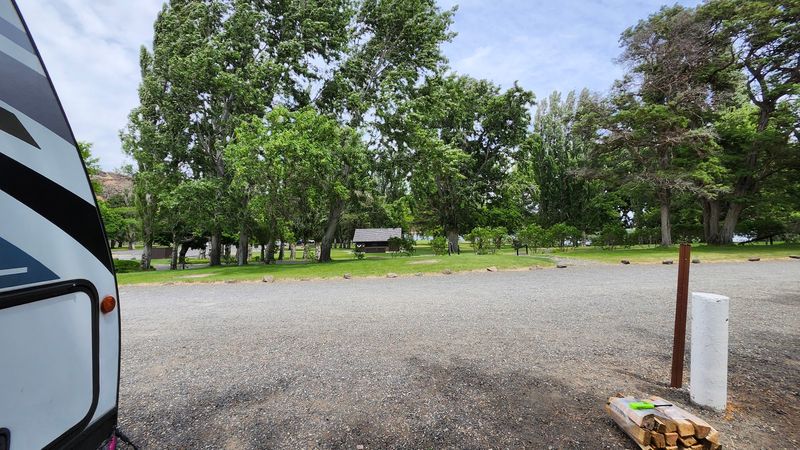
The Horsethief Lake Campground offers both tent and RV sites. RV spots have water and electric hookups but no sewer connections.
A dump station handles that need.
Bathrooms earn steady praise for being very clean. Showers are available too, and windbreaks help shield tent sites from the gorge’s famous gusts.
The camp hosts deserve their own applause. They’re widely described as friendly, helpful, and full of local knowledge.
Some families say their kids thought the hosts were the best part of the trip.
Sites sit fairly close together, and tree cover can be sparse in spots. Still, shade trees help keep things cooler on hot afternoons.
Reservations are smart, since the number of sites is limited. The park also operates seasonally, so check dates before packing the car.
Clean facilities, kind hosts, and trains for entertainment. That’s an affordable Washington weekend I can get behind.
Plan Your Trip, Grab Your Pass, And Go
Ready to roll? Point your GPS to 8514 Lewis and Clark Hwy, Lyle, WA 98617, along the Washington side of the Columbia River.
Bring a Discover Pass for parking. Day-use passes can also be purchased on site at some trailheads.
The same Discover Pass works at many other Washington state recreation lands, which helps stretch your budget.
Signs can be a little confusing on arrival. You may see Horsethief Lake posted instead of the park name.
Don’t panic, just follow the road in.
Remember the She Who Watches tour requires a reservation. Book it before you go, or you’ll only see the open petroglyph areas.
Pack water, sun protection, and layers. Summers get very hot, and the wind can surprise you any season.
Spring visits offer the best wildflower odds.
Want to keep exploring? Maryhill State Park and the Stonehenge replica memorial sit roughly a half hour east.
So is Columbia Hills Historical State Park worth the drive? With ancient art, eagles, a friendly lake, and starry nights, I believe the answer is an easy yes.
Go see who’s been watching.