
Ancient Carvings Left Over Centuries Cover The Boulders Along This Short, Quiet Arizona Trail
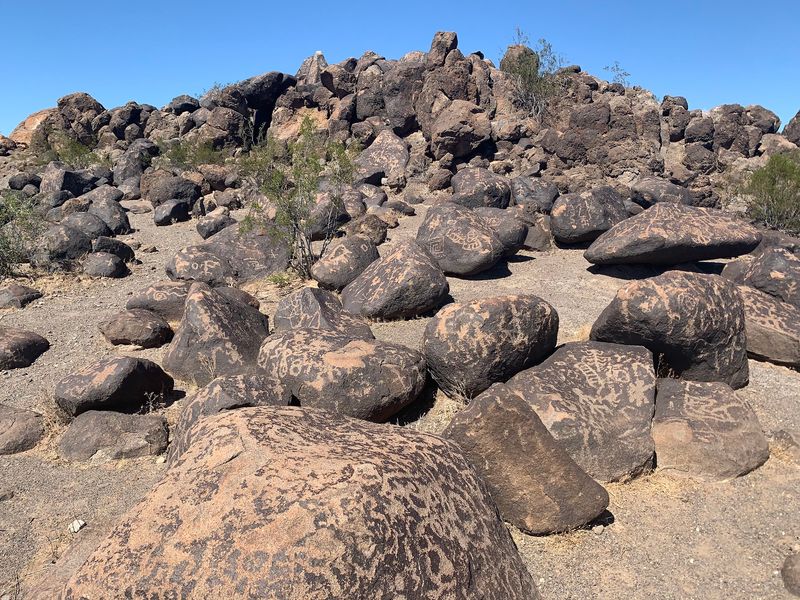
Hundreds of ancient carvings crowd one low pile of dark volcanic boulders in the middle of the open desert. Some symbols look like spirals.
Others look like animals, human figures, and even mazes.
The walk to see them is short, flat, and easy. You park on pavement, stroll a gravel path, and suddenly you’re face to face with centuries of messages.
I like how little effort it takes to reach something this old.
The rock pile has drawn travelers for generations. Indigenous peoples carved here, and a famous Spanish expedition passed nearby in the 1770s.
Later visitors even scratched names and dates into the stone.
All of this sits a short detour off a major Arizona highway. Most drivers zoom right past it.
So what would you spot if you finally took that turn?
A Volcanic Rock Pile That Doubles As A Desert Gallery
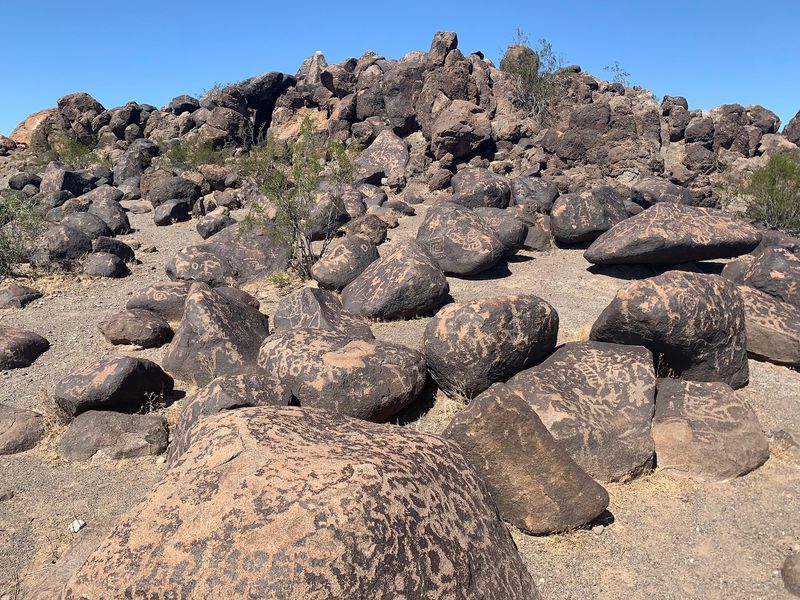
Out in the desert of southwestern Arizona, one rocky mound holds more history than many museums. Painted Rock Petroglyph Site and Campground is managed by the Bureau of Land Management.
The site sits roughly 11 miles off Interstate 8, northwest of Gila Bend. Its Google listing uses a Dateland mailing address, but it feels miles from everything.
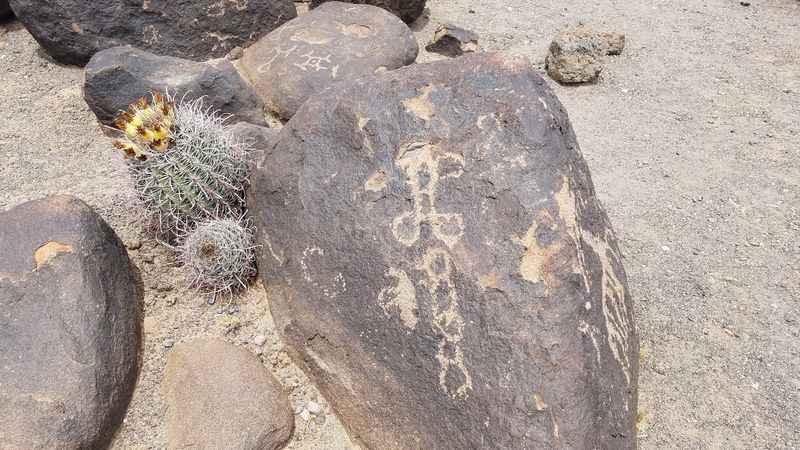
The main attraction is a cluster of dark boulders stacked into two connected volcanic cones. Hundreds of petroglyphs cover their surfaces, carved by Indigenous peoples over long stretches of time.
Most of the carvings appear on the south and east sides of the rocks. That makes a slow lap around the mound the best way to take it all in.
Next to the carvings, you’ll find a day-use area with covered picnic tables. A large primitive campground spreads out nearby for anyone who wants to linger.
The setup is simple and honest. No gift shop, no snack bar, no flashy visitor center competing for your attention.
That simplicity is part of the charm. It’s just you, the open desert, and a pile of stones with stories etched across them.
For a free or nearly free outing, that’s a pretty remarkable trade. Not many detours pay off quite like this one.
Spirals, Mazes, And Animals Etched Into Dark Stone
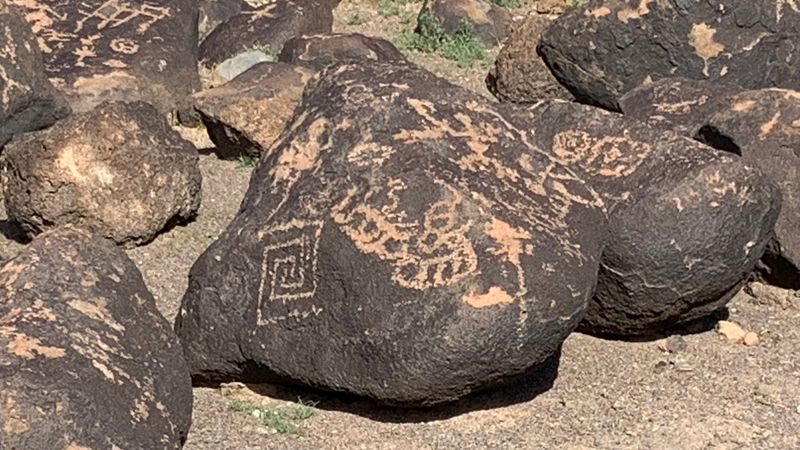
Spirals curl across one boulder, while a little animal figure seems to trot across another. The variety here keeps your eyes busy the entire time.
The carvings include human figures, geometric shapes, maze-like patterns, and plenty of mysterious symbols. Some are easy to recognize.
Others leave you happily guessing.
Petroglyphs are made by pecking or scratching through the dark coating on the rock. The lighter stone underneath shows through, creating a striking contrast on the volcanic surface.
What really sets this place apart is the density. So many images sit packed into such a small space that the whole mound feels like an open-air sketchbook.
Interpretive signs around the site offer helpful context. They explain what you’re looking at without turning the visit into a lecture.
A few signs have faded with time, so a little patience helps.
Was the rock pile a classroom, a message board, or a canvas? Nobody can answer that with total certainty, and the mystery is half the fun.
Kids especially tend to love the treasure-hunt feeling. Spotting a new shape on a rock you already passed is surprisingly satisfying.
Bring curiosity and a good pair of eyes. The rocks reward anyone willing to look twice.
Centuries Of Travelers Who Paused At These Boulders
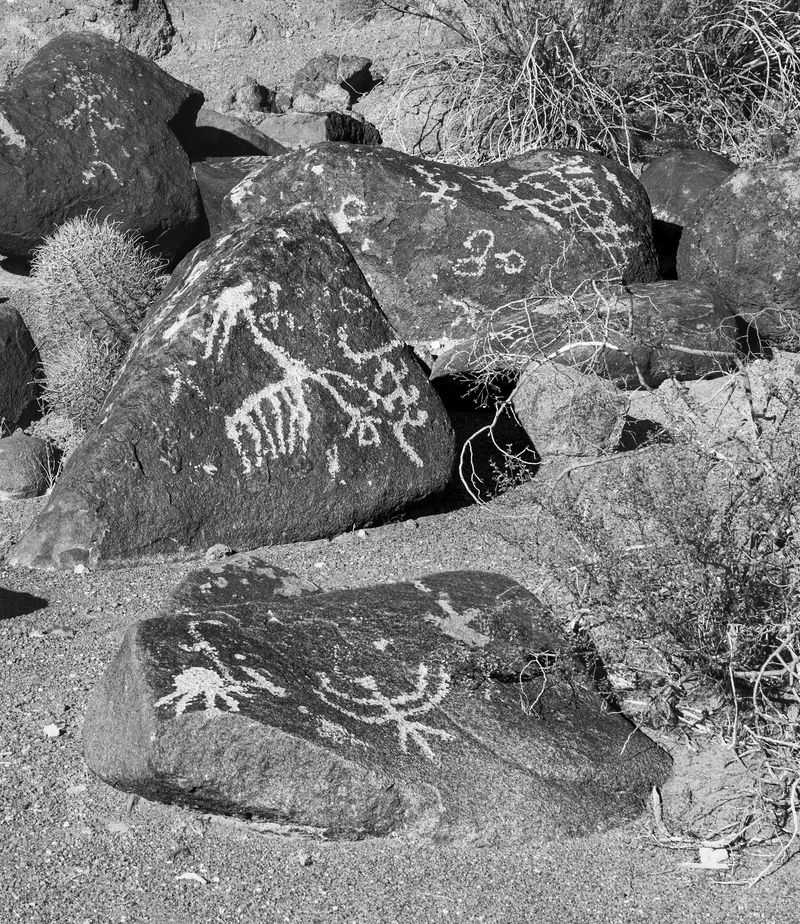
Long before highways, this rock pile was already a landmark. The area sat along long-standing travel routes through the desert.
Indigenous peoples carved here over many generations. The site is still considered culturally important and sacred by many Native communities in southern Arizona.
The story didn’t stop there. The Juan Bautista de Anza expedition passed nearby in the late 1700s, adding another chapter to the area’s long history of movement.
Later visitors left marks too. Among the ancient symbols, you can spot names and dates from more recent times scratched into the stone.
That layering is fascinating. One mound holds evidence of people passing through across vastly different eras.
Of course, not every modern mark is welcome history. Some graffiti has damaged the site, which is a sad reminder of how fragile these carvings are.
Treat every boulder like a priceless artifact, because it is. Stay on the paths, keep hands off the rocks, and leave nothing behind but footprints.
Knowing all this changes the visit. It stops feeling like a quick stop and starts feeling like a meeting place that never really closed.
You become the newest traveler in a very long line. Just skip the autograph.
Fifty Feet From The Parking Lot To Ancient Art
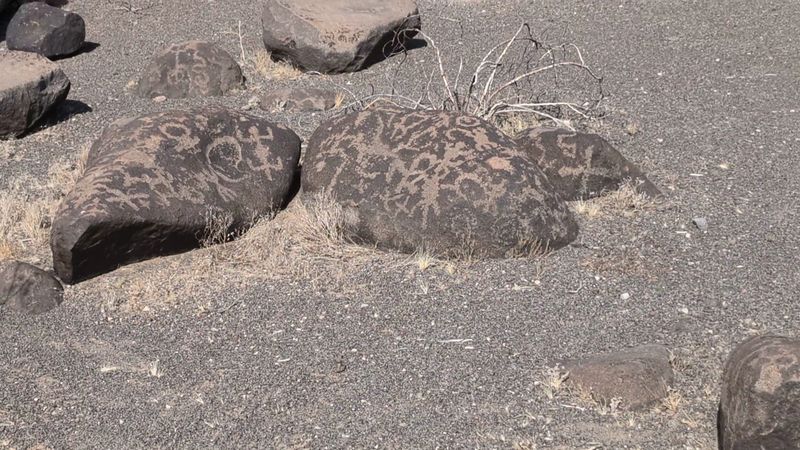
Good news for anyone who dreads long hikes. The petroglyphs start roughly 50 feet from the paved parking lot.
A flat dirt and crushed-rock trail loops around the boulders. It’s short, manageable, and comfortable for a wide range of ages.
Families with little ones can handle it easily. Grandparents can enjoy it without pushing their limits either.
Parking is right on site and plentiful. You won’t spend time circling for a space or hiking in from a distant lot.
There’s one catch worth planning around. The trail has very little shade, and Arizona sun doesn’t negotiate.
Bring water, a hat, and sunscreen, even on mild days. Arriving earlier in the day is a smart move during warmer months.
Timing affects more than comfort. Morning and evening light can make many carvings stand out more clearly as shadows sharpen the details.
Midday glare tends to flatten the rock surfaces. So that early start may help both your skin and your photos.
The whole loop doesn’t take long. Still, plan extra time to wander back for a second look, because you’ll likely want one.
Short trail, big payoff. That’s an easy formula to love.
Covered Picnic Tables Made For A Desert Lunch Break
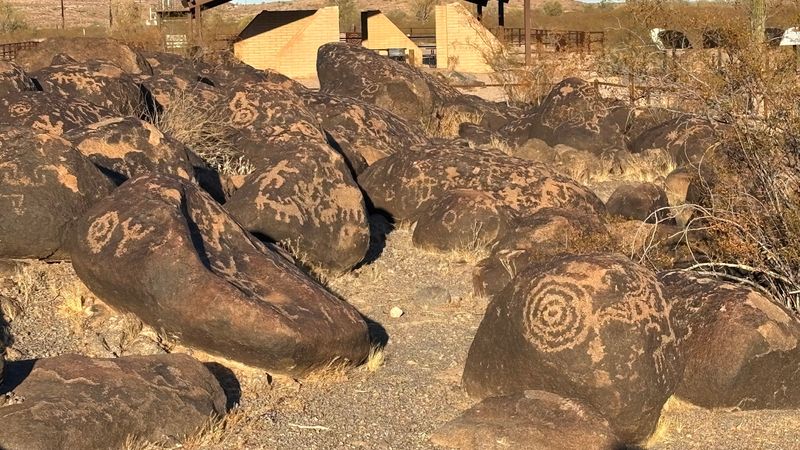
Shade is a precious resource out here, and the day-use area delivers. Two large covered picnic areas sit near the petroglyphs.
That makes this spot a natural lunch stop on a long Interstate 8 drive. Pack sandwiches, grab a table, and enjoy the quiet view.
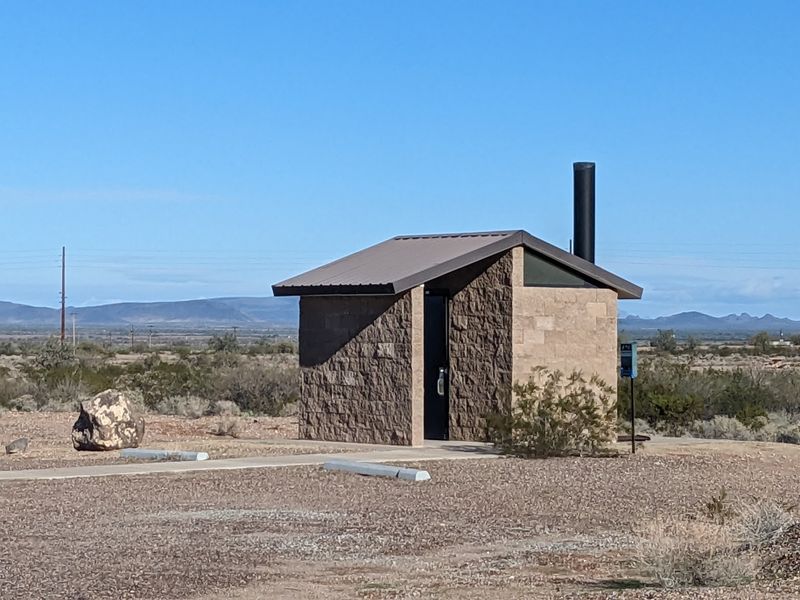
Restrooms are available, too. Vault toilets sit at the adjoining campground and have a reputation for being kept clean.
Don’t expect a full-service rest area, though. There’s no running water on site, so bring all you’ll need.
Food, lodging, and gas are about 15 to 20 minutes away in Gila Bend. Fill up before you head out, and you’ll be set.
The interpretive boards make lunch extra educational. Kids can munch and learn at the same time, which counts as a parenting win.
Families who homeschool may find it especially useful. History, geology, and culture all come together without feeling like a structured lesson.
It’s a stop that works on a budget. A cooler, a little planning, and some curiosity are all you really need.
Honestly, few roadside picnic spots come with ancient artwork as the backdrop. Your usual fast-food parking lot can’t compete.
Roomy Campsites Under A Dark, Star-Filled Sky
Sixty-some campsites spread across wide-open desert, and many feel enormous. Painted Rock Petroglyph Site and Campground lets you sleep next to the carvings.
Most sites are pull-throughs with plenty of room between neighbors. Each one has a picnic table and a fire ring.
Big rigs fit comfortably here. Even long motorhomes towing trailers can get in and out without much fuss.
It’s all dry camping. There’s no water, electricity, or dump station, but you will find vault toilets and dumpsters.
Accessible sites and accessible toilets are available. Camp hosts are often on site if you need a hand.
Fees are modest, and the campground uses a scan-and-pay system. Some sites require online reservations, so check before you arrive.
Generators are limited to daytime hours, which helps keep nights peaceful. Tents work too, though privacy is limited in the open landscape.
The real bonus shows up after sunset. Far from city lights, the sky turns dark enough for excellent stargazing.
Sunsets here can be spectacular, painting the volcanic rocks in warm color. Then the stars take over the show.
Cooler months are the sweet spot for camping. Summer heat with no shade is a tough combination.
Getting There Is Easier Than The Remote Setting Suggests
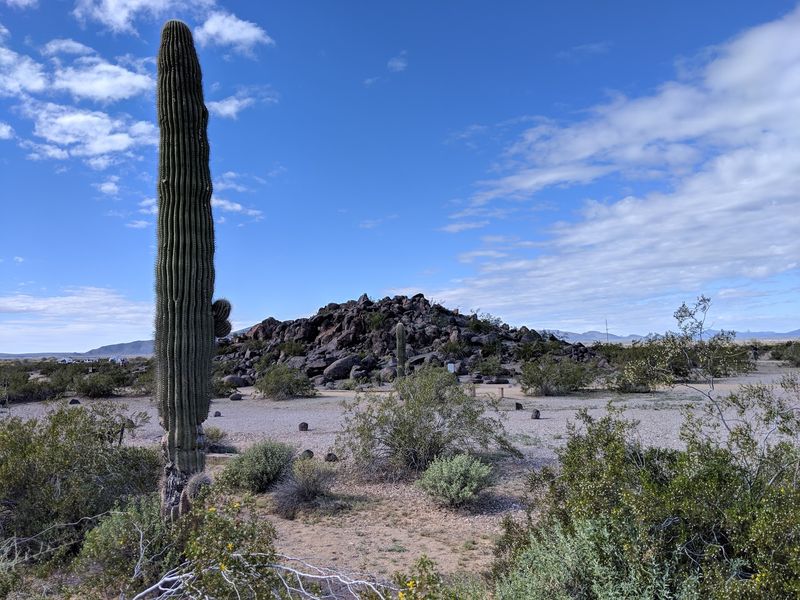
Remote doesn’t mean complicated. Signage is clear, and GPS leads drivers right to the site.
The address is 2XF2+2R, Rocky Point Rd, Dateland, AZ 85333. That plus code works well in navigation apps.
From Interstate 8, plan on about 11 miles each way along paved and graded roads. The drive feels like part of the adventure.
It’s an easy detour for anyone traveling between San Diego and Tucson or Phoenix. Gila Bend makes the closest base for supplies.
Day use is mostly free, which makes this a fantastic value outing in Arizona. Camping comes with a small nightly fee.
The Bureau of Land Management oversees the site. Conditions and fees can change, so a quick check with the agency before you go is wise.
Visit in the cooler months for the most comfortable experience. Fall, winter, and spring bring pleasant desert weather.
In summer, aim for very early mornings. The heat builds fast, and shade is scarce once you leave the picnic ramadas.
Toss extra water in the car regardless of season. Desert roads reward the prepared traveler.
A Small Detour With A Surprisingly Big Payoff
Some stops fill an afternoon, and others fill your imagination. This one manages a little of both in surprisingly little time.
Painted Rock Petroglyph Site and Campground won’t wow anyone looking for thrill rides or fancy facilities. It’s a quiet loop around a rock pile.
But that rock pile holds hundreds of ancient carvings. Few places in Arizona pack this much history into such an easy walk.
It suits history buffs, curious kids, road-trippers, and RV travelers who love wide-open space. Stargazers will feel right at home after dark.
Travelers expecting lots of activities may find it brief. Set expectations for a meaningful pause, and it delivers.
Treat it with care while you’re there. The site remains sacred to many Native communities, and every carving deserves respect.
Come early or late for the best light. Bring water, stay on the trail, and take only photos.
I can’t imagine a better excuse to break up a long Interstate 8 drive. A short detour, a free look, and centuries of stories waiting on the stones.
Tag the friend who always wants to stop for something weird. This one’s actually worth it.