
12 Ancient Ruins In Arizona That Still Hold Their Secrets
I have a bad habit of getting distracted by old, crumbling things when I’m supposed to be hiking. While my friends are focused on reaching the summit, I’m usually off in the brush, poking at a petroglyph or imagining who sat in a specific doorway six hundred years ago.
There is a strange, magnetic energy that surrounds the forgotten homes of those who walked these paths long before modern maps were drawn.
I’ve compiled a list that captures that exact feeling of discovery and wonder. If you’re ready to step into the past and explore the enigmatic legacy etched into our Arizona landscape, look no further than these 12. Just promise you’ll try to keep up, even if I stop to admire every single rock.
They’re windows into civilizations that built irrigation systems, tracked the stars, and created communities that thrived in one of North America’s harshest environments.
You can almost hear the echoes of daily life, feel the careful planning behind each stone placement, and wonder about the people who called these places home.
1. Canyon De Chelly National Monument, Chinle
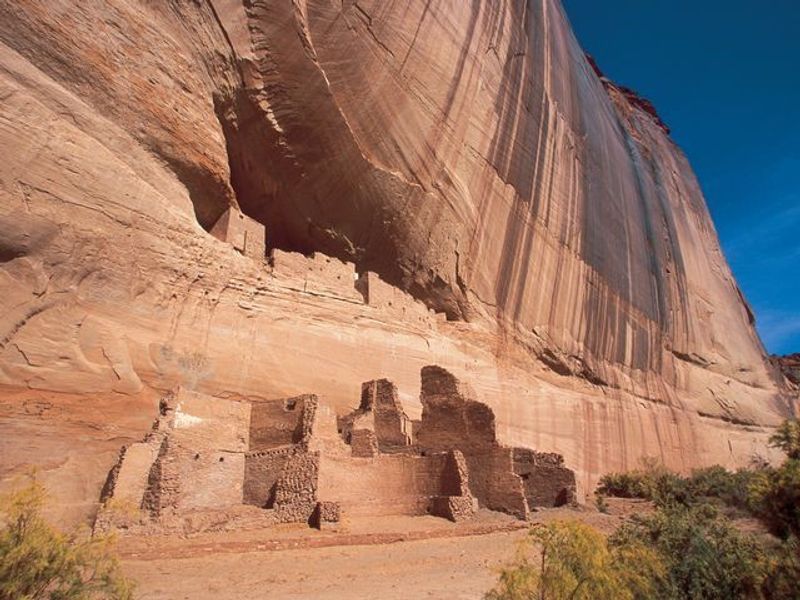
Towering sandstone walls rise 800 feet above the canyon floor, and tucked beneath one of these massive cliffs sits White House Ruin, one of the most photographed ancient sites in the Southwest.
What makes this spot truly special is that you can actually hike down to it on the only self-guided public trail allowed into Canyon de Chelly.
The 2.5-mile round-trip path descends 600 feet, winding past layered rock formations that glow orange and red in the afternoon sun. As you approach the base, the dwelling comes into view, its white plaster walls still clinging to the stone after more than 700 years.
Built by ancestral Puebloan people between 1060 and 1275 CE, the structure originally contained about 60 rooms spread across multiple levels.
The upper rooms were painted white, which gave the ruin its modern name. Standing in the shadow of these ancient walls, you’ll notice how perfectly the builders chose this spot for protection and access to water.
2. Wupatki National Monument, Flagstaff
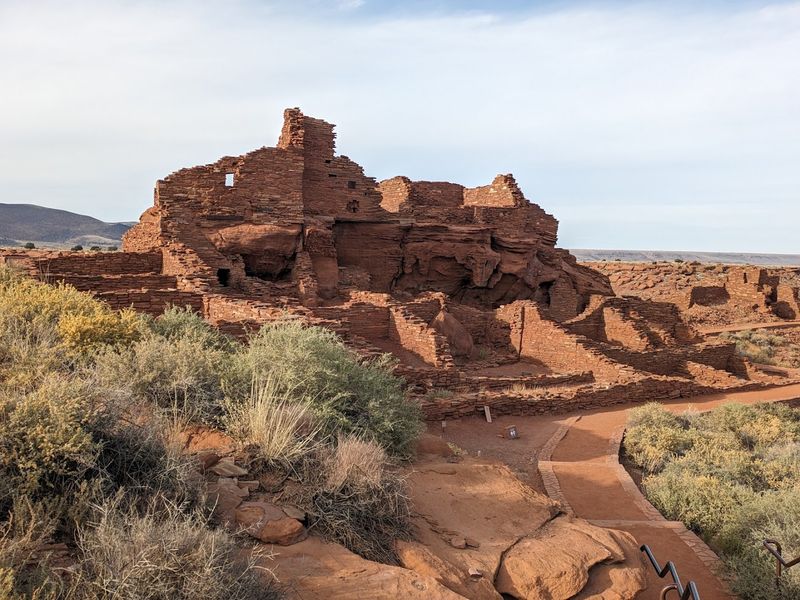
Picture a four-story apartment building made entirely of red sandstone blocks, standing alone in a windswept high desert where pronghorn antelope still roam. That’s Wupatki Pueblo, the centerpiece of this monument that protects several ancestral sites scattered across nearly 36,000 acres.
Walking the main trail, you’ll circle the massive pueblo that once housed more than 100 rooms.
But here’s something you won’t find at most other ruins: a ball court similar to those found hundreds of miles south in Mexico, hinting at trade networks and cultural connections that stretched across the ancient Southwest.
Even more unusual is the natural blowhole near the pueblo, where air rushes in or out of cracks in the earth depending on atmospheric pressure. Ancient residents likely considered this geological oddity sacred.
The monument currently keeps the main trail open year-round, though three rooms are temporarily off-limits because of an unstable wall that archaeologists are monitoring.
3. Montezuma Castle National Monument, Camp Verde
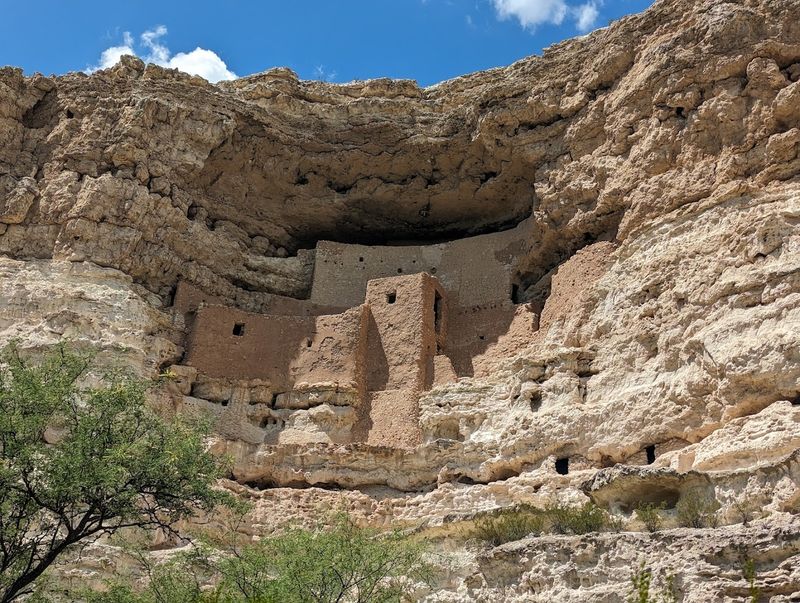
Despite its name, this stunning cliff dwelling has absolutely nothing to do with the Aztec emperor Montezuma. Early settlers just assumed something this impressive must be connected to the famous Mexican ruler, and the name stuck even after everyone learned better.
Built by Sinagua people sometime between 1100 and 1425 CE, this five-story structure clings to a limestone cliff face 90 feet above the valley floor. About 20 rooms are packed into a natural alcove that provided shelter from rain and summer heat.
The preservation is remarkable because the alcove protected the dwelling from centuries of weather. You can’t climb up into the rooms anymore, which actually helps preserve them, but the easy paved trail below offers excellent views of the intricate stonework and original wooden beams.
Bring binoculars if you want to spot details like the small windows and doorways that connected different levels. The setting, overlooking Beaver Creek, shows how carefully these ancient architects chose their building sites.
4. Tonto National Monument, Roosevelt
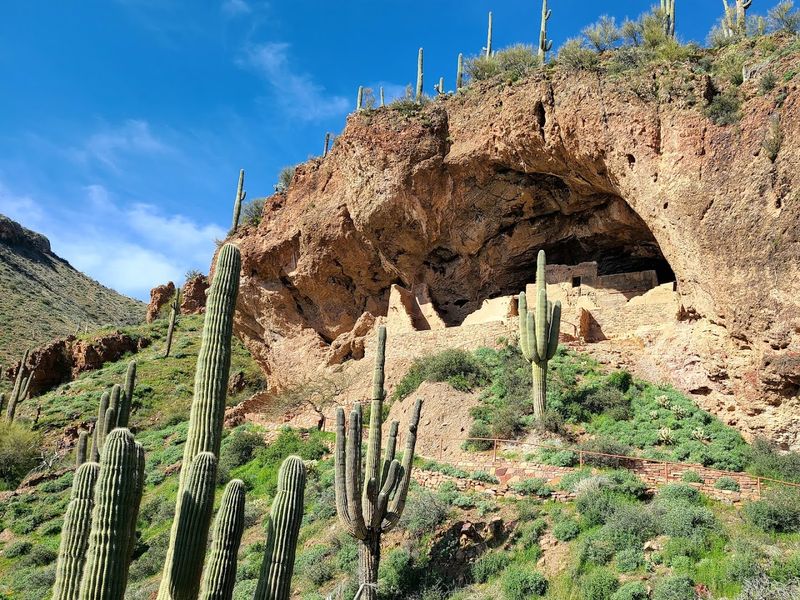
High above what’s now Roosevelt Lake, these cliff dwellings belonged to the Salado people who farmed the Salt River valley between 1250 and 1450 CE.
The Lower Cliff Dwelling, containing about 16 rooms, sits just half a mile up a steep but paved trail that rewards your effort with sweeping lake views.
Summer visitors need to plan carefully because the trail to the lower dwelling closes at noon when temperatures soar past comfortable.
The larger Upper Cliff Dwelling, with 32 rooms tucked even higher in the cliff face, can only be visited through reserved guided hikes offered during cooler months from November through April.
Inside these stone rooms, archaeologists found beautifully woven textiles, decorated pottery, and tool, showing that the Salado created a sophisticated culture in this rugged landscape. The natural alcoves kept their belongings preserved for centuries.
Standing on the trail looking out over the modern reservoir, you can imagine how different this valley looked when ancient farmers tended crops below these protective cliff homes.
5. Walnut Canyon National Monument, Flagstaff
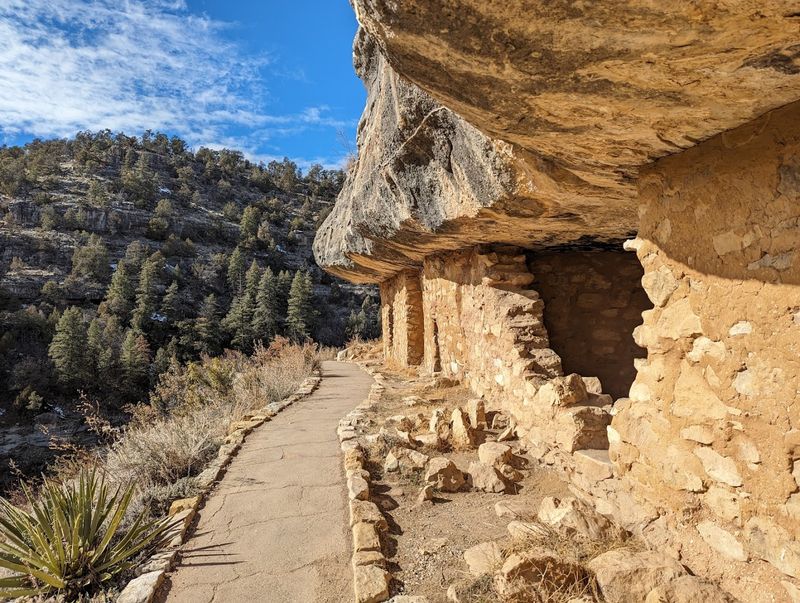
More than 25 cliff rooms line the walls of this limestone canyon, each one tucked beneath a natural ledge that provided a ready-made roof for Sinagua families who lived here between 1100 and 1250 CE.
The Island Trail offers the best way to experience these dwellings up close, though you’ll earn that experience by climbing 240 steps down into the canyon and back up again.
This trail loops around a peninsula of rock, passing doorway after doorway where you can peek inside rooms that still show smoke-blackened ceilings and stone storage bins. The builders didn’t need to construct roofs since the overhanging ledges did that job naturally.
They focused instead on building sturdy walls to enclose the front of each dwelling.
The canyon itself is beautiful, with ponderosa pines growing from the rim and Douglas firs clinging to shadier spots below. Keep in mind the Island Trail closes earlier than other parts of the monument, so arrive early to avoid disappointment.
6. Navajo National Monument, Shonto
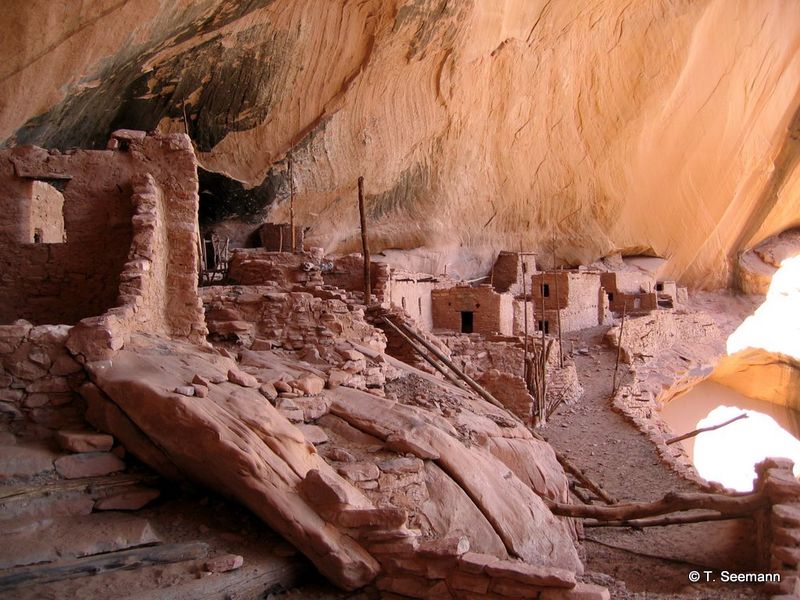
Hidden within a massive sandstone alcove that could swallow a football field, Betatakin contains 135 rooms built between 1267 and 1286 CE.
That’s an incredibly short occupation period, just 19 years, which makes archaeologists wonder why people invested so much effort into a home they’d abandon so quickly.
You can glimpse Betatakin from the mile-long Sandal Trail overlook, but seeing it up close requires joining one of the ranger-led hikes offered on selected days. These five-hour round trips involve steep terrain but reward hikers with the chance to stand inside the alcove among actual dwelling rooms.
Even more remote is Keet Seel, one of the best-preserved cliff dwellings in the Southwest, accessible only through strenuous overnight backpacking trips on limited 2026 dates that require advance reservations. The monument stays open year-round, though winter snow can affect trail access.
Both sites show the remarkable construction skills of ancestral Puebloan people who built multi-story villages in these protected alcoves.
7. Tuzigoot National Monument, Clarkdale
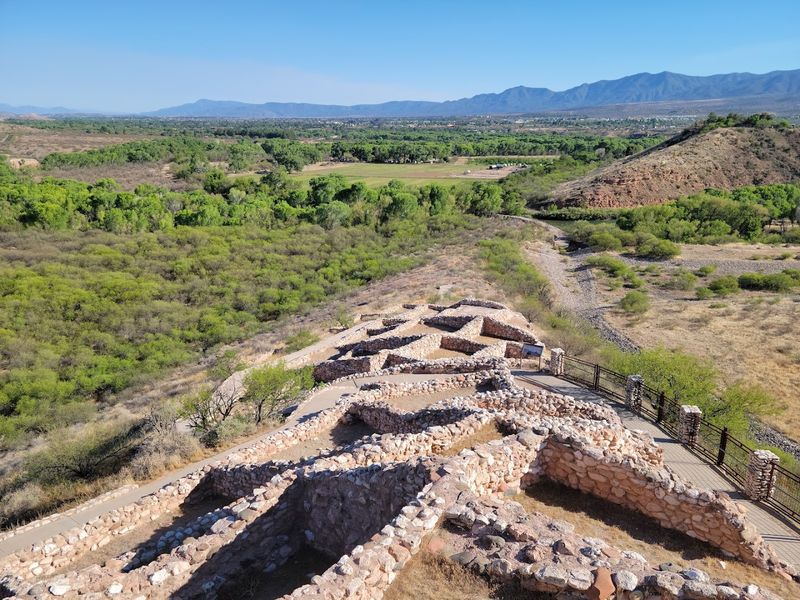
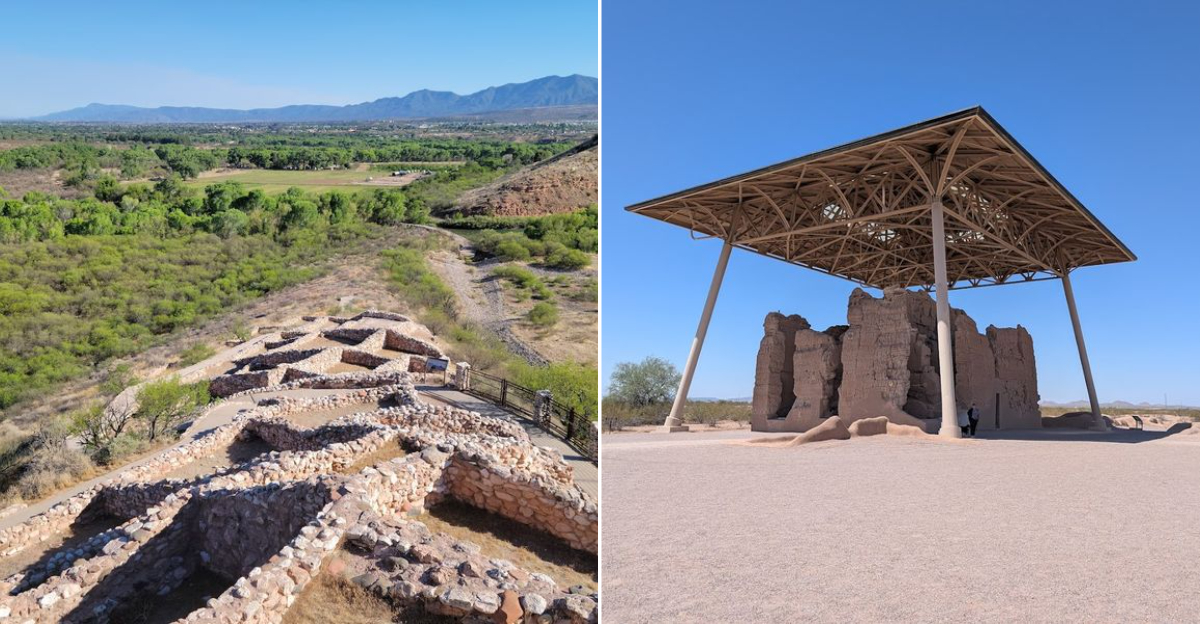
Sprawling across a limestone ridge overlooking the Verde Valley, Tuzigoot once housed up to 225 people in a pueblo that grew room by room over 300 years.
The name comes from the Apache word meaning “crooked water,” referring to the nearby Verde River that sustained this Sinagua community from about 1000 to 1400 CE.
Unlike cliff dwellings that hide in alcoves, this pueblo stands boldly on a hilltop where residents could spot approaching visitors or threats from miles away. The structure eventually grew to 110 rooms on multiple levels, all connected without a single doorway at ground level for defensive purposes.
Today’s short hilltop trail circles the ruins and lets you climb to the summit where you can enter a reconstructed room and imagine daily life in this ancient apartment complex.
Original walls still stand several feet high in places, showing how builders used river cobbles and limestone chunks set in mud mortar. The pueblo and trails welcome visitors during regular monument hours, offering one of Arizona’s most accessible ancient sites.
8. Casa Grande Ruins National Monument, Coolidge
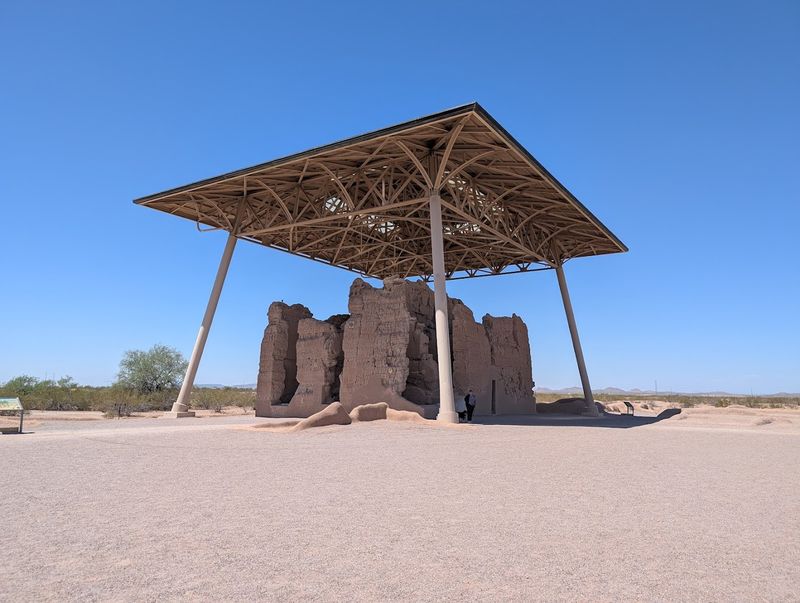
Rising four stories above the Sonoran Desert floor, the Great House at Casa Grande is the largest prehistoric structure ever built in this region.
Constructed around 1350 CE by the Ancestral Sonoran Desert people, this massive building used over 3,000 tons of caliche mud to create walls that are still standing more than 650 years later.
Nobody knows exactly what purpose this building served. The walls are oriented to align with the sun’s position during solstices and equinoxes, suggesting astronomical observations played a role.
Some rooms might have been used for ceremonies, others possibly for storage or administrative functions in a community that depended on sophisticated irrigation canals.
A modern roof now protects the Great House from rain erosion, and you can walk around its base to appreciate the scale and craftsmanship. The surrounding grounds preserve remnants of the ancient irrigation network that brought water from the Gila River to fields that fed hundreds of people.
The monument opens daily from 9 a.m. to 4 p.m., except for certain holiday closures.
9. Palatki Heritage Site, Sedona
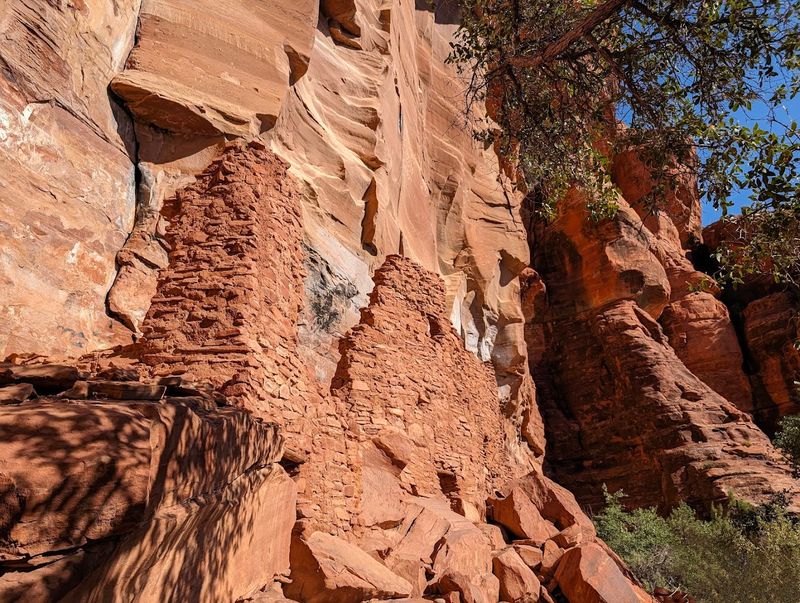
Red rock walls tower above stone dwellings and rock art panels that make Palatki one of Sedona’s most visually stunning archaeological sites.
The name means “red house” in the Hopi language, perfectly describing the rust-colored sandstone cliffs that shelter these ruins built by Sinagua people between 1100 and 1300 CE.
What sets Palatki apart is the combination of architecture and art. You’ll find both pictographs painted on the rock faces and petroglyphs carved into the stone, depicting geometric designs, handprints, and mysterious figures that might represent spiritual beings or astronomical events.
The site operates on limited summer hours, and advance tour reservations are strongly recommended because space is restricted to protect the ruins and rock art from too much traffic.
Rangers lead small groups along the trails, sharing insights about the symbols and structures that make this place special.
The setting is absolutely gorgeous, with Sedona’s famous red rocks creating a backdrop that looks like it belongs on a postcard rather than in real life.
10. Honanki Heritage Site, Sedona
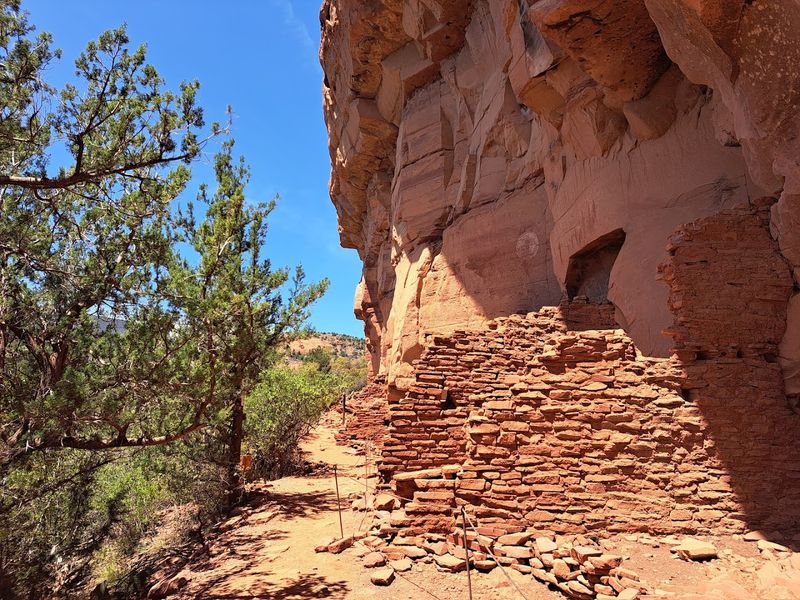
Larger and more remote than its neighbor Palatki, Honanki preserves the remains of what was once a substantial cliff dwelling community.
The name translates to “bear house” in Hopi, and this sprawling site tucked into red rock alcoves west of Sedona shows evidence of occupation spanning several centuries.
Archaeologists count at least 60 rooms in the main dwelling area, though the actual number might have been higher before erosion took its toll.
The rock art here is particularly impressive, with numerous panels showing everything from handprints to complex geometric patterns that might have marked clan symbols or recorded important events.
Getting to Honanki requires driving an unpaved road that can be rough on low-clearance vehicles, so check current conditions before heading out. The site currently welcomes visitors seven days a week during operating hours.
Once you arrive, trails lead past the cliff dwellings and rock art panels, offering a quieter, less crowded experience than some of Arizona’s better-known ruins. The extra effort to reach this place pays off in solitude and scenery.
11. Homolovi State Park, Winslow
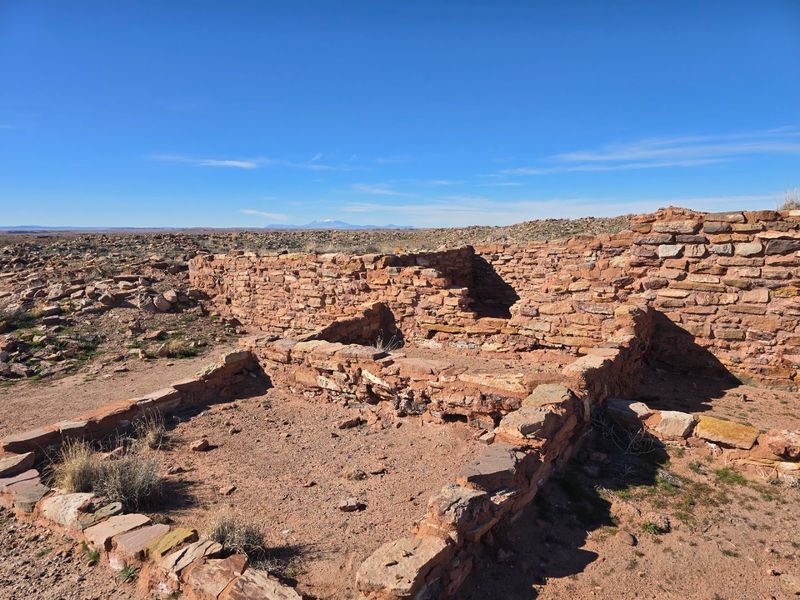
Pottery sherds still scatter across the ground at Homolovi, exactly where ancient residents dropped or discarded them 700 years ago.
The park protects several ancestral Hopi village sites that flourished mainly between the 1200s and late 1300s CE, when hundreds of people lived along the Little Colorado River.
Unlike some archaeological sites where everything has been collected and catalogued, Homolovi’s pottery fragments remain in place, creating an outdoor museum where you can see the actual distribution of artifacts across the landscape.
Rangers ask visitors to look but never touch or remove these irreplaceable pieces of the past. Archaeological trails wind through different village areas, and interpretive signs explain what daily life might have looked like when these pueblos bustled with activity.
The park museum displays some of the most significant finds and tells the story of how modern Hopi people maintain cultural and spiritual connections to these ancestral sites. This isn’t just ancient history to them but part of a continuous story that links past and present in meaningful ways.
12. S’edav Va’aki Museum And Archaeological Park, Phoenix
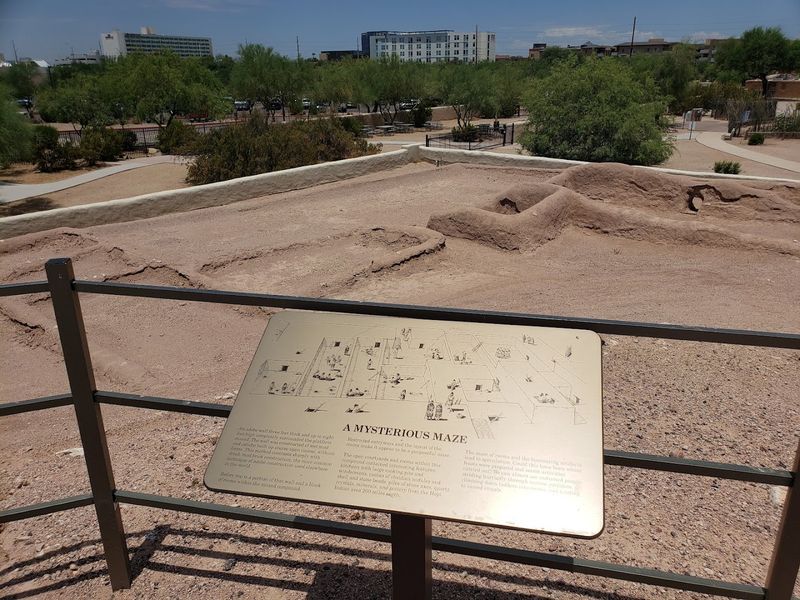
Right in the middle of modern Phoenix, this 1,500-year-old site preserves a remarkable platform mound, ball court, and sections of an ancient canal system that once irrigated thousands of acres of desert farmland.
The Hohokam people who built this complex created one of the most sophisticated irrigation networks in prehistoric North America.
The platform mound rises about 30 feet above the surrounding desert floor and was constructed in stages over several centuries, with the final version supporting ceremonial structures on its flat top.
Archaeologists believe it served as both a religious center and a symbol of political power for leaders who coordinated the massive labor required to maintain the canals.
An outdoor interpretive trail remains open for self-guided exploration, though the museum operates on reduced summer hours during July and August 2026 when Phoenix heat becomes intense.
Walking among these ruins with downtown skyscrapers visible in the background creates a striking contrast between ancient and modern civilizations, both shaped by the challenge of thriving in the Sonoran Desert.