
Arizona Lets You Look Through Telescopes Powerful Enough To Reveal Distant Galaxies
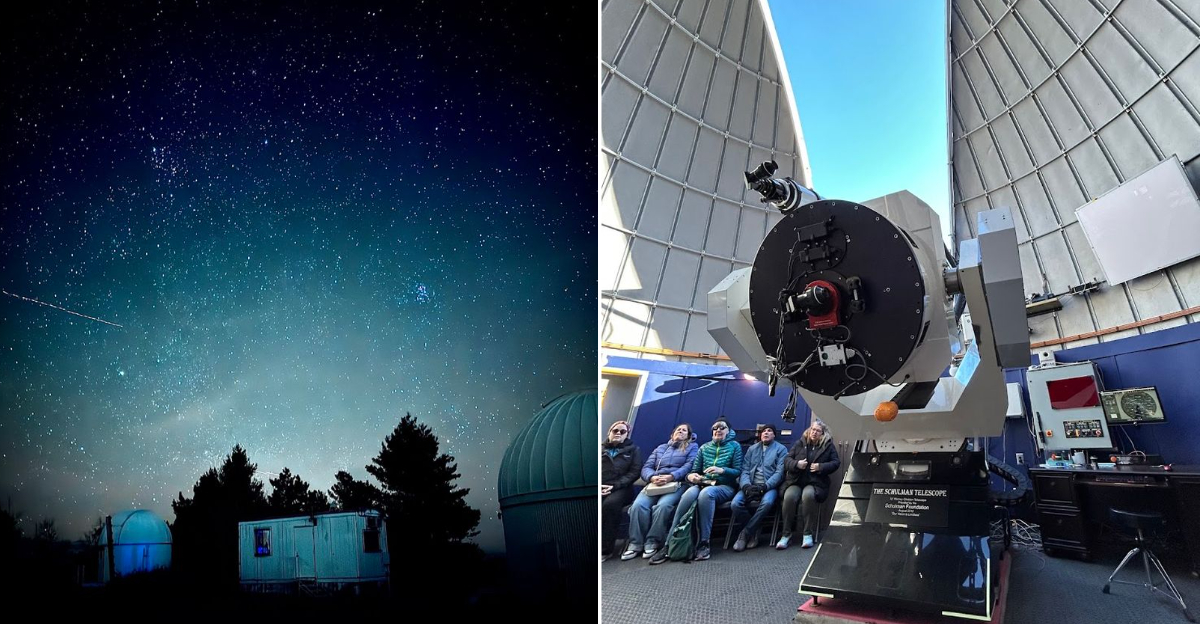
Staring into the cosmic abyss usually requires a multi-million-dollar NASA budget or a very vivid imagination. Yet, there I stood on a chilly mountain peak in Arizona, about to peer through a telescope so ridiculously powerful it makes regular backyard stargazers look like they are squinting at fireflies.
My mission? To track down distant galaxies swirling billions of light-years away while trying very hard not to drop my hot chocolate in the dark.
Astronomy has never been this intensely humbling, or this cold. If you have ever wanted to feel delightfully microscopic while browsing the universe’s ultimate photo album, you are in the right place.
Fasten your seatbelt, because we are about to take a little field trip far, far beyond the Milky Way. If you have ever wanted to see Saturn’s rings with your own eyes, watch a galaxy swirl in real time, or simply feel genuinely small in the best possible way, this is the trip that will do it.
Keep reading and I will walk you through everything that makes this place so extraordinary, from the wild drive up the mountain to the moment a telescope shows you a star cluster 25,000 light-years away.
The Sky Island Drive Up Catalina Highway
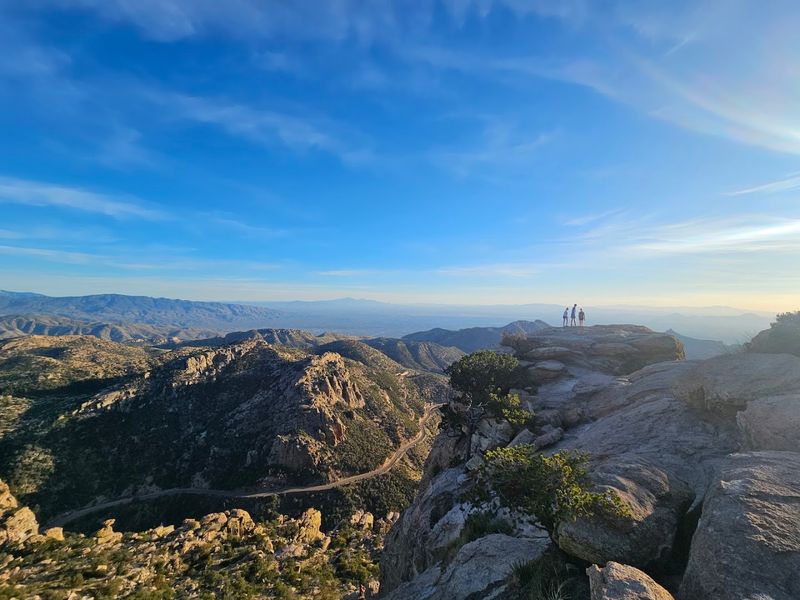
Before you even reach a telescope, the journey itself earns a standing ovation. Catalina Highway climbs from the Sonoran Desert floor near Tucson all the way to the alpine zone of Mount Lemmon, covering roughly 27 miles and five distinct ecological zones along the way.
You pass towering saguaros, then scrubby oak woodlands, then cool ponderosa pines, all within a single drive that feels like traveling from the American Southwest to the Canadian Rockies.
I rolled down my windows somewhere around mile 15 and felt the temperature drop a noticeable 20 degrees in what seemed like minutes.
The canyon views open up dramatically on the switchbacks, and if you stop at the Windy Point Vista, you will get a panoramic look at Tucson spread across the valley below. It is genuinely breathtaking in a way that no photograph fully captures.
Plan about 45 minutes each way without stops, though stopping is highly encouraged. The drive primes you perfectly for the cosmic experience waiting at the summit.
The Remarkable Elevation
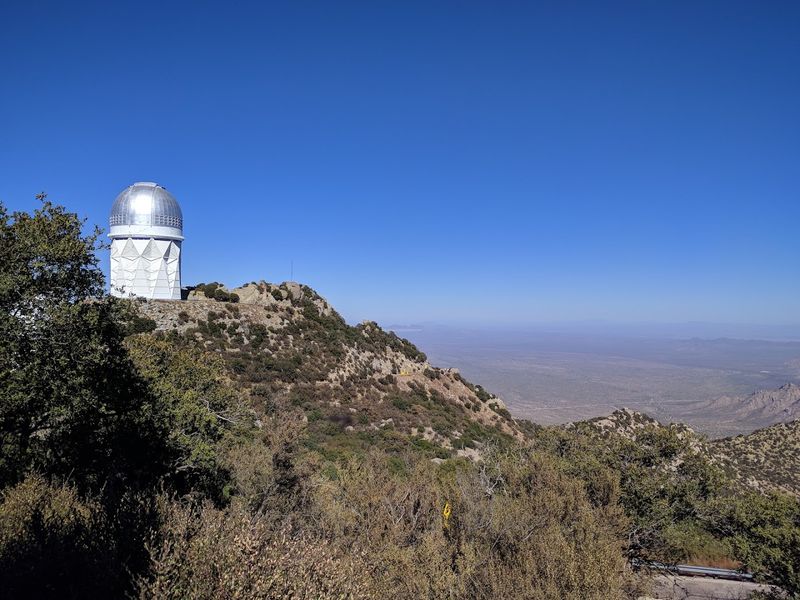
Standing at 9,157 feet above sea level changes everything about how you see the sky. At that altitude, you are above a significant portion of the atmospheric moisture and light pollution that typically blurs celestial objects for observers at ground level.
The result is a sky so sharp and detailed that even the unaided eye can spot features invisible from the city.
I remember stepping outside after the orientation session and tilting my head back. The Milky Way was not a faint smudge but a bold, textured river of light stretching from horizon to horizon.
It looked almost three-dimensional, and I stood there for a solid two minutes just absorbing it before anyone had to say a single word.
Arizona is already celebrated for its dark skies, and the SkyCenter sits in one of the state’s most protected observing zones. That combination of elevation, dry air, and minimal light pollution creates conditions that professional astronomers genuinely envy.
The Schulman And Phillips Telescopes Up Close
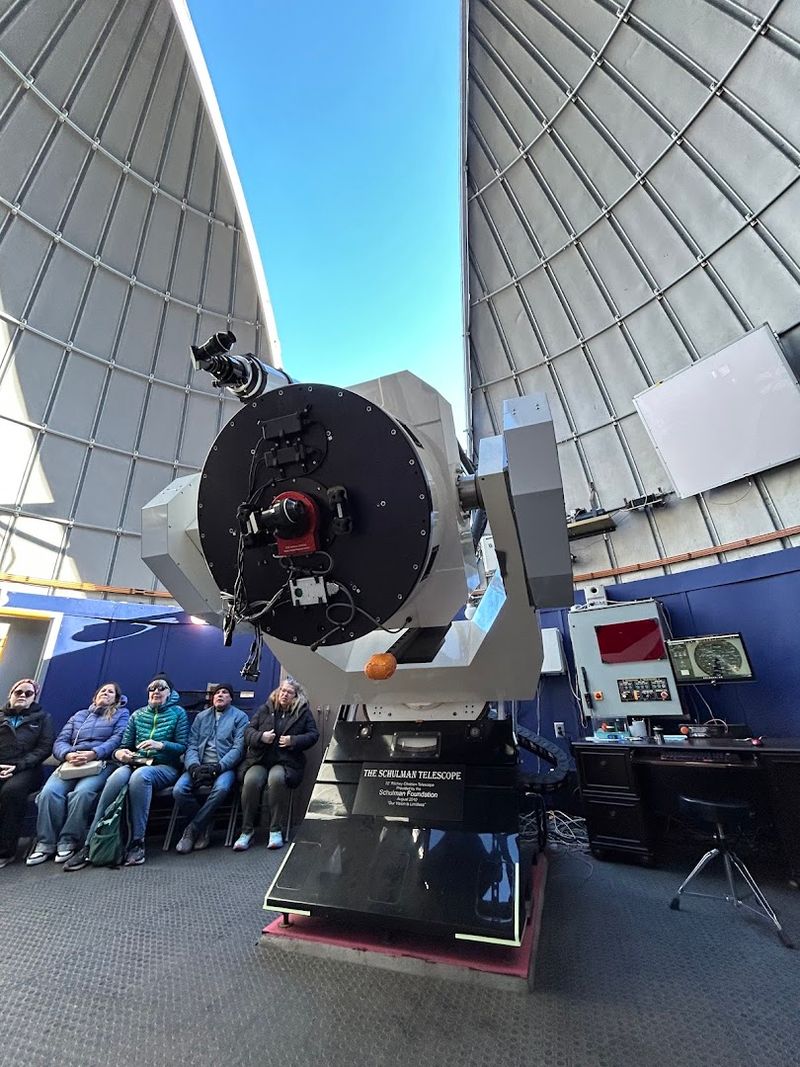
The centerpiece of the SkyCenter experience is getting your eye up to one of two seriously powerful instruments.
The 32-inch Schulman Telescope and the 24-inch Phillips Telescope are among the largest telescopes in the entire American Southwest that are dedicated specifically to public viewing. These are not the wobbly backyard refractors of childhood.
These are precision research-grade instruments capable of resolving objects millions of light-years away.
When I pressed my eye to the Schulman eyepiece and the operator pointed it at the Andromeda Galaxy, I genuinely had to take a breath.
That faint smudge I had always seen in photos resolved into a soft glowing oval with structure, texture, and depth. Knowing it was over two million light-years away made the moment feel almost philosophical.
The trained science communicators on staff adjust the telescopes throughout the evening to show multiple targets, rotating through planets, nebulae, star clusters, and galaxies depending on what is visible that particular night.
Every object they choose feels intentional and awe-inspiring.
The SkyNights Program Experience
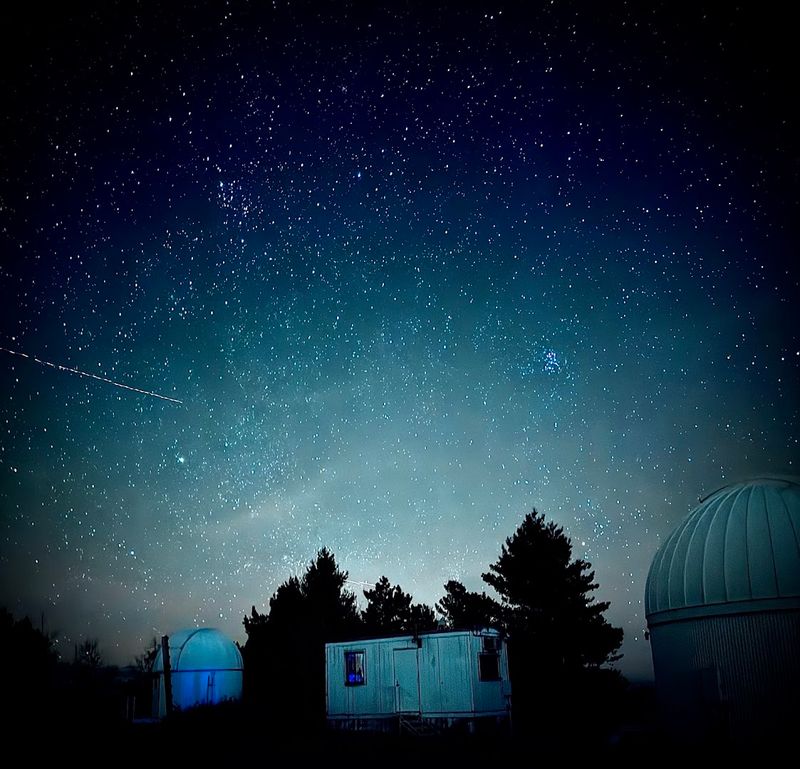
SkyNights is the flagship program and the one I booked three weeks in advance because spots fill up fast. The evening begins about two hours before sunset, which gives you time for a light meal and a polished astronomy presentation by one of the SkyCenter’s science communicators.
These folks are sharp, enthusiastic, and surprisingly funny, which makes even the dense astrophysics content feel approachable and genuinely fun.
As the sky darkens, guests move outside for a guided naked-eye and binocular tour of the emerging constellations. There is something quietly magical about learning to read the sky like a map, connecting dots of light into stories that ancient cultures told for thousands of years.
Then the telescopes open up and the real show begins.
The full SkyNights session runs about five hours, ending well after midnight. Dress warmly because even in summer the mountain gets cold after dark, and you will not want to leave early. Every single minute feels worth the drive.
From Cold War Radar Station To Public Observatory
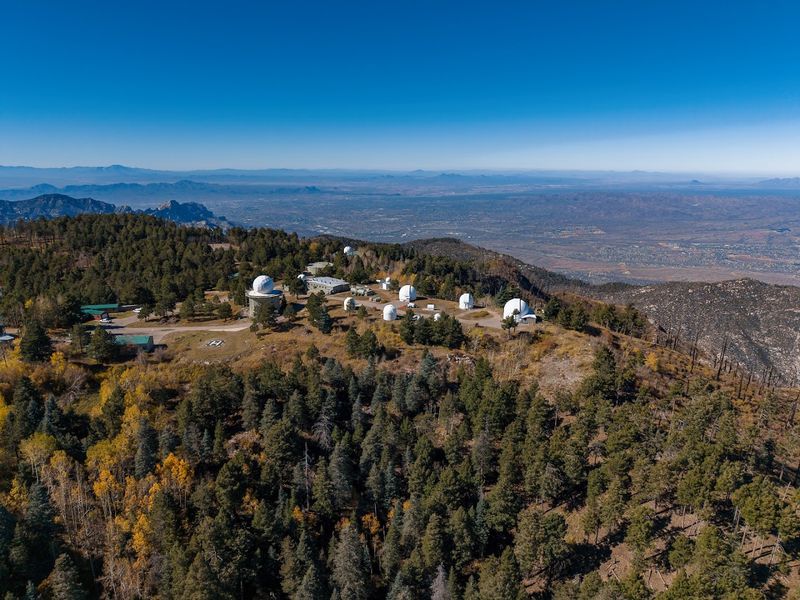
Few places carry a backstory as unexpected as this one. Before it became a hub for cosmic wonder, the Mount Lemmon summit served as an active military installation.
From 1956 to 1969, the Mount Lemmon Air Force Station operated here as one of the highest continuously running radar stations in the world, scanning the skies for Cold War threats rather than nebulae.
After the military decommissioned the site, the University of Arizona’s Steward Observatory took over in 1970, converting the infrastructure into an infrared research facility.
The Mount Lemmon SkyCenter as a public outreach program was then established in 2009, creating a space where everyday visitors could access world-class instruments and expertise.
Walking around the summit knowing that history adds a fascinating layer to the visit. The domes that now track distant galaxies once housed radar arrays built for a very different kind of vigilance.
That transformation, from defense to discovery, feels like a genuinely hopeful story about what science can become when it turns its gaze upward.
What To Wear And Bring For Your Visit
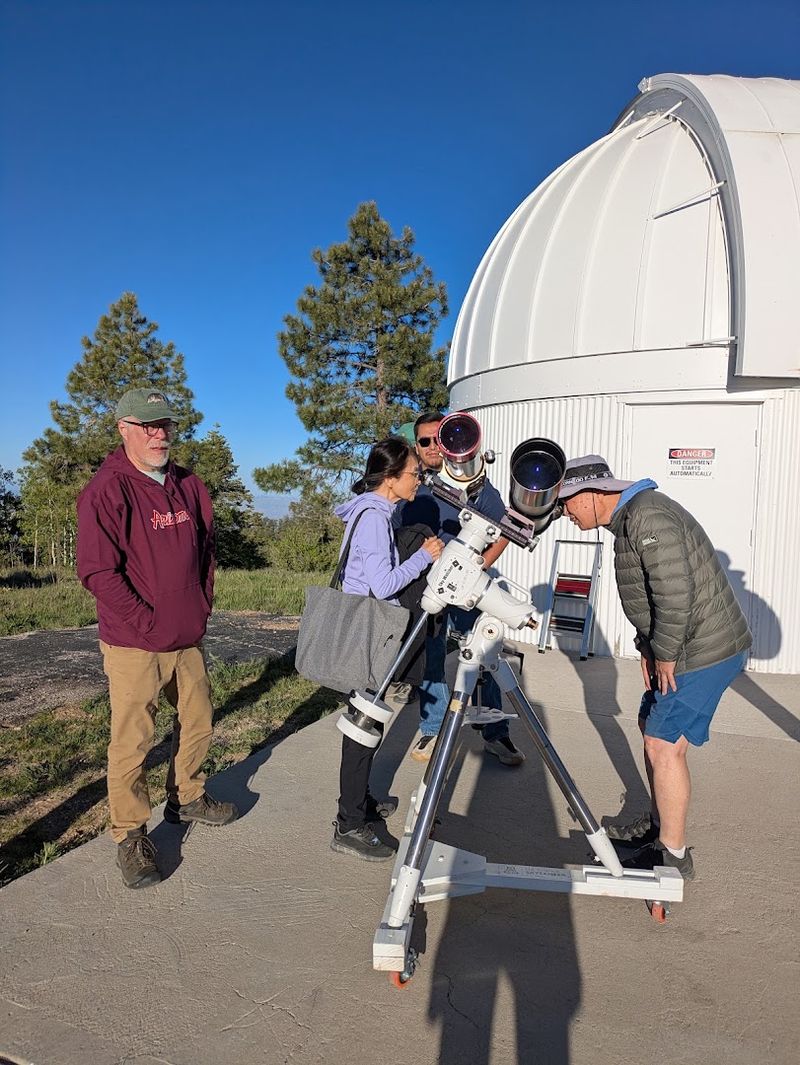
Practical preparation makes the difference between a magical night and a shivery, distracted one. The summit sits at over 9,000 feet, and even when Tucson is cooking at 95 degrees in summer, Mount Lemmon can hover around 65 degrees during the day and drop into the low 40s after sunset.
From September through May it gets considerably colder, and frost is not unusual. I wore a hoodie on my first visit in early October and spent the last two hours of the program quietly regretting that decision.
Layers are essential: a base layer, a mid-layer fleece, and a proper insulated outer jacket. Add a warm hat and gloves, and you are set. Closed-toe shoes are strongly recommended since the terrain around the domes is uneven gravel and dark conditions make footing tricky.
Bring a red-light flashlight if you have one, since white light disrupts night vision and the staff will appreciate the consideration. A small backpack with snacks and water rounds out your kit perfectly for the long evening ahead.
RemoteSky: When The Mountain Is Out Of Reach
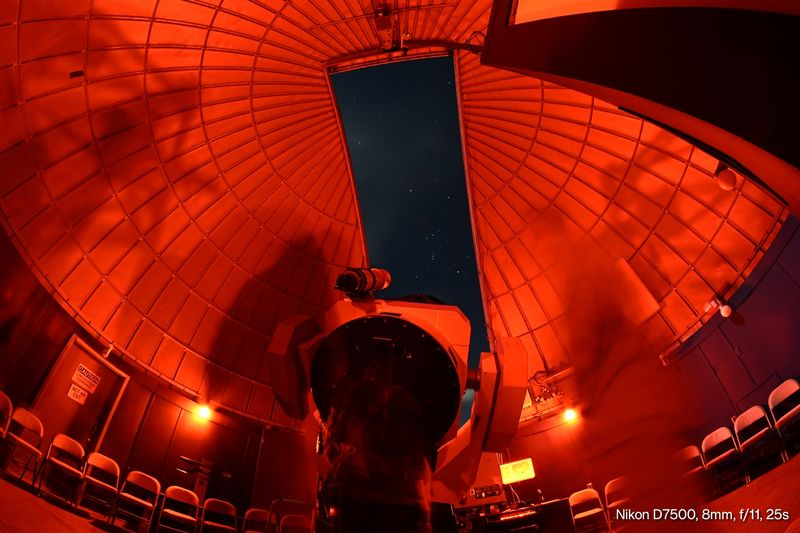
Not everyone can make the mountain drive, and the SkyCenter thought of that too. The RemoteSky program brings the observatory experience down to Tucson itself, offering live telescope feeds and virtual presentations that let participants see real celestial objects without leaving the city.
It is a genuinely clever solution for families with young children, visitors with mobility limitations, or anyone visiting during the summer monsoon season when mountain weather can be unpredictable.
I tried the RemoteSky option on a follow-up visit when afternoon thunderstorms made the summit road questionable. Watching a live feed of the Orion Nebula projected large while a science communicator narrated in real time was surprisingly immersive.
It is not the same as pressing your eye to an eyepiece at 9,000 feet, but it is far better than missing the experience entirely.
The program also serves school groups and community events throughout the year, spreading genuine astronomical literacy across southern Arizona in a way that feels both generous and forward-thinking. Science outreach at its most practical and creative.
Booking Tips And Planning Your Trip
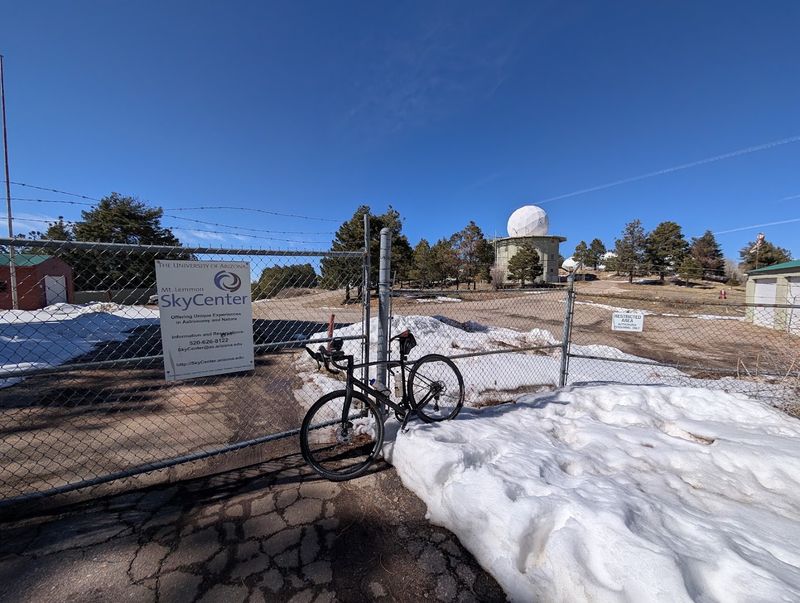
Getting your reservation locked in early is the single most important piece of advice I can offer. SkyNights sessions book out weeks in advance, especially on weekends and during popular stargazing months like spring and fall when skies are clearest.
The SkyCenter’s website is the only official booking channel, and checking it the moment you know your travel dates is a smart move.
The SkyCenter is located at 9800 East Ski Run Road, Mt. Lemmon, AZ 85619, about 35 miles northeast of downtown Tucson. Allow at least an hour for the mountain drive, and add extra time if you plan to stop at viewpoints along Catalina Highway.
Gas up before you leave Tucson since there are no fuel stations on the mountain. Programs run year-round, though monsoon season from July through mid-September can bring cancellations due to cloud cover or lightning.
The SkyCenter communicates weather-related changes promptly, but booking in shoulder seasons gives you the best odds of a crystal-clear sky and a night you will talk about for years.