
Arkansas Is Landlocked, But You Can Still Sleep On A Real Submarine Here
Most museum visits do not begin with a climb down a 14-foot ladder. This one does, and it gets more surprising once you are inside.
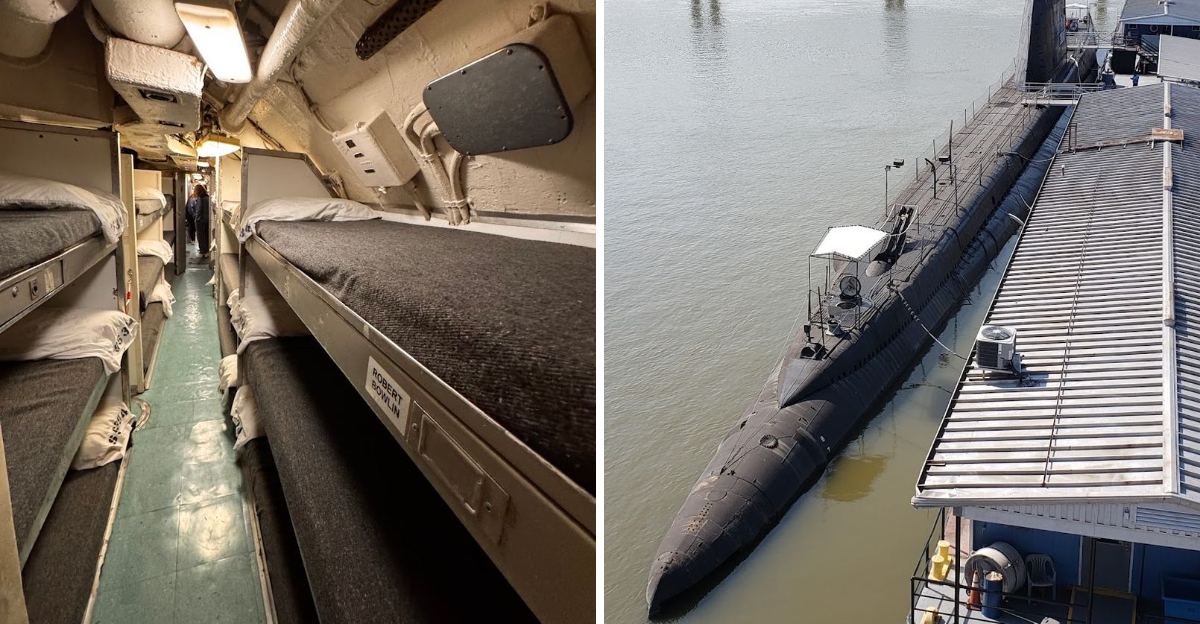
A real World War II submarine sits along a riverfront, packed with original controls and tight compartments sailors once used daily. Visitors duck through narrow hatches, pass stacked bunks, and see just how little personal space existed aboard the vessel.
Arkansas is far from the sea, yet this attraction delivers a close look at naval life that feels immediate rather than distant. The submarine also served for decades under two nations, giving each room a history that extends well beyond one war.
Group sleepovers let guests spend the night in refurbished crew bunks, which takes the experience far past an ordinary guided tour. It feels unusual and surprisingly personal.
By the end, the vessel feels less like an exhibit and more like a preserved world.
A Wartime Giant Moored Along The River
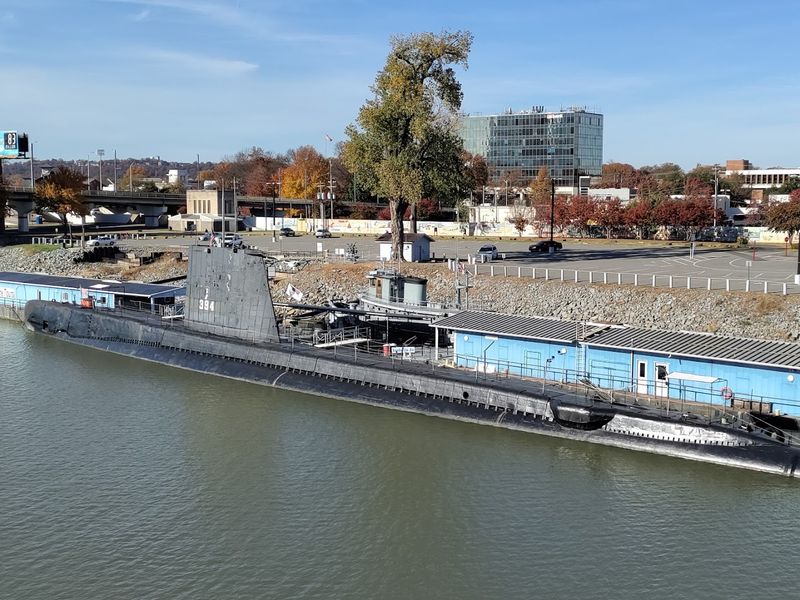
A 311-foot steel hull resting in a river park is not something most travelers expect to encounter on a road trip through the American South.
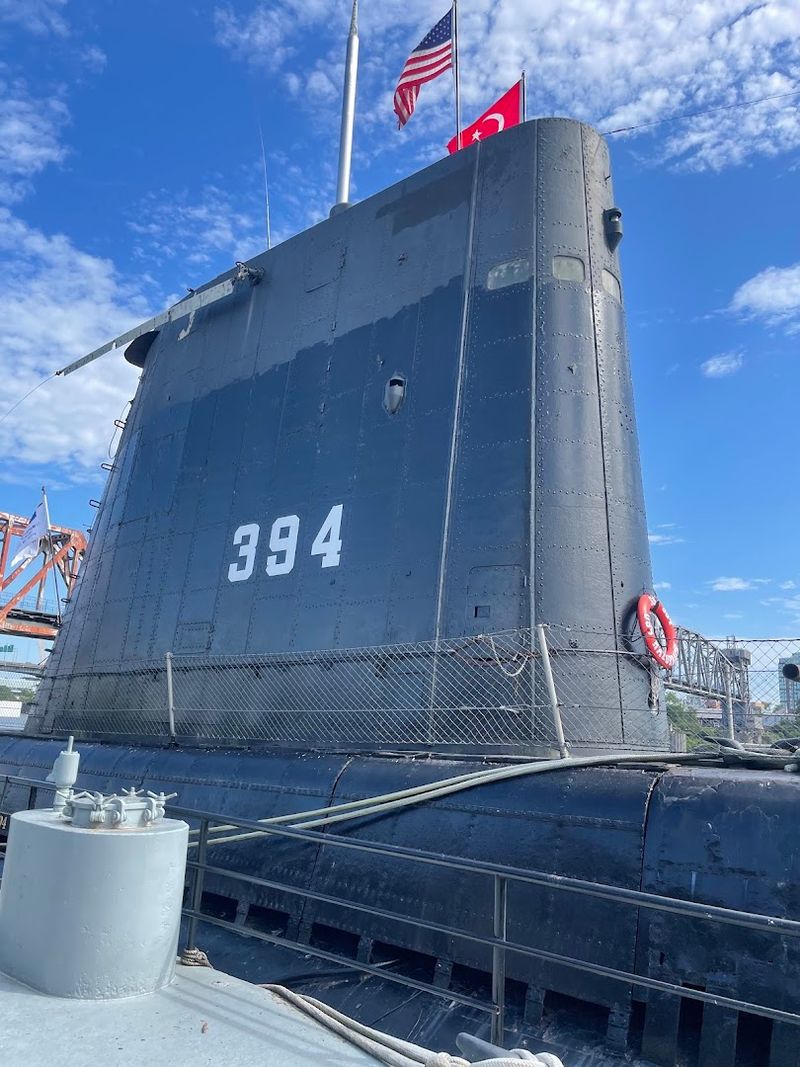
The USS Razorback, a Balao-class submarine launched on January 27, 1944, holds the distinction of being one of the longest-serving combat submarines still in existence, having served two nations across 56 years of active duty.
During World War II, it played a direct role in some of the most significant moments of the conflict, including being present in Tokyo Bay during the formal surrender of Japan.
That single fact alone tends to stop visitors mid-step when they hear it on the tour.
The sheer scale of the vessel surprises nearly every first-time visitor, because photographs simply do not capture how imposing a submarine looks when you are standing next to it on a riverbank.
Arkansas may sit hundreds of miles from the nearest ocean, but this wartime giant anchored along the river proves that naval history has a way of finding its own shore, and you can find it at the Arkansas Inland Maritime Museum at 120 Riverfront Park Dr, North Little Rock, AR 72114.
The Hatch Opens To A Different World
Before you even set foot inside, the submarine sends a clear message: this is not a museum where you stroll past glass cases.
Visitors board the USS Razorback by descending a steep 14-foot ladder, a climb that immediately reframes what the word “tour” means in this context.
The moment your hands grip those metal rungs and your feet find the first step down, the outside world starts to feel very far away.
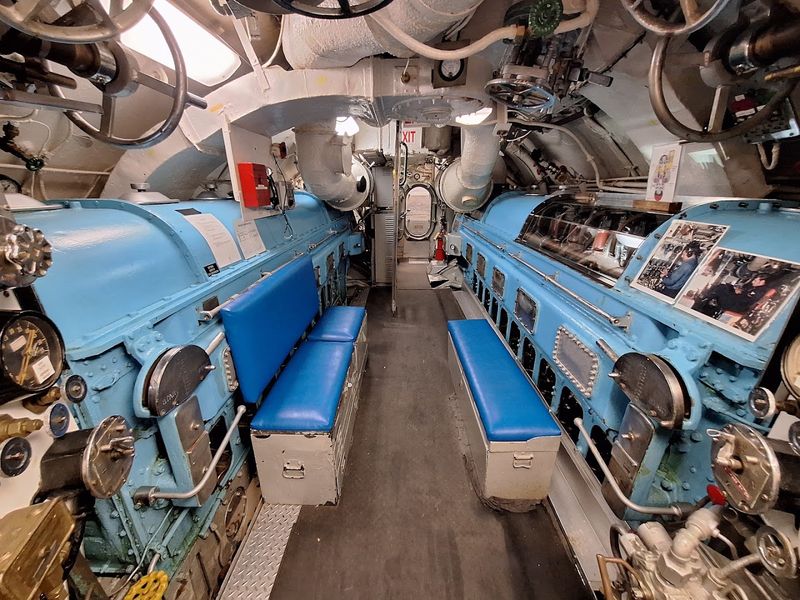
The submarine is kept 90 percent operational, which means the equipment, gauges, and mechanical systems surrounding you are not props or replicas placed there for effect.
A distinct combination of sights and smells greets you as you move through the airlock entrance, and those sensory details do more to communicate life aboard a submarine than any written description ever could.
Tour guides walk visitors through the vessel with real knowledge and enthusiasm, pointing out details that would be easy to miss on your own.
What begins as a simple step down a ladder quickly turns into one of the more genuinely immersive historical experiences available anywhere in Arkansas, and that transformation happens faster than you might expect.
Inside The Tight Quarters Sailors Once Called Home
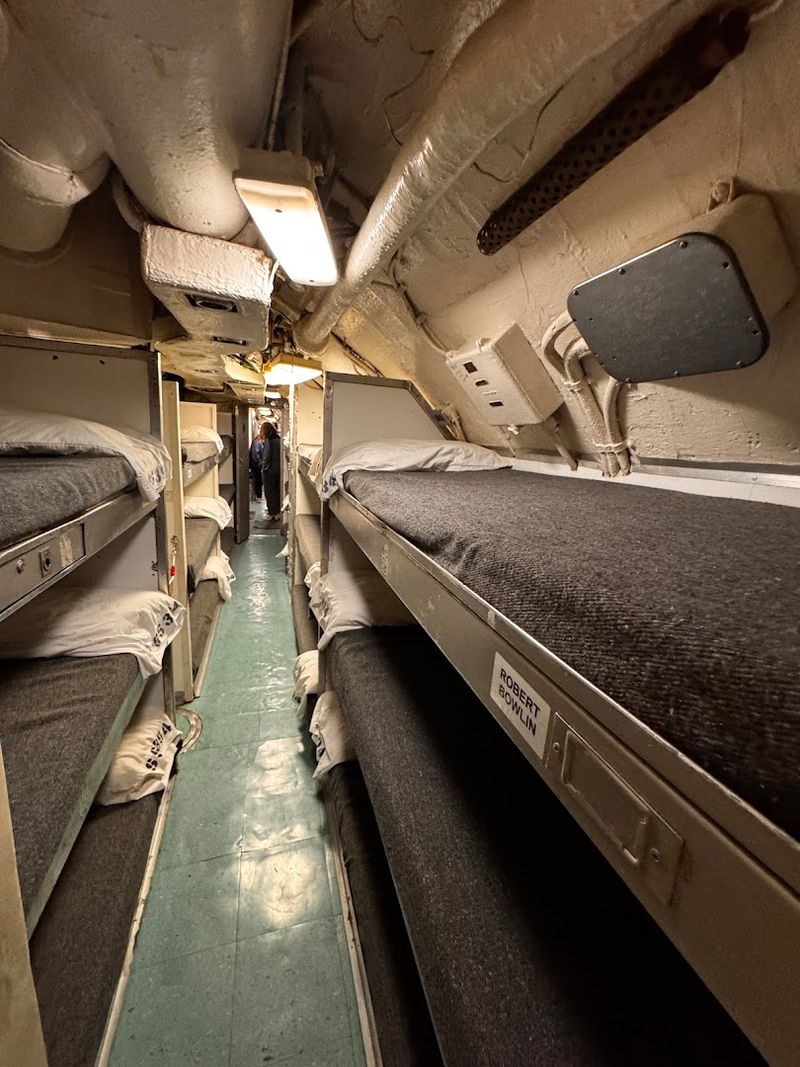
Hot-racking is a term that sounds almost cozy until you understand what it actually means: three sailors rotating through two bunks in shifts, with no bunk ever going cold.
The USS Razorback carried roughly 10 officers and 70 enlisted men, and every square inch of the vessel was engineered to serve a function, leaving almost nothing for personal comfort.
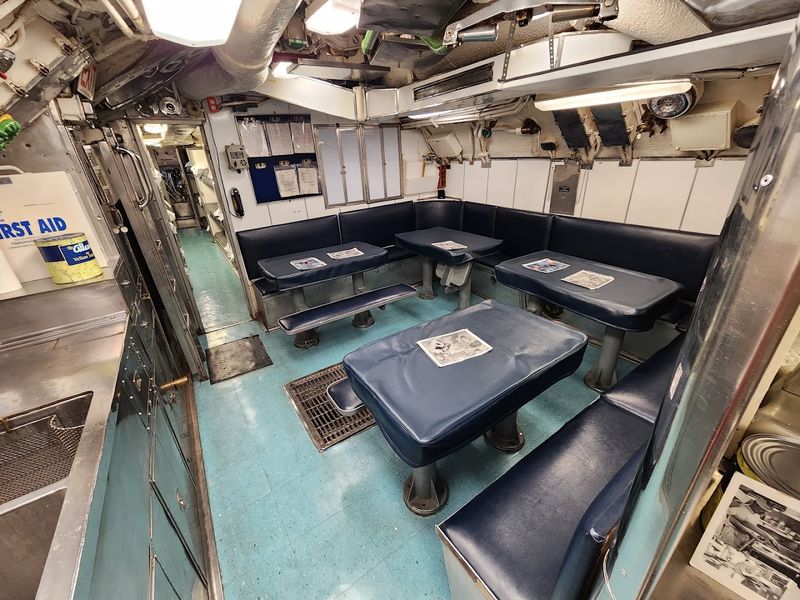
Food was stored wherever space permitted, including beneath the mess hall floor, where a freezer was tucked out of the way to free up room elsewhere.
Showers were a rare luxury, sometimes limited to a 30-second rinse every two weeks, taken in a tiny doorless closet that offered zero privacy.
The mess tables pulled double duty as entertainment hubs, with board games built directly into their surfaces for crew members during off-duty hours.
Standing inside these quarters and looking around at the bunks stacked tightly together, it becomes very easy to feel genuine respect for the people who lived this way for months at a time.
Tight as these spaces are, they tell a story of discipline and resilience that no exhibit panel could fully convey on its own.
Original Control Panels Still Fill The Command Room
Walk into the control room of the USS Razorback and the first thing that hits you is the sheer density of instrumentation packed into a space roughly the size of a large living room.
Dials, switches, levers, and periscopes crowd every surface, and the fact that the submarine remains 90 percent operational means these instruments are not decorative leftovers but functional pieces of a working mechanical system.
During active service, this room was the nerve center of the entire vessel, where officers processed information and issued commands that determined the fate of everyone aboard.
The preserved state of the equipment gives visitors an unusually direct connection to the people who once stood in this exact spot under real pressure.
Tour guides do an excellent job of explaining what each station controlled and how the crew coordinated their actions across different systems simultaneously.
There is a particular stillness in the control room that feels different from the rest of the submarine, as if the space itself remembers what happened here.
Museum visitors rarely get this close to original wartime technology still capable of doing exactly what it was built to do.
Spending The Night Below The Surface Feels Surreal
A night inside a real submarine sounds like an experience pulled from someone else’s bucket list, but groups can actually book it here.
The museum offers Submarine Sleepovers for groups, allowing participants to spend the night in refurbished bunks within the crew quarters, experiencing firsthand the sounds, smells, and spatial constraints that defined a submariner’s daily life.
The overnight package includes a personalized guided tour that covers sections of the vessel not typically accessible during standard daytime visits, which adds a layer of exclusivity to the experience.
Waking up inside a steel hull with the Arkansas River just outside the hull is a genuinely disorienting moment, and that slight confusion is part of what makes the sleepover so memorable.
Groups who have participated often describe the experience as one of the more unexpectedly moving things they have done together, because the close quarters create a shared sense of perspective that is hard to replicate elsewhere.
No hotel room with a river view has ever prompted quite the same kind of quiet reflection that a night aboard the USS Razorback tends to produce.
River Views Frame Every Angle Of The Historic Vessel
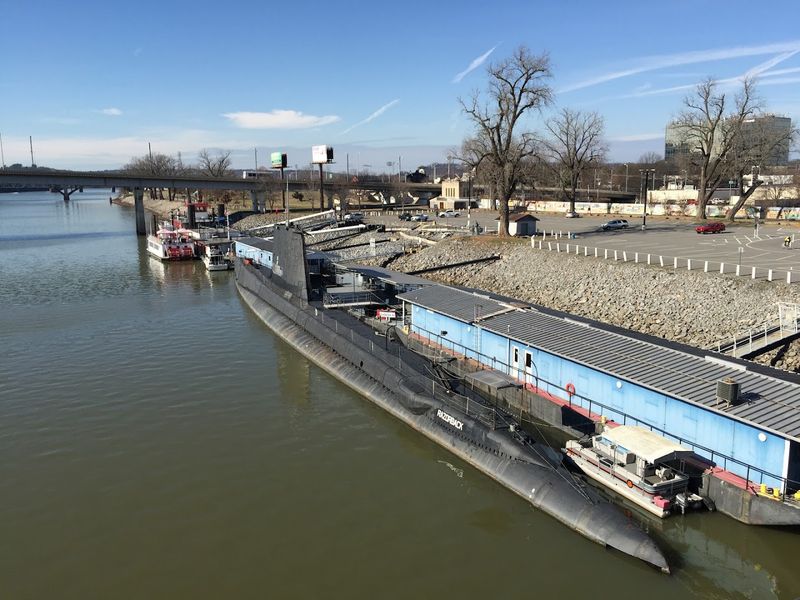
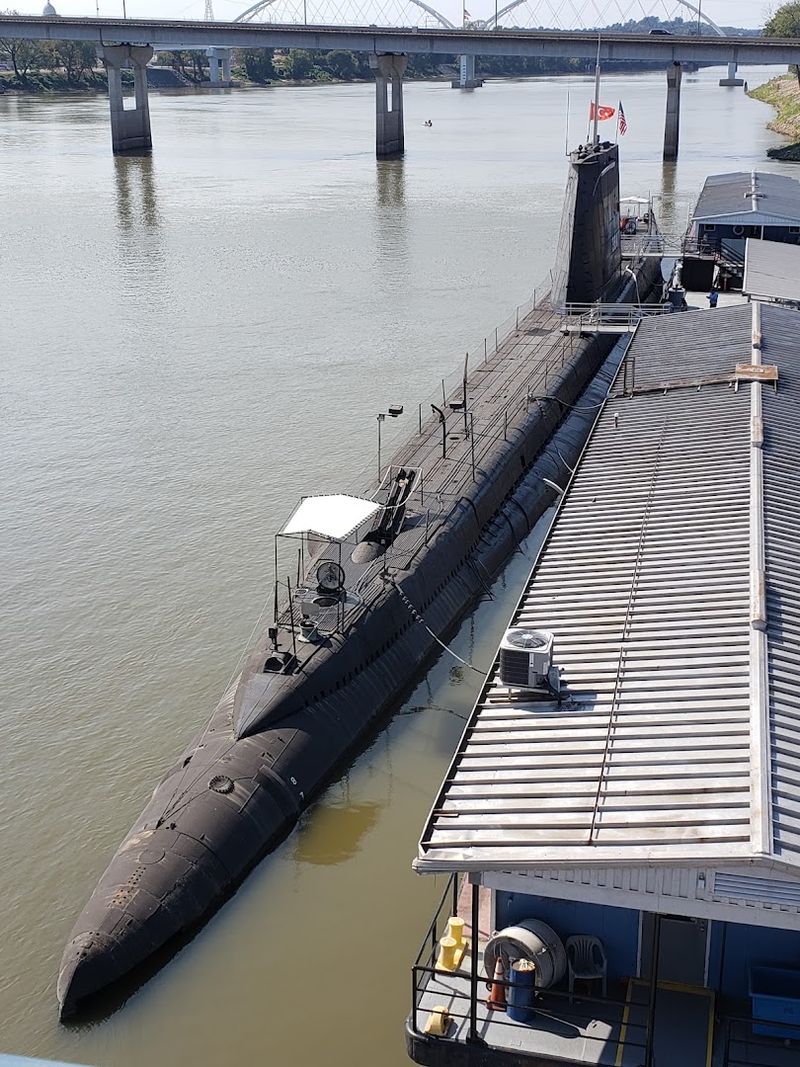
Not many landlocked states can offer a waterfront view anchored by a 311-foot submarine, but North Little Rock manages it with a quiet confidence that suits the setting perfectly.
The USS Razorback sits moored in North Little Rock Riverfront Park right along the Arkansas River, and the surrounding scenery gives the vessel a context that feels both peaceful and historically weighted at the same time.
Alongside the submarine, visitors can also board the USS Hoga, a tugboat with its own remarkable World War II history that earned it National Historic Landmark status.
The park grounds include memorials dedicated to other submarines and their crews, creating a reflective outdoor space that complements the hands-on experience of the tours.
On a clear day, the river frames the entire scene beautifully, and the combination of open sky and moving water makes the steel hull look both powerful and unexpectedly serene.
Photographers tend to linger here longer than they planned, because the light on the water and the silhouette of the vessel change constantly throughout the day.
The riverfront setting transforms what could have been a static museum display into a living, breathing piece of the landscape.
Steep Ladders Lead To Unexpected Corners
A tour of the USS Razorback is as much a physical activity as it is an educational one, and visitors who come prepared tend to enjoy it far more.
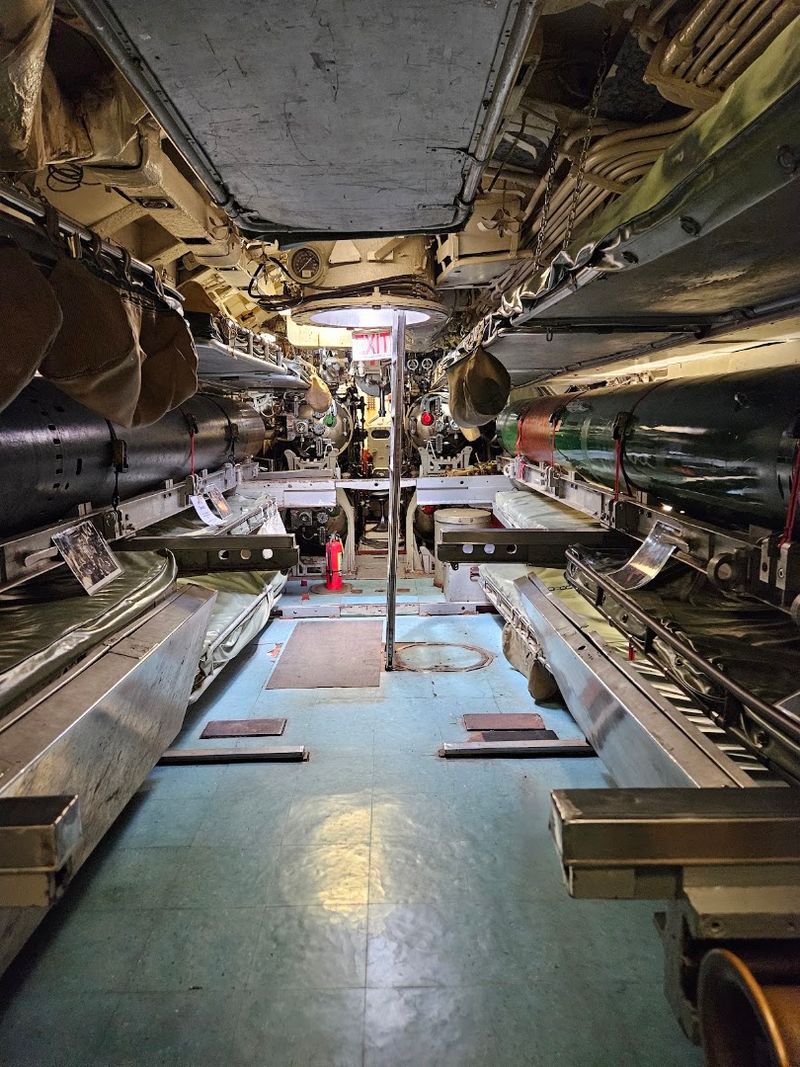
Moving between compartments requires climbing steep vertical ladders and ducking through narrow circular hatchways, each of which was sized for efficiency rather than comfort.
The guided route typically takes visitors from the after torpedo room all the way forward to the bow, covering the full length of the submarine and passing through every major section along the way.
Each new compartment reveals a different function, from the engine rooms humming with mechanical complexity to the quieter forward spaces where crew members spent their off-duty hours.
Children must be at least five years old to join the tour, and the physical requirements are real, so comfortable clothing that does not snag on tight spaces makes a noticeable difference.
Visitors who are tall or broad-shouldered often report that the hatchways are the most memorable part of the physical experience, requiring a specific combination of ducking and turning to pass through cleanly.
Every ladder climbed and every hatch squeezed through adds one more layer of honest appreciation for the crew members who did this daily.
Every Deck Tells A Different Story
Five battle stars earned in World War II and four more during the Vietnam War make the USS Razorback one of the most decorated vessels of its kind still accessible to the public.
After its service with the United States Navy, the submarine was transferred to the Turkish Navy in 1970 and renamed TCG Muratreis, continuing active service until 2001 under a different flag but the same steel hull.
North Little Rock acquired the vessel in 2004 and had it towed across oceans and up rivers to reach its current home, a journey that itself sounds like the plot of a documentary worth watching.
Inside the museum building, exhibits on naval history and Arkansas River history add broader context to the submarine’s story, making the visit feel like a full experience rather than a single attraction.
One detail that surprises many visitors is the origin of the name Razorback, which refers to a species of whale rather than the well-known university mascot, adding a quietly amusing footnote to an otherwise serious history.
Tours run during the museum’s operating days, with summer hours currently offered Wednesday through Sunday, so arriving early is the smartest move.
Every corner of this vessel holds a chapter worth reading, and the Arkansas Inland Maritime Museum makes sure none of those chapters go untold.