
9 Arkansas Stargazing Places Where Fall Nights Reveal The Milky Way
Fall nights can turn a simple drive into something worth talking about the next morning. Once the sky darkens and nearby lights fade, stars that barely registered at first can begin filling the gaps overhead.
Arkansas has several places where that change feels especially noticeable, including mountain parks and quiet stretches near the water. Some make it easy to camp nearby, while others give you a high overlook or a cabin close to dark-sky country.
The moon matters more than many first-time stargazers expect. A bright one can wash out faint detail, so checking the lunar calendar before leaving home is smart.
Bring a chair and switch your flashlight to red once you settle in. Then give your eyes time to adjust.
The spots ahead offer different ways to spend a fall evening looking up, with scenery that can make the wait for full darkness part of the fun.
1. Buffalo National River, St. Joe
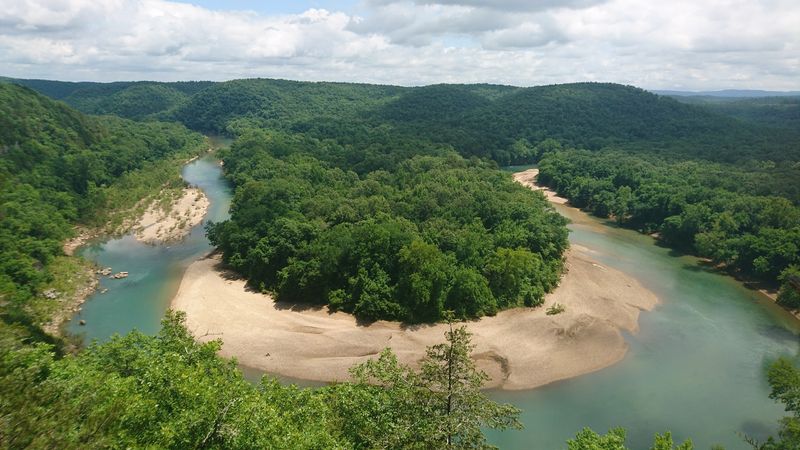
Darkness here is not an accident. Buffalo National River, reachable through the Tyler Bend Visitor Center at 170 Ranger Road in St. Joe, earned the title of Arkansas’s first International Dark Sky Park after staff swapped out outdoor fixtures for downward-pointing lights that keep the glow on the ground where it belongs.
The payoff shows up overhead. Parts of the park sit at a Bortle Scale rating of two to three, which in plain terms means the Milky Way looks textured rather than washed out, with dark lanes and bright clouds visible to the unaided eye.
Ozark Mountain ridges frame the view on every side, and the free-flowing river keeps the soundtrack soft. Water moving over gravel bars has a way of making an hour outside feel like fifteen minutes.
Ranger-led night sky programs run at spots such as Buffalo Point and Tyler Bend during the summer season, covering constellations and the reasons dark skies matter for wildlife and people alike. Fall visitors often have the gravel bars entirely to themselves once the paddling crowds thin out.
Gravel bars near the water make natural viewing platforms, though footing can be uneven after dark, so a headlamp with a red setting earns its keep. Warm layers matter more than most first-timers expect, since river valleys hold the chill.
What strikes me about this place is how quickly the sky fills in once your eyes adjust. Stars that seemed absent at first suddenly crowd the gaps.
Few rivers in the country pair this kind of scenery with skies this deeply, honestly dark.
2. Mount Magazine State Park, Paris
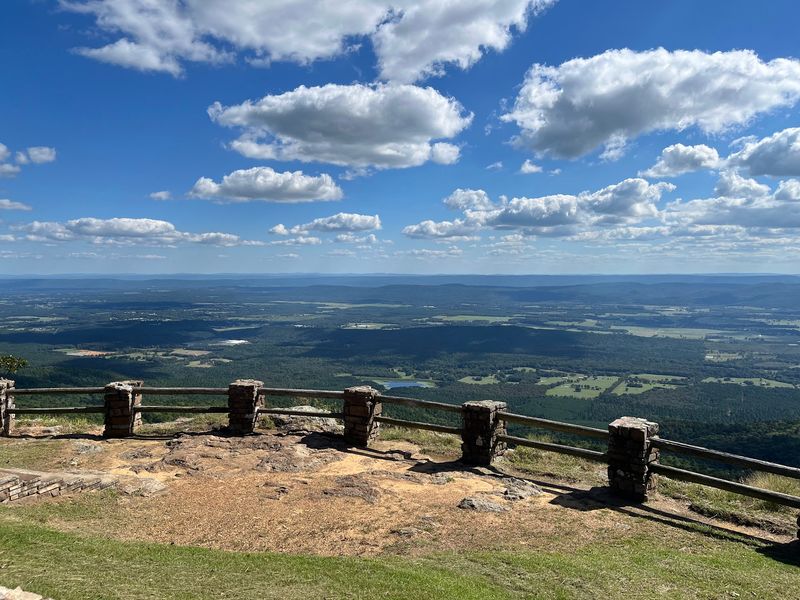
Climb high enough and the air thins, the haze drops away, and the stars sharpen. Mount Magazine State Park at 16878 AR-309 in Paris sits atop the highest mountain in Arkansas, which gives sky watchers a natural advantage before they even unfold a chair.
Cameron Bluff Overlook is the favorite perch. Reclining there as twilight deepens, you can watch the first bright stars appear one by one until the whole dome fills in.
Telescope owners like the open sightlines, but plenty of people show up with nothing more than binoculars and a blanket. Binoculars alone will pull star clusters out of what looks like empty sky.
Daytime here keeps you just as busy. Trails wander through surprisingly varied habitats along the mountain, with cool breezes and long views across the valley below, and camping facilities let visitors stretch a single evening into a full weekend.
A truly dark sky makes the vastness of space land in a way no planetarium screen manages, and this mountaintop delivers that feeling without much effort on the visitor’s part.
Autumn adds color to the slopes below, so the drive up AR-309 becomes part of the attraction. Temperatures at the summit run cooler than in Paris down below, which is worth packing for.
Pick a night near the new moon and the difference is dramatic. Moonlight is the quiet competitor most beginners forget about.
Elevation, open overlooks, and easy camping make this summit a reliable bet for fall sky watching.
3. Queen Wilhelmina State Park, Mena
Astronomers use the Bortle scale to rank darkness, and Queen Wilhelmina State Park scores a Class 2. That puts the park at 3877 Highway 88 West in Mena among the darkest measurable places in the region.
What does Class 2 actually buy you? Faint nebulae become visible without optics, and the zodiacal light can appear as a soft cone reaching up from the horizon.
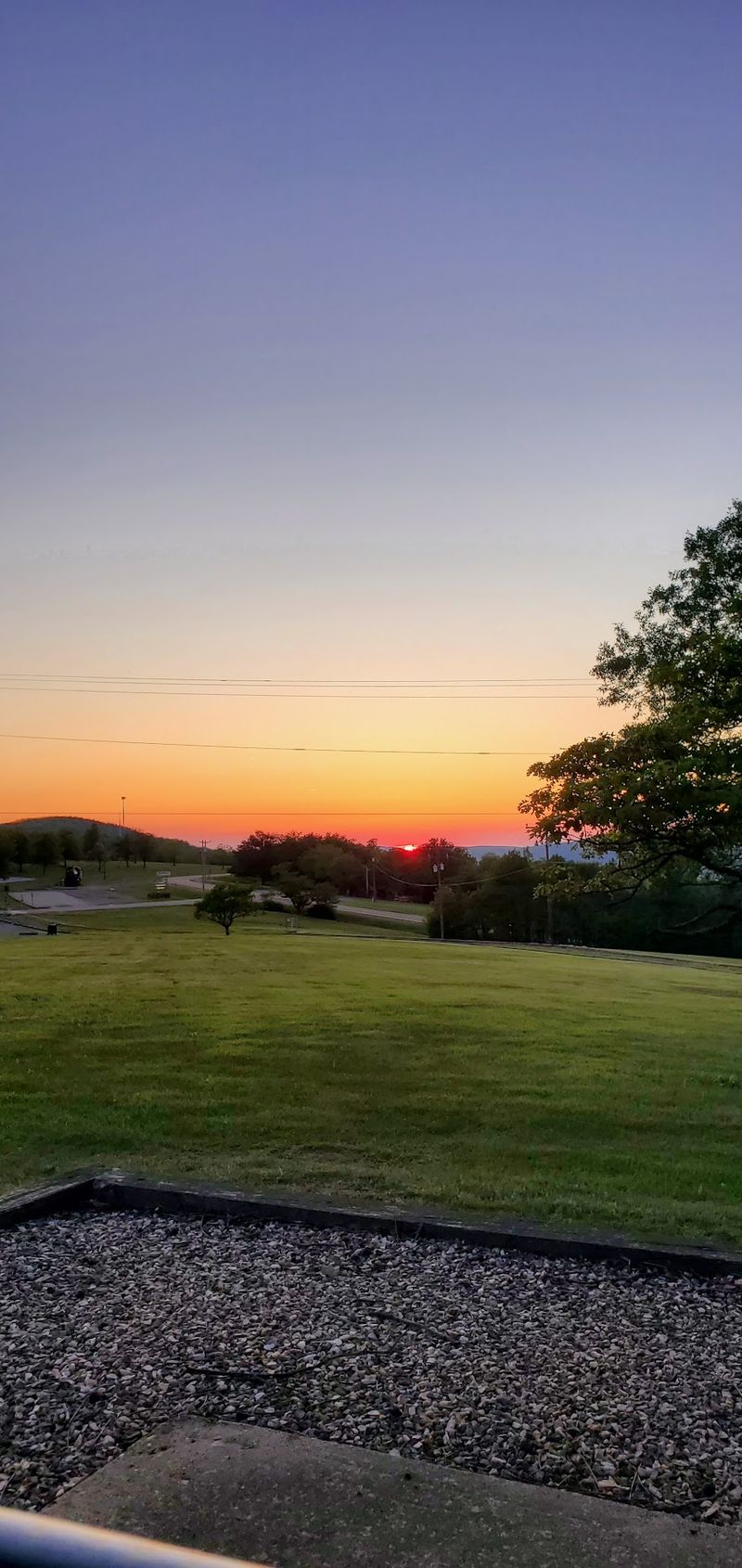
The park perches on Rich Mountain, the second-highest peak in the state, and has long been nicknamed the Castle in the Sky thanks to its lodge setting. Views stretch across the Ouachitas in daylight and open onto the galaxy after sunset.
Hiking trails lace the mountain, moving between shaded woods and rocky overlooks, so afternoons fill themselves easily. The Talimena Scenic Byway runs right through the area, making the drive in a scenic event rather than a chore.
Sleeping arrangements cover a wide range. The campground includes Class A and Class B campsites, along with tent options with water.
One hike-in tent site is also available for visitors who want a more basic overnight setup.
Mountain weather changes fast up here, and clouds can roll across the ridge while the valley stays clear. Checking the forecast the morning of a planned session saves disappointment.
Honestly, the idea of spotting zodiacal light with your own eyes sounds like something reserved for observatories, yet visitors manage it on clear nights.
Rich Mountain rewards patience with a sky most people never get to see.
4. Cossatot River State Park-Natural Area, Wickes
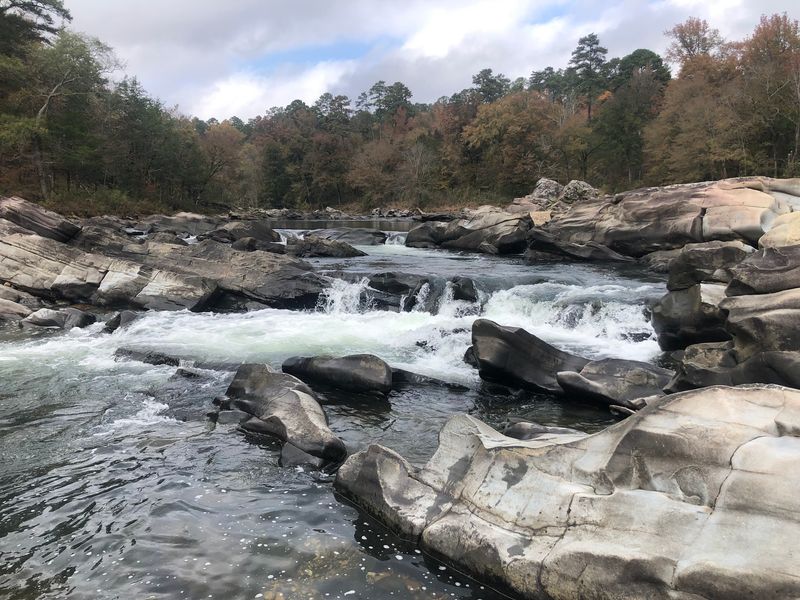
Solitude is the selling point at Cossatot River State Park-Natural Area, found at 1980 Highway 278 West in Wickes. Tucked into a rural pocket of the Ouachita Mountains, the park keeps artificial light scarce and the horizon dark in every direction.
That matters more than beginners realize. Without distant town glow creeping up from the edges, the Milky Way stretches fully overhead instead of fading out near the treeline.
Daylight tells a different story here. The Cossatot is famous for whitewater rapids that draw paddlers looking for a challenge, and the river’s reputation is built on adrenaline rather than quiet.
Once the sun drops, the mood flips completely. The same water that churned all afternoon becomes background music, steady and unhurried, while the sky takes over the show.
Primitive campgrounds put visitors right in the middle of the wilderness with nothing between their sleeping bags and the cosmos. No hookups, no bright bathhouse lights, no interruptions.
Rushing water combined with a galaxy overhead creates a sensory pairing that sticks with people long after they drive home. That mix of wild and peaceful is hard to manufacture anywhere else.
Practical notes help: cell service is limited, roads into the natural area can be rough, and supplies should be bought before arriving in the area.
Fall nights bring fewer bugs and cooler air, both of which make lying on a camp pad for an hour far more pleasant than it sounds in July.
Remote, rugged, and gloriously unlit, this river corner belongs on any serious sky-watching list.
5. Lake Ouachita State Park, Mountain Pine
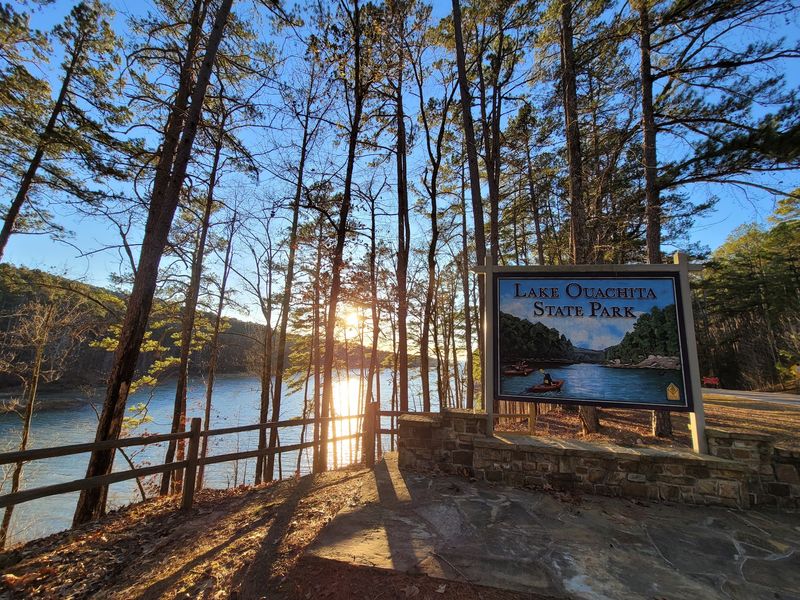
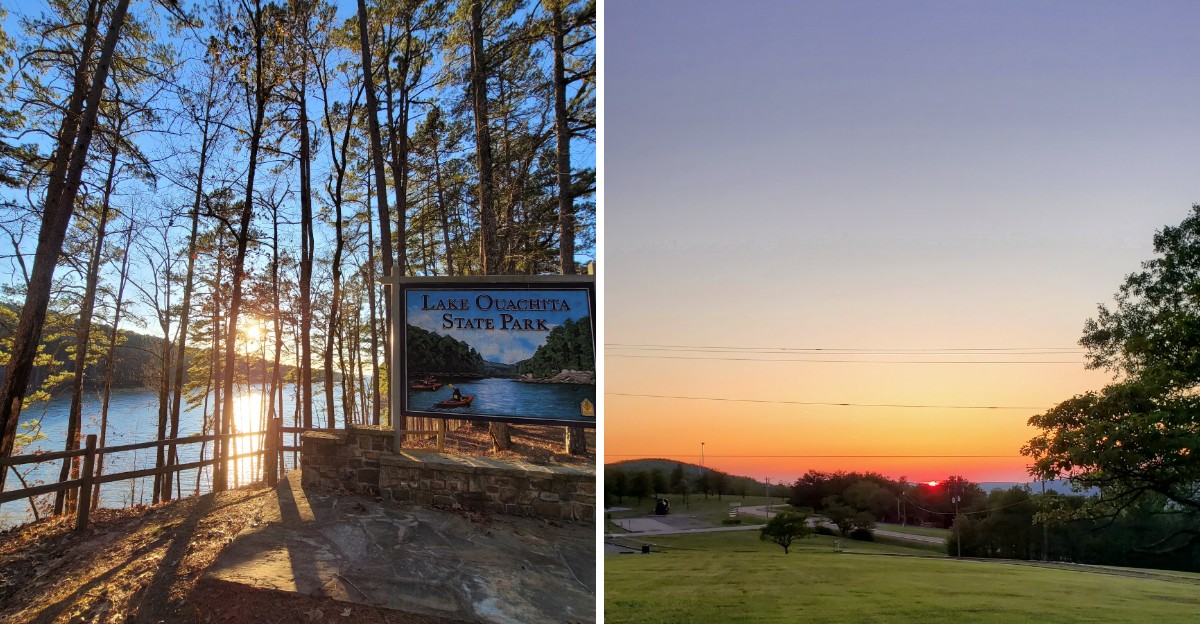
Two skies for the price of one. At Lake Ouachita State Park, 5451 Mountain Pine Road in Mountain Pine, the stars appear overhead and again on the surface of a 40,000-acre lake known for clear, clean water.
The park carries recognition as a dark sky destination, and serious observers arrive knowing the Milky Way reaches peak visibility during late summer and holds strong into autumn.
Campsites sit right at the water’s edge, which explains the double-vision effect. On a windless evening the lake goes glassy and constellations show up below your feet.
Surrounding Ouachita National Forest acts as a buffer, soaking up light from nearby communities and keeping the horizon impressively dark on all sides.
Daytime options run long. Swimming, skiing, scuba diving, kayaking, and fishing all happen across roughly forty thousand acres of clear water, so nobody sits around waiting for sunset.
Park interpreters have teamed up with astronomical organizations for special events, wheeling out high-powered telescopes and explaining what everyone is looking at. Those programs turn a nice night into an education.
Scuba diving in an Arkansas lake already sounds unexpected, and the fact that the same water doubles as a mirror for the galaxy is a fine bonus.
Reserving a waterfront site well ahead makes sense during fall weekends, when the weather cooperates and the crowds know it.
Bring a low chair, something warm, and enough patience to let your eyes adjust for twenty full minutes.
Stars above, stars below, and a lake that refuses to pick a side.
6. Devil’s Den State Park, West Fork
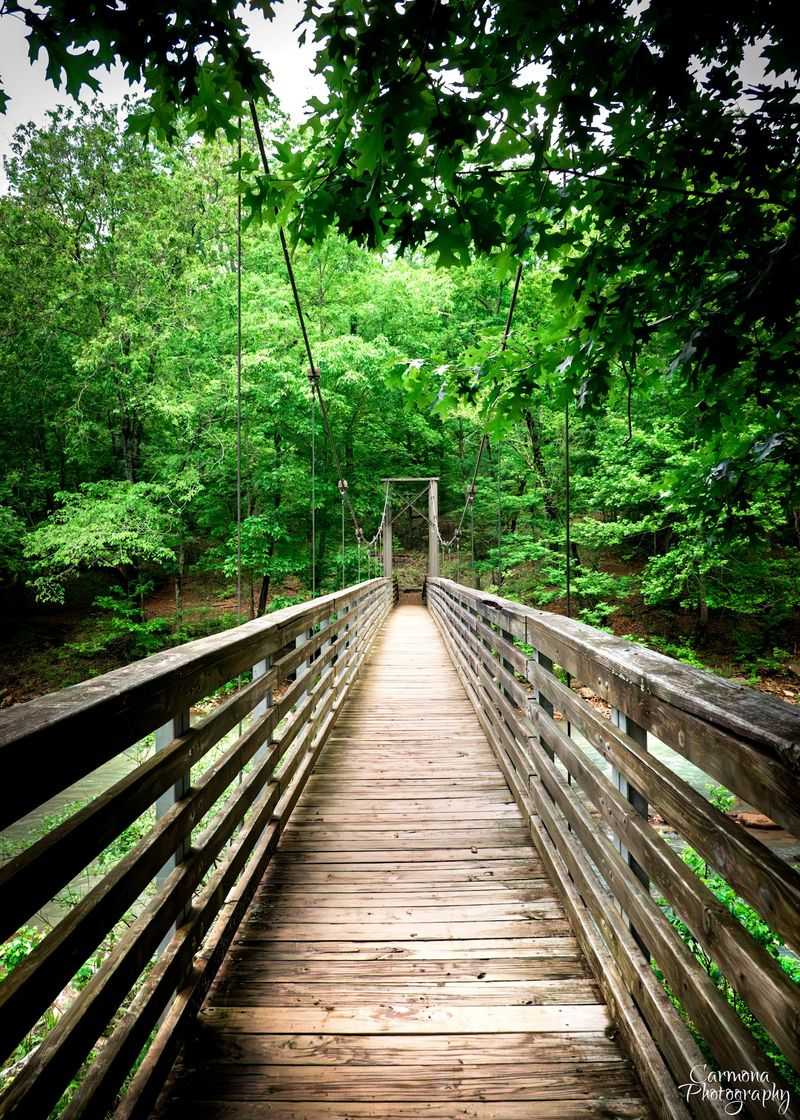
Rock formations, crevices, and shadowed valleys give Devil’s Den State Park its name and its character. Sitting at 11333 West Arkansas Highway 74 in West Fork, the park tucks itself into the Boston Mountains of the Ozarks, where the terrain does a fine job of blocking stray light.
Deep valleys and steep ridges work in a stargazer’s favor. Glow from surrounding towns gets absorbed by the landscape before it reaches the sky above the park.
Access is the other advantage. Northwest Arkansas residents can reach the park quickly, which makes a spontaneous weeknight sky session realistic rather than an expedition.
Limestone caves and unusual geology draw daytime crowds, and the trail system winds past formations that look carved on purpose. Mountain bikers and campers fill out the rest of the visitor mix.
The seclusion changes the atmosphere after dark. Conversations drop to a murmur, flashlights click off, and the stars stop competing with anything.
Open areas near the campgrounds work better than the narrow canyon trails, since tall ridges can crop the view if you settle in the wrong spot.
Something about a park with rugged features and quiet nights feels especially fitting for autumn, when the oaks turn and the air finally cools down.
Fall weekends book up fast, so anyone planning to stay overnight should sort out a site early in the season.
Warm layers, a red light, and a little patience turn this Ozark hollow into a first-rate observatory.
7. Withrow Springs State Park, Huntsville
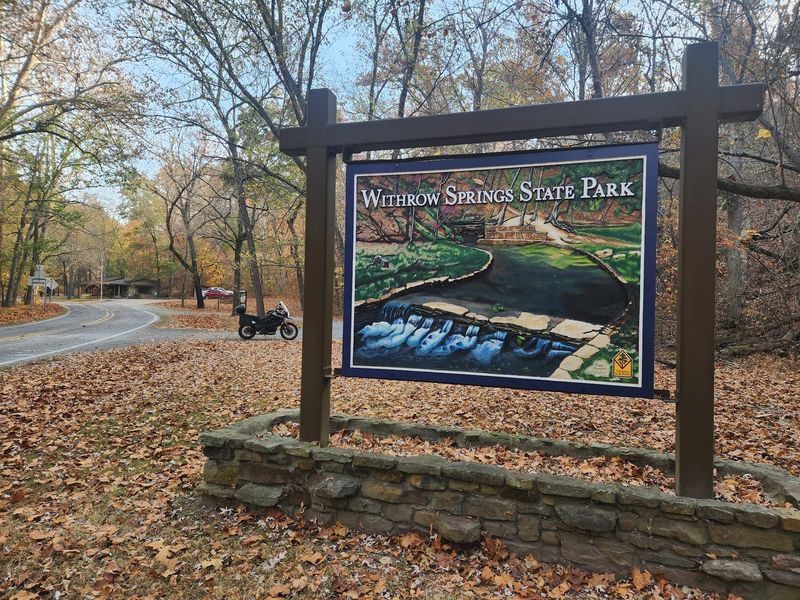
Telescopes lined up in a field, strangers swapping views of Saturn, someone pointing out a star cluster to a kid who has never looked through an eyepiece. That scene plays out regularly at Withrow Springs State Park, 33424 Spur 23 in Huntsville.
The park works with the Northwest Arkansas Astronomical Society to host star parties, and those gatherings welcome complete beginners alongside people who grind their own mirrors.
Powerful instruments usually come along, aimed at planets, star clusters, and deep-sky objects that most folks have only seen in photographs. Getting to look at the real thing changes how those images feel.
Darkness here rates around a Bortle four, noticeably better than any town or suburb, though not quite as inky as the remote Ouachita parks. For a location this easy to reach in the rolling Ozark hills, that is a solid trade.
Days can be spent on the trails that loop through the wooded hills. The park’s public swimming pool operates from Memorial Day through Labor Day, so it is closed during fall.
War Eagle Creek runs nearby and keeps the setting green.
Community events like these make astronomy feel less intimidating, and honestly, having someone else align the telescope is a relief for newcomers.
Checking the park calendar before driving out is smart, since star party dates depend on moon phase and weather.
Chairs, a warm layer, and a thermos cover the essentials for an evening that often stretches past bedtime.
Small park, friendly crowd, and a sky that keeps giving after sunset.
8. Lake Fort Smith State Park, Mountainburg
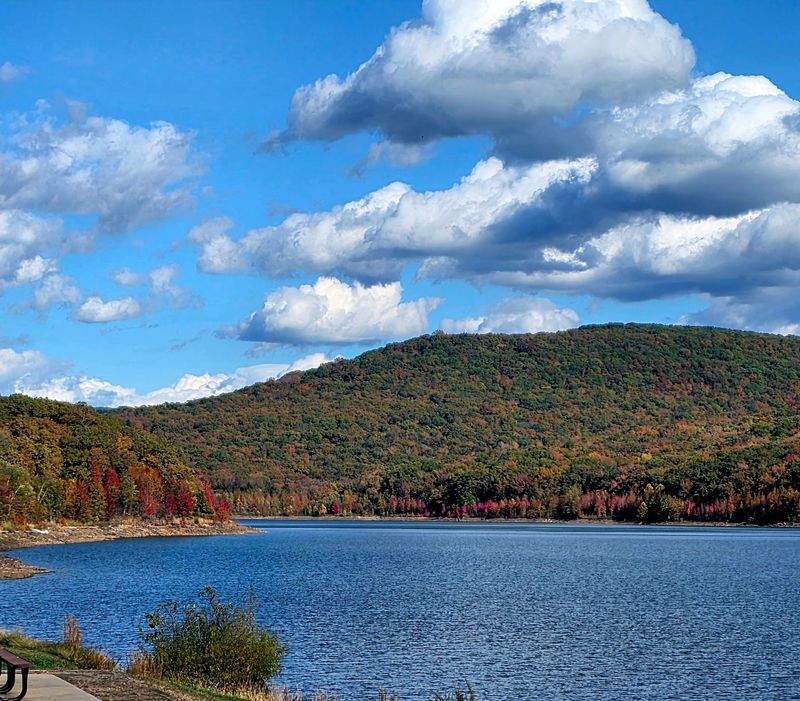
Mountains wrapped around a valley lake create a natural light shield, and Lake Fort Smith State Park at 15458 Shepherd Springs Road in Mountainburg takes full advantage. The Boston Mountain Range surrounds the park, soaking up glow from nearby communities before it can spoil the view.
Measurements put the sky here around a Bortle four, dark enough for naked-eye viewing of plenty of celestial objects without any equipment at all.
Calm evenings bring the best show. The lake’s surface flattens into a mirror, doubling the stars and giving photographers a reason to set up tripods along the shoreline.
Open areas near the marina rank among the better viewing spots, with fewer trees crowding the horizon than you find along the wooded trails.
Activity options stack up during daylight hours: camping, fishing, kayaking, hiking, and mountain biking all have a home here. The park also serves as the western terminus of the Ozark Highlands National Recreation Trail, which runs roughly 165 miles across northern Arkansas.
Thru-hikers finishing that long walk get a pretty spectacular reward if they time their last night right.
Fall is prime season, with cooler air cutting the summer humidity that softens star images. Clear nights after a cold front pass through tend to be the sharpest of all.
Parking near the marina fills during busy weekends, so arriving before sunset gives you a decent spot and time to settle in.
Valley walls, still water, and a quiet lakeshore add up to a dependable stargazing night.
9. Bear Creek Log Cabins, St. Joe
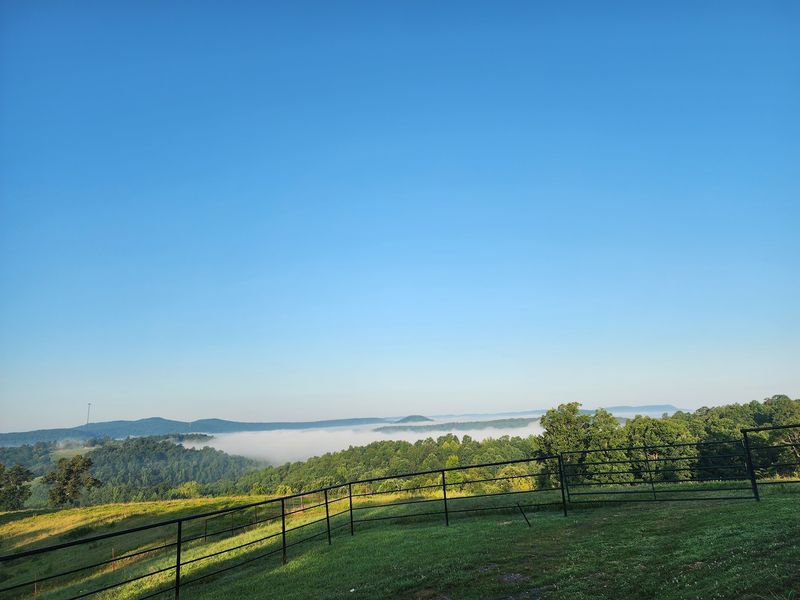
Not everyone wants to sleep on the ground to see the galaxy. Bear Creek Log Cabins, located at 6403 US-65 near St. Joe, offers a roof, a bed, and a sky worth staying up for, all within 1200 acres of Ozark elk country.
Six dark-sky cabins sit on the property along with RV sites, spaced out so headlights and porch bulbs do not interfere with anyone’s viewing session.
Position helps enormously. The setting is rural and close to Buffalo National River, an International Dark Sky Park with some of the darkest skies in Arkansas, so conditions in the surrounding area lean strongly in a stargazer’s favor.
Guests can spend daylight hours hiking the property or fishing, then wander out after supper when the sky turns properly black. Elk country means wildlife sightings are part of the deal too.
Campfire pits give the evening a gathering point. Sitting by low flames with the mountain sky wide open overhead is a fine way to close out a day of exploring.
Cabin lodging also solves the cold-weather problem that keeps some people indoors during autumn. Step outside, look up for twenty minutes, then step back into warmth whenever you want.
Having a real bed within walking distance of a dark sky viewing spot strikes me as an underrated luxury.
Booking ahead is wise, since only a handful of cabins exist and fall is a popular stretch in the Arkansas hills.
Comfort and constellations rarely share an address this neatly.