
15 Banned Candy Products That Were Best-Sellers Back In The Day
Remember those sugary treats that made childhood feel extra magical? Whether it was the thrill of unwrapping something colorful or trading sweets with friends, candy played a huge role in our younger years.
But over time, some of our all-time favorites mysteriously vanished from store shelves. Even now, I find myself scanning candy aisles, hoping to spot one of those nostalgic gems, only to be reminded they’ve been discontinued.
From safety concerns like choking hazards to changes in regulations or shifting consumer tastes, these beloved candies were pulled from production, leaving behind nothing but fond memories and a craving that never quite fades.
1. Kinder Surprise Eggs
My first encounter with these chocolate wonders happened during a family trip to Europe. The thin chocolate shell housed a yellow plastic capsule containing a miniature toy that required assembly. Pure magic! American kids weren’t so lucky.
The FDA banned these treats in 1938 under a law prohibiting non-food items embedded in edibles. The choking hazard posed by the small toys inside these chocolate eggs kept them off U.S. shelves despite their worldwide popularity.
Kinder eventually created a modified version called Kinder Joy that separates the toy from the candy, legally available in America since 2018.
2. Candy Cigarettes
Growing up in the 80s, I’d strut around the neighborhood with a candy cigarette dangling from my lips, pretending to be as cool as the adults. These chalky sugar sticks came in packages mimicking real cigarette brands, complete with the red-colored tip to simulate a lit cigarette.
Health advocates successfully campaigned against these treats for promoting smoking to children. Several countries including Canada, Ireland, and Australia banned them outright.
Manufacturers tried rebranding them as “candy sticks” without the red tips, but the damage was done. Their popularity plummeted as public awareness about smoking dangers grew.
3. Nestlé Magic Balls
I saved my allowance for weeks to buy these chocolate spheres filled with Disney characters. The thin chocolate shell would crack open to reveal a plastic capsule containing a collectible figurine inside, pure childhood treasure!
Following the 1938 Federal Food, Drug, and Cosmetic Act prohibiting non-nutritive items embedded in confections, these magical treats were banned in the USA. Safety concerns about children potentially choking on the toys led to their removal.
Nestlé tried redesigning them with larger toys and warning labels, but eventually discontinued Magic Balls worldwide in 1997, crushing the dreams of young collectors everywhere.
4. Haribo Sugar-Free Gummy Bears
My weight-conscious aunt brought these to our family gathering, innocently believing she’d found a guilt-free version of everyone’s favorite gummy treats. Little did we know what digestive chaos would ensue!
These seemingly innocent bears contained lycasin (maltitol), a sugar substitute with powerful laxative effects when consumed in normal candy quantities. The online reviews became legendary, with customers describing emergency bathroom situations and “gastrointestinal exorcisms.”
Haribo eventually pulled these from shelves after countless complaints. The bears weren’t technically banned, but the company discontinued them following the widespread digestive distress they caused.
5. Roadkill Gummy Candy
My brother thought these were hilarious, gummy candies shaped like flattened animals with tire tracks pressed into them. The packaging featured cartoon animals with X’s for eyes and their tongues hanging out. Parent groups found them far less amusing.
These treats were banned in several states for trivializing animal suffering and sending the wrong message to children about animal welfare.
The controversial candy featured squirrels, chickens, and other animals in splattered positions. Despite the backlash, some novelty shops continued selling them underground until manufacturers finally ceased production after mounting pressure from animal rights activists.
6. Wonder Ball
Saturday mornings meant cartoons and the chance to beg mom for a Wonder Ball, the American answer to Kinder Eggs. I’d carefully peel away the foil wrapper, crack open the chocolate sphere, and discover character-shaped candies inside.
Originally containing small toys when introduced in 1997, the FDA quickly banned this version due to choking hazards.
Nestlé reintroduced them in 2000 with candy inside instead of toys. After Nestlé sold the product to the Frankford Candy Company, production eventually ceased in 2007. Though technically not banned in their final form, the original toy-containing version remains prohibited in the United States.
7. Lucas Powder Candy
My cousin from Mexico introduced me to this tangy, spicy powder candy that we’d pour directly onto our tongues. The intense sweet-sour-spicy kick was unlike anything in American candy aisles! In 2004, the FDA discovered lead contamination in several Lucas products, particularly Lucas Limon.
Lead exposure can cause serious developmental issues in children, leading to an immediate import ban and recall.
The manufacturer, Mars, Inc., eventually discontinued all Lucas powdered candy products in the US market. Though reformulated versions exist in Mexico, the original lead-contaminated formula remains banned in the United States, disappointing fans of its unique flavor profile.
8. Jarts (Lawn Darts)
Technically not candy, but these dangerous “treats” were sold alongside summer fun items in the candy aisle of my local five-and-dime. I remember tossing these weighted darts with metal tips into the air, aiming for plastic rings on the ground.
After thousands of injuries and several deaths, including children, the Consumer Product Safety Commission banned the sale of Jarts in 1988. The metal-tipped projectiles could pierce skulls and cause fatal injuries.
Modern versions exist with blunt plastic tips, but vintage Jarts remain prohibited. Collectors still trade the original banned versions underground, despite the federal ban and potential legal consequences.
9. Butterfinger BB’s
My pocket change always went toward these addictive marble-sized versions of the classic Butterfinger bar. The crunchy, peanut-buttery centers covered in chocolate were perfectly poppable, I’d finish a whole tube during one movie!
Though not technically banned for safety reasons, Nestlé discontinued them in 2006. Rumors circulated about choking hazards, but the official reason given was declining sales. Fan petitions for their return have circulated for years.
Butterfinger attempted to recapture the magic with Butterfinger Bites in 2009, but loyalists maintain they lack the perfect crunch-to-chocolate ratio of the original BB’s, leaving a candy-shaped hole in our nostalgic hearts.
10. Altoids Sours
My high school backpack always contained a tin of these intensely tart candies. Unlike their minty cousins, Altoids Sours came in small, colored tin boxes containing gem-like candies in flavors like tangerine, apple, and raspberry.
Introduced in 2004, these powerfully sour treats developed a cult following before their mysterious discontinuation in 2010. Mars never officially explained why they pulled the product, though rumors about production costs and packaging issues circulated among disappointed fans.
Unopened tins now sell for astronomical prices online. The tangerine flavor remains particularly sought-after by collectors willing to pay over $100 for a single unopened tin of these banned-by-manufacturer sour delights.
11. Toxic Waste Nuclear Sludge Chew Bars
I once participated in a “who can eat the sourest candy” contest with these notorious chew bars. Packaged in bright yellow wrappers with radioactive symbols, these intensely sour candies lived up to their hazardous branding. In 2011, the FDA discovered elevated levels of lead in the cherry flavor imported from Pakistan.
Lead levels tested at 0.24 parts per million, exceeding the FDA’s acceptable limit of 0.1 ppm. The manufacturer, Candy Dynamics, issued a voluntary recall of the cherry flavor.
Though the company later reformulated and reintroduced the product, the original Pakistani-manufactured version remains banned in the United States, cementing its place in candy infamy.
12. Hubba Bubba Squeeze Pop
Summer camp wasn’t complete without sticky fingers from these liquid candy-filled tubes. I’d squeeze the plasticky goo directly into my mouth, enjoying the fruity sugar rush that followed. While not officially banned, these treats disappeared around 2009 amid growing concerns about their high sugar content and artificial ingredients.
Parent groups criticized the syringe-like delivery method, claiming it normalized drug use among children.
The sticky substance also proved problematic, causing choking incidents when children consumed it too quickly. Though similar products exist today, the original Hubba Bubba Squeeze Pops vanished from mainstream retail, leaving 90s kids with nothing but sticky memories.
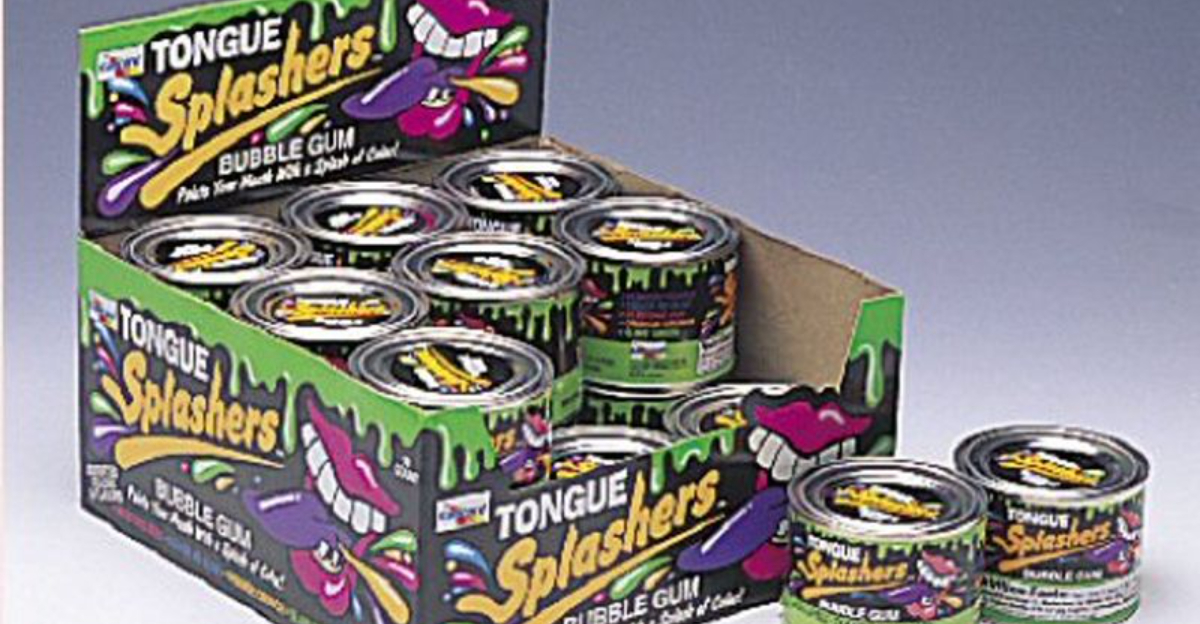
13. Tongue Splashers Gum
My elementary school status skyrocketed whenever I brought these color-changing gumballs for recess. We’d stick out our dyed tongues, comparing the vibrant blues, greens, and purples before teachers inevitably confiscated them.
The original formula contained several artificial dyes including Red No. 3, which the FDA banned in 1990 after studies linked it to thyroid tumors in animals. Manufacturers reformulated several times throughout the 90s.
Production finally ceased around 2011 amid growing parental concerns about artificial colors and their potential link to hyperactivity in children. Though not officially banned in their final form, the original dye-heavy formula remains prohibited.
14. Space Dust (Pop Rocks Predecessor)
My dad tells stories about this legendary candy from the 70s that fizzed and popped in your mouth even more intensely than Pop Rocks. The fine powder would explode with crackling sounds when it hit your tongue!
General Foods pulled Space Dust from shelves after parents became concerned about rumors that the candy resembled illegal drugs. The name and powdery format sparked comparisons to recreational substances, creating a marketing nightmare.
The candy was rebranded as “Cosmic Candy” before disappearing entirely. Its successor, Pop Rocks, survived with a larger crystal format that seemed less controversial to worried parents, while the original Space Dust formula remains abandoned.
15. Wrigley’s Spicy Cinnamon Gum
My grandfather always carried this fiery gum in his pocket. The intense cinnamon kick was unlike anything on today’s candy shelves, it would literally burn your tongue if you chewed too many pieces at once! In the early 1980s, concerns arose about cinnamaldehyde, the flavoring agent that gave the gum its signature burn.
Studies suggested potential liver damage from prolonged exposure to concentrated amounts. Wrigley reformulated the product with milder cinnamon flavoring, disappointing fans of the original spicy version.
Though not technically banned by regulators, the original formula was voluntarily discontinued. Modern cinnamon gums contain significantly reduced levels of cinnamaldehyde, forever altering their flavor profile.