
6 Beloved North Carolina Chains Locals Still Talk About Years After They Closed
Growing up in North Carolina, I watched several iconic restaurant chains come and go over the decades. These eateries weren’t just places to grab a bite—they were community hubs where memories were made.
From family Sunday dinners to first dates and celebration meals, these establishments wove themselves into the fabric of North Carolina culture.
Years after their doors closed, locals still reminisce about these beloved spots with a special kind of hometown pride.
1. Ham’s Restaurants: Where Drink Flowed And Friendships Grew
My college buddies and I practically lived at Ham’s during the ’90s! Founded in Greensboro in 1935, this sports bar chain became the unofficial headquarters for UNC game nights and Thursday happy hours across the state.
The vintage memorabilia covering every inch of wall space created an atmosphere you couldn’t replicate. Remember those signature potato skins loaded with cheese and bacon? Pure comfort food heaven that paired perfectly with their rotating craft drink selection.
At its peak, Ham’s boasted over 20 locations throughout North Carolina before financial troubles led to its gradual disappearance. Though most locations closed by 2015, former patrons still swap stories about celebration nights and the distinctive railroad-themed decor that made each visit feel like a neighborhood reunion.
2. K&W Cafeterias: The Southern Comfort Food Institution
Nothing beat the excitement of sliding my tray along K&W’s gleaming cafeteria line as a kid! The ladies behind the counter always snuck me extra mac and cheese with a wink. Founded in Winston-Salem in 1937, K&W became synonymous with affordable, home-style Southern cooking. Families dressed in their Sunday best would flock there after church, creating lines that wrapped around the building.
The chicken and dumplings transported you straight to grandma’s kitchen, while their legendary yeast rolls—pillowy and buttery—were worth the visit alone. While a handful of locations still operate, K&W filed for bankruptcy in 2020, closing most of its beloved cafeterias. For generations of North Carolinians, those green trays loaded with comfort food represented a cherished tradition of family dining.
3. Mama Dip’s Kitchen: Soul Food Legacy That Fed A Community
“You haven’t lived until you’ve tried Mama Dip’s fried chicken,” my grandpa would declare before our monthly pilgrimages to Chapel Hill. Mildred Council (known affectionately as Mama Dip) opened her restaurant in 1976 with just $64 to her name and a wealth of family recipes. The small restaurant quickly became legendary for its authentic soul food—crispy fried chicken, silky collard greens, and cornbread that melted in your mouth.
What made Mama Dip’s special wasn’t just the food but Mildred herself, who often wandered between tables sharing stories. While the original restaurant closed following Mildred’s passing in 2018, her culinary legacy lives on through cookbooks and the memories of countless diners who experienced Southern hospitality at its finest. Her food told the story of North Carolina’s rich culinary heritage.
4. Crook’s Corner: The Shrimp And Grits Pioneer That Defined Southern Cuisine
My first date with my wife happened at Crook’s Corner—I spilled shrimp and grits on my shirt and somehow still got a second date! This Chapel Hill institution, marked by its iconic pig sculpture on the roof, revolutionized Southern dining after opening in 1982. Chef Bill Neal transformed humble shrimp and grits from a fisherman’s breakfast into a sophisticated dish that put North Carolina cuisine on the national map. The seasonal menu showcased local ingredients long before “farm-to-table” became trendy, while the honeysuckle sorbet became the stuff of local legend.
When Crook’s Corner permanently closed in 2021 after pandemic struggles, food writers across the country mourned its loss. The restaurant didn’t just serve meals—it defined an entire culinary movement that celebrated the South’s diverse food heritage with both reverence and innovation.
5. Smithfield’s Chicken ‘N Bar-B-Q: Eastern-Style BBQ That Sparked Regional Pride
“Eastern or Western?” That BBQ question divides North Carolinians faster than basketball rivalries! Smithfield’s proudly waved the eastern-style flag with its vinegar-based pork BBQ that had me hooked from childhood. Founded in Smithfield in 1964, the chain spread across eastern North Carolina with its distinctive yellow and red buildings. Beyond the chopped BBQ, their fried chicken came with a crackling crust that somehow stayed crispy for hours.
The sweet tea—served in those iconic yellow cups—was gloriously sweet enough to make your dentist weep. While some locations remain, many Smithfield’s restaurants have disappeared from North Carolina roadsides in recent years. Former fans still debate whether the hush puppies or the Brunswick stew deserved side-dish superiority, proving that regional food loyalty runs deep in the Tar Heel state.
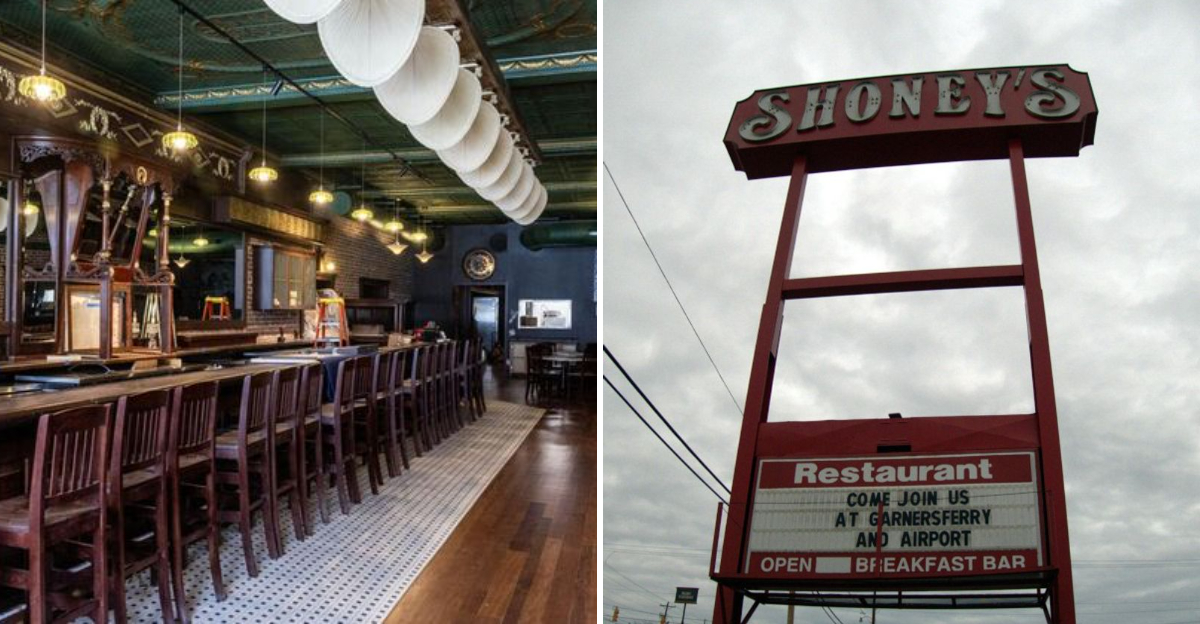
6. Shoney’s: Where The Breakfast Bar Reigned Supreme
The sheer excitement of being told “We’re going to Shoney’s!” as a kid in the 80s is something today’s children will never understand. That illuminated Big Boy statue outside promised access to the legendary breakfast bar—a wonderland of pancakes, bacon, and fruit I could select myself! Though not exclusively North Carolinian, Shoney’s had a special place in our state’s heart with dozens of locations in mid-sized towns and along highways.
The strawberry pie, with its glistening red topping and mountain of whipped cream, became the mandatory finish to any meal. Most NC locations vanished by the 2010s, leaving behind memories of family road trips, post-church gatherings, and that distinctive coffee aroma that permeated the restaurants. Former fans still recreate the hot fudge cake recipe at home, trying to recapture that perfect blend of warm cake and cold ice cream.