
14 Breathtaking Places In Florida That Belong On Your 2026 Travel List
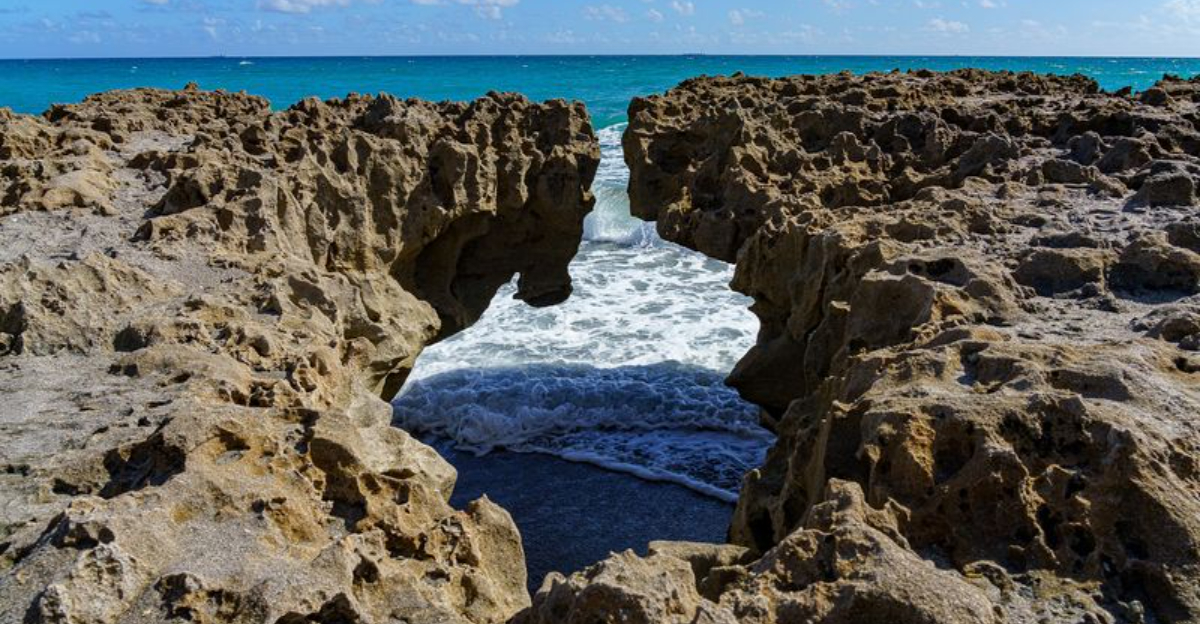
You can visit Florida and still discover a place that makes you ask, “How did I not know this existed?”
That is the magic.
Beyond the attractions, the landscape becomes unpredictable.
Clear springs reveal grain of sand below.
Ancient forests turn afternoon walks into journeys through another century.
Wild coastlines stretch beyond the crowds, looking suspiciously like someone adjusted the scenery for a movie.
Florida does not save its best surprises for one region.
They appear in islands, hidden trails, glowing caves, botanical escapes, and waters so blue they make camera filters feel unnecessary.
Some places invite adventure.
Others simply make you stand still and stare.
Both belong on a memorable travel list.
In 2026, skip the trips that feel copied from everyone else’s calendar.
Florida has breathtaking destinations ready to deliver the views, stories, and unexpected moments you will still be talking about long after returning home.
1. Dry Tortugas National Park, Key West
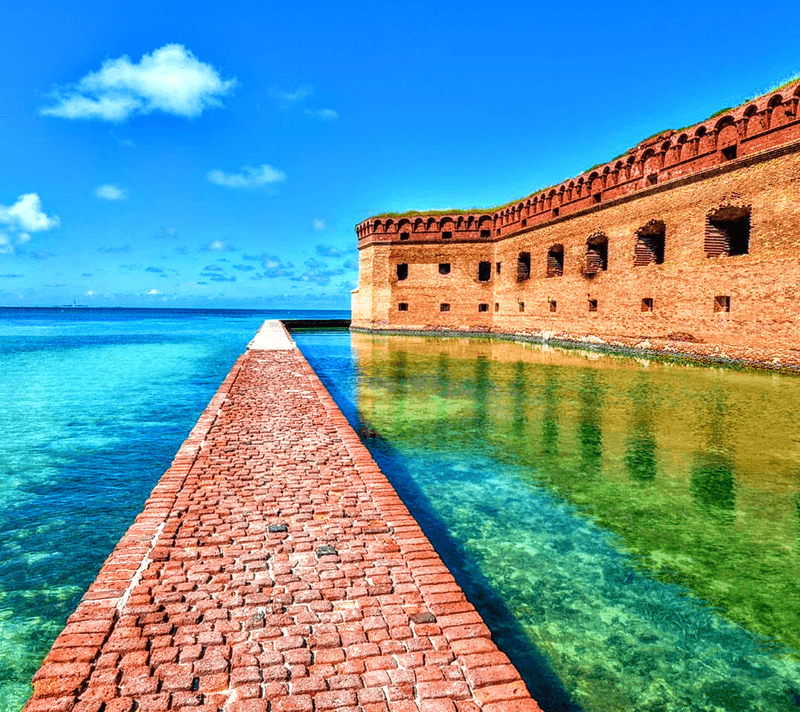
Seventy miles west of Key West, a massive 19th-century brick fortress rises straight out of the Gulf of Mexico, and the first time you see it from the ferry, you genuinely cannot believe it is real.
Fort Jefferson at Dry Tortugas National Park, located at Key West, FL 33040, is one of the largest brick structures ever built in the Americas, and it sits on a tiny island surrounded by water so clear and blue it almost looks digitally altered.
Snorkeling around the moat wall puts you face to face with sea turtles, nurse sharks, and parrotfish in water that rarely drops below waist-deep visibility.
The park is only reachable by ferry or seaplane, which keeps the crowds manageable and gives the whole place a remote, almost secret feeling.
Camping overnight on the island means falling asleep to nothing but wave sounds and waking up to a sunrise with zero light pollution in sight.
Pack everything you need because there are no stores, no restaurants, and no shortcuts out here, just one of Florida’s most unforgettable corners.
2. Bahia Honda State Park, Big Pine Key
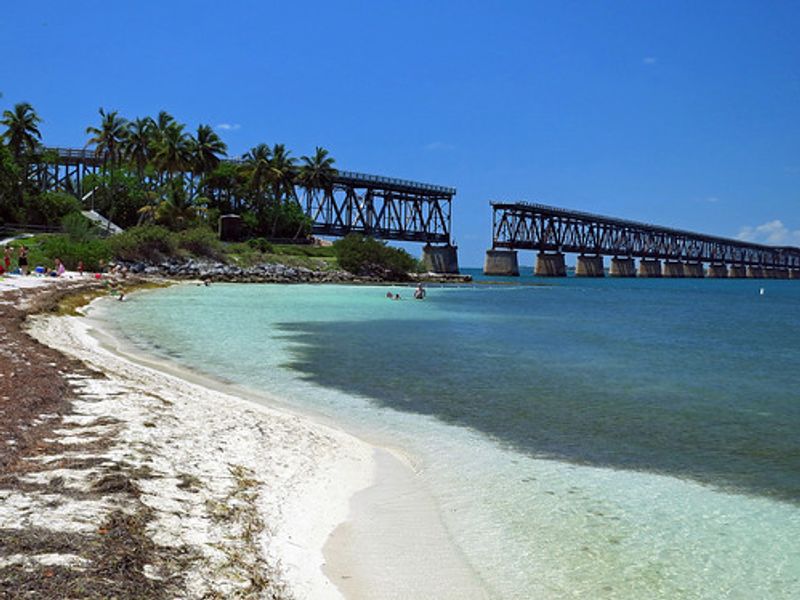
There is a stretch of sand at Bahia Honda State Park that consistently ranks among the best beaches in the entire United States, and once you plant your feet in it, the ranking starts to make complete sense.
Sitting at 36850 Overseas Hwy, Big Pine Key, FL 33043, this park is tucked into the Florida Keys between Key West and Marathon, and it carries a laid-back energy that feels completely different from the more commercial stretches of the Keys.
The old Bahia Honda Rail Bridge looms over the park as a rusted, beautiful reminder of Henry Flagler’s ambitious early 20th-century railroad project.
Kayaking through the calm backcountry waters here is one of those quietly spectacular activities that sneaks up on you, especially when a great blue heron decides to pace you from the mangroves.
Snorkeling at the reef just offshore brings up colorful coral formations and tropical fish in water that stays warm most of the year.
Book your campsite early because spots here fill up faster than anywhere else in the Florida Keys.
3. Myakka River State Park, Sarasota
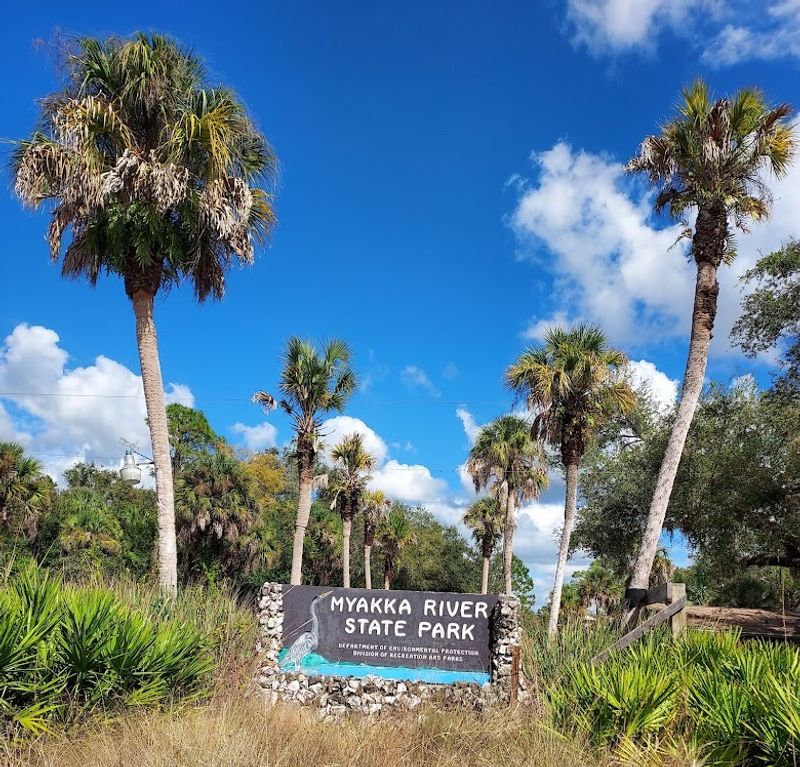
Florida’s wild side shows up loudly and unapologetically at Myakka River State Park, where alligators lounge on the banks like they own the place, which, honestly, they kind of do.
Located at 13208 State Rd 72, Sarasota, FL 34241, this park covers nearly 37,000 acres of prairies, wetlands, hammocks, and pine flatwoods, making it one of the largest state parks in all of Florida.
The airboat tours on the upper lake are an absolute must, especially during winter months when the alligator and bird populations are at their most concentrated and visible.
Hiking the Deep Hole trail in November and December rewards you with one of the strangest and most spectacular wildlife sights in the state, as hundreds of alligators pack into a single freshwater hole.
Birdwatchers will find sandhill cranes, roseate spoonbills, and wood storks with almost embarrassing ease just by walking the main road at sunrise.
Myakka has a way of making you feel like you have stepped into a nature documentary, except you are the one holding the camera.
4. Devil’s Den Prehistoric Spring, Williston
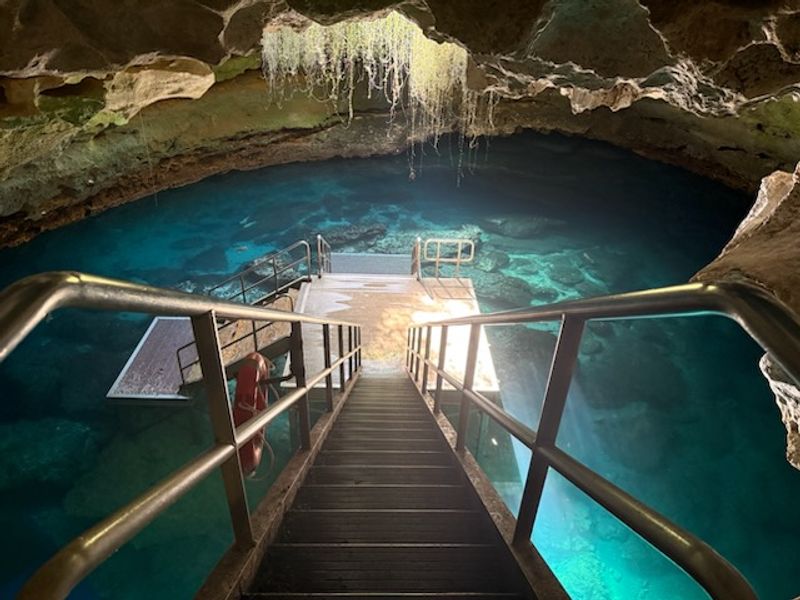
Stepping down into Devil’s Den feels like discovering a secret that the earth has been keeping for about 33 million years, which is roughly how old this prehistoric underground spring actually is.
Found at 5390 NE 180th Ave, Williston, FL 32696, this privately owned spring sits inside a dry cave, which means you descend into a limestone cavern and find a crystal-clear pool waiting at the bottom, completely sheltered from the outside world.
The water temperature holds steady at 68 degrees Fahrenheit year-round, making it a favorite winter destination when the contrast between the cool cave air and the warm spring water creates a dreamy mist above the surface.
Snorkeling here is a genuinely surreal experience because the water clarity is almost disorienting, and fossil bones of extinct animals have been found in the sediment below.
Scuba divers can explore the underwater ledges and cavern formations with a reservation, which adds a whole different dimension to the visit.
Reservations are required, and weekend slots disappear quickly, so plan ahead if you want to experience this one-of-a-kind spot.
5. Ichetucknee Springs State Park, Fort White, FL
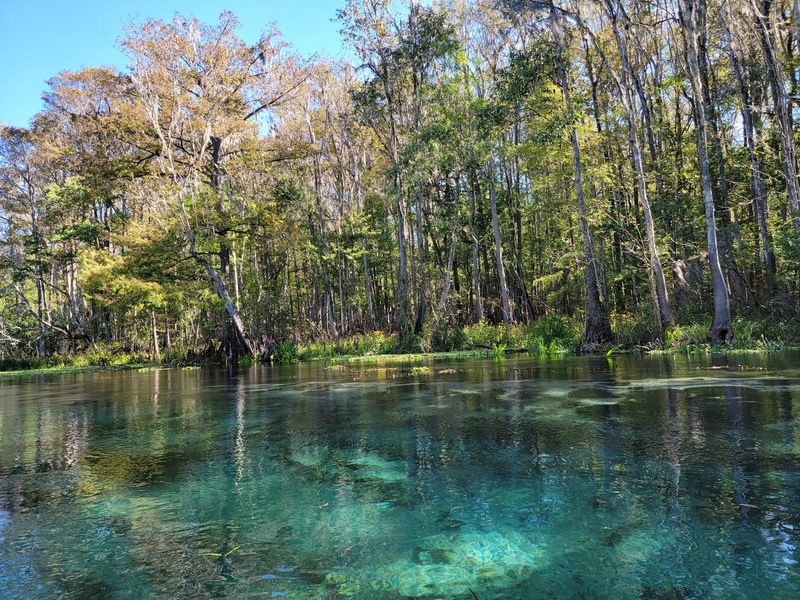
On a hot Florida summer day, few experiences on earth beat floating down the Ichetucknee River on a tube while ancient cypress trees shade you from above and the water stays a refreshing 68 degrees all around you.
Ichetucknee Springs State Park, located at 12087 SW US Hwy 27, Fort White, FL 32038, is home to nine major springs that feed into this impossibly clear river, which winds for about six miles through one of Florida’s most pristine natural corridors.
The tubing season runs from Memorial Day through Labor Day, and the park limits daily visitors to protect the ecosystem, so arriving early or booking ahead is a smart move.
Manatees occasionally visit the springs during cooler months, and river otters are spotted often enough that keeping your eyes on the banks is always worthwhile.
Snorkeling alongside the main spring boils gives you a fish-eye view of the underwater landscape, complete with bass, gar, and soft-shell turtles cruising the sandy bottom.
The park also offers paddling, hiking, and picnic areas that make it easy to spend a full, satisfying day without ever running out of things to enjoy.
6. Blue Spring State Park, Orange City
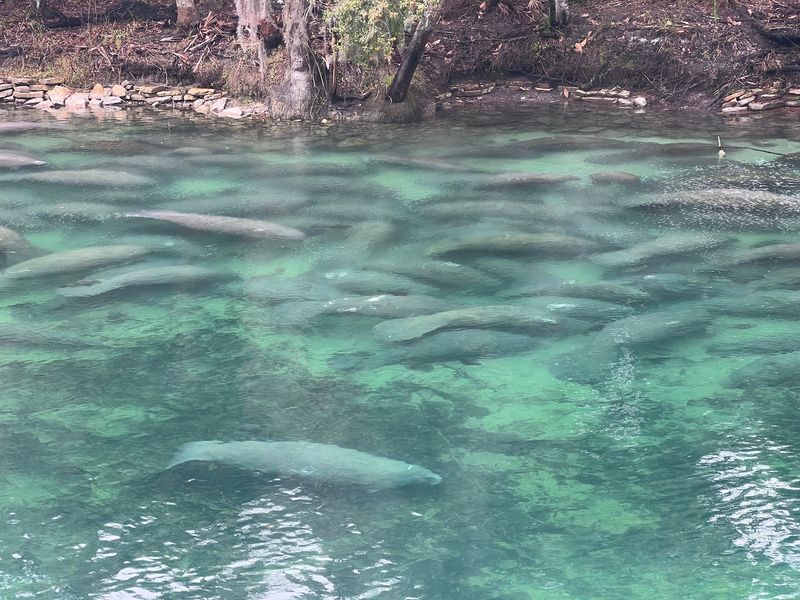
Every winter, one of the most heartwarming wildlife events in Florida unfolds quietly at Blue Spring State Park, where hundreds of West Indian manatees gather in the warm spring water to wait out the cold season in the St. Johns River.
At 2100 W French Ave, Orange City, FL 32763, this park sits about an hour north of Orlando, and from November through March, the manatee count in the spring run can reach into the hundreds on the coldest days.
The boardwalk that runs along the spring gives you an unobstructed view straight down into the 72-degree water, where manatees float, roll, and occasionally nudge each other in slow motion directly below your feet.
Swimming and snorkeling in the spring run are permitted during summer months when the manatees have moved back out into the river, and the visibility is absolutely stunning either way.
The park also has a restored antebellum homestead from the 1870s, which adds a surprising bit of Florida history to what is already a spectacular natural visit.
Weekday visits in January tend to bring the largest manatee gatherings and the smallest human crowds, which is a combination worth planning around.
7. Rainbow Springs State Park, Dunnellon
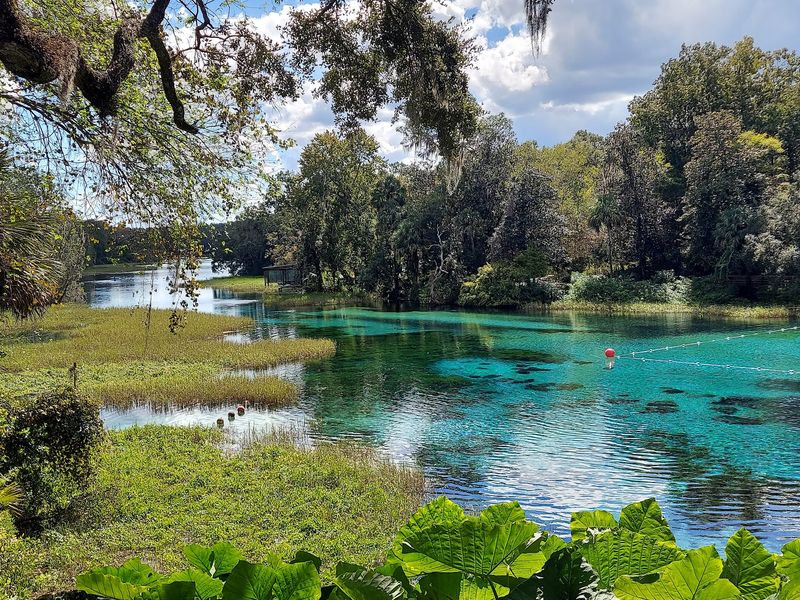
Rainbow Springs has been drawing visitors since the 1930s, when it operated as a commercial attraction complete with glass-bottom boats and trained animal shows, and even after all that history, the spring itself still manages to steal the show.
Now a state park at 19158 SW 81st Pl Rd, Dunnellon, FL 34432, Rainbow Springs is the headwaters of the Rainbow River, which flows for about 5.7 miles and ranks as one of Florida’s clearest and most beautiful waterways.
Tubing down the river is the main event for most visitors, and the combination of aquatic plants swaying in the current, fish darting beneath you, and dappled sunlight filtering through the tree canopy makes it feel like floating through a living aquarium.
The park’s botanical garden near the main spring is a genuinely lovely surprise, with azaleas, waterfalls, and flowering plants that create a completely different kind of beauty from the river itself.
Kayak and tube rentals are available nearby, and the downstream take-out point connects to a shuttle service back to the park.
Mornings on weekdays give you the best chance of having long, quiet stretches of the river almost entirely to yourself.
8. Bok Tower Gardens, Lake Wales
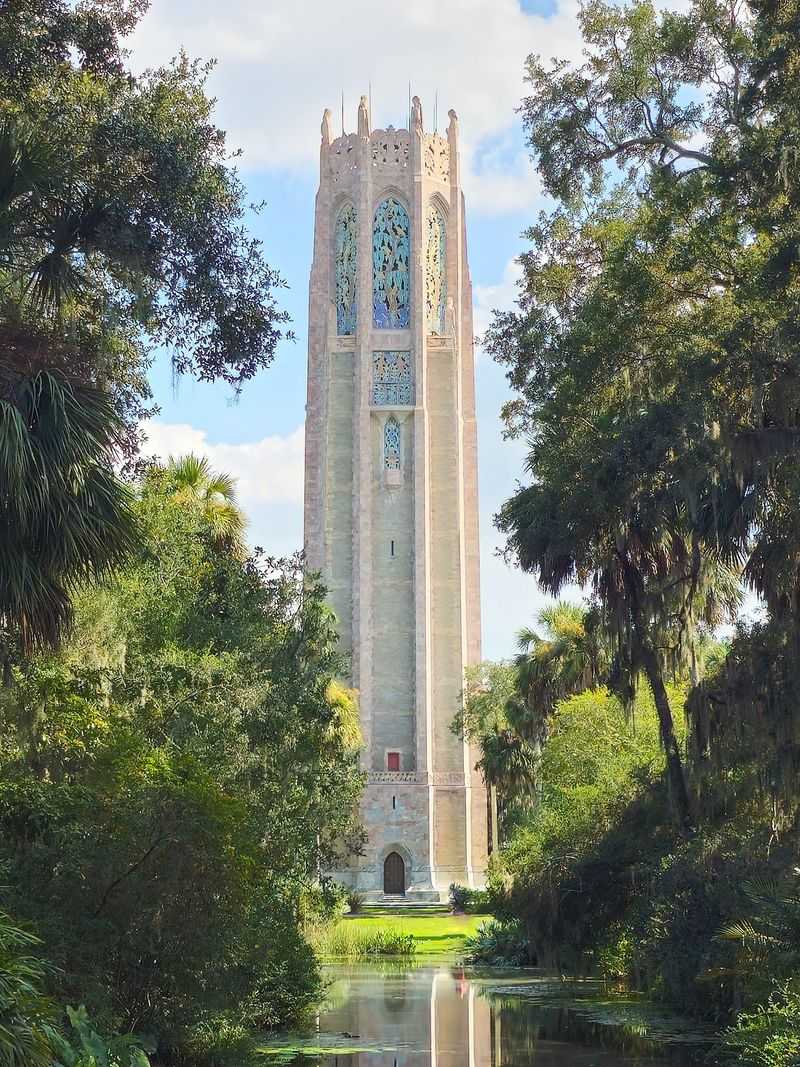
Perched on one of the highest points in peninsular Florida, Bok Tower Gardens offers something that catches most first-time visitors completely off guard: genuine peace and quiet in the middle of a very busy state.
At 1151 Tower Blvd, Lake Wales, FL 33853, this National Historic Landmark was dedicated by President Calvin Coolidge in 1929 and was designed by landscape architect Frederick Law Olmsted Jr., the same family name behind New York’s Central Park.
The tower itself is a stunning 205-foot Gothic and Art Deco carillon built from pink and gray coquina stone, and it plays a live concert every day at 1 p.m. and 3 p.m. that echoes beautifully across the gardens.
The surrounding 250 acres of gardens include ancient live oaks, blooming camellias, and a reflecting pool that mirrors the tower in the late afternoon light.
Sandhill cranes, gopher tortoises, and white-tailed deer wander the grounds with a comfort level that suggests they have never once been told to move along.
The on-site cafe and visitor center make it easy to settle in for a long, unhurried morning that feels nothing like a typical Florida tourist stop.
9. Paynes Prairie Preserve State Park, Micanopy, FL
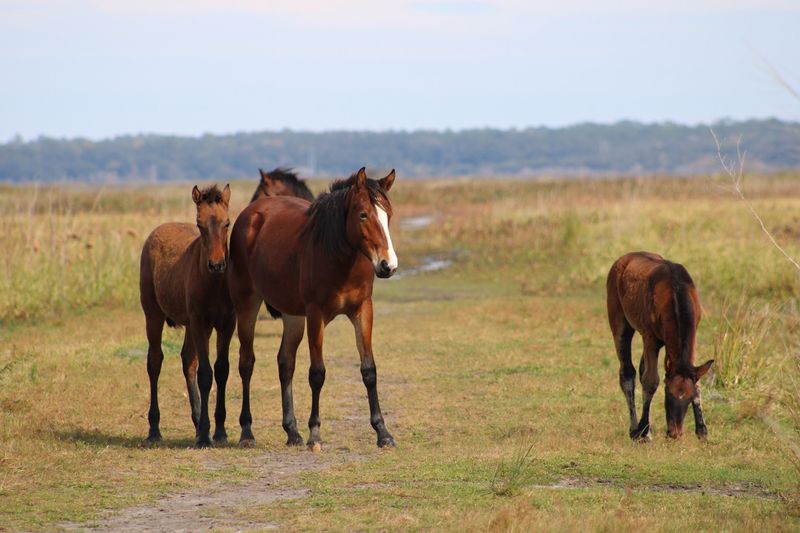
Somewhere between Gainesville and Micanopy, a 21,000-acre open basin sits waiting to rewrite everything you thought you knew about what Florida looks like.
Paynes Prairie Preserve State Park at 100 Savannah Blvd, Micanopy, FL 32667 is home to a free-roaming herd of American bison and a band of Florida Cracker horses, which are direct descendants of the Spanish horses brought to Florida in the 1500s.
Standing on the La Chua Trail observation platform at sunrise while bison graze in the mist below and sandhill cranes call out across the prairie is one of those moments that makes you question why you waited so long to come here.
The park has 20 miles of trails ranging from flat, easy walks to more challenging routes that pass through hammocks, wetlands, and pine forests.
Alligators are common along the La Chua Trail, and during spring and fall, the bird diversity along this route attracts serious birders from across the country.
This is the kind of place where showing up without a plan and simply walking until something catches your eye turns out to be a perfectly good strategy.
10. Falling Waters State Park, Chipley
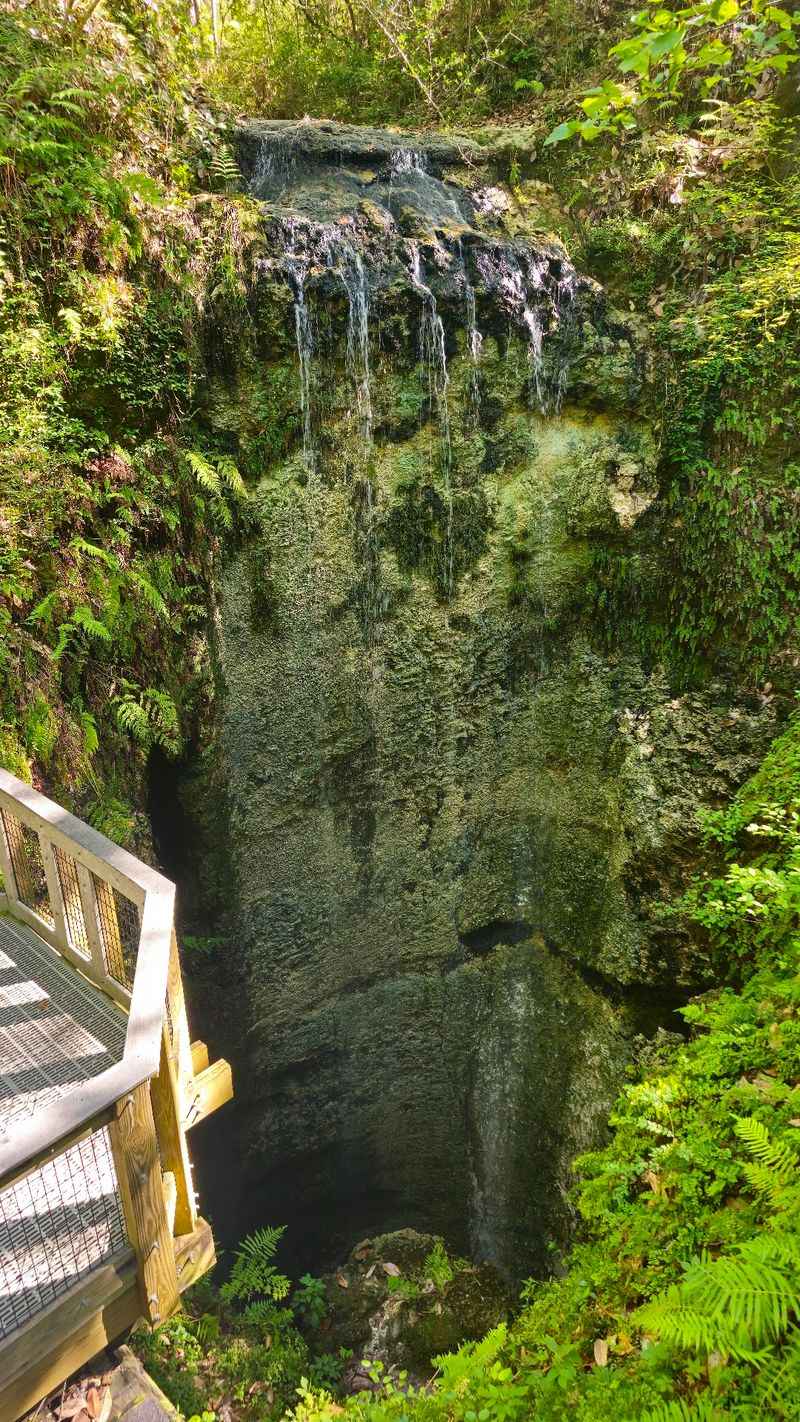
Florida is not exactly famous for its waterfalls, which is exactly what makes Falling Waters State Park such a satisfying and unexpected surprise for anyone who makes the drive out to Chipley.
Located at 1130 State Park Rd, Chipley, FL 32428, this park is home to Florida’s tallest waterfall, a 73-foot cascade that drops straight down into a cylindrical sinkhole and disappears into an underground stream system below.
Standing on the observation platform at the edge of the sinkhole and watching the water fall into the dark void below is genuinely mesmerizing, especially after heavy rain when the flow is at its strongest.
The park’s 1.5-mile loop trail winds past several other sinkholes, giving you a clear picture of how dramatically the karst geology of this region shapes the landscape.
Swimming is available at the park’s lake, which offers a pleasant, low-key counterpoint to the geological drama happening just a short walk away.
Falling Waters is part of the Florida Panhandle, a region of the state that gets far fewer visitors than it deserves, and this park is one of the best arguments for making the trip north.
11. Blowing Rocks Preserve, Hobe Sound
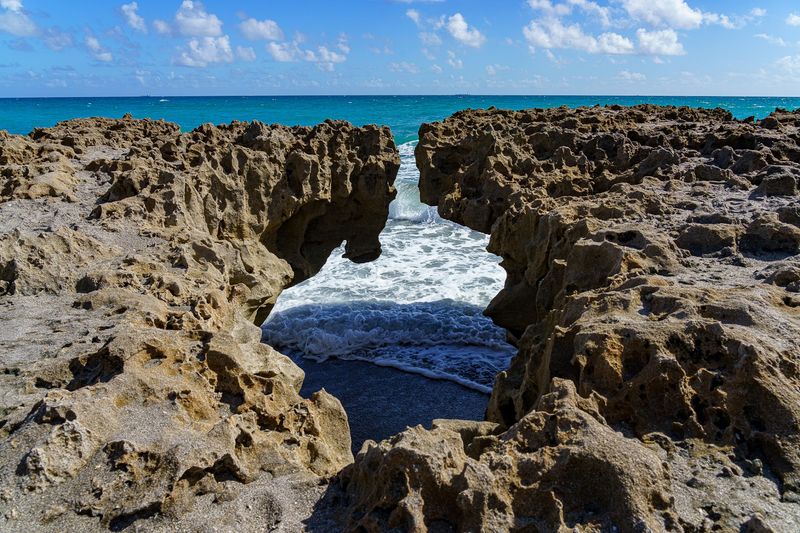
At high tide during a strong east wind, the limestone shoreline at Blowing Rocks Preserve puts on a show that is genuinely hard to describe without sounding like you are exaggerating.
Managed by The Nature Conservancy, Blowing Rocks Preserve sits at 574 S Beach Rd, Hobe Sound, FL 33455 on Jupiter Island, and it protects the largest Anastasia limestone outcropping on the Atlantic Coast of the United States.
When waves push into the natural holes and tunnels in the rock, water shoots upward in dramatic spouts that can reach heights of 50 feet, which is how the preserve earned its memorable name.
The beach on the ocean side is a nesting ground for loggerhead, green, and leatherback sea turtles, and the preserve runs guided turtle walks during nesting season from June through July.
The Indian River Lagoon side of the preserve offers a completely different experience, with a mangrove shoreline, a butterfly garden, and a restored coastal hammock that feels worlds away from the crashing waves just across the trail.
Admission is free for Nature Conservancy members, and the relatively small size of the preserve makes it easy to explore everything in a single focused morning.
12. Three Sisters Springs, Crystal River
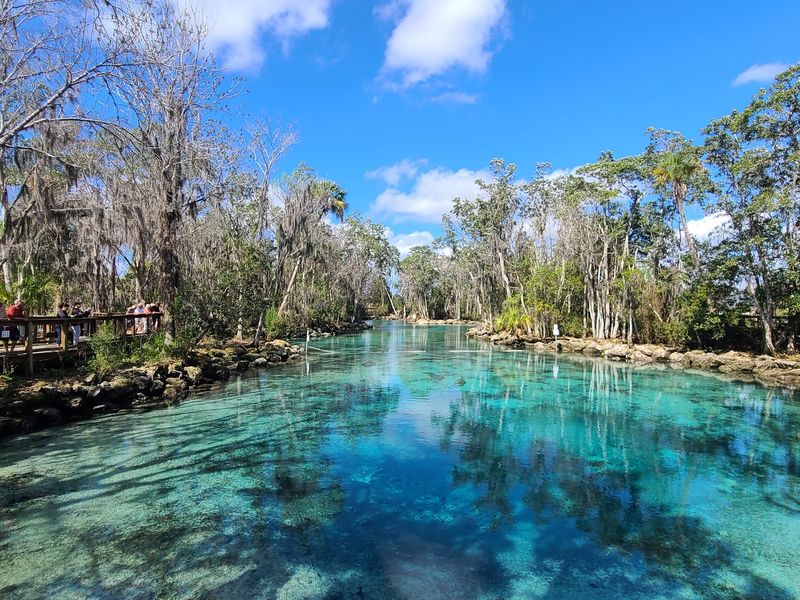
Crystal River, Florida has a reputation as one of the best places in the world to swim with wild manatees, and Three Sisters Springs is the crown jewel of that experience.
At 917 Three Sisters Springs Trail, Crystal River, FL 34429, this U.S. Fish and Wildlife Service refuge contains three interconnected spring vents that pump out warm, clear water year-round, creating a sanctuary that manatees return to faithfully every winter.
Guided kayak and snorkel tours launch from the visitor center and take you through the narrow canal into the springs, where manatees often rest so close to the surface that you could reach out and touch one, though the rules firmly ask you not to.
The water clarity here is remarkable even by Florida spring standards, with visibility extending well beyond 20 feet on most days and the white sandy bottom glowing in the filtered winter sunlight.
Outside of manatee season, the springs remain open for swimming and snorkeling, and the aquatic vegetation, turtles, and fish make it worthwhile in any season.
Early morning tours in January and February offer the highest manatee counts and the softest, most cinematic light of the entire year.
13. Washington Oaks Gardens State Park, Palm Coast
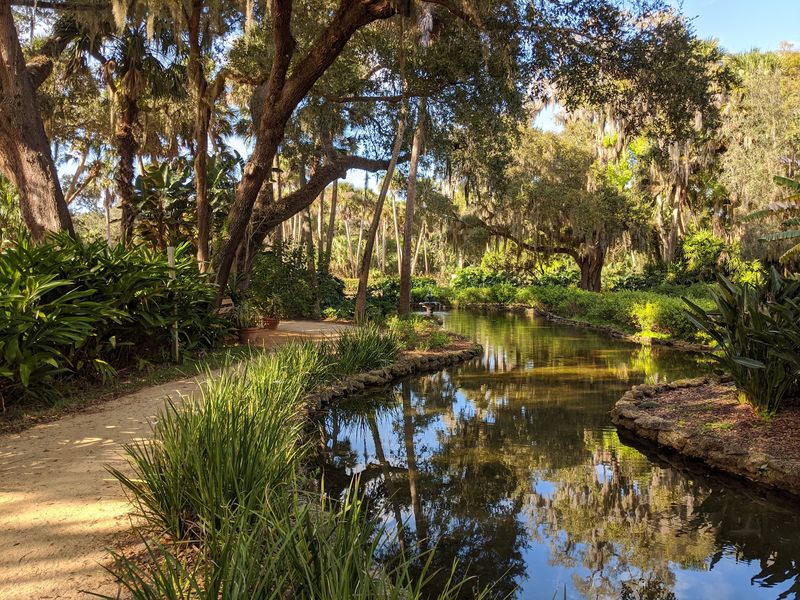
Two completely different Florida landscapes face each other across a single strip of land at Washington Oaks Gardens State Park, and somehow both of them manage to be extraordinary.
At 6400 N Ocean Shore Blvd, Palm Coast, FL 32137, the park sits between the Matanzas River and the Atlantic Ocean, offering a formal garden on one side and one of the most dramatic rocky shorelines in the state on the other.
The coquina rock formations along the ocean beach are sculpted by centuries of wave action into jagged, photogenic shapes that create tidal pools filled with small crabs, sea urchins, and anemones at low tide.
The garden side of the park was originally part of a private estate and features camellias, azaleas, roses, and native plantings arranged around a reflecting pool and ornamental fountains that feel surprisingly elegant for a Florida state park.
Gopher tortoises are frequently spotted on the garden paths, and the park’s hammock trails pass through ancient live oaks draped in Spanish moss that create a deeply atmospheric canopy.
Sunrise on the coquina beach is one of the most underrated photography opportunities on Florida’s entire Atlantic coast.
14. St. Andrews State Park, Panama City Beach
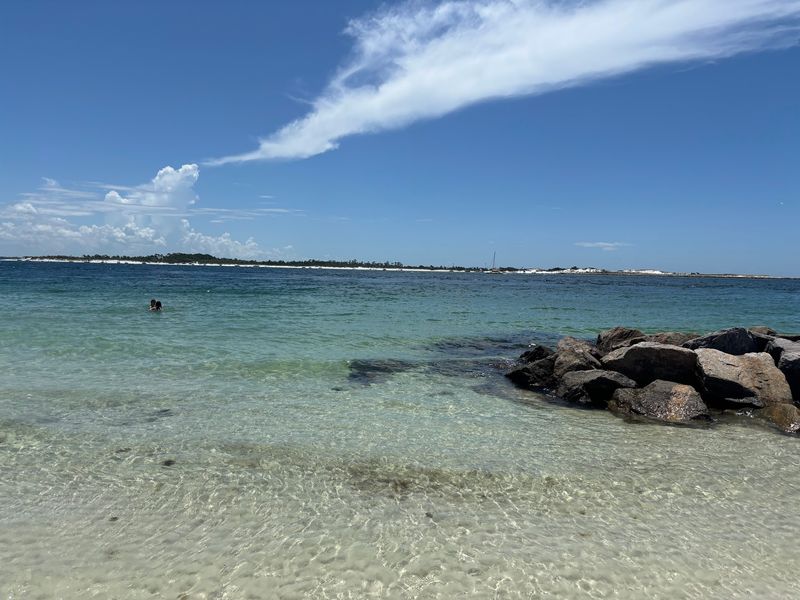
Not all of Panama City Beach is packed with high-rises and souvenir shops, and St. Andrews State Park is the clearest possible proof of that point.
At 4607 State Park Ln, Panama City Beach, FL 32408, this park protects over 1,200 acres of white quartz sand beaches, dunes, pine flatwoods, and marshes along the Gulf of Mexico, and the water color here is the kind of bright emerald green that makes people stop mid-sentence to stare.
The jetty that separates the Gulf from the Grand Lagoon is a popular spot for fishing, and the snorkeling around the jetty rocks turns up sheepshead, flounder, and the occasional cobia moving through the current.
A ferry runs from the park to Shell Island, an undeveloped barrier island just across the pass where dolphins regularly ride the bow wake of the boat and shelling is genuinely excellent.
The park’s campground sits close enough to the beach that you can hear the Gulf from your tent, which is an experience that earns its own dedicated memory.
Spring and fall visits avoid the summer crowds while still delivering water temperatures warm enough for comfortable swimming and snorkeling.