
11 Cajun And Creole Food Phrases Folks Mix Up (And Locals Gladly Untangle)
Louisiana food carries its own vocabulary, and the words are as layered as the dishes themselves. A visitor might hesitate over whether gumbo is thickened with roux or filé, or pause when ordering a po’boy to understand what “dressed” really means.
Locals don’t make a fuss about the confusion; they explain it, then return to stirring pots that feel older than recipes. These terms aren’t decorative. They carry migrations, memories, and the weight of identity.
I’ve watched people realize that learning the language is part of tasting the food correctly, that the words are as important as the seasoning. In Louisiana, meaning and flavor share the same pot, and each phrase deepens the story of the table.
1. Cajun vs. Creole
The simplest distinction starts with geography. Cajun cuisine grew from rural communities, designed for one-pot cooking and the flavors of the countryside. Creole, meanwhile, was born in New Orleans, a city layered with French, Spanish, African, and Caribbean influences.
On the plate, Cajun often leans on pork, rice, and smoky depth. Creole uses tomatoes more freely, along with refined sauces and urban polish.
It helps to remember: Cajun tastes like the bayou’s backbone, Creole like the city’s rhythm. Both stand tall, but they aren’t interchangeable.
2. Holy Trinity
You’ll hear cooks mention this with reverence, but it’s not religious—it’s practical. The base mix of onion, celery, and bell pepper anchors countless Cajun and Creole dishes. Think of it as the region’s version of mirepoix.
Garlic sometimes joins in, nicknamed “the pope.” It’s chopped, sizzled, and spread into sauces, gumbos, and étouffées until the aroma is undeniable.
The trick is simple: if you smell those three vegetables softening in butter or oil, you’re halfway to Louisiana flavor before the main ingredient even hits the pot.
3. Roux
Flour meets fat, and patience turns the mixture into the backbone of Southern sauces. It can be pale blond, rich peanut, or deep chocolate, with each shade lending a different note of flavor and thickness.
Unlike French roux, which often stops pale, Louisiana pushes it further, brown and nutty. Burn it, though, and you start over completely.
I’ve stood over a skillet watching roux go from tan to mahogany, and the transformation feels like magic. That slow stir is where meals like gumbo find their soul.
4. Gumbo
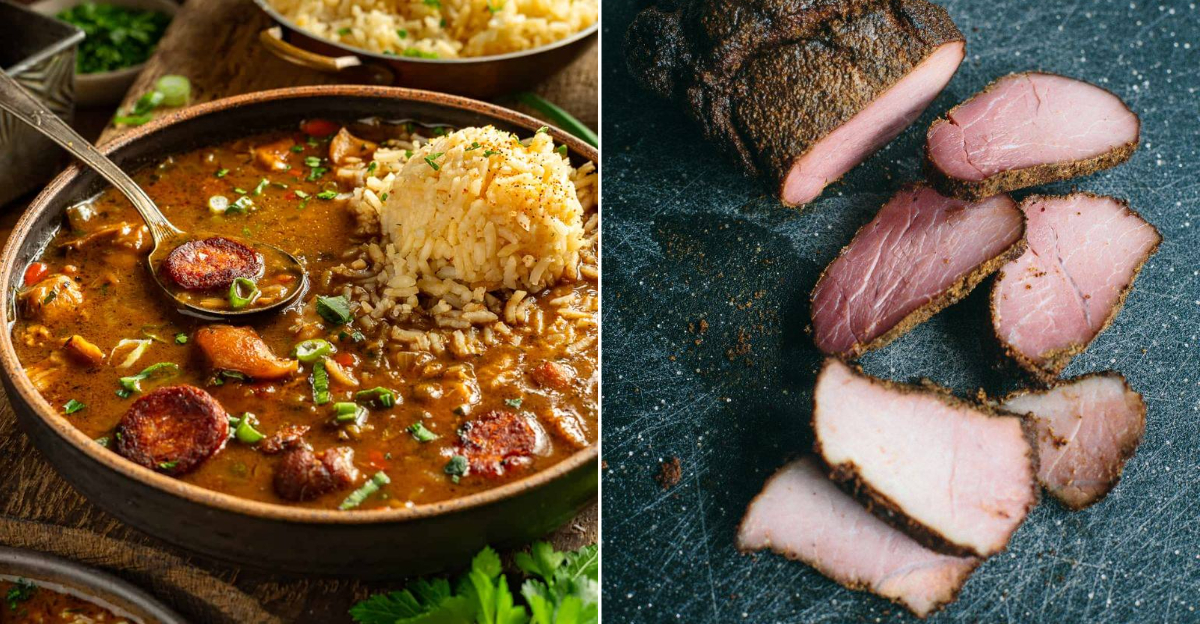
Thick, steamy, and ladled over rice, gumbo is a meal that defines a state. Roux often thickens it, though some recipes use filé, ground sassafras leaves, to do the job.
It’s hearty, filled with meat, seafood, or both, depending on tradition. A true gumbo is never thin, and it’s never just “soup.”
There’s something almost communal about it. One bowl doesn’t stay solitary for long, gumbo invites second helpings and storytelling, proof that food here has always been about more than filling stomachs.
5. Filé
Open a jar and you’ll smell something earthy and herbal. Filé powder comes from ground sassafras leaves, long used by Native peoples before Cajun cooks embraced it.
It’s never boiled into gumbo; add it too soon and it goes stringy. Instead, it’s stirred in at the end, or even sprinkled over a bowl just before eating.
The result is a subtle perfume and a gentle thickening. It’s not flashy, but it adds depth. That quiet role is why locals insist you don’t skip it.
6. Étouffée
The French word means “smothered,” and that’s the heart of the dish: shrimp or crawfish bathed in a buttery, roux-thickened sauce, served over rice.
It’s different from frying or grilling, étouffée is meant to feel cozy, the kind of plate that warms from the inside. The sauce clings, velvety and rich, with just enough seasoning to keep it lively.
I always think of étouffée as a weeknight luxury. It doesn’t take a banquet to feel special, just a scoop of rice under all that sauce.
7. Jambalaya
Picture rice, meat, and seasonings all cooking together until the flavors fuse. That’s jambalaya, often compared to paella because of its Spanish influence.
Creole versions add tomato, while Cajun ones usually don’t. Chicken, sausage, or shrimp find their way in, with spices tying it all together.
The beauty is in its practicality. One pot feeds a crowd, and leftovers reheat beautifully. Order it anywhere in Louisiana, and you’ll taste both tradition and a chef’s personal signature in the same spoonful.
8. Boudin
At first glance, it looks like sausage. But cut into one, and you’ll find rice mixed with pork or seafood, bound with spices into a soft, savory filling.
Boudin isn’t sliced into neat coins; you squeeze it from the casing or eat it whole, often as roadside fare. Boudin rouge, made with blood, is rare these days but still part of the heritage.
I’ve eaten it warm from a small-town counter, and it felt more like comfort food than charcuterie. Messy, hearty, and utterly satisfying.
9. Tasso
This isn’t a ham steak for carving, it’s pork shoulder, heavily spiced and smoked until it becomes a seasoning in its own right.
Small chunks of tasso bring smoky, spicy intensity to beans, jambalayas, or sauces. It acts less like a main dish and more like a flavor amplifier.
It’s worth seeking out for cooking at home. A little goes a long way, and suddenly ordinary beans taste like something you’d swear simmered in Louisiana all afternoon.
10. Lagniappe
Pronounced “lan-yap,” it simply means “a little something extra.” It could be an unexpected beignet slipped onto your tray or an oyster added free of charge.
The custom comes from New Orleans shopkeepers giving small bonuses to loyal customers, a tradition that restaurants happily continued.
The charm lies in surprise. It’s not a coupon, not a promotion, just a gesture. That touch of generosity explains why people who experience lagniappe tend to smile while telling the story afterward.
11. Po’boy “Dressed”
When you order a po’boy “dressed,” you’re asking for lettuce, tomato, pickles, and mayo by default. Fried shrimp, roast beef, or oysters fill the bread, but “dressed” sets the toppings.
It’s shorthand born from local habit, saving everyone time at crowded counters. If you want fewer toppings, you specify.
I learned fast: if you don’t say anything, the sandwich arrives stacked and messy in the best way. That one word, “dressed”, carries decades of street-corner tradition inside it.